
This is a group Marangu-route climb scheduled for 9–14 December 2026: a six-day hut trek using the classic Mandara–Horombo–Kibo approach with summit attempt on Day 5–6. Participants receive mountain crew support, hut accommodation (shared in standard huts), most meals on the mountain and park fees as per standard operator inclusions. Exact availability, final inclusions and price for the 9–14 Dec group must be confirmed with Climb 4 Africa before booking.
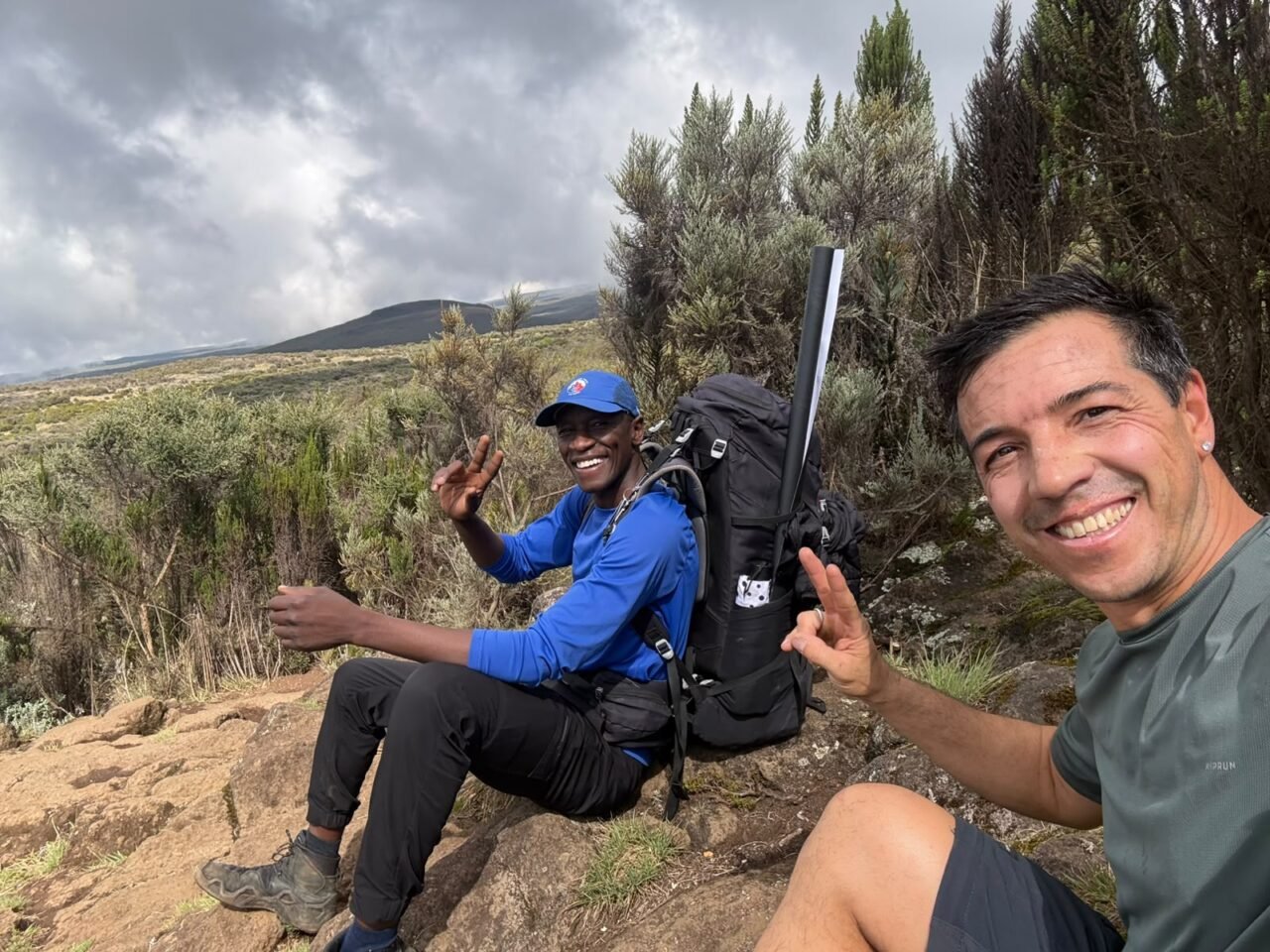
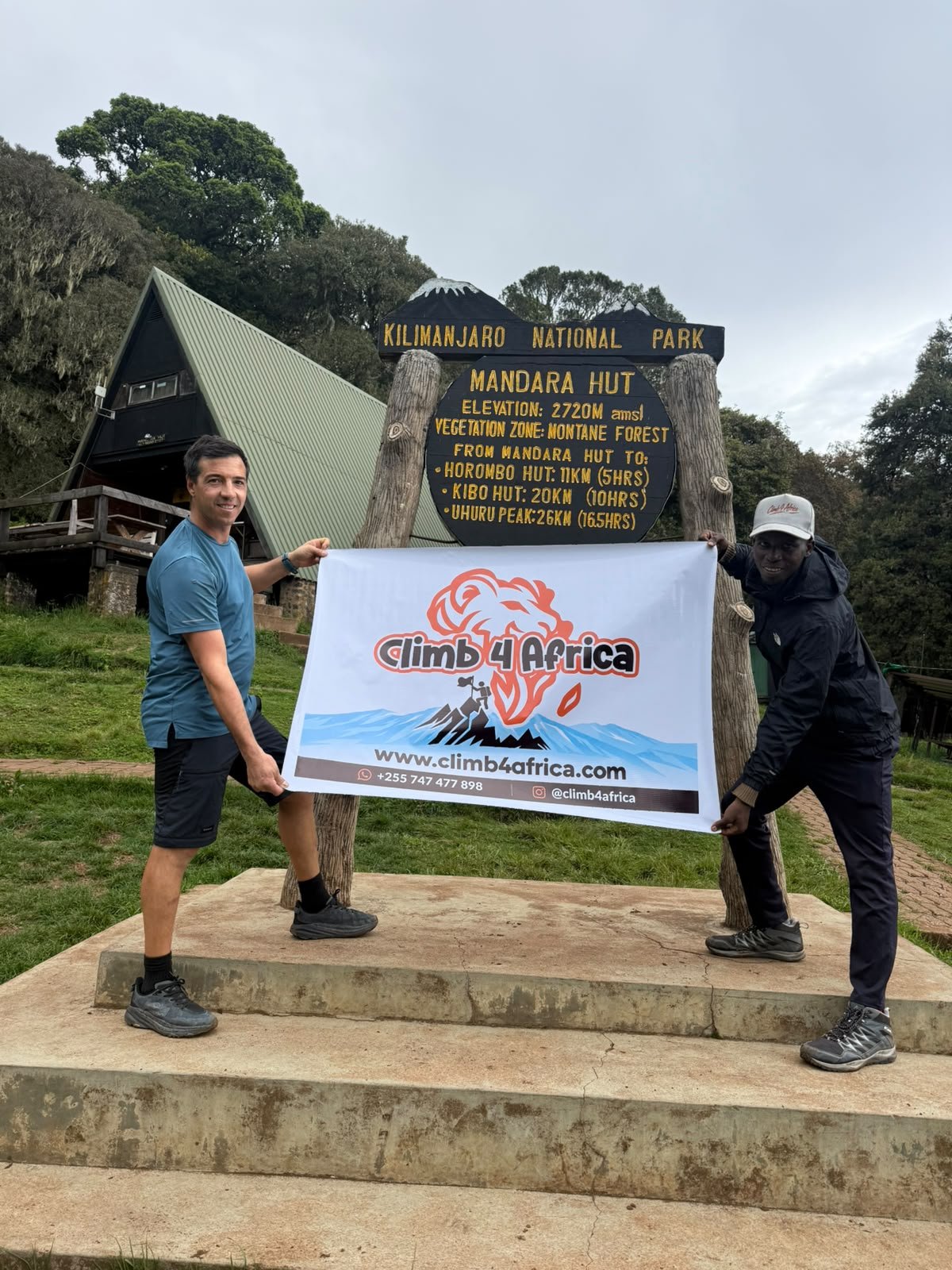
Below is a practical, route-focused breakdown of the proposed 6 Days Marangu Kilimanjaro Group Hiking (9–14 December 2026). The emphasis is on day-to-day movement, acclimatisation logic, gear and booking steps you need to decide whether this group date suits your fitness and schedule. Where details are not operator-verified they are flagged and require confirmation with Climb 4 Africa.
Why pick the 6-day Marangu group climb (who it’s for)
The Marangu route is the traditional “Coca‑Cola” trail on Kilimanjaro: relatively direct, well-marked, with hut accommodation that reduces weight compared with camping options. The 6-day version gives an extra night for acclimatisation compared with the tighter 5-day schedules and is better for hikers who want a slightly higher summit success probability without changing routes. It suits travelers who prefer sleeping in huts, want a guided small-group experience, and have a moderate fitness baseline (regular hill walks and cardio training recommended).
What this specific group date covers
- Route: Marangu (Mandara Hut → Horombo Hut → Kibo Hut → Summit crater) — standard hut stages.
- Duration: 6 days on route (9–14 December 2026), arrival/departure logistics separate.
- Accommodation on the mountain: shared huts (single/double upgrades possible — confirm with operator).
- Included: mountain crew (guide, porters, cook), park and rescue fees as per operator policy, mountain meals while trekking. Confirm exact inclusions with Climb 4 Africa.
- Availability and price: NOT published here — you must request confirmation for spaces and final cost for the 9–14 Dec group.
How the 6-day Marangu itinerary manages acclimatisation
The key to the 6-day plan is trading one extra day for slower ascent gains and a crucial overnight at Horombo before pushing to Kibo. Instead of racing through identical elevations on consecutive days, the schedule staggers hours on the mountain and keeps summit-night exertion shorter from Kibo by giving a full rest period at Horombo. That reduces acute altitude stress and improves standing at the summit push.
Day 1 — Moshi / Kilimanjaro Gate to Mandara Hut
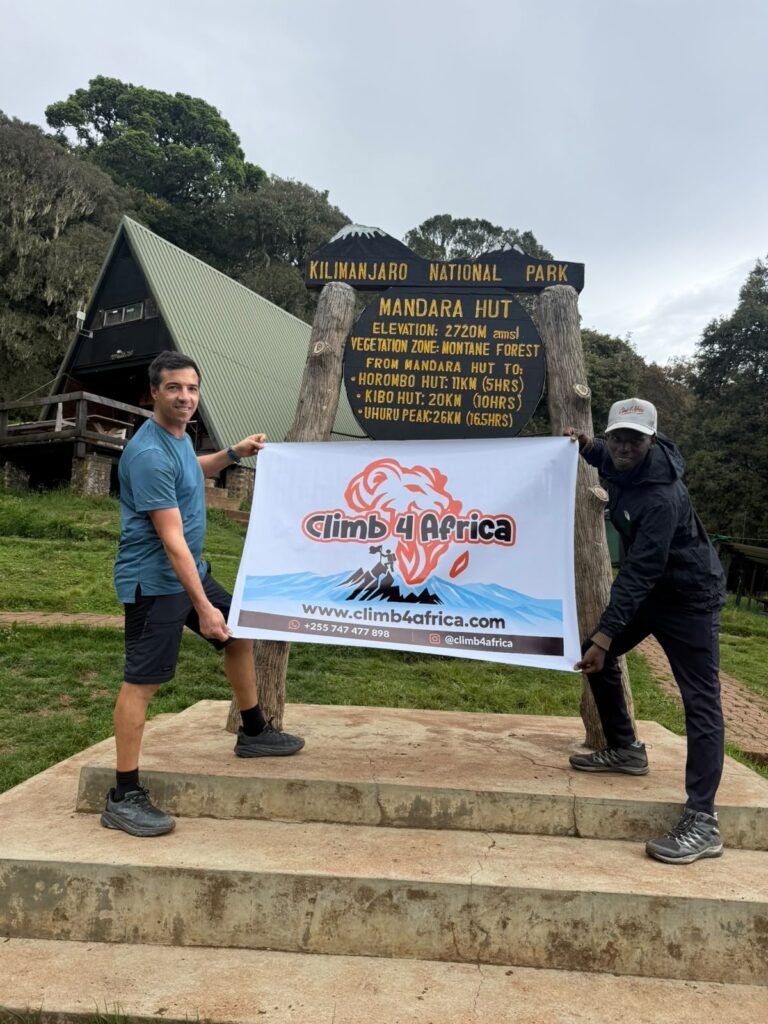
Meeting and briefing in Moshi (time confirmed by operator) followed by transfer to Marangu Gate for registration. The trek starts through montane forest with a steady climb to Mandara Hut. This first day is short to moderate in duration and helps the group adjust from town altitude to the mountain environment. Expect forest scents, possible sightings of blue monkeys or birdlife, and the hut’s bunk-style layout. Night is in huts; confirm shared or upgraded arrangements with Climb 4 Africa.
Day 2 — Mandara Hut to Horombo Hut
The path leaves forest into heath and moorland. This is a longer walking day with gradual elevation gain; you move across open moor, which exposes you to wind and larger temperature swings. Horombo Hut is the main acclimatisation stop with better facilities and a longer afternoon rest window. Guides will assess pace and may include short acclimatisation walks above the hut and back (do as instructed).
Day 3 — Horombo Hut acclimatisation day
A dedicated acclimatisation day is the crucial advantage of the 6-day schedule. The group either does a short hike above Horombo to gain and return (Karanga direction) or spends the day resting, hydrating and checking gear. This day reduces summit-night stress and is a good time to sort clothing, test sleeping systems and follow the guide’s hydration plan.
Day 4 — Horombo Hut to Kibo Hut
From Horombo you gain altitude more substantially and cross the alpine desert toward Kibo Hut. The walk is demanding for its elevation rather than technical difficulty; it’s a long day by length and exposure. Kibo Hut is basic and quiet by design; it hosts the summit push party and you should prepare for a late-night wake-up. Guides often run a pre-summit briefing and encourage early afternoon rest.
Day 5 — Summit night: Kibo Hut to Uhuru Peak to Horombo Hut
Typical summit strategy: a pre-dawn ascent from Kibo across the lunar desert up to the crater rim, then the final rim-to-peak section to Uhuru Peak. Exact timings vary with pace and guide judgement. After summiting you descend to Horombo Hut for an overnight — a practical option on the 6-day plan that reduces the strain of descending all the way to Mandara in one go. This day is the longest and most physically intense; your guide will manage pacing and safety checks.
Day 6 — Horombo Hut to Marangu Gate and return to Moshi
Final descent through moor and forest back to Marangu Gate, administrative procedures and transfer to Moshi. This
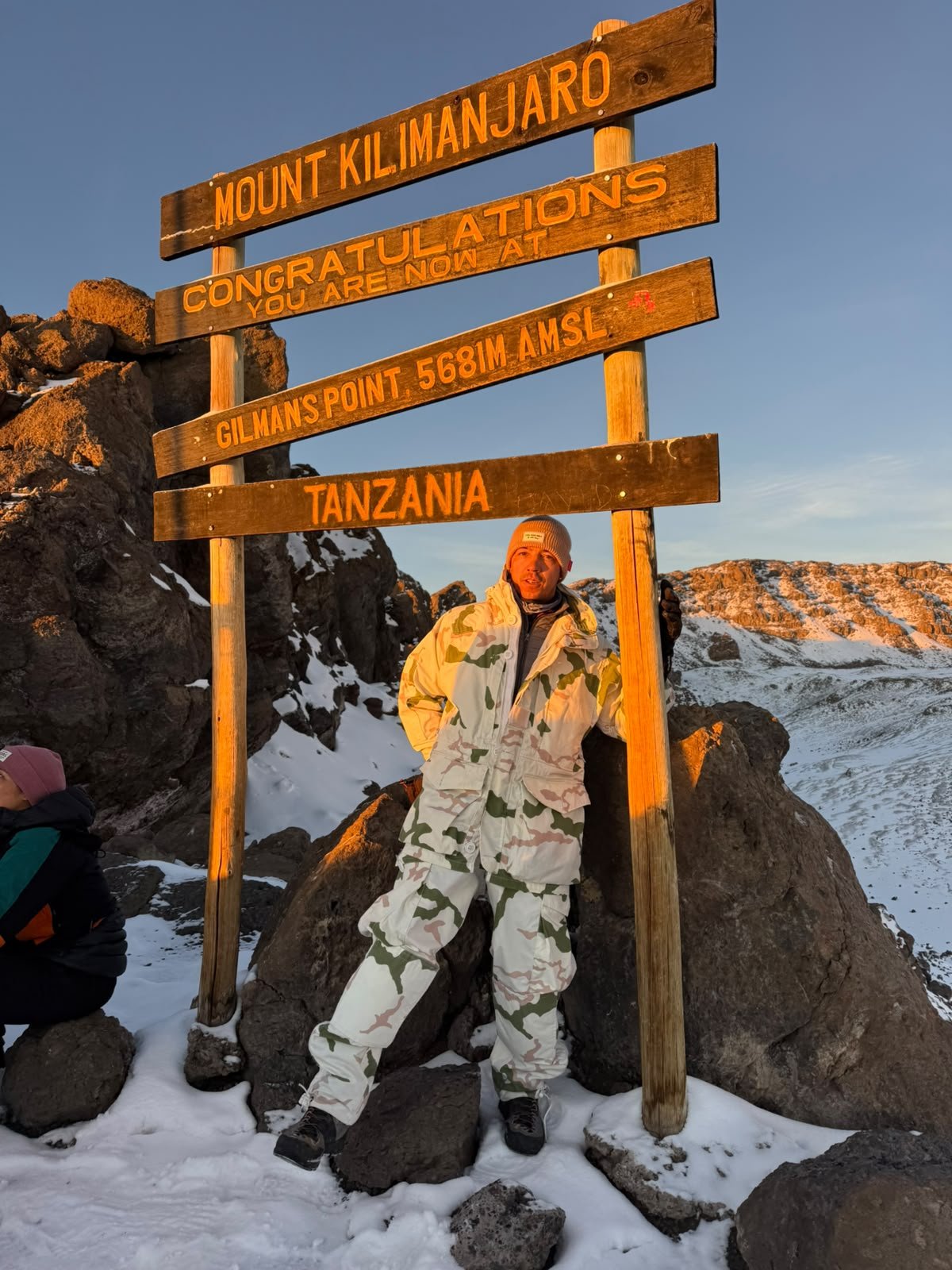
Essential gear and packing for the 6-day Marangu hut trek
One practical gap for participants deciding whether to join the 9–14 December 2026 6-day Marangu group climb is exactly what to pack for hut-based nights, the long summit push, and porter logistics. Below is a focused, route-specific checklist and packing strategy that aligns with shared-hut sleeping, the Marangu approach profile, and the summit-night conditions (pre‑dawn cold, strong winds on the crater rim, and a hot descent after Uhuru Peak). Use this as a decision-making tool when confirming hut upgrades, luggage limits and transfer arrangements with Climb 4 Africa.
General packing principles for Marangu hut treks
- Prioritise layered clothing over single heavy garments: days can be warm on the lower slopes and very cold above 4,500–5,000 m. Layers allow quick temperature management while moving between Mandara, Horombo and Kibo.
- Reduce carry weight: porters carry personal duffels up to operator limits—confirm the allowed porter weight and whether summit-night kit must be carried by you. Keep the daypack light for summit night essentials only.
- Hut sleeping constraints: huts provide bunks and mattresses but bedding can be coarse; bring a warm sleeping liner and compact pillow for hygiene and extra warmth.
Clothing — what to wear and what to pack
- Base layers: two breathable thermal tops and one pair of thermal leggings. Merino or synthetic fabrics are preferable to cotton.
- Mid layers: a lightweight fleece or insulated jacket for daytime warmth and a heavier down or synthetic parka for summit night and the crater rim.
- Outer shell: a waterproof, windproof jacket and overtrousers. At higher elevations wind and occasional sleet are common.
- Pants: trekking trousers for lower days plus an insulated pair or windproof trousers for summit night.
- Hands/Head: thin liner gloves, warm insulated gloves or mittens, a warm hat that covers ears and a buff/neck gaiter. Sunglasses with high UV protection are essential above the tree line.
Footwear, socks and gaiters
- Hiking boots: broken-in, waterproof ankle boots with stiff soles to support long descents and rocky ground near the crater rim.
- Socks: multiple pairs of synthetic or wool blend trekking socks; bring liners if you use them. Plan to change socks at Horombo before the summit push if possible.
- Gaiters: recommended above Horombo to keep out loose scree and fine volcanic dust on the alpine desert approaches.
Summit-night kit (daypack contents)
- Primary items to carry for the summit push: headlamp (extra batteries), high-calorie snacks, warm insulated jacket, down pants or extra layer, hat and gloves, water (insulated bottle or thermos) and lip balm with SPF.
- Emergency/comfort items: a lightweight emergency bivvy or survival blanket, blister kit, personal medications and a small first-aid selection. Guides maintain group rescue gear, but personal items accelerate care and comfort.
- Navigation & devices: fully charged phone or GPS device, power bank (cold reduces battery life—keep it inside an insulated pocket) and a camera if desired.
Hut essentials and personal items
- Sleeping liner: a thermal sleeping bag liner or a lightweight 0–5°C sleeping bag liner improves hygiene and warmth in shared bunks.
- Toiletries: biodegradable wet wipes, small quick-dry towel, toothbrush, hand sanitiser and toilet paper in a resealable bag. Huts have basic latrines; hygiene supplies matter.
- Hydration: 2–3 litre capacity daypack bladder or bottles; consider purification tablets as a backup though mountain crew provide boiled water.
Medical and safety items
- Altitude-aware medications: only take medications prescribed or recommended by your clinician. Carry personal prescriptions in original packaging and a copy of the prescription.
- Small personal first-aid kit: include blister plasters, pain relief, rehydration salts, anti-diarrhoeal and any personal medicines. Guides carry comprehensive group kits and evacuation plans; personal kits complement these.
Packing and porter logistics
- Confirm with Climb 4 Africa the porter weight limit per person and how luggage is labelled before arrival; pack personal summit items in a small daypack you keep with you while porters carry the larger duffel.
- Divide fragile or essential items between your daypack and duffel (e.g., keep headlamp, medications and money with you). Waterproof dry bags protect clothes and sleeping liners from damp huts and rain.
- Consider a lightweight collapsible walking pole set — useful on long descents and during the summit push for rhythm and knee relief.
Before finalising your packing list, request Climb 4 Africa’s exact porter allowance and hut sleeping arrangements for the 9–14 December departure. That information will determine which items you must carry yourself and which can go in porter luggage, helping you balance comfort, safety and summit-night efficiency.
Mountain hut life, meals and etiquette on the 6-day Marangu (9–14 December 2026)
One practical area readers often ask about after reading the itinerary and packing lists is what daily life actually looks and feels like inside the shared huts on the Marangu route — meals, sleeping arrangements, charging devices, sanitation, meal schedules, and crew interactions. This section fills that gap with route‑specific, experience‑based guidance you can use to decide whether the 9–14 December 2026 group climb fits your expectations and to prepare respectfully and efficiently.
Hut accommodation and sleeping arrangements
Marangu’s huts are stone-built dormitories with bunk beds and shared sleeping rooms. Standard hut accommodation on the 6-day Marangu is typically allocated by gender, and rooms can range from small six‑to‑ten‑person bunks to larger rooms holding more climbers at busier times. If Climb 4 Africa confirms single or double upgrades for this departure, those are usually still shared between one or two people in the same hut structure but with fewer bunk neighbours. Expect basic mattresses (bring a liner for hygiene and warmth), minimal shelving, and a communal area where climbers gather in the evening.
Daily meal rhythm and what to expect to eat
Mountain meal service on the Marangu route follows a regular rhythm designed around walking hours. Typical daily pattern: early morning tea/porridge before departure, mid‑morning tea or snack stop prepared by the crew, a hot lunch or stew at the hut or on the trail depending on schedule, tea and cake or biscuits in the afternoon, dinner served early (usually between 18:00–19:00) and then lights‑out rules to conserve fuel and heat. On summit night you’ll receive a light pre‑departure snack, thermos drinks and small energy items to carry.
The menu is modest but carbohydrate‑rich to support high energy demand: porridge, rice and beans, chapati, stews, soups and occasional fresh salad when available. If you have strong dietary requirements (strict vegan, severe allergies), confirm details with Climb 4 Africa before travel—hut cooks accommodate many requests but ingredients at altitude can be limited. Carry specialised snacks you prefer for summit night and recovery (energy gels, bars, electrolyte powder) because personal tastes help maintain appetite at altitude.
Sanitation, water and hygiene
Sanitation is basic. Huts usually provide pit latrines located outside the sleeping blocks and occasionally a simple wash area. Hot water is not reliably available except as boiled water for drinking; showers are not provided. Bring wet wipes, hand sanitiser, and a small towel. Use a resealable bag for toilet paper, and pack out any hygiene waste the crew asks you to keep with you. Drinking water is boiled and served by staff; treat any personal water you carry with purification tablets only if you have a medical reason or prefer redundancy.
Electricity, device charging and keeping batteries warm
Charging options in the huts are limited. Some huts have shared charging points powered by limited solar or generator supply — availability depends on hut and current season. Bring a good capacity power bank and keep it in an inner jacket pocket at night; cold reduces battery performance, so insulating batteries overnight is crucial for summit‑night photos and safety devices. If you must use hut charging, do so sparingly and bring a short charging cable; carry some cash for any optional charging fee if the operator advises this is in place.
Laundry, drying and clothing rotation
There’s no laundry service on route. Clothes damp from sweat or rain should be air‑dried on lines where space exists; bring a small clothesline clip or a lightweight travel towel. Rotate base layers and socks; change into dry socks at Horombo before the summit push to reduce blister risk. Keep summit layers and a dry set of clothes in a waterproof bag in your daypack reserved for the final ascent and immediate post‑summit rest.
Etiquette, privacy and interaction with crew
Respectful hut etiquette makes the experience better for everyone. Keep noise low after dinner; avoid using bright headlamps inside sleeping areas; store food and smelly items away from sleeping bunks (rats are uncommon but possible). Crew members are highly experienced and work long hours—tip and thank them according to the operator’s guidance and local custom (confirm recommended tipping range with Climb 4 Africa before departure). Ask permission before photographing staff close‑up and follow any cultural guidance provided at briefing.
Practical checklist for hut nights on the Marangu route
- Sleeping liner, small pillow or inflatable pillow
- Headlamp with spare batteries (useful inside huts for late movements)
- Wet wipes, hand sanitiser and small resealable bag for used toilet paper
- Power bank (insulated in an inner pocket at night) and short charging cable
- Personal snacks for summit night and recovery (compact, high‑energy)
- Small cash for optional hut services or charging fees (confirm with operator)
These practical details about hut life, meal cadence and etiquette are intentionally operational rather than experiential: they prepare you for what to expect without promising variable services. Confirm any operator‑specific arrangements for the 9–14 December 2026 group (single/double hut upgrades, charging fees, tipping guidance) with Climb 4 Africa before departure so you can pack and budget accurately.
Preparing fitness and training for the 6-day Marangu (9–14 December 2026)
A frequent, practical question left unanswered in many trek briefings is: how should I train so I arrive fit and ready for the specific demands of the 6-day Marangu hut climb? The single most useful preparation focus for this itinerary is building sustained aerobic endurance plus leg strength for long, steady ascents and technical but non-technical high‑altitude walking. Below are concrete, route‑specific training targets and a simple 10–12 week plan you can adapt to your base fitness.
Key physical goals before you travel
- Cardio endurance: comfortable walking or hiking for 6–8 hours at moderate-intensity (talking pace) on back-to-back days.
- Leg and core strength: ability to ascend and descend repeatedly with controlled balance and minimal knee pain.
- Muscular endurance with loaded pack: ability to carry a 6–8 kg daypack for summit night and short hikes wearing summit layers.
- Recovery resilience: rapid heart-rate recovery and low perceived exertion on second-day efforts (important for Horombo→Kibo and summit night recovery).
10–12 week progressive training outline (sample)
Adjust the weekly volume to your starting fitness. If you already walk frequently, start near week 4–6 intensity; if sedentary, build more slowly and consult your doctor.
- Weeks 1–4 (base building): 3–4 cardio sessions per week (45–60 minutes). Mix brisk walking, treadmill incline walking, cycling or easy runs. One longer weekend hike (2–3 hours) on varied terrain. Two strength sessions (40 minutes) focusing on squats, lunges, step‑ups, deadlifts (light–moderate), planks and single‑leg balance work.
- Weeks 5–8 (endurance + load): Increase one long hike to 4–6 hours weekly, ideally on trails with sustained ascent. Begin wearing a 6–8 kg pack on these hikes. Maintain 2 shorter cardio sessions (interval or tempo work) to improve aerobic capacity and recovery. Strength sessions continue, add calf raises and eccentric step‑downs to prepare for descents.
- Weeks 9–11 (specificity and intensity): Two back‑to‑back medium hikes on weekends (4–6 hours each) to simulate consecutive mountain days. Include stair climbs or hill repeats—sessions of 30–60 minutes of sustained ascent at moderate effort. One high‑intensity interval session per week to sharpen recovery ability. Maintain one gentle recovery walk and mobility work.
- Final week (taper): Reduce volume by 40–60%, keep intensity with short hill efforts, prioritize sleep, nutrition and hydration. No heavy strength sessions; focus on mobility, light walks and packing drills.
Practical, route-specific drills
- Stair training: climb persistent stairs for 30–60 minutes to simulate the prolonged step rhythm of summit night. Use a loaded daypack for the last 10–20 minutes.
- Downhill control: practice long descents to protect knees—controlled pace, shorter steps, poles if you plan to use them. Include eccentric quad work (slow step‑downs) in strength sessions.
- Night hiking: to adapt to nocturnal summit routines, do a couple of short night walks with your headlamp—this trains circadian adjustment and layering logistics.
- Pack rehearsals: conduct at least two full kit dress rehearsals wearing summit layers and carrying your summit daypack for several hours to test comfort and blister management.
Health checks, altitude readiness and travel timing
Get a pre‑trip medical check if you have pre‑existing conditions. Discuss altitude‑related prescriptions (e.g., acetazolamide) with your clinician well before departure rather than during final packing. Aim to arrive in Moshi at least 24–48 hours before the trek start to sleep, hydrate and resolve any last‑minute gear issues; many climbers prefer 48–72 hours to adjust to local time and rest after long international travel.
Consistent, progressive training that privileges long‑duration hiking, leg strength and recovery will materially increase your chances of a comfortable summit push on the 6-day Marangu route (9–14 December 2026). Combine the plan above with the packing lists and acclimatisation advice already in this guide, and discuss any medical questions with a qualified clinician.
Related Guides and Packages
Check Availability for 6 Days Marangu Kilimanjaro Group Hiking – 9–14 December 2026
Ready to compare dates, prices, and the best option for your group? Send the package name and travel month so the team can reply with a clear quote, availability, and what is included.
5 Days Marangu Route Kilimanjaro Group Climb – 8–12 December 2026
5 Days Marangu Route Kilimanjaro Group Climb – 8–12 December 2026.
View package details6 Days Marangu Route Kilimanjaro Group Departure – 16–21 December 2026
6 Days Marangu Route Kilimanjaro Group Departure – 16–21 December 2026.
View package details6 Days Marangu Route Kilimanjaro Group Joining – 1–6 December 2026
6 Days Marangu Route Kilimanjaro Group Joining – 1–6 December 2026.
View package details
December 4, Kilimanjaro Budget Trekking With Shared Group
December 4, 2026 Kilimanjaro Budget Trekking with Shared Group.
View package details
Climb Kilimanjaro In Budget 12-December-2026, Join Group 2027
climb kilimanjaro in Budget 12-december-2026, Join Group.
View package detailsClimb Kilimanjaro In 12-December-2026, Small Group in 2027
climb kilimanjaro in 12-december-2026, Small Group.
View package details
6 Days Rongai Route Kilimanjaro Hiking – 6–11 December 2026
6 Days Rongai Route Kilimanjaro Hiking – 6–11 December 2026.
View package details5 Days Marangu Kilimanjaro Christmas Trek – 22–26 December 2026
5 Days Marangu Kilimanjaro Christmas Trek – 22–26 December 2026.
View package details5 Days Marangu Kilimanjaro New Year Trek – 29 December – 2 January 2026
5 Days Marangu Kilimanjaro New Year Trek – 29 December 2026 – 2 January 2027.
View package details6 Days Marangu Kilimanjaro New Year Climb – 28 December – 2 January 2026
6 Days Marangu Kilimanjaro New Year Climb – 28 December 2026 – 2 January 2027.
View package details6 Days Marangu Kilimanjaro Christmas Holiday Climb – 21–26 December 2026
6 Days Marangu Kilimanjaro Christmas Holiday Climb – 21–26 December 2026.
View package details5 Days Marangu Kilimanjaro Full Moon Trek – 21–25 December 2026
5 Days Marangu Kilimanjaro Full Moon Trek – 21–25 December 2026.
View package detailsNo related package matches those filters. Clear one or more filters to see the other topic-matched options.



