
The 5 Days Marangu Route Kilimanjaro Group Climb – 8–12 December 2026 is a scheduled group departure arranged by Climb 4 Africa that follows the classic Marangu path (Marangu Gate → Mandara Hut → Horombo Hut → Kibo Hut → Summit via Uhuru Peak → Horombo Hut → Marangu Gate). This is a hut-based itinerary prioritising a fast summit push with standard acclimatisation; confirm seat availability, exact meeting point and luggage limits with Climb 4 Africa before booking.
Why this page and who should read it
This page is written for climbers planning to join the specific 5 Days Marangu Route Kilimanjaro Group Climb (8–12 December 2026). It focuses on the practical sequence of each day, the route logic, what to expect from hut accommodation, how acclimatisation is handled on this compressed schedule and the booking steps you must take with Climb 4 Africa to secure a place.
Quick facts you need to confirm before you pay
- Confirmed departure and group capacity: 8–12 December 2026 — ask Climb 4 Africa for current availability, minimum group size and final meeting location in Moshi.
- Accommodation type: Marangu is traditionally hut-based; verify whether huts are booked or a tented variant is offered for this group.
- Airport transfers and pre-climb hotel: confirm whether transfers from Kilimanjaro Airport (JRO) and a night in Moshi are included or available as an add-on.
- Medical requirements: your own travel insurance with high-altitude evacuation cover, recent medical clearance if required, and recommended fitness level.
- Gear and luggage limits: Marangu huts have limited space—ask for the operator’s kit list and porters’ luggage allowances.
How the 5-day Marangu route handles acclimatisation
The Marangu route is the most direct hut-to-hut path on Kilimanjaro and the classic 5-day itinerary compresses acclimatisation into a tighter profile than longer routes. Expect a one-night stop at Mandara Hut in the rainforest, a longer stay at Horombo Hut to aid acclimatisation, then a late-night summit push from Kibo Hut. That summit night is the critical altitude exposure: it is physically demanding and success depends on prior pace, sleep, hydration and how you react to altitude. If you are concerned about acclimatisation, ask about the 6-day Marangu variant or alternative routes (for example the 6 Day Marangu with hut accommodation) for a slower ascent profile.
Day 1 — Moshi (or Kilimanjaro airport) to Marangu Gate, then Mandara Hut
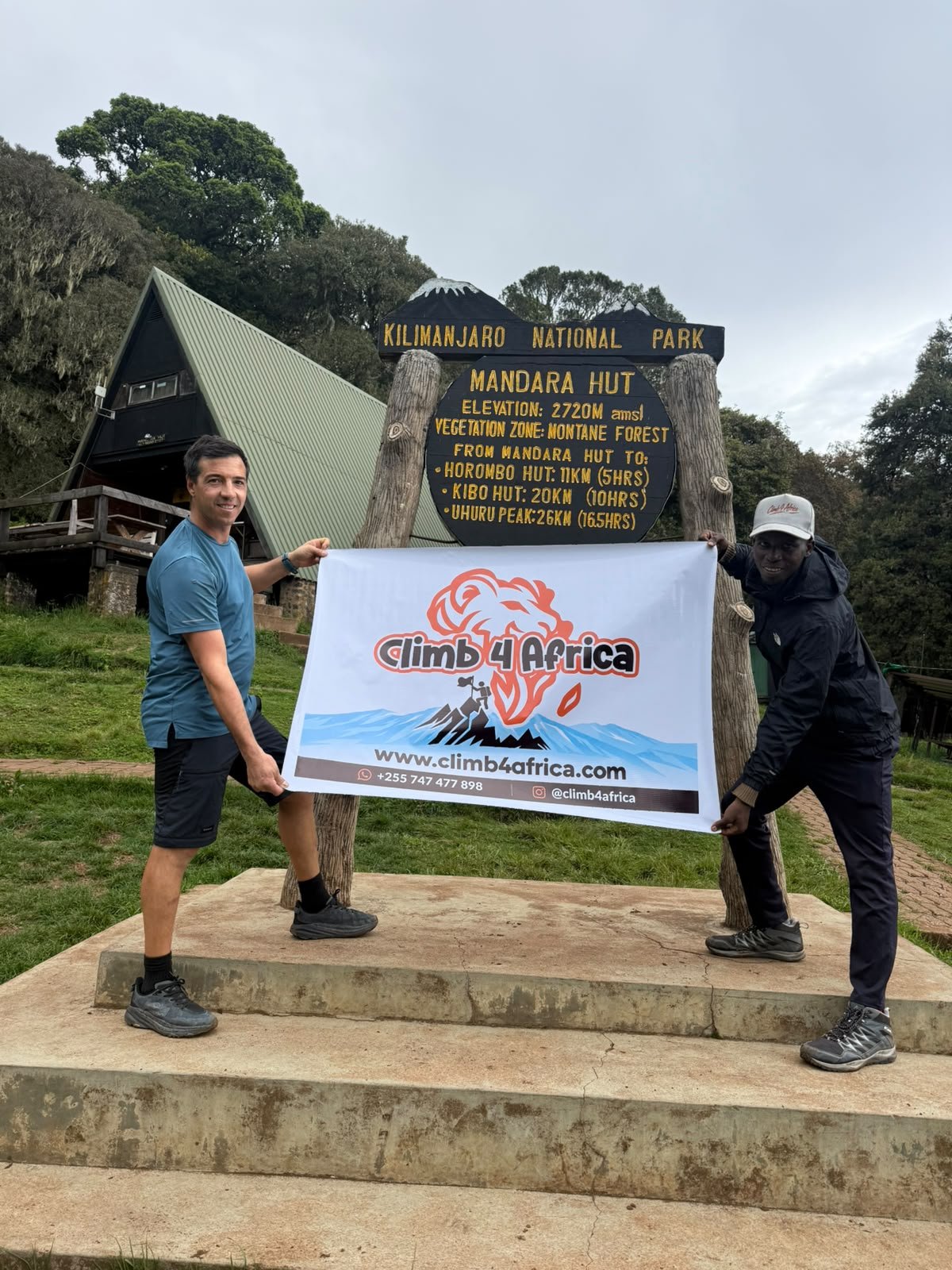
Typical morning: meet the group in Moshi or at a pre-arranged transfer point after arrival. Drive to Marangu Gate (park registration) — this is the start of the Marangu Route. The path goes through montane rainforest with steady, shady steps. On day 1 you reach Mandara Hut where the overnight is in huts. The walk is straightforward but expect warm, humid conditions and muddy sections during the rainy season. This day is mainly about getting your legs working, briefing with guides and verifying gear. Keep walking pace slow to save energy for higher days.
Day 2 — Mandara Hut to Horombo Hut
Day 2 climbs out of the forest into moorland and heather zones, with panoramic views opening as you ascend. The trail is longer than day 1 and ends at Horombo Hut, the main acclimatisation hut on Marangu. This night is crucial: you will rest at ~3,700 metres, hydrate, eat well and attend a brief acclimatisation walk or a guide-led briefing on summit night plans. Hut accommodation means shared dorm-style rooms; check the operator for bedding and locker arrangements.
Day 3 — Horombo Hut: acclimatisation day and short hikes
On the 5-day schedule Day 3 is used for rest and light acclimatisation. Expect a shorter day with a moderate hike around the ridge or to Zebra Rocks and back, depending on group fitness and weather. The goal is to increase altitude exposure without overexertion. Guides will monitor symptoms of acute mountain sickness (AMS) and may recommend additional rest or adjustments. This day is also when porters usually prepare main equipment for the summit push.
Day 4 — Horombo Hut to Kibo Hut; late-night summit start
The transition to Kibo Hut is a longer, uphill slog across alpine desert. Kibo Hut sits near the scree slopes below the crater rim. You will arrive early, rest, and have an early dinner. The summit attempt begins late at night (often around midnight), so sleep management and caloric intake are important. Guides will set a steady, slow pace on the final ascent to conserve energy. Note: Kibo Hut provides basic sleeping facilities but space and comfort are limited—confirm exact hut arrangements with Climb 4 Africa.
Day 5 — Summit (Uhuru Peak) and descent to Marangu Gate
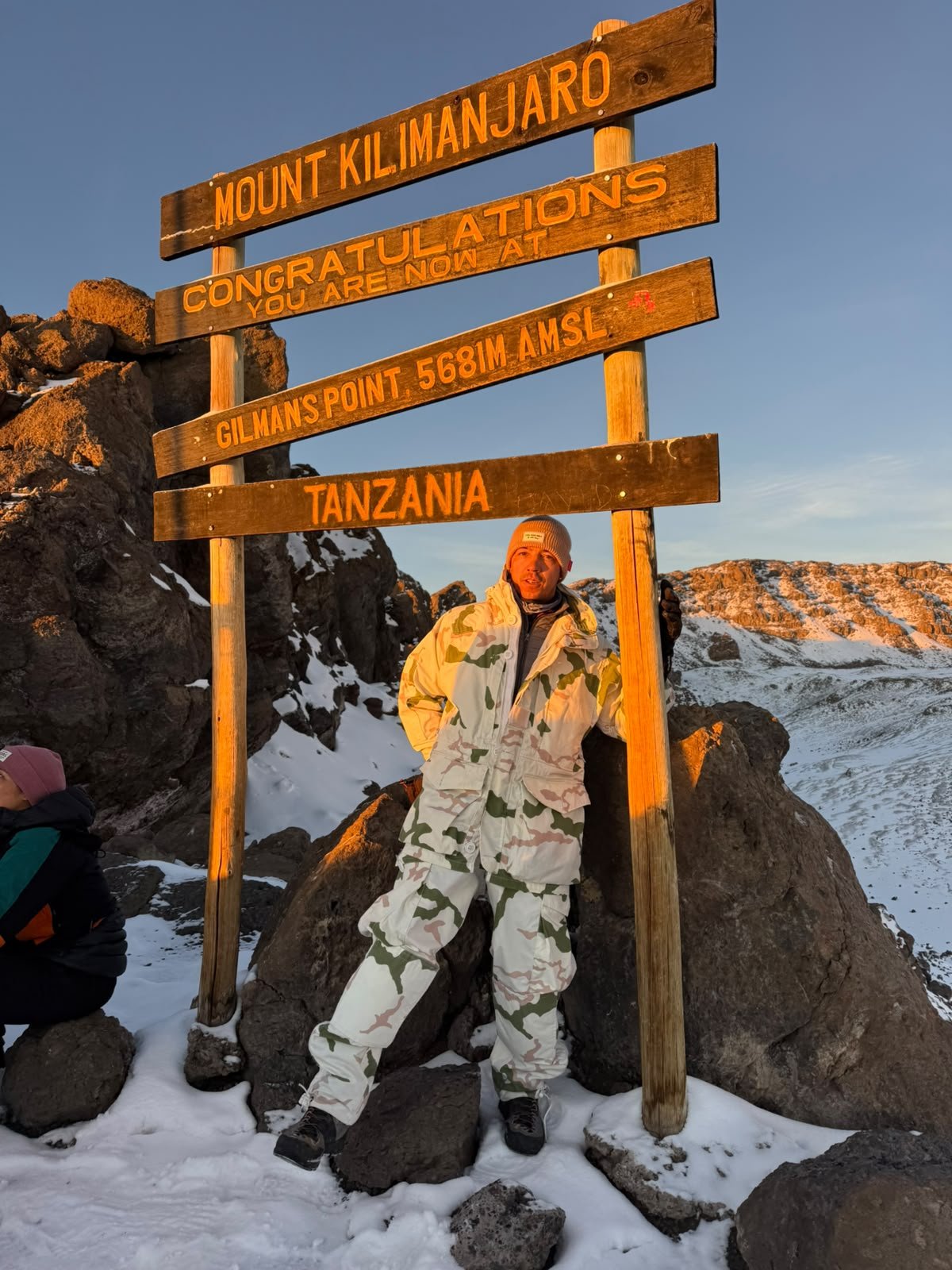
Summit night: the ascent from Kibo Hut follows a steep, rocky, and icy route up to Gillman’s Point and on to Uhuru Peak (5,895 m). Weather and group pacing determine how far individuals go. After a short summit stay for photos and acclimatisation checks, descent follows back to Horombo Hut and then down to Marangu Gate for park exit. On a true 5-day schedule the descent is long; allow for fatigue and slower walking speeds. Expect to arrive at the gate mid- to late-afternoon and transfer back to Moshi or the arranged drop-off. Confirm whether a post-climb night in Moshi is included or recommended — most climbers prefer at least one recovery night before international flights.
Post-climb logistics you must plan for (transfer timing, kit, tipping and medical follow-up)
Finishing the 5 Days Marangu Route Kilimanjaro Group Climb on Day 5 is only the start of a short, important operational window: the descent returns you to Marangu Gate and then to Moshi (or the onward transfer point), but there are several practical steps and timing constraints that every climber in the 8–12 December 2026 group should plan for in advance. This section explains what typically happens immediately after the trek, what you must bring in your day pack versus main luggage, how porter/tipping norms work on Marangu, and the sensible medical checks and flight timing considerations to avoid last-minute problems.
Immediate post-descent flow and expected timings
After you reach Marangu Gate and complete park exit formalities, the group normally gathers for a short debrief and to collect main luggage carried by porters. On a true 5-day Marangu schedule the transfer to Moshi or to the arranged drop-off point tends to be mid- to late-afternoon depending on how long the summit day took and any mandatory rest stops at Horombo Hut. For planning, allow a flexible arrival window in Moshi: guides will give an estimated arrival time on summit day but confirm onward transport pickup times with Climb 4 Africa well before departure.
What to keep in your day pack (and what to leave with porters)
- Carry in your day pack: passport, wallet, phone and charger pack, any prescription medication you took on the mountain, headlamp, an insulating layer, water bottle, snacks, a basic first-aid kit, and any items you’ll want immediately on arrival (sunglasses, lightweight shoes, spare gloves).
- Leave with porters: large duffel bags and non-essential clothing. Confirm the operator’s luggage weight limit per porter and label your bag clearly; only pack items you can afford to be out of reach during the summit push—porters transport your main kit between huts.
Hut dormitories are basic; if you need access to valuables right after descent (camera, spare electronics), keep them with you in the day pack.
Tipping and porter welfare — norms and what to expect
Tipping remains an expected and important part of Kilimanjaro climbs. Operators usually collect tips at the end of the trek for distribution to guides, assistant guides and porters. The exact collection method differs by company: some request individual contributions, others pass a communal tip bag. Before your departure, ask Climb 4 Africa how tips are handled for the 8–12 December group so you know whether to bring cash in local currency (Tanzanian shillings) or USD.
When deciding amounts, consider the group size, the number of support staff and the quality of service—but do not invent figures; confirm recommended guidelines with your operator. If you prefer a direct approach, you can tip certain individuals personally at the gate or back in Moshi; either way, tipping etiquette and transparent handling are important for fair distribution.
Medical follow-up: immediate and within 24–48 hours
Even if you feel fine after descent, organize a short medical check within 24–48 hours if any of the following occurred: severe headache at altitude, persistent nausea, balance problems, breathlessness disproportionate to exertion, or unusual fatigue. Many climbers book a clinic visit in Moshi the evening after the climb or the following morning. Keep your travel insurance details and emergency contacts accessible for any evacuation claims or medical referrals.
If you required oxygen, medication, or evacuation on the mountain, inform the operator about follow-up steps and keep the incident report and any receipts for insurance. Ask Climb 4 Africa whether they provide standard post-climb documentation (a trek completion certificate or incident briefing) that may be useful for insurers.
Flight timing and onward travel — avoid common mistakes
Do not book an international flight on the evening of your descent unless your itinerary explicitly confirms a guaranteed transfer and you are comfortable with risk. Altitude-related delays, weather and logistical slowdowns are common on summit day; a same-day international connection increases the chance of missed flights. Most operators advise allowing at least one full day in Moshi before flying out. If you must connect the same day, coordinate a flexible transfer and confirm how luggage and any last-minute medical needs will be handled.
Finally, reconfirm pickup meeting points and times for your return to Moshi with Climb 4 Africa before the climb starts, and verify post-climb options such as a recovery night at a recommended hotel, laundry services, and if desired, airport transfers arranged as an add-on.
Critical decision points and contingency plans on the 5 Days Marangu Route Kilimanjaro Group Climb
The compressed 5-day Marangu itinerary leaves less margin for unexpected events than longer routes. This section covers the realistic decision points guides and clients must handle during the scheduled 8–12 December 2026 group climb, and the practical contingency options you should know before you sign on. It focuses on medically and operationally verifiable actions (turn-back criteria, evacuation triggers, short-delay options, and communication/transfer steps) rather than operator-specific promises.
Primary decision points every group will face
- Pre-departure fitness and medical screening — if you report recent serious illness, a recent chest infection, or are otherwise borderline fit on the morning of start, expect a group medical check; guides will decide whether you can go onto the mountain or are advised to defer. This is the first practical gate where the trip plan can change.
- Acute symptoms at Horombo Hut (Day 3) — Horombo is the main acclimatisation staging point. If a climber develops moderate to severe altitude symptoms (severe persistent headache, vomiting, ataxia, breathlessness at rest), guides commonly pause summit plans for that person and either arrange descent or a short monitored rest with oxygen/medication if available. The group’s overall summit attempt timing may be adjusted where feasible.
- Summit-night pacing around Kibo Hut (Day 4–5) — guides monitor pacing, oxygenation and cognitive state during the late-night ascent. A slow but steady team is preferred. Individuals showing confusion, marked slowing, or progressive breathlessness are counselled to descend rather than continue to Gillman’s Point or Uhuru Peak.
- Weather-driven decisions — high winds, heavy snowfall on the crater rim, whiteout or severe storms may lead guides to call off a summit attempt that night. Expect a safety-first decision; if the summit is cancelled, the usual alternatives are a controlled descent to Horombo Hut or an overnight wait at Kibo Hut only if conditions allow and the guide team assesses it safe.
What triggers an evacuation and how it’s handled
Evacuation is triggered by clinical or safety criteria: suspected HAPE/HACE (severe breathlessness, cough with pink sputum, loss of coordination, altered consciousness), serious trauma, uncontrolled bleeding, or any condition the guide cannot safely manage on-trail. Typical handling steps are:
- Immediate on-site assessment and stabilization by the lead guide.
- Descent plan — guide-led foot descent is the primary method; where descent by foot is impossible or would take too long, the guide discusses mechanical evacuation options with the operator (stretcher, helicopter if available and authorised, or local rescue service).
- Notification — your designated emergency contact and travel insurer should be informed as soon as the operator has the facts; keep your insurance details and emergency numbers accessible in your day pack.
- Documentation — ask for an incident report and receipts for medical treatment or extra transport; these are often required for insurance claims.
Small, practical contingency options that save a trip
- Short rest-and-monitor at Horombo — for mild AMS signs, an extra few hours of rest, hydration, and medication under guide supervision can be sufficient. Because the 5-day schedule is tight, this option still risks a missed summit for that individual but can allow safe continuation down the profile.
- Local oxygen and meds — many reputable operators carry oxygen and first-line medications (acetazolamide, dexamethasone). These are tools to buy time, not cures. Ensure your group provider confirms availability before booking.
- Flexible transfers — ask Climb 4 Africa before departure whether a late transfer or optional hotel night in Moshi can be arranged if the group descends earlier or later than planned; having a pre-booked but modifiable recovery night in Moshi reduces risk if the summit day schedule slips.
Group dynamics and leadership decisions
On compressed schedules the guide’s authority on safety, pacing and turn-back decisions is final. As a climber, you should understand the guide’s likely criteria (safety first, no single climber should endanger the group) and be prepared to accept a medically or safety-driven decision to descend. Group cohesion is important: help less-experienced teammates, report your own symptoms honestly, and keep communication direct with guides rather than waiting until late in a summit push.
Before you go: checklist of practical confirmations with Climb 4 Africa
- Confirm what emergency kit the guide team will carry (oxygen cylinders, first-aid drugs) and whether there is a formal evacuation agreement with local rescue providers.
- Ask whether the operator holds a spare seat on the return transfer or can flex a hotel night in Moshi should descent timing change.
- Ensure your travel insurance policy explicitly covers high-altitude rescue and repatriation and that you have claim contact numbers in your day pack.
Understanding these decision points before the 8–12 December 2026 Marangu departure will reduce uncertainty on the mountain and help you and the guide team make timely, safety-first choices if problems arise.
Summit-night pacing, timing and energy management (what actually happens between Kibo Hut and Uhuru Peak)
One of the most under-explained but decisive parts of the 5 Days Marangu Route Kilimanjaro Group Climb is how summit-night rhythm, calorie intake and pacing decisions interact to determine who reaches Gillman’s Point and Uhuru Peak and who must stop short. This passage gives concrete, operational guidance you can use on the mountain: realistic time windows, how to pace vertical gain, hydration and fuel strategy, and micro-decision points your guide will apply.
Typical summit-night timeline (range-based, not guaranteed)
- Pre-departure: 19:00–23:30 — early evening meal, final kit check, short rest; many groups eat between 18:00–19:30 and try to sleep before a midnight or later start.
- Departure from Kibo Hut: commonly 23:00–01:30 — later starts push more of the ascent into colder, windier pre-dawn hours; earlier starts mean more walking in darkness but slightly warmer pre-sunrise periods.
- Base of scree/summit slope (scree sector transition): 02:00–04:30 — pace typically slows here; expect more frequent short breaks for breath and layering changes.
- Gillman’s Point (crater rim at ~5,685 m): 04:30–07:30 — depending on start and pace; many groups arrive around sunrise for the best conditions and photos.
- Uhuru Peak (depending on conditions beyond Gillman’s): +30–90 minutes after Gillman’s Point if conditions and team pace allow.
- Descent to Kibo Hut and Horombo Hut: long descent follows; many climbers reach Horombo Hut in the afternoon or evening of Day 5.
Pace strategy: vertical metres per hour and rhythm
On summit night the sensible target is a steady, sustainable vertical gain rather than speed. For the steepest sections expect to gain roughly 150–300 vertical metres per hour for most recreational climbers; on easier walking sections this can rise to 400–600 m/h. Guides will set a rhythm of 45–90 minutes walking followed by a 5–15 minute rest depending on group fitness and symptoms. Keep to the guide’s cadence; surging ahead or stopping too frequently breaks acclimatisation rhythm and increases risk of fatigue.
Hydration and calorie plan that works
- Start the night well hydrated: drink 500–700 ml during the pre-departure window unless advised otherwise for medical reasons.
- Small, frequent intakes beat large swigs. Aim for 100–200 ml of warm or room-temperature fluid every 30–60 minutes. Cold drinks are tolerated poorly in the night; insulated bottles or thermoses help.
- Calorie pacing: eat 200–300 kcal every 45–90 minutes. Easy-to-digest, carbohydrate-dominant foods—energy gels, soft biscuits, nut butter on a soft roll—are preferable to heavy, fatty meals.
- Sodium and electrolytes matter: a low-dose electrolyte tablet or a salted snack midway through the night can maintain cramp resistance and thirst control.
Layering, rest and micro-decisions
Temperature and wind change rapidly across the scree and near the crater rim. Use a simple layering rule: base (wicking) + insulating mid-layer + windproof shell; add a down jacket for photo stops at the rim. At each rest stop do a quick check: toes/fingers cold or numb (protect with extra gloves or add a down layer), breathing unusually difficult for your pace (report immediately), or dizziness/lack of coordination (stop, sit, evaluate). Your guide will monitor oxygen use and may apply short supplemental oxygen bursts if needed—these are temporary aids, not substitutes for descent if symptoms worsen.
Decision thresholds the group will apply
- Consistent severe breathlessness or SpO2 trending very low despite rest → enforced descent for that climber.
- Unable to continue the pace without stopping more than twice per hour for more than 5–10 minutes each → guide may turn the climber back to preserve summit schedule and group safety.
- Loss of coordination, altered consciousness, or vomiting with severe headache → immediate descent and medical evaluation.
Summit night is both a physical and logistical puzzle: controlled pacing, small frequent fuel and fluid intakes, simple layering and strict adherence to the guide’s decision thresholds give you the best chance of reaching Uhuru Peak safely and returning. Discuss your individual pacing and an agreed “turn-back” point with your lead guide before you set off from Kibo Hut so the whole team shares expectations and can act quickly if conditions change.
Related Guides and Packages
Check Availability for 5 Days Marangu Route Kilimanjaro Group Climb – 8–12 December 2026
Ready to compare dates, prices, and the best option for your group? Send the package name and travel month so the team can reply with a clear quote, availability, and what is included.
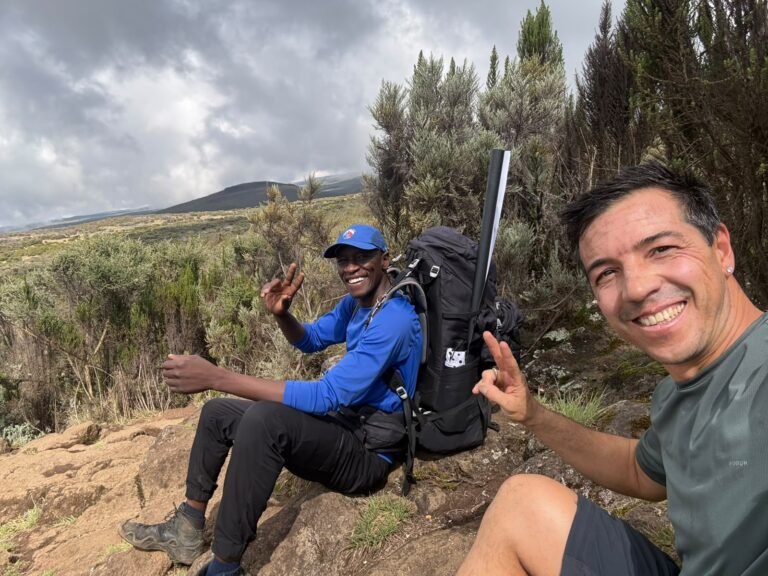
6 Days Marangu Kilimanjaro Group Hiking – 9–14 December 2026
6 Days Marangu Kilimanjaro Group Hiking – 9–14 December 2026.
View package details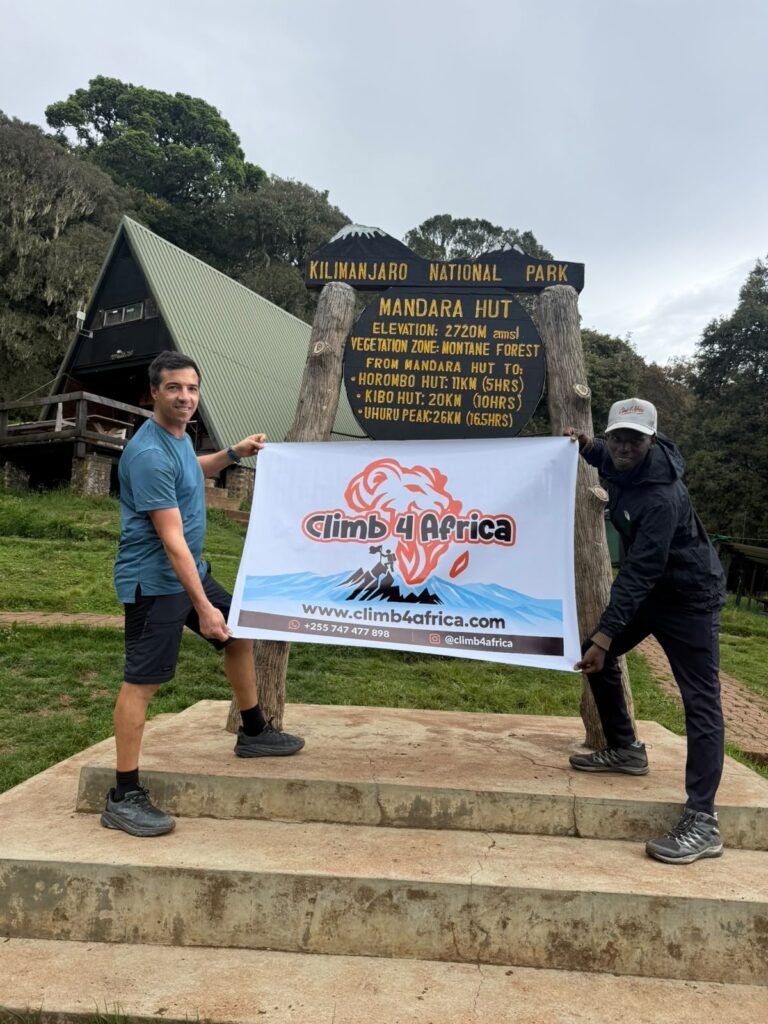
6 Days Marangu Route Kilimanjaro Group Departure – 16–21 December 2026
6 Days Marangu Route Kilimanjaro Group Departure – 16–21 December 2026.
View package details6 Days Marangu Route Kilimanjaro Group Joining – 1–6 December 2026
6 Days Marangu Route Kilimanjaro Group Joining – 1–6 December 2026.
View package details
Climb Kilimanjaro In Budget 12-December-2026, Join Group 2027
climb kilimanjaro in Budget 12-december-2026, Join Group.
View package detailsClimb Kilimanjaro In 12-December-2026, Small Group in 2027
climb kilimanjaro in 12-december-2026, Small Group.
View package details6 Days Marangu Kilimanjaro New Year Climb – 28 December – 2 January 2026
6 Days Marangu Kilimanjaro New Year Climb – 28 December 2026 – 2 January 2027.
View package details6 Days Marangu Kilimanjaro Christmas Holiday Climb – 21–26 December 2026
6 Days Marangu Kilimanjaro Christmas Holiday Climb – 21–26 December 2026.
View package details6 Days Marangu Kilimanjaro Full Moon Climb – 20–25 December 2026
6 Days Marangu Kilimanjaro Full Moon Climb – 20–25 December 2026.
View package details5 Days Marangu Route Kilimanjaro Trek – 2–6 December 2026
5 Days Marangu Route Kilimanjaro Trek – 2–6 December 2026.
View package details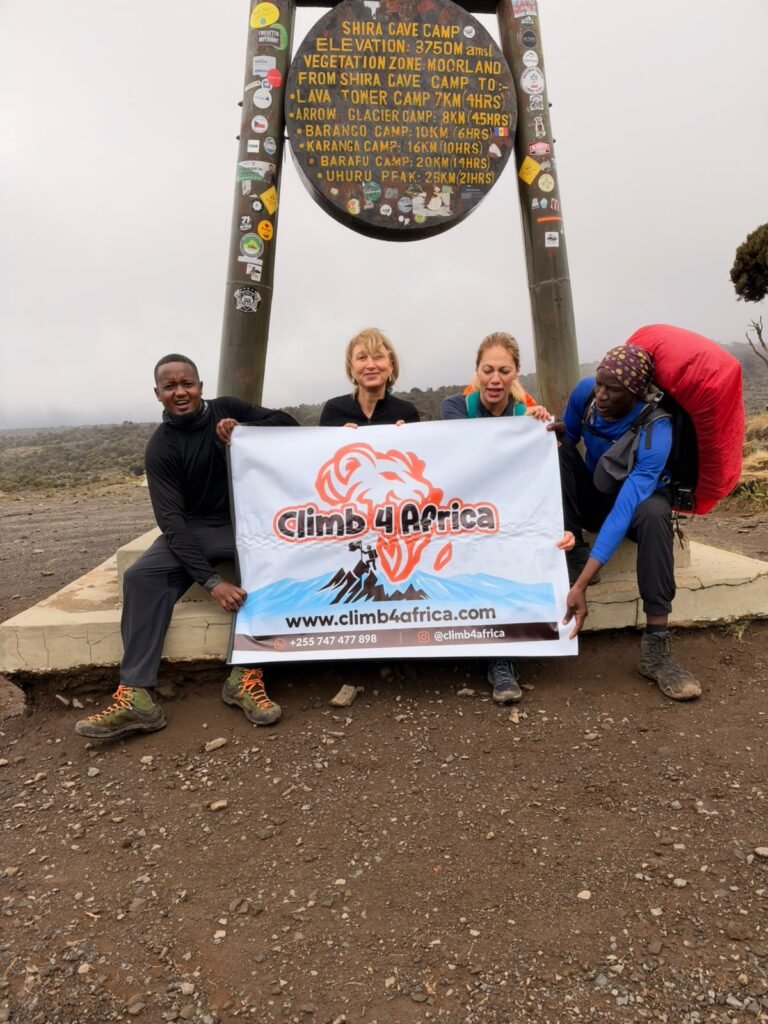
December 4, Kilimanjaro Budget Trekking With Shared Group
December 4, 2026 Kilimanjaro Budget Trekking with Shared Group.
View package details2–8 January , 7 Days Lemosho Route Kilimanjaro Group Climb 2027
2–8 January 2027, 7 Days Lemosho Route Kilimanjaro Group Climb.
View package details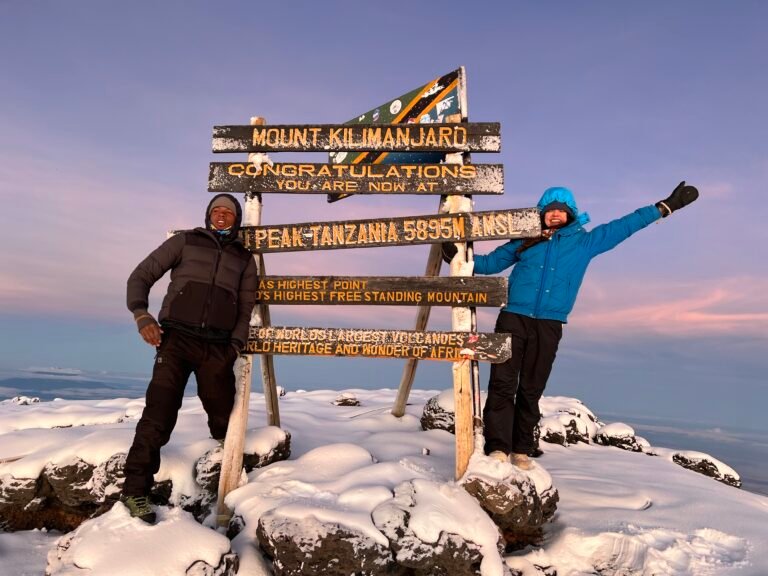
6 Days Rongai Route Kilimanjaro Hiking – 6–11 December 2026
6 Days Rongai Route Kilimanjaro Hiking – 6–11 December 2026.
View package detailsNo related package matches those filters. Clear one or more filters to see the other topic-matched options.



