
This 6 Days Marangu Kilimanjaro Christmas Holiday Climb (21–26 December 2026) follows the classic Marangu Route: Moshi to Marangu Gate, uphill through rainforest and moorland to Horombo and Kibo Hut, a summit push from Kibo to Uhuru Peak, then descent back to Marangu Gate. The package is bookable through Climb 4 Africa; confirm availability, exact hut bookings and included services with the operator before payment.
Below is a practical, route-focused plan designed for climbers choosing a compact six-day Marangu experience over the Christmas week. It explains day-to-day movement, the acclimatisation reasoning behind pauses at Horombo and Kibo, options for luggage and hut versus camping, and the booking checks you must make with Climb 4 Africa before confirming travel.
Why choose the 6-day Marangu Route for Christmas?
The Marangu Route is the only Kilimanjaro route that offers hut accommodation along the whole way, which suits travellers who prefer structured sleeping arrangements over camping. A 6-day timetable compresses ascent and descent more tightly than a 7- or 8-day program, so the principal trade-off is faster summit access at the expense of slightly reduced acclimatisation margin. For a Christmas climb (21–26 December 2026) this itinerary is popular with holiday travellers who need a single-week plan. Before you book, check exact hut availability and medical readiness because the schedule leaves fewer contingency days.
Day 1 — Moshi / Arusha to Marangu Gate then to Mandara Hut
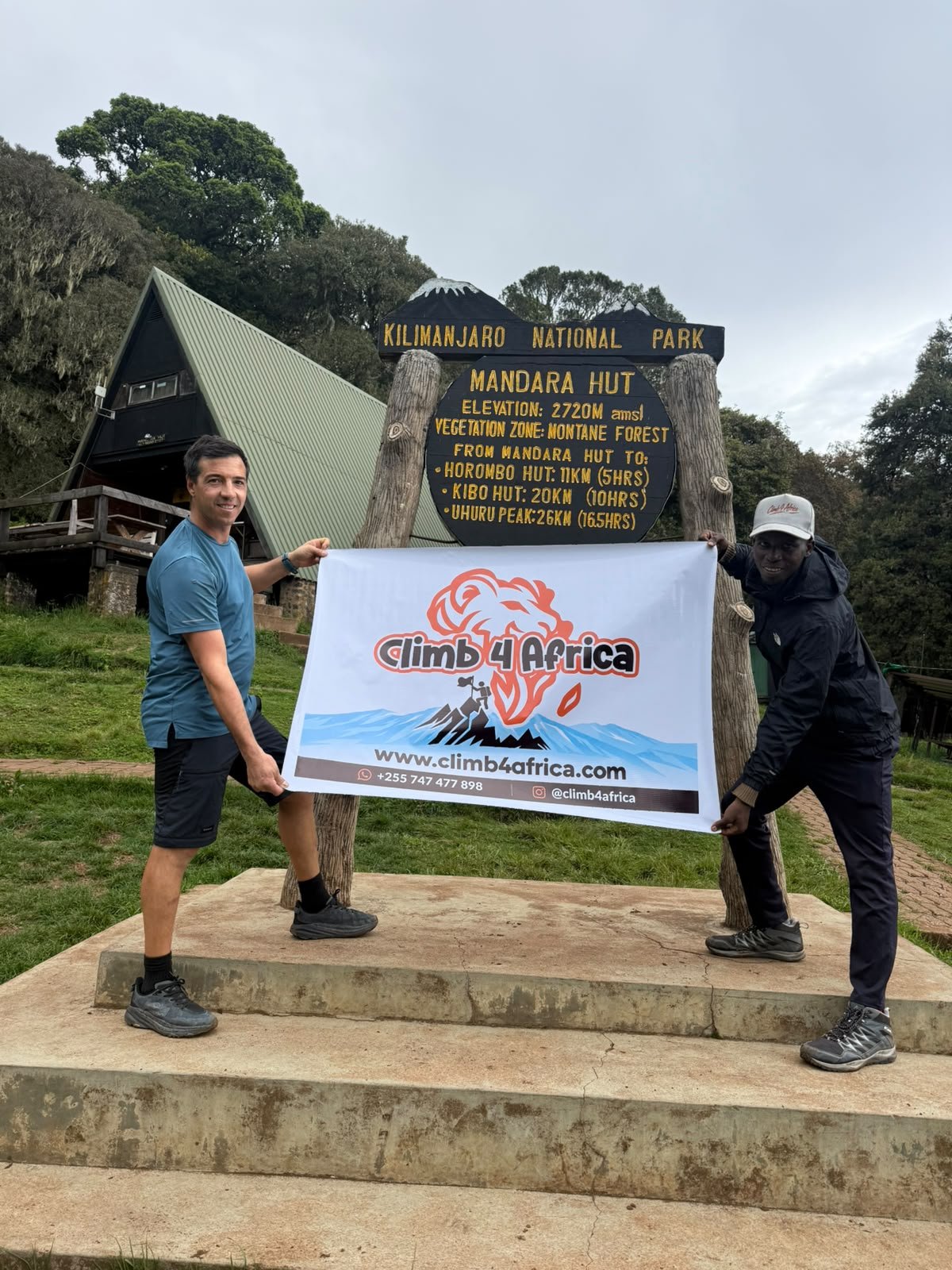
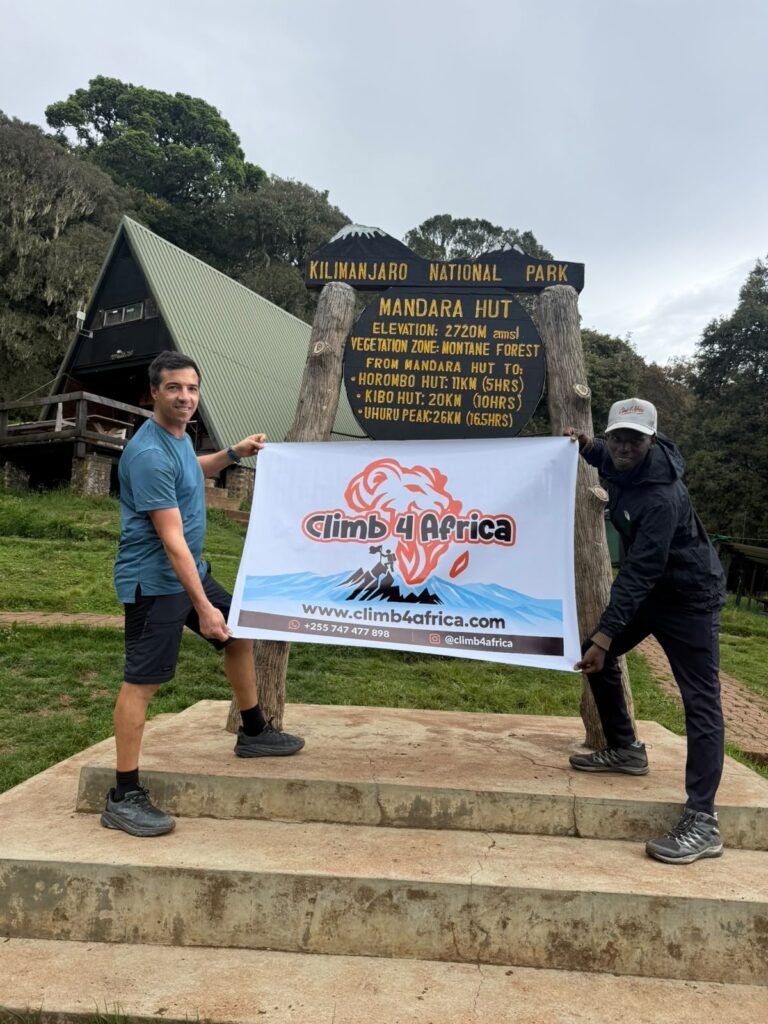
Route flow: transfer from Moshi or Arusha to Marangu Gate (the operator will confirm pick-up locations). You register at the gate, start through montane rainforest, and climb steadily to Mandara Hut for your first overnight. The walk is typically 3–4 hours with lush forest, good opportunities for birdlife viewing and gradual altitude gain to about 2,700 m. This is an easy day intended to begin the acclimatisation process; avoid ascending rapidly before arrival.
Accommodation: sample hut accommodation on-route (bunk huts). Confirm with Climb 4 Africa whether huts on your dates are reserved and whether private rooms are available; if huts are full, the operator will discuss alternatives such as nearby camping or a different early schedule.
Day 2 — Mandara Hut to Horombo Hut
Route flow: leave Mandara and exit the forest into moorland; the track climbs through heather and giant lobelias. Expect 5–6 hours of walking to Horombo Hut (approx. 3,700 m). This day increases elevation progressively, giving another important acclimatisation step. Keep a steady, slow pace and prioritize hydration and warm layers as weather at Horombo can be cold at night.
Acclimatisation logic: spending the night at Horombo helps your body adapt before higher-altitude exposure on Day 4 and the summit attempt on Day 5. The hut provides mattress space; verify bedding policy and whether you need a sleeping bag rental.
Day 3 — Horombo Hut to Kibo Hut (via Saddle)
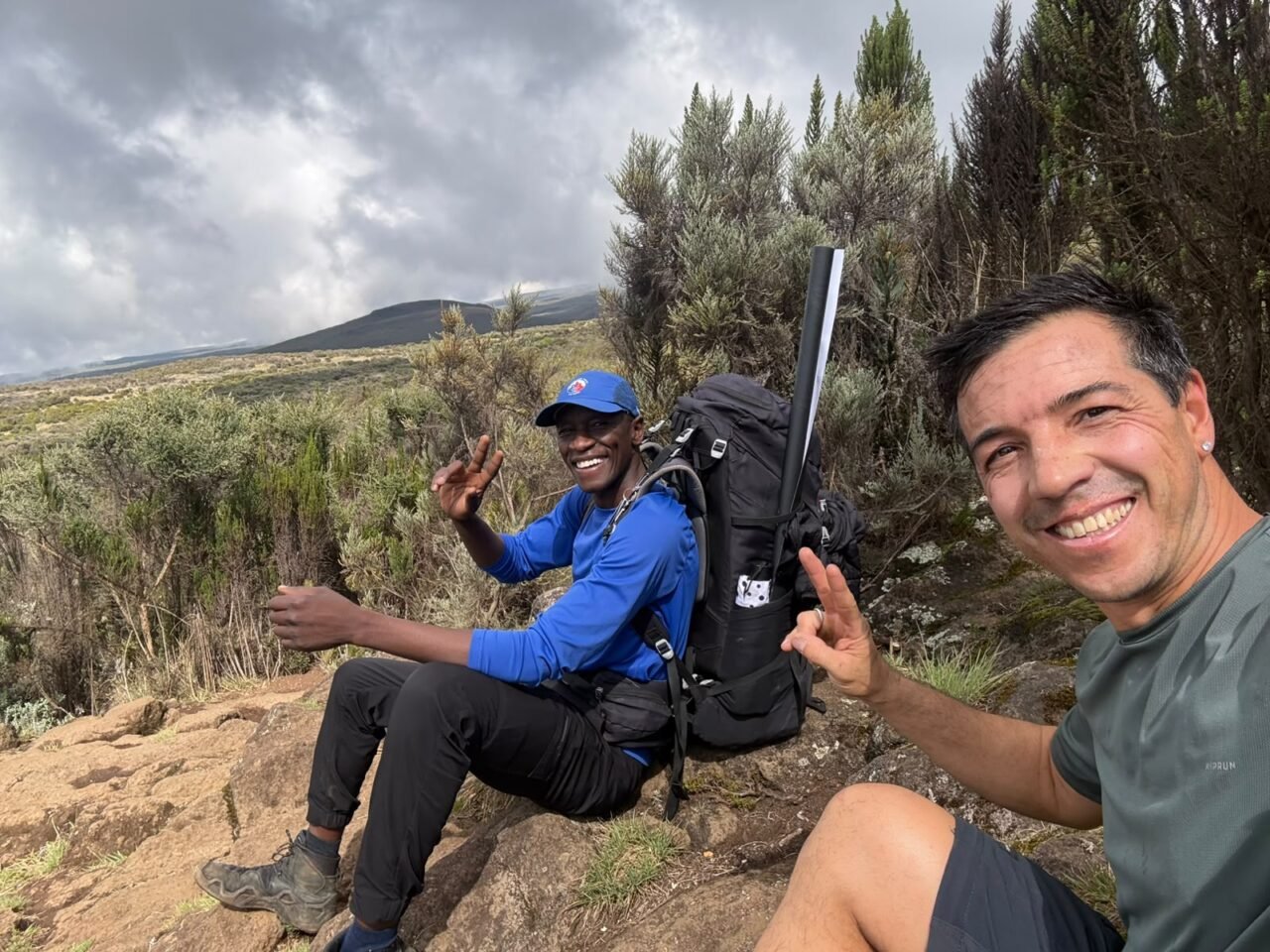
Route flow: a long, steady ascent across open alpine desert toward Kibo Hut (approx. 4,700 m), often described as the ‘Saddle’ between Mawenzi and Kibo. Walking time is normally 6–8 hours depending on pace and weather. The terrain is dryer and exposure to wind increases—layers and sun protection are essential.
Logistics and strategy: this day positions you for the summit bid. It’s not a summit day so use it to conserve energy and eat adequately. Arrival at Kibo usually gives a few hours of rest before a very early-night to prepare for a midnight departure.
Day 4 — Kibo Hut to Summit (Uhuru Peak) and down to Horombo Hut
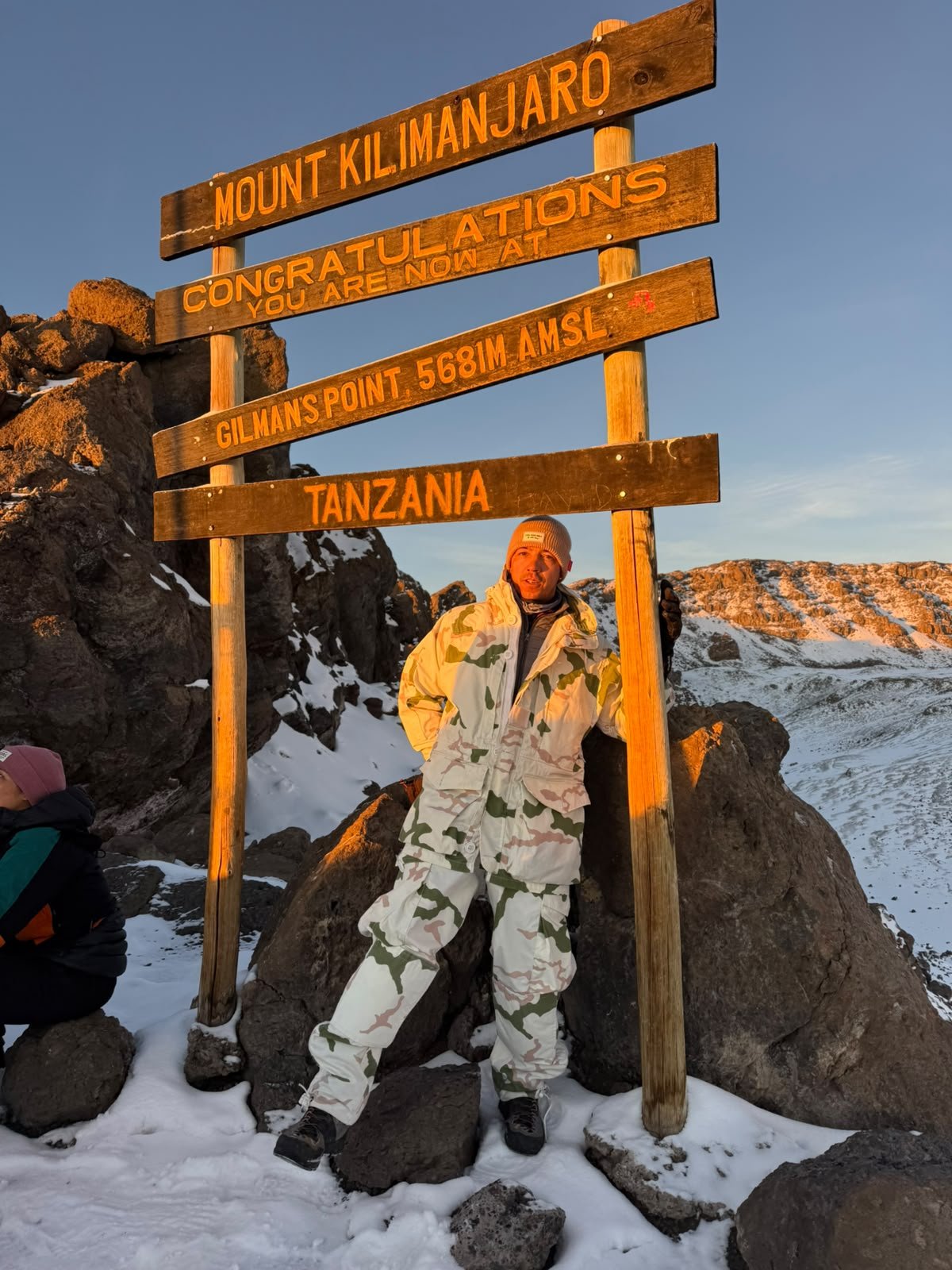
Route flow: the classic summit push begins around midnight from Kibo Hut for a gradual but very demanding ascent to Stella Point on the crater rim, then the final ridge to Uhuru Peak (5,895 m). Expect 6–8 hours up and 3–5 hours down to Kibo or, for this itinerary, continuing descent back to Horombo Hut for the night. The exact timing depends on group speed and conditions.
Health and safety: the summit day is the hardest; altitude sickness can occur even in fit climbers. Your guide will monitor symptoms and decide on the best course of action. Descent after summiting is long—arranging rest and warm clothing at Horombo is important.
Day 5 — Horombo Hut to Marangu Gate and transfer to Moshi
Route flow: descent from Horombo Hut down through moorland and forest to Marangu Gate. This day is mostly downhill and typically takes 4–6 hours. At the gate you will complete formalities with park authorities and receive certificates where issued. Transfers back to Moshi or Arusha follow; check with Climb 4 Africa for the planned drop-off point and timing.
Post-climb: allow time in Moshi to rest, rehydrate and collect your travel documents and personal kit. Many clients prefer a night in town after the climb before international flights.
Day 6 — Buffer / travel day (21–26 December 2026 logistics)
Why this day matters: on a Christmas-week schedule, Day 6 functions as a contingency if summit attempts are delayed by weather or health holds, or as a travel buffer for departures. For the specific 21–26 December 2026 package the sequence above uses Day 6 as your final travel or rest day—confirm whether your booking includes an additional night in Moshi or airport transfer. If the operator lists fixed pickup/drop-off times for the 26th, verify they fit your international flight schedule.
Inclusions, exclusions and essential confirmations
- Common inclusions to verify: park fees
Altitude, acclimatisation and summit‑day health protocols for the 6 Days Marangu Kilimanjaro Christmas Holiday Climb
The single most important unanswered practical question for a compact 6-day Marangu climb is how altitude will be managed day by day and what to expect in terms of symptoms, decision points and treatments. The Marangu schedule gains altitude relatively quickly compared with longer itineraries, so clear, conservative rules for pacing, hydration, sleep and medical response are essential. Below is a route-focused, practical guide that ties the physiological realities of altitude to the specific stages of the 21–26 December 2026 itinerary.
How the route’s elevation profile shapes acclimatisation
Tie each day’s expected exposures to simple acclimatisation logic rather than generic advice. Typical overnight elevations on the Marangu timetable are roughly Mandara Hut ~2,700 m (Day 1), Horombo Hut ~3,700 m (Days 2 and 4 night after descent), Kibo Hut ~4,700 m (Day 3). The summit reaches 5,895 m. Those climbing elevations mean:
- Day 1 (to Mandara): gentle gain — useful to establish rhythm, hydrate and sleep early.
- Day 2 (to Horombo): significant single‑day gain — this is the primary acclimatisation step; avoid pushing pace to keep resting heart rate low.
- Day 3 (to Kibo via the Saddle): highest pre‑summit sleeping elevation — conserve energy here as it’s the staging night for the summit push.
- Day 4 (summit and down to Horombo): large, rapid change in altitude — summit morning is physiologically demanding; descending to Horombo helps recovery because lower overnight altitude reduces ongoing hypoxic stress.
Recognising early symptoms and common decision points
Know the red‑flag symptoms that require immediate guide intervention: worsening persistent headache not relieved by simple analgesics, nausea and repeated vomiting, progressive loss of coordination (ataxia), severe breathlessness at rest, altered mental status or drowsiness. On the Marangu schedule a guide’s two immediate actions are to slow the group and, if symptoms persist or worsen, enforce descent. Descent is the only definitive field treatment for progressive altitude illness.
Minor symptoms such as mild headache, poor appetite or sleep disturbance are common and often respond to conservative measures: stop, rest for 20–30 minutes, rehydrate, eat a small carbohydrate snack and reassess. Guides will monitor oxygen saturation and pulse where pulse‑oximeters are in use, but clinical signs and subjective symptoms remain the primary determinants of action.
Medication, oxygen and guide equipment — what to confirm with Climb 4 Africa
Certain medical aids are commonly used on Kilimanjaro but are operator‑dependent. Before booking, confirm with Climb 4 Africa whether the climbing party and guides will carry: acetazolamide (Diamox) as a preventive or therapeutic option (used under medical advice), dexamethasone as an emergency medication for severe high‑altitude cerebral oedema (HACE), portable oxygen cylinders, a pulse oximeter and an emergency descent plan that can include helicopter evacuation if necessary. Do not rely on medication being available unless it is explicitly confirmed in writing.
Practical daily health protocols to follow on this 6‑day plan
- Hydrate continuously: aim for steady fluid intake throughout the day rather than large volumes at once. Include electrolyte tablets if you tolerate them.
- Eat regular, carbohydrate‑rich small meals to sustain energy on long ascent days (Days 2 and 3 especially).
- Keep to a slow, steady pace—use the “pole‑pole” (slowly, slowly) principle recommended on Kilimanjaro; avoid sprint efforts that raise breathing rate and fatigue quickly.
- Sleep is key: prioritize rest on every night, and avoid alcohol and sedating medications that can depress respiration unless authorised by your physician and your guide.
- Monitor urine output and colour—reduced volume and very dark urine indicate dehydration that needs correcting.
Pre‑trip and summit‑day considerations
See a clinician before travel to discuss baseline fitness and specific altitude medication (acetazolamide) if you have medical risk factors. On summit night, expect a very early departure (around midnight) and prolonged exposure to cold and exertion; make sure breathable layering, an insulating parka and spare gloves are immediately available in your summit pack. Your guide will reassess each climber before departure from Kibo Hut and may delay or prevent a summit attempt for anyone whose clinical picture suggests unacceptable risk.
Finally, clarify with Climb 4 Africa their exact emergency medical procedures, how many guides and porters accompany each group, and whether communication equipment and evacuation arrangements (ground or helicopter) are contractually confirmed for the 21–26 December 2026 departures. Having these assurances in writing before final payment is the clearest safeguard for a safe Christmas‑week climb.
Why the 6-Day Marangu Route Demands Strategic Acclimatisation on Christmas Week
The 6-Day Marangu Kilimanjaro Christmas Holiday Climb (21–26 December 2026) operates on a compressed timeline that requires precise biological and logistical management of altitude exposure. Unlike longer routes, which allow for gradual ascent and multiple nights at key elevations, this itinerary pushes climbers through critical altitude zones—especially the transition from 3,700 m (Horombo Hut) to 4,700 m (Kibo Hut)—in just 24 hours. This rapid gain places significant stress on the body’s ability to adapt, making strategic acclimatisation not optional but essential. The route’s success hinges on how well climbers manage physiological responses during Days 2, 3, and 4, particularly through controlled pacing, hydration, and sleep.
Day-by-Day Acclimatisation Strategy: Beyond Simply “Climbing Higher”
On Day 2, the ascent from Mandara Hut (2,700 m) to Horombo Hut (3,700 m) is designed to initiate acclimatisation without overwhelming the body. The 5–6 hour walk includes a steady climb through moorland with scattered heather and giant lobelias, allowing time for the body to begin adjusting to lower oxygen levels. The elevation gain is gradual—approximately 1,000 m over a full day—making it one of the most sustainable transitions on the route. However, the real test begins the next morning.
Day 3, from Horombo Hut to Kibo Hut (via the Saddle), is the most demanding in terms of altitude gain. The climb spans roughly 1,000 m over 6–8 hours, with the final 800 meters rising from 4,000 m to 4,700 m. This segment crosses the “alpine desert” zone, where air pressure drops sharply and exposure to wind and cold increases. The body must now adapt to near-peak summit conditions, yet climbers are still required to ascend further before descending. This is where the 6-day schedule’s risk profile emerges: there is no intermediate rest day at high altitude, so the body must acclimatise during active ascent rather than passive recovery.
Crucially, the decision to rest at Horombo Hut for two nights (on Days 2 and 4) is not arbitrary. It allows for a “sleep high, train low” acclimatisation strategy: climbers sleep at 3,700 m on Day 2, then descend to 3,700 m again on Day 5 after summiting, but the key is the repeat exposure to moderate altitude during the descent and re-acclimatisation phase. This helps the body maintain haemoglobin levels and red blood cell production, which are vital for oxygen transport at extreme elevations.
Why the Summit Push Is the Ultimate Acclimatisation Test
Day 4—Kibo Hut to Uhuru Peak and back to Horombo Hut—is not just a physical challenge; it is a physiological checkpoint. The ascent from Kibo Hut (4,700 m) to Stella Point (5,750 m) occurs at night, when the body’s metabolic rate drops and oxygen demand increases due to cold and exertion. Climbers are often fatigued from minimal sleep and dehydration, which compounds the effects of hypoxia. The descent to Horombo Hut (3,700 m) is not recovery—it is a second exposure to high altitude, allowing the body to re-adapt to the reduced oxygen environment before the final descent.
For the 6-day Marangu climb, this double exposure—ascending to 5,895 m and descending back to 3,700 m—creates a unique acclimatisation window. Research shows that repeated exposure to high altitude, even with brief descents, improves the body’s ability to tolerate hypoxia. This is why the 6-day Marangu route, despite its tight schedule, still achieves a higher summit success rate than many shorter alternatives—provided climbers follow strict health protocols and avoid pushing beyond their limits.
Practical Acclimatisation Tools: What You Can Control
While the route’s elevation profile is fixed, climbers can influence their acclimatisation success through personal preparation. The most effective tools are:
- Pre-trip acclimatisation: If possible, spend 2–3 days at 2,500–3,000 m before departure. This primes the body for higher elevation.
- Hydration and nutrition: Drink 3–4 liters of water daily, with electrolytes, and eat small, frequent meals rich in complex carbohydrates. This supports red blood cell production and reduces fatigue.
- Slow, steady pacing: Use the “pole-pole” principle—walking slowly and deliberately. This prevents breathlessness and reduces the risk of acute mountain sickness (AMS).
- Sleep monitoring: Pay attention to sleep quality. Restless or disrupted sleep at altitude is a red flag for poor acclimatisation.
Guides will monitor climbers daily using pulse oximetry and symptom checklists. If a climber shows signs of AMS (headache, nausea, dizziness), they may be advised to descend or pause at Horombo Hut. On this 6-day Christmas climb, such decisions are made with greater urgency due to the tight schedule and limited buffer.
Guide decision framework: go/no‑go criteria and contingency options for Day 4 on the 6‑Day Marangu Christmas climb
One of the single most practical unanswered questions for travellers booking the 6 Days Marangu Kilimanjaro Christmas Holiday Climb (21–26 December 2026) is: how do guides make the final call on whether the summit push proceeds from Kibo Hut on Day 4, and what contingency choices exist given the compact schedule? The remainder of this article section describes a clear, realistic decision matrix guides will use, what options are feasible for the group, and what you — as a paying climber — should expect and prepare for before departure.
Primary go/no‑go criteria used by professional guides
- Objective physiological markers: pulse oximetry readings, mental status and functional capacity. A sustained oxygen saturation (SpO2) below an operator‑specific threshold (commonly around 75–78% at rest for unsedated, ambulatory climbers at Kibo Hut) combined with impaired coordination or confusion will generally trigger a no‑go or mandatory descent. Guides also monitor respirations, persistent severe headache not responding to treatment, repeated vomiting and inability to walk unaided.
- Symptom trajectory over the evening: because climbers rest during the afternoon and sleep badly before a midnight departure, guides check whether symptoms have improved, remained stable or clearly worsened during the pre‑summit period. Worsening symptoms are a strong reason to cancel.
- Group fitness and pacing projections: the guide assesses whether the group can realistically complete the summit and descend to Horombo Hut before daylight and before accumulative fatigue causes risk. Slow but steady groups may still be allowed if every member meets health checks and pace forecasts remain positive. If the forecasted summit time would extend exposure to daylight collapse, a no‑go is more likely.
- Weather and trail condition forecast: severe wind, poor visibility, or snowfall that makes the crater rim or final ridge unsafe will lead to cancellation. Guides weigh the current micro‑forecast for summit hours heavily because conditions can change rapidly at high altitude.
- Availability of emergency resources: if the guide team lacks immediate access to descent‑grade oxygen, functioning stretcher plans, or reliable radio/phone contact with park rescue, they will be more conservative in allowing a summit attempt.
Contingency options when the summit is postponed or cancelled
If guides decide not to attempt the summit from Kibo Hut, common and practical contingency pathways include:
- Delay and reassess before midnight: in marginal cases guides may allow an additional rest and repeat checks later in the evening; this is only feasible when each climber’s condition is stable and weather forecasts show improvement. On a 6‑day schedule this increases pressure on Day 5/6 logistics, so it is used sparingly.
- Abort and descend to Horombo Hut: the most common response to significant AMS or safety risk is a controlled descent to Horombo Hut (3,700 m) to stabilise the climber and reassess. This preserves safety and leaves the Day 6 buffer available for travel contingencies.
- Split‑party summit strategy: under strict conditions a guide may allow physiologically fit climbers to attempt the summit while those with symptoms descend. This involves reallocating guide resources and must be agreed by the operator; ask Climb 4 Africa beforehand whether they permit split parties and how they staff them.
- Use of the Day 6 buffer: if weather forced a group to descend, Day 6 can sometimes be used to reschedule or provide surplus time for medical observation. However, operator logistics (flight departures, hut bookings) may limit this; confirm with Climb 4 Africa during booking.
What happens operationally if a summit is cancelled?
Administratively, cancellation triggers immediate practical steps: guides organise a descent profile, confirm hut berths and porters for the earlier move, notify park authorities if evacuation is required, and communicate revised transfer times with the operator. Climbers should expect the descent day to be physically demanding and emotionally dissatisfying — guides will prioritise rest, fluids and monitoring on arrival to Horombo Hut and confirm next‑day transfers. Because the 6‑day timetable has limited slack, cancelled summits commonly result in lost summit opportunities rather than rescheduling unless the operator has clearly stated alternative arrangements at booking.
How to prepare as a climber
- Know the go/no‑go criteria discussed here and accept that safety, not summit attainment, determines the decision.
- Follow pre‑summit hydration, rest and medication instructions from your guide; cooperate fully with checks.
- Ask Climb 4 Africa, before you book, whether they allow split parties and how they use Day 6 when weather or health disrupts the summit night.
- Plan mental contingencies: a cancelled summit is a legitimate outcome of responsible guiding, especially on a compact 6‑day itinerary.
Clear, shared expectations about these decision triggers reduce last‑minute conflict and improve safety outcomes for everyone on the 6 Days Marangu Kilimanjaro Christmas Holiday Climb (21–26 December 2026).
Related Guides and Packages
Check Availability for 6 Days Marangu Kilimanjaro Christmas Holiday Climb – 21–26 December 2026
Ready to compare dates, prices, and the best option for your group? Send the package name and travel month so the team can reply with a clear quote, availability, and what is included.
5 Days Marangu Kilimanjaro Christmas Trek – 22–26 December 2026
5 Days Marangu Kilimanjaro Christmas Trek – 22–26 December 2026.
View package details6 Days Marangu Kilimanjaro New Year Climb – 28 December – 2 January 2026
6 Days Marangu Kilimanjaro New Year Climb – 28 December 2026 – 2 January 2027.
View package details6 Days Marangu Kilimanjaro Full Moon Climb – 20–25 December 2026
6 Days Marangu Kilimanjaro Full Moon Climb – 20–25 December 2026.
View package details5 Days Marangu Route Kilimanjaro Group Climb – 8–12 December 2026
5 Days Marangu Route Kilimanjaro Group Climb – 8–12 December 2026.
View package details5 Days Marangu Kilimanjaro New Year Trek – 29 December – 2 January 2026
5 Days Marangu Kilimanjaro New Year Trek – 29 December 2026 – 2 January 2027.
View package details5 Days Marangu Kilimanjaro Full Moon Trek – 21–25 December 2026
5 Days Marangu Kilimanjaro Full Moon Trek – 21–25 December 2026.
View package details5 Days Marangu Kilimanjaro December Trek – 19–23 2026
5 Days Marangu Kilimanjaro December Trek – 19–23 December 2026.
View package details
6 Days Marangu Kilimanjaro Group Hiking – 9–14 December 2026
6 Days Marangu Kilimanjaro Group Hiking – 9–14 December 2026.
View package details6 Days Marangu Kilimanjaro Hut Trekking – 6–11 December 2026
6 Days Marangu Kilimanjaro Hut Trekking – 6–11 December 2026.
View package details5 Days Marangu Route Kilimanjaro Trek – 2–6 December 2026
5 Days Marangu Route Kilimanjaro Trek – 2–6 December 2026.
View package details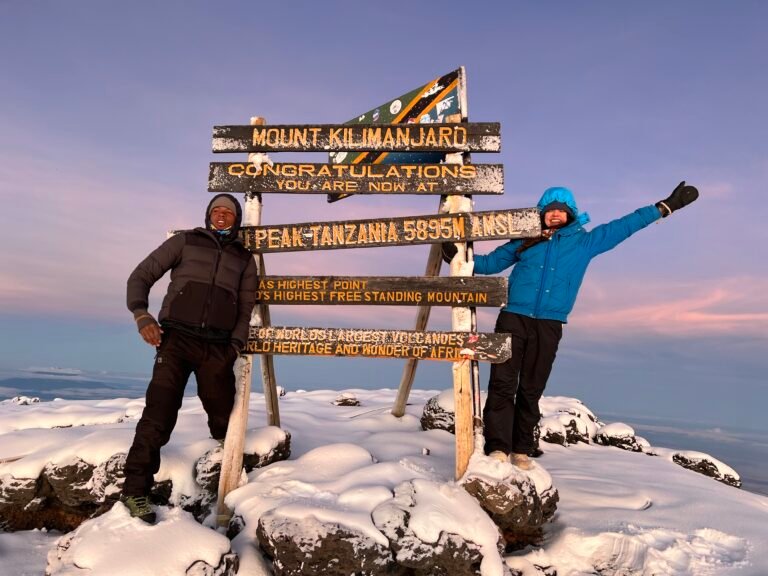
6 Days Rongai Route Kilimanjaro Hiking – 6–11 December 2026
6 Days Rongai Route Kilimanjaro Hiking – 6–11 December 2026.
View package details5 Days Marangu Kilimanjaro Climbing Package – 12–16 December 2026
5 Days Marangu Kilimanjaro Climbing Package – 12–16 December 2026.
View package detailsNo related package matches those filters. Clear one or more filters to see the other topic-matched options.



