
The 5 Days Marangu Kilimanjaro Full Moon Trek – 21–25 December 2026 is a guided hut-based ascent on the Marangu Route timed to summit under the December full moon on or near 24 December. The plan runs 5 days with hut nights (Mandara, Horombo, Kibo) and a summit push from Kibo Hut to Uhuru Peak, returning to Marangu Gate. Your package with Climb 4 Africa includes guides, porters, hut accommodation (subject to confirmation), park fees and basic meals; exact availability and final confirmations must be verified at booking.
What this specific 5-day Marangu full moon trek actually is
The focus here is the operational sequence: a five-day Marangu Route itinerary scheduled 21–25 December 2026 that times the summit night to coincide with the full moon window. Marangu is the classic ‘hut route’ on Kilimanjaro — hikers sleep in huts rather than tents — which simplifies luggage management and speeds camp setup. This package is presented as a bookable group or private climb offered by Climb 4 Africa; final hut reservations, group size and confirmed departure details must be checked when you enquire.
Who should consider the 5 Days Marangu Kilimanjaro Full Moon Trek
This 5-day plan suits fit hikers who want a shorter schedule, prefer hut accommodation, and value the novelty of a full-moon summit. Note the trade-offs: 5 days gives less time for gradual acclimatisation compared with 6–7 day variations, so physical conditioning and strict pace control on ascent/descent are essential. If you prefer extra acclimatisation, compare the 6-day full moon option (link below) before booking.
Relevant internal link: For the slightly longer option, see our 6 Days Marangu Kilimanjaro Full Moon Climb – 20–25 December 2026: Climb 4 Africa — 6 days full moon.
Essential logistics before you book
- Confirm availability: Hut berths and park permits for 21–25 December 2026 must be reserved in advance; December is high season.
- Medical clearance: Standard travel medical advice applies; if you have pre-existing conditions, get a medical check and inform the operator.
- Transfers: Transfer from Kilimanjaro Airport or Arusha/ Moshi to Marangu gate is arranged separately; inquire about pick-up times and transfer costs.
- Packing and kit: Hut sleeping bags are recommended though some operators rent them; check what Climb 4 Africa provides versus what you must bring.
Day 1 — Marangu Gate to Mandara Hut
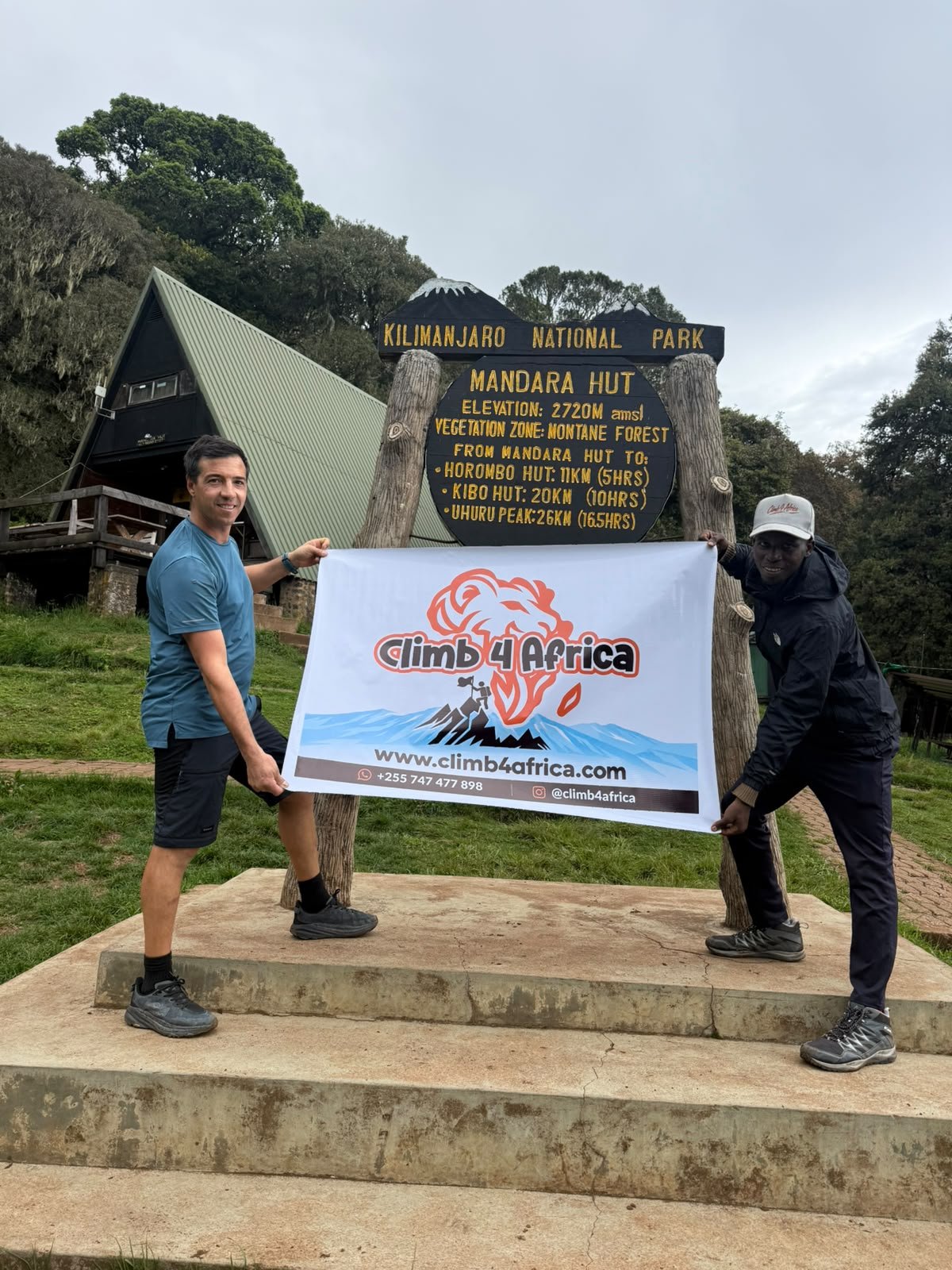
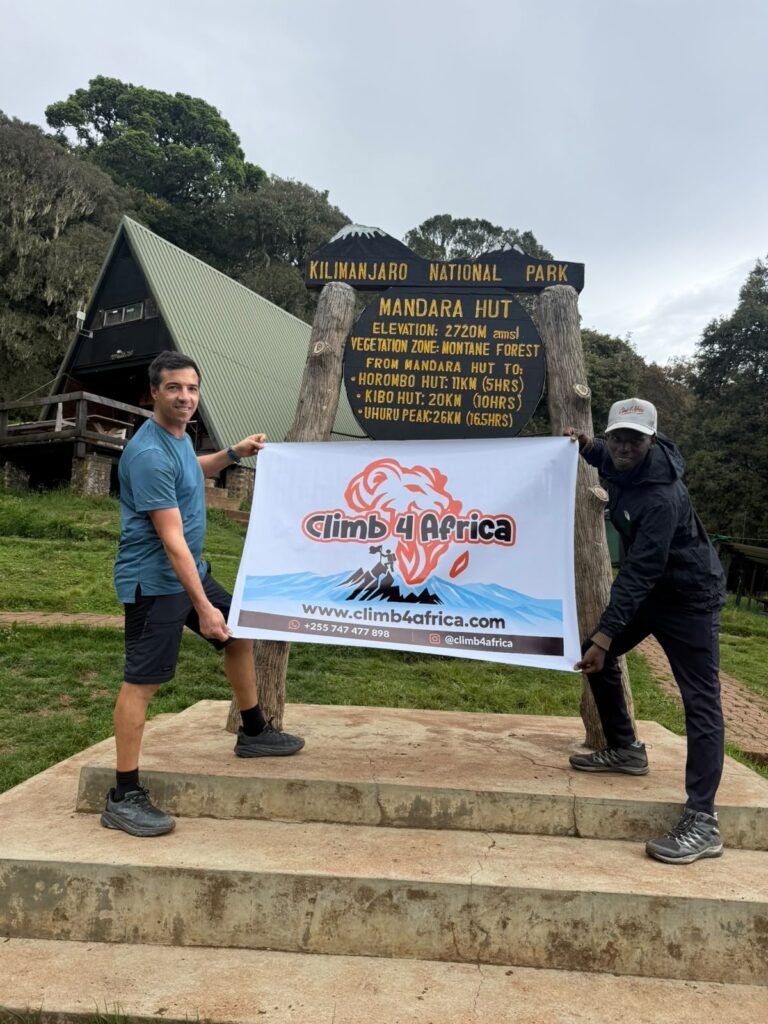
Route and flow: Arrival at Marangu Gate (altitude ~1,860m) and registration with park authorities; then begin the hike through montane forest to Mandara Hut (approx. 2,700–2,750m). This stage is mostly a steady climb through lush forest with occasional clearings. Walking time is typically 3–4 hours depending on pace and group size.
Purpose: a gentle first day to shift travel fatigue into walking rhythm while gaining initial elevation. Expect hut accommodation in a dormitory-style room (separate male/female huts where available) and three meals provided by the trekking crew. Hydration and a calm pace set the tone for acclimatisation.
Day 2 — Mandara Hut to Horombo Hut
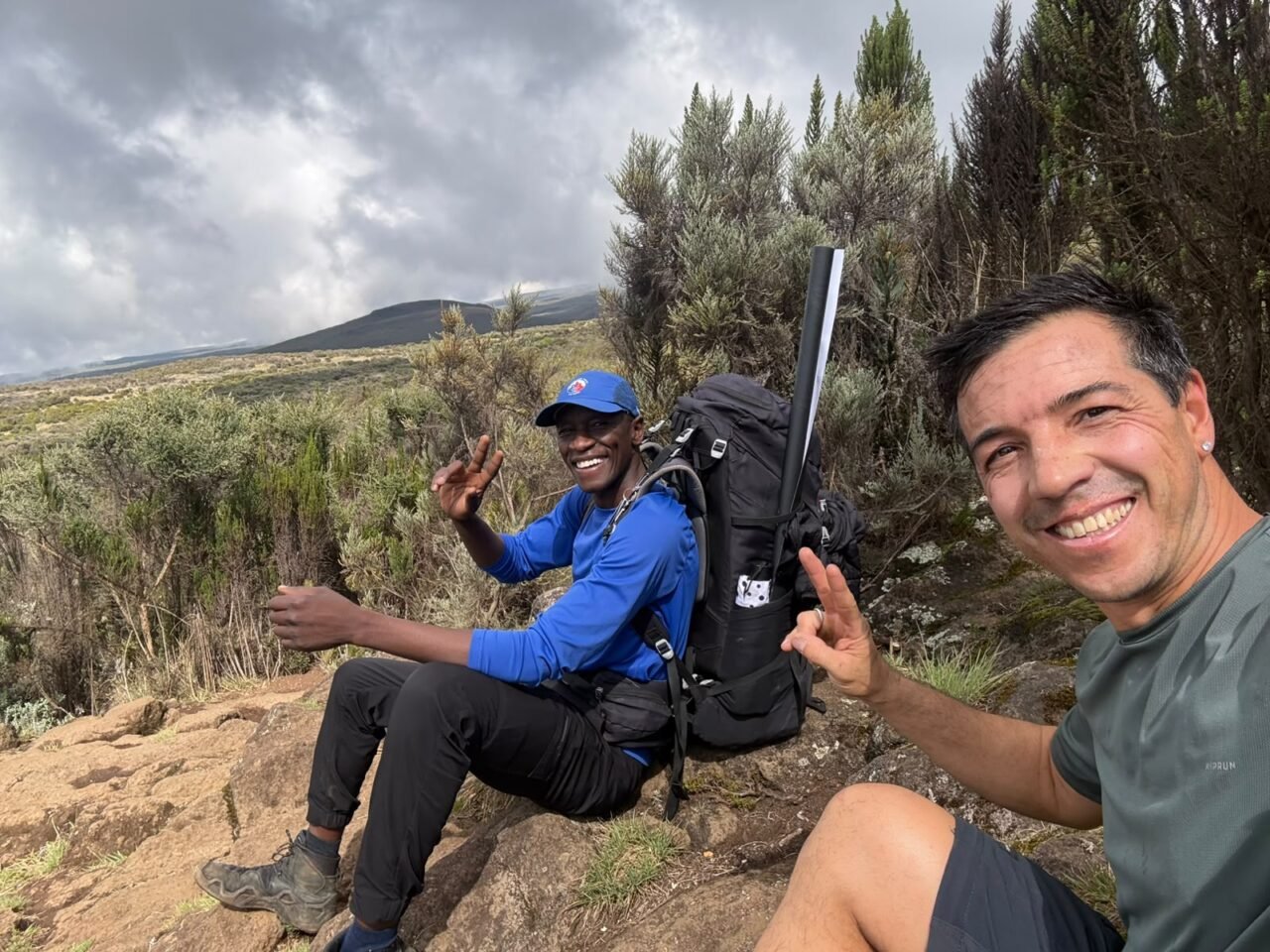
Route and flow: From Mandara Hut the trail leaves the dense forest into heath and moorland as you climb toward Horombo Hut (altitude ~3,720m). The trek takes approximately 5–6 hours with gradual ascent; you may pass alpine vegetation and enjoy wider views of the mountain.
Purpose: this is the key acclimatisation day, with a larger altitude gain than Day 1 but still moderate enough to adapt. Horombo Hut is the main staging hut before the summit push; facilities are basic but sufficient. Crew will run a pulse-check routine and advise on pace and medication if needed.
Day 3 — Horombo Hut to Kibo Hut
Route and flow: Depart Horombo Hut after breakfast and cross the saddle toward Kibo Hut (altitude ~4,700m). The terrain becomes rockier and drier; walking time is usually 5–7 hours depending on conditions. Kibo Hut is sparse: a brief rest and early dinner precede the summit attempt.
Purpose: this day positions the team close to the summit while conserving energy for the night ascent. The group will follow a conservative approach to acclimatisation—slow pace, high fluid intake, and rest. Because this itinerary is condensed, it’s critical to stick to the guide’s pace and accept slower walking if advised.
Day 4 — Kibo Hut to Uhuru Peak (summit) to Horombo Hut
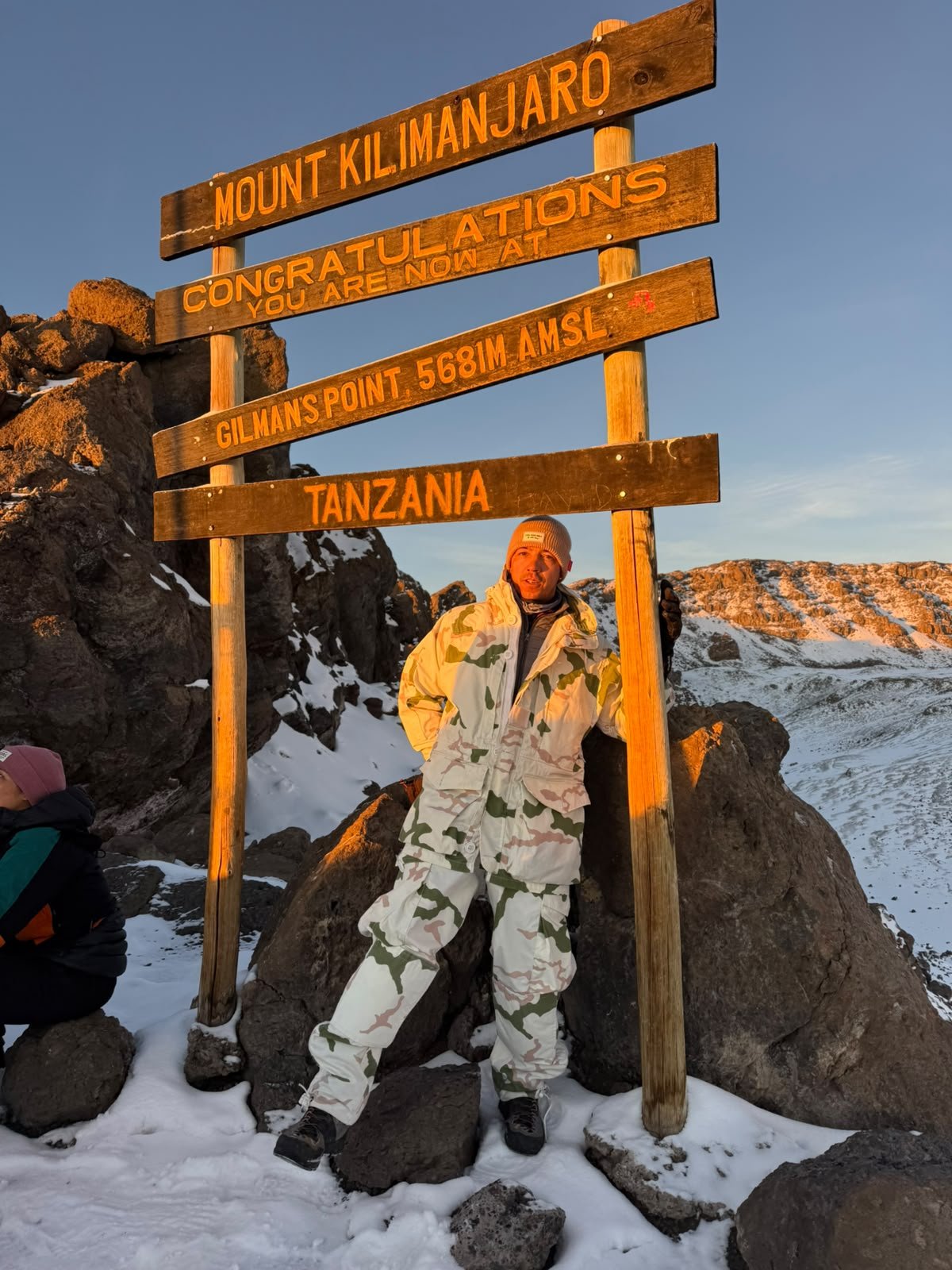
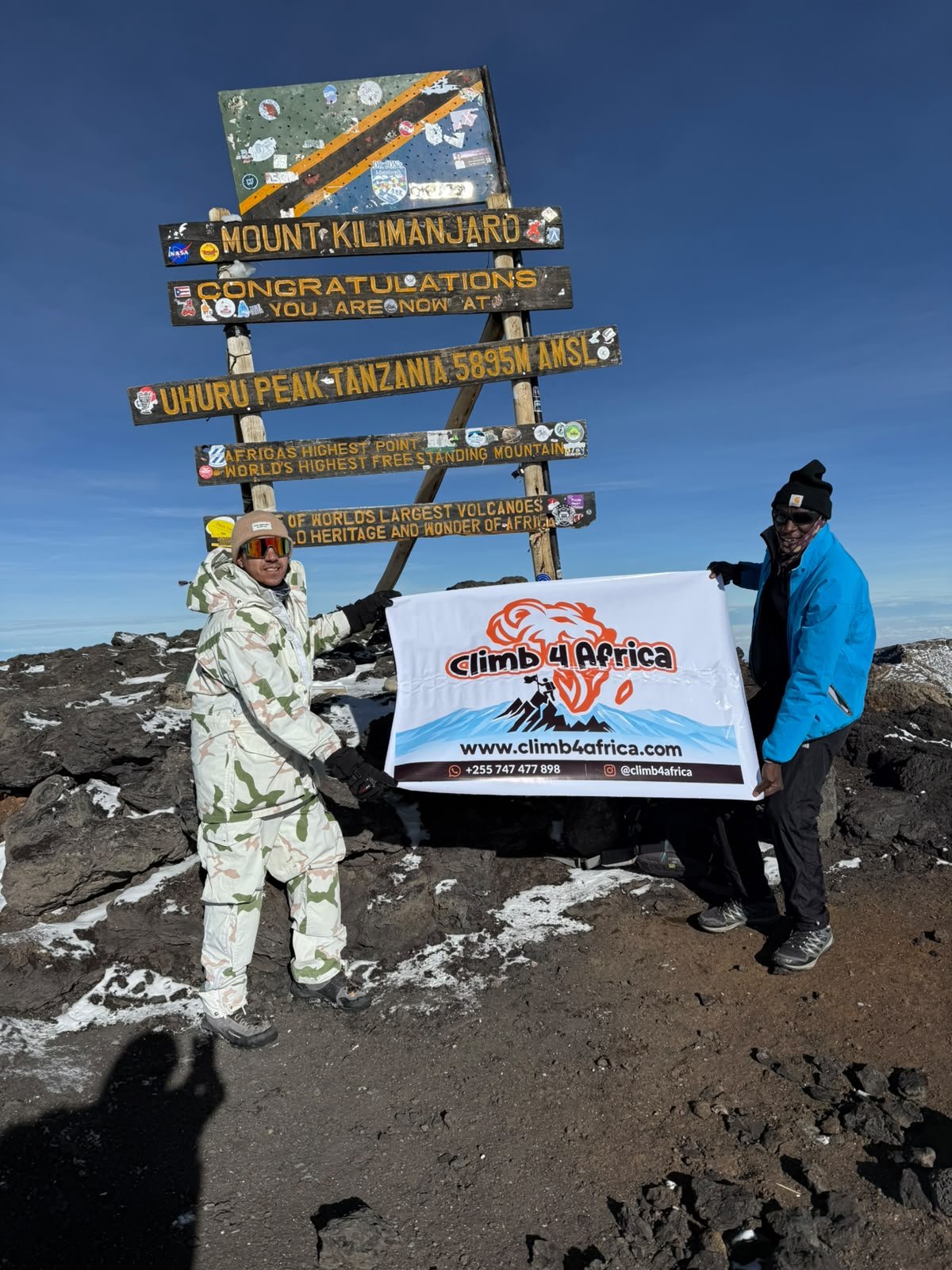
Route and flow: The summit night typically begins around midnight. Climbers leave Kibo Hut and ascend through the lunar landscape to Gillman’s Point (5,685m) on the crater rim and then proceed to Uhuru Peak (5,895m) if conditions allow. After sunrise and photography, descent returns to Kibo Hut briefly then down to Horombo Hut for a recovery night. Total hours for the summit day (ascent+descent to Horombo) can be 12–18 hours depending on team speed and weather.
Purpose: this is the critical summit push coordinated to coincide with the full moon illumination. Full moon light can make route finding easier but does not replace headlamps and careful pacing. Because of the condensed program, your summit day is physically demanding; adequate pre-trek fitness and sleep
Day 5 — Horombo Hut to Marangu Gate (descent and exit)
Route and flow: On Day 5 of the 5 Days Marangu Kilimanjaro Full Moon Trek you complete the final descent from Horombo Hut down to Marangu Gate. This stage is almost entirely downhill, dropping from roughly 3,720m at Horombo to the park gate at about 1,860m. The trail traverses the same moorland and heath you crossed on ascent but in reverse: broad, exposed slopes giving way to shrubby vegetation and, eventually, the upper edge of montane forest before a short final walk through taller forest to the gate. Walking time is typically 4–6 hours depending on group speed, weather and how many stops the guides schedule for rest and photos.
Pace and purpose: After the summit night and the long descent back to Horombo Hut on Day 4, Day 5 is focused on safe, steady descent and on-airing any minor medical issues to guides and porters. A conservative pace is still recommended—descending too quickly can strain knees and joints. Guides will set short, frequent breaks to avoid overexertion and to keep the group together. Because the itinerary is condensed into five days, this final day is also when you collect personal gear from the huts and porters and prepare for the exit formalities at Marangu Gate.
Typical sequence and timing:
- Early breakfast at Horombo Hut (time depends on the crew; usually before or around first light).
- Depart Horombo with guides and porters; initial sections are wide and gently sloping.
- Mid-morning rest at a scenic point or designated break area; opportunity for photos and refuelling.
- Late morning/early afternoon entry into montane forest and final short descent to Marangu Gate.
- At Marangu Gate: formal sign-out with park authorities, distribution of any remaining paperwork, and issuing of the Kilimanjaro summit certificate where applicable.
Logistics at the gate: Expect a brief administrative process at Marangu Gate. Park staff record departures and confirm the party’s exit; guides will handle the paperwork. Many operators provide a printed summit certificate at the gate or deliver a digital certificate shortly after the trek—confirm with your operator before departure since provision practices vary. After sign-out, groups commonly receive transport back to Moshi/Arusha or a prearranged onward transfer. Because operator-specific transfers, hotel pickups and timings are not guaranteed here, you must verify your return arrangements with Climb 4 Africa or your booking agent prior to travel.
What to expect physically: Descending from altitude usually relieves acute AMS symptoms for most people, but expect residual fatigue, sore muscles—especially knees, quads and calves—and possible bruising from shared hut bunking. Drink fluids, eat a balanced meal at the first available opportunity and rest. If you experienced significant headache, dizziness, severe nausea or breathing difficulty during summit day or descent, report it promptly to your guide; they will advise medical follow-up. Guides and porters carry basic first-aid supplies, but any advanced care or evacuation procedures should be clarified with your operator in advance.
Gear and clothing on the final day: Layering remains useful—mornings can be cold and windy, while later in the descent you may warm up significantly. Waterproof shell and sturdy trekking footwear are still necessary until you reach the lower forest. Bring your daypack with essentials (water, snacks, sunscreen, hat, basic meds) and ensure any personal items left in hut storage are reclaimed.
Gratuities and crew thanks: The descent day is commonly the moment groups organise gratuities for guides, assistant guides and porters. If a tip distribution plan was outlined in your booking paperwork or pre-trek briefing, follow that guidance. If in doubt, speak to your lead guide for recommended procedures; many climbers collect contributions and present them at the gate or at the final hut.
After the trek — immediate next steps: Once at Marangu Gate you will usually be transported to Moshi or your pre-booked accommodation. Allow time in your travel schedule for recovery—many climbers spend at least one night in Moshi before international or regional travel. If you have onward domestic flights out of Kilimanjaro Airport (JRO) or arranged travel that same day, confirm pick-up times and any luggage transfer needs beforehand because delays on descent or at the gate can happen.
Closing note: Day 5 concludes the practical sequence of the 5 Days Marangu Kilimanjaro Full Moon Trek and moves you from the mountain back to organised transport and onward travel. Because this itinerary compresses acclimatisation into five days, remain attentive to your body during the final descent and communicate with guides about recovery and any necessary medical follow-up once you return to lower elevations.
Managing acclimatisation and pacing on a compressed 5-day Marangu Kilimanjaro Full Moon trek
Because the 5 Days Marangu Kilimanjaro Full Moon Trek compresses the usual acclimatisation timeline, the single most useful unanswered question for prospective participants is: how do I practically reduce the risk of altitude illness and maximise my summit chances within this tighter schedule? The guidance below focuses on specific, route- and day-linked behaviours you can reasonably control during the 21–25 December 2026 climb—pace, rest, hydration, nutrition, sleep strategy and small equipment choices that materially affect how well you adapt to altitude.
Overall pacing principle: slow up, steady gain
On a 5-day Marangu itinerary the safest default is to adopt a deliberately conservative walking rhythm on every uphill section. Aim for a comfortable conversation pace (often described as ‘pole-to-pole’ or ‘slow and steady’): roughly 2–2.5 kph on moderate uphill and slower over steep or rocky ground. Keep group intervals regular—short, frequent breaks (5–10 minutes every 45–60 minutes of walking) are better than sporadic long rests. Conserving energy early on improves your odds during the summit push.
Day-by-day acclimatisation tactics (practical steps you can use)
Day 1 — Marangu Gate to Mandara Hut: Treat the forest section as a warm-up. Walk slowly through the montane forest and avoid rushing to the hut. Eat a slightly larger lunch, hydrate steadily, and prioritise sleep—early lights-out helps build a baseline for subsequent short-sleep summit night.
Day 2 — Mandara Hut to Horombo Hut: Use this longer saddle day to practise ‘rhythmic hiking’—short steps with even breathing. Carry a refillable water bottle or bladder and aim for 0.5–1 litre per hour depending on exertion and temperature. Replace simple carbohydrates hourly (energy bars, dried fruit) rather than only at mealtimes; small, frequent snacks help maintain blood glucose and perceived exertion.
Day 3 — Horombo Hut to Kibo Hut: This is an important pre-acclimatisation day. Keep the pace intentionally slow, and break more often than feels necessary. Spend the afternoon at Kibo resting upright where possible—the hut environment is cramped so light activity (short walks around the hut area) helps circulation without over-taxing. Prioritise sleep, even if the pre-summit nerves make it difficult: try a light carbohydrate snack 30–60 minutes before bed and avoid heavy meals late at night.
Day 4 — Summit from Kibo and return to Horombo: On summit night, maintain the slowest possible upward pace that still keeps you moving—this is not the time to sprint for the summit. Use a trekking pole rhythm, take 1–2 small steps per breath if you feel breathless, and hydrate at every short break. If you have prescribed altitude medication (see FAQ), follow your prescribing clinician’s timing. For the descent, allow the lower elevation to restore appetite and energy; eat easy-to-digest protein and carbohydrate as soon as you can.
Day 5 — Descent to Marangu Gate: Once descending, avoid overstriding which stresses knees; use poles and plant downhill with the midfoot to reduce impact. Keep fluids and electrolytes up—some residual fatigue is normal, but clear neurological or cardiorespiratory symptoms require immediate attention.
Sleep, hydration and nutrition specifics
- Sleep: Aim for consistent bedtimes at huts and use earplugs and an eye mask to maximise sleep quality. If you normally use a sleep aid, discuss it with your guide and doctor beforehand because medications can affect breathing at altitude.
- Hydration: Start each day with fluids. Carry a hydration bladder and sip often; electrolyte tablets can help replace lost salts—avoid excessive caffeine and alcohol during the trek.
- Nutrition: Prefer frequent small meals and snacks. Include salty snacks, easy carbs and some protein at each meal; glycogen availability influences perceived effort at altitude.
Small gear and behavioural choices that help acclimatise
- Poles: Use adjustable trekking poles to reduce energy cost and protect knees—especially on the steep sections to/from Horombo and Kibo.
- Layering: Keep extremities warm (fingers, ears) to reduce peripheral vasoconstriction which can negatively affect sleep and perceived exertion.
- Pacing tools: Use a simple wristwatch or phone app to monitor average speed rather than relying on perceived pace; seeing a low, steady kph helps reinforce conservative pacing decisions.
- Buddy checks: Arrange simple symptom reporting with your climbing partner or guide (headache scale, nausea, dizziness) each rest break—early detection is key.
When to slow down or stop: concrete red flags
Stop or descend if you experience any of the following progressively: worsening headache not relieved by rest or simple analgesics, persistent vomiting, marked confusion, difficulty breathing at rest, or inability to stand/walk without severe breathlessness. Guides are trained to assess these signs and will initiate descent or medical care when indicated.
Applying the practical pacing and acclimatisation strategies above on the 5 Days Marangu Kilimanjaro Full Moon Trek improves your personal safety margin and increases the chance of reaching Uhuru Peak on the full-moon night without compromising health. Discuss any specific medical questions or medication options with your travel clinic, and confirm on-trek medical contingencies with Climb 4 Africa at booking.
How the full moon changes summit-night logistics on the 5 Days Marangu Kilimanjaro Full Moon Trek
One practical question many climbers still ask at booking is: what does the full moon actually change about the summit night on the 5 Days Marangu Kilimanjaro Full Moon Trek? Beyond the obvious photographic appeal, the moon affects several tangible logistics and decisions on summit night—navigation, timing, equipment needs, sleep strategy and crowd dynamics. The guidance below explains those effects and gives precise, actionable choices you can make for a safer, more enjoyable full-moon summit.
Moonlight and route visibility: less reliance on headlamps, not none
On a clear full-moon night the crater zone and the upper slopes benefit from substantial ambient light compared with a new-moon summit. This improves long-range visibility of the route, allows you to read the trail and see rock features with greater ease, and reduces the feeling of isolation many climbers report in total darkness. However, do not interpret “moonlit” as a replacement for a headlamp—cloud cover, volcanic crater shadowing, or intermittent haze can still plunge sections into near-darkness. Keep a reliable headlamp with fresh batteries or charged power bank as your primary light source, and use the moonlight as a helpful secondary cue for pacing and hazard awareness.
Timing adjustments and summit-hour planning
Because the full moon brightens pre-dawn hours, operators sometimes start summit pushes at roughly the same local times used for dark-weather ascents, but guides will be more flexible about short stops for photography or marginal speed changes. The key operational change is that the moon allows slightly easier route finding and quicker transitions at rest stops—so groups may cover a few extra metres per hour without increasing physiological load. Treat any small gains conservatively: the altitude physiology is unchanged by moonlight, so pacing and symptom checks remain central.
Photography, pause policy and group flow
Full-moon summit attempts attract more photo stops—moonrise shots, silhouette images on the crater rim, and extended sunrise sessions. If you plan to photograph, discuss with your guide beforehand: agree on scheduled short photo-breaks that don’t fragment group momentum or cause repeated re-start fatigue. Guides commonly set a ‘photo window’ at Gillman’s Point or on the rim where the group pauses for 10–20 minutes; outside that window keep stops brief. Carry a compact tripod or a lightweight monopod if you intend to shoot long exposures—tripods make better images and reduce the need for repeated repositioning.
Sleep disruption and recovery strategy
Bright moonlight can interfere with daytime naps in Kibo Hut or early-evening sleep at Horombo if hut windows are not fully blackout. If you are sensitive to light, bring an eye mask and plan for a deliberate 60–90 minute pre-summit nap window: short, timed naps before midnight can improve alertness without blunting acclimatisation. Avoid caffeine in the hour before naps and use straps or earplugs to reduce hut noise during the daytime rest.
Crowding, etiquette and safety zones
Full-moon summit nights may draw slightly larger numbers of climbers to the final push. Expect a higher density at bottlenecks such as the scree slope above Kibo Hut and the trail to Gillman’s Point. Maintain single-file pacing where instructed, keep gaps for ventilation and buddy visibility, and allow faster parties to pass at agreed pull-over points. Guides enforce stricter symptom monitoring during crowded phases—if you feel unwell, accept a temporary rest or descent rather than trying to keep pace with a dense group.
Practical checklist for full-moon summit night on the 5 Days Marangu Kilimanjaro Full Moon Trek
- Carry a headlamp with spare batteries even if you expect bright moonlight.
- Pack an eye mask and earplugs to protect pre-summit sleep.
- Bring a small tripod or stable support for low-light photography.
- Agree on photo-stop windows with your guide to avoid repeated slowdowns.
- Plan conservative pacing identical to a dark-night ascent—altitude risk is unchanged by the moon.
- Be prepared for larger group sizes; practise clear, brief communication at trail bottlenecks.
Addressing these lunar-specific logistics will help you take full advantage of the unique visual experience the full moon offers on the 5 Days Marangu Kilimanjaro Full Moon Trek without compromising safety or acclimatisation.
Related Guides and Packages
Check Availability for 5 Days Marangu Kilimanjaro Full Moon Trek – 21–25 December 2026
Ready to compare dates, prices, and the best option for your group? Send the package name and travel month so the team can reply with a clear quote, availability, and what is included.
6 Days Marangu Kilimanjaro Full Moon Climb – 20–25 December 2026
6 Days Marangu Kilimanjaro Full Moon Climb – 20–25 December 2026.
View package details5 Days Marangu Kilimanjaro Christmas Trek – 22–26 December 2026
5 Days Marangu Kilimanjaro Christmas Trek – 22–26 December 2026.
View package details5 Days Marangu Kilimanjaro New Year Trek – 29 December – 2 January 2026
5 Days Marangu Kilimanjaro New Year Trek – 29 December 2026 – 2 January 2027.
View package details5 Days Marangu Kilimanjaro December Trek – 19–23 2026
5 Days Marangu Kilimanjaro December Trek – 19–23 December 2026.
View package details6 Days Marangu Kilimanjaro Hut Trekking – 6–11 December 2026
6 Days Marangu Kilimanjaro Hut Trekking – 6–11 December 2026.
View package details5 Days Marangu Route Kilimanjaro Trek – 2–6 December 2026
5 Days Marangu Route Kilimanjaro Trek – 2–6 December 2026.
View package details6 Days Marangu Kilimanjaro New Year Climb – 28 December – 2 January 2026
6 Days Marangu Kilimanjaro New Year Climb – 28 December 2026 – 2 January 2027.
View package details6 Days Marangu Kilimanjaro Christmas Holiday Climb – 21–26 December 2026
6 Days Marangu Kilimanjaro Christmas Holiday Climb – 21–26 December 2026.
View package details
6 Days Marangu Kilimanjaro Group Hiking – 9–14 December 2026
6 Days Marangu Kilimanjaro Group Hiking – 9–14 December 2026.
View package details5 Days Marangu Route Kilimanjaro Group Climb – 8–12 December 2026
5 Days Marangu Route Kilimanjaro Group Climb – 8–12 December 2026.
View package details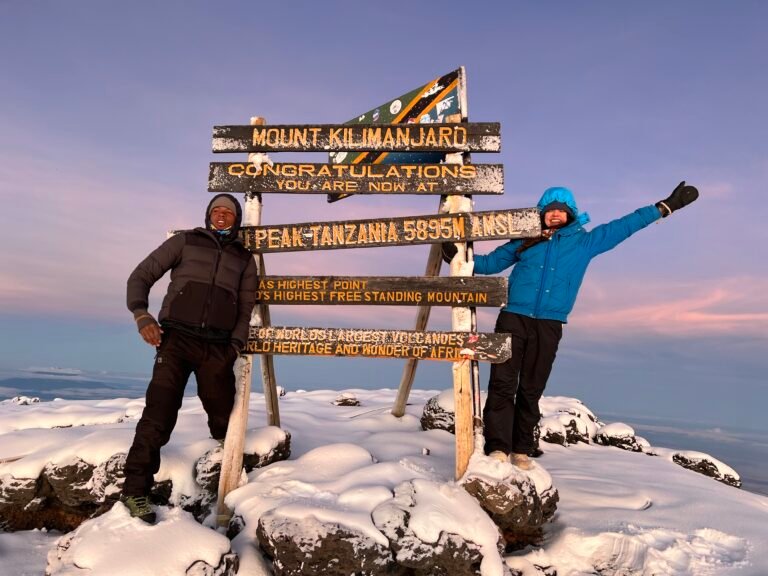
6 Days Rongai Route Kilimanjaro Hiking – 6–11 December 2026
6 Days Rongai Route Kilimanjaro Hiking – 6–11 December 2026.
View package details
December 4, Mount Kilimanjaro Marangu Day Hike
December 4, 2026 Mount Kilimanjaro Marangu Day Hike.
View package detailsNo related package matches those filters. Clear one or more filters to see the other topic-matched options.



