
A fly-in safari from Dar es Salaam is the most efficient way to experience Tanzania’s diverse ecosystems without the fatigue of long-distance road transfers. While many travelers associate Tanzania safaris exclusively with Arusha, starting your journey from the coast in Dar es Salaam opens up unique possibilities, particularly for accessing the Southern Circuit parks like Nyerere (formerly Selous) and Ruaha, or making a direct connection to the Serengeti.
For travelers with limited time or those who prefer to avoid the 8-to-10-hour drive times common in Tanzania, light aircraft transfers transform the safari experience. By flying, you turn a full day of dusty road travel into a scenic, 60-to-90-minute flight, landing directly on bush airstrips mere minutes from your lodge.
Why Choose a Fly-In Safari From Dar es Salaam?
The primary advantage of choosing a fly-in package is time optimization. When you land at Julius Nyerere International Airport (DAR), you are immediately positioned for the Southern Circuit. Driving to Nyerere National Park can be done, but it is a long, arduous journey. Flying allows you to reach the wildlife-rich areas of the Rufiji River by mid-morning, meaning you can be on a boat safari or a game drive by the afternoon of your arrival.
For those looking to combine the remote, rugged wilderness of Ruaha with the lush, riverine landscapes of Nyerere and the iconic plains of the Serengeti, a customized private Tanzania safari with internal flights is the only way to make the distances manageable. It removes the “transfer day” from your itinerary, replacing it with a bird’s-eye view of the Tanzanian landscape.
The Destinations: Nyerere, Ruaha, and Serengeti
Understanding the geography of these three parks is essential for planning your itinerary. They offer vastly different experiences.
Nyerere National Park (Formerly Selous)
Nyerere is the closest major safari destination to Dar es Salaam. It is a massive wilderness area defined by the Rufiji River. Because it is so accessible from the coast, it is the most logical first stop on a fly-in safari originating from Dar. The park is known for its diverse activities—not just game drives, but walking safaris and boat safaris, which are rare in other parts of Tanzania. It is an ideal introduction to the bush.
Ruaha National Park
Ruaha is for the traveler seeking isolation. It is Tanzania’s largest national park and is famous for its high concentration of elephants and large prides of lions. It is significantly more rugged than Nyerere. Accessing Ruaha from Dar by air is straightforward, but it requires a slightly longer flight than Nyerere. Because of its remote location, it remains one of the least crowded safari destinations in East Africa, offering a true “off-the-beaten-path” experience.
Serengeti National Park
The Serengeti needs little introduction. As part of the Northern Circuit, it is the home of the Great Migration. If your heart is set on the Serengeti, you will be flying from Dar es Salaam to Arusha (ARK) or directly to one of the Serengeti’s multiple airstrips (such as Seronera, Kogatende, or Grumeti). This is a longer transit than the southern parks, but it is entirely feasible with scheduled light aircraft services.
Sample Itinerary Concepts
We do not believe in rigid, one-size-fits-all packages. However, when we design itineraries for clients flying out of Dar, we often follow a logical geographical flow to minimize airtime and maximize game-viewing hours.
The Southern Circuit Focus (Nyerere & Ruaha)
This is the most time-efficient use of a Dar-based fly-in safari. You can easily combine these two parks in a 5-to-7-day trip.
- Day 1: Fly from Dar es Salaam to Nyerere National Park. Afternoon boat safari on the Rufiji River.
- Day 2-3: Game drives in Nyerere, focusing on the riverbanks and the diverse wildlife that congregates there.
- Day 4: Fly from Nyerere to Ruaha National Park. Afternoon game drive in the rugged, baobab-dotted landscape.
- Day 5-6: Full days in Ruaha, exploring the Great Ruaha River and tracking the park’s famous predator populations.
- Day 7: Fly back to Dar es Salaam or connect to your next destination.
For more details on how to structure these logistics, see our guide on Tanzania Fly-In Safari Packages 2027.
The “Best of Both Worlds” (Southern + Northern)
If you have 10-12 days, you can combine the Southern and Northern circuits. This is a more complex logistical operation. It typically involves a flight from Dar to Nyerere, then a flight from Nyerere to Arusha/Serengeti, and finally a return to Dar or Kilimanjaro International Airport (JRO).
This requires careful coordination of light aircraft schedules, as flights between the Southern and Northern circuits are not always daily. We recommend contacting our team at WhatsApp +255 747 477 898 or info@climb-4-africa.com to discuss the current flight connectivity for your travel dates.
Practical Considerations for Your Fly-In Safari
Traveling by light aircraft in Tanzania is not the same as taking a commercial jet. There are specific rules you must follow to ensure your trip goes smoothly.
Luggage Restrictions
This is the single most important detail for any fly-in safari. Light aircraft have strict weight limits. Generally, you are restricted to 15kg (33 lbs) per person in soft-sided luggage. Hard-shell suitcases are often prohibited because they cannot be squeezed into the small cargo holds of Cessna Caravans. For more guidance, read our article on How Much Luggage Is Allowed on Serengeti Safari Flights?
Flight Schedules and Timing
Flights to and from bush airstrips are “bush flights,” meaning they often stop at multiple strips along the way to pick up and drop off other passengers. Your departure time might be fixed, but the arrival time can fluctuate based on weather and passenger loads. Always maintain flexibility in your schedule. Do not book tight international flight connections on the same day as your bush flight back to Dar es Salaam. We always recommend an overnight buffer in Dar es Salaam before your international departure.
Weather and Seasonality
While the parks are open year-round, the “green season” (typically March to May and November) can make some bush airstrips muddy or inaccessible. During these times, schedules can be disrupted. Conversely, the dry season (June to October) offers the most reliable flight operations and, arguably, the best wildlife viewing as animals congregate around water sources.
Booking Your Fly-In Safari with Climb 4 Africa
Planning a fly-in safari involves coordinating multiple moving parts: international flight arrivals, internal bush flight bookings, park fees, and lodge reservations. When you book with us, we handle the entire chain of logistics.
To get started, consider these factors:
- Your Travel Dates: Are you looking for the peak migration season in the Serengeti or the quieter, more intimate experience of Ruaha?
- Budget and Comfort: We can arrange packages ranging from mid-range tented camps to ultra-luxury lodges.
- Internal Connections: Do you want to see just one park or a combination?
Our team at Climb 4 Africa provides on-the-ground support to ensure your transfers are smooth. Whether you need help with domestic flight bookings or advice on which airport is best for your specific trip, we are here to assist. Reach out to us at climb4africa@gmail.com or our backup email info@climb-4-africa.com with your rough dates and interests. We will build a proposal that respects your time and maximizes your wildlife encounters.
Frequently Asked Questions
Is it possible to visit Serengeti and Nyerere in the same trip?
Yes, but it requires a multi-leg flight path. You will typically fly from Dar es Salaam to Nyerere, spend your time there, then fly from Nyerere to Arusha or directly into the Serengeti. It adds to the cost due to the number of flight segments, but it saves days of driving time.
What happens if my bush flight is delayed?
Bush flights are subject to weather conditions and air traffic control at small strips. If a delay occurs, our local support team is alerted. We will coordinate with your lodges and ground handlers to ensure your pick-up is adjusted. See our guide on What Happens if My Tanzania Safari Flight Is Delayed? for more details.
Do I need a visa for these flights?
If you are flying within Tanzania, you do not need an additional visa for the domestic flights. However, ensure your Tanzania entry visa is valid and that you have your passport with you for all flights, as they are treated as domestic commercial aviation.
Can I book the international and domestic flights together?
While we specialize in the safari portion and domestic flight connections, we generally recommend that you book your international flights independently and let us handle the domestic bush flights to ensure they sync perfectly with your lodge bookings and park schedules. Learn more about Can I Book International Flights and Safari Packages Together?
A fly-in safari from Dar es Salaam is a premium experience that prioritizes your time. By choosing to fly, you are choosing to spend more time watching lions in Ruaha or elephants in Nyerere and less time sitting in a vehicle on a transit road. If you are ready to plan your 2026 or 2027 safari, contact our team to begin customizing your itinerary.
The Anatomy of a Bush Flight
Understanding the operational reality of a bush flight is essential for any traveler flying out of Dar es Salaam. Unlike commercial aviation, where the journey is often a means to an end, the bush flight is an integral part of the safari experience. Most operators in Tanzania utilize the Cessna Grand Caravan or similar light aircraft. These are rugged, high-wing turboprops designed specifically for short take-offs and landings on unpaved surfaces. Because these aircraft are not pressurized, they fly at lower altitudes—typically between 5,000 and 8,000 feet. This is the “low-altitude advantage”: you are not staring at clouds, but rather getting a bird’s-eye view of the changing Tanzanian landscape as you transition from the coastal humidity of Dar to the arid plains of the interior.
The Reality of Bush Airstrips
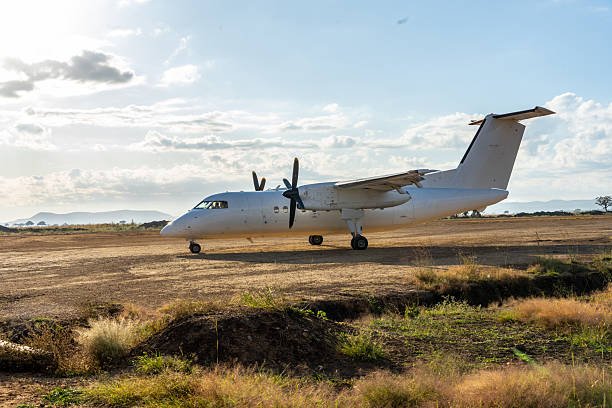
It is vital to manage expectations regarding what you will encounter upon landing. A “bush airstrip” is not an airport in the traditional sense. There are no departure lounges, duty-free shops, or security scanners. In most cases, the airstrip is a cleared, compacted stretch of earth or grass located in the heart of the wilderness. Your “terminal” may be nothing more than a shaded tree where the lodge driver waits with a cooler of water.
Upon arrival, the protocol is simple but strict. You must remain inside the aircraft until the pilot gives the signal to disembark. Once the propellers have stopped, you will walk directly onto the dirt strip. Your lodge transfer vehicle will be waiting at the edge of the runway, often with the engine already running. Because these airstrips are unfenced, wildlife is a constant factor; it is not uncommon for a pilot to perform a low-altitude “fly-by” to check for zebra or impala herds on the runway before committing to a landing. This is a standard safety procedure and should be viewed as a unique part of the safari adventure rather than a delay.
Managing the Transition from Urban to Wild
The contrast between Dar es Salaam and the Tanzanian bush is profound. You are moving from one of East Africa’s most energetic, sprawling coastal cities directly into absolute wilderness. This transition happens in as little as 60 to 90 minutes. For many travelers, this rapid change can be disorienting. We recommend that you prepare for the “silence” of the bush. Once the small aircraft engine cuts out at your destination, you will be struck by the lack of ambient noise. There are no sirens, no traffic, and no urban hum—only the sounds of the African savannah.
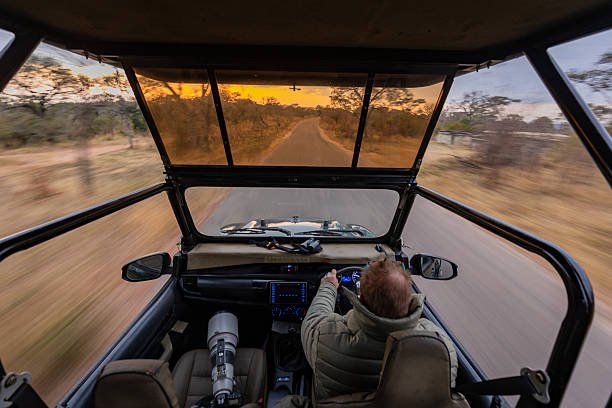
Because you are arriving in a remote area, the lodge staff will often meet you immediately at the strip. This is the moment your safari officially begins. Do not expect to spend time “checking in” at a desk; the check-in happens in the vehicle or at the lodge as you arrive. We advise travelers to have their cameras accessible in their carry-on luggage, as the drive from the airstrip to the lodge is often your first unofficial game drive. Keep your binoculars handy, as elephants or giraffes are frequently spotted within minutes of leaving the landing zone.
Operational Nuances for Bush Travel
One of the most common questions involves the flexibility of these flights. Bush flights operate on a “circuit” basis. This means your flight may stop at two or three other airstrips to pick up or drop off other passengers before reaching your final destination. This is not a private charter (unless specifically booked as one), and your departure time may be adjusted slightly based on the needs of other passengers or local weather patterns. Embracing this “African time” is crucial. If the pilot announces a slight delay due to fog in the Ngorongoro Highlands or rain in the Serengeti, remain patient. The pilots prioritize safety above all else, and these adjustments are the norm for bush aviation in Tanzania.
Frequently Asked Questions About Bush Flights
- Are the bush flights noisy or uncomfortable?
- They are louder than commercial jets due to the proximity of the engines and the lack of soundproofing, but most operators provide earplugs. The seats are comfortable but basic, and there is no in-flight service or lavatory on board, so please ensure you use the facilities before departure.
- What happens if wildlife is on the runway when we arrive?
- This is a common occurrence. The pilot will circle the airstrip at a low altitude to encourage the animals to move. If they do not vacate the area, the pilot will divert to a nearby alternative airstrip or return to the previous stop until the runway is clear. Safety is the absolute priority.
- Should I tip the bush pilot?
- Tipping is not expected for bush pilots in the same way it is for safari guides. They are professional transport crew. However, if they have gone above and beyond—perhaps by pointing out specific landmarks or wildlife during the flight—a small token of appreciation is always welcomed but never required.
Strategic Packing for the Multi-Environment Safari
Because a fly-in safari from Dar es Salaam often bridges vastly different ecological zones—from the humid, riverine wetlands of Nyerere to the arid, rocky escarpments of Ruaha and the high-altitude plains of the Serengeti—your packing strategy must be modular. Unlike a single-destination trip, you are navigating significant variations in temperature and terrain. While the 15kg soft-sided luggage limit is the non-negotiable hard constraint, how you utilize that space is the key to comfort.
The primary challenge is the “layering principle.” In the early mornings, particularly in the Serengeti or the highlands of Ruaha, temperatures can drop significantly, often requiring a fleece or windbreaker. By midday, these same areas can become intensely hot and dusty. If you are starting your trip in Nyerere, you will encounter high humidity and heat, necessitating lightweight, breathable, moisture-wicking fabrics. Avoid heavy denim or synthetic fabrics that do not breathe; instead, prioritize light cottons or specialized safari-grade synthetics that dry quickly.
Consider the “in-transit” utility of your carry-on bag. Since you will be moving between airstrips, your carry-on is effectively your “survival kit” for the day. Ensure it contains your essential medications, a backup pair of glasses or contact lenses, high-SPF sunscreen, and a wide-brimmed hat. Because flight schedules can shift, having a portable power bank and a universal adapter is essential, as charging facilities on light aircraft are non-existent, and some remote lodges rely on solar power that may be limited during overcast days.
The Importance of Photographic Gear Management
For many, the fly-in safari is a photographic pilgrimage. However, transporting professional-grade camera equipment within the strict weight limits of a Cessna Caravan requires careful planning. Most bush airlines are strict about the total weight of your luggage, which includes your camera bags. If you carry a heavy camera backpack, it will count toward your 15kg allowance. To mitigate this, wear your heaviest items—such as hiking boots, a heavy jacket, or a multi-pocket vest—during the flight check-in process.
Protecting your gear from the environment is equally critical. The bush airstrips are often unpaved, leading to significant dust during takeoff and landing. Ensure that all camera lenses and bodies are stored in dust-proof, sealed bags or cases within your soft-sided luggage. Do not rely on open-top camera bags during the transit between the airstrip and the lodge, as the open-sided safari vehicles will expose your equipment to the elements. A simple, sturdy dry bag or a high-quality camera insert is a wise investment for protecting lenses from the fine, pervasive dust characteristic of the dry season in Ruaha and the Serengeti.
Wildlife Etiquette Near Airstrips
A unique aspect of flying into remote parks like Ruaha or Nyerere is that the airstrip itself is often located within the wildlife habitat. It is not uncommon for game to be grazing near the runway. While pilots are trained to assess the safety of the landing, passengers must also exercise caution. Upon landing, remain inside the aircraft until the pilot explicitly signals that it is safe to disembark. Once you step onto the tarmac, do not wander away from the aircraft or the waiting safari vehicle. The bush is not a park; wild animals are unpredictable, and the area surrounding the airstrip is not fenced. Always wait for your lodge representative to greet you and escort you to the vehicle. Your safari guide is your primary authority on safety; follow their instructions immediately, especially if wildlife is spotted near the landing zone.
Check Availability for Fly-In Safari From Dar Es Salaam: Serengeti, Ruaha & Nyerere Packages
Ready to compare dates, prices, and the best option for your group? Send the package name and travel month so the team can reply with a clear quote, availability, and what is included.

Entebbe To Serengeti Safari: Flight Connections & Cost Planning
A practical guide to connecting your Entebbe-based travel with a Serengeti safari, covering flight routes, airport choices, baggage constraints, and cost factors for 2026-2027.
View package details
Kilimanjaro Climb And Serengeti Safari: Flight & Transfer Planning
Kilimanjaro Climb and Serengeti Safari: Flight & Transfer Planning.
View package detailsSerengeti Great Migration Fly-In Safari: Flight And Lodge Prices ()
A deep look at the logistical and financial considerations of planning a Serengeti Great Migration fly-in safari, focusing on how flight routes and seasonal lodge locations dictate your...
View package details
Luxury Serengeti Fly-In Safari: Private Packages & Prices ( Guide)
A detailed guide to luxury fly-in safaris in the Serengeti, focusing on private logistics, pricing structures for 2026-2027, and maximizing your time in the bush.
View package details
5-Day Serengeti & Ngorongoro Fly-In Safari: Complete Package Costs
5-Day Serengeti & Ngorongoro Fly-In Safari: Complete Package Costs.
View package details
2-Day Serengeti Fly-In Safari From Arusha: Understanding Package Prices
A practical guide to the costs, logistics, and planning realities of a 2-day fly-in safari to the Serengeti from Arusha.
View package detailsHow Much Luggage Is Allowed On Serengeti Safari Flights? A Planning Guide
Learn the precise luggage requirements for Serengeti bush flights, including weight limits, the mandatory soft-bag policy, and how to safely store your extra gear.
View package details
Christmas Kilimanjaro Climb And Serengeti Wildlife Safari Package: Planning
A comprehensive guide to planning a combined Christmas Kilimanjaro climb and Serengeti wildlife safari, covering route selection, seasonal logistics, and expert booking advice for 2026-2027.
View package detailsDec 27, – 4 Day Serengeti Migration Group Safari: Plan Your Trip
A deep look at planning your 4-day Serengeti migration group safari departing December 27, 2026, including itinerary logistics, group benefits, and seasonal expectations.
View package detailsDec 23, – 4 Day Mikumi And Nyerere Christmas Group Safari: Your Essential
A deep look at the logistics, expectations, and planning for the 4 Day Mikumi and Nyerere Christmas group safari departing Dec 23, 2026.
View package details3 Day Serengeti And Ngorongoro Group Safari: Planning For December 4,
A detailed guide on planning a 3-day group safari to the Serengeti and Ngorongoro Crater for December 4, 2026, covering route expectations, group logistics, and essential planning steps.
View package details
Serengeti Flight Prices During The Great Migration Season: A Practical Guide
Planning a safari during the Great Migration? Here is how to navigate Serengeti flight prices, seasonal demand, and the logistical realities of bush travel.
View package detailsNo related package matches those filters. Clear one or more filters to see the other topic-matched options.



