
When you are planning a safari that involves internal flights—often called “bush flights”—one of the most jarring adjustments for international travelers is the strict baggage allowance. While your international flight from home might allow 23kg, 30kg, or even two checked bags, the aircraft that ferry you between the Serengeti, Ruaha, or Zanzibar operate under entirely different physical constraints. For most standard safari flights in Tanzania, the limit is 15kg total per person, including your carry-on.
This limit is not designed to be inconvenient; it is a hard safety requirement based on the performance characteristics of light aircraft like the Cessna Caravan. Understanding the logic behind these limits—and knowing how to manage them—is the difference between a smooth transition from the airstrip to your game drive and a stressful negotiation at check-in.
Why the 15kg Limit is Non-Negotiable
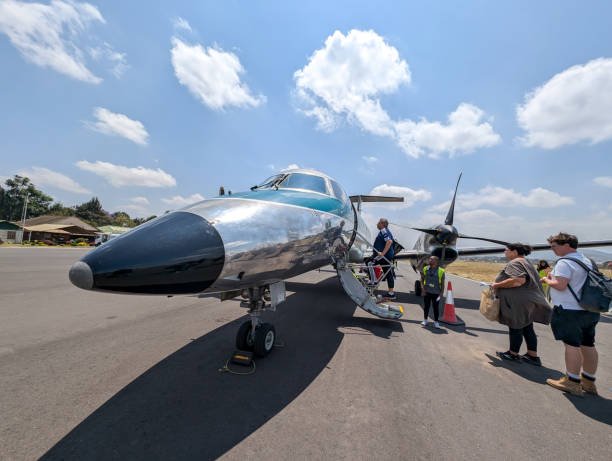
Light aircraft, which are the workhorses of the Tanzanian safari circuit, have significant payload restrictions. These planes are not like commercial jets; they are designed to land on short, dirt, or grass runways in the bush. Every kilogram of weight directly affects the aircraft’s take-off distance, climb performance, and fuel consumption. In the heat of the Tanzanian afternoon, air density decreases, which further limits the plane’s ability to generate lift. When a pilot calculates the load, they are looking at a precise total weight for the aircraft, pilot, passengers, and cargo. If the total exceeds the safety envelope, they cannot fly.
While some routes or specific operators might occasionally offer a 20kg limit, this is usually reserved for specific, larger aircraft or routes with less restrictive runway conditions. Never assume you have 20kg unless it is explicitly stated on your specific flight ticket. For almost all bush flights, 15kg is the safest planning number to use.
The Golden Rule: Soft-Sided Luggage Only
Beyond weight, the type of bag you bring is often more important than what is inside it. You must use soft-sided, non-rigid luggage. If you arrive at a safari airstrip with a hard-shell suitcase, you will likely be told it cannot be loaded.
The reason is simple: the luggage compartments on these bush planes are often pods underneath the fuselage or narrow rear compartments. They are irregular in shape and flexible. A hard-shell suitcase cannot be compressed or molded to fit the contours of these compartments. Soft bags, such as duffels or canvas bags, can be squeezed, stacked, and maneuvered into tight spaces. If you bring a hard suitcase, you risk having to leave it behind at the airport or paying for a private cargo flight to transport it separately, which is an expensive and logistically complex mistake.
Recommended Luggage Specs
- Material: Canvas, nylon, or soft polyester.
- Shape: Rectangular or cylindrical duffel style.
- Structure: Zero rigid frame. Avoid bags with large, stiff wheels or rigid handles that cannot be bent.
- Size: Aim for a bag that is roughly 60cm to 70cm long.
Pro Tip: Many travelers mistakenly believe that because their bag is “small,” it is acceptable. A small, hard-shell “carry-on” suitcase is still a hard-shell suitcase. It will not fit in the pod. Stick to a flexible duffel bag.
The Reality of “Extra Weight” Fees
A common question is, “Can I just pay for extra weight?” The answer is: Maybe, but don’t count on it.
On a commercial airline, paying for extra weight guarantees that the airline will carry your bag. On a bush flight, paying for extra weight only gives you the right to request extra space. If the flight is full—meaning the total weight of all passengers and their gear is near the maximum capacity—the pilot will refuse to take your extra bag, even if you have paid for it. In those instances, your bag will be “offloaded” and sent on a later flight, often the next day, which can disrupt your entire safari itinerary.
If you absolutely must travel with more than 15kg, you need to coordinate this with your operator, such as Climb 4 Africa, well in advance. We can sometimes book an “extra seat” for your luggage, which essentially reserves the payload capacity of a human being for your bags. This is the only way to guarantee your extra gear makes it on the same flight as you.
Managing Luggage for Multi-Activity Trips
Many travelers combine a Kilimanjaro climb with a safari and a beach stay in Zanzibar. This presents a unique logistical challenge: you need heavy, technical gear for the mountain, safari clothes for the bush, and beachwear for the coast. You do not need to haul your mountain gear on the safari plane.
The standard solution is to utilize luggage storage services. Most reputable operators, including us, provide secure storage for your excess gear. When you finish your Kilimanjaro climb, you swap your mountain duffel for your safari duffel. Your heavy mountain boots and cold-weather gear stay behind in a secure facility in Arusha or Moshi. You then pick them up on your way back through or have them delivered to your hotel before your international flight home. This strategy allows you to easily stay under the 15kg limit for your bush flights without sacrificing the gear you need for the different legs of your trip.
Strategy for Photographers and Heavy Gear
Professional photographers and videographers face the hardest challenge with these weight limits. Camera lenses, tripods, and heavy bodies add up quickly. Here is how to manage it:
- Wear your heaviest gear: Put your camera body with the heaviest lens around your neck or in a vest. This weight is not counted as checked baggage.
- Use a dedicated camera backpack: If your bag is soft-sided (or soft enough to be manipulated), you may get more leniency, but it must still be weighed.
- Consolidate: If you are traveling as a couple, pool your total weight allowance. If one of you is carrying 10kg and the other is carrying 20kg, the total is 30kg, which is usually acceptable on a two-person booking, provided the individual bags are manageable.
- Check in advance: If you are traveling with a significant amount of specialized equipment, let your tour operator know the exact weight and dimensions weeks before your departure.
For more specific guidance on how to organize your gear for these flights, you can reach out to us via WhatsApp at +255 747 477 898 or email climb4africa@gmail.com. We can help you determine if your specific itinerary requires an extra seat booking.
Commonly Asked Questions About Safari Baggage
Does my carry-on count toward the 15kg?
Yes. The 15kg limit is almost always a “total” allowance for all items you bring onto the aircraft. There is rarely a separate allowance for carry-on items on these bush planes.
Can I bring a tripod?
Yes, but it must be packed carefully. Ensure it is not a long, rigid metal stick that could damage the aircraft’s interior. A soft, padded tripod case is essential.
What if I am doing a fly-in safari?
If your entire trip is a fly-in safari, your luggage requirements are even stricter because you will be moving between lodges frequently. Keep your gear as minimal as possible. Remember, lodges provide laundry services, often at a very low cost, allowing you to travel with fewer clothes.
Is the 15kg limit the same for all airlines?
Most bush airlines in Tanzania—such as Coastal Aviation, Auric Air, and Flightlink—adhere to the 15kg rule. While slight variations exist, 15kg is the safe baseline for planning. Always check the specific ticket provided by your operator.
Planning Your Tanzania Safari Logistics
Navigating the logistics of internal flights is a standard part of the planning process for any tailor-made African travel experience. The goal is to ensure your arrival at the airstrip is stress-free. By choosing the right bag, storing excess equipment appropriately, and keeping your gear minimal, you avoid the common pitfalls that lead to baggage being offloaded or extra, unexpected fees.
If you are in the early stages of planning your 2027 trip, consider how internal flights will impact your itinerary. Are you combining a climb with a safari? Are you flying directly into the Serengeti or taking a road transfer for part of the way? We are here to help you structure your trip to manage these logistical realities effectively. You can contact our team at info@climb-4-africa.com to discuss your specific needs, or explore our private safari itineraries for a clearer picture of how flight-inclusive packages are structured.
Remember, the constraints of bush travel are a small price to pay for the incredible access these flights provide to the heart of Tanzania’s national parks. With a bit of preparation, your baggage will be the last thing you have to worry about once you land.
Navigating the Airstrip Weigh-In Process
For many travelers, the most anxiety-inducing part of the safari journey is the actual check-in process at the airstrip. Unlike the highly structured environment of an international airport, where digital scales and automated conveyor belts dictate the rules, the bush flight experience is far more tactile and personal. Understanding how this process unfolds can help you remain calm and prepared when you arrive at your remote departure point.
At major hubs like Arusha Airport (ARK) or Kilimanjaro International (JRO), you will typically encounter standard check-in counters where your luggage is weighed with precision. However, when you are departing from a remote bush airstrip—such as those deep within the Serengeti, Ruaha, or Selous—the infrastructure changes significantly. Often, there are no formal check-in desks. Instead, you may find yourself waiting on a shaded bench or under the wing of the aircraft as the pilot or a ground handler manages the loading process manually.
In these remote locations, the “weigh-in” is often a visual assessment. Experienced pilots and ground crews have an uncanny ability to judge weight by the size and density of a bag. If your luggage appears bulky, overstuffed, or clearly exceeds the dimensions of a standard soft-sided duffel, it will be flagged immediately. This is not the time to argue or negotiate; the pilot is the final authority on the aircraft’s safety. If they determine that your bag is too heavy or too large to fit safely in the cargo hold or the nose compartment, they have the right to refuse it.
If you find yourself in a situation where your gear is over the limit, the outcome depends entirely on the flight’s capacity that day. If the flight is fully booked with other passengers and their luggage, your excess bag may be left behind to be flown in on a subsequent flight, which can cause significant disruption to your itinerary. In some cases, if there is a “space available” seat or cargo allowance, you may be asked to pay a fee to accommodate the extra weight. However, treating this as a guaranteed option is a dangerous strategy. The best approach is to ensure your weight is strictly managed before you even leave your hotel. By being transparent with your ground handler or tour operator about your gear—especially if you are traveling with specialized equipment—you allow them to alert the flight operator in advance, which is the only reliable way to avoid last-minute complications at the airstrip.
The Logistics of Storing Excess Luggage
If your Tanzanian itinerary involves a combination of activities—such as a Kilimanjaro trek, a city tour in Dar es Salaam, or a relaxing stay in Zanzibar—you will inevitably have luggage that is not suitable for a light aircraft flight. The most reliable strategy for managing this is to utilize luggage storage services provided by your safari operator or your starting hotel. In the major safari hubs of Arusha and Moshi, almost all reputable lodges and hotels are accustomed to storing guest luggage while they are out on safari. This is a standard, often complimentary service, but it requires a structured approach to ensure your belongings remain secure and accessible.
Before you depart for your bush flight, coordinate with your ground handler or hotel concierge to designate which bags will remain in storage. Use a separate, lockable suitcase for your city or mountain gear—a hard-shell case is perfectly acceptable for storage. Ensure that all valuables, including passports, international flight tickets, expensive electronics, and prescription medications, are removed from these stored bags and kept in your carry-on or personal safari daypack. Never leave items of significant monetary or sentimental value in stored luggage, regardless of how secure the hotel facility is. Once you have identified your “storage bag” and your “safari bag,” clearly label both with your name and the date of your expected return. Most hotels will provide you with a baggage claim ticket or a written confirmation; keep this in your travel folder, as you will need it to retrieve your gear upon your return from the bush.
If you are booking through a tour operator, they often act as the intermediary for this logistics chain. They may collect your excess luggage at your initial briefing or instruct you to leave it at the hotel desk. It is vital to confirm this arrangement in writing before you arrive in Tanzania. If you are flying between different regions—for example, flying from the Serengeti to Zanzibar—and not returning to your original hotel, you may need to use a courier service or coordinate with your operator to have your luggage forwarded to your final destination. This requires advance planning and is generally more expensive, but it is a necessary step if you cannot return to your starting point.
The Anatomy of Your Safari Weight: A Breakdown
To truly master the 15kg limit, it is helpful to visualize exactly where that weight goes. Many travelers arrive at the airstrip in Arusha or Dar es Salaam surprised to find their bag is 18kg or 20kg, despite feeling like they packed lightly. Understanding the typical weight distribution of safari gear can help you trim the fat before you leave home.
Consider the “Safari Baseline” weight. A high-quality, empty soft-sided duffel bag often weighs between 1.5kg and 2.5kg on its own. If you bring a heavy, rugged canvas bag with thick leather straps, you are starting your journey with 15% of your total allowance already consumed before you have packed a single pair of socks. Opting for a lightweight, high-denier nylon or ripstop material bag is the first tactical decision you can make.
Next, footwear is the primary culprit for weight overages. A pair of sturdy hiking boots or even heavy-duty walking shoes can weigh upwards of 1kg to 1.5kg per pair. When you multiply this by the two pairs many travelers feel compelled to bring—one for the game drive, one for the lodge—you are looking at 3kg of your allowance dedicated solely to footwear. The solution is simple: wear your heaviest pair of shoes on the flight. Do not pack them. This applies to your safari jacket and your heaviest pair of trousers as well. By wearing these items, you remove 2kg to 3kg from your luggage scale immediately.
Toiletries and medical kits are another area where weight accumulates silently. Instead of full-sized bottles of shampoo, conditioner, and sunscreen, utilize travel-sized containers or, better yet, rely on the amenities provided by your lodges. Almost all reputable safari camps in the Serengeti, Tarangire, and Ngorongoro Crater provide high-quality, eco-friendly soaps, shampoos, and insect repellent. Check with your accommodation provider in advance to confirm what is stocked in the bathrooms. If you have specific prescription medications, keep them in their original packaging, but move them into a lightweight, clear plastic pouch rather than a bulky, heavy medical kit case.
The Role of Laundry Services in Weight Management
One of the most underutilized strategies for managing the 15kg limit is the frequent availability of laundry services. Unlike a typical city break where you might pack for the duration of your trip, a safari is an environment where “wash and wear” is the standard. Most bush camps offer daily or near-daily laundry services. Because water is a precious resource, these services are often done by hand and dried in the sun, meaning they are gentle on your clothes. This allows you to pack for three to four days of wear, rather than for the entire length of your safari.
This approach fundamentally shifts your packing philosophy. Instead of packing seven shirts for a seven-day safari, you pack three. You wear one, have one in your bag, and have one in the wash. This reduction alone can save you 1.5kg to 2kg of weight. When planning your wardrobe, prioritize quick-dry, moisture-wicking synthetic fabrics over heavy cottons or denims. Not only are these fabrics better suited for the heat of the bush, but they also dry significantly faster after a laundry cycle, ensuring you are never without clean clothes.
Navigating “Combined” Weight Restrictions
Occasionally, travelers are confused by the difference between “checked baggage” and “hand luggage” when flying on bush aircraft. On international carriers, these are distinct allowances. On a bush flight, they are almost never treated separately. When the pilot or ground crew asks to weigh your bag, they are weighing everything that is not on your body. This includes your camera bag, your daypack, your purse, and your main duffel. This is a crucial distinction. If you arrive with a 15kg main bag and a 5kg camera backpack, you are 5kg over the limit. You must treat your entire collection of belongings as one single, collective weight. If you must carry expensive optics or cameras, these items should be worn around your neck or in a vest with large pockets during the weigh-in process to keep them off the scale entirely.
Related Guides and Packages
Check Availability for Tanzania Safari Flight Baggage Limits: 15Kg, 20Kg & Extra Bag Costs…
Ready to compare dates, prices, and the best option for your group? Send the package name and travel month so the team can reply with a clear quote, availability, and what is included.

Tanzania Safari And Zanzibar Holiday With Domestic Flights: Costs Guide
A guide to understanding the costs, logistics, and planning strategies for combining a Tanzanian wildlife safari with a Zanzibar beach getaway using domestic flights.
View package details
Masai Mara To Serengeti Flights: Cross-Border Safari Costs And Logistics
Discover the logistics of flying from Masai Mara to Serengeti, including bush flight options, cross-border visa requirements, and typical safari cost considerations.
View package detailsEntebbe To Serengeti Safari: Flight Connections & Cost Planning
A practical guide to connecting your Entebbe-based travel with a Serengeti safari, covering flight routes, airport choices, baggage constraints, and cost factors for 2026-2027.
View package details
Tanzania Flight Ticket Prices: Economy Vs Safari Bush Flights Explained
A practical guide to understanding the cost and logistical differences between commercial economy flights and private-style bush flights in Tanzania.
View package detailsFlightlink Vs Coastal Aviation: Tanzania Safari Flight Prices Guide
A practical comparison of Tanzania's two leading bush airline operators, focusing on what drives prices, operational differences, and how to plan your inter-camp travel.
View package detailsCoastal Aviation Vs Auric Air: Comparing Tanzania Safari Flight Routes &
Deciding between Coastal Aviation and Auric Air for your Tanzania safari? We break down the differences in routes, reliability, and how to manage your bush flight logistics effectively.
View package details
Tanzania Flight Prices August : Kilimanjaro & Safari Travel Guide
A deep-dive guide into managing airfare costs and travel logistics for your August 2027 Kilimanjaro climb and Tanzania safari, including expert tips on timing, booking windows, and regional...
View package detailsTanzania Flight Prices July : Peak Safari Season Planning Guide
July is the absolute peak of the safari season in Tanzania. Here is how to navigate flight pricing, airline choices, and booking strategies for your July 2027 trip.
View package detailsTanzania Flight Prices June : Safari Season Airfares
A practical guide to navigating flight costs and logistics for Tanzania in June 2027, focusing on the seasonal shift from shoulder to peak.
View package detailsTanzania Flight Prices February : Safari & Zanzibar Routes
A detailed guide to navigating flight logistics and budget factors for Tanzania travel in February 2027, focusing on safari circuits and Zanzibar connections.
View package detailsTanzania Safari Flight-Inclusive Packages Vs Road Price Comparison
A deep look at the cost drivers and logistical differences between flying and driving on your Tanzanian safari. Learn which option fits your time and budget.
View package details
Private Tanzania Safari With Internal Flights: Cost & Itinerary
An expert guide to planning a private fly-in safari in Tanzania, covering cost factors, time-saving logistics, and how to structure your itinerary for maximum wildlife viewing.
View package detailsNo related package matches those filters. Clear one or more filters to see the other topic-matched options.



