
If you are planning to travel in July 2027, you are targeting the absolute peak of the Tanzanian safari season. Flight prices during this window are at their highest due to the convergence of the Great Migration in the Northern Serengeti, pleasant dry-season weather, and peak international demand. There is no ‘cheap’ way to fly during July; however, you can avoid unnecessary premiums by booking international legs 9–12 months in advance and coordinating your domestic bush flights to align with your safari itinerary rather than booking them as standalone tickets. Prices for domestic flights in Tanzania are generally fixed by the carriers and do not fluctuate as wildly as international fares, but availability on the best routes sells out quickly.
When you look at the landscape for July 2027, the primary driver of your flight budget will be the international long-haul ticket. Unlike domestic bush flights, which operate on a set tariff structure, international flights into Kilimanjaro International Airport (JRO) or Julius Nyerere International Airport (DAR) behave like any other global commodity: the price rises as the cabin fills. For a July departure, you are competing with families, honeymooners, and safari enthusiasts from every corner of the globe. The strategy for July is not about finding a ‘deal’—it is about securing a seat that prevents a logistical nightmare.
Understanding the July 2027 Flight Landscape
July is the heart of the dry season. The dust has settled, the vegetation has thinned, and wildlife congregates around permanent water sources, making game viewing predictable and rewarding. This is also when the Great Migration is typically crossing the Mara River. Because this is the most sought-after window, airline pricing reflects this peak demand. You should anticipate that international airfares for July 2027 will be significantly higher than those for April low-season travel.
When you begin monitoring prices, ignore the impulse to wait for a last-minute drop. In July, last-minute inventory is almost non-existent. Airlines know that if you want to be in the Serengeti during the migration, you will pay the premium. Your most effective strategy is to secure your international arrival point—ideally JRO—as soon as your safari dates are confirmed.
International vs. Domestic: The Two-Tiered Pricing Model
It is helpful to separate your flight budget into two distinct categories. The international leg is variable, while the domestic leg is essentially a fixed cost managed through local operators.
Comparing Flight Cost Factors
| Feature | International Long-Haul | Domestic Bush Flights |
|---|---|---|
| Pricing Model | Dynamic (Market Demand) | Fixed (Operator Tariff) |
| Booking Window | 9-12 Months Ahead | 3-6 Months Ahead |
| Availability | Highly Variable | Limited (Small Aircraft) |
| Primary Risk | Price Spikes | Sold-Out Flights |
| Booking Method | Direct with Airline/Agent | Through Tour Operator |
Most travelers make the mistake of booking their bush flights (the small Cessna Caravans that jump between Arusha, Seronera, and Kogatende) on third-party aggregator sites. This often leads to confusion regarding baggage allowances and connection times. When you book a private Tanzania safari with internal flights through a local operator like Climb 4 Africa, we integrate these costs. This ensures that if your international flight is delayed, the bush flight logistics are adjusted or protected, rather than leaving you stranded with a non-refundable, non-changeable ticket bought online.
Logistics of the July Safari Route
For a July safari, your flight path should be dictated by your itinerary. Most international flights arrive at Kilimanjaro International Airport (JRO). If you are starting a mountain climb before your safari, JRO is the only logical arrival point. However, if you are heading straight to the Serengeti, some travelers consider flying into Nairobi (NBO) and taking a regional connection, or flying into Dar es Salaam (DAR) and connecting to the north.
Be cautious with the Nairobi-to-Tanzania connection. While it can sometimes offer a cheaper international fare, it adds a layer of complexity: you are dealing with two countries, two sets of immigration, and potential visa requirements for both. For a July trip, where time is precious and the schedule is tight, the most reliable route remains an international arrival at JRO, followed by a domestic bush flight or a private 4×4 transfer.
If you are planning to combine your safari with a beach holiday, consider the Zanzibar to Serengeti safari by flight. This routing is incredibly efficient for July. You minimize time spent on the road and maximize time in the bush. When we quote these packages, we include the domestic flight as part of the total cost, which simplifies your planning significantly compared to booking individual segments.
The “Peak Season” Bottleneck
July is a bottleneck for more than just airlines. The airstrips in the Serengeti—specifically those serving the Northern Serengeti near the Mara River—have limited landing slots. During the peak migration weeks, these flights fill up months in advance. If you have your heart set on flying directly into the Northern Serengeti to see the river crossings, you must prioritize this part of your booking.
We often see travelers secure their international flights but neglect the domestic connections until three months before departure, only to find that the bush flight they need is fully booked. This forces a longer drive from Arusha or a change in the itinerary. When you work with us, we look at the entire sequence. We ensure your domestic flights align with your fly-in safari packages, ensuring that your arrival at the airstrip matches your lodge transfer schedule.
What to Do if Prices Seem Prohibitive
If you are looking at July 2027 flight prices and feeling discouraged, consider the trade-offs. You do not necessarily need to fly everywhere. A road safari is a valid and often more in-depth alternative to a fly-in safari. By driving between parks, you save on the cost of multiple domestic flight segments and gain the flexibility of a private vehicle and guide for the duration of your trip.
If you are determined to fly, look at the shoulder weeks of July. The first week of July is often slightly less congested than the final two weeks, which coincide with European and American summer holidays. Shifting your travel dates by just a few days can sometimes yield better flight availability, even if the price difference is marginal.
Booking Guidance for 2027
We are currently accepting inquiries for 2027. When you reach out to us, please provide your preferred travel dates, the number of travelers, and whether you are considering a mountain climb or just a wildlife safari. This allows us to provide a comprehensive view of your logistics, not just a flight estimate.
You can contact our team directly via WhatsApp at +255 747 477 898 or email us at climb4africa@gmail.com or our backup address info@climb-4-africa.com. We recommend that you have a rough idea of your budget and your ‘must-see’ locations—such as the Ngorongoro Crater or the Serengeti—so we can build a route that makes sense for your timeframe.
Remember, the goal of your 2027 safari is to experience the landscape, not to spend the entire trip managing transfers. By planning your international and domestic flight connections as a single, cohesive unit, you eliminate the stress of the peak season rush and ensure your focus remains on the wildlife.
Frequently Asked Questions About July Travel
Is July the most expensive month to fly to Tanzania?
Yes, July is one of the most expensive months to fly to Tanzania. It coincides with the peak of the dry season and the Great Migration, leading to high demand for both international seats and domestic bush flights.
Should I book my domestic flights separately?
Generally, no. It is safer and often more cost-effective to include your domestic bush flights as part of your overall safari package. This ensures that your local operator manages the connection times, baggage handling, and any schedule changes that might occur.
Are there any budget airlines for safari flights?
The bush flight market in Tanzania is specialized. While there are different carriers, they operate on similar tariff structures. ‘Budget’ options are rare because the cost of maintaining small aircraft in remote areas is high. Focus on reliability rather than cost-saving when booking these flights.
How far in advance should I book for July 2027?
For a July trip, aim to have your international flights booked at least 9 to 12 months in advance. Your domestic safari logistics should be finalized and booked at least 6 months before your departure date.

Managing the “Airport Gap”: Kilimanjaro vs. Arusha Logistics
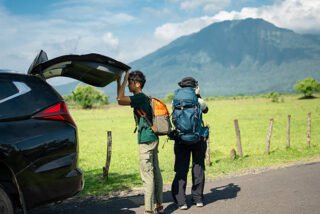
While the international long-haul flight is the most significant line item in your July 2027 safari budget, the logistical “gap” between your arrival and your bush flight is where many travelers encounter unexpected costs and stress. A common oversight for first-time visitors is the assumption that Kilimanjaro International Airport (JRO) and Arusha Airport (ARK) are the same facility. They are not. They are roughly 50 to 60 kilometers apart, a journey that can take anywhere from one to two hours depending on the notoriously unpredictable traffic on the main highway connecting the two.
If your international flight arrives at JRO, but your domestic bush flight departs from ARK—a scenario that is common because many regional safari carriers operate exclusively out of Arusha—you must factor in the cost and time of this transfer. In July, peak season traffic can be heavy. If you attempt to book a tight connection, you risk missing your bush flight entirely. If you miss that flight, you are not merely looking at a rebooking fee; you are often looking at the cost of an unplanned overnight stay in Arusha, additional taxi transfers, and the potential loss of a pre-paid safari day. When calculating your July 2027 flight budget, always build in a buffer of at least four to five hours between your international arrival and your domestic departure. If this buffer is impossible to achieve, it is often more cost-effective to pay a premium for a flight that departs from JRO, or to arrange a private transfer service that coordinates with your flight schedule, rather than relying on standard shuttles that may not accommodate delays.
The Hidden Weight Penalty: Bush Flight Baggage Restrictions
Beyond the ticket price itself, the most significant “hidden” cost of flying within Tanzania during the peak season is the baggage surcharge. Unlike international carriers that allow for 23kg or even 30kg of checked luggage, bush flights in Tanzania operate on strict weight limits, typically capped at 15kg per passenger. These limits are not arbitrary; they are determined by the safety requirements of the small Cessna Caravan aircraft used to navigate remote airstrips in the Serengeti, Ruaha, or Selous.
If you arrive at the airport with a standard international suitcase—which often weighs 20kg to 25kg—you will be hit with immediate financial penalties. In many cases, if your luggage exceeds the 15kg limit, the operator will require you to purchase an “extra seat” on the aircraft to accommodate the weight. During the peak month of July, when flights are operating at maximum capacity, this is not just an inconvenience; it is an expensive necessity. An extra seat can cost as much as a full one-way ticket, effectively doubling the price of your domestic transit. Furthermore, these aircraft require soft-sided bags. Hard-shell suitcases, which are standard for international travel, are often physically incompatible with the cargo holds of bush planes. If you bring a hard-shell bag, you may be forced to leave it behind at a hotel in Arusha or pay for a secure storage service, adding yet another layer of logistical cost and complexity to your trip.
To mitigate this, approach your packing with the discipline of a bush pilot. Invest in high-quality, lightweight soft-sided duffel bags well before your July 2027 trip. Weigh your luggage at home, including your camera gear, which is often the silent culprit behind excess weight. By staying under the 15kg threshold, you avoid the “extra seat” penalty, which is often the single most expensive surprise for travelers who have otherwise meticulously budgeted for their safari.
The Cost of “Dead Time” and Unplanned Layovers
July is a period of high operational pressure for Tanzanian aviation. Because every seat on every bush flight is in high demand, there is very little room for error. If a mechanical issue, weather delay, or late arrival causes you to miss a scheduled bush flight, the airline is not always obligated to put you on the next flight for free, especially if the delay was caused by your international flight. In the peak season, the “next flight” might not be until the following morning. This forces an unplanned overnight stay in Arusha or near JRO. While Arusha has a range of accommodations, finding a room at the last minute during July—when lodges are fully booked with safari-goers—can be both difficult and expensive. When planning your 2027 budget, set aside a contingency fund specifically for these “dead time” costs. It is better to have a reserve of $300–$500 for potential airport transfers, meals, and emergency accommodation than to be caught without resources when a flight schedule shifts.
Decoding the “Circuit” Model: Why Bush Flight Times Are Fluid
One of the most frequent sources of frustration for travelers in July 2027 is the nature of bush flight scheduling. Unlike commercial airlines that operate on a rigid hub-and-spoke model with fixed, published departure times, bush aviation in Tanzania functions as a dynamic, circuit-based network. When you book a seat on a bush plane, you are not buying a ticket on a point-to-point flight; you are purchasing a seat on a route that is optimized daily based on demand, aircraft availability, and passenger manifests across multiple safari camps.
In the peak month of July, this system is under immense pressure. A single bush plane might start its day at Arusha Airport, fly to a landing strip in the Central Serengeti to drop off two guests, continue to a strip in the Northern Serengeti to pick up three more, and then head to a lodge in the Grumeti area. Because the flight manifest is constantly shifting as lodges confirm new arrivals and departures, the airline’s operations team often does not finalize the specific departure time for your flight until the late afternoon of the day before. This is why you might receive a flight itinerary that lists a “proposed” time, only to have it shifted by several hours 24 hours before your departure.
This fluidity is not a sign of poor service; it is the reality of operating small, reliable aircraft into remote, unpaved airstrips. The pilots and dispatchers are balancing weight limits, runway conditions, and the logistical puzzle of moving hundreds of safari-goers across the vast Serengeti ecosystem. If you are accustomed to the predictability of international carriers, this can feel chaotic. However, understanding that your flight time is a moving target is the first step toward reducing anxiety. When your lodge manager tells you on the evening before your flight that your departure time has shifted from 10:00 AM to 1:00 PM, recognize that this is an operational necessity driven by the logistics of the circuit, not a delay in the traditional sense.
Strategies for Managing Dynamic Flight Schedules
To navigate the July 2027 peak season without succumbing to the stress of shifting flight times, you must adjust your expectations and your itinerary structure. The most effective strategy is to treat your bush flight day as a “travel-heavy” day rather than a “game-viewing” day. Do not plan for a critical activity, such as a hot air balloon safari or a specific afternoon game drive, on the same day you are scheduled to fly between camps. The likelihood of your flight time shifting is simply too high to guarantee your presence at a pre-booked activity.
Furthermore, try to minimize the number of legs in your journey. Every time you add a flight, you add a potential point of failure in the circuit. If you are staying in the Serengeti, consider selecting camps that are relatively close to one another or staying in one region for a longer duration rather than hopping between three different strips in four days. A longer stay not only provides a more in-depth safari experience but also removes the logistical headache of frequent check-ins, safety briefings, and tarmac transfers.
Finally, your relationship with your safari operator is your greatest asset during this period. Because they are in constant communication with the bush airlines, they are often the first to know about schedule adjustments. Ensure that you have a reliable way to receive updates—whether via WhatsApp, a local SIM card, or the lodge’s internal communication system—and check in with your host at the lodge each evening. By proactively asking, “Has the flight manifest been confirmed for tomorrow?” you put yourself in a position to adjust your morning plans accordingly, rather than being surprised by a sudden departure request.
Remember that in July, the skies above the Serengeti are busy. The airspace is managed carefully, and the bush airlines are doing their best to ensure that every guest reaches their destination safely. By accepting the inherent flexibility of the circuit model and building “buffer time” into your safari itinerary, you can focus on the wildlife rather than the logistics of the transit.
Check Availability for Tanzania Flight Prices July : Peak Safari Season Planning Guide
Ready to compare dates, prices, and the best option for your group? Send the package name and travel month so the team can reply with a clear quote, availability, and what is included.

Tanzania Flight Prices June : Safari Season Airfares
A practical guide to navigating flight costs and logistics for Tanzania in June 2027, focusing on the seasonal shift from shoulder to peak.
View package details
Tanzania Flight Prices August : Kilimanjaro & Safari Travel Guide
A deep-dive guide into managing airfare costs and travel logistics for your August 2027 Kilimanjaro climb and Tanzania safari, including expert tips on timing, booking windows, and regional...
View package details
Tanzania Flight Ticket Prices: Economy Vs Safari Bush Flights Explained
A practical guide to understanding the cost and logistical differences between commercial economy flights and private-style bush flights in Tanzania.
View package detailsFlightlink Vs Coastal Aviation: Tanzania Safari Flight Prices Guide
A practical comparison of Tanzania's two leading bush airline operators, focusing on what drives prices, operational differences, and how to plan your inter-camp travel.
View package detailsCoastal Aviation Vs Auric Air: Comparing Tanzania Safari Flight Routes &
Deciding between Coastal Aviation and Auric Air for your Tanzania safari? We break down the differences in routes, reliability, and how to manage your bush flight logistics effectively.
View package details
Tanzania Flight Prices March : Airfare & Seasonal Guide
A practical guide to understanding flight pricing for Tanzania in March 2027, covering seasonal trends, booking windows, and logistics for safari and Kilimanjaro itineraries.
View package detailsTanzania Flight Prices February : Safari & Zanzibar Routes
A detailed guide to navigating flight logistics and budget factors for Tanzania travel in February 2027, focusing on safari circuits and Zanzibar connections.
View package details4-Day Tanzania Fly-In Safari With Return Flights: Prices & Planning
A deep look at the logistics and price factors for a 4-day Tanzania fly-in safari, helping you plan your 2027 wildlife adventure.
View package details
Kenya To Tanzania Safari Flights: Prices & Booking Guide
A practical guide to connecting Kenya and Tanzania by air for your safari. Learn about border logistics, booking realities, and why most travelers choose specific routes over others.
View package detailsBest Airlines For Tanzania Safari Flights: Prices & Comparison ()
A guide to navigating Tanzania's domestic airline market for safari travel, covering reliability, baggage constraints, and booking strategies for 2027.
View package details
Tanzania Honeymoon Safari And Zanzibar With Flights: Package Prices
Tanzania Honeymoon Safari and Zanzibar With Flights: Package Prices.
View package detailsNairobi To Serengeti Safari By Flight: Prices & Travel Options
A practical guide to navigating the logistics of flying from Nairobi to the Serengeti, including transit requirements, airport choices, and cost considerations for your 2027 safari.
View package detailsNo related package matches those filters. Clear one or more filters to see the other topic-matched options.



