
Understanding the Reality of Bush Flight Delays
When you book a fly-in safari to destinations like the Serengeti, Ruaha, or Nyerere National Park, you are opting for one of the most efficient ways to traverse Tanzania. However, bush aviation operates differently than international travel. These flights utilize small, single-engine or twin-engine aircraft landing on dirt or gravel strips. Because these operations are highly sensitive to weather, pilot hours, and even runway obstacles like wildlife, delays can and do happen. Understanding what happens when a delay occurs is the best way to keep your stress levels low and your holiday on track.
If your flight is delayed, the immediate reality is that you are rarely navigating the situation alone if you have booked through a professional operator. The most important thing to understand is that the airline and your ground support team operate in a tight feedback loop. When a flight is delayed—whether due to a sudden tropical rainstorm, low visibility, or a minor technical issue—the airline typically communicates this to their ground handling team and, subsequently, to the tour operator who arranged your transfer.
Why Do Safari Flights Get Delayed?
It helps to know that delays in the bush are almost always for safety, not inconvenience. Unlike major airports with ILS (Instrument Landing Systems) and long tarmac runways, bush airstrips rely on visual flight rules. If the weather closes in, the pilot cannot land. Similarly, if a herd of zebras is grazing on the runway, the pilot must circle until the airstrip is clear. These are standard operational realities in the Tanzanian wilderness. Recognizing this helps you view a delay not as a failure of service, but as a necessary safety precaution.
Pro Tip: Always keep your phone charged and ensure you have the contact details of your tour operator handy. While the airline will notify the ground crew, having a direct line to your local support team—like Climb 4 Africa—adds an extra layer of security.
The Chain Reaction: What Happens on the Ground?
A flight delay creates a ripple effect. If you are flying from Arusha to the Serengeti, your safari driver is already waiting at the airstrip to collect you. When a flight is delayed, the following sequence typically occurs:
- Communication Protocol: The airline’s operations center notifies the ground handling agent at the airstrip.
- Driver Notification: Your specific safari driver, who is already at the airstrip, is informed by the ground handling staff or by our office.
- Itinerary Adjustment: If your arrival time shifts significantly, the lodge or camp is alerted. They need to know if you will miss lunch or if you need a late check-in.
- Wildlife Viewing Salvage: If you miss a morning game drive, your driver will assess the situation. Often, they will adjust the route to ensure you still get your safari experience on the way to the lodge.
The key here is that the driver is your primary advocate. Because your driver is already stationed at the destination airstrip, they are the first to know about the delay and the first to start re-planning your afternoon. You can learn more about how we manage these logistics in our guide on Can My Hotel or Safari Operator Book a Domestic Flight for Me?, where we detail the benefits of having an integrated booking.
Managed vs. DIY Bookings: A Comparison
The level of support you receive during a delay depends heavily on how you booked your travel. Below is a comparison of what you can expect in the event of a disruption.
| Scenario | Managed Booking (via Operator) | DIY Booking |
|---|---|---|
| Communication | Operator coordinates with airline and driver. | You must contact the airline and driver yourself. |
| Logistics | Itinerary is adjusted automatically. | You must manage camp/hotel notifications. |
| Rebooking | Priority support from the airline. | You are subject to public queues. |
| Cost Management | Operator absorbs minor changes. | You may face immediate out-of-pocket fees. |
What Should You Do While You Wait?
If you find yourself waiting at an airstrip due to a flight delay, patience is your best asset. The infrastructure at remote bush airstrips is often minimal—sometimes just a small shelter or a shaded area under a tree. Here is how to handle the wait:
- Stay Connected: Keep your mobile phone charged. If you have a local SIM card or roaming, ensure you can receive calls.
- Keep Your Gear Accessible: Don’t pack your essentials (water, snacks, camera, medications) in the hold luggage if you can avoid it. Keep your daypack with you.
- Trust the Process: The pilots and ground crew want to get you to your destination just as much as you want to get there. They are constantly monitoring weather patterns and air traffic control updates.
- Consult Your Driver: If you are already at the airstrip waiting for a departing flight, your driver is your best source of information. They are in constant contact with the airline’s ground staff.
For those worried about the reliability of these connections, we often suggest reviewing our analysis on Are Tanzania Safari Flights Safe and Reliable?, which covers the rigorous safety standards of the airlines operating these routes.
Financial and Insurance Implications
A common question is whether a flight delay will cost you money. Generally, if the delay is due to weather, the airline is not liable for accommodation or meals. This is where comprehensive travel insurance is vital. Ensure your policy includes ‘trip delay’ or ‘travel interruption’ coverage. If a significant delay causes you to miss a pre-paid activity or a night at a lodge, you will need to provide documentation to your insurance provider to claim those costs back. Always ask the airline for a written statement confirming the delay if you intend to file a claim.
If you are booked on a package with Climb 4 Africa, we do our utmost to minimize these costs by negotiating directly with our partners on the ground. We understand that travel in Tanzania can be unpredictable, and we aim to act as a buffer between you and the logistical challenges of remote travel.
Common Concerns About Safari Flight Disruptions
Travelers often ask if they should avoid flying altogether to prevent delays. While road transfers are an option, they are significantly longer and can be just as prone to delays due to road conditions or traffic. For most travelers, the time saved by flying—often hours vs. days—far outweighs the occasional risk of a weather-related delay.
Another frequent concern is luggage. If your flight is delayed, does your luggage get lost? In our experience, airlines are very careful about keeping passengers and luggage together. If you are bumped to a later flight, the airline will make every effort to ensure your bags are on that same flight. We discuss the specifics of weight and space in our guide on How Much Luggage Is Allowed on Serengeti Safari Flights?, which is essential reading for anyone flying into the bush.
Planning for the Unexpected
The best way to handle a delay is to build a little buffer into your itinerary. Avoid scheduling tight international flight connections on the same day as your bush flight. If you are flying from the Serengeti to Kilimanjaro International Airport (JRO) to catch an international flight home, we strongly recommend leaving a significant window—at least 4 to 6 hours—between your landing and your international departure. This buffer protects you from the ripple effects of a minor delay.
If you are currently planning your trip and want to ensure your logistics are as smooth as possible, we are here to help. Whether you are finalizing your itinerary or have questions about flight connections, our local team is ready to assist.
For expert advice on your specific itinerary, feel free to reach out to us. You can contact us via WhatsApp at +255 747 477 898, or send an email to climb4africa@gmail.com. For backup, you can also reach us at info@climb-4-africa.com. We are here to help you navigate the nuances of your Tanzania safari, ensuring that even if the unexpected happens, you are supported every step of the way.

The “Milk Run” Factor: Why Your Flight Path Matters
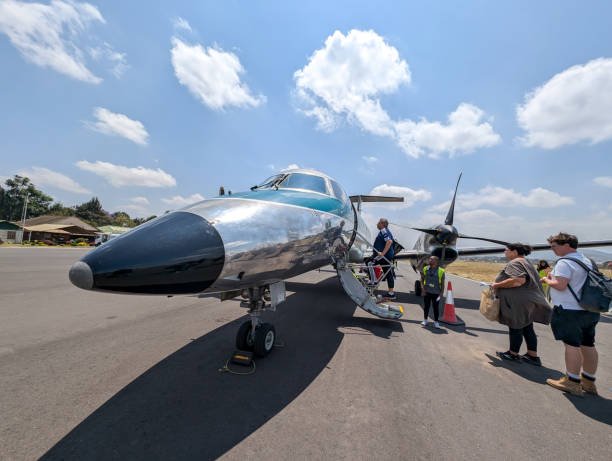
To fully grasp why delays happen and how they impact your itinerary, it is essential to understand that bush aviation in Tanzania rarely operates as a point-to-point service. Instead, most bush airlines utilize a “hub-and-spoke” or “milk run” model. A single aircraft might depart from Arusha and stop at three or four different airstrips—such as Seronera in the Serengeti, followed by Kogatende, and perhaps a smaller strip in the Grumeti region—before returning. This operational structure is incredibly efficient for covering vast distances, but it introduces a vulnerability: a delay at the very first stop cascades through the entire day.
If a passenger at your first stop is late arriving at the airstrip, or if a sudden localized weather event forces a pilot to hold at the second stop, that delay is physically carried forward to your flight. Understanding this helps manage expectations; you are not necessarily waiting for your specific pilot to resolve an issue with your specific plane. You are often waiting for the aircraft to complete its circuit. Recognizing that your flight is part of a larger, interconnected ecosystem of movement can help alleviate the frustration of a delay, as it becomes clear that the airline is managing a complex logistical puzzle rather than simply being unorganized.
Managing the “Lost Time” Anxiety
The most common source of stress regarding flight delays is the fear of losing precious game drive time. You have likely invested significant resources into your safari, and the prospect of arriving at your camp at 4:30 PM instead of 2:00 PM can feel like a tangible loss of value. It is important to remember, however, that the Tanzanian safari industry is built on a culture of flexibility. Lodge managers and safari guides are accustomed to the realities of bush travel and are rarely rigid about the clock.
When you arrive at your lodge or camp after a delayed flight, the first thing to do is communicate with the camp manager or your assigned guide. Do not assume that your afternoon game drive is simply “gone.” While you may have missed the formal start time, many camps are willing to offer a “shortened” sunset drive or an extended evening sundowner experience to ensure you still get out into the bush immediately upon arrival. The goal of the camp staff is to transition you from the stress of travel into the rhythm of the wilderness as quickly as possible. Often, a quick, focused drive to a nearby watering hole can be just as rewarding as a longer, planned excursion.
Negotiating Your Schedule Upon Arrival
If a significant delay makes an afternoon game drive impossible—perhaps you arrive just as the sun is setting—the best approach is to negotiate your schedule for the following day. Safari guides are generally very accommodating if they know you missed your intended arrival time. You might suggest an earlier departure the next morning or a longer full-day game drive that pushes deeper into the park than originally planned.
Because you are usually staying in the same camp for multiple nights, there is inherent flexibility in the itinerary that does not exist in rigid, city-based travel. Your guide wants you to have a successful safari just as much as you do; if they know you are disappointed about a missed opportunity, they will often go the extra mile to find wildlife or provide a more in-depth experience the next day to compensate. Instead of viewing the delay as a “lost” day, view it as a logistical pivot. By proactively discussing your schedule with the lodge team the moment you check in, you turn a passive experience—waiting for a flight—into an active negotiation that protects the quality of your safari.
Finally, avoid the temptation to rush the transition. If your flight was delayed due to weather or technical issues, you may be tired or dehydrated. Forcing yourself into a game drive the moment you land, simply to “make up for lost time,” can sometimes lead to a less enjoyable experience. Sometimes, the best way to handle a delay is to accept that the first few hours of your stay will be spent relaxing at the lodge, taking in the sounds of the bush, and preparing for a full, uninterrupted day of wildlife viewing the next morning. This approach ensures that your safari remains a vacation rather than a race against the clock.
Navigating the “Worst Case”: When Delays Threaten Your International Connection
While most bush flight delays merely result in a missed afternoon game drive or a late check-in at your lodge, the situation becomes significantly more complex when a delay threatens your international flight home. This is the distinction between a minor inconvenience and a travel crisis. It is critical to recognize that in Tanzania, your bush flight and your long-haul international flight are almost never booked on the same ticket. They are entirely separate legal contracts with different carriers, meaning that if a delay on your bush flight causes you to miss your international departure, the international airline is generally under no obligation to rebook you for free.
The first step when a delay threatens your connection is immediate, proactive communication. If you are on a managed itinerary, your tour operator is your primary lifeline. They often have real-time access to flight status boards and, more importantly, existing relationships with airline ground staff. They can sometimes leverage these relationships to prioritize your re-booking or coordinate an alternative transfer, such as a private road transfer to Arusha or Kilimanjaro International Airport (JRO) if the weather window is closing but the roads remain viable. If you are on a DIY booking, you must contact your international airline immediately. Do not wait until you arrive at the airport; call them the moment the bush airline informs you of a delay that puts your connection at risk. Explain the situation clearly, noting that the delay is due to weather or operational safety, which may occasionally garner sympathy from airline agents even if they are not contractually obligated to assist.
Documentation is your most valuable asset in this scenario. Before you leave the airstrip or the bush airline’s terminal, you must request a written statement of delay. This document, often called a “Flight Delay Certificate” or “Disruption Report,” is essential for your travel insurance claim. It should explicitly state the flight number, the scheduled time, the actual time of arrival, and the cause of the delay (e.g., “weather-related ground stop”). Without this, your insurance provider may reject your claim for missed connection expenses, such as the cost of a new flight ticket, additional hotel nights, or emergency transport. Keep this document digital if possible—take a clear photo of it immediately—as physical papers are easily lost in the shuffle of transit.
Understanding the geography of your transit hub is also vital for damage control. Most international departures from Tanzania leave from Kilimanjaro International Airport (JRO) or Dar es Salaam (DAR). If you are delayed, you need to assess your options for overnighting. JRO is relatively small and can be quiet at night, meaning that if you miss a flight, your options for food and comfortable accommodation within the terminal are limited. If you are stranded, your tour operator or hotel concierge can assist in arranging a transfer to a nearby hotel in Arusha or Moshi. Do not attempt to sleep in the airport terminal unless absolutely necessary; the infrastructure is not designed for overnight stays, and you will be much better served by a local hotel where you can secure a stable Wi-Fi connection to manage your rebooking.
Finally, consider the logistics of your luggage. When a flight is delayed and you are forced to pivot to a different, faster, or alternative route—such as taking a late-day flight or an emergency road transfer—your luggage may not always follow the same path. Bush planes have strict weight and size limits, and if your flight is re-routed or split, your bags might be placed on a different aircraft or held until the next available flight. If you are in a high-stress situation involving a missed international connection, confirm the status of your checked bags with the airline agent at the airstrip. Ask specifically if the luggage will be transferred automatically to your new flight or if you need to collect it at the hub airport. Failing to confirm this can lead to the “missing bag” scenario, which adds another layer of complexity to an already stressful day.
Related Guides and Packages
Check Availability for What Happens If My Tanzania Safari Flight Is Delayed? A Practical Guide
Ready to compare dates, prices, and the best option for your group? Send the package name and travel month so the team can reply with a clear quote, availability, and what is included.

Tanzania Safari Flight Baggage Limits: 15Kg, 20Kg & Extra Bag Costs Explained
A practical guide to navigating bush flight luggage restrictions in Tanzania. Understand why 15kg is the standard, the necessity of soft bags, and how to manage gear across multiple trip...
View package details
Tanzania Flight Ticket Prices: Economy Vs Safari Bush Flights Explained
A practical guide to understanding the cost and logistical differences between commercial economy flights and private-style bush flights in Tanzania.
View package detailsFlightlink Vs Coastal Aviation: Tanzania Safari Flight Prices Guide
A practical comparison of Tanzania's two leading bush airline operators, focusing on what drives prices, operational differences, and how to plan your inter-camp travel.
View package detailsCoastal Aviation Vs Auric Air: Comparing Tanzania Safari Flight Routes &
Deciding between Coastal Aviation and Auric Air for your Tanzania safari? We break down the differences in routes, reliability, and how to manage your bush flight logistics effectively.
View package details
Tanzania Flight Prices August : Kilimanjaro & Safari Travel Guide
A deep-dive guide into managing airfare costs and travel logistics for your August 2027 Kilimanjaro climb and Tanzania safari, including expert tips on timing, booking windows, and regional...
View package detailsTanzania Flight Prices July : Peak Safari Season Planning Guide
July is the absolute peak of the safari season in Tanzania. Here is how to navigate flight pricing, airline choices, and booking strategies for your July 2027 trip.
View package detailsTanzania Flight Prices June : Safari Season Airfares
A practical guide to navigating flight costs and logistics for Tanzania in June 2027, focusing on the seasonal shift from shoulder to peak.
View package detailsTanzania Flight Prices February : Safari & Zanzibar Routes
A detailed guide to navigating flight logistics and budget factors for Tanzania travel in February 2027, focusing on safari circuits and Zanzibar connections.
View package detailsTanzania Safari Flight-Inclusive Packages Vs Road Price Comparison
A deep look at the cost drivers and logistical differences between flying and driving on your Tanzanian safari. Learn which option fits your time and budget.
View package details
Private Tanzania Safari With Internal Flights: Cost & Itinerary
An expert guide to planning a private fly-in safari in Tanzania, covering cost factors, time-saving logistics, and how to structure your itinerary for maximum wildlife viewing.
View package detailsBudget Tanzania Fly-In Safari: Affordable Options & Flights Guide
Discover how to plan a budget-friendly fly-in safari in Tanzania without compromising on the experience. Learn about strategic timing, regional flight logistics, and how to balance air...
View package details4-Day Tanzania Fly-In Safari With Return Flights: Prices & Planning
A deep look at the logistics and price factors for a 4-day Tanzania fly-in safari, helping you plan your 2027 wildlife adventure.
View package detailsNo related package matches those filters. Clear one or more filters to see the other topic-matched options.



