
Yes, your safari operator can—and in most cases, should—book your domestic flights in Tanzania. While hotels or lodges can occasionally assist with local transfers, a dedicated safari operator like Climb 4 Africa is fundamentally better equipped to handle the complexities of bush flights. When you book your internal air travel through your safari operator, they act as the primary point of accountability for your entire itinerary. This ensures that your flight timings align perfectly with your game drives, your baggage allowances are managed according to light aircraft regulations, and, most importantly, there is a single expert coordinating your support if a flight is delayed, cancelled, or rescheduled due to weather.
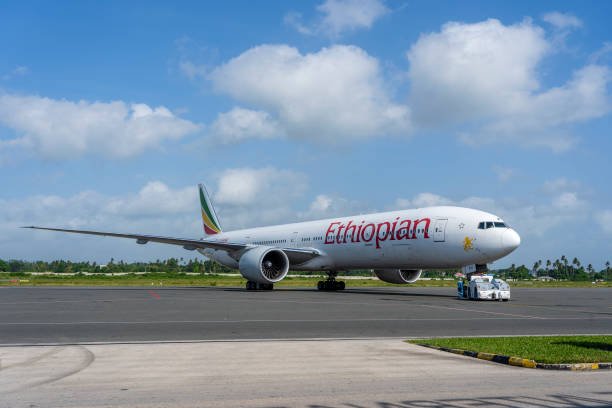
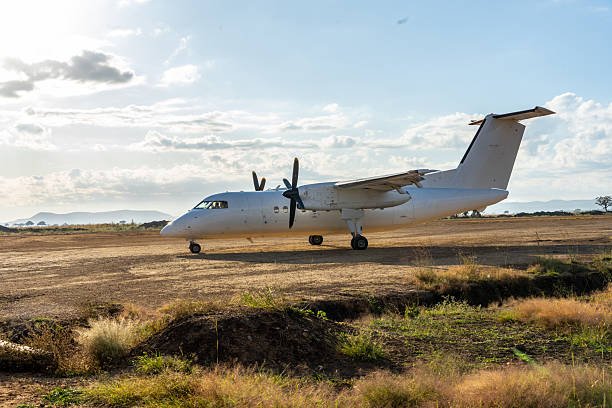
Many travelers arrive in Tanzania assuming that domestic flights operate like major international carriers, but the reality of bush aviation is quite different. These flights are often operated by small, regional airlines using light aircraft that land on gravel or grass strips in remote parks. Because these flights are highly sensitive to weather conditions, runway status, and passenger weight limits, having a professional operator manage the booking is a significant logistical advantage.
The Difference Between a Hotel Concierge and a Safari Operator
It is important to distinguish between the two types of assistance you might receive. A hotel or lodge concierge can certainly help with basic transport—perhaps arranging a taxi to the airport or pointing you toward a ticket office. However, they are generally not managing your entire trip’s logistics. If you book a flight through a hotel, you are often on your own the moment you leave their property.
Conversely, a safari operator is responsible for your safety and success from the moment you land until you depart. When we book a domestic flight for you, we are not just buying a ticket; we are integrating that flight into a larger, time-sensitive itinerary. We monitor airline schedules, handle the complex communication required if a bush flight is rerouted, and ensure that your ground transport is waiting at the destination airstrip regardless of minor flight delays.
For more on how this integration works, you might find it helpful to read our guide on can one company arrange our safari, internal flights and Zanzibar transfers?, which details why consolidation is almost always the preferred route for stress-free travel.
Why Baggage Logistics Require Professional Handling
One of the most frequent points of confusion for travelers is the luggage allowance on Serengeti safari flights. Domestic airlines in Tanzania have strict weight limits—usually 15 kilograms (33 lbs)—and they mandate the use of soft-sided bags. If you show up at a remote airstrip with a hard-shell suitcase that exceeds the weight limit, you may be charged a significant fee, or in some cases, the airline may refuse to transport the bag entirely.
When your safari operator books the flight, we provide explicit, pre-trip instructions regarding these weight restrictions. We help you plan what to leave at your hotel in Arusha or Dar es Salaam and what to pack for the bush. If you book the flight yourself online, you might miss these critical warnings, leading to unnecessary stress at the check-in counter. We prioritize managing these details so you don’t have to navigate them alone.
Managing Flight Delays and Itinerary Disruptions
Bush aviation in Tanzania is subject to the realities of the environment. A sudden storm in the Serengeti or a maintenance issue on a small plane can lead to delays. If you book your own flight, you are responsible for contacting the airline, rebooking, and coordinating with your ground transport on the other end. This can be incredibly difficult if you are in a remote area with limited cell reception.
When an operator like Climb 4 Africa manages your booking, we have direct lines of communication with the airlines. We receive the updates first, and we proactively manage the fallout. If a flight is pushed back, we inform your safari guide, who will adjust the game drive schedule or wait at the airstrip. You are not left stranded, and you do not have to spend your vacation time on the phone with customer service lines.
Key Advantages of Operator-Managed Domestic Flights
- Coordinated Transfers: Your guide is always notified of flight status updates, ensuring they are at the airstrip when you land.
- Baggage Compliance: We ensure you are aware of the strict 15kg limit and soft-bag requirements before you ever reach the airport.
- Conflict Resolution: If a flight is cancelled, we handle the rebooking and communicate with the airline on your behalf.
- smooth Integration: Your flight times are selected to minimize wait times, ensuring you don’t spend half a day sitting at an airport.
- Airport Tax Awareness: We clarify whether your ticket includes all airport taxes and fees, preventing surprises at the terminal.
Comparison: Booking Yourself vs. Booking Through Your Operator
To help you decide, consider the following breakdown of the two approaches. While booking yourself might seem like it offers more control, the reality of travel in Tanzania often favors the operator-led model.
| Feature | Booking Yourself | Booking via Operator |
|---|---|---|
| Flight Selection | You choose based on price/time | We choose based on itinerary efficiency |
| Rebooking (if delayed) | Your responsibility | Operator handles all logistics |
| Baggage Rules | Easily missed | Explicitly managed & advised |
| Ground Transfer | You must arrange independently | Seamlessly included |
| Accountability | None; you are on your own | Operator holds the responsibility |
The Reality of “Same-Day” Transfers
Many travelers ask, can I book a Tanzania domestic flight on the same day? It is a common question, especially for those arriving on international flights. While it is technically possible, it is risky. If your international flight is delayed, you will miss your domestic connection. When you book through a professional operator, we use our experience to build in a safe buffer. We know which connections are reliable and which are too tight. If we book the full package, we take responsibility for ensuring you make your connection or helping you if you don’t.
For those looking to combine multiple experiences, such as a mountain climb followed by a safari, we often get asked, can a safari package include the domestic flight to Zanzibar? The answer is an emphatic yes. In fact, we recommend it. Combining your safari and your Zanzibar beach holiday into a single, operator-managed package allows us to time your flight to coincide with your transfer to the airport and your hotel check-in on the island. It removes the stress of trying to coordinate multiple independent bookings.
How to Get Started with Your Booking
If you are in the planning stages for 2026 or 2027, the best approach is to reach out to us early. You do not need to have your international flights booked before you talk to us about your domestic needs. In fact, it is often better to discuss your full itinerary—including your Kilimanjaro climb, wildlife safari, and Zanzibar holiday—before you finalize your international arrival and departure times.
When you contact us, simply provide the following details:
- Your preferred travel dates: Be specific about when you want to be in the bush versus on the coast.
- Your group size: This affects flight availability and transfer vehicle size.
- Your total luggage requirements: If you have special gear, let us know early.
- Your budget expectations: We can discuss mid-range versus luxury options for both safaris and flights.
For expert assistance with your upcoming travel, you can reach out to us via WhatsApp at +255 747 477 898 or email us at climb4africa@gmail.com. If you have any trouble reaching us, our backup email is info@climb-4-africa.com. We are here to help you navigate the logistics, including finding the right flights that fit your schedule and comfort level.

Understanding the Costs and Value
A common misconception is that booking flights through an operator is significantly more expensive than booking online. In many cases, it is quite the opposite. Because operators have access to negotiated rates and can bundle flights with transfers, the total package cost is often lower than the sum of the parts. Furthermore, you must factor in the ‘hidden’ cost of managing a crisis. If you book a cheap flight online and it gets cancelled, the cost of a last-minute replacement, a taxi, or a lost day of your safari can far exceed any savings you initially made.
We prioritize transparency in our pricing. When we quote your trip, we break down what is included, ensuring you understand exactly what you are paying for. You aren’t just paying for a flight; you are paying for the peace of mind that comes with professional management. If you are curious about the general costs involved in domestic travel, our article on how much does a domestic flight cost in Tanzania? provides a good baseline for your budget planning.
Final Considerations for Your Trip
Ultimately, your time in Tanzania is precious. Whether you are trekking the Machame Route or exploring the Ngorongoro Crater, the last thing you want to do is spend your time navigating airport websites, worrying about luggage weight limits, or trying to rebook flights in the middle of a remote park. By letting your safari operator handle your domestic flight bookings, you ensure that your trip remains a vacation, not a logistical project.
We encourage you to look at our tanzania safari group departures if you are looking for a pre-planned, stress-free itinerary, or reach out to us for a custom, tailor-made experience that includes every flight, transfer, and lodge stay perfectly coordinated from start to finish. Let us take the heavy lifting of logistics off your shoulders so you can focus on the experience of the African wilderness.
“,
“faq_schema”: [
{
“question”: “Should I book my own domestic flights in Tanzania?”,
“answer”: “It is generally better to have your safari operator book them. They understand the specific requirements for bush flights, including baggage limits and timing, and can manage rebookings if flights are delayed or cancelled.”
},
{
“question”: “Can a hotel help me with my domestic flight?”,
“answer”: “A hotel concierge can often assist with basic arrangements, but they usually lack the capacity to integrate the flight into your broader safari itinerary or provide support if a flight delay impacts your onward travel.”
},
{
“question”: “What happens if my bush flight is cancelled?”,
“answer”: “If you booked through a professional safari operator, they will handle the rebooking, communicate with the airline, and adjust your ground transport at the destination to ensure your itinerary remains on track.”
},
{
“question”: “Are there luggage limits on Tanzania domestic flights?”,
“answer”: “Yes, most domestic bush flights have a strict 15kg (33 lbs) weight limit and require soft-sided luggage. Your safari operator will provide these specific instructions before you pack.
Navigating Multi-Leg Itineraries: The “Bush-to-Beach” Transition
Many travelers view the domestic flight as a simple “A to B” commute, but in the context of a Tanzanian safari, it is rarely that straightforward. The most common itinerary involves a “bush-to-beach” transition—moving from the rugged, dusty airstrips of the Serengeti, Ruaha, or Selous directly to the coastal hubs of Zanzibar or Dar es Salaam. When you book these legs individually through various airline websites, you often miss the critical logistical layer that connects these disparate environments. An operator-managed itinerary treats these flights not as isolated events, but as a continuous, fluid journey, accounting for the unique requirements of each leg.
Understanding the Hub-and-Spoke Aviation Model
It is essential to understand that bush aviation in Tanzania does not operate like a standard commercial airline with direct, point-to-point flights. Instead, it functions on a “hub-and-spoke” model, often referred to as a “milk run.” A single light aircraft might depart from Arusha and make stops at Seronera, Kogatende, and Grumeti before eventually heading toward the coast or a different park. If you are booking your own flights, you might select a ticket based solely on price or departure time, failing to realize that your flight is scheduled for four stops along the way. This can turn a theoretical 90-minute flight into a four-hour journey, significantly impacting your safari schedule.
A safari operator, by contrast, understands the specific routing of the bush aircraft for that season. They know which airstrips are currently active and which routes are subject to seasonal maintenance. By managing the booking, they ensure that your flight is optimized for efficiency, often prioritizing direct connections where possible or ensuring that if a stopover is required, it is at a location that minimizes your time spent on the tarmac. This level of insider knowledge prevents the common frustration of realizing, mid-flight, that you are flying in the opposite direction of your destination to drop off other passengers.
The Critical “Handover” at the Airstrip
The most vulnerable moment in your entire safari itinerary is the “handover”—the transition from your game drive vehicle to the light aircraft, and later, the transition from the airstrip to your next lodge or beach resort. When you book through an operator, this handover is orchestrated with precision. Your safari guide is in direct communication with the airline’s operations desk. If your flight is running ahead of schedule or is delayed by a sudden afternoon thunderstorm, your guide is updated in real-time. They adjust the timing of your final morning game drive to ensure you arrive at the airstrip exactly when needed, rather than sitting in the sun for an hour or, worse, arriving late and watching the plane taxi away.
Conversely, when arriving at a new destination, the coordination is just as vital. Airstrips in remote parks are often nothing more than a cleared patch of gravel or grass. There are no departure boards, no information desks, and rarely any cell service. If you have booked your own flight, you are responsible for ensuring your transfer driver knows exactly which flight you are on and which airstrip you are landing at. In areas like the Serengeti, there are multiple airstrips serving the same general region (e.g., Seronera, Kogatende, Lobo). If you book a flight to one and your transfer driver is waiting at another, the results can be catastrophic for your schedule. An operator ensures the pilot, the airline, and the driver are all synchronized on the exact landing location and arrival time.
Managing Baggage Discrepancies Across Different Legs
One of the most complex aspects of a multi-leg trip is the inconsistency in baggage regulations. A flight from the Serengeti to Zanzibar often involves two different types of aircraft: a small, single-engine bush plane for the first leg and perhaps a larger turboprop or commercial jet for the second. The weight limit for the bush plane is almost always a strict 15 kilograms (33 lbs) in soft-sided bags, while the subsequent leg might allow for standard luggage. If you arrive at the airstrip with a hard-shell suitcase that exceeds the weight limit, you may be forced to pay a hefty penalty, leave your bag behind, or—in extreme cases—be denied boarding entirely.
Operators manage this by providing a “luggage strategy” for your trip. They will advise you on what to pack for the bush portion versus what can be stored or checked for the coastal portion. In some cases, operators can even arrange for secure luggage storage in Arusha or at a base hotel, allowing you to leave your heavier, non-essential items behind while you travel light into the bush. This proactive management removes the guesswork and stress from your packing process, ensuring that every piece of your luggage is compliant with the specific requirements of the aircraft you are boarding.
Why Multi-Leg Bookings Require Centralized Control
When you have multiple flights, transfers, and lodge stays, the risk of a “cascading failure” increases significantly. A minor delay on your first flight can cause you to miss a connection, which then invalidates your ground transfer, which in turn means you miss your check-in window at the next lodge. When you book each component individually, you are the project manager responsible for fixing these issues. You must call the airline, then the transfer company, then the hotel, and hope that each party can accommodate the change.
When an operator manages the booking, they hold the entire itinerary. If a delay occurs, they are already working on the solution before you even land. They can hold the transfer vehicle, rebook the onward flight, and notify the lodge of your new arrival time, all while you are still in the air. This centralized control is the primary value proposition of using a professional operator for domestic travel. You are not just paying for a seat on a plane; you are paying for an insurance policy against the unpredictable nature of remote travel logistics.
The Pre-Flight Communication Loop: What to Expect 24 Hours Before Departure
One common point of anxiety for travelers using bush flights is the lack of a traditional “check-in” process. In commercial travel, you are accustomed to receiving a digital boarding pass via email or an app 24 hours before your flight. In the Tanzanian bush, this does not happen. Instead, you are part of a dynamic manifest that is constantly being updated by your safari operator and the aviation company to account for changing weather, runway conditions, and passenger routing.
The day before your scheduled flight, your operator will confirm the final flight time with the airline. Because bush planes are often scheduled based on fluctuating demand—or what is known as “on request” routing—the exact departure time can shift by an hour or two depending on other passengers being picked up or dropped off at different airstrips along the route. This is not a delay in the traditional sense; it is simply the nature of the “milk run” model, where aircraft optimize their flight paths based on the day’s total passenger list.
Your lodge manager or your private guide will receive this confirmation from the operator, usually by the evening before your flight. It is their responsibility to inform you at dinner or during your evening briefing. You do not need to check a website, refresh an app, or call the airline yourself. If there is a significant weather-related change—such as low cloud cover delaying a morning takeoff—the operator will contact your lodge directly to adjust your morning game drive schedule accordingly. This communication loop is the “invisible service” that ensures you are not waiting unnecessarily at a remote airstrip.
Furthermore, you will not receive a physical boarding pass. Instead, the pilot will have your name on a manifest. When you arrive at the airstrip, the pilot or the ground handler will simply verify your identity against that document. This reliance on personal coordination rather than digital documentation is why having a single operator managing the entire chain is so vital; they are the ones feeding the passenger data to the pilots and ensuring your presence is accounted for at every leg of the journey.
Check Availability for Can My Hotel Or Safari Operator Book A Domestic Flight For Me?
Ready to compare dates, prices, and the best option for your group? Send the package name and travel month so the team can reply with a clear quote, availability, and what is included.
Kenya To Tanzania Safari Flights: Prices & Booking Guide
A practical guide to connecting Kenya and Tanzania by air for your safari. Learn about border logistics, booking realities, and why most travelers choose specific routes over others.
View package details
Tanzania Safari And Zanzibar Holiday With Domestic Flights: Costs Guide
A guide to understanding the costs, logistics, and planning strategies for combining a Tanzanian wildlife safari with a Zanzibar beach getaway using domestic flights.
View package details
Can I Book International Flights And Safari Packages Together? Expert
A practical guide on why local Tanzanian tour operators handle land arrangements, not international airfare, and how to coordinate your 2026-2027 trip for success.
View package detailsNairobi To Serengeti Safari By Flight: Prices & Travel Options
A practical guide to navigating the logistics of flying from Nairobi to the Serengeti, including transit requirements, airport choices, and cost considerations for your 2027 safari.
View package details
Masai Mara To Serengeti Flights: Cross-Border Safari Costs And Logistics
Discover the logistics of flying from Masai Mara to Serengeti, including bush flight options, cross-border visa requirements, and typical safari cost considerations.
View package details
Kigali To Serengeti Flights: Prices & Safari Connections
A practical guide to connecting your Rwanda gorilla trekking with a Serengeti safari, focusing on flight routes, transit logistics, and expert booking advice.
View package detailsEntebbe To Serengeti Safari: Flight Connections & Cost Planning
A practical guide to connecting your Entebbe-based travel with a Serengeti safari, covering flight routes, airport choices, baggage constraints, and cost factors for 2026-2027.
View package details
Kilimanjaro Climb And Serengeti Safari: Flight & Transfer Planning
Kilimanjaro Climb and Serengeti Safari: Flight & Transfer Planning.
View package detailsTanzania Safari Flight Baggage Limits: 15Kg, 20Kg & Extra Bag Costs Explained
A practical guide to navigating bush flight luggage restrictions in Tanzania. Understand why 15kg is the standard, the necessity of soft bags, and how to manage gear across multiple trip...
View package details
Tanzania Flight Ticket Prices: Economy Vs Safari Bush Flights Explained
A practical guide to understanding the cost and logistical differences between commercial economy flights and private-style bush flights in Tanzania.
View package detailsFlightlink Vs Coastal Aviation: Tanzania Safari Flight Prices Guide
A practical comparison of Tanzania's two leading bush airline operators, focusing on what drives prices, operational differences, and how to plan your inter-camp travel.
View package detailsCoastal Aviation Vs Auric Air: Comparing Tanzania Safari Flight Routes &
Deciding between Coastal Aviation and Auric Air for your Tanzania safari? We break down the differences in routes, reliability, and how to manage your bush flight logistics effectively.
View package detailsNo related package matches those filters. Clear one or more filters to see the other topic-matched options.



