
When planning a safari or a beach extension, the question of how much a domestic flight costs in Tanzania often comes down to a fundamental choice: are you taking a scheduled commercial regional flight or a bush charter flight? The two experiences are vastly different, and their pricing structures operate on entirely separate logic. There is no single “standard” price for flying across Tanzania, as rates fluctuate based on aircraft type, fuel surcharges, seasonal demand, and the specific airstrip infrastructure involved.
For many travelers, the goal is to save time. Driving between the Northern Circuit parks or from Arusha to Zanzibar can take an entire day. Flying turns a 10-hour drive into a 45-minute hop. However, this convenience carries a premium. Below, we break down the reality of these costs to help you budget effectively for your 2026-2027 travels.
The Two Worlds of Tanzanian Aviation
To understand the cost, you must first categorize the flight type. In Tanzania, domestic air travel is split into two distinct tiers.
1. Scheduled Commercial Regional Airlines
These operate like standard airlines. They use larger turboprop aircraft (like ATR-72s or Dash 8s), fly between major airports (such as Dar es Salaam, Kilimanjaro, and Zanzibar), and have fixed, published schedules. You book a seat, you check in at a terminal, and you follow standard airport security procedures. Because these flights carry more passengers, the cost per seat is generally lower and more predictable.
2. Bush Charter Flights (Safari Links)
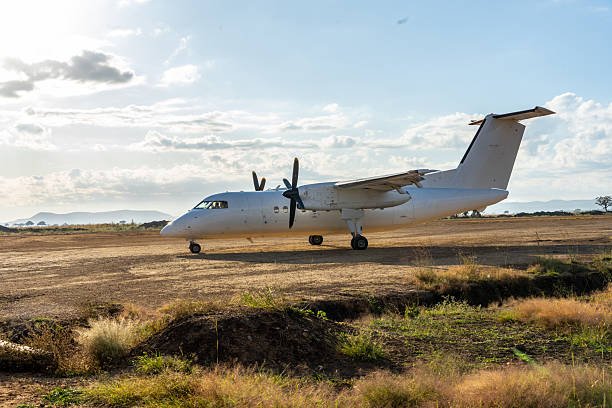
This is the “safari” experience. Companies like Coastal Aviation, Auric Air, and Regional Air operate smaller Cessna Caravans (often 12-14 seaters). They fly directly into the bush—landing on dirt strips in the middle of the Serengeti or Ruaha. Because these flights are essentially hop-on/hop-off bush taxis that require specialized pilot training and expensive maintenance for rough-terrain landings, the cost is significantly higher. You are paying for the proximity to your lodge, not just the distance traveled.
Pro Tip: The Hub Confusion
A major hidden cost factor is which airport you choose. Kilimanjaro International Airport (JRO) is the primary gateway for international arrivals, but Arusha Airport (ARK) is the actual hub for most bush flights. If your flight itinerary requires a transfer from JRO to ARK to catch your bush flight, you must factor in the cost of ground transfers, which can be an additional $50–$100 depending on your group size. Always clarify with your operator whether your flight departs from JRO or ARK.
Factors Influencing the Cost
When you ask for a quote, several variables shift the final price. Unlike international flights, where algorithms dictate pricing based on how many seats are left, domestic Tanzanian flights are influenced by:
- Seasonality: During the peak safari season (July through October and late December), demand for bush flights skyrockets. Availability on specific routes—like the Serengeti to Zanzibar—becomes extremely tight, and airlines rarely offer discounts.
- Fuel Surcharges: Because these companies operate in remote areas, fuel logistics are complex. Significant spikes in global fuel prices are often passed directly to the consumer as “fuel surcharges” that can fluctuate month-to-month.
- The “Circuit” Effect: Airlines often route their planes in a loop. If you are flying a popular route (e.g., Arusha to Seronera in the Serengeti), the plane is likely already full, keeping costs relatively stable. If you are requesting a flight to a remote, less-visited airstrip, the airline may have to position the plane specifically for you, which can increase the cost or require booking a private charter.
- Baggage Limitations: This is the most common “hidden” cost. On bush flights, you are strictly limited to 15kg (33lbs) of luggage in soft-sided bags. If you arrive with a hard-shell suitcase or excessive weight, you may be forced to buy an extra seat to accommodate your bags, which effectively doubles the cost of your flight.
Comparative Flight Overview
The following table illustrates the general differences in how these two travel methods impact your trip logistics and financial planning.
| Feature | Regional Commercial Flight | Bush Charter Flight |
|---|---|---|
| Aircraft Type | Large Turboprop (30-70 seats) | Light Aircraft (12-14 seats) |
| Departure Point | Major Airports (JRO, DAR, ZNZ) | Airstrips (Inside/Near Parks) |
| Cost Level | Moderate | High (Premium) |
| Reliability | High (Standard procedures) | Weather-Dependent (VFR rules) |
| Luggage Limit | Standard (20-23kg) | Strict (15kg, soft bags) |
| Best For | City-to-city, Zanzibar connections | Direct lodge-to-lodge safari travel |
When to Fly vs. When to Drive
Deciding whether to pay for a flight involves a trade-off between your time and your budget. For a 5-day safari, spending 10 hours driving from Arusha to the Southern Serengeti is not efficient. In that scenario, the cost of a domestic flight is actually an investment in your vacation time.
However, if you are on a budget-conscious trip, driving is almost always cheaper. When you drive, the cost of transport is split across your group and often includes the vehicle rental and driver services for the duration of the trip. When you fly, you pay per seat, and you still need to pay for a vehicle and guide at your destination. We often help clients navigate this trade-off by suggesting a hybrid approach: fly into the remote areas to maximize game viewing time, and drive back to Arusha to see the changing landscape and save on costs.
Booking Logistics and Avoiding Pitfalls
For travelers planning a 2026 or 2027 itinerary, the best way to manage domestic flight costs is to integrate them into your safari package. Booking flights independently can be risky. If a bush flight is delayed due to weather—which happens frequently in the rainy season—you are on your own to rebook connections, secure transport, and find accommodation. When you book through an operator, the flight is part of your itinerary, and we handle the rebooking and logistical pivots.
Furthermore, avoid “cheap” third-party flight aggregators for bush flights. These platforms often fail to communicate the strict luggage requirements or the specific airstrip codes, leading to confusion at the airport. Stick to reputable operators who maintain direct relationships with the flight companies.
If you are traveling during the peak season, we advise confirming your flights at least 4 to 6 months in advance. The bush flight companies have a limited number of planes, and once the morning slots are booked, you are forced into afternoon flights, which can cut into your game drive time.
Common Traveler Questions
Do I need to pay for park fees if I fly into the Serengeti?
Yes. Even if you fly into an airstrip inside the park, you are still subject to the standard Tanzania National Park Authority (TANAPA) fees. These are usually not included in your flight ticket price; they are paid either by your tour operator as part of your safari package or collected at the airstrip gate upon arrival. Always verify if your quote includes these fees.
Can I carry my camera equipment?
Photographers often worry about the 15kg limit. If you have significant camera gear, discuss this with us well in advance. We can often arrange an “extra seat” booking for your gear, which ensures it travels on the same plane as you without exceeding weight limits. This is a standard procedure, but it must be pre-booked and paid for, as flights are often full.
What happens if my flight is canceled?
Weather is the primary reason for cancellations in the bush. If visibility is low or airstrips are waterlogged, flights are grounded. This is why we always recommend a buffer day in your itinerary. If you are flying from the Serengeti to Zanzibar, do not schedule your international flight home for the same evening. Always give yourself a 24-hour window to account for potential aviation delays.

Planning Your Tanzania Itinerary
Whether you are aiming to combine a Kilimanjaro trek with a Zanzibar beach holiday or focusing on a Northern Circuit wildlife expedition, domestic flights are a tool, not just a travel expense. They allow you to cross the vast Tanzanian landscape efficiently, leaving more hours for what matters: the experience itself.
If you are currently mapping out your 2026 or 2027 trip, we recommend identifying your “must-see” locations first. Once your route is set, we can provide an accurate quote for the flights involved, factoring in the current fuel surcharges and seasonal availability. We are here to ensure your logistics are sound, from the moment you land at JRO to your final flight back home.
For assistance with your flight routing, luggage questions, or to get a custom quote for your upcoming safari, please reach out to us directly. You can contact our team via WhatsApp at +255 747 477 898, or send us an email at climb4africa@gmail.com or our backup address at info@climb-4-africa.com. We are ready to help you plan the most efficient route for your adventure.
Navigating the Hidden Surcharges and Taxes
While the base fare of a domestic flight in Tanzania is the most visible number, it is rarely the final amount you will pay. Travelers often encounter a layer of “hidden” costs that are standard across the aviation industry in East Africa but can be confusing for first-timers. Understanding these line items is essential for accurate budgeting.
The Reality of Fuel Surcharges
Because Tanzania relies on imported aviation fuel, prices are subject to global market volatility. Most bush charter operators add a variable fuel surcharge to their tickets. Unlike commercial airlines, which often absorb small fluctuations or bake them into the base fare, bush operators frequently update these surcharges monthly or quarterly. When you receive a quote for a flight six months in advance, that price may include an estimated fuel surcharge. If global oil prices spike significantly before your travel date, some operators reserve the right to adjust that surcharge. Always ask your travel agent or the airline if the quote you are receiving is “all-inclusive” or if it is subject to a fuel surcharge adjustment closer to the date of departure.
Airport Infrastructure Taxes
Every time your flight touches down, you are essentially paying for the infrastructure of that airstrip or airport. In major hubs like Dar es Salaam (DAR) or Kilimanjaro (JRO), these fees are standardized and usually collected by the airport authority, often embedded in your ticket price. However, when flying into remote bush airstrips, the situation changes. Many of these airstrips are privately owned or managed by the lodges and conservancies they serve. These locations often levy a “landing fee” or “airstrip maintenance fee.”
This fee is designed to cover the cost of maintaining the dirt runway, ensuring it is clear of wildlife, and managing the safety protocols required for bush landings. These fees are rarely included in the base airfare provided by the airline. Instead, they are often billed through your tour operator or collected by the lodge upon arrival. If you are booking your own flights, do not assume your ticket covers the landing rights at every remote strip. Check your itinerary documentation to see if these fees are listed as a separate line item.
The “Wait-and-See” Booking Fee
A unique quirk of Tanzanian bush aviation is the “wait-and-see” nature of bookings. Because these planes are small, they fill up quickly. If you are traveling as a group of four or more, you are often looking at booking out a significant portion of the aircraft. Some operators charge a premium for “guaranteed space” during peak season, which is effectively a priority booking fee. If you are traveling during the Great Migration (typically July through October), demand for seats into the Northern Serengeti airstrips like Kogatende or Lobo is astronomical. In these cases, the cost is not just about the flight distance; it is about the scarcity of the seat. If you find a quote that seems higher than expected for a short flight, it may be because you are booking into a high-demand route where capacity is constrained.
Luggage Weight vs. Luggage Volume
While we have discussed the 15kg limit, it is vital to understand that this is a strict safety constraint, not a revenue-generating policy. Small aircraft like the Cessna Caravan are weight-sensitive. If you arrive with a hard-shell suitcase—even if it weighs under 15kg—it may be refused. These planes have small, flexible cargo holds. A rigid, rectangular suitcase often cannot physically fit through the cargo door or be maneuvered into the space available. If you are forced to leave your luggage behind because it is the wrong shape, you will face the cost of having it couriered to your next destination, which can be expensive and logistically complex. Always use soft-sided, flexible duffel bags to avoid the hidden cost of last-minute luggage storage or shipping.
The “Resident” vs. “Non-Resident” Pricing Trap
One of the most common sources of financial confusion for travelers researching Tanzanian domestic flights is the existence of dual pricing structures. Many regional airlines and charter operators advertise fares that cater to both the international tourist market and the local “Resident” market. Resident fares are specifically designated for Tanzanian citizens and expatriates holding valid work or residency permits. These fares are often significantly lower than the standard international tourist rates, as they are designed to support local mobility and business travel within the East African Community.
When searching for flights online, you may occasionally see a price that appears exceptionally low—perhaps 40% to 50% cheaper than what you were quoted by a tour operator. Before assuming you have found a “deal,” check the booking terms carefully for residency requirements. If you book a Resident fare as a tourist, you will almost certainly be denied boarding at the check-in counter or forced to pay the difference at the current “walk-up” rate, which is typically the most expensive fare class available. Always ensure you are selecting the “Non-Resident” or “International” fare category from the outset to avoid this costly surprise at the airport.
The Economics of Private Charters for Families and Groups
While most travelers purchase individual “seat-in-plane” tickets on scheduled bush flights, there is a specific threshold where chartering an entire aircraft becomes a more logical financial decision. For a solo traveler or a couple, a private charter is prohibitively expensive. However, for a family or a group of six to twelve people, the math changes significantly.
A typical Cessna Caravan, which serves as the workhorse of the Tanzanian bush, has a seating capacity of 12 to 14 passengers. If you are a group of eight or more, you are often paying for the majority of the plane’s capacity anyway. By booking a private charter, you essentially purchase the entire aircraft. While the total cost might be slightly higher than eight individual tickets, the intangible value is substantial: you gain total control over your departure time, you eliminate the risk of waiting for other passengers to arrive on connecting flights, and you can often bypass the “hub” stops that scheduled flights make to drop off other passengers at different airstrips.
When considering this, ask your safari operator for a “private charter quote” rather than individual seat pricing. They can calculate the cost based on the flight hours and the aircraft type. If your itinerary involves multiple stops across the Northern Circuit—for example, flying from Arusha to Manyara, then to the Serengeti, and finally to Zanzibar—a private charter can sometimes streamline the logistics so effectively that it saves you nearly an entire day of travel time, effectively “buying” you more time on safari for a marginal increase in cost.
The Logistics of Island-Hopping: Zanzibar, Pemba, and Mafia
While the “bush-to-bush” flight experience is defined by dirt airstrips and wildlife sightings, the “island-hopping” segment of Tanzanian aviation operates under a different set of logistical and financial constraints. Travelers frequently add a beach extension to their safari, but they often underestimate how the geography of the Tanzanian coast forces a specific, and sometimes costly, flight structure. Unlike the Northern Circuit, where airstrips are clustered relatively close together, the islands of Zanzibar (ZNZ), Pemba (PMA), and Mafia (MFA) are geographically isolated, necessitating flights that often require a mandatory connection through a mainland hub.
Zanzibar is the most accessible island, served by a mix of larger commercial regional airlines and the same Cessna Caravans used for bush flights. Because of the high volume of tourist traffic, competition is higher, which often results in more stable, predictable pricing. However, reaching Pemba and Mafia is a different logistical endeavor. These islands have significantly lower passenger throughput, meaning fewer scheduled flights per day. Consequently, you are less likely to find “seat-in-plane” availability on a whim. Operators often require a minimum number of passengers to justify the fuel and flight time to these more remote strips, or they may charge a premium for the “dead-leg”—the cost of flying the plane back to the mainland empty if you are the only passenger.
Furthermore, the cost structure for island-hopping is heavily influenced by the “Hub-and-Spoke” model. If you are flying from the Serengeti to Mafia, you are rarely booking a single flight ticket. You are effectively booking two: a bush flight to a mainland hub (usually Arusha or Dar es Salaam) and a second, distinct flight to the island. Each leg incurs its own set of airport taxes, handling fees, and, crucially, its own fuel surcharge. This “multi-leg” booking structure is why the final cost of a beach extension can sometimes surprise travelers who expected a single, flat rate for their coastal transit. When budgeting, treat these as separate financial events rather than a single journey.
Finally, be aware of the “Airport Infrastructure” disparity. Zanzibar has invested heavily in its international terminal, and the fees associated with landing there are higher than those at the smaller, rustic airstrips found on Mafia or Pemba. These fees are almost always passed directly to the passenger as a component of the ticket price. If your itinerary involves hopping between these islands—for example, flying from Zanzibar to Mafia—you may find that the cost per mile is significantly higher than a flight of similar distance on the mainland. This is due to the operational complexity of cross-water navigation and the specialized safety requirements for single-engine aircraft operating over open ocean, which necessitates more rigorous maintenance checks and, occasionally, different insurance premiums for the operators.
Related Guides and Packages
Check Availability for How Much Does A Domestic Flight Cost In Tanzania? Price Guide
Ready to compare dates, prices, and the best option for your group? Send the package name and travel month so the team can reply with a clear quote, availability, and what is included.
Hidden Costs Of Tanzania Domestic Flights: Taxes, Luggage & Transfers ( Guide)
A practical guide to understanding the real price of flying within Tanzania, covering baggage constraints, mandatory airstrip taxes, and the often-overlooked cost of ground transfers.
View package details
Tanzania Safari And Zanzibar Holiday With Domestic Flights: Costs Guide
A guide to understanding the costs, logistics, and planning strategies for combining a Tanzanian wildlife safari with a Zanzibar beach getaway using domestic flights.
View package detailsTanzania Safari Flight Baggage Limits: 15Kg, 20Kg & Extra Bag Costs Explained
A practical guide to navigating bush flight luggage restrictions in Tanzania. Understand why 15kg is the standard, the necessity of soft bags, and how to manage gear across multiple trip...
View package details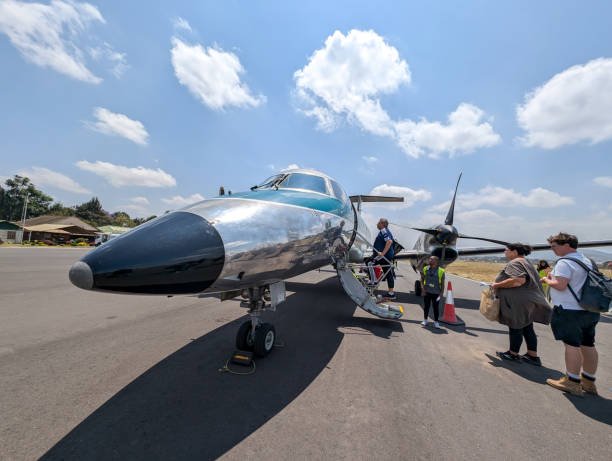
Private Charter Flight Prices In Tanzania: Cost Per Aircraft & Planning Guide
A practical guide to understanding how private charter flight prices in Tanzania are calculated, including aircraft types, route logic, and booking advice for 2027.
View package detailsOne-Way Vs Return Flights In Tanzania: Which Costs Less And Saves Time?
A deep look at Tanzanian domestic flight pricing: why return tickets aren't always cheaper, the logic of open-jaw travel, and how to optimize your itinerary for 2027.
View package details
Precision Air Vs Tanzania: Domestic Flight Prices & Comparison
When planning domestic travel in Tanzania, choosing between Precision Air and Air Tanzania often comes down to route networks and baggage policies rather than just the base fare. Learn how...
View package detailsTanzania Flight Prices April : Low-Season Travel Costs
A deep look at the realities of flying to Tanzania in April 2027, focusing on the seasonal price advantages, logistics of the 'Green Season,' and how to manage your travel budget...
View package detailsPrivate Tanzania Safari With Internal Flights: Cost & Itinerary
An expert guide to planning a private fly-in safari in Tanzania, covering cost factors, time-saving logistics, and how to structure your itinerary for maximum wildlife viewing.
View package detailsAre Tanzania Domestic Flights Cheaper Than Private Transfers? ( Guide)
Deciding between a domestic flight and a private transfer in Tanzania involves more than just ticket prices. We break down the cost-to-time ratio for your 2026-2027 trip.
View package detailsDo Tanzania Domestic Flight Prices Include Airport Taxes? A Guide
Planning your 2026-2027 Tanzania travel? We clarify the confusion surrounding airport taxes, service fees, and ticket pricing for domestic flights in Tanzania.
View package detailsCan I Book A Tanzania Domestic Flight On The Same Day? Expert Guidance
A practical guide to the realities of booking domestic flights in Tanzania, including why last-minute reservations often fail and how to manage your transit logistics safely.
View package detailsFlights To Moshi Tanzania: Nearest Airports & Travel Costs Guide
A professional guide to navigating air travel for your Kilimanjaro climb or safari, comparing airport options, transfer logistics, and cost factors for 2026-2027.
View package detailsNo related package matches those filters. Clear one or more filters to see the other topic-matched options.



