
In the context of domestic travel within Tanzania, return flights are rarely cheaper than two one-way flights. Unlike international long-haul routes where airlines incentivize round-trips with bundled pricing, most Tanzanian domestic carriers—such as Coastal Aviation, Auric Air, and Precision Air—price their seats on a per-segment basis. A return ticket is essentially the sum of two individual one-way fares. Therefore, the decision between booking a return or two one-ways should be based entirely on your itinerary efficiency, your entry and exit points, and your overall travel flow, rather than an attempt to find a non-existent “round-trip discount.”
When planning a trip to Tanzania in 2027, the structure of your travel is often dictated by the vast distances between key hubs like Kilimanjaro (JRO), the Serengeti, and Zanzibar (ZNZ). Travelers often start their search looking for “return” flight deals, assuming they will save money, but this can lead to inefficient travel plans that actually increase your total expenditure. Understanding how domestic carriers operate is the first step toward building a cost-effective and logical itinerary.
The Reality of Domestic Flight Pricing in Tanzania
Domestic flight pricing in Tanzania is highly dynamic, but it is not structured around the “round-trip” model common in global aviation. Most bush-flight operators and regional airlines treat every flight as a distinct leg. If you are flying from Arusha to the Serengeti and then back to Arusha, you are paying for two separate flights. There is no automatic discount for booking both at once.
Because these airlines operate small aircraft (often Cessna Caravans or similar bush planes), capacity is strictly limited. Prices fluctuate based on seat availability and seasonal demand rather than ticket types. In fact, booking two one-way tickets can sometimes be more flexible, allowing you to easily adjust your schedule if your safari plans shift, provided the fare class allows it. For a deeper look at managing these costs, you can review our guide on how to find cheap domestic flights in Tanzania.
The “Open-Jaw” Advantage: Why One-Way Might Be Better
For most travelers, the most significant cost saving doesn’t come from finding a “cheaper” ticket; it comes from eliminating the need for a return flight altogether. This is known as an “open-jaw” itinerary.
Consider this scenario: You fly into Kilimanjaro International Airport (JRO) for your safari, and then you want to visit Zanzibar. A standard approach might be to fly from the Serengeti back to Arusha/Kilimanjaro, and then catch a flight to Zanzibar. However, many domestic airlines now offer direct flights from Serengeti airstrips to Zanzibar. By booking a one-way flight from the Serengeti to Zanzibar, you bypass the need to return to your starting point.
This strategy saves you:
- Time: You avoid an unnecessary stopover or transit in Arusha.
- Logistics: You eliminate the risk of missing connections.
- Hidden Costs: You save on the additional ground transfers and airport taxes associated with extra legs.
Our team at Climb 4 Africa frequently advises travelers to look at their entry and exit points holistically. If you fly into Kilimanjaro and out of Zanzibar, you reduce your total flight count, which is almost always cheaper than flying back to your starting point just to catch a return flight.
Comparison: One-Way vs. Return Logic
| Factor | One-Way Strategy | Return Strategy |
|---|---|---|
| Pricing | Sum of individual legs; no inherent discount. | Sum of individual legs; usually no discount. |
| Itinerary Flow | Best for “open-jaw” travel (e.g., JRO in, ZNZ out). | Best if you must return to your entry airport (e.g., parked car, specific flight). |
| Flexibility | High; easier to change one leg without affecting the whole trip. | Lower; changes to one leg may affect the entire booking. |
| Efficiency | High; minimizes backtracking. | Low; often requires returning to a central hub like Arusha. |
To see how this applies to your specific plans, feel free to reach out to us via WhatsApp at +255 747 477 898 or email climb4africa@gmail.com. We can help you map out whether an open-jaw route is feasible for your 2027 trip.
The Cost of Transfers vs. Flights
A common mistake is comparing the price of a flight to the price of a private transfer without considering the time cost. For example, if you are looking at the difference between a one-way flight from the Serengeti to Zanzibar versus a long drive back to Arusha followed by a flight, the flight might seem more expensive initially. However, when you factor in the cost of a private driver for a full day, meals on the road, and the loss of a vacation day, the flight often becomes the better value.
We have compiled detailed analysis on this, including when it makes sense to choose road travel over air, in our article: Are Tanzania domestic flights cheaper than private transfers?
Booking Considerations for 2027
When you are ready to book your flights for 2027, keep these operational realities in mind:
- Luggage Limits: Most bush flights have a strict 15kg (33lbs) limit in soft-sided bags. If you book two one-way tickets on different airlines, ensure your baggage allowance is consistent across both, or you may face unexpected excess baggage fees.
- Timing: Do not book tight connections. A delay on a bush flight is common due to weather or runway conditions. Always allow at least a 3-4 hour window if you are connecting to an international flight.
- Booking through an Operator: When you book your safari or climb with a local specialist, we often handle these internal flights as part of your package. This is advantageous because we can coordinate the timing of your bush flight with your safari end-time, ensuring you aren’t stuck at an airstrip for hours or rushing to make a departure.
For those looking to combine their safari with beach time, checking the flight logistics early is essential. You can see how this works in practice by reviewing our Tanzania Safari and Zanzibar Holiday with Domestic Flights guide.
When a Return Flight Is Actually Necessary
There are specific situations where a return flight is the only logical choice. If you have booked an international flight that arrives and departs from the same airport—for example, a round-trip flight from your home country into Kilimanjaro (JRO)—you are essentially locked into a return journey. In this case, you must plan your domestic travel to loop back to your starting point.
If you find yourself in this position, focus your energy on finding the most efficient route back, rather than looking for a “return discount.” Look for direct “hop” flights that minimize the time spent in transit. If you are traveling in a group, we can sometimes negotiate better logistics or group rates for these internal connections, which is a significant advantage of using a dedicated Tanzania travel company.
Planning Your Next Steps
Whether you are planning a Kilimanjaro climb or a multi-day safari, the flight strategy should serve your itinerary, not the other way around. If you are struggling to decide between booking separate legs or trying to find a round-trip connection, our team at Climb 4 Africa is here to help.
We specialize in tailoring the entire travel experience, from the moment you land to the moment you depart. We can advise on the most cost-effective routing, help you manage luggage logistics, and ensure your internal flights align perfectly with your safari schedule. You can reach us at info@climb-4-africa.com or our backup email climb4africa@gmail.com with your travel dates, and we will provide a clear, practical itinerary plan for your 2027 adventure.
Remember, the goal is a smooth experience. By focusing on the flow of your journey rather than searching for non-existent bundle discounts, you ensure a smoother, more enjoyable trip across Tanzania’s diverse landscapes.
The Hidden Cost of Self-Transferring and Interline Risks
One of the most overlooked factors when debating the cost of one-way versus return flight strategies is the risk associated with self-transferring between regional bush airlines and international carriers. Many travelers, in an attempt to save money by booking separate tickets, inadvertently create a “self-transfer” scenario. It is crucial to understand that in Tanzania, most regional operators—including Coastal Aviation, Auric Air, and Precision Air—do not have interline agreements with major international airlines like Qatar Airways, KLM, or Ethiopian Airlines.
This means your luggage will rarely be checked through to your final international destination. You will almost always be required to collect your bags at a major hub like Kilimanjaro International Airport (JRO) or Zanzibar (ZNZ), exit the arrivals terminal, and re-check your luggage for your international flight. If you have booked two separate one-way tickets to save costs, you are responsible for the transit time between them. If your bush flight is delayed due to weather, airstrip conditions, or mechanical issues—which are inherent realities of small-aircraft operations—you risk missing your international departure. In this instance, a “cheaper” one-way flight strategy can suddenly become the most expensive mistake of your trip, as you may be forced to purchase a new international ticket at last-minute prices.
To mitigate this risk, always build a generous “buffer” into your schedule when connecting from a bush strip to an international flight. A minimum of four to five hours is recommended if you are changing airlines and terminals. When comparing the cost of one-way tickets, do not just look at the fare difference; factor in the potential cost of an overnight stay at a hotel near the airport should your connection fail. Booking your domestic legs through a single operator or a travel specialist who can consolidate your routing often provides a layer of protection, as they can monitor flight times and advise on safer connections that reduce the likelihood of a catastrophic scheduling failure.

The Logistical Impact of Aircraft Type on Pricing
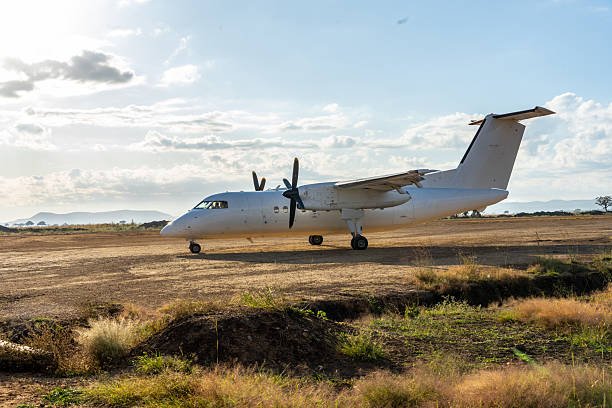
To truly understand why the standard “round-trip discount” model fails in Tanzania, one must look at the physical constraints of the aircraft utilized for domestic travel. Tanzanian domestic aviation is bifurcated into two distinct categories: regional jet services operating between major airports like Dar es Salaam (DAR), Kilimanjaro (JRO), and Zanzibar (ZNZ), and bush-plane services (typically Cessna Caravans or similar turboprops) that connect these hubs to remote airstrips in national parks like the Serengeti, Ruaha, or the Selous.
Regional jet services, operated by carriers like Precision Air, function somewhat closer to international airlines. They utilize yield management systems, meaning prices fluctuate based on demand, booking class, and how far in advance you reserve your seat. However, even within this tier, the “return” fare is almost always simply the combined price of two one-way tickets. There is no institutional incentive for the airline to discount a return trip because their capacity is relatively fixed and demand on these trunk routes remains consistently high regardless of ticket type. You are paying for a seat on a specific flight, not a “package” of travel.
Bush-plane services operate on an entirely different economic model. These aircraft are often chartered or semi-scheduled, with operating costs driven heavily by fuel, pilot salaries, and landing fees at remote airstrips. When you book a flight from Arusha to the Serengeti, you are essentially paying for a seat on an aircraft that has a very high cost-per-mile. Because these operators often fly “legs” rather than “routes,” they do not have the overhead to offer volume discounts. If you book a return flight, the airline is still performing two distinct logistical operations: two take-offs, two landings, and two sets of paperwork. Consequently, the price remains linear. Understanding this distinction is vital for your 2027 budget planning; if you attempt to force a return itinerary where a one-way “open-jaw” route would be more efficient, you are not just losing time—you are paying for two distinct, high-cost operational legs that offer no financial benefit over booking them separately.
The “Hidden” Cost of Weight and Luggage Management
A frequently overlooked factor that dwarfs the debate between one-way and return pricing is the cost of excess luggage. In the context of Tanzanian domestic flights, weight is the primary currency. Most bush-plane operators enforce a strict 15kg (33lbs) limit, including hand luggage, and mandate the use of soft-sided bags. If your luggage exceeds this limit, you are often required to purchase an “extra seat” to accommodate the weight, which can double the cost of your flight.
This creates a significant variable when deciding between booking separate one-way legs or a round-trip. If you book a return flight on a single ticket, you are locked into the luggage policies of that specific operator for both legs. If you find that your luggage requirements change—for example, if you are bringing specialized climbing gear for Kilimanjaro on the outbound leg but plan to store it in a locker in Arusha for a safari portion—a rigid, multi-leg booking can be problematic. By booking one-way tickets, you retain the flexibility to choose different operators for different segments. This allows you to select an airline that might have a more generous baggage policy for a heavy-luggage leg, while opting for a more cost-effective, lighter-weight option for a short, internal hop.
Furthermore, if you are forced to purchase an “extra seat” for your luggage, this cost is rarely bundled into a round-trip fare. It is an ancillary fee calculated at the time of check-in or booking. By viewing your itinerary as a series of independent legs, you can better manage these costs. You might find that it is significantly cheaper to book a return flight on a larger regional jet that allows for standard checked baggage, and then book separate, minimal-luggage bush flights for your safari, rather than trying to force a single, all-encompassing ticket that may carry hidden “excess weight” penalties across every segment.
The Hub-and-Spoke vs. Point-to-Point Cost Reality
Travelers often assume that flying directly between two remote airstrips is the most efficient, and therefore the most “logical” way to travel. However, in Tanzania, the most expensive way to fly is often the direct, point-to-point bush flight. These flights are often “private” or “semi-private” in nature, with limited passenger capacity. When you look at the price of a direct flight from the Serengeti to Zanzibar, you are paying a premium for the convenience of bypassing the major hubs.
When comparing the cost of one-way versus return strategies, you must factor in the “hub-and-spoke” alternative. Often, flying from the Serengeti back to a major hub (like Arusha or Dar es Salaam) and then catching a separate, larger-capacity flight to your next destination is substantially cheaper than a direct bush-to-bush connection. This is because you are utilizing the high-volume, competitive routes where airlines like Precision Air or Coastal Aviation operate larger aircraft with more seats. While this adds time to your journey, it is the single most effective way to lower your total flight expenditure. If you are debating a return flight, ask yourself if the return leg is truly necessary, or if it is merely a byproduct of your initial arrival airport. If you can re-route your journey to end at a different hub, you often eliminate the need for the return leg entirely, effectively cutting your domestic flight budget by 30% to 50% by avoiding the “bush-to-bush” premium entirely.
The Hidden Costs of Transactional Fragmentation
While the base fare of a Tanzanian domestic flight remains consistent whether you book a single leg or a series of segments, the transactional landscape often introduces “hidden” costs that travelers fail to account for until the final checkout screen. When you book a multi-leg journey as several independent one-way tickets, you are often subject to individual processing fees, credit card surcharges, or “booking service fees” for every single transaction. In the context of Tanzanian bush aviation, these are rarely nominal; they can range from a few dollars to significant percentages of the ticket price, depending on the payment gateway and the airline’s internal policy.
If your itinerary requires four separate bush flights to complete a circuit through the Serengeti, Ruaha, and Zanzibar, booking these as four distinct transactions can inflate your total expenditure by a surprising margin. While this does not change the base fare, it increases the “out-the-door” cost significantly compared to a single transaction. Savvy travelers should investigate if their chosen airline or a reputable booking agent allows for a “multi-leg” booking request. By bundling your segments into a single booking reference (PNR), you may be able to consolidate these service fees, effectively lowering the total cost of your trip without relying on a non-existent round-trip discount.
The Operational Risk of Independent Tickets
Beyond the immediate financial impact of transaction fees, there is a substantial “risk premium” associated with holding separate, unlinked tickets. In the high-volatility environment of Tanzanian domestic aviation—where weather, technical delays, and airstrip conditions can shift schedules on short notice—having a single booking reference is your most valuable insurance policy. If you book separate one-way tickets across different operators, you are effectively self-insuring against delays. If your first flight is delayed and you miss the connection for your second, separately booked flight, the second airline has no contractual obligation to assist you. You may be forced to purchase a new, last-minute ticket at a premium price, or worse, find yourself stranded without a confirmed seat on the next available flight.
Conversely, when you book multiple legs through a single operator or a centralized booking service, you are often protected by a unified itinerary. If a delay on the first leg causes you to miss the second, the operator is generally responsible for rebooking you on the next available flight at no additional cost. This operational resilience is a form of financial security. When weighing the “cheaper” option of booking disparate one-way tickets to save a marginal amount on base fares, always calculate the potential cost of a missed connection. Often, paying a slightly higher service fee to have your flights linked under a single booking reference is the more cost-effective strategy in the long term, protecting your budget from the unpredictable realities of regional bush travel.
Related Guides and Packages
Check Availability for One-Way Vs Return Flights In Tanzania: Which Costs Less And Saves Time?
Ready to compare dates, prices, and the best option for your group? Send the package name and travel month so the team can reply with a clear quote, availability, and what is included.

Flights To Moshi Tanzania: Nearest Airports & Travel Costs Guide
A professional guide to navigating air travel for your Kilimanjaro climb or safari, comparing airport options, transfer logistics, and cost factors for 2026-2027.
View package detailsHidden Costs Of Tanzania Domestic Flights: Taxes, Luggage & Transfers ( Guide)
A practical guide to understanding the real price of flying within Tanzania, covering baggage constraints, mandatory airstrip taxes, and the often-overlooked cost of ground transfers.
View package details
Tanzania Safari And Zanzibar Holiday With Domestic Flights: Costs Guide
A guide to understanding the costs, logistics, and planning strategies for combining a Tanzanian wildlife safari with a Zanzibar beach getaway using domestic flights.
View package details4-Day Tanzania Fly-In Safari With Return Flights: Prices & Planning
A deep look at the logistics and price factors for a 4-day Tanzania fly-in safari, helping you plan your 2027 wildlife adventure.
View package detailsNo related package matches those filters. Clear one or more filters to see the other topic-matched options.



