
When planning a Tanzanian itinerary, the question of whether to fly or drive between locations is one of the most common dilemmas we hear from travelers. It is natural to look at the bottom line of a quote and wonder, are Tanzania domestic flights cheaper than private transfers? The short answer is that while a flight ticket might sometimes appear accessible for an individual, the total value—and the true cost—depends heavily on your group size, the specific route, and how much you value your time.
At Climb 4 Africa, we see travelers every year weigh this exact decision. There is no one-size-fits-all answer because transport in Tanzania is not just about moving from Point A to Point B; it is about the experience, the fatigue factor, and the logistical overhead of your trip.
The Core Cost Difference: Per-Seat vs. Per-Vehicle
To understand the cost, you must first look at how these two transport modes are priced. A domestic flight is priced per seat. If you are a solo traveler, a couple, or a small family, buying three or four tickets can become quite expensive. The airline has fixed operational costs—fuel, pilot salaries, airport taxes—which are spread across the passengers on that flight.
A private transfer, conversely, is priced per vehicle. Whether you are one person or a group of four, the cost of hiring a private driver and vehicle for the day is largely the same. This means that for a group of four or more, a private transfer is almost universally cheaper than buying individual flight tickets. When you divide the daily rate of a vehicle and driver by four passengers, the per-person cost drops significantly compared to the price of a flight.
The “Time-Value” Equation
You cannot talk about cost without talking about time. Tanzania is a large country with varied infrastructure. A drive from Arusha to the Central Serengeti can take anywhere from 8 to 10 hours, depending on road conditions and how often you stop. That is essentially a full day of your vacation spent in a vehicle.
A flight, however, takes about an hour. If you only have a 7-day itinerary, losing two full days to driving (one to get there, one to return) means you are sacrificing nearly 30% of your holiday to travel. When you calculate the daily cost of your safari—accommodation, park fees, and guide services—that lost time has a tangible monetary value. For many of our clients, the extra cost of a flight is easily justified by the extra day of game viewing it unlocks.
When Private Transfers Make More Sense
There are specific scenarios where we almost always recommend a private transfer over a flight:
- Short Distances: If you are traveling between Arusha and Tarangire, or Arusha and Lake Manyara, a flight is rarely worth the hassle. You have to get to the airport, go through security, wait for the flight, and then arrange a transfer from the airstrip to your lodge. Driving is often faster and much more flexible.
- Scenic Value: The road to the Ngorongoro Highlands offers spectacular views that you simply miss from the air. A private driver can stop at local markets, viewpoint spots, or villages that offer cultural insights you won’t get at 10,000 feet.
- Flexibility: If you want to change your departure time, stop for lunch at a specific spot, or adjust your plans based on weather, a private driver is at your command. You are locked into a schedule with a flight.
If you are trying to decide which route works for your timeline, you can read our guide on Is It Cheaper to Fly From Arusha or Kilimanjaro to Zanzibar? to understand the nuances of airport selection.
The Hidden Costs of Flying
When comparing prices, travelers often look at the base airfare and assume that is the total cost. In reality, flying in Tanzania involves several hidden expenses that can alter the math:
- Luggage Constraints: Domestic bush flights have strict weight limits, typically 15kg in soft-sided bags. If you are on a long trip—perhaps combining a Kilimanjaro climb with a safari—you will likely exceed this. Excess baggage fees are common and can be surprisingly steep.
- Airport Transfers: A flight lands at an airstrip, not at your hotel lobby. You will still need a transfer from the airstrip to your lodge, which is often an additional cost.
- Safety and Reliability: While generally safe, bush flights are subject to weather. If it is foggy or stormy, flights can be delayed or cancelled. While we have robust protocols for managing these situations, road transfers are generally more resilient to minor weather events. You can explore more about this topic in our article on Are Tanzania Safari Flights Safe and Reliable?
Planning Your 2026-2027 Itinerary
If you are planning your trip for 2026 or 2027, the best approach is to map out your “must-sees” first. If your primary goal is to maximize time in the Serengeti, flight is the clear winner for efficiency. If your goal is to experience the landscapes of Northern Tanzania and interact with local culture, a private transfer provides a much richer experience.
We often help clients create a hybrid itinerary. For example, some choose to fly from Arusha to the Serengeti to maximize game viewing time, and then take a private transfer back to Arusha to see the landscapes, coffee plantations, and local towns on the return journey. This gives you the best of both worlds.
For those interested in how these costs break down in real-world terms, you may find our resource on How Much Does a Domestic Flight Cost in Tanzania? helpful for your budget planning.
The Role of a Local Operator
Whether you choose to fly or drive, managing the logistics of a Tanzanian safari is complex. A flight schedule might change, a road might be under construction, or you might find yourself needing to coordinate three different transfers for one day of travel. This is where booking with a specialist like Climb 4 Africa provides real value.
We don’t just book your transport; we orchestrate the entire flow of your trip. We know which airstrips are closest to your specific lodge, we know which road routes are currently under repair, and we have the local contacts to adjust your plans if a flight is delayed. If you are interested in a tailor-made experience, we can help you decide which mode of transport fits your budget and your travel style.
Before you commit to a booking, reach out to us. Tell us your travel dates, your group size, and what you are hoping to see. We can provide a transparent comparison for your specific route, helping you understand not just the price, but the trade-offs involved. You can reach our team via WhatsApp at +255 747 477 898 or email us at climb4africa@gmail.com. We are here to ensure your 2026-2027 adventure is smooth, regardless of how you choose to travel.
Summary Decision Checklist
To help you make the final call, consider this simple checklist based on the typical traveler profile we see:
- Choose a Flight If: You are a solo traveler or couple with limited time (under 10 days) and want to maximize time in the national parks. You prefer the comfort and speed of air travel and don’t mind the strict luggage limits.
- Choose a Private Transfer If: You are a group of 3 or more (where the per-person cost becomes very attractive), you have plenty of time, you want to see the changing scenery of rural Tanzania, or you have heavy camera equipment and gear that exceeds bush flight weight limits.
Remember, the “cheapest” option isn’t always the best one if it leaves you exhausted or cuts your safari time short. Think about your travel style—do you prefer the journey or the destination? Once you have that answer, the decision between flying and driving usually becomes very clear.
The Physical Reality: Comfort and Accessibility Differences
Beyond the simple math of per-seat versus per-vehicle pricing, the decision to fly or drive in Tanzania is fundamentally a choice about the physical nature of your safari experience. Many travelers assume that a private transfer is merely a ‘taxi’ service, but in the context of Tanzania’s national parks, a private transfer means spending significant hours inside a 4×4 safari-modified vehicle. These vehicles, typically Toyota Land Cruisers, are engineered for durability rather than highway comfort. They feature high-clearance suspension, pop-up roofs for game viewing, and specialized tires designed to handle the ‘African massage’—a local term for the constant vibration and jarring motion experienced on unpaved, corrugated dirt roads. If you have chronic back pain or are particularly sensitive to motion, the cumulative effect of eight hours on these roads can be physically draining, regardless of how much money you save by choosing to drive.
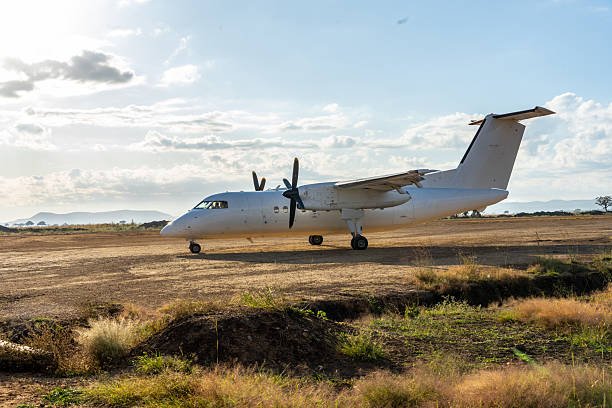
Conversely, the ‘bush flight’ experience offers a distinct set of physical realities. While a flight from Arusha to the Serengeti might take only 45 to 60 minutes, the aircraft involved are typically small, single-engine, or light twin-engine planes like the Cessna Caravan. These planes do not offer the pressurized, climate-controlled comfort of a commercial jet. You will experience noise levels that require earplugs, temperature fluctuations as the plane climbs and descends, and potential turbulence that is much more noticeable in a light aircraft than in a large commercial airliner. Furthermore, bush planes do not have onboard lavatories. If you are someone who experiences anxiety in small spaces or has a fear of flying, the ‘faster’ option may actually introduce more stress than the long, scenic drive.
Accessibility and environmental exposure also play a major role in this comparison. When you choose a private transfer, you are essentially ‘on the ground’ for the duration of your transit. This means you are exposed to the heat, the dust, and the changing landscapes of the Tanzanian countryside. During the dry season, the dust on the roads can be intense, often coating the interior of the vehicle and its passengers. However, this exposure is also what makes the drive a safari in its own right. You are at eye level with the environment, able to stop at local markets, observe rural life in villages, and spot wildlife while in transit between parks. A flight, by contrast, removes you from the landscape entirely. You are viewing the Serengeti or the Ngorongoro Conservation Area from above, which is a impressive perspective, but you miss the nuances of the ecosystem that you would otherwise pass through.
Finally, consider the logistical constraints of your equipment. We frequently see travelers who have invested in professional photography gear—heavy tripods, multiple lenses, and large camera bags. A private transfer vehicle allows you to load this equipment with relative ease, as you are not restricted by the stringent weight and dimension limits of light aircraft. Bush planes often have strict baggage policies, typically requiring soft-sided bags to fit into the cramped cargo holds. If you are traveling with specialized gear, the ‘cheaper’ cost of a flight might be negated by the need to ship equipment separately or the risk of having to leave essential items behind at your hotel in Arusha. When you weigh the physical comfort, the environmental interaction, and the equipment requirements, the decision often shifts away from pure economics toward the specific physical needs of your travel party.


The Impact of Seasonality on Transport Costs
While base prices for flights and private transfers remain relatively stable throughout the year, the seasonal nature of Tanzanian tourism significantly impacts the value proposition of each. During the peak season (typically June through October), flight availability becomes tighter, and prices for domestic bush flights can rise as demand outstrips supply. Airlines operate on fixed schedules, and when popular routes like Arusha to the Serengeti sell out, you are left with fewer options, often forcing you to book more expensive, circuitous flight paths or premium carriers.
Conversely, the cost of private transfers tends to remain more consistent regardless of the season, primarily because the expense is tied to the vehicle and the driver’s time, rather than a seat on a limited-capacity aircraft. However, seasonality affects the efficiency of driving. During the long rains (March to May), certain road routes—particularly those heading into the deeper, more remote sections of the parks—can become treacherous or even impassable. In these specific conditions, a private transfer might actually become more expensive than a flight, not because of the base rate, but because of the specialized equipment (4×4 vehicles with high-clearance modifications, winches, and recovery gear) and the increased time required for a driver to navigate muddy, washed-out tracks. If you are traveling during the shoulder or rainy seasons, you must ask your operator specifically about the road conditions for your intended route, as the “cheaper” driving option may carry the hidden cost of potential delays or the need for a more rugged, and thus more expensive, vehicle class.
The “Last Mile” Logistics: Getting to Your Final Destination
A frequently overlooked factor when comparing the cost of flying versus driving is the “last mile” logistics. When you fly, you land at a bush airstrip. You are not at your lodge; you are at an airstrip that might be anywhere from twenty minutes to two hours away from your actual accommodation. Almost every lodge or camp in Tanzania charges an additional fee for an “airstrip transfer.” These are often private vehicle transfers arranged by the lodge itself. If you are analyzing the cost of your flight, you must add this transfer fee to your budget.
For many travelers, the math looks like this: the flight ticket is one cost, but the shuttle service from the airstrip to the camp is a second, often mandatory, cost. When you arrive by private transfer, you are already in the vehicle that will take you directly to your lodge’s doorstep. There is no middleman, no waiting for a shuttle, and no additional transfer fee to pay. If you are staying at a lodge that is remote, the cost of these airstrip transfers can be substantial, sometimes adding hundreds of dollars to the total cost of your “cheaper” flight. Always inquire whether your accommodation includes complimentary transfers from the local airstrip; if they do not, the financial gap between flying and driving closes significantly.
Safety and Reliability Considerations
When evaluating whether a flight is cheaper than a private transfer, one must weigh the reliability of the transport mode against the potential cost of disruption. Bush aviation in Tanzania is subject to weather conditions that do not affect road travel to the same extent. Low cloud cover, heavy rain, or high winds can lead to flight cancellations or significant delays. If your flight is canceled, the airline will typically put you on the next available flight, but this might be the following day, or it might require a rerouting that disrupts your entire itinerary. The cost of a lost day—prepaid lodge nights, missed game drives, and the stress of rescheduling—is a financial variable that is difficult to quantify but very real.
Private transfers, while slower, offer a level of reliability that is often superior in terms of schedule control. A driver can adapt to road conditions, choose alternative routes, and is not grounded by the same weather minimums as a light aircraft pilot. If you are on a strict timeline with non-refundable activities booked at your destination, the potential “cost” of a flight delay is something to consider. While flying is generally safe and highly professional, it is a mode of transport that requires a buffer in your schedule. If your budget is tight and you cannot afford to lose a day of your safari, the predictability of a private vehicle can be a hidden financial safeguard.
The Multi-Leg Itinerary: Calculating Cumulative Costs
A critical oversight for many travelers is analyzing transport costs on a per-segment basis rather than evaluating the entire multi-leg itinerary. When you look at a single flight between Arusha and the Serengeti, it may appear manageable within your budget. However, a standard Tanzanian safari often involves three or four distinct legs: perhaps Arusha to the Serengeti, then a hop to the Ngorongoro region, and finally a transfer to Zanzibar or Dar es Salaam. When you multiply the per-seat cost of flights across four segments, the financial impact compounds rapidly. For a family of four, this can result in a total transportation bill that rivals the cost of the entire accommodation package.
Conversely, a private transfer strategy often benefits from economies of scale that are not available in aviation. Many tour operators provide a flat daily rate for a vehicle and a driver-guide. This rate remains constant regardless of whether you are traveling 50 kilometers or 300 kilometers in a single day. If your itinerary involves a circuit—such as moving from Arusha to Tarangire, then to Manyara, and finally into the Serengeti—a private vehicle stays with you throughout the journey. You are paying for the vehicle’s availability, not for each individual movement. In this scenario, the “cost per leg” essentially disappears, replaced by a “cost per day” model that is often significantly more predictable and cost-effective for multi-stop trips.
Managing Luggage and Gear Limitations
While often categorized as a logistical inconvenience, luggage restrictions on domestic bush flights translate directly into hidden costs that can force a re-evaluation of your transport budget. Most light aircraft operators in Tanzania enforce a strict 15kg limit, and this must be packed in soft-sided bags without wheels or rigid frames. If you are traveling with heavy camera equipment, specialized safari gear, or simply luggage that exceeds these strict requirements, you face two expensive choices: paying significant “excess baggage” fees per kilogram, or purchasing an additional “freight seat” on the aircraft. A freight seat is essentially the cost of an extra passenger ticket just to transport your bags.
Private transfers eliminate this financial friction entirely. When you hire a private vehicle, you are generally limited only by the physical capacity of the vehicle’s trunk. There are no per-kilogram surcharges, and you are not required to use specialized soft-sided luggage. For photographers carrying extensive lenses and tripods, or families traveling with significant gear, the cost of a private transfer becomes highly competitive when compared to the price of buying extra seats on a bush flight. By choosing to drive, you effectively sidestep the “baggage tax” that can add hundreds of dollars to a fly-in itinerary.
Related Guides and Packages
Check Availability for Are Tanzania Domestic Flights Cheaper Than Private Transfers? ( Guide)
Ready to compare dates, prices, and the best option for your group? Send the package name and travel month so the team can reply with a clear quote, availability, and what is included.
Private Tanzania Safari With Internal Flights: Cost & Itinerary
An expert guide to planning a private fly-in safari in Tanzania, covering cost factors, time-saving logistics, and how to structure your itinerary for maximum wildlife viewing.
View package detailsHidden Costs Of Tanzania Domestic Flights: Taxes, Luggage & Transfers ( Guide)
A practical guide to understanding the real price of flying within Tanzania, covering baggage constraints, mandatory airstrip taxes, and the often-overlooked cost of ground transfers.
View package details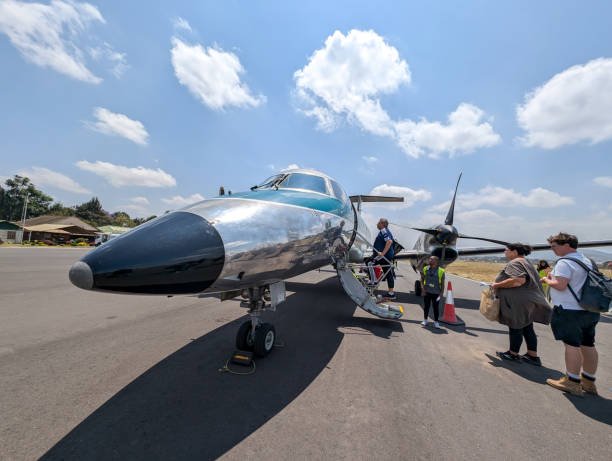
Private Charter Flight Prices In Tanzania: Cost Per Aircraft & Planning Guide
A practical guide to understanding how private charter flight prices in Tanzania are calculated, including aircraft types, route logic, and booking advice for 2027.
View package details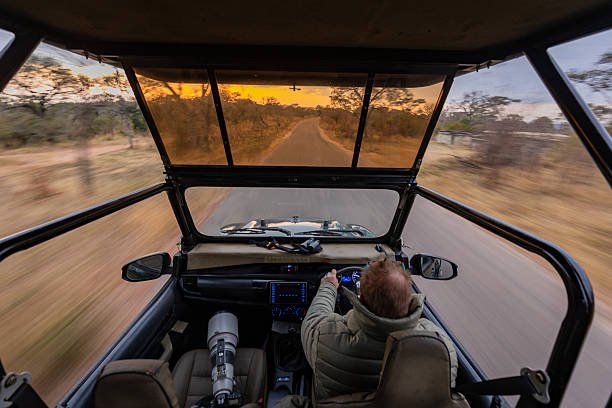
Tanzania Flight Ticket Prices: Economy Vs Safari Bush Flights Explained
A practical guide to understanding the cost and logistical differences between commercial economy flights and private-style bush flights in Tanzania.
View package details
Best Time To Book Tanzania Domestic Flights For Lower Prices: Planning Guide
A strategic guide to finding the best value on Tanzania internal flights, balancing early booking windows with seasonal demand.
View package detailsHow To Find Cheap Domestic Flights In Tanzania: A Planning Guide
Discover practical strategies for securing affordable domestic air travel in Tanzania for your 2026 or 2027 trip, including booking timing, airline selection, and the hidden costs of...
View package detailsTanzania Safari And Zanzibar Holiday With Domestic Flights: Costs Guide
A guide to understanding the costs, logistics, and planning strategies for combining a Tanzanian wildlife safari with a Zanzibar beach getaway using domestic flights.
View package detailsDo Children Pay Full Price On Tanzania Domestic Flights?
Do Children Pay Full Price on Tanzania Domestic Flights?
View package detailsNo related package matches those filters. Clear one or more filters to see the other topic-matched options.



