
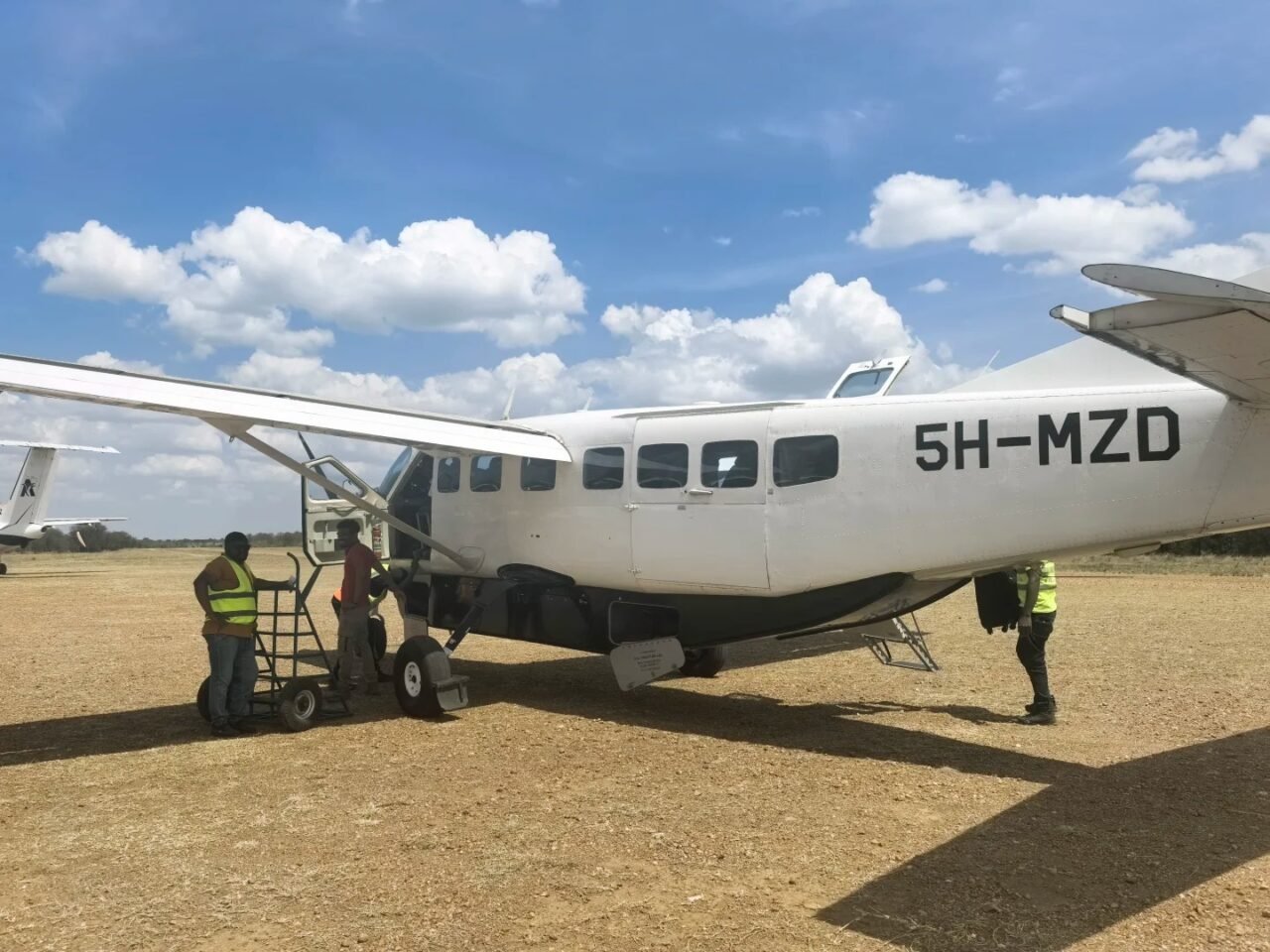
If you are looking at a map of Tanzania, the distance between the white sands of Zanzibar and the vast plains of the Serengeti looks like a significant journey. Travelers often ask: Can you fly directly from Zanzibar to Serengeti? The short answer is yes, but it requires understanding how regional aviation works in East Africa. You are not hopping on a commercial jet at an international terminal; instead, you are utilizing a network of bush planes—typically Cessna Caravans—that connect the island to the northern safari circuit.
While these flights are often marketed as “direct,” it is helpful to understand the reality on the ground. These bush planes frequently operate on a “milk run” basis. This means your flight might make a brief, 15-minute technical stop in Arusha or another secondary airstrip to drop off or pick up passengers. It is not a non-stop commercial service, but it is the fastest way to get from the ocean to the bush, turning what would be a multi-day journey by road and ferry into a morning’s travel.
The Reality of “Direct” Bush Flights
When you book a flight from Zanzibar (ZNZ) to the Serengeti, you are booking a seat on a small, light aircraft. These planes carry anywhere from 8 to 13 passengers. Unlike major commercial airlines, these carriers prioritize flexibility and access to remote areas. A “direct” flight means you do not have to leave the aircraft, or if you do, it is merely a quick tarmac transition while the pilot refuels or manages cargo.
The convenience of this connection cannot be overstated. By flying, you bypass the logistical headache of taking a ferry back to Dar es Salaam, navigating city traffic, and enduring a long overland drive to the Serengeti. You trade a full day of transit for roughly 2 to 3 hours in the air. For travelers with limited time, this is almost always the preferred route.
Why Your Choice of Airstrip Matters
The Serengeti National Park is massive—roughly 14,750 square kilometers. A common mistake is assuming there is only one “Serengeti Airport.” In reality, there are several airstrips scattered across the park, including Seronera (Central), Kogatende (North), Grumeti (West), and Lobo (North-East). When booking your flight, your destination airstrip should be as close as possible to your lodge or camp to minimize travel time on bumpy park roads. If you are planning your trip, consider reading our detailed guide on which Serengeti airstrip is best for your safari to ensure your flight lands where you actually need to be.
Baggage Limits: The Golden Rule of Bush Flying
If you are coming from an international flight where you might be used to two checked bags and a carry-on, you need to adjust your expectations immediately. Bush planes have strictly limited cargo space. The standard baggage allowance on these flights is typically 15 kilograms (33 lbs) per person, and this weight usually includes your hand luggage.
Crucially, you must use soft-sided duffel bags. Hard-shell suitcases, even if they are within the weight limit, are often prohibited because they cannot be squeezed into the uniquely shaped cargo holds of the small planes. If you arrive at the Zanzibar airport with a hard-shell suitcase, you may be asked to leave it behind or pay a significant fee to store it. Planning your packing around this limitation is a major part of a successful safari, especially if you are combining a beach holiday with a trek or safari.
Is the Flight Always Available?
Flights between Zanzibar and the Serengeti are highly seasonal. During the peak safari months—typically from June to October and December to February—the frequency of flights increases to meet demand. During the low season, schedules can be sparse. It is rarely a case of walking up to a ticket counter and buying a seat; these flights are part of a coordinated itinerary.
Because these flights are operated by regional companies like Coastal Aviation or Auric Air, they are often integrated into safari packages. If you are looking for a luxury fly-in safari from Zanzibar, the flights are usually bundled with your park entry fees, game drives, and accommodation. This is generally the safest way to travel because if a flight is delayed or cancelled due to weather—a rare but real possibility in the tropics—the operator can manage the logistics of rebooking your connections.
Comparing Flight vs. Overland Routes
For most travelers, the decision comes down to budget versus time. Here is the trade-off:
- The Fly-In Option: You arrive in the Serengeti in time for an afternoon game drive. You maximize your time with the wildlife. The cost is higher, but the convenience is absolute.
- The Hybrid Route: Some travelers choose to fly from Zanzibar to Arusha, spend a night in the city, and then drive into the Serengeti via Ngorongoro Crater. This is often cheaper and allows you to see the Ngorongoro Conservation Area, which you would skip if you flew directly into the heart of the Serengeti.
If you are torn between these options, we often suggest looking at your total trip duration. If you have less than 5 days for the safari portion, the flight is almost mandatory to avoid spending half your trip in a vehicle. You can see more details on the cost and logistics of this in our guide on how much a flight from Zanzibar to Serengeti actually costs.
Planning Your 2027 Safari
As we look toward 2027, the demand for fly-in safaris remains high. Booking early is not just about securing a seat on a plane; it is about securing the best lodges. The top-rated camps in the Serengeti are small and fill up months in advance. When you coordinate your flight and your lodge simultaneously, you ensure that you aren’t flying into a region of the park where the lodge you wanted is already booked.
If you are ready to start planning, the best first step is to clarify your dates and the wildlife you hope to see. The Great Migration moves throughout the year, and your choice of airstrip—and flight path—should reflect that. For example, if you are chasing the river crossings in the North, you need a flight that lands in Kogatende or Lamai, not Seronera.
For personalized help with your route, flight connections, and ensuring your baggage plan is solid, you can reach out to the Climb 4 Africa team. We handle the coordination of these flights as part of our tailor-made itineraries. You can contact us via WhatsApp at +255 747 477 898 or send an email to climb4africa@gmail.com. Let us know your preferred travel dates and the number of travelers, and we will help you map out the most efficient way to get from the island to the plains.
Common Traveler Questions About This Route
Do I need to clear customs in Arusha?
Since Zanzibar is part of Tanzania, a flight from Zanzibar to the Serengeti is a domestic flight. You do not need to go through international immigration again, but you will need to present your passport or official identification for security checks at the airport.
What happens if my flight is delayed?
Bush plane schedules are sensitive to weather, especially heavy rain or low visibility. If a delay occurs, your safari operator (if you have booked a package) will be responsible for communicating with your lodge and adjusting your game drive schedule. This is a significant advantage of booking a full tour rather than piecing together independent flight and hotel tickets.
Can I bring my camera gear on these small planes?
Yes, but camera gear is heavy. Professional photography equipment is often the exception to the 15kg rule, but you must declare it in advance. If you are traveling with significant camera bodies and lenses, please inform us during the booking process so we can ensure the airline is aware of the extra weight.
Is there a seat preference on these flights?
On a Cessna Caravan, every seat is a window seat, and the views are spectacular. There is no “bad” seat. The pilot will often point out landmarks or wildlife as you fly over the rift valley. It is an experience in itself, often cited by our clients as one of the highlights of their trip.
Navigating the “Last Mile”: From Airstrip to Camp
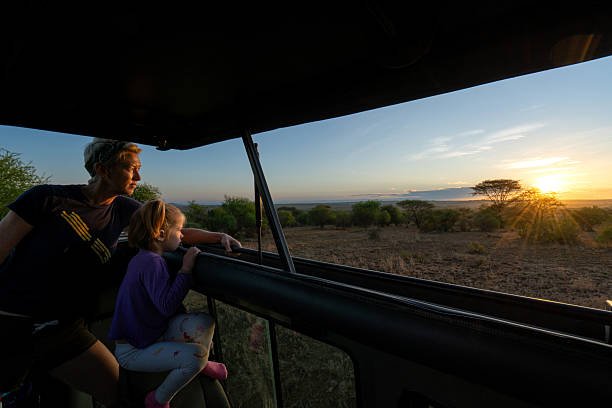
Once your bush plane touches down on the gravel or dirt runway in the Serengeti, the transition from traveler to safari guest begins immediately. It is crucial to understand that a bush airstrip is rarely an “airport” in the conventional sense. You will not find terminal buildings, taxi ranks, or public transport options waiting at the edge of the runway. In most cases, the airstrip is a simple, fenced-off clearing in the savanna designed solely for the safe landing and takeoff of light aircraft.
Because there is no infrastructure, your arrival depends entirely on pre-arranged logistics. When you book your safari, your lodge or tour operator will coordinate the “meet and greet” at the airstrip. This is typically done by your designated safari guide, who will be waiting in a 4×4 land cruiser. This vehicle is your primary mode of transport for the duration of your stay. If you have booked a “Game Package” (a common term for all-inclusive safari stays), your transport from the airstrip to the camp is included. The moment you step off the plane, your game drive effectively begins, as the drive from the airstrip to your lodge is often an experience in itself, offering your first sightings of the Serengeti’s wildlife.
If you are traveling on a “Fly-in” basis where you have booked lodging independently of transport, you must ensure that your lodge has been notified of your flight number and arrival time. Without this coordination, you risk being stranded at an airstrip with no means of communication or transport. Always confirm that your transfer is included in your booking or request that the lodge arrange a private transfer for you well in advance.
The Return Leg: Planning Your Departure from the Bush
The return journey from the Serengeti back to Zanzibar requires a different level of logistical planning than your arrival. While the outbound flight is filled with anticipation, the inbound flight to the coast is often tied to your onward travel, such as a flight back to your home country. A common mistake travelers make is booking a tight connection between their bush flight arrival in Zanzibar and their international flight departure from the same airport.
Bush flights are subject to the realities of regional aviation. Weather conditions, such as heavy rain during the “green season” or morning fog, can delay departures. Additionally, because these planes often operate on a “milk run” schedule—stopping at multiple airstrips to pick up other guests—the flight time can fluctuate. If your flight is scheduled to land in Zanzibar at 2:00 PM, and your international flight leaves at 5:00 PM, you have very little margin for error. If the bush flight is delayed by even an hour, you may miss your international connection.
The standard expert recommendation is to build a significant buffer into your travel plan. Ideally, plan to arrive in Zanzibar at least five to six hours before your international flight departs, or better yet, schedule a final night on the island. This allows you to account for any potential flight delays, baggage transfers, and the time required to clear security and check in for your international airline. Treating the Serengeti-to-Zanzibar flight as a fluid, rather than fixed, component of your travel day will save you significant stress and ensure that your final hours of the trip remain focused on relaxation rather than logistical panic.
What to Expect at a Bush Airstrip Facility
Travelers accustomed to international hubs often ask what facilities are available at Serengeti airstrips. The reality is that there are essentially none. You should not expect Wi-Fi, duty-free shops, restaurants, or even reliable indoor plumbing. Some of the larger, busier airstrips like Seronera might have a small, rudimentary structure that acts as a waiting area or a basic office for the airline staff, but these are exceptions rather than the rule.
Because you will be spending time on the tarmac—either waiting for your flight or waiting for your guide to arrive—you should prepare accordingly. Carry a refillable water bottle, a hat, and sunscreen in your hand luggage. If you are traveling with children, ensure they have entertainment, as delays can happen and there is no infrastructure to keep them occupied. Essentially, view the airstrip as a functional extension of the bush itself: it is part of the wild environment, and you should be prepared to be self-sufficient during your time on the ground.
The Sensory and Practical Transition: From Savannah to Coast
Moving between the Serengeti and Zanzibar is more than just a change in geography; it is a profound shift in sensory experience. You are transitioning from the high-octane, dusty, and intense environment of the savannah—where your alarm clock is a lion’s roar and your schedule is dictated by the movement of the Great Migration—to the humid, rhythmic, and slow-paced life of the Indian Ocean coast. Managing this transition requires more than just booking a flight; it requires a shift in both your gear and your mindset.
Managing the “Dual-Environment” Wardrobe
The 15-kilogram baggage limit on bush planes is often the primary source of anxiety for travelers who are combining a safari with a beach vacation. The challenge is that these two destinations require fundamentally different clothing. Safari attire emphasizes utility, neutral colors to avoid attracting tsetse flies, and protection against the sun and evening chill. Beach attire, by contrast, is light, colorful, and moisture-wicking. To bridge this gap without exceeding your weight limit, you must prioritize versatility over volume.
The strategy is to embrace the “layering system” for both environments. A lightweight, long-sleeved linen shirt works as effectively for sun protection during a game drive as it does as a cover-up on a Zanzibar beach. Avoid packing heavy, specialized gear that serves only one purpose. For instance, heavy-duty hiking boots are rarely necessary for a standard safari; a sturdy, comfortable pair of trail runners or walking shoes will suffice for both game drives and airport transit, saving you significant weight and space.
Leveraging Lodge Services to Beat the Weight Limit
A critical, often overlooked strategy for managing luggage on a fly-in safari is the use of laundry services. Almost all reputable lodges and camps in the Serengeti offer same-day or overnight laundry. Instead of packing a fresh outfit for every single day of your safari, pack for three days and rely on the lodge’s laundry service. This allows you to maintain a clean, fresh wardrobe without needing a massive suitcase. By rotating your clothes, you can keep your total luggage weight well under the 15-kilogram threshold, even when accounting for the extra items you need for your time on the coast.
When packing, use soft-sided duffel bags rather than hard-shell suitcases. The cargo holds of Cessna Caravans and other bush planes are shaped to accommodate flexible, soft luggage. A hard-shell suitcase, even if it meets the weight limit, may be physically impossible to fit into the aircraft’s storage compartment, leading to the risk of your bag being left behind to follow on a later flight. Prioritize packing cubes to keep your items organized within that soft duffel; this makes the constant packing and unpacking of a multi-stop trip significantly less stressful.
The Psychological Shift: Resetting Your “Safari Clock”
Travelers often experience a form of “safari whiplash” when arriving in Zanzibar. You may find yourself waking up at 5:30 AM, scanning the horizon for wildlife, or feeling an urge to rush to your next activity. The transition requires a conscious effort to slow down. The Serengeti is an environment of active observation; the coast is an environment of passive relaxation. Allow yourself a buffer day when you first land on the island. Do not schedule heavy excursions or boat tours for the first afternoon. Use this time to adjust to the humidity, the change in pace, and the different rhythm of the tides, which often dictate the availability of swimming and water activities in Zanzibar.
The Flight as a Scenic Tour
While the primary purpose of your bush flight is logistical efficiency, it is worth remembering that this is one of the most visually spectacular transit routes in East Africa. Unlike commercial flights that cruise at 30,000 feet, bush planes typically fly at much lower altitudes, often between 5,000 and 10,000 feet. This offers an unparalleled vantage point of the Tanzanian landscape.
Navigating Altitude and Visibility
Because these flights are visual, the pilot relies on clear weather to navigate. This is why morning flights are generally preferred; the air is typically more stable, and the visibility is higher before the afternoon heat creates thermal turbulence. As you fly out of the Serengeti, look for the dramatic shift in topography. You will watch the dry, golden plains of the savannah gradually give way to the lush, green highlands, the bustling urban sprawl of Arusha, and eventually, the deep blues and turquoise hues of the Indian Ocean as you approach the Zanzibar archipelago.
If you are seated near the cockpit, you may be able to see the flight path on the pilot’s navigation display. It is a fascinating way to understand the scale of the country. This flight is not merely a transit between two points; it is a transition through the diverse ecological zones of Tanzania. By treating the flight as part of the safari experience rather than a hurdle to be cleared, you arrive at your destination not just physically, but mentally, ready for the next chapter of your journey.
Related Guides and Packages
Check Availability for Can You Fly Directly From Zanzibar To Serengeti? A Planning Guide
Ready to compare dates, prices, and the best option for your group? Send the package name and travel month so the team can reply with a clear quote, availability, and what is included.
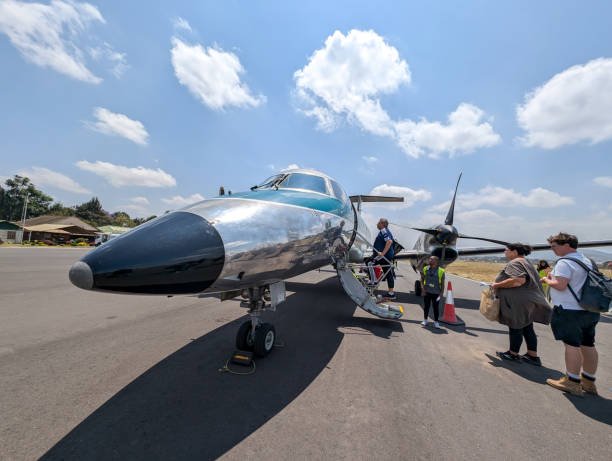
Tanzania Flight Prices September : Serengeti And Zanzibar Planning
Expert advice on navigating domestic flight logistics, seasonal pricing, and the crucial 'bush-to-beach' connection for your September 2027 Tanzania itinerary.
View package details
Can I Fly From Zanzibar To Serengeti And Return The Same Day? Guide
A professional assessment of the feasibility of same-day air travel between Zanzibar and the Serengeti, including logistical realities and better alternatives for your Tanzanian itinerary.
View package details
How Long Is The Flight From Serengeti To Zanzibar? ( Planning Guide)
Planning your bush-to-beach connection? Discover the actual flight durations, stopover logistics, and booking realities for traveling from the Serengeti to Zanzibar.
View package detailsHow Much Is A Flight From Zanzibar To Serengeti?
How Much Is a Flight From Zanzibar to Serengeti?
View package details
Zanzibar To Nairobi Flight Price & Schedule: Planning Your Connection
A practical guide to navigating flights from Zanzibar to Nairobi, covering airport logistics, price factors, and how to coordinate your beach-to-safari transition.
View package detailsBest Time To Book Flights To Zanzibar In : Planning Your Island Getaway
Expert advice on securing the best flight arrangements for your 2027 Zanzibar holiday, including seasonal booking windows and coordination with Tanzania safari itineraries.
View package detailsTanzania Flight Prices February : Safari & Zanzibar Routes
A detailed guide to navigating flight logistics and budget factors for Tanzania travel in February 2027, focusing on safari circuits and Zanzibar connections.
View package detailsTanzania Honeymoon Safari And Zanzibar With Flights: Package Prices
Tanzania Honeymoon Safari and Zanzibar With Flights: Package Prices.
View package detailsTanzania Safari And Zanzibar Holiday With Domestic Flights: Costs Guide
A guide to understanding the costs, logistics, and planning strategies for combining a Tanzanian wildlife safari with a Zanzibar beach getaway using domestic flights.
View package detailsWhich Tanzanian Airport Is Best For A Safari And Zanzibar Holiday?
Which Tanzanian Airport Is Best for a Safari and Zanzibar Holiday?
View package detailsAfcon Football Safari And Zanzibar Holiday: Expert Planning Guide
A guide to combining the AFCON 2027 football tournament with a Tanzanian safari and Zanzibar beach holiday, focusing on logistics, timing, and travel planning.
View package detailsNairobi To Zanzibar Flights: Ticket Prices & Booking Guide
A comprehensive guide to understanding flight costs, airline choices, and logistics for the popular Nairobi to Zanzibar route.
View package detailsNo related package matches those filters. Clear one or more filters to see the other topic-matched options.



