
Connecting the white sands of Zanzibar to the wildlife hubs of Kenya is one of the most common travel requests we handle at Climb 4 Africa. Whether you are finishing a relaxing beach holiday after a strenuous Kilimanjaro climb or heading north for a safari in the Maasai Mara, the flight from Abeid Amani Karume International Airport (ZNZ) to Nairobi is a vital link. Because this route involves crossing an international border, the logistics are slightly more involved than purely domestic travel within Tanzania or Kenya.
Important Logistics Note: There is no single “standard” price for this route. Costs fluctuate significantly based on seasonality, how far in advance you book, and your choice of destination airport in Nairobi (Jomo Kenyatta vs. Wilson). As a general rule, booking at least 3-4 months in advance is recommended to secure the best rates and availability.
Understanding the Nairobi Airport Choice: NBO vs. WIL
One of the most frequent points of confusion for travelers flying from Zanzibar to Nairobi is the destination airport. Nairobi is served by two primary airports, and choosing the wrong one can complicate your onward travel or transfer.
- Jomo Kenyatta International Airport (NBO): This is the main international gateway. If you are flying into Kenya to connect to an international long-haul flight home, or if you are meeting a safari operator who operates out of the main city hubs, NBO is likely your destination. It handles larger commercial jets and international arrivals.
- Wilson Airport (WIL): This is the hub for regional and “bush” flights. If your safari itinerary starts with a flight to the Maasai Mara, Samburu, or Amboseli, your bush plane will almost certainly depart from Wilson. Choosing to land at NBO when your next flight is from Wilson requires a cross-town transfer that can take anywhere from 45 minutes to two hours depending on Nairobi’s notorious traffic.
Always confirm with your safari operator or travel agent exactly which airport your next connection requires. If you are booking your own flights, look for the airport code carefully before finalizing your ticket.
Factors Influencing Flight Prices
When searching for a Zanzibar to Nairobi flight price, you will notice a wide range of fares. Several variables drive these differences, and understanding them helps you budget more effectively for your 2026 or 2027 trip.
| Factor | Price Impact | Traveler Advice |
|---|---|---|
| Seasonality | High (July-Sept, Dec-Jan) | Book as early as possible. |
| Booking Lead Time | High | Last-minute fares are often double or triple. |
| Airline Class | Moderate | Full-service vs. regional budget carriers. |
| Baggage Fees | Moderate | Check weight limits, especially for onward bush flights. |
As a local operator, we often see travelers struggle with last-minute price hikes. If your travel dates are flexible, shifting your flight by even a single day can sometimes result in significant savings. Furthermore, remember that the lowest “headline” price you see on an aggregator site often excludes checked baggage or requires non-refundable conditions. Always factor in the total cost, including the baggage you will realistically carry for an African holiday.
Typical Flight Schedules
Most flights from Zanzibar to Nairobi are direct, taking roughly 1.5 to 2 hours. However, the frequency of these flights varies by season. During peak tourist months, airlines increase their capacity to meet demand. During the shoulder or low seasons, you may find fewer flight options, which can make planning your connection tighter.
Generally, flight schedules are optimized for morning departures. This is intentional: it allows travelers to arrive in Nairobi in time for afternoon connecting flights or to reach their safari destination before nightfall. If you are planning an itinerary that involves a same-day connection, we strongly advise a minimum of 4 hours between your arrival in Nairobi and your onward departure. Traffic, immigration processing at Jomo Kenyatta, and potential flight delays are real factors that can disrupt tight schedules.
For those interested in how these flights fit into a larger plan, you can read our guide on best flights for Kilimanjaro climbing and Zanzibar holidays to see how to sequence your entire East African journey.
Booking Strategy: Managing the Connection
When you are managing a multi-leg journey, the biggest risk is not the individual flight, but the connection between them. If you book your Zanzibar to Nairobi flight on one ticket and your Nairobi to safari-bush-airstrip flight on another, you are responsible for the connection. If the first flight is delayed, the second airline is under no obligation to rebook you.
This is where using a dedicated travel operator like Climb 4 Africa provides peace of mind. We assist in coordinating these logistics as part of our safari and tour packages. By ensuring your arrival times in Nairobi align with your onward transport, we mitigate the risk of missed connections. If you prefer to book your own flights, we suggest:
- Allowing buffer time: Never plan a “tight” connection where you have less than 3 hours at the airport.
- Checking Visa requirements: You are crossing an international border. Ensure you have your Kenya visa sorted in advance or confirm you are eligible for an e-visa.
- Baggage consistency: If you are moving from a larger airline to a smaller bush plane, ensure your luggage meets the strict 15kg soft-bag limit often required for light aircraft.
Practical Considerations for Your Trip
Traveling between Zanzibar and Nairobi is a smooth experience if prepared, but it requires attention to detail. Beyond the flight price and schedule, consider the following:
Airport Transfers
In Zanzibar, getting to the airport is straightforward, but allow extra time during the rainy season or peak holiday traffic. In Nairobi, if you are transiting between airports (e.g., landing at NBO and flying out of Wilson), pre-book a reliable transfer. Do not rely on finding a taxi on the spot if you have a tight connection; having a driver waiting for you is the most efficient way to navigate the city traffic.
The “Safari to Beach” or “Beach to Safari” Flow
Many of our guests choose to do their safari first and end with Zanzibar. This is often the preferred route as it allows you to relax on the beach after the dusty, early-morning safari drives. However, if your international flights are routed through Nairobi, you may find yourself flying Zanzibar to Nairobi, then Nairobi to your home country. In this case, ensure your Zanzibar-Nairobi flight arrives with ample time for your international check-in.
If you need help coordinating these transfers or want advice on the best route for your specific itinerary, our team is here to help. Whether you are looking for a Kilimanjaro climb followed by a beach stay, or a multi-country safari, we can help you structure the flights to minimize stress.


How We Can Help You Plan
At Climb 4 Africa, we specialize in tailor-made African travel experiences. We understand that the flight between Zanzibar and Nairobi is just one piece of a much larger puzzle. If you are struggling to find a flight schedule that fits your itinerary, or if you need advice on whether to fly into NBO or Wilson for your specific safari, please reach out.
We can help you verify the most up-to-date routes and advise on the best booking windows for your travel dates. You can contact us for assistance or to request a custom quote for your combined safari and beach holiday:
- WhatsApp: +255 747 477 898
- Email: climb4africa@gmail.com
- Backup Email: info@climb-4-africa.com
By planning your flights as part of a comprehensive itinerary, you avoid the common pitfalls of independent booking. Let us handle the logistical details so you can focus on the experience of your African adventure.
Visa and Cross-Border Documentation Requirements
Because you are crossing an international border between Tanzania and Zanzibar (which operates under its own immigration jurisdiction) and Kenya, flight tickets are only half the battle. Many travelers mistakenly assume that because they are within East Africa, travel is as simple as domestic transit. However, you must navigate the specific entry and exit requirements for both nations to ensure your Zanzibar to Nairobi flight proceeds without friction at immigration desks.
The East Africa Tourist Visa vs. Single-Entry Visas
If your itinerary involves moving between Tanzania and Kenya, you should evaluate the East Africa Tourist Visa. This visa is designed specifically for travelers visiting Kenya, Rwanda, and Uganda. It is crucial to note that Tanzania is not part of this specific visa scheme. If you are flying from Zanzibar to Nairobi, you are arriving in Kenya from Tanzania. If your original entry into Tanzania was on a standard Tanzanian tourist visa, that visa is single-entry. If you leave Tanzania for Kenya and intend to return to Tanzania for a final flight home, you will need a multiple-entry visa for Tanzania or a new visa upon re-entry.
For the Kenya arrival, you must apply for the Electronic Travel Authorization (eTA) prior to boarding your flight in Zanzibar. Airlines operating the ZNZ-NBO route are strictly required to verify your Kenyan eTA or visa status before allowing you to board. Do not assume you can resolve visa issues upon arrival at Jomo Kenyatta International Airport; boarding may be denied if your digital documentation is not approved.
Yellow Fever Certificates and Health Protocols
Health documentation is a frequent point of confusion for this specific route. Even if you have not traveled to a country with a high risk of Yellow Fever, the movement between Tanzania and Kenya can trigger health screening checks. Kenya often requires proof of Yellow Fever vaccination for travelers arriving from Tanzania, as Tanzania is classified as a country with a risk of transmission. If you cannot produce a valid Yellow Fever certificate (or an official medical exemption) upon arrival in Nairobi, you may be subject to quarantine or denied entry. Always carry your original vaccination card in your carry-on luggage—do not pack it in your checked bags.
Currency and Customs Declarations
While the flight time is short, you are moving between two distinct currency zones: the Tanzanian Shilling (TZS) and the Kenyan Shilling (KES). It is rarely efficient to exchange large amounts of cash at the airport, as rates are generally unfavorable. Most travelers find it easiest to use international debit or credit cards for airport expenses in Nairobi. However, be aware of customs limits. Both Tanzania and Kenya have strict regulations regarding the export of local currency and the import of duty-free goods. If you are carrying high-value camera equipment for your safari, ensure you have your purchase receipts or temporary import documentation ready, as customs officials at both ZNZ and NBO may occasionally perform spot checks on transit passengers.
Navigating Baggage Restrictions and Weight Limits
One of the most overlooked aspects of the Zanzibar to Nairobi journey is the drastic shift in baggage requirements that occurs once you transition from international or regional commercial flights to the light aircraft used for safari bush transfers. While your flight from Zanzibar to Nairobi might be operated by a larger jet (such as a Boeing 737 or Embraer 190) with standard baggage allowances, your subsequent connection to a safari airstrip—such as the Maasai Mara, Samburu, or Serengeti—will almost certainly be on a small Cessna or Caravan aircraft. This transition creates a significant logistical hurdle for many travelers.
The “Soft-Sided” Requirement
If your itinerary includes a bush flight after arriving in Nairobi, you must adhere to strict luggage policies. Small safari aircraft have limited cargo holds that are not shaped like standard airline compartments. Consequently, rigid hard-shell suitcases are strictly prohibited. These bags cannot be compressed to fit into the uniquely shaped storage areas of a bush plane, and they risk damaging the aircraft’s interior lining. If you arrive at Wilson Airport with a hard-shell suitcase, you may be denied boarding, or you may be forced to pay for an expensive, last-minute transfer of your luggage by road, which can take several hours and disrupt your safari schedule.
Always ensure that your primary luggage for the safari portion of your trip is a soft-sided duffel bag. These bags are flexible, stackable, and can be easily stowed in the aircraft’s hold. Many travelers find it effective to pack their “beach gear” for Zanzibar in a hard-shell case and their “safari gear” in a soft duffel, allowing them to swap items or leave the hard case behind before heading into the bush.
Managing Luggage Discrepancies Between Carriers
There is a stark difference between the baggage allowance on your Zanzibar to Nairobi flight and the allowance on your onward bush flight. Regional carriers operating between ZNZ and NBO typically allow 20kg to 23kg of checked baggage, consistent with international standards. However, bush operators (such as Safarilink, Airkenya, or Mombasa Air Safari) typically impose a strict 15kg limit per person, including your carry-on items. This limit is not arbitrary; it is a critical safety calculation based on the aircraft’s maximum takeoff weight, especially when flying into high-altitude or short, unimproved airstrips.
Do not assume that you can simply pay a fee to bring your extra weight. While some operators allow you to purchase an “excess baggage seat” (a seat sold specifically for your luggage), this is subject to space availability and is not guaranteed. During peak tourist seasons, flights are often full, and there is physically no room to accommodate extra weight. If you arrive at the airport with 25kg, and the limit is 15kg, you will be forced to leave items behind or store them in Nairobi.
Where to Store Excess Gear in Nairobi
If you are traveling with more gear than your bush flight allows, you must plan for luggage storage in Nairobi. If your safari is a loop that ends back in Nairobi, this is straightforward. Most reputable safari operators or hotels near Wilson Airport offer secure luggage storage services for their guests. This allows you to leave your heavy hard-shell suitcases, city clothing, or non-essential items in a safe, climate-controlled environment while you head out to the bush with only your essential safari gear.
If you are not returning to Nairobi (for example, if you are flying out of the bush directly to an international connection), you will need to coordinate with your ground handler well in advance. Some travelers opt to ship excess luggage to their final destination via courier, though this can be expensive and logistically complex. The most effective strategy remains “light packing”: audit your gear before leaving Zanzibar. If you find yourself exceeding the 15kg limit, prioritize removing electronics, heavy toiletries, or extra footwear that can be replaced or isn’t essential for the bush. Remember, safari lodges almost universally provide daily laundry services, meaning you can comfortably get by with a smaller rotation of clothing than you would need for a city holiday.
Navigating the Departure Process at Abeid Amani Karume International (ZNZ)
While the flight to Nairobi is relatively short, the departure process at Zanzibar’s Abeid Amani Karume International Airport (ZNZ) requires a different level of preparation than a standard domestic hop. Even with the modernization of Terminal 3, the airport maintains a deliberate, “island pace” that can catch unprepared travelers off guard. Understanding these nuances is essential to ensuring you do not miss your connection.
The “Through-Check” Baggage Fallacy
A common misconception among travelers is that if their Zanzibar-to-Nairobi flight and their onward international flight are booked on a single ticket, their luggage will automatically be “through-checked” to their final destination. In practice, this is rarely the case for this route. Because you are crossing an international border between Tanzania and Kenya, and subsequently moving from a regional carrier to a long-haul international airline, you will almost certainly be required to collect your checked bags at Jomo Kenyatta International Airport (NBO), clear customs, and re-check them for your next flight. Do not assume your bags will be waiting for you at your final destination. Always confirm with the check-in agent at ZNZ whether your luggage is tagged through to your final destination or only to Nairobi.
Arrival Timing and Security Bottlenecks
The “Zanzibar pace” applies to airport operations. While you might be used to arriving at European or North American airports 90 minutes before a regional flight, this is insufficient at ZNZ. We strongly recommend arriving at the terminal at least three hours before your scheduled departure time. The airport often experiences bottlenecks at the security and immigration checkpoints, especially when multiple international flights are scheduled to depart in a similar window. These queues are not always efficient, and the manual nature of document verification can create significant delays.
Terminal Infrastructure and Amenities
Terminal 3 is visually modern, but do not mistake it for a high-traffic hub with endless amenities. Once you have cleared immigration and security, your options for dining and retail are limited. If you have specific dietary requirements or need to purchase last-minute travel essentials, do so before heading to the airport. Furthermore, ensure you have your digital or printed visas and health documentation readily accessible; you will likely be asked to present them at the check-in counter and again at the boarding gate. Having your paperwork organized in a single folder—rather than buried in a carry-on—will significantly expedite your passage through the terminal.
Related Guides and Packages
Check Availability for Zanzibar To Nairobi Flight Price & Schedule: Planning Your Connection
Ready to compare dates, prices, and the best option for your group? Send the package name and travel month so the team can reply with a clear quote, availability, and what is included.
Nairobi To Zanzibar Flights: Ticket Prices & Booking Guide
A comprehensive guide to understanding flight costs, airline choices, and logistics for the popular Nairobi to Zanzibar route.
View package details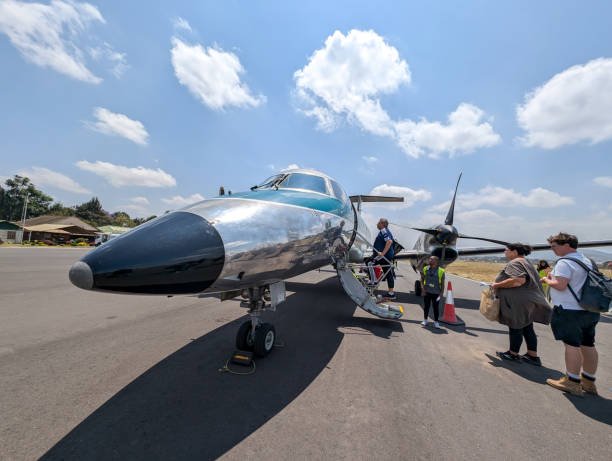
Tanzania Flight Prices September : Serengeti And Zanzibar Planning
Expert advice on navigating domestic flight logistics, seasonal pricing, and the crucial 'bush-to-beach' connection for your September 2027 Tanzania itinerary.
View package details
Tanzania Flight Prices February : Safari & Zanzibar Routes
A detailed guide to navigating flight logistics and budget factors for Tanzania travel in February 2027, focusing on safari circuits and Zanzibar connections.
View package detailsKilimanjaro Climbing And Zanzibar Package With Flights: Pricing Guide
A detailed guide on how to structure a Kilimanjaro climb and Zanzibar beach holiday, covering cost drivers, flight logistics, and route selection for 2026-2027.
View package details
Zanzibar Flights During Christmas And New Year: Expert Booking & Pricing Guide
Essential guide for booking Zanzibar flights during the high-demand Christmas and New Year season, covering pricing realities, route strategy, and logistics.
View package detailsTanzania Honeymoon Safari And Zanzibar With Flights: Package Prices
Tanzania Honeymoon Safari and Zanzibar With Flights: Package Prices.
View package detailsBest Flights For Kilimanjaro Climbing And Zanzibar Holidays: A Planning Guide
A professional guide to optimizing your international and domestic flight strategy for a combined Kilimanjaro trek and Zanzibar beach holiday in 2026-2027.
View package detailsBest Time To Book Flights To Zanzibar In : Planning Your Island Getaway
Expert advice on securing the best flight arrangements for your 2027 Zanzibar holiday, including seasonal booking windows and coordination with Tanzania safari itineraries.
View package detailsHow Long Is The Flight From Serengeti To Zanzibar? ( Planning Guide)
Planning your bush-to-beach connection? Discover the actual flight durations, stopover logistics, and booking realities for traveling from the Serengeti to Zanzibar.
View package detailsHow Much Is A Flight From Zanzibar To Serengeti?
How Much Is a Flight From Zanzibar to Serengeti?
View package detailsTanzania Safari And Zanzibar Holiday With Domestic Flights: Costs Guide
A guide to understanding the costs, logistics, and planning strategies for combining a Tanzanian wildlife safari with a Zanzibar beach getaway using domestic flights.
View package detailsIs It Cheaper To Fly From Arusha Or Kilimanjaro To Zanzibar? A Planning Guide
Deciding between Arusha Airport and Kilimanjaro International for your Zanzibar flight involves more than just the ticket price. Discover how location, baggage rules, and transfer costs...
View package detailsNo related package matches those filters. Clear one or more filters to see the other topic-matched options.



