
When planning a combined Kilimanjaro climbing expedition and a Zanzibar beach holiday, the logistics of your flight itinerary are just as critical as your physical preparation for the mountain. Many travelers assume that booking a round-trip ticket to a single airport is the most economical choice, but in the context of Tanzania, this often leads to expensive backtracking, lost vacation days, and unnecessary stress. The most efficient strategy for 2026 and 2027 travel is to design an ‘open-jaw’ or ‘multi-city’ ticket: arriving at Kilimanjaro International Airport (JRO) and departing from Zanzibar International Airport (ZNZ).
The Pro Strategy: Book your international flight into Kilimanjaro International Airport (JRO) to start your climb, and book your return flight home from Zanzibar International Airport (ZNZ). This eliminates the need to return to the mainland after your beach holiday, saving you at least one full day of travel and the cost of an additional domestic flight. For your internal transfer, a direct domestic flight from JRO or Arusha (ARK) to ZNZ is the industry standard for reliability and comfort.
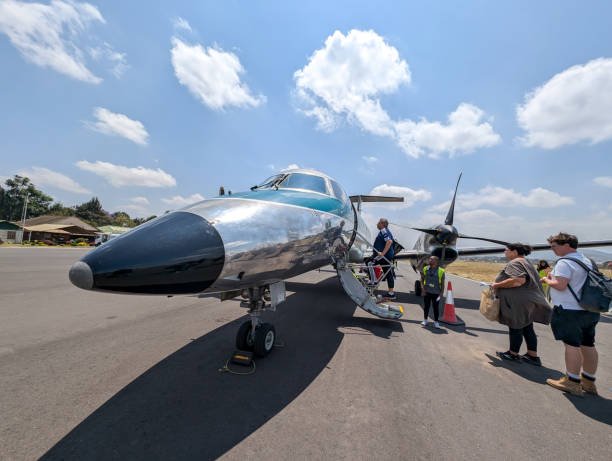

The JRO-In, ZNZ-Out Strategy
The geography of Tanzania dictates your flight path. Kilimanjaro is in the north, near the Kenyan border, while Zanzibar is an archipelago off the coast of Dar es Salaam. If you attempt to fly back to Kilimanjaro from Zanzibar after your beach time, you are looking at a domestic connection that usually requires a stopover in Dar es Salaam, effectively consuming an entire day of your trip.
By utilizing an open-jaw ticket—where your arrival and departure cities are different—you maximize your time on the ground. Most major international carriers now allow this booking structure without a significant price penalty compared to a standard round-trip. When searching for flights, do not simply look for ‘Round Trip’ options; use the ‘Multi-City’ search tool on airline websites or travel aggregators. This allows you to select JRO as your arrival and ZNZ as your departure point, creating a smooth flow from the mountain to the ocean.
Why Kilimanjaro International Airport (JRO) is Non-Negotiable
For any climber, Kilimanjaro International Airport (JRO) is the only logical arrival point. It is located roughly 40-50 kilometers from Moshi, the primary gateway town for most Kilimanjaro climbing routes. Landing at JRO puts you within an hour’s drive of your hotel, allowing you to settle in, meet your guides, and perform your final gear check without the fatigue of a long domestic connection after a long-haul international flight.
We frequently receive inquiries about flying into Dar es Salaam (DAR) and taking a bus or train to the north. While this might appear cheaper on a spreadsheet, the travel time can exceed 10-12 hours by bus. For those on a tight schedule, the flights to Mount Kilimanjaro are the only way to ensure you arrive fresh and ready for your first day on the trail. If your international flight arrives late in the evening, we strongly recommend pre-booking your Kilimanjaro Airport to Moshi transfer to avoid the stress of negotiating taxis at midnight.
Bridging the Mountain and the Beach
Once you descend from the mountain, you need to bridge the gap between the Kilimanjaro region and Zanzibar. You have two primary options here: flying or the combination of flight and ferry. For the vast majority of our climbers, flying is the only recommended option.
Domestic carriers like Precision Air, Air Tanzania, and regional bush-plane operators offer daily connections. The most efficient route is a direct flight from JRO to ZNZ. If a direct flight isn’t available on your chosen day, the route will typically connect through Dar es Salaam (DAR). While this adds a stop, it is significantly more reliable and comfortable than taking a bus to Dar es Salaam and then a ferry to Zanzibar.
Key considerations for your domestic booking:
- Buffer Time: Never book your domestic flight for the same day you descend from the mountain. You need at least one full day in Moshi or Arusha to recover, clean your gear, and ensure you are not suffering from any lingering effects of altitude.
- Luggage Weight: Domestic airlines in Tanzania often have stricter weight limits than international carriers, typically 15kg to 20kg. If you have excess weight from your climbing gear, you will need to arrange for storage or prepare to pay for extra baggage.
- The ‘Safari’ Option: If you are planning a safari between your climb and your beach holiday, ensure your flight from JRO to the safari region (often Arusha Airport – ARK) and then to Zanzibar is booked as part of a cohesive travel plan.
For more specific guidance on these connections, you can always reach out via WhatsApp at +255 747 477 898 or email us at climb4africa@gmail.com to discuss the best timing for your specific itinerary.
The Baggage Conundrum: Managing Gear and Beachwear
One of the most common challenges for climbers heading to the beach is the sheer volume of gear required for a Kilimanjaro trek versus the light clothing needed for Zanzibar. You are essentially packing for two completely different climates.
At Climb 4 Africa, we assist our guests in managing this transition. You do not need to carry your heavy mountain boots, sleeping bag, and thermal layers to the beach. We provide secure storage options for your excess gear while you are on safari or enjoying your Zanzibar holiday. When planning your flights, keep this in mind: you may want to pack a separate, smaller duffel bag for the beach portion of your trip, which you can leave at our office or your base hotel in Moshi/Arusha while you climb.
This strategy also helps you stay under the weight limits of domestic bush-plane flights if you choose a more remote safari lodge or a smaller island hop. It simplifies your travel experience, allowing you to move through airports with ease rather than lugging around a massive expedition pack.
Strategic Planning for 2026-2027
Travel patterns for 2026 and 2027 suggest that booking early remains the most effective way to secure competitive rates on international flights. While domestic flights in Tanzania are less prone to extreme price fluctuations, they do fill up, especially during the peak climbing seasons (January-February and July-October).
If you are planning your trip during the Christmas or New Year period, please be aware that flights to Zanzibar sell out months in advance. You can find more detailed advice in our guide on Zanzibar flights during Christmas and New Year. For those aiming for the quieter months, you may find more flexibility, but the weather patterns in both the mountains and the islands should be your primary guide for scheduling.
Recommended Booking Sequence:
- Confirm your climb dates and secure your permit with your operator.
- Book your international long-haul flights (Open-Jaw: Home -> JRO / ZNZ -> Home).
- Book your domestic connection (JRO to ZNZ) only after your climb dates are locked in.
- Finalize your airport transfers and accommodation for the nights before and after your trek.
Common Pitfalls in Flight Booking
The most frequent error travelers make is underestimating the fatigue factor. A Kilimanjaro climb is physically demanding. Planning to fly to Zanzibar the moment you descend from the mountain gate is a recipe for a ruined beach holiday. You will be exhausted, your muscles will be sore, and you will likely have a significant amount of laundry to manage.
We always advise our clients to schedule at least one ‘buffer day’ in Moshi. This is not just for rest; it is a safety net. If your climb is delayed by even a few hours due to trail conditions or weather, a same-day flight to Zanzibar would be missed. A buffer day gives you the flexibility to handle any unexpected changes without the panic of rebooking international connections.
Another pitfall is assuming that all airports in the region are the same. Arusha Airport (ARK) and Kilimanjaro International Airport (JRO) are different facilities. ARK is a smaller, regional airport often used for safari flights, while JRO is the international hub. Always double-check your tickets to ensure you are going to the correct airport for your departure or arrival.


Expert Support for Your Logistics
At Climb 4 Africa, we understand that coordinating international flights, domestic connections, and mountain permits can feel overwhelming. Our role goes beyond guiding you to the summit; we are here to ensure the transition from the rugged slopes of Kilimanjaro to the white sands of Zanzibar is effortless. We provide comprehensive, on-the-ground support to help you navigate these logistics.
Whether you need advice on the best airlines to use for your specific route, help with arranging airport transfers, or assistance in storing your extra luggage, our local team is ready to help. If you are still in the planning phase, we encourage you to reach out to us at info@climb-4-africa.com. Share your preferred travel window, and we can help you structure an itinerary that balances your adventure and relaxation goals perfectly.
Quick Checklist for Your Tanzania Flight Planning
- Passport Validity: Ensure your passport is valid for at least 6 months beyond your departure date from Tanzania.
- Visa Requirements: Check if your home country requires an e-visa for Tanzania, which is separate from your flight booking.
- International Flight: Use the ‘Multi-City’ option to fly into JRO and out of ZNZ.
- Domestic Flight: Book only after confirming your climb dates, and allow for at least one buffer day after your descent.
- Luggage Strategy: Plan to store your climbing gear before heading to the coast.
- Travel Insurance: Ensure your policy covers both high-altitude trekking and international flight cancellations.
Your trip to Tanzania is a significant investment of time and resources. By prioritizing the right flight strategy early in your planning, you ensure that your experience is defined by the memories you make on the mountain and the peace you find on the beach, rather than the stress of navigating transit hubs.
Navigating Tanzanian Transit: Customs, Immigration, and Connections
For international travelers, understanding the mechanics of your port of entry is essential to avoiding transit stress. When you book your international flight, you must distinguish between your ‘port of entry’—the first point where you land in Tanzania—and your final destination. If you are flying into Kilimanjaro International Airport (JRO), this will be your point of entry. You will clear immigration, collect your luggage, and process your visa here. This is a straightforward process, but it requires that your international flight is booked directly to JRO, or via a transit hub that does not require you to clear customs until you reach Tanzania.
Conversely, if your international route includes a connection in Dar es Salaam (DAR) before proceeding to JRO or Zanzibar (ZNZ), you must be aware of the ‘transit vs. entry’ distinction. In many cases, travelers are required to clear customs and immigration in Dar es Salaam, collect their checked bags, and re-check them for their domestic connection. This process can be time-consuming, often requiring a minimum of three to four hours between flights. If your itinerary involves this, ensure your domestic flight is booked with enough lead time to account for potential delays in immigration queues, which can fluctuate significantly depending on the arrival of other international flights.
The Operational Realities of Regional Aviation
Once you are ready to move from the mountain to the coast, you will transition from international jet travel to regional aviation. It is a mistake to assume that the operational standards of your international carrier apply to the small regional airlines that service the JRO-to-ZNZ route. These carriers often utilize smaller, propeller-driven aircraft, which come with significantly stricter luggage policies and check-in procedures.
Most regional airlines impose a strict weight limit, typically ranging from 15 to 20 kilograms for checked luggage. Unlike international flights, where you might pay an overage fee to bring extra weight, regional flights may refuse to load your bags if the aircraft is at capacity. Furthermore, check-in deadlines for these flights are often much earlier than those for international departures—sometimes closing 60 to 90 minutes before takeoff. Always verify the specific ‘Baggage Allowance’ policy of your chosen domestic carrier at the time of booking, and consider the ‘buffer day’ not just as a rest period, but as a logistical window to consolidate your gear and ensure your luggage meets these regional specifications.
Why the ‘Buffer Day’ is Your Best Insurance Policy
The ‘buffer day’ is frequently misunderstood by first-time climbers as merely a day for resting sore muscles. While recovery is undeniably important, the buffer day serves a critical logistical function: it acts as a shock absorber for the inherent unpredictability of regional travel. Tropical weather patterns, particularly during the transition months between the wet and dry seasons, can lead to sudden, temporary groundings of smaller aircraft. Additionally, unexpected technical delays are more common in regional hubs than at major international airports.
By scheduling at least 24 hours between your descent from the mountain and your flight to Zanzibar, you decouple your mountain expedition from your beach holiday. If your descent is delayed by a day—perhaps due to a slower pace or an extra night needed for acclimatization—you will not be forced to scramble to rebook your domestic flight or, worse, risk missing your international departure home. This 24-hour window allows you to finalize your mountain gear storage, handle any unexpected administrative tasks, and transition your mindset from the rugged, high-altitude environment of the Kilimanjaro slopes to the relaxed pace of the Zanzibar coast without the pressure of a ticking clock.
Mastering the Ground Transfers: The Critical Link
While your focus is rightfully on the flight itinerary, the success of your transition from the high-altitude slopes of Kilimanjaro to the tropical coastline of Zanzibar often hinges on the ground transfers connecting your accommodation to the airports. A common oversight for many climbers is assuming that the airport code on their ticket is the only detail that matters. In Tanzania, the physical location of the airport—and the road conditions leading to it—can drastically alter your travel experience.
The JRO vs. ARK Distinction
A frequent point of confusion for travelers is the distinction between Kilimanjaro International Airport (JRO) and Arusha Airport (ARK). While both serve the northern safari and climbing circuit, they are not interchangeable. JRO is the international gateway, located roughly halfway between the towns of Moshi and Arusha. It handles large jets and international arrivals. In contrast, Arusha Airport (ARK) is a smaller, regional facility located much closer to the city center of Arusha. It is used primarily for domestic bush flights and smaller regional hops, including some connections to Zanzibar.
When booking your flight from the mountain region to Zanzibar, verify which airport your carrier uses. If you are staying at a lodge in Moshi, JRO is significantly more convenient. If you are staying in Arusha, you might be tempted by the proximity of ARK, but you must ensure your domestic carrier operates from there. Never assume a transfer is short simply because a town is nearby; traffic congestion in Arusha can be intense, and road construction or weather events can turn a forty-minute drive into a two-hour ordeal. Always build a 30-minute buffer into your departure time from your hotel, regardless of how close you believe the airport to be.
Ground Logistics in the Kilimanjaro Region
The final leg of your mountain journey—the drive from your post-climb hotel to the airport—is the most overlooked logistical hurdle. After a multi-day climb, your body is fatigued, and your focus is likely on recovery. However, this is when you are most vulnerable to travel delays. Many climbers rely on hotel-arranged shuttles or pre-booked private transfers. It is essential to confirm your pickup time the evening before your flight. Do not rely on ad-hoc taxi services at the hotel gate on the morning of your departure, as availability during early morning hours can be sporadic.
Furthermore, consider the terrain. The roads leading to JRO from the Moshi side pass through areas that can experience heavy commuter traffic. If your flight is scheduled for the mid-morning, you are competing with local transport, school buses, and commercial vehicles. A reliable transfer service will account for these variables. Ensure your transfer provider has a direct contact number for your driver and a contingency plan in case of a vehicle breakdown—a rare but possible occurrence in this environment.
The Zanzibar Last Mile: Airport to Beach
Your arrival at Abeid Amani Karume International Airport (ZNZ) in Zanzibar presents a different set of challenges. The airport itself has undergone significant modernization, but the infrastructure surrounding it remains busy. Once you land, you are not immediately at your destination; the island’s geography dictates your transfer time. If you are staying in Stone Town, your transfer will be short, typically 15 to 20 minutes. However, if your accommodation is in the popular northern beaches like Nungwi or Kendwa, or the eastern coast like Michamvi or Paje, you are looking at a drive of 60 to 90 minutes, or even longer depending on traffic and the state of the roads.
The “last mile” from ZNZ to your beach resort is where many travelers experience their first real test of patience. The roads crossing the island are narrow and frequently shared with pedestrians, cyclists, and livestock. It is not an autobahn. When arranging your transport, prioritize a private, pre-booked transfer. While public taxis are available outside the terminal, navigating the chaotic arrival hall with your mountain gear and beach luggage can be overwhelming. A pre-booked driver who knows your destination will be waiting for you, saving you from negotiating prices in a high-pressure, fatigued state. Moreover, if your flight is delayed—a common occurrence with regional aviation—a pre-booked service is more likely to track your flight status and adjust the pickup time accordingly, whereas an airport taxi will simply leave the queue once the demand is met.
Check Availability for Best Flights For Kilimanjaro Climbing And Zanzibar Holidays: A Planning…
Ready to compare dates, prices, and the best option for your group? Send the package name and travel month so the team can reply with a clear quote, availability, and what is included.
Kilimanjaro Climbing And Zanzibar Package With Flights: Pricing Guide
A detailed guide on how to structure a Kilimanjaro climb and Zanzibar beach holiday, covering cost drivers, flight logistics, and route selection for 2026-2027.
View package details
Kilimanjaro Honeymoon Climbing And Zanzibar Beach Holiday: December Planning
A practical guide for couples planning a Kilimanjaro climb and Zanzibar beach holiday in December 2026, focusing on route selection, recovery logistics, and planning timelines.
View package detailsIs It Cheaper To Fly From Arusha Or Kilimanjaro To Zanzibar? A Planning Guide
Deciding between Arusha Airport and Kilimanjaro International for your Zanzibar flight involves more than just the ticket price. Discover how location, baggage rules, and transfer costs...
View package detailsAfcon Kilimanjaro Safari And Zanzibar Package: Expert Planning Guide
A comprehensive guide to coordinating your AFCON 2027 travel, including Kilimanjaro trekking, Northern Circuit safaris, and Zanzibar relaxation, with expert logistical advice.
View package details
Nairobi To Zanzibar Flights: Ticket Prices & Booking Guide
A comprehensive guide to understanding flight costs, airline choices, and logistics for the popular Nairobi to Zanzibar route.
View package details
Zanzibar Flights During Christmas And New Year: Expert Booking & Pricing Guide
Essential guide for booking Zanzibar flights during the high-demand Christmas and New Year season, covering pricing realities, route strategy, and logistics.
View package detailsBest Time To Book Flights To Zanzibar In : Planning Your Island Getaway
Expert advice on securing the best flight arrangements for your 2027 Zanzibar holiday, including seasonal booking windows and coordination with Tanzania safari itineraries.
View package detailsTanzania Honeymoon Safari And Zanzibar With Flights: Package Prices
Tanzania Honeymoon Safari and Zanzibar With Flights: Package Prices.
View package detailsTanzania Safari And Zanzibar Holiday With Domestic Flights: Costs Guide
A guide to understanding the costs, logistics, and planning strategies for combining a Tanzanian wildlife safari with a Zanzibar beach getaway using domestic flights.
View package details
Kilimanjaro Climbing Packages For Students On December Holidays 2026
Kilimanjaro Climbing Packages for Students on December Holidays.
View package details
Private Kilimanjaro Climbing Tours For Christmas Holidays 2026
A deep-dive guide for planning your private Kilimanjaro expedition for the 2026 holiday season, focusing on route selection, acclimatization, and logistics.
View package detailsZanzibar To Nairobi Flight Price & Schedule: Planning Your Connection
A practical guide to navigating flights from Zanzibar to Nairobi, covering airport logistics, price factors, and how to coordinate your beach-to-safari transition.
View package detailsNo related package matches those filters. Clear one or more filters to see the other topic-matched options.



