
The short answer is technically yes, but practically no. While it is physically possible to charter a private aircraft or book connecting commercial flights that depart Zanzibar in the early morning and return in the late evening, we strongly advise against attempting a same-day return trip from Zanzibar to the Serengeti. The sheer amount of time spent in transit, combined with the unpredictable nature of bush aviation and the logistical requirements of entering the park, means you would spend significantly more time in the air and on transfer roads than you would actually viewing wildlife.
When planning a trip to Tanzania, the map can be deceptive. The distance between the beaches of Zanzibar and the plains of the Serengeti is vast. Travelers often look at the flight time—usually between 1.5 and 2.5 hours—and assume that a day trip is a viable way to “tick off” the Serengeti. As local operators, our goal is to ensure your investment in travel actually delivers the experience you are paying for. A same-day trip typically results in exhaustion, missed wildlife sightings, and a feeling of being rushed through one of the world’s most spectacular ecosystems.
The Logistical Reality of the “Same-Day” Attempt
To understand why this is not a recommended itinerary, we have to look at the math of a typical travel day. Even if you book the earliest possible flight out of Zanzibar (ZNZ), you are subject to the rigid schedules of light aircraft operators. Most scheduled bush flights operate on a “hopping” basis, meaning they often stop at multiple airstrips (such as Arusha or Manyara) before reaching the Serengeti. This turns a direct-looking flight into a multi-stop journey that can take three to four hours.
Once you land at a Serengeti airstrip—like Seronera or Kogatende—you still need to clear park entry protocols. If you are not already part of a pre-arranged tour, this process takes time. You then need to transfer from the airstrip to a game-viewing vehicle. By the time you are actually on a game drive, it is often mid-day. In the Serengeti, the middle of the day is when wildlife is typically resting in the shade, away from the tracks, and the heat haze can make spotting animals difficult. You would then need to rush back to the airstrip for your return flight, leaving you with perhaps two or three hours of actual safari time.
Why Flight Schedules Are Not Guaranteed
Unlike commercial flights between major international hubs, bush flights in Tanzania are highly dependent on weather and passenger loads. Delays are common, and flights can be rescheduled or combined at short notice. If your morning flight is delayed by even an hour—which is not uncommon during the rainy season or due to technical logistics—your entire “day trip” evaporates. You risk being stranded in the Serengeti or missing your connection back to Zanzibar, which can complicate your onward travel plans or international flights home.
For a detailed look at how these connections actually function, you can read our guide on Can You Fly Directly From Zanzibar to Serengeti?. Understanding the distinction between direct charters and commercial multi-stop flights is the first step in planning a realistic itinerary.
The “Golden Hours” of Safari
The most important factor that same-day travelers miss is the rhythm of the African bush. Wildlife viewing is not a constant activity; it follows the sun. The best wildlife viewing happens during the “Golden Hours”: the early morning (sunrise to 10:00 AM) and the late afternoon (4:00 PM to sunset). These are the times when predators are active and the light is perfect for photography.
By attempting a same-day return, you are essentially guaranteeing that you will miss both of these crucial windows. You will be arriving when the animals are inactive and leaving before the evening activity begins. To truly experience the Serengeti, you need to be on the ground, ideally staying at a lodge or tented camp within the park. This allows you to start your game drive at dawn, when the park comes alive, and finish as the sun sets, maximizing your chances of witnessing unique animal behaviors.
Recommended Minimum Stay
If you are flying from Zanzibar, we recommend a minimum of two nights and three days in the Serengeti. This duration allows for:
- A full afternoon game drive upon arrival.
- A full day of exploration the following day, covering different ecosystems or the Great Migration corridors.
- A final morning game drive before your departure flight.
This structure transforms a frantic travel day into a relaxed, in-depth safari experience. For those wondering about the logistics of staying longer, our guide on Can we fly from Zanzibar to Serengeti and stay for two nights? provides a clear breakdown of how to structure a short-but-effective safari.
Comparing Costs and Value
When you look at the cost of a private charter flight—which would be necessary to even attempt a same-day return with any reliability—the price is significantly higher than a standard scheduled flight. When you divide that high cost by the few hours of game viewing you receive, the “cost per hour of safari” becomes astronomical.
For most travelers, the budget is better spent on:
- Better accommodation: Staying inside the park rather than outside the gate, which saves hours of driving time.
- Private vehicle usage: Having a dedicated guide for your group rather than sharing a vehicle, which gives you control over your schedule.
- Extended time: Adding an extra night, which often costs less than the premium paid for a rushed, single-day charter.
If you are concerned about flight times, it is helpful to understand the general connectivity. Our resource on How Long Is the Flight From Serengeti to Zanzibar? clarifies the actual travel time expectations, which helps in planning your departure and return windows more effectively.
Practical Planning for Your Tanzania Itinerary
If your heart is set on combining the beach and the bush, you don’t need to force it into one day. The most successful itineraries follow a logical flow. Many travelers choose to start with the safari portion. After a flight into Kilimanjaro or Arusha, you can head directly into the Northern Circuit (Tarangire, Ngorongoro, Serengeti) and finish your trip by flying from the Serengeti or Arusha to Zanzibar for some well-deserved relaxation on the beach.
This order makes sense for several reasons:
- Fatigue: Safari days are long and dusty. Ending on the beach allows you to recover before flying home.
- Logistics: It is generally easier to catch a domestic flight to Zanzibar from the mainland than it is to fly back and forth.
- Packing: You can leave your beach gear in storage at a hotel in Arusha or Zanzibar, keeping your safari luggage light.
For those packing for these internal flights, remember that light aircraft have strict weight limits. You can find our guide on How Much Luggage Is Allowed on Serengeti Safari Flights? helpful to ensure you don’t face extra fees or issues at the airstrip.


What to Do Instead of a Same-Day Trip
If you have limited time and want to see the Serengeti, consider these alternatives:
- Fly-in Safari Packages: These are pre-packaged trips where the flights, accommodation, and game drives are coordinated. They are the most efficient way to see the park without the headache of planning individual legs.
- Ngorongoro Crater Day Trip: While still a long day, the Ngorongoro Crater is closer to the Arusha/Kilimanjaro hub than the heart of the Serengeti. It offers a high density of wildlife in a smaller, contained area, which makes a “day trip” slightly more feasible than a Serengeti excursion.
- Extended Transit: If you absolutely must return the same day, be prepared to book a private charter rather than a scheduled flight. This gives you the flexibility to dictate the takeoff and landing times, though it comes at a premium cost.
To see what a well-structured trip looks like, you can browse our range of Tanzania safari group departures, which often include these flight connections in a way that maximizes your time.
Booking Your Safari with Expert Support
Planning a multi-leg journey in Tanzania involves coordinating airlines, park authorities, and lodging. When you book with Climb 4 Africa, we handle these logistical threads to ensure they don’t unravel. We don’t just book a flight; we ensure your arrival at the airstrip aligns with your game drive schedule and that your return flight allows enough buffer time for unexpected delays.
If you are in the early stages of planning and want to discuss what is realistically possible for your specific travel dates, we are here to help. Whether you are looking for a private, tailor-made experience or a group departure, we can provide the local expertise to avoid the common pitfalls of a “same-day” itinerary.
To start your planning, send us your rough dates and the number of travelers. We can help you build an itinerary that balances the thrill of the Serengeti with the relaxation of Zanzibar without the unnecessary stress of a single-day rush.
Contact us to discuss your itinerary:
WhatsApp: +255 747 477 898
Email: climb4africa@gmail.com or info@climb-4-africa.com
We are ready to help you craft a trip that values your time and provides the authentic Tanzanian experience you are looking for.
Navigating the Unique Constraints of Bush Aviation
Beyond the simple math of flight times and schedules, there is a distinct set of operational realities regarding bush aviation in Tanzania that often catches travelers off guard. When you book a flight from Zanzibar to the Serengeti, you are not engaging with the standard infrastructure of a major international airport. You are entering the realm of bush pilots, unpaved runways, and strict weight-and-balance regulations that can derail a same-day itinerary before you even board the aircraft.
The Mandatory Soft-Sided Luggage Requirement
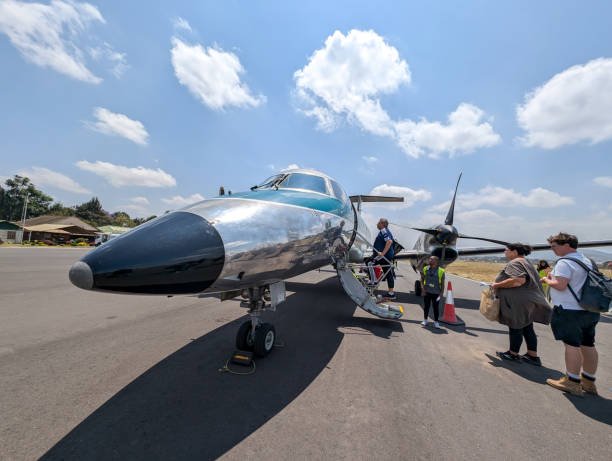
One of the most critical, yet frequently overlooked, aspects of flying into the Serengeti is the requirement for soft-sided luggage. Because bush aircraft—typically Cessna Caravans or similar light planes—have cargo holds that are small, oddly shaped, and structurally sensitive, hard-shell suitcases are strictly prohibited. These planes do not have baggage handlers who stack luggage in a traditional hold; the pilot or ground crew manually fits bags into a nose or side compartment.
If you arrive at Zanzibar airport with a hard-shell suitcase, assuming you can check it in as you would on a commercial flight, you will be denied boarding. For a same-day traveler, this creates an immediate crisis. You cannot simply leave your luggage at the gate; you would need to store it at the airport or your hotel, adding hours of transit time and coordination to a day that is already stretched to its limit. This luggage constraint alone makes the “day trip” model impractical for anyone who is not traveling with specific, safari-ready gear.
The Airstrip Environment: What to Expect Upon Arrival
Travelers often envision landing at a Serengeti airstrip as a smooth transition into a safari vehicle. In reality, the “terminal” at a place like Seronera or Kogatende is often little more than a small, open-air shelter or a patch of grass. There are no lounges, no cafes, no charging stations, and certainly no climate-controlled waiting areas. If your return flight is delayed—which, as previously noted, is a common occurrence—you will be spending that time in the heat and dust of the savannah.
This environment is not designed for commuters; it is designed for arrivals and departures. If you are attempting a same-day return, you are essentially tethered to this remote location. If a mechanical issue or weather event grounds your plane, you do not have the luxury of returning to a hotel or finding a comfortable place to wait. You are at the mercy of the bush, with no infrastructure to support a prolonged stay. This lack of facilities is a significant risk factor that many tourists fail to account for when they view the Serengeti on a map.
The Physiological Strain of Rapid Transition
Finally, consider the human element of the trip. You are moving from the humid, sea-level environment of the Zanzibar coast to the high-altitude, arid plains of the Serengeti in a matter of hours. This rapid shift in climate, combined with the extreme early morning wake-up call required to catch the first flight out, often results in significant physical fatigue. By the time you reach the park and begin a game drive, you are likely to be dehydrated and exhausted. Rather than enjoying the “Golden Hours” of wildlife viewing, you are fighting the urge to sleep. A same-day trip is not merely a logistical challenge; it is a physically taxing experience that often leaves travelers feeling drained rather than inspired.
The Reality of Park Access: Time Lost vs. Time Gained
Many travelers operate under the misconception that landing at a Serengeti airstrip is synonymous with the start of a safari game drive. This is a critical misunderstanding of how the park is laid out. Even upon landing at a primary hub like Seronera, you are not immediately surrounded by wildlife in a way that allows for an instant, high-quality experience. You are at an airstrip, which is essentially a logistical node in the middle of a vast wilderness. To transition from a passenger on a light aircraft to a safari participant, you must navigate a series of steps that consume significant time—time that is already in short supply for a same-day traveler.
First, consider the transfer logistics. When you arrive, you must meet your pre-arranged driver-guide, load your (soft-sided) luggage, and complete the mandatory park entry procedures. This is not a rapid process. The airstrips are often located on the periphery of the most active wildlife areas to minimize noise and disturbance to the animals. This means that after you land, you will likely spend 30 to 60 minutes simply driving to reach a location where wildlife density is high enough for a meaningful viewing experience. When you factor in the return journey—you must be back at the airstrip at least 45 to 60 minutes before your flight to clear security and boarding protocols—the actual “game viewing window” shrinks dramatically. If your flight arrives at 10:00 AM and your return flight departs at 3:00 PM, you are not getting five hours of safari; you are realistically getting less than two hours of actual exploration, with the rest of the time swallowed by transit and administrative overhead.
The Hidden Complexity of Park Entry Permits
Beyond the physical distance, there is the administrative reality of entering a protected national park. The Serengeti is managed by the Tanzania National Parks Authority (TANAPA), and entry is not a simple “pay-at-the-gate” affair. Every visitor must be registered, and permits must be validated. For independent travelers or those attempting to cobble together a day trip without a professional operator, this bureaucracy is a significant point of failure. If your documentation is not perfectly aligned—or if there is a discrepancy in your permit timing—you can be delayed at the entry gate or the airstrip office. In the context of a same-day trip, a 30-minute administrative delay is not a minor inconvenience; it is a catastrophe that could result in you missing your return flight entirely. Professional safari operators manage these permits in advance, but even with expert support, the administrative friction of entering the park remains a constant variable that adds stress to what should be a relaxing experience.
The “Ticking Clock” Effect on Game Viewing Quality
Perhaps the most overlooked impact of the same-day attempt is the psychological pressure it places on your game viewing. A true safari experience relies on patience. It involves stopping the vehicle, turning off the engine, and waiting for wildlife to emerge or for a predator to reveal itself. This is the antithesis of the “same-day” model, which is inherently rushed. When you are constantly aware that you must be back at the airstrip by a specific, inflexible time to catch your return flight, you lose the ability to linger. You cannot wait for a leopard to descend from a tree, nor can you follow a pride of lions as they move through the tall grass. You are constantly “driving to the next spot” rather than observing the ecosystem. This results in a superficial “check-the-box” style of travel, where you might see animals from a distance but rarely have the opportunity to engage with the environment in the slow, observant manner that defines the best safari experiences. You are effectively touring the Serengeti under the pressure of a commute, which fundamentally changes the nature of your interaction with the bush.
Check Availability for Can I Fly From Zanzibar To Serengeti And Return The Same Day? Guide
Ready to compare dates, prices, and the best option for your group? Send the package name and travel month so the team can reply with a clear quote, availability, and what is included.
Tanzania Flight Prices September : Serengeti And Zanzibar Planning
Expert advice on navigating domestic flight logistics, seasonal pricing, and the crucial 'bush-to-beach' connection for your September 2027 Tanzania itinerary.
View package detailsHow Long Is The Flight From Serengeti To Zanzibar? ( Planning Guide)
Planning your bush-to-beach connection? Discover the actual flight durations, stopover logistics, and booking realities for traveling from the Serengeti to Zanzibar.
View package details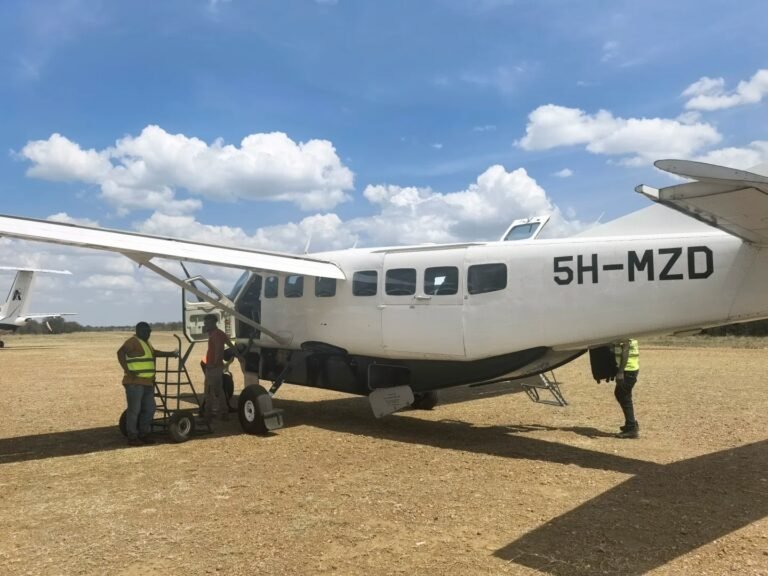
Can You Fly Directly From Zanzibar To Serengeti? A Planning Guide
A practical guide to flying from the beaches of Zanzibar to the Serengeti plains, covering bush plane logistics, baggage restrictions, and planning advice.
View package detailsHow Much Is A Flight From Zanzibar To Serengeti?
How Much Is a Flight From Zanzibar to Serengeti?
View package details
Zanzibar To Nairobi Flight Price & Schedule: Planning Your Connection
A practical guide to navigating flights from Zanzibar to Nairobi, covering airport logistics, price factors, and how to coordinate your beach-to-safari transition.
View package details
Best Time To Book Flights To Zanzibar In : Planning Your Island Getaway
Expert advice on securing the best flight arrangements for your 2027 Zanzibar holiday, including seasonal booking windows and coordination with Tanzania safari itineraries.
View package detailsTanzania Flight Prices February : Safari & Zanzibar Routes
A detailed guide to navigating flight logistics and budget factors for Tanzania travel in February 2027, focusing on safari circuits and Zanzibar connections.
View package detailsTanzania Honeymoon Safari And Zanzibar With Flights: Package Prices
Tanzania Honeymoon Safari and Zanzibar With Flights: Package Prices.
View package detailsTanzania Safari And Zanzibar Holiday With Domestic Flights: Costs Guide
A guide to understanding the costs, logistics, and planning strategies for combining a Tanzanian wildlife safari with a Zanzibar beach getaway using domestic flights.
View package detailsWhich Tanzanian Airport Is Best For A Safari And Zanzibar Holiday?
Which Tanzanian Airport Is Best for a Safari and Zanzibar Holiday?
View package detailsAfcon Football Safari And Zanzibar Holiday: Expert Planning Guide
A guide to combining the AFCON 2027 football tournament with a Tanzanian safari and Zanzibar beach holiday, focusing on logistics, timing, and travel planning.
View package detailsNairobi To Zanzibar Flights: Ticket Prices & Booking Guide
A comprehensive guide to understanding flight costs, airline choices, and logistics for the popular Nairobi to Zanzibar route.
View package detailsNo related package matches those filters. Clear one or more filters to see the other topic-matched options.



