
A luxury fly-in safari from Zanzibar is a premium, time-efficient travel experience that bypasses the long overland drives from the coast, using light aircraft to connect Zanzibar directly to Tanzania’s premier national parks like the Serengeti, Nyerere, or Ruaha. These private packages are designed for travelers who prioritize exclusivity, comfort, and maximizing wildlife viewing time, typically featuring fly-in transfers, private 4×4 game drive vehicles, high-end tented camps or lodges, and full-board service, making them the most smooth way to combine a beach holiday with a world-class safari in 2026 and 2027.

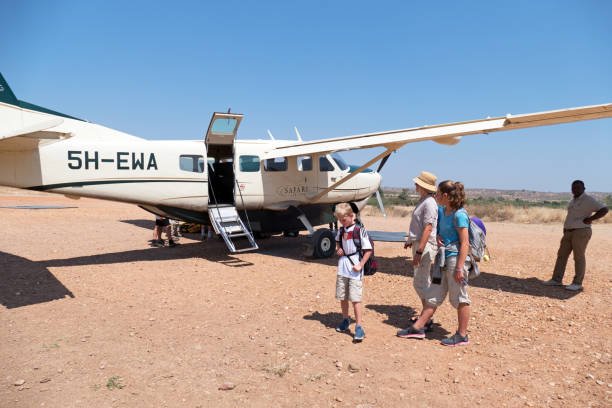
When you are already relaxing on the white sands of Zanzibar, the idea of spending 10 to 12 hours in a safari vehicle just to reach the northern parks is rarely appealing. This is where the concept of a luxury fly-in safari transforms your itinerary. By opting for a private charter or scheduled light aircraft flight, you can be sipping sundowners in the heart of the Serengeti or exploring the vast landscapes of Nyerere National Park within a few hours of leaving your Zanzibar hotel.
For 2026 and 2027, the demand for these private packages has shifted toward deeper, more personalized itineraries. Travelers are increasingly looking for a balance between the “big five” excitement and the solitude of remote, high-end concessions. A fly-in approach is not just about saving time; it is about accessing the best wildlife regions without the fatigue of long-distance transit.
Why Choose a Private Fly-In Safari Over Overland Options?
The primary trade-off in Tanzania travel is time versus cost. Overland safaris are iconic, but they are grueling. A luxury fly-in safari from Zanzibar eliminates the “transfer fatigue” that often plagues multi-destination trips. When you fly, your safari begins the moment you touch down on a bush airstrip.
Consider these practical advantages:
- Time Efficiency: You gain nearly two full days of game viewing that would otherwise be spent in transit.
- Exclusivity: Private packages mean you are not sharing your game drive vehicle with strangers. The itinerary is flexible, allowing you to prioritize your interests—whether that is photography, birding, or simply spending longer with a pride of lions.
- Comfort: You avoid the bumpy, dusty roads that characterize many rural Tanzanian transit routes. Your arrival at a remote lodge is fresh, not exhausted.
- Access to Remote Regions: Some of the most exclusive lodges in the Serengeti or Ruaha are located deep within the park, far from the main gate traffic. These are often best reached by air, keeping you away from the crowds.
If you are planning your trip, consider reaching out to the team at Climb 4 Africa via WhatsApp at +255 747 477 898 or email climb4africa@gmail.com. We specialize in coordinating these complex logistics so you do not have to manage multiple flight operators and ground transfers independently.
Top Destinations for Your Zanzibar Fly-In Experience
Not every park is equally suited for a short fly-in trip. Your choice depends heavily on what you want to see and how much time you have. Here is a breakdown of the best destinations accessible from Zanzibar.
The Serengeti National Park
This is the gold standard for a fly-in safari. With direct flights connecting Zanzibar to airstrips like Seronera, Kogatende, or Grumeti, you can access the heart of the wildebeest migration with ease. If you are targeting the Great Migration, flying is almost mandatory to reach the remote northern or western corridors where the herds are located at specific times of the year.
Nyerere National Park (formerly Selous)
For those who prefer a wilder, more rugged experience, Nyerere is an exceptional choice. It is closer to Zanzibar than the northern parks, making it perfect for shorter 2- or 3-day escapes. The landscape is dominated by the Rufiji River, and the safari experience here focuses on boat safaris, walking safaris, and game drives. It feels more intimate and less “touristy” than the Serengeti.
Ruaha National Park
If you have a bit more time and want to see predators in a landscape that feels truly ancient, Ruaha is the destination. It is the largest national park in Tanzania and is known for its massive elephant herds and high concentration of lions. Because it is further afield, the fly-in option is the only practical way to visit it from Zanzibar without turning your vacation into a logistics project.
Pro Planning Tip: The “Combo” Strategy
Many of our guests at Climb 4 Africa choose to combine a beach stay in Zanzibar with a 3-day fly-in safari to the Serengeti and a 2-day fly-in visit to Nyerere. This dual-safari approach allows you to see two completely different ecosystems—the open plains of the north and the riverine wilderness of the south—without ever needing to step foot in a long-haul transfer vehicle. If you are interested in this, contact our team at info@climb-4-africa.com to discuss how we can structure these connections for your 2026 or 2027 dates.
Understanding the Costs of Luxury Packages
It is important to be clear: luxury fly-in safaris are a premium investment. The cost is driven by three main factors: light aircraft charter or seat-in-plane costs, the tier of the accommodation (which often includes all-inclusive drinks and gourmet meals), and the use of private 4×4 vehicles.
When you receive a quote, ensure it includes:
- Domestic Flight Tickets: Often the most volatile part of the pricing. Prices vary based on seasonality (peak vs. shoulder season).
- Park Fees & Conservation Levies: These are mandatory and can be significant. A transparent operator will break these out for you.
- Private Vehicle & Guide: You are paying for the exclusivity of a vehicle that stays with you throughout your safari days.
- Full-Board Accommodation: Luxury lodges in the bush are rarely just “bed and breakfast”; they include all meals and often premium beverages.
Avoid “bargain” packages that seem too good to be true. Often, these cut costs by using shared vehicles, lower-tier airstrip transfers, or lodges located outside the park boundaries, which adds significant travel time each day. For a truly smooth experience, prioritize packages that include lodges located inside the park boundaries.
Logistics: How the Flow Works
The beauty of a luxury fly-in safari is the simplicity of the logistics. Here is how a typical trip is structured:
- Morning Departure: You are picked up from your Zanzibar hotel and transferred to Zanzibar International Airport (ZNZ).
- The Flight: You board a light aircraft (usually a Cessna Caravan or similar). These flights offer incredible aerial views of the coastline and the Tanzanian interior.
- Arrival & Meet-and-Greet: Upon landing at the bush airstrip, your private guide meets you directly at the plane. Your luggage is loaded, and you are often on a game drive within 15 minutes of landing.
- The Safari: You spend your days exploring. Your guide knows the best spots, and because you are in a private vehicle, you decide when to start, when to stop for lunch, and how long to stay with a specific sighting.
- The Return: After your final game drive, you are driven back to the airstrip for your return flight to Zanzibar, usually arriving back at your beach resort by late afternoon.
Who Should Choose a Private Fly-In Safari?
This style of travel is not for everyone. It is specifically designed for:
- Honeymooners and Couples: Seeking intimacy, privacy, and zero stress.
- Time-Poor Travelers: Those who only have a few days to spare but want to see the best of Tanzania.
- Photographers: Who need the flexibility of a private vehicle to wait for the perfect light or a specific animal behavior without worrying about other passengers.
- Luxury Seekers: Who view travel as a way to minimize effort and maximize enjoyment.
If you enjoy the social aspect of group tours or are looking to minimize costs at all stages, a shared overland safari might be more your speed. You can explore those options in our guide to Tanzania group departures. However, if you are looking for that specific “fly-in” convenience, we recommend booking at least 4 to 6 months in advance, especially for the peak migration seasons, as the best lodges and flight slots fill up rapidly.
Frequently Asked Questions
What is the best time of year to fly from Zanzibar to the Serengeti?
The Serengeti is a year-round destination, but the “best” time depends on the migration. For the river crossings (northern Serengeti), aim for July to September. For the calving season (southern Serengeti), January to March is ideal. A luxury fly-in safari allows you to pivot your destination based on where the herds are, which is a major advantage.
Are the light aircraft flights safe?
Yes, the domestic flight network in Tanzania is well-regulated and operated by experienced pilots who fly these routes daily. The aircraft are maintained to high safety standards. It is a standard mode of transport for high-end travel across East Africa.
Can I bring my standard luggage?
This is a critical point. Light aircraft have strict weight and size limitations. You must use soft-sided duffel bags, not hard-shell suitcases. We provide detailed packing lists for all our clients to ensure your luggage meets these requirements.
What happens if there is bad weather?
In the rare event of severe weather affecting flight schedules, our team at Climb 4 Africa manages the rebooking and logistics. This is the primary reason to book with an experienced operator rather than booking flights and safaris separately—we act as your safety net on the ground.
Next Steps for Your 2026-2027 Safari
Ready to move from planning to booking? The first step is to define your “must-see” list. Are you chasing the Big Five, looking for the quiet of the bush, or trying to time your trip with the Great Migration? Once you have a rough idea, we can handle the rest.
We provide tailor-made itineraries that factor in your flight preferences, lodge style, and budget. You can reach out to us at WhatsApp +255 747 477 898 or email climb4africa@gmail.com to start the conversation. Let us know your preferred dates, the number of travelers, and any specific interests, and we will build a proposal that fits your vision for the perfect African getaway.
For those looking for specific inspiration, you can also browse our other specialized guides, such as our Zanzibar to Serengeti fly-in packages or our Ngorongoro Crater flight itineraries. Every trip is unique, and we are here to ensure your logistics are as smooth as the view from the plane.
The Private Vehicle and Concession Advantage
While the light aircraft flight is the most visible component of a luxury fly-in safari, the true differentiator for a high-end experience lies in the ground operations—specifically, the vehicle and the terrain it is permitted to navigate. Many travelers book a ‘fly-in’ package assuming all safari experiences are equal, but there is a profound difference between a standard lodge-based safari and a private, concession-based safari.
Shared vs. Private Game Drives
In mid-range or standard packages, game drives are often conducted in ‘shared’ vehicles. This means you will be accompanied by other guests staying at the same lodge, which dictates the schedule. If another guest wants to return early for lunch, or if they have different wildlife interests, your experience is tethered to their agenda. A true luxury package prioritizes a private vehicle. With a private 4×4, your guide is solely dedicated to you. This allows for total flexibility: you can choose to leave camp at dawn, spend four hours tracking a specific leopard, or enjoy a picnic lunch in the shade of an acacia tree without checking your watch. This level of autonomy is the hallmark of a premium safari.
The Power of Private Concessions
The most significant advantage of choosing a high-end fly-in package is the ability to stay in or access private concessions. In Tanzania, National Parks like the Serengeti have strict regulations: you must remain on designated roads, you cannot drive at night, and you must return to your accommodation by sunset. While these rules protect the ecosystem, they can limit the intimacy of your wildlife encounters.
Private concessions—often located on the periphery of major parks like the Serengeti or within the Nyerere National Park—operate under different rules. Because these areas are leased to exclusive lodges, they offer three distinct advantages:
- Off-Road Driving: In a private concession, your guide is often permitted to drive off-road to get closer to a sighting. This is invaluable for photography and for getting a clear view of animals that might be obscured by bush or tall grass.
- Night Drives: Most National Parks strictly forbid driving after dark. Private concessions allow for night game drives, where you can use spotlights to spot nocturnal predators like leopards, servals, and honey badgers—animals that are rarely seen during the day.
- Walking Safaris: Being on foot in the bush provides a perspective that a vehicle cannot match. Many private concessions offer expert-led walking safaris, allowing you to learn about the smaller details of the ecosystem, from tracking footprints to understanding medicinal plants.
Photography and Positioning
For photography enthusiasts, the private vehicle is not a luxury; it is a necessity. In a shared vehicle, you are often limited by the ‘window seat’ lottery, and you may find yourself shooting over the heads of other passengers. In a private vehicle, you have 360-degree access. You can ask your guide to position the vehicle for the perfect angle, wait for the light to change, or remain stationary for as long as needed to capture a behavior. This patience is rarely possible in a shared group setting where the guide is pressured to move on to the next ‘sighting’ to satisfy a group of varying interests.
The Transition: Bridging the Gap Between Beach and Bush
Moving from the white sands of Zanzibar to the Tanzanian interior is more than a change of scenery; it is a fundamental shift in your travel rhythm. While your beach holiday is defined by horizontal relaxation—long hours by the pool, ocean breezes, and a fluid, unstructured schedule—the safari experience is inherently vertical and active. Understanding this transition is key to ensuring your luxury fly-in safari feels like an evolution of your holiday rather than a jarring change of pace.
In Zanzibar, you are operating on ‘island time,’ where the day revolves around tides and sunset cocktails. Once you land on a bush airstrip, the environment demands a different kind of engagement. The air is drier, the sun is more intense, and the wildlife dictates the schedule. A successful fly-in itinerary acknowledges this shift by building in a ‘buffer’ period. We often advise guests to treat their first 24 hours in the bush as an acclimatization phase. Do not rush to fill every moment with game drives. Spend your first afternoon simply sitting on your private deck, observing the immediate surroundings of the camp. The luxury of a fly-in package is that you have the time to let the bush come to you, rather than exhausting yourself in a frantic search for the ‘Big Five’ the moment your wheels touch the ground.
Decoding Bush Accommodation: Tented Camps vs. Permanent Lodges
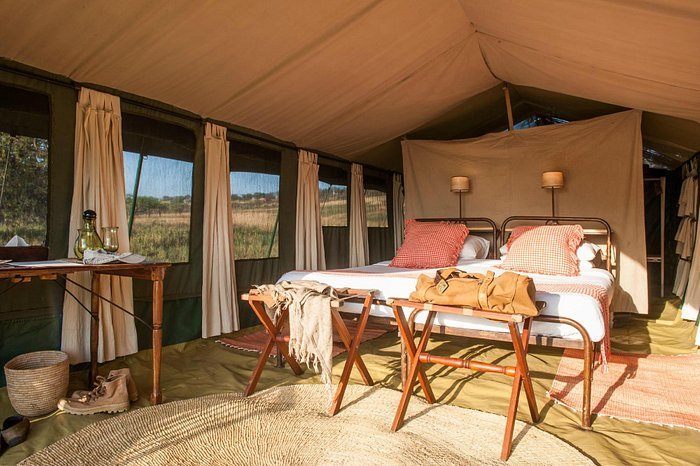
A common misconception among luxury travelers is that ‘tented’ implies a compromise in comfort. In the context of high-end Tanzania safaris, the term ‘Luxury Tented Camp’ refers to a specific, elevated style of architecture that is arguably more in-depth than a permanent structure. These are not camping tents; they are semi-permanent, high-spec structures featuring canvas walls, hardwood floors, en-suite bathrooms with hot-and-cold running water, and often, private plunge pools overlooking the savannah.
The choice between a tented camp and a permanent lodge is a matter of sensory experience. Tented camps allow you to hear the bush at night—the distant roar of a lion, the call of a hyena, or the rustle of elephants passing near your perimeter. They provide a visceral connection to the wilderness that stone-and-thatch lodges cannot replicate. Conversely, permanent lodges, often built into rocky outcrops or elevated on stilts, provide a sense of fortress-like security and are often better suited for families with younger children or travelers who prefer solid walls. Both options in the luxury category offer five-star amenities, including professional service, gourmet dining, and high-thread-count linens. When selecting your package, consider whether you want to feel ‘part of’ the landscape (tented) or ‘an observer above’ the landscape (lodge).
The Dynamics of Safari Dining and Service
Dining in a luxury fly-in safari camp operates on a different social logic than a large-scale Zanzibar resort. In a hotel, you expect anonymity and private tables. In the bush, the dining experience is often designed to foster a sense of community. While private dining is always available upon request, many of the most memorable moments of a safari happen at the communal dinner table, where you share stories with other guests and your guides about the day’s sightings.
Furthermore, ‘all-inclusive’ in the bush means something very different than it does at a beach resort. It is not just about unlimited drinks; it is a comprehensive service model. Because you are in remote locations, the camp operates as a self-contained ecosystem. Your package includes laundry service (a necessity when packing for light aircraft weight limits), private game drives, guided bush walks, and often, specialized dining experiences like ‘bush breakfasts’ or ‘sundowners’ set up in the middle of the savannah. These experiences are not merely meals; they are logistical feats orchestrated by your camp staff to ensure you are safe, comfortable, and positioned in the best possible light for photography, regardless of how far you are from the main camp.
Managing the ‘Bush-to-Beach’ Packing Shift
One of the most overlooked aspects of the transition is the wardrobe change. While Zanzibar encourages linen, light cottons, and beachwear, the bush requires a more technical approach. The morning game drive is often chilly, requiring layers, while the midday heat can be scorching. The dust of the savannah is fine and pervasive; it will coat your belongings quickly. For a luxury fly-in traveler, the best strategy is to embrace a ‘capsule’ safari wardrobe. Stick to neutral, earth-toned colors—khaki, olive, and tan—which are not only practical for hiding dust but also scientifically better for minimizing your presence to wildlife. Avoid dark blue or black, which are known to attract tsetse flies in certain regions. Because your light aircraft flights have strict luggage weight limits, your safari wardrobe should be compact, versatile, and easily washable. Your luxury lodge will handle the laundry, allowing you to cycle through a small, efficient set of clothing throughout your safari leg.
The Airstrip Arrival: Navigating the Bush Terminal
For the uninitiated, the arrival process at a remote bush airstrip is a jarring but exhilarating departure from the standard airport experience. There is no terminal building, no baggage claim carousel, and no security queue. When your light aircraft touches down on a compacted dirt or gravel strip in the Serengeti or Ruaha, the engine cuts, and you are immediately enveloped in the profound, heavy silence of the African wilderness. This moment is the true beginning of your luxury safari. Your pilot—who often serves as the first point of contact—will assist with your luggage, moving it directly from the aircraft hold to the waiting 4×4 vehicle parked just meters away.
This transition is smooth by design. Your private guide, who will be your constant companion for the duration of your stay, is typically waiting by the vehicle, often with a cooler of refreshments. Because you have booked a private, fly-in package, there is no waiting for other travelers to disembark or for a transfer bus to fill up. You depart for your lodge or camp the moment you step onto the airstrip. This immediacy is the primary logistical advantage of the fly-in model; you avoid the ‘waiting game’ that characterizes ground-based transfers. Use this first drive from the airstrip to the lodge as an orientation session. Ask your guide about the local landscape, the current wildlife movements in the immediate vicinity, and the history of the concession you are entering. This is your first opportunity to establish a rapport, which is essential for a successful, personalized safari.
The Guide-Guest Dynamic in Private Safaris
In the context of a luxury fly-in safari, your guide is far more than a driver; they are an interpreter, a tracker, and a host. In standard, mass-market safari packages, the guide is often a fixed asset of the vehicle, focused on moving large groups between pre-determined viewpoints. In a private, high-end package, the dynamic is inverted. Your guide is typically a senior member of the camp staff, often with years of specialized training in ecology, ornithology, and animal behavior.
The value of this relationship cannot be overstated. A private guide can tailor the day’s rhythm to your specific interests. If you are a passionate birder, they will bypass the crowded lion sightings to find rare raptors. If you are a photographer, they will understand the importance of positioning the vehicle for the ‘golden hour’ light, even if it means sitting stationary for an hour waiting for a leopard to emerge from a thicket. This level of flexibility is only possible when you are not beholden to the schedules of other guests. Furthermore, because you are in a private or low-density concession, your guide has the discretion to go off-road in areas where it is permitted, allowing for much closer and more intimate wildlife encounters than are possible in the heavily trafficked areas of the main National Parks.
Ethical Engagement: Luxury Conservation and You
Luxury travel in Tanzania is increasingly synonymous with conservation-led tourism. When you pay a premium for a fly-in package that includes stays in private concessions, you are directly contributing to the funding of these protected areas. Unlike National Parks, which are state-run, private concessions are often leased from local communities or private landholders. The high fees paid by luxury operators provide the financial incentive for these stakeholders to preserve the land for wildlife rather than converting it for agriculture or grazing.
As a guest, your role in this ecosystem is to practice ‘conscious observation.’ This means adhering to the strict etiquette of the bush, which your guide will explain upon arrival. While you may be in a luxury environment, the wildlife is wild and unpredictable. Maintaining a respectful distance, minimizing noise, and adhering to the ‘no-litter’ policy are non-negotiable. Furthermore, in the era of 2026-2027 travel, many lodges are implementing ‘citizen science’ initiatives. You may be invited to participate in recording wildlife sightings via mobile apps or assisting with camera trap monitoring. Engaging in these activities not only enriches your personal experience but provides valuable data to researchers working to protect Tanzania’s biodiversity. Approach your safari as a participant in a conservation effort, rather than merely a spectator, and you will find that the depth of your experience increases exponentially.
Navigating Connectivity and the ‘Digital Detox’ Paradox
In the luxury safari sector, the approach to digital connectivity has undergone a significant evolution. A few years ago, a trip to the bush was almost synonymous with a complete digital blackout. Today, while many travelers still seek that ‘off-the-grid’ experience, the modern luxury traveler often requires a hybrid approach: the ability to disconnect when desired, but the security of connectivity when necessary. Understanding how this functions in the context of your Zanzibar fly-in package is essential for managing your expectations.
Most high-end lodges and tented camps in the Serengeti, Nyerere, and Ruaha have integrated satellite-based internet solutions, with many now adopting Starlink technology to provide reliable speeds even in the most remote corners of the wilderness. However, it is vital to understand that this is not the high-speed fiber connection you are accustomed to in a Zanzibar beach resort. Connectivity in the bush is often limited to public areas—the main lounge, the library, or the dining deck—rather than inside your private tent or suite. This is a deliberate architectural and operational choice: it preserves the sanctity of your private living space and encourages guests to engage with the environment rather than a screen.
For those who need to manage business or personal affairs, it is advisable to clarify the connectivity situation with your tour operator prior to booking. If you require a stable connection for video conferencing, you may need to specifically select lodges that have invested in enterprise-grade satellite systems. Conversely, for those who truly want the ‘digital detox,’ the best luxury camps offer a ‘service-on-demand’ model where they can effectively disable Wi-Fi access for your party, allowing you to fully experience the rhythm of the bush without the constant ping of notifications. Always assume that while basic email and messaging will be possible, heavy media uploads or high-bandwidth video streaming may be restricted or unavailable. Planning for this ‘low-bandwidth’ reality is part of the preparation for a successful safari.
Tipping Etiquette and Financial Realities in the Bush
One of the most common, yet rarely discussed, logistical hurdles for luxury safari travelers is the question of tipping and financial etiquette. While your fly-in safari package is often ‘all-inclusive’—covering your flights, park fees, accommodation, gourmet meals, and drinks—this inclusivity does not always extend to the discretionary service gratuities that are customary in East Africa. Navigating this can feel awkward for first-time visitors, but having a clear plan removes the stress and ensures your generosity is directed effectively.
In the context of a private safari, you are interacting with two distinct tiers of staff: the ‘back-of-house’ team (camp managers, housekeeping, kitchen staff) and the ‘front-of-house’ team (your private guide and tracker). The standard practice is to handle these separately. Most luxury lodges provide a ‘general staff tip box’ at the end of your stay. This is the most equitable way to reward the team that ensures your tent is spotless, your laundry is turned around in hours, and your meals are prepared to a high standard. A contribution to this central fund is typically divided among all non-guiding staff, ensuring that the unseen hands—the ones maintaining the water systems, solar arrays, and kitchens—are recognized.
Your private guide and tracker, however, deserve a personal acknowledgement. Because you have opted for a private vehicle, you have developed a specific, intimate rapport with these individuals. They have spent hours interpreting the bush for you, positioning the vehicle for that perfect shot, and ensuring your safety. It is customary to tip your guide and tracker directly and personally at the conclusion of your safari, usually on your final evening or at the airstrip before departure. It is highly recommended to carry a sufficient supply of US Dollars in small denominations (bills from 2013 or newer, as older notes are often rejected by local banks) to facilitate this.
While there is no ‘mandatory’ amount, many luxury operators suggest a daily guideline based on the quality of the experience. For a private guide, a range of $20 to $50 per day (per group, not per person) is often considered appropriate for exceptional service. If you are particularly moved by a specific encounter or if your guide went ‘above and beyond’—perhaps by finding a rare leopard or navigating a difficult river crossing—it is common to adjust this upward. The most important rule is to avoid the ‘last-minute scramble.’ Prepare your cash envelopes in the privacy of your room before the final morning rush. This allows you to hand over the tips with a genuine expression of gratitude, rather than a hurried, stressful interaction at the airstrip.
The Nuance of Air Travel: Scheduled Bush Flights vs. Private Charters
When reviewing luxury fly-in packages, it is essential to distinguish between the two primary modes of air travel: the scheduled ‘bush flight’ and the private air charter. While both utilize light aircraft to bypass the long overland drives from Zanzibar, they offer fundamentally different experiences regarding time, flexibility, and exclusivity.
The standard ‘scheduled’ fly-in safari utilizes a network of light aircraft that operate much like a bus route in the sky. When you book this option, you are purchasing a seat on a flight that may be shared with other travelers. These flights often make ‘hops’—touching down at multiple airstrips within the park to drop off or pick up guests at different lodges. While this is a highly efficient and cost-effective way to travel, it does introduce variables to your arrival time. You may find yourself waiting on the tarmac at a secondary airstrip while other passengers disembark, or your flight path may be slightly circuitous to accommodate the logistics of the airline’s daily schedule.
Conversely, a private air charter involves booking the entire aircraft for your party. This is the pinnacle of the fly-in experience and is often the preferred choice for multi-generational families or travelers who are strictly time-poor. With a private charter, you dictate the schedule. You can request a departure time that aligns perfectly with your Zanzibar hotel checkout or your desire for a slow breakfast. The flight is direct, point-to-point, meaning you avoid the intermediate stops at other lodges. This can shave significant hours off your transit time, effectively granting you an extra game drive on your arrival day.
Choosing between these two depends on your tolerance for the ‘journey’ versus the ‘destination.’ If you enjoy the aerial views of the Tanzanian landscape and don’t mind the social aspect of sharing a small cabin with fellow travelers, the scheduled service is perfectly adequate and remains the industry standard for high-end travel. However, if your itinerary is compressed, or if you are traveling with a group that requires total privacy and immediate transit, the private charter is a worthwhile investment. When finalizing your booking, always confirm with your operator which tier of air travel is included in your quote, as the cost difference between a scheduled seat and a private charter can be substantial.

The Daily Rhythm of a Luxury Fly-In Safari
While the logistics of flying from Zanzibar to the bush are streamlined, the daily rhythm of your time in the wilderness follows a strict, nature-dictated schedule that differs significantly from the relaxed pace of a beach resort. Understanding this cadence is vital for managing your energy and expectations. In a luxury fly-in context, the schedule is not merely a timetable; it is a strategic approach to maximizing wildlife encounters while ensuring you remain refreshed throughout your stay.
The ‘Predator Hour’ and the Morning Routine
The hallmark of a high-end safari is the early start. You will typically be woken before sunrise, often around 5:30 AM, with a light tea, coffee, and biscuit service delivered to your tent or room. This is not arbitrary; it is designed to get you out of camp and into the field during the ‘predator hour.’ As the sun begins to crest the horizon, the air is cool, and the bush is most active. Predators like lions, leopards, and hyenas are often still hunting or patrolling their territories before the heat of the day forces them into the shade. By arriving at the vehicle as the light breaks, you position yourself to witness the transition from nocturnal to diurnal activity, which is often the most dramatic wildlife viewing window of the entire day.
The Midday Reset: Why the Siesta Matters
By mid-morning, around 10:30 AM or 11:00 AM, the temperature rises, and wildlife activity drops significantly. This is when the luxury fly-in itinerary shifts. You will return to camp for a substantial brunch—a hallmark of the safari experience that bridges the gap between breakfast and lunch. Following this, the ‘siesta’ period begins. While some travelers initially view this as ‘down time,’ it is a critical component of the safari experience. The midday heat can be intense, and the animals are generally inactive, often lying deep in the shade of acacia trees or thickets. This break allows you to recharge, catch up on photography editing, or simply enjoy the solitude of your lodge. In a private, luxury setting, this is also the time when your guide can handle maintenance, vehicle checks, and tracking updates, ensuring that the vehicle is perfectly prepped for the afternoon surge in activity.
The Evolution of the Evening Routine
The afternoon game drive typically departs after tea, around 3:30 PM or 4:00 PM. This session is the mirror image of the morning, focusing on the transition from daytime activity to the onset of the night. As the sun begins to set, the light becomes ideal for photography, offering that golden, soft glow that is highly coveted by professionals. A defining moment of the luxury safari is the ‘sundowner’—a ritual where your guide finds a safe, scenic location to stop the vehicle. You will step out to enjoy a cocktail or refreshment as the sky changes color. This is not just a social break; it is a moment to absorb the vastness of the landscape. Unlike shared safaris, where this might be a rushed affair, a private luxury package allows you to extend this time, watching the stars emerge or listening to the first calls of the nocturnal wildlife, before returning to camp for dinner.
Managing Health and Dietary Logistics in Remote Locations
One of the most critical aspects of a luxury fly-in safari, which is often overlooked until arrival, is the management of health and dietary requirements in remote locations. Because you are flying into areas that are geographically isolated, these camps operate with sophisticated supply chains, but they are not supermarkets. You must communicate any dietary restrictions—such as severe allergies, vegan requirements, or specific medical diets—to your booking agent at least four to six weeks before your departure from Zanzibar. This lead time is essential for the camp to fly in specialized ingredients. Furthermore, all reputable luxury safari operators incorporate ‘Flying Doctors’ or similar emergency medical evacuation services into their operational protocols. While your personal travel insurance is primary, these bush-based networks provide the immediate, specialized response necessary in the event of a medical emergency, ensuring that if you require urgent care, you are stabilized and transported to a major hospital in Nairobi or Dar es Salaam with speed and precision.
Navigating the Return Leg: Connecting Bush Flights to International Departures
While much of the planning for a luxury fly-in safari focuses on the anticipation of arriving in the bush, the return leg—the journey from the remote airstrip back to your international departure point—often presents the most significant logistical risk. For travelers ending their safari with a flight back to Zanzibar or connecting directly to a major hub like Dar es Salaam or Kilimanjaro for an international flight home, the “buffer” strategy is the single most important consideration.
The primary challenge is the nature of bush aviation. Light aircraft schedules are subject to “hop-on, hop-off” routing, meaning your flight may stop at several other airstrips to pick up or drop off passengers before reaching your final destination. These flights are not synchronized with international airline schedules. If you attempt to book a connection with less than four to five hours of transit time, you are leaving your itinerary vulnerable to minor delays, weather patterns, or operational adjustments that are common in remote East Africa. Experienced operators strongly advise against scheduling an international departure on the same day you fly out of the bush, unless you have chartered a private flight that guarantees a direct, non-stop connection to your international terminal.
Beyond the timing, there is the issue of luggage weight. During your time in the bush, it is common to acquire souvenirs, wood carvings, or local crafts. While you may have arrived at the airstrip with a compliant soft-sided duffel bag, your return journey may see that bag significantly heavier. Light aircraft pilots are strictly bound by safety regulations regarding payload capacity. If your luggage exceeds the weight limit—typically 15 kilograms per person—the pilot may refuse to load the bags, or you may be forced to pay for an additional seat to accommodate the weight. Always factor in this “souvenir buffer” when packing; if you plan on purchasing items, ship them home separately or ensure you have enough weight allowance to accommodate the extra load.
Finally, consider the customs and immigration flow. When flying from a remote bush airstrip back to Zanzibar or Dar es Salaam, you are effectively entering an international hub. While you have already cleared immigration into Tanzania, you are now re-entering the transit or international departure zone. Ensure you have your passport and any relevant visa documentation easily accessible in your carry-on, as you will need to transit through security checkpoints again. This is where booking through a single, reputable operator proves its worth: they coordinate the ground transfer between the bush-flight terminal and the international terminal, ensuring that even if your arrival is delayed, your ground transport is waiting to expedite your transition to the international check-in counter.
Navigating the ‘Zanzibar Transit’ Window: Managing Overnight Layovers
While the luxury fly-in safari is designed for maximum efficiency, the geographic reality of connecting a tropical island destination with remote wilderness airstrips often creates a logistical ‘blind spot’ regarding international flight arrivals. Many travelers assume that because they are flying into Zanzibar (ZNZ) or Dar es Salaam (DAR) on an international carrier, they can seamlessly connect to a bush flight on the same day. This is rarely the case and, in many instances, is logistically impossible.
Most international flights arriving into Zanzibar or Dar es Salaam land in the late afternoon or evening. Domestic bush flights, by contrast, operate almost exclusively during daylight hours, typically between 8:00 AM and 4:00 PM, to ensure pilot visibility on unlit, dirt-strip runways. If your international flight arrives at 6:00 PM, you have already missed the final bush departure of the day. This necessitates an overnight stay in either Zanzibar or Dar es Salaam before your safari begins. While this might initially feel like a disruption to your schedule, framing it correctly turns this layover from a logistical hurdle into a strategic advantage.
Strategic Layover Planning: Zanzibar vs. Dar es Salaam
Choosing where to spend your pre-safari night is a critical decision that influences the tone of your trip. If your international flight lands in Zanzibar, you are already positioned to enjoy a final evening of coastal relaxation. This is the ideal scenario for travelers who have spent a long-haul flight in transit and wish to avoid further movement. Staying at a boutique hotel near the airport or in Stone Town allows you to decompress, adjust to the local time zone, and organize your gear before the bush flight the next morning.
Conversely, if your international route requires a connection through Dar es Salaam (Julius Nyerere International Airport), the logistical calculus changes. Dar es Salaam serves as the primary hub for most bush-flight operators. Staying in the city allows you to be closer to the domestic terminal (Terminal 1) for your morning departure. This eliminates the need for an early-morning transfer flight from Zanzibar to the mainland, which can sometimes be susceptible to the same delays as bush flights. For travelers prioritizing the most smooth possible start to their safari, staying in Dar es Salaam the night before arrival in the bush is the professional recommendation.
Managing the ‘Split-Ticket’ Risk
A frequent error among independent travelers is booking the international flight and the bush flight as separate, unrelated entities without a buffer. In the event of a significant international flight delay—common with long-haul connections—you may miss your bush flight departure. Because bush flights are often booked on a ‘seat-in-plane’ basis rather than as part of a single airline ticket, you generally do not have the same protections regarding rebooking or missed connections that you would have with a traditional airline ticket.
To mitigate this risk, seasoned safari planners utilize a ‘buffer day’ strategy. This involves scheduling your international arrival at least 24 hours before your bush flight departure. This gap provides a safety net for lost luggage, flight cancellations, or exhaustion. During this buffer day, you can finalize your packing, ensure your equipment is charged, and conduct a final check of your travel documentation. This period of ‘pre-safari’ rest is essential for transitioning from the high-stress environment of international travel to the slow, deliberate rhythm of the bush.
The Role of the ‘Meet and Greet’ Service
When you are navigating the transition between an international arrival and a domestic bush departure, the presence of a professional ‘meet and greet’ service is the difference between a smooth journey and a chaotic one. In hubs like Zanzibar or Dar es Salaam, airports can be overwhelming, with complex signage and multiple terminals. A dedicated ground handler who meets you at the aircraft door or the arrivals hall can expedite your transit through immigration, assist with baggage collection, and facilitate your transfer to your overnight accommodation.
This service is particularly valuable when you are moving between the international terminal and the domestic airstrip. In some cases, your bush flight may depart from a different location than your arrival terminal. Having a pre-arranged transfer that understands the specific requirements of bush aviation—such as ensuring you arrive at the airstrip 45 minutes before departure for check-in and safety briefings—ensures that you do not miss your flight window. This service effectively acts as a bridge, allowing you to remain in ‘vacation mode’ while the logistical complexities are handled by local experts.
The Multi-Leg Safari: Connecting Distinct Ecosystems by Air
While many luxury fly-in packages focus on a direct return trip from Zanzibar to a single national park, the true potential of this travel style is unlocked through the multi-leg circuit. For travelers with more time, the ability to chain two or three distinct ecosystems—such as moving from the plains of the Serengeti to the baobab-studded hills of Ruaha—without ever relying on long-haul road transfers is the pinnacle of the Tanzanian safari experience. However, executing a multi-leg itinerary requires a different logistical approach than a simple “hub-and-spoke” trip.
It is important to understand that inter-park bush flights rarely operate like standard commercial routes. They function more like regional “bush taxis.” Your flight between parks may not be a direct, private charter, but rather a shared flight that makes intermediate stops at other airstrips to drop off or collect guests. This is a standard practice in East African aviation, designed to maximize aircraft utilization. While this adds a small amount of transit time, it also provides an unexpected benefit: a low-altitude scenic tour. These hops often fly at lower altitudes, offering spectacular aerial views of the Rift Valley, volcanic craters, and river systems that you would never see from a commercial jet or a safari vehicle.
Managing the weight limit is significantly more complex on a multi-leg journey than on a single return trip. In a simple Zanzibar-to-Serengeti itinerary, you might have the option to leave excess luggage at your Zanzibar hotel. On a multi-leg circuit, you are carrying your entire safari wardrobe with you for the duration of the trip. Because the 15kg (33lb) soft-bag limit applies to every leg of your journey, you must be disciplined in your packing. There is no opportunity to “drop off” weight in the bush; if you arrive at your third destination with bags that exceed the capacity of the light aircraft, you may be forced to pay for an additional seat or leave items behind, neither of which is ideal.
Finally, when booking a multi-leg circuit, the “buffer” strategy becomes even more critical. While a single delay on a Zanzibar-to-bush flight is manageable, a delay on the first leg of a three-park circuit can create a cascading effect on your entire itinerary. Experienced operators mitigate this by scheduling inter-park flights during the mid-morning window, which is the “sweet spot” for bush aviation—after the early morning mist has cleared but before the afternoon thermals make for a turbulent ride. By coordinating these flights with your camp managers, you ensure that your transition between lodges is as smooth as the initial departure from the coast.
The ‘Bush-to-Beach’ Re-Entry: Navigating the Cultural and Sensory Shift
While much of the logistical planning for a luxury fly-in safari focuses on the anticipation of arriving in the bush, the return leg—the journey from the remote airstrip back to your international departure point—often presents the most significant psychological and sensory transition of the entire trip. You are moving from a state of hyper-attuned wilderness awareness back into the relaxed, tropical, and distinctly human-centric rhythm of Zanzibar. This transition is not merely a flight change; it is a profound shift in environmental input that requires careful management to avoid a sense of jarring disconnection.
The first element of this transition is the sensory contrast. In the bush, your auditory landscape is dominated by the sounds of the ecosystem—the rustle of grass, the distant roar of a lion, the evening chorus of insects. Your visual landscape is one of vast horizons and earth tones. Upon landing back in Zanzibar, you are immediately confronted by the saturation of the Indian Ocean, the humidity, and the bustling, human-dense environment of the island. Many travelers find this ‘re-entry’ to be disorienting. It is highly recommended to build in a ‘buffer day’ upon your return to the coast before your international flight home. This day should not be scheduled with excursions or heavy activity; rather, it serves as a decompression period where you can process the intensity of the safari experience while easing back into the comfort of a beach resort.
Beyond the sensory, there is the ‘social’ shift. In the bush, you have likely formed intense, short-term bonds with your guide, camp manager, and fellow guests, all centered around a shared purpose: wildlife viewing. Returning to a beach resort, where the social dynamic is more anonymous and leisure-focused, can feel abrupt. You may find yourself instinctively scanning the treeline for movement or maintaining the ‘early to bed, early to rise’ schedule of the safari, only to find the resort environment is just beginning its evening activity. Embracing this difference rather than fighting it is key. Use the final Zanzibar leg to transition from the ‘participant’ role of the safari—where you were actively tracking and observing—to the ‘observer’ role of the beach vacation, where you simply exist in the environment.
Managing the Psychological ‘Safari Withdrawal’
It is a phenomenon rarely discussed in brochures, but ‘safari withdrawal’ is a common experience for travelers returning from high-end, in-depth bush experiences. After spending days or weeks in a private concession, where every detail of your life—from your dietary needs to your morning wake-up call—was curated by a dedicated team, the return to independent travel can feel stark. The quiet, personalized attention of a private camp creates a ‘bubble’ that is difficult to replicate in other travel settings.
To mitigate this, many luxury operators now offer a ‘soft landing’ service as part of their Zanzibar-safari packages. This may include a private transfer from the Zanzibar airstrip directly to a boutique hotel that mirrors the intimacy of the bush camp, rather than a large, impersonal beach resort. When selecting your Zanzibar accommodation for the post-safari leg, look for properties that prioritize personalized service and offer quiet, secluded spaces. This continuity in service level helps bridge the gap, preventing the feeling that your high-end experience ended the moment the light aircraft touched down on the tarmac.
The Documentation Phase: Organizing Your Memories
One of the most practical ways to navigate the post-safari transition is to dedicate time during your final Zanzibar days to organizing your digital footprint. In the excitement of the bush, you likely captured hundreds, if not thousands, of photos. Attempting to manage, edit, or share these while in the bush is often impossible due to limited connectivity and the demanding daily schedule. The Zanzibar ‘buffer’ period is the perfect time to back up your media, review your wildlife sightings, and perhaps even journal about the experiences while they are still fresh. Most luxury resorts in Zanzibar are well-equipped with the high-speed Wi-Fi necessary for uploading large files, allowing you to finalize your digital archive before the long journey home. This creates a sense of closure, ensuring that when you do board your international flight, you are leaving the region with a sense of completion rather than a backlog of tasks.
Navigating the ‘Safari Weight’ Restriction: Luggage Logistics for Light Aircraft
While the luxury fly-in experience is designed for smooth transit, the most common logistical friction point for travelers moving from Zanzibar to the bush is the discrepancy between international baggage allowances and the strict requirements of light aircraft operators. When flying on bush charters or scheduled light aircraft, you are not merely a passenger; you are a weight-calculated unit. This reality often catches travelers off-guard, especially those arriving in Tanzania with standard, hard-shelled international suitcases designed for commercial airline holds.
Light aircraft, such as the Cessna Caravan or similar bush-rated planes, have significant payload limitations. These constraints are not arbitrary; they are essential for the safe take-off and landing on unpaved, often short, bush airstrips. Most operators enforce a strict weight limit, typically ranging from 15 to 20 kilograms (33 to 44 pounds) per person, inclusive of both checked luggage and carry-on items. Crucially, this allowance often dictates the type of bag you can bring. Hard-sided suitcases are almost universally prohibited because they cannot be compressed or maneuvered into the irregular, limited cargo holds of these smaller planes.
The ‘Soft-Bag’ Requirement
To ensure your luggage is accepted, you must utilize a soft-sided duffel bag. These bags are pliable, allowing the pilot to stack and wedge them securely into the aircraft’s hold, maximizing the limited space available. If you arrive at the airstrip with a hard-shell suitcase, you may be faced with a difficult choice: leaving your luggage behind in a secure locker at the Zanzibar airport or, in some cases, being forced to pay for an additional seat on the aircraft to accommodate your oversized bag. This ‘freight seat’ is an expensive and often unavailable last-minute solution, especially during peak safari seasons when flights are fully booked.
Strategizing Your Luggage Split
For travelers on a combined Zanzibar-safari itinerary, the most effective strategy is a ‘split-storage’ approach. You do not need to bring your entire Zanzibar wardrobe into the bush. Instead, utilize the luggage storage services provided by your Zanzibar hotel or the safari operator’s base office. Pack your safari-specific gear—lightweight, neutral-colored clothing, technical layers, and personal items—into a dedicated soft-sided duffel bag for the bush leg. Leave your larger, hard-shell suitcase, containing your beachwear, evening attire for the island, and any items not required for the wilderness, in secure storage in Zanzibar.
This approach has three distinct benefits. First, it ensures you remain well under the weight limit, avoiding potential flight delays or baggage rejection. Second, it simplifies your life in the bush; you won’t be navigating a bulky suitcase through a tented camp or a small lodge room. Third, it allows you to easily switch ‘modes’ upon your return to the coast. You arrive back in Zanzibar with your bush gear, swap it for your fresh beach attire, and proceed to your final days of relaxation without the clutter of gear you didn’t use in the wilderness.
Weight-Saving Tips for the Bush
Beyond the bag itself, be mindful of what goes inside. The ‘luxury’ in a fly-in safari is service-oriented, not gear-oriented. Most high-end camps provide daily laundry service, often included in the package. This is a vital resource that allows you to pack significantly less. You only need enough clothing for three to four days, as you can have your items washed and returned within 24 hours. Furthermore, reconsider your toiletries. While you may have a preferred routine, most luxury lodges provide high-quality, eco-friendly soaps, shampoos, and lotions. Bringing full-sized bottles of liquids adds unnecessary weight; stick to travel-sized essentials or rely on the lodge’s offerings to keep your bag light and compliant with flight regulations.
Logistical Considerations for Multi-Generational and Family Fly-In Safaris
While many luxury fly-in packages are marketed toward couples or solo travelers seeking solitude, the demographic of families traveling with children or multi-generational groups has surged. Planning a bush-to-beach itinerary for a family requires a shift in logistical priority, moving from the purely aesthetic to the functional. When you are moving a group of three or more generations, the ‘smooth’ nature of a fly-in safari becomes even more critical, as fatigue can derail the experience for younger travelers and seniors alike.
The Necessity of the Private Vehicle
In the context of a family safari, the ‘private vehicle’ is not merely a luxury; it is a fundamental requirement for a successful experience. In shared-vehicle safari models, the itinerary is dictated by the lowest common denominator—the group’s collective interest, patience, and energy levels. For a family with children, this can be disastrous. A private vehicle allows you to control your own schedule completely. If a child needs to return to camp for a nap, or if the pace of the game drive needs to be adjusted to accommodate a grandparent, you are not beholden to the needs of strangers. This control allows you to turn a standard game drive into a series of shorter, more interactive ‘micro-safaris’ that keep children engaged without reaching the point of exhaustion.
Selecting Family-Friendly Concessions
Not all luxury camps are created equal for families. When booking a fly-in package, you must distinguish between camps that are ‘family-friendly’ and those that are ‘family-capable.’ A family-capable camp might accept children but lack the infrastructure to keep them engaged. A truly family-friendly camp in a private concession will offer specialized ‘bush buddy’ programs, junior ranger activities, and, crucially, specific safety protocols for younger guests. These camps often feature fenced-in areas, child-safe swimming pools, and specialized guides who are trained to communicate the complexities of the ecosystem in age-appropriate ways. Before finalizing your booking, verify the camp’s policy on children—some ultra-luxury lodges have strict age minimums (often 12 or 16) to maintain a quiet atmosphere, which would render your entire fly-in package invalid if you are traveling with younger children.
Flight Logistics for Larger Groups
Traveling as a family of four or more changes the nature of your bush flights. On smaller light aircraft, weight distribution is paramount. When you book as a family, your operator should be coordinating directly with the flight company to ensure your group is kept together on the same aircraft. In peak season, if your group is large enough, it may be more cost-effective and logistically sound to book a private charter rather than individual seats on a scheduled bush flight. A private charter allows you to dictate your own departure times from the Zanzibar airstrip, which is invaluable when coordinating the wake-up times and transit requirements of a family group. It eliminates the stress of waiting in a remote airstrip terminal for a connecting flight that may be delayed by weather or other passenger issues.
Managing Health and Safety for Younger Travelers
The transition from the coast to the bush involves a significant shift in environmental exposure. For families, the pre-trip health consultation is essential. Ensure that your medical kit is tailored to the specific needs of your children, including familiar rehydration salts, pediatric-strength insect repellent, and any necessary prophylactic medications. While luxury camps provide high-quality service, they are not clinics. The ‘fly-in’ nature of your trip is your greatest safety asset; in the event of an emergency, being in a remote area with an airstrip means you are significantly closer to rapid medical evacuation services (such as the Flying Doctors) than you would be if you were on an overland route. Ensure that your travel insurance policy explicitly covers air evacuation for all family members, as this is the standard expectation for anyone entering the Tanzanian bush.
The ‘Slow-Safari’ Approach for Multi-Generational Groups
When traveling with multiple generations, the temptation is often to pack as much into the itinerary as possible. However, the most successful fly-in safaris for families are those that adopt a ‘slow-safari’ philosophy. Instead of jumping between three different parks in six days, choose one exceptional private concession and stay for four or five nights. This reduces the number of take-offs and landings—which can be stressful for some travelers—and allows the family to settle into a rhythm. It provides the children with a sense of place and familiarity, and it allows the older generations to enjoy the luxury of the lodge without the constant disruption of packing and unpacking. By staying in one location, you deepen your connection to the landscape, and the logistics of your return journey to Zanzibar become significantly more manageable, as you only have to coordinate one flight out of the bush.
Navigating the Zanzibar Arrival: VIP Services and Terminal Logistics
While much attention is paid to the departure from Zanzibar to the bush, the return journey—arriving back at Abeid Amani Karume International Airport (ZNZ) after a week in the wilderness—is a critical juncture where the luxury experience can either be maintained or abruptly diluted. When flying from remote airstrips in the Serengeti, Nyerere, or Ruaha back to the coast, you are technically arriving on a domestic flight. However, the logistical reality of Zanzibar’s airport infrastructure means that your return can be significantly smoothed by pre-arranging specific ‘after-safari’ ground services that many travelers overlook.
For the luxury traveler, the most valuable, yet under-utilized, resource at ZNZ is the pre-booked VIP lounge access for domestic arrivals. After spending days in the heat, dust, and intense sun of the bush, the public arrival terminal can be overwhelming. By arranging for a VIP meet-and-greet service that includes access to the arrivals lounge, you bypass the standard crowded terminal areas. These services often include expedited assistance with your luggage and a dedicated, climate-controlled space where you can freshen up, organize your gear, and enjoy refreshments while your driver is coordinated to meet you. This creates a smooth ‘decompression’ zone, ensuring you do not step directly from a hot tarmac into a chaotic public parking area.
The coordination of your ground transfer at this stage is also nuanced. Zanzibar Airport has distinct areas for domestic and international arrivals, and they are not always physically adjacent. A common point of friction occurs when a driver, expecting an international arrival, waits at the wrong terminal gate. When booking your private transfer, it is essential to explicitly communicate your flight number and the fact that you are arriving on a domestic bush flight. If you have secured a VIP service, the agent will typically manage the communication with your driver, ensuring that the vehicle is pulled up to the exact ‘airside’ exit or the designated VIP pickup point. This prevents the need to drag your soft-sided safari bags through public corridors.
Furthermore, consider the ‘soft-bag’ transition. You have spent the week with light, pliable luggage designed for bush aircraft. Upon landing in Zanzibar, your bags will be offloaded from the small aircraft directly onto the tarmac or a small cart. Unlike international arrivals where bags are placed on a carousel, domestic bush flights often involve a manual hand-off. Your VIP representative or private driver should be prepared to meet you at the aircraft or the immediate gate area to take possession of your luggage directly. This prevents the bags from sitting unattended on the tarmac while you clear the terminal, and it ensures that your belongings are securely transferred to your luxury resort vehicle. By prioritizing these specific ‘return-leg’ logistics, you preserve the exclusive, stress-free atmosphere of your safari all the way to the lobby of your beach hotel.
Related Guides and Packages
Check Availability for Luxury Fly-In Safari From Zanzibar: Private Packages For 2026-2027
Ready to compare dates, prices, and the best option for your group? Send the package name and travel month so the team can reply with a clear quote, availability, and what is included.
2-Day Serengeti Safari From Zanzibar By Flight: Price & Booking Guide
A practical guide to booking a 2-day Serengeti safari from Zanzibar by flight, covering itinerary logistics, cost considerations, and how to maximize your short time in the bush.
View package detailsBudget Fly-In Safari From Zanzibar: Best Packages & Prices 2026-2027
Discover how to plan a budget-friendly fly-in safari from Zanzibar to Tanzania's top parks without sacrificing the quality of your wildlife experience.
View package detailsZanzibar To Ruaha National Park Fly-In Safari: Prices & Booking Guide
A practical guide to planning a fly-in safari from Zanzibar to Ruaha National Park, covering flight logistics, itinerary choices, and how to book with Climb 4 Africa.
View package details2-Day Nyerere Safari From Zanzibar: Flight-Inclusive Package Prices 2026-2027
An expert guide to planning a 2-day Nyerere safari from Zanzibar, covering flight-inclusive package structures, cost drivers, and the practical rhythm of a short-stay wildlife adventure.
View package details1-Day Nyerere National Park Safari From Zanzibar By Flight: 2026-2027
Planning a one-day fly-in safari to Nyerere from Zanzibar? Understand the logistics, travel times, and wildlife expectations for a 2026 or 2027 trip.
View package detailsZanzibar To Mikumi Safari By Flight: Prices & Travel Options 2026-2027
A practical guide to the logistics, costs, and planning steps for flying from Zanzibar to Mikumi National Park.
View package details2-Day Tarangire & Ngorongoro Safari From Zanzibar: Flight Package Cost 2026
A detailed guide on the logistics, cost factors, and itinerary realities for a 2-day fly-in safari from Zanzibar to Tarangire National Park and the Ngorongoro Crater.
View package details4-Day Serengeti Safari From Zanzibar With Return Flights: A Planning Guide
A deep look at planning a 4-day fly-in safari from Zanzibar to the Serengeti, covering flight logistics, itinerary structures, and the critical decisions needed for a successful 2026 or...
View package details1-Day Serengeti Safari From Zanzibar By Flight: Cost & Itinerary 2026-2027
Is a 1-day Serengeti safari from Zanzibar feasible? Get the expert breakdown on the flight logistics, cost factors, and how to manage your expectations for this intense, one-day wildlife...
View package detailsZanzibar To Serengeti Safari By Flight: Prices & Packages 2026-2027
A practical guide to booking a Zanzibar to Serengeti safari by flight in 2027, covering route options, baggage logistics, and how to choose the right itinerary length.
View package details
Zanzibar To Tarangire Safari By Flight: Prices & Travel Options 2026-2027
A detailed breakdown of the logistics, flight connections, and road transfers required to travel from Zanzibar to Tarangire National Park for a safari.
View package details
3-Day Serengeti & Ngorongoro Safari From Zanzibar By Flight 2027
3-Day Serengeti & Ngorongoro Safari From Zanzibar by Flight is explained with current 2027 planning, price, itinerary and booking information.
View package detailsNo related package matches those filters. Clear one or more filters to see the other topic-matched options.



