
If you mean joining a group climb that schedules summit or summit-side trekking on 24 December 2026, this is normally handled by operators who set the summit night to fall on or near the full moon; exact departure dates, available group spaces and confirmed summit-night plans must be checked and booked directly with Climb 4 Africa. Do not assume a particular route or guaranteed full-moon summit without operator confirmation.
What the query really asks — and what you must confirm
Someone searching “Kilimanjaro Full Moon Climb 24 December 2026 – Group Trekking” is usually deciding whether to join a Christmas-week group departure timed for a luminous summit attempt. The three immediate facts you need before committing are: (1) which route and how many days, because route = acclimatisation and difficulty; (2) whether the operator guarantees the summit night to be 24 December (summit-night scheduling is not automatic); and (3) the current group capacity and deposit/booking terms with Climb 4 Africa. Operators sometimes list multiple departures in December — verify the exact itinerary tied to your requested date.
Why full-moon climbs are different from ordinary departures
Full-moon climbs aren’t just about the view. Operators schedule summit nights to coincide with the moon to use lunar illumination for the final ascent and better summit visibility. That affects the entire timetable: you may start earlier in the day on preceding stages to position for a late-night summit, or choose a longer route so acclimatisation still works even with a summit on a specific night. That interplay — moon phase, route length and summit-night aims — is the crucial planning constraint for a Kilimanjaro Full Moon Climb 24 December 2026.
Route and duration choices to discuss for a Christmas full‑moon group
Routes matter more for success than whether the moon is full. For group climbing around a fixed summit night (24 Dec), typical operator options you should compare with Climb 4 Africa are the 6- and 7-day route variations (for example, some operators offer 6-day Marangu, 6- or 7-day Rongai, Lemosho or Machame variants). Shorter routes concentrate acclimatisation and increase altitude risk; longer routes spread ascent and lower acute mountain sickness risk but require more days away from base.
- 6-day options — often attractive for schedules around holidays but demand efficient acclimatisation. Ask the operator to explain how the summit-night plan (24 Dec) fits the day-by-day altitude profile.
- 7-day (or longer) options — offer better acclimatisation margins and higher summit success rates; if you can extend, this is worth serious consideration for a Christmas full-moon attempt.
How to read an operator itinerary when the summit night is fixed
When an operator lists a fixed summit night, confirm these explicit points: the arrival/meeting day in Moshi or Arusha, the exact dates of each camp night, and the summit-night timetable (departure time from high camp, expected summit window and descent plan). For example, you must know if the operator expects you to be at high camp on the evening of 23 December ready for a midnight start that reaches Uhuru Peak on 24 December — or whether the schedule places the summit on 25 December instead. Clarity here prevents dangerous last-minute adjustments.
Group dynamics, size and what Climb 4 Africa typically controls
Group trekking on Kilimanjaro means shared logistics: guides, porters, cooking staff and the group pace set by the slowest members. With holiday departures, groups often include climbers at different experience levels. Before you book the Kilimanjaro Full Moon Climb 24 December 2026 with Climb 4 Africa ask for the confirmed group size limit, the guide-to-client ratio, and whether group gear (tents, stoves) is shared or rationed across multiple groups. These practical details influence comfort and summit success more than marketing language about “festive climbs.”
Medical, fitness and acclimatisation questions to resolve
For a climb tied to a specific night, you
What you still must confirm with Climb 4 Africa before committing to a Kilimanjaro Full Moon Climb 24 December 2026
After the practical and medical issues above, the single most important unanswered question for anyone searching “Kilimanjaro Full Moon Climb 24 December 2026 – Group Trekking” is this: exactly how will the operator stage you to be in the right place on the mountain for a summit-night that falls on 24 December, and what contingency options are contractually available if weather or group progress prevents a summit on that night?
Why this single question matters
Because the summit-night is fixed, every preceding day’s pace, campsite choice and logistics are adjusted to deliver you to high camp at the right time for a late-night start that reaches Uhuru Peak in the early hours of 24 December. If any part of that chain breaks — late arrival in Tanzania, a slower-than-planned group pace, illness, bad weather or trail congestion — your summit attempt may have to be postponed to another night or abandoned. In a holiday group you also have limited flexibility to rebook around the operator’s fixed departure windows, so you need explicit, operator-verified answers before paying a deposit.
Checklist of explicit confirmations to demand from Climb 4 Africa
- Confirmed summit night placement: Ask for a written itinerary that shows the specific camp you will occupy on the evening of 23 December and the scheduled departure time from that camp for the midnight (or other) summit start that aims to reach the summit on 24 December.
- High-camp identification: Require the exact name of the high camp used on your chosen route (e.g., Kibo Hut, Stella Point staging) and whether the operator uses a single high-camp night or splits it with an intermediate camp to improve acclimatisation.
- Contingency protocol for delays or illness: Obtain their formal policy: will the group delay the summit by 24 hours, attempt a partial summit, or require affected clients to descend? What are the medical criteria for preventing a client from joining the summit push?
- Weather contingency and decision authority: Who makes the final weather call (lead guide, head guide, or company operations manager), and by when is that decision made? Ask for past-season examples of decisions and whether a postponed summit is offered on an alternate night or the client must forfeit the summit attempt.
- Guide-to-client and rescue capacity on summit night: Verify the number of guides assigned to your group on summit night, porter support at high camp, and whether additional guides will be available if group size grows.
- Transfer/flexibility if you miss the fixed-night departure: If you cannot be on the mountain in time for the planned 24 December summit (flight delay, hotel problem), confirm whether Climb 4 Africa will move you to the next available group departure and any related costs or availability constraints.
- Documentation of meetings and pre-trek briefings: Request the date, time and place of the required pre-climb briefing in Moshi/Arusha, and whether any pre-departure acclimatisation hikes or medical checks are scheduled that could affect your ability to start on time.
- Cancellation and refund terms tied to summit-night failure: The contract should state what refunds or partial refunds apply if the operator cancels the summit attempt due to weather or safety concerns on or before 24 December.
Practical staging and what to inspect in the itinerary language
When reviewing the operator email or booking document, read for precise words: “scheduled to summit on 24 December” vs “summit attempt aimed for 24 December, subject to conditions.” The former suggests a fixed-plan but does not override safety; the latter correctly preserves operational discretion. Also check whether the itinerary lists an explicit high-camp night as “Night X – High Camp (arrive evening 23 Dec)”; vague entries such as “Summit night will be arranged around full moon” are insufficient.
Sample questions to ask in a booking call or email
- “Which camp will we sleep in on the night of 23 December and at what time will the guide schedule our summit start?”
- “If the group cannot reach high camp in time due to slow pace or weather, what is the operator’s standing contingency for the 24 December summit-night?”
- “How many guides will be on the summit push and what is the guide-to-client ratio between 23–25 December?”
- “If my international flight is delayed and I miss the group’s arrival, can you move me to another Christmas-week departure or issue a refund?”
Final practical tips before you book
Obtain the operator’s reply in writing and save copies with your booking file. If you rely on the full moon as a primary motivation, insist on a clear description of how that lunar timing is being used operationally rather than marketing language. Finally, ask whether Climb 4 Africa offers optional extra acclimatisation days or private guide upgrades on the Christmas departure; even if you don’t book them immediately, knowing the options preserves flexibility if the group’s progress threatens the fixed-night plan.
These confirmations close the most important planning gap left by a fixed-date Kilimanjaro Full Moon Climb 24 December 2026 and let you evaluate risk, flexibility and cost before you commit.
The single unanswered question: who decides — and by what objective criteria — whether the 24 December summit goes ahead?
Everything you have read so far narrows to a single operational hinge: for a Kilimanjaro Full Moon Climb 24 December 2026, who holds the decision authority to keep, delay or cancel the summit-night plan, and what objective criteria will they use? That question matters because a fixed summit night creates pressure to reach high camp on schedule; yet safety, weather and client health can legitimately force a change. Before you commit, obtain Climb 4 Africa’s explicit decision protocol in writing so you know how choices will be made and what consequences follow.
What a credible decision protocol must include
A robust answer from Climb 4 Africa — not a vague reassurance — should list the decision-maker(s) and the measurable or clearly described triggers that will prompt a change of plan. Ask them to provide the following items in their written confirmation:
- Named authority: who has final operational authority for summit decisions during 22–24 December (lead guide on the mountain, company operations manager, or both). Names and contact details are preferable.
- Timing of the summit call: the latest practical time when the decision to proceed or postpone the midnight start will be made (for example: by 1800 the night before or by a specified number of hours before scheduled departure from high camp). A deadline tied to logistics is important so you know when alternatives will be invoked.
- Objective weather thresholds: what specific weather conditions will bar the summit-night attempt (e.g., sustained wind speeds above a stated value, heavy snow or visibility below a stated distance, lightning within a given sector). If the company uses local forecasts or Tanzanian meteorological advisories, ask which models/sources they rely on and how often they check them during the decisive 48 hours.
- Health and acclimatisation triggers: explicit medical criteria for refusing or postponing a summit attempt (e.g., presence of moderate/severe AMS signs as defined by the Wilderness Medical Society, two or more members beyond an agreed oxygen saturation threshold at high camp, or multiple climbers unable to reach high camp by a set cut-off time).
- Pace and arrival cut-offs: what the company uses as a cut-off for reaching high camp the evening before the summit (for instance, maximum allowable arrival time at high camp that still permits safe rest and summit start). If there’s flexibility to use an alternate high camp or split the group, that should be stated.
- Contingency summit options: whether the operator keeps a standby plan (a different summit night, an alternate route for descent, or extra acclimatisation day) and the operational/financial terms if those options are enacted.
- Client communication protocol: how and when the company will inform the group and individual clients of a decision (who will call or message, what information will be provided, and whether changes will be confirmed in writing).
Why quantifiable triggers matter to you
Vague language such as “subject to weather” or “guide’s discretion” leaves too much uncertainty for a departure specifically marketed as a 24 December summit. Quantifiable triggers protect you in three ways: they set expectations about when the decision will happen; they give you a basis to request refunds or alternatives if the operator deviates from the stated protocol; and they enable you to prepare mentally and logistically (flight connections, accommodation, post-trek plans) in the event of a change.
Practical examples of decision thresholds to request (worded as queries you can copy)
- “Please confirm the specific weather conditions that will prevent a summit attempt on 24 December (for example: sustained winds > X km/h at 5,800–5,900 m, visibility < Y metres, heavy snowfall or active lightning).”
- “Please state the latest time you will make the proceed/cancel call and how we will be notified.”
- “Please confirm medical cut-offs the guide will use to refuse a summit attempt (e.g., AMS score thresholds, SpO2 readings under a specified percentage at high camp).”
- “If climbers do not reach high camp by [specified time] on 23 December, what alternative plans will the operator follow and how are costs/refunds handled?”
- “If the summit is postponed to a later night or cancelled, state the refund policy or credit terms that apply specifically to the 24 December summit-night failure.”
How to use the operator’s response
When Climb 4 Africa replies, evaluate the response for specificity and enforceability. A useful reply will name the decision-maker, give a clear latest decision time, list concrete weather and medical thresholds, and spell out contingency options plus financial consequences. If the response is ambiguous, ask for the wording to be added to your booking confirmation or contract. If they refuse to provide measurable triggers, treat that as an operational risk and consider asking for a private guide/acclimatisation upgrade or booking a longer route to reduce dependence on a single summit night.
Securing this decision protocol in writing converts marketing language about a Kilimanjaro Full Moon Climb 24 December 2026 into an operational contract you can evaluate objectively. It will not eliminate mountain risk — no operator can guarantee a summit — but it will remove the most problematic uncertainty for anybody buying a Christmas-week, full-moon-timed group departure.
How to turn the operator’s promise about a Kilimanjaro Full Moon Climb 24 December 2026 into enforceable contract language
At this stage you’ve already asked Climb 4 Africa for named decision-makers, measurable triggers and a latest decision time for the 24 December summit-night. The remaining, most important practical gap is legal: how to convert those verbal or email assurances into contract text that binds the operator and protects your money, your travel plans and your Christmas logistics. Below are precise, copy-and-paste clauses you can request to be inserted into your booking confirmation or contract. Use them only after you have the operator’s raw thresholds (wind speed, visibility, SpO2, AMS cut-offs, times). If the operator will not add clauses verbatim, ask them to provide an equivalently specific alternative in writing.
1. Named decision authority and latest decision time (binding clause)
Insert this clause to fix who decides and when:
- Decision Authority: “The authorised decision-maker to proceed with, postpone, or cancel the summit attempt scheduled for 24 December 2026 is the lead mountain guide assigned to this departure, named in writing, acting in consultation with the expedition medical officer if present. If the named lead guide is unavailable, the substitute deputy guide authorised by Climb 4 Africa shall assume authority.”
- Latest Decision Time: “A final proceed/cancel decision for the summit attempt on 24 December 2026 will be communicated to all booked clients no later than 18:00 local time on 23 December 2026 via email and WhatsApp. After this deadline, changes may only be made for newly developing medical emergencies affecting the group.”
2. Concrete weather and safety triggers (operational thresholds)
Attach the operator’s measured triggers behind this text, or request the operator to complete the blanks and sign:
- “A summit attempt will not proceed on 24 December 2026 if any of the following conditions apply at high camp (5,800–5,900 m) at the time of the final decision: sustained winds exceeding ___ km/h for 10 minutes; forecasted visibility under ___ metres during the summit window; active lightning within ___ km of the route; or snowfall exceeding ___ cm within the preceding 12 hours.”
- “A summit attempt will not proceed if, at the final decision time, more than ___% of the booked clients are presenting AMS symptoms scoring > ___ on the Lake Louise AMS scale, or if any client records peripheral oxygen saturation (SpO2) below ___% at high camp after standardised rest and supplemental oxygen assessment.”
3. Contingency options and financial remedies (refund/credit language)
Make sure the contract states what happens materially and financially if the summit-night is postponed or cancelled:
- “If the operator cancels or postpones the summit attempt scheduled for 24 December 2026 for a reason that matches the triggers listed above and the client elects not to accept the offered contingency (alternative summit night, route extension where possible, or private guide upgrade), the client will receive a pro‑rata refund for the summit-night-specific portion of services not delivered (including high-camp accommodation, summit guide fees and porter services) amounting to ___% of the total trip price, to be paid within 14 days.”
- “If the operator offers an alternative summit night and the client accepts, any additional costs incurred by the operator to provide that alternative (extra nights for staff, additional permits) will be borne by the operator unless the client requests private services; additional optional upgrades requested by the client are at the client’s cost.”
4. Notification and evidence requirements
Require the operator to document the decision and its basis:
- “Any proceed/cancel decision must be accompanied by a written decision notice that quotes the trigger(s) invoked and provides supporting evidence: the relevant MET report snapshot (time-stamped), the SpO2 readings and AMS scores recorded by the expedition medical officer, and the name and signature of the named decision-maker.”
5. Dispute resolution and remedies
If wording is resistive, include a simple dispute path:
- “In the event of a dispute over whether the documented triggers were met at the decision time, the parties will first engage in mediation with a mutually agreed mediator in Tanzania. If unresolved within 30 days, the dispute will be referred to arbitration under the rules of [named arbitration institution or ICC], with costs allocated as the arbitrator determines.”
If the operator refuses to add specific contract language
Do not accept vague assurances. If Climb 4 Africa declines to include any of the clauses above, consider these practical alternatives before paying final balances:
- Request a written addendum or email from the operations manager that restates the decision protocol and triggers and attach that email to your booking file.
- Ask for a private guide/acclimatisation upgrade or a longer-route booking availability to reduce dependency on a single summit night.
- Insist on a clearly defined refund percentage for summit-night failure, then compare the financial protection with other operators who will sign similar language.
Securing specific contract wording converts the uncertain promise of a Kilimanjaro Full Moon Climb 24 December 2026 into an enforceable agreement. That does not guarantee you will summit — no operator can lawfully promise that — but it does guarantee you clarity on who decided, why, when and what compensation or alternatives you can expect if the moonlit summit does not happen as planned.
Required decision notice and evidence: exact wording to demand for a Kilimanjaro Full Moon Climb 24 December 2026
The single remaining practical gap for any climber booking a Kilimanjaro Full Moon Climb 24 December 2026 is not more theoretical protections but the precise, copy‑and‑paste language you will attach to the booking as the operator’s duty to record and prove a proceed/postpone/cancel decision. A clear, machine‑readable decision notice protects you by removing ambiguity about timing, who decided, and what objective facts were checked. Below are three components you should insist on: (A) a one‑page Decision Notice template the operator must deliver at the decision time; (B) a list of supporting evidence that must be attached electronically; and (C) an audit trail clause that preserves timestamps and signatures.
A. Decision Notice — required text (copy this into your booking addendum)
Require Climb 4 Africa to commit in writing to issue a Decision Notice in exactly this form at or before the Latest Decision Time you have agreed (for example, 03:00 local time on 24 December 2026). Ask them to paste this template into an email or PDF and to fill the blanks for each departure:
DECISION NOTICE — Kilimanjaro Full Moon Climb 24 December 2026
Operator: [Climb 4 Africa — insert registered company name]
Departure: [group name or booking reference]
Named decision-maker: [full name and guide licence/qualification]
Decision timestamp (UTC and local): [YYYY-MM-DD HH:MM UTC / HH:MM EAT]
Decision (select one): Proceed with summit attempt on 24 Dec 2026 / Postpone summit attempt (new proposed summit night: _______) / Cancel summit attempt for 24 Dec 2026
Primary trigger(s) invoked: [list specific triggers from contract: e.g. sustained wind > X km/h at 5900 m, visibility < Y m, heavy precipitation, SpO2 < Z% for majority of team, AMS threshold exceeded — cite measured values below]
Measured data at decision time (attach raw files): [MET snapshot: provider and timestamp; on-site weather log; SpO2 measurements; AMS scores; guide observations]
Alternative offered to clients if not proceeding: [description: alternative summit night, refund/credit amount, logistics plan]
Operator signature: [decision-maker name, role, electronic signature]
B. Supporting evidence required (attach all; no exceptions)
Demand the Decision Notice be accompanied by the listed evidence files. Name the accepted sources in the contract or addendum so the operator cannot later produce inappropriate data:
- Time-stamped MET snapshot(s) from a named provider (e.g., Meteoblue, ECMWF, Meteo‑Tanzania) showing wind speed, gusts, visibility and precipitation for coordinates 3.074°S, 37.353°E at 5,800–5,900 m.
- On-site wind and temperature log taken by the lead guide (device make/model), with timestamps and location stated.
- Digital photographs or short video(s) of the summit ridge and high-camp conditions, timestamped by the camera or phone.
- SpO2 and pulse readings recorded for each client in the group within one hour prior to decision time; name, value and time for each reading.
- AMS assessment forms completed by the expedition medical officer or lead guide (scoring document), signed and dated.
- Radio or satellite communication logs if weather or evacuation coordination informed the decision (include the transcript or screenshot).
C. Evidence handling, timestamps and dispute-resistance
Include a clause requiring the operator to deliver the Decision Notice and attachments to the client group’s registered email addresses and to an independent escrow address (for example, the client’s travel agent or a mutually agreed third-party email) within 60 minutes of the decision time. The notice must include UTC timestamps and the GPS coordinates of the decision-maker when signing. Require that any digital evidence be delivered as original files (not screenshots) and that images retain EXIF metadata; if the operator strips metadata, require a signed statement explaining why together with a notarised time log from the guide kit.
Example enforcement sentence you can paste into your addendum: “Operator shall deliver the Decision Notice and the complete set of supporting evidence files (original MET snapshot images / PDFs, device logs, SpO2 logs, AMS forms and timestamped photographs) within 60 minutes of the Decision Time to the client’s primary booking email and to [agent email]. Failure to provide the Decision Notice and attachments shall be treated as grounds for client election of the highest compensation option under Clause 3 (refund percentage for summit-night failure).”
Suggested booking-email to attach the Decision Notice clause
When you request the clause, attach a short email that reproduces the Decision Notice text and the list of supporting evidence. Here is a concise, copyable message format that uses the exact focus phrase so it remains clear in the operator’s booking file: “Please confirm and sign the attached Decision Notice and Evidence Requirements specific to our Kilimanjaro Full Moon Climb 24 December 2026 booking [REF]. We require the Decision Notice template and the listed attachments to be delivered within 60 minutes of the Decision Time. Please return a signed addendum or an operations manager email that copies this exact wording into your official reply.”
Securing these three elements—(A) a one‑page Decision Notice template, (B) a mandatory evidence list, and (C) an enforceable timestamp/delivery clause—closes the final practical gap a discerning client has when booking a Kilimanjaro Full Moon Climb 24 December 2026. It does not change safety judgement; it does change the information you receive and the remedies you can pursue if the operator’s stated triggers are invoked but the decision notice is not properly documented.
If you would like, I can format the Decision Notice and the addendum into a printable PDF text block you can attach to your booking email to Climb 4 Africa.
Related Guides and Packages
Check Availability for Kilimanjaro Full Moon Climb 24 December – Group Trekking 2026
Ready to compare dates, prices, and the best option for your group? Send the package name and travel month so the team can reply with a clear quote, availability, and what is included.
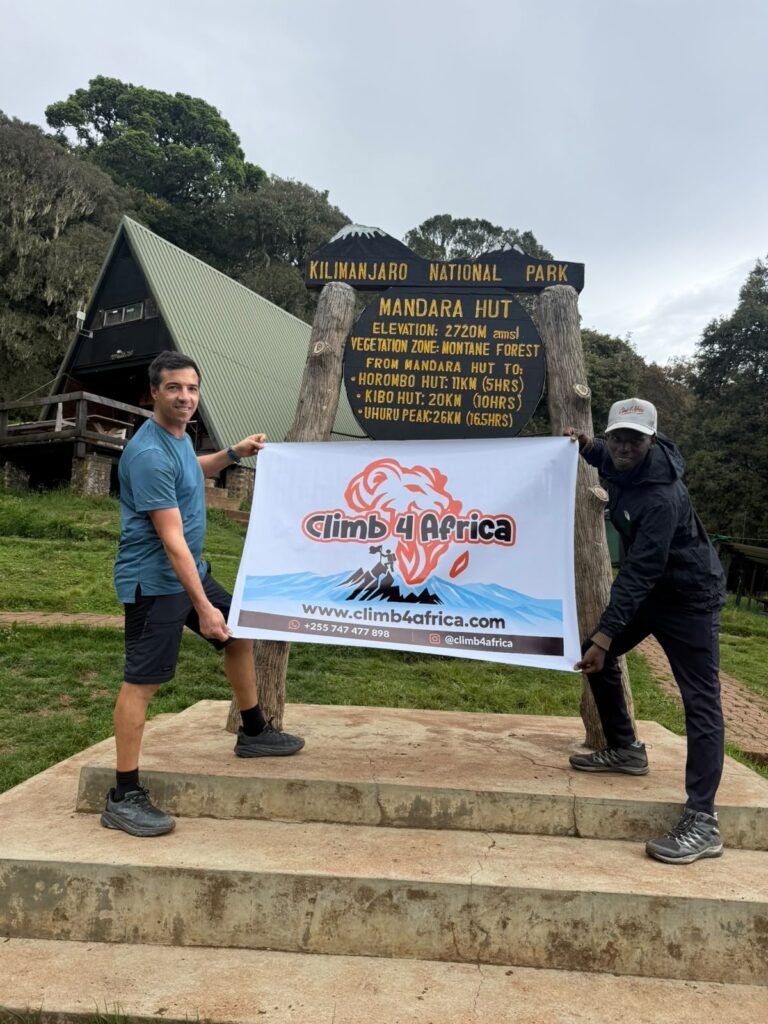
5 Days Marangu Route Kilimanjaro Group Climb – 8–12 December 2026
5 Days Marangu Route Kilimanjaro Group Climb – 8–12 December 2026.
View package details
December 4, Kilimanjaro Budget Trekking With Shared Group
December 4, 2026 Kilimanjaro Budget Trekking with Shared Group.
View package details
Climb Kilimanjaro In Budget 12-December-2026, Join Group 2027
climb kilimanjaro in Budget 12-december-2026, Join Group.
View package detailsClimb Kilimanjaro In 12-December-2026, Small Group in 2027
climb kilimanjaro in 12-december-2026, Small Group.
View package details6 Days Marangu Kilimanjaro Full Moon Climb – 20–25 December 2026
6 Days Marangu Kilimanjaro Full Moon Climb – 20–25 December 2026.
View package details
6 Days Marangu Kilimanjaro Group Hiking – 9–14 December 2026
6 Days Marangu Kilimanjaro Group Hiking – 9–14 December 2026.
View package details5 Days Marangu Kilimanjaro Full Moon Trek – 21–25 December 2026
5 Days Marangu Kilimanjaro Full Moon Trek – 21–25 December 2026.
View package details
Magical July Kilimanjaro Full Moon Climb: Expert Trekking Guide 2026-2027-2028
Discover the enchantment of a Kilimanjaro full moon climb in July. This comprehensive guide covers everything you need to know for an unforgettable 2026-2027 adventure, from choosing the...
View package details2–8 January , 7 Days Lemosho Route Kilimanjaro Group Climb 2027
2–8 January 2027, 7 Days Lemosho Route Kilimanjaro Group Climb.
View package details
17 Days Kilimanjaro Group Climb Safari And Zanzibar 2026-2027
17 Days Kilimanjaro Group Climb Group Safari and Zanzibar.
View package details
Kilimanjaro New Year Eve Climb – 31 December Summit 2026
Kilimanjaro New Year Eve Climb – 31 December 2026 Summit.
View package detailsKilimanjaro Christmas Holiday Trekking Packages December 2026
Kilimanjaro Christmas Holiday Trekking Packages December 2026.
View package detailsNo related package matches those filters. Clear one or more filters to see the other topic-matched options.



