
When you are planning your safari in Tanzania, one of the most common logistical questions is: How early should I arrive for a Serengeti bush flight? Unlike major international airports where you might be advised to show up three hours in advance, the logic for bush airstrips in the Serengeti is entirely different. For a standard Serengeti bush flight, arriving 45 to 60 minutes before your scheduled departure is the golden rule. Anything less risks missing the flight; anything more is usually unnecessary and just leaves you waiting in the heat or dust.
The reason for this specific window is that bush aviation in Tanzania operates on a different rhythm than commercial airline travel. These are not massive jets with hundreds of passengers and complex security protocols; they are typically small aircraft—often Cessna Caravans—that function more like a scheduled bus service through the sky. Pilots are operating on tight, multi-leg schedules, and they rarely have the flexibility to wait for late passengers.
Why the 45-60 minute window works:
- No massive security lines: You will not be waiting in long TSA-style queues. Check-in is often just a quick verification of your name and a weighing of your bags.
- Small Airstrips: Most Serengeti airstrips (like Seronera, Kogatende, or Lobo) are simple, open-air facilities. They lack the amenities of major airports, so arriving three hours early offers no comfort or benefit.
- Pilot Schedules: The pilots are often flying a “daisy chain” of stops. If you are not there, they may be cleared to depart early if the aircraft is loaded, or they may simply have to stick to a strict departure window to meet air traffic control slots elsewhere.
The Reality of Serengeti Airstrip Logistics
It is important to understand what a “Serengeti Airstrip” actually is. It is rarely a building with a departure lounge or a cafe. Often, it is simply a compacted dirt or gravel strip in the middle of the savannah. Because of this, the concept of “arriving early” feels strange. You aren’t walking through a terminal; you are being dropped off by a vehicle at the edge of a runway.
When you arrive, your pilot will usually be waiting near the plane or finishing the unloading of arriving passengers. They need that 45-minute window to check your soft-sided luggage (which is mandatory for these flights—see our guide on luggage limits on Serengeti flights), confirm the weight and balance of the aircraft, and brief you on the flight path. If you arrive too late, you interfere with the pilot’s pre-flight checks, which can delay the entire flight chain.
The Critical Role of the “Last Mile” Transfer
The most common reason travelers miss their flight is not because they didn’t get to the airport early enough, but because they didn’t account for the transfer time from the lodge to the airstrip. Depending on where you are staying, this drive can take anywhere from 15 minutes to over an hour.
If you are staying at a lodge that is deep inside the park, your driver must navigate game-viewing tracks. You might see a lion kill or a herd of elephants blocking the road. While this is the magic of a safari, it is also a logistical hurdle. Always confirm with your lodge or tour operator exactly how long the drive to the airstrip takes. If your flight is at 10:00 AM, and the lodge says it’s a 45-minute drive, do not plan to leave at 9:15 AM. Plan to leave at 8:45 AM. That extra 30 minutes acts as a buffer for the unpredictable nature of the African bush.
Comparison: Bush Airstrip vs. Major International Airport
To help you visualize the difference in planning, consider this breakdown of how these two travel experiences differ:
| Feature | Major International Airport | Serengeti Bush Airstrip |
|---|---|---|
| Arrival Time | 2-3 hours prior | 45-60 minutes prior |
| Check-in Process | Complex (Security, Immigration) | Simple (Weight check, Manifest) |
| Flexibility | Low (Fixed gates/schedules) | Moderate (But pilot-dependent) |
| Environment | Terminal, shops, lounges | Open-air, nature, minimal shade |
| Luggage | Standard hard/soft suitcases | Strictly soft-sided bags required |
As you can see, the stress of the process is significantly lower for bush flights, provided you handle the transfer logistics correctly.
What Happens if You Are Late?
This is a question we hear often at Climb 4 Africa. If you are late for a bush flight, the aircraft will generally not wait. Because these flights often stop at multiple locations—picking up and dropping off passengers at different camps—a delay at one strip creates a ripple effect across the entire day’s schedule. If you miss your flight, you might be looking at a significant cost to rebook, or worse, you might have to arrange a private charter, which is exponentially more expensive.
If you suspect you might be running late—perhaps due to a breakdown or a major wildlife sighting blocking the road—contact your operator immediately. If you have booked through a specialized agency, we can often communicate directly with the bush airline to update them on your status, though we cannot guarantee they will hold the plane.
Connecting Flights: Arusha to Serengeti
If you are flying from Arusha to the Serengeti, the logic remains the same regarding arrival times, but the stakes are higher. Arusha Airport (ARK) and Kilimanjaro International Airport (JRO) are much busier than the bush strips. If your bush flight is the second leg of a journey, you must factor in the transition time. For more information on these specific connections, read our detailed breakdown on flight times from Arusha to Serengeti. When connecting from international flights into a domestic bush flight, we generally recommend a buffer of at least three to four hours to account for immigration and potential delays.
Planning Your Transfer with Climb 4 Africa
The best way to ensure you arrive on time for your Serengeti bush flight is to have your transfers pre-arranged by your tour operator. When you book your safari with us, we coordinate with the lodge to ensure your driver is ready at the appropriate time. We factor in the distance, the road conditions, and the flight schedule.
If you are in the planning stages of your 2026 or 2027 safari, reach out to us. We can help you understand which airstrips are closest to your chosen lodges, minimizing your transit time and maximizing your time in the bush. Whether you are wondering which airport is closest to Serengeti National Park for your specific itinerary or need advice on combining domestic flights with your international arrivals, we provide the ground support to make it happen.
For any questions regarding your upcoming safari logistics, or to get a custom itinerary that aligns your flights with your wildlife viewing, please reach out to us directly:
- WhatsApp: +255 747 477 898
- Email: climb4africa@gmail.com
- Backup Email: info@climb-4-africa.com
We are here to ensure your transition between the sky and the savannah is as smooth as possible. Don’t worry about the logistics—focus on the wildlife, and let us handle the timing.
Navigating Baggage Protocols and Weight Constraints
While the 45-60 minute window is the standard recommendation, your preparation before you even reach the airstrip is what determines whether that window is sufficient. The most common cause of a “delayed” departure that isn’t related to weather is baggage non-compliance. Bush aviation in the Serengeti relies on small, single-engine or twin-engine aircraft, such as the Cessna Caravan, which are highly sensitive to weight and balance calculations. Unlike commercial aircraft, where a few extra kilograms might just cost a fee, an overweight bush plane is a safety hazard that cannot take off.
Travelers often arrive at the airstrip with hard-shell suitcases, which are physically impossible to stow efficiently in the narrow, irregularly shaped cargo pods of these bush planes. When a pilot realizes your bag is rigid and oversized, they must spend time attempting to repack the aircraft, re-calculate the center of gravity, or, in worst-case scenarios, leave your luggage behind to be flown on a later, separate cargo flight. This process turns a 10-minute turnaround into a 45-minute delay. To ensure your arrival time remains effective, strictly adhere to the requirement for soft-sided, flexible bags. These can be molded to fit the specific contours of the aircraft’s hold, allowing for rapid loading and a prompt departure.
The Impact of Visual Flight Rules (VFR) on Your Schedule
It is crucial for travelers to understand that Serengeti bush flights operate under Visual Flight Rules (VFR). This means that pilots must be able to see the ground and maintain a certain distance from clouds to navigate safely. They do not rely on the complex instrument landing systems found at major international airports like JRO or DAR. Consequently, weather is the single greatest variable in your flight timing.
If you arrive at the airstrip 60 minutes early, you may find the pilot waiting, but the flight might still be delayed by an hour or more due to a localized rain shower or low-hanging mist at your destination or an intermediate stop. This is not a failure of the airline; it is a necessary safety protocol. During the wet season, or even during sudden convective storms in the dry season, schedules become fluid. If you are tracking your flight and notice delays, do not assume you can sleep in or linger at the lodge. The weather can clear as quickly as it forms, and the pilot will depart the moment the flight path is deemed safe. Being at the airstrip ensures you are ready to depart the moment the “go” signal is given, rather than being the reason the pilot has to wait for a ground transfer to arrive.

Safety and Etiquette While Waiting at Remote Airstrips
Because Serengeti airstrips are not fenced, gated, or secured like commercial terminals, your behavior while waiting is a matter of both etiquette and personal safety. You are, quite literally, standing in the middle of a wildlife habitat. It is common to see zebras, wildebeest, or even predators near the runway perimeter. When you arrive early, stay within the vicinity of your transfer vehicle. Do not wander off into the tall grass to take photos, as visibility can be low and wildlife can be unpredictable.
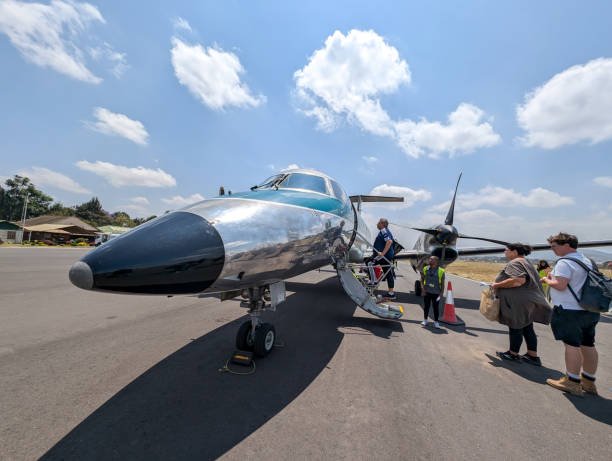
Furthermore, maintain a low profile until the aircraft has fully come to a stop and the pilot has signaled that it is safe to approach. The propellers on these aircraft are powerful and can be difficult to see if you are distracted by the excitement of the bush. Wait for the pilot to open the door and invite you to board. By staying organized, having your soft-sided bags ready for immediate loading, and remaining near your vehicle, you transform the waiting period from a potential logistical hurdle into a final, peaceful moment of observing the savannah before your departure.
The Dynamics of Multi-Stop Flight Manifests
One aspect of Serengeti bush flight logistics that often confuses travelers is the nature of the “manifest” and why arrival times are dictated by more than just your personal convenience. Unlike a direct flight from a major hub where you are the sole concern of the airline, bush flights operate on a dynamic, multi-stop loop. A single aircraft might depart from Arusha, stop at Seronera to drop off passengers, continue to Kogatende to pick up others, and then head to a private airstrip near a luxury camp in the North. Because of this, the pilot is managing a complex puzzle of weight, balance, and passenger logistics that changes with every landing.
When you arrive at the airstrip 45 to 60 minutes early, you are not just checking in for your seat; you are becoming part of the pilot’s immediate calculation. The pilot must account for the total weight of the aircraft—passengers plus luggage—before every takeoff. If a passenger is missing, the pilot cannot simply wait indefinitely. A delay at one airstrip creates a cascading effect: the aircraft misses its assigned slot at the next airstrip, potentially disrupting the schedules of passengers waiting at subsequent locations. This is why airline ground staff and pilots are often rigid about departure times. They are balancing the needs of your flight against the needs of several other groups of travelers spread across the Serengeti ecosystem.
Understanding the “Fly-In” vs. “Drive-In” Arrival Experience
The experience of arriving at a bush airstrip varies significantly depending on whether you are arriving from a lodge or connecting from another flight. If you are arriving from a lodge, your driver is usually intimately familiar with the specific airstrip. They know the “unofficial” meeting point, where the pilot prefers to park, and how to navigate the often-bumpy access tracks. However, if you are a passenger arriving from a different bush flight and waiting for a connecting service, your “arrival time” is effectively set by the airline’s schedule. In these cases, you are essentially in a transit state. You may find yourself waiting on the tarmac or in a very basic shaded area near the runway for 30 to 90 minutes. It is critical to keep your boarding pass or flight manifest visible and accessible, as bush pilots frequently double-check documentation for connecting passengers to ensure no one is left behind during a busy mid-morning turnover.
Managing Expectations During Peak Migration Seasons
During the peak migration months, particularly when the herds are concentrated in the Northern Serengeti or the Central plains, the volume of air traffic increases dramatically. Airstrips that are usually quiet can become hubs of activity, with multiple light aircraft arriving and departing within minutes of each other. During these busy windows, the “45-60 minute” rule becomes even more critical. Ground handling teams are often stretched thin, managing luggage transfers between multiple aircraft simultaneously. If you arrive late during a peak season, you run the risk of being “bumped” or left behind, not necessarily because the flight is full, but because the ground crew has already finalized the weight and balance manifest and moved on to the next aircraft. Arriving early during these times allows you to verify your luggage is correctly tagged and loaded onto the right aircraft, providing a layer of peace of mind that is difficult to replicate if you rush to the airstrip at the last possible minute.
The “Morning Game Drive” Dilemma: Balancing Sightings and Schedules
One of the most nuanced challenges for travelers departing the Serengeti is the psychological and logistical tug-of-war between squeezing in one final morning game drive and ensuring a timely arrival at the airstrip. It is a common scenario: you have spent several days immersed in the bush, and the desire to maximize every single minute of wildlife viewing is intense. However, this is precisely when the most significant logistical errors occur. The “Morning Game Drive” dilemma arises because guests often treat their departure morning as an extension of their safari, forgetting that the moment they depart the lodge, the clock is ticking toward a fixed, non-negotiable flight time.
To navigate this successfully, you must shift your mindset from “safari participant” to “traveler” the moment you wake up on your final morning. The most effective strategy is to handle all administrative “housekeeping” the evening before. This includes settling your final bill at the lodge, double-checking that your passport is in your daypack, and ensuring your luggage is packed and ready to be loaded into the transfer vehicle before breakfast. By eliminating these minor tasks from your final morning, you remove the risk of “administrative delays” that can derail your schedule.
The danger of the “Game Drive Creep” is a real phenomenon in the Serengeti. It occurs when a guest, eager for one last lion sighting or a glimpse of a cheetah on the hunt, asks their guide to “just check one more area” on the way to the airstrip. While your guide wants to provide the best experience, they are also responsible for your flight connection. If you succumb to the temptation of extending your drive, you are essentially gambling with your flight manifest. Unlike a standard game drive where the only deadline is dinner, a transfer to an airstrip is a time-sensitive commitment. If you are even 15 minutes late, you may miss the small window the pilot has allocated for loading, which can lead to missed connections in Arusha or onward travel disruptions.
It is essential to have an explicit, clear conversation with your lodge manager and guide the night before your departure. State your flight time clearly and ask them to confirm the exact departure time from the lodge. When you leave the lodge, frame the drive to the airstrip not as a “game drive,” but as a “transfer with wildlife viewing.” If you happen to spot wildlife on the way, treat it as a bonus, not a requirement. By maintaining the discipline to leave at the pre-agreed time, you ensure that your departure remains stress-free, allowing you to enjoy the final sights of the Serengeti without the mounting anxiety of watching your watch and calculating whether you will miss your plane.
Related Guides and Packages
Check Availability for How Early Should I Arrive For A Serengeti Bush Flight? ( Planning Guide)
Ready to compare dates, prices, and the best option for your group? Send the package name and travel month so the team can reply with a clear quote, availability, and what is included.

Nairobi To Serengeti Safari By Flight: Prices & Travel Options
A practical guide to navigating the logistics of flying from Nairobi to the Serengeti, including transit requirements, airport choices, and cost considerations for your 2027 safari.
View package details
Masai Mara To Serengeti Flights: Cross-Border Safari Costs And Logistics
Discover the logistics of flying from Masai Mara to Serengeti, including bush flight options, cross-border visa requirements, and typical safari cost considerations.
View package details
Serengeti To Kigali Flights: Ticket Prices & Travel Guide
Connecting the Serengeti to Kigali requires a strategic two-stage flight plan. Understand the logistics, baggage limits, and booking considerations for your 2026-2027 itinerary.
View package details
Kigali To Serengeti Flights: Prices & Safari Connections
A practical guide to connecting your Rwanda gorilla trekking with a Serengeti safari, focusing on flight routes, transit logistics, and expert booking advice.
View package detailsEntebbe To Serengeti Safari: Flight Connections & Cost Planning
A practical guide to connecting your Entebbe-based travel with a Serengeti safari, covering flight routes, airport choices, baggage constraints, and cost factors for 2026-2027.
View package details
Kilimanjaro Climb And Serengeti Safari: Flight & Transfer Planning
Kilimanjaro Climb and Serengeti Safari: Flight & Transfer Planning.
View package detailsSerengeti Flight Prices During The Great Migration Season: A Practical Guide
Planning a safari during the Great Migration? Here is how to navigate Serengeti flight prices, seasonal demand, and the logistical realities of bush travel.
View package detailsTanzania Flight Prices September : Serengeti And Zanzibar Planning
Expert advice on navigating domestic flight logistics, seasonal pricing, and the crucial 'bush-to-beach' connection for your September 2027 Tanzania itinerary.
View package detailsSerengeti Great Migration Fly-In Safari: Flight And Lodge Prices ()
A deep look at the logistical and financial considerations of planning a Serengeti Great Migration fly-in safari, focusing on how flight routes and seasonal lodge locations dictate your...
View package details
How Long Is The Flight From Serengeti To Zanzibar? ( Planning Guide)
Planning your bush-to-beach connection? Discover the actual flight durations, stopover logistics, and booking realities for traveling from the Serengeti to Zanzibar.
View package detailsHow Long Is The Flight From Arusha To Serengeti? A Planning Guide
A detailed look at flight durations between Arusha and the Serengeti, including airstrip differences, luggage constraints, and the strategic choice between flying and driving.
View package detailsHow Much Is A Flight From Zanzibar To Serengeti?
How Much Is a Flight From Zanzibar to Serengeti?
View package detailsNo related package matches those filters. Clear one or more filters to see the other topic-matched options.



