
When planning a summit attempt on Kilimanjaro, the route and the support team you choose are the two most significant variables impacting your success. A Private 8 Days Lemosho Route with Personalized Mountain Guide is widely considered the gold standard for climbers who prioritize safety, acclimatization, and a high-quality, unhurried mountain experience. Unlike group climbs where the pace is dictated by the slowest or fastest member, a private trek allows you to move at your own rhythm, supported by a guide whose sole focus is your health and progress.
Why 8 Days? The Lemosho route is longer than others like the Machame or Marangu, but this extra time on the mountain is exactly what makes it effective. By adding the extra days, you avoid the ‘rush’ that often causes altitude sickness. It is a strategic choice for anyone serious about reaching Uhuru Peak.
The Logic Behind the 8-Day Lemosho Strategy
The Lemosho route approaches Kilimanjaro from the west. The first two days are spent traversing remote rainforests and the Shira Plateau, which is one of the most scenic high-altitude plateaus in the world. The 8-day itinerary is specifically structured to provide ‘climb high, sleep low’ opportunities, which are critical for altitude adaptation.
By spreading the ascent over eight days, you give your body time to produce more red blood cells and adjust to the lower oxygen levels. When you choose a private, personalized guide, you gain the flexibility to pause, rest, or adjust your daily mileage. If you find a particular section challenging, your guide can pivot the plan to ensure you recover effectively before pushing higher.
Comparison: Lemosho vs. Other Kilimanjaro Routes
Choosing the right route can feel overwhelming. This table highlights how the Lemosho route compares to other common options in terms of acclimatization and overall experience.
| Route | Duration | Acclimatization Profile | Best For |
|---|---|---|---|
| Lemosho | 8 Days | Excellent | Those prioritizing success & scenery |
| Machame | 6-7 Days | Moderate | Budget-conscious climbers |
| Marangu | 5-6 Days | Poor | Those preferring hut accommodation |
| Rongai | 6-7 Days | Good | Climbers seeking a quieter, northern approach |
As the table shows, while other routes might be faster, the 8-day Lemosho is intentionally slower. If you are looking to avoid the crowds of the Machame Route, Lemosho offers a more secluded start, keeping you away from the main traffic until the later stages of the climb.
What a Personalized Mountain Guide Actually Does
The term ‘personalized guide’ is often used loosely in the travel industry. At Climb 4 Africa, it has a specific operational meaning. When you book a private trek, your guide is not just a leader; they act as a health and logistics manager.
- Continuous Health Monitoring: Your guide will conduct daily checks using a pulse oximeter to track your oxygen saturation levels and heart rate. They are trained to spot the earliest signs of Acute Mountain Sickness (AMS) and know when to advise a rest day or a change in pace.
- Pacing Control: ‘Pole pole’ (slowly, slowly) is the mantra, but everyone’s ‘slow’ is different. Your guide will calibrate your walking speed based on your specific fitness level, not the average of a group.
- Mental Support: The final ascent to Uhuru Peak is as much mental as it is physical. A dedicated guide provides the encouragement and consistent focus needed during the toughest hours of the night.
- Logistical Flexibility: If the weather shifts or you need an extra hour of rest at a camp, a private guide can adjust the day’s timing without needing to consult a larger group or compromise the schedule.
The 8-Day Lemosho Itinerary Overview
This itinerary is the backbone of a successful Lemosho climb. It balances steady altitude gain with adequate recovery.
Day 1: Trailhead to Mti Mkubwa
The journey begins at the Londorossi Gate. You will transition from the agricultural lands into the lush, dense rainforest. This is a shorter walking day, allowing you to settle into the rhythm of the mountain.
Day 2: Mti Mkubwa to Shira 1 Camp
You leave the forest behind and emerge onto the moorland. The air begins to thin, and the views of the Shira Plateau start to open up. This is a day for steady, moderate hiking.
Day 3: Shira 1 to Shira 2 Camp
This day takes you across the Shira Plateau. You will see some of the most dramatic landscapes on the mountain. Because the terrain is relatively flat, you can focus on breathing and hydration.
Day 4: Shira 2 to Barranco Camp via Lava Tower
This is the classic ‘climb high, sleep low’ day. You will hike up to the Lava Tower (around 4,600m) for lunch and acclimatization, then descend to Barranco Camp. This specific day is critical for your body’s adaptation.
Day 5: Barranco Camp to Karanga Valley
You tackle the Barranco Wall. It is not technical climbing, but it requires focus. After cresting the wall, you descend into the beautiful Karanga Valley. This shorter day allows for critical rest.
Day 6: Karanga Valley to Barafu Camp
You reach the high camp, Barafu. This is the staging ground for the summit attempt. You will spend the afternoon resting, checking your gear, and preparing mentally for the final push.
Day 7: The Summit Day
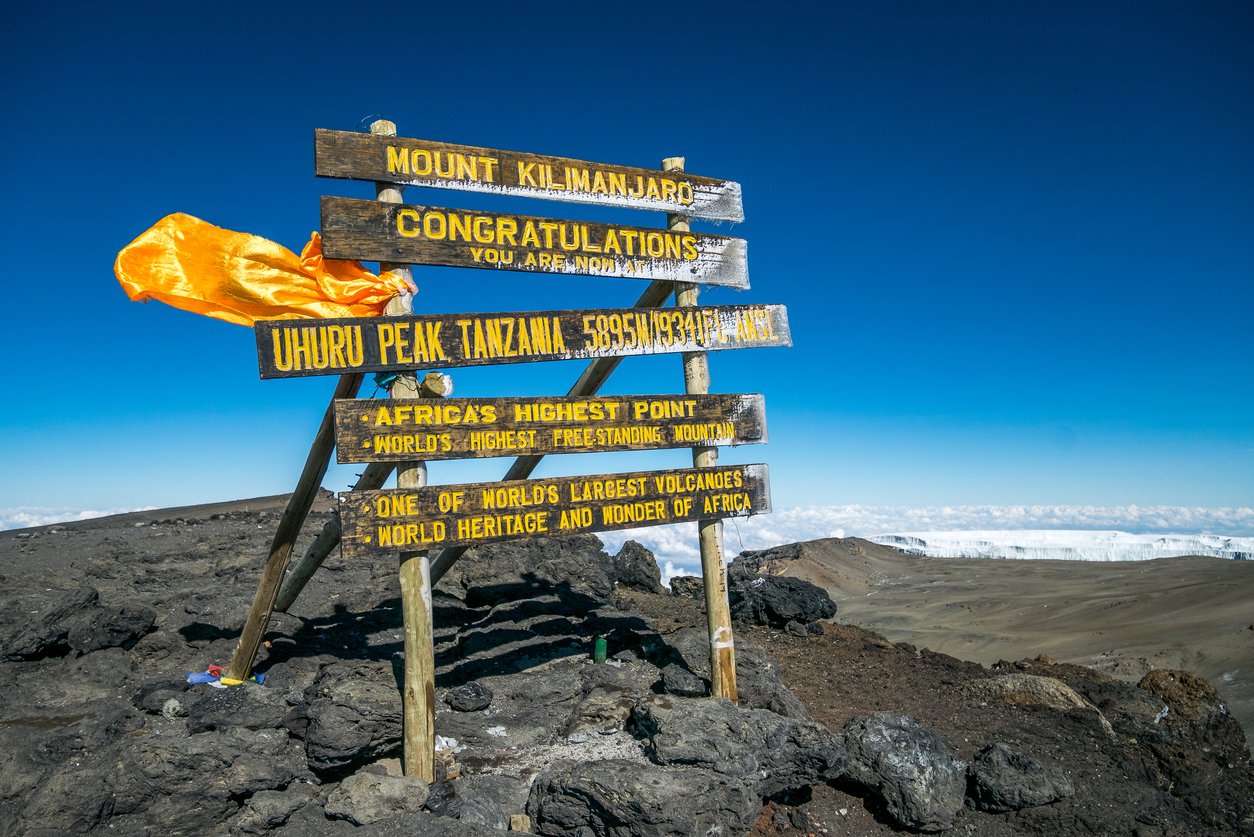
You start in the darkness of the early morning, aiming for Stella Point and then Uhuru Peak. After celebrating the summit, you descend to Mweka Camp. It is a long, demanding day that requires your guide’s full attention.
Day 8: Mweka Camp to the Gate
The final descent through the forest back to the gate. You will receive your summit certificates and meet your transfer vehicle for the return to your hotel.
Planning Your 2027 Climb
Planning for 2027 is already underway. Because we specialize in private, tailor-made experiences, we do not follow a rigid, pre-set calendar of group dates. Instead, we work with you to determine the best time for your specific needs.
If you are looking for specific weather conditions, the dry seasons (January-February and July-October) are generally the most stable. However, climbing in the ‘shoulder’ seasons can also be rewarding if you prefer fewer crowds and don’t mind the possibility of a little more precipitation.
When you contact us, please let us know:
- Your preferred month of travel for 2027.
- Any previous high-altitude experience (not required, but helpful).
- Your general fitness level.
- Whether you would like to combine your climb with a safari or Zanzibar beach extension.
We can then provide a tailored quotation and a breakdown of what is included, such as park fees, mountain crew wages, camping gear, and safety equipment. We avoid hidden costs and provide a transparent, all-inclusive view of what your trip will entail.
Contact Our Expert Team
If you are ready to start planning your climb or have questions about the logistics of a private 8-day Lemosho trek, our team is ready to assist. We have spent years refining our operations on Kilimanjaro and understand the nuances that make a trip successful.
You can reach out to us directly for a personalized consultation regarding your 2027 plans. Whether you are a solo traveler, a couple, or a private group, we can build the itinerary that fits your requirements. For the fastest response, you can contact us via WhatsApp at +255 747 477 898 or email us at climb4africa@gmail.com. For general inquiries, you can also reach our office at info@climb-4-africa.com.
Do not feel pressured to book immediately. We are happy to provide the information you need to make an informed decision about your mountain adventure. We look forward to helping you reach the roof of Africa.
Preparing for the 8-Day Lemosho: Physical and Logistic Readiness
While the 8-day Lemosho route is designed to maximize acclimatization, it remains a significant physical undertaking. Success on this route is not merely about fitness; it is about endurance management over the course of more than a week. Because you are on a private trek, your personalized guide will adjust the pace to your capabilities, but you must arrive with the baseline conditioning to sustain several hours of hiking daily.
Tailoring Your Training for Endurance
Many climbers make the mistake of focusing exclusively on high-intensity interval training or heavy weightlifting. For an 8-day trek, your primary training goal should be ‘time on feet.’ Your body needs to adapt to the repetitive impact of walking on uneven, rocky, and rooted terrain for five to seven hours per day. We recommend incorporating long, slow hikes into your routine at least three months before your departure. If possible, hike with your fully loaded daypack to condition your shoulders and hips to the weight you will carry during the ascent.
Focus on eccentric leg strength—the ability to control your descent—which is just as critical as your uphill stamina. The descent from the summit on Day 7 and the return on Day 8 are often where fatigue-related injuries occur. Strengthening your quadriceps and calves through step-ups and lunges will help stabilize your knees during these long downward stretches.
The Layering System for Diverse Microclimates
The 8-day Lemosho route is unique because it forces you to traverse every ecological zone of the mountain, from the humid rainforest to the arctic summit. A common error is overpacking heavy, bulky clothing that you will only wear for a few hours. Instead, adopt a modular layering system that allows you to adjust your temperature on the move without stopping to unpack.
- Base Layer: Moisture-wicking synthetic or merino wool. Avoid cotton entirely, as it traps moisture and cools your body rapidly.
- Mid-Layer: A fleece or lightweight ‘puffy’ jacket to provide insulation while hiking in the cooler moorland and alpine desert zones.
- Insulation Layer: A heavy down or synthetic parka, reserved exclusively for the summit night and evenings in camp.
- Shell Layer: A high-quality, breathable waterproof jacket and pants. These are essential for the rainforest and potential precipitation in the higher camps.
Your personalized guide will perform a gear check at your hotel before the trek begins. This is your opportunity to ensure your layers are appropriate for the specific season of your 2027 climb, as weather patterns can shift significantly between the dry seasons and the shoulder months.
Managing Your Personal Gear Load
On a private Lemosho trek, your logistical burden is minimized by your support crew, but you must still manage your personal items correctly. You will carry a daypack containing only what you need for the day: water (typically 3 liters), extra layers, sun protection, your camera, and personal medical supplies. Your main duffel bag, containing the bulk of your sleeping gear and clothing, is carried by the porters.
Because you are on a private schedule, you have the advantage of being able to reorganize your duffel bag each morning without the pressure of a group departure. We recommend using internal dry bags or compression sacks to organize your gear. This keeps your clothing dry in the event of rain and makes it significantly easier to locate items in the dim light of your tent during the early morning hours.
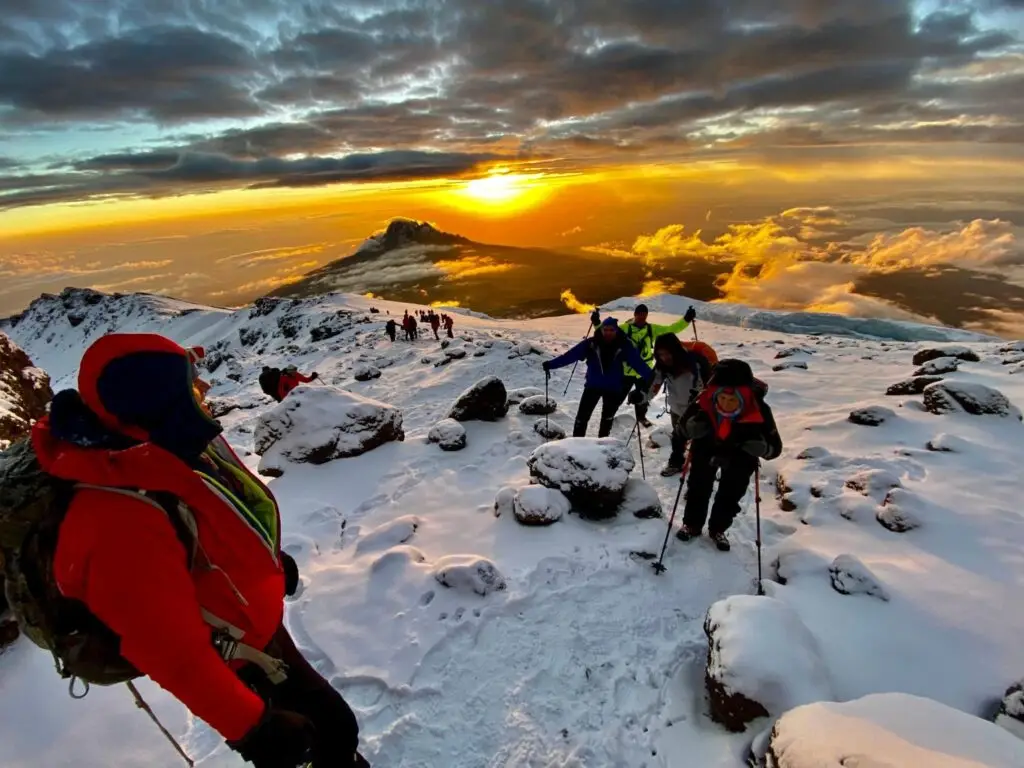
Life in Camp: The Rhythm of an 8-Day Private Trek
On an 8-day Lemosho itinerary, your time spent in camp is nearly as significant as your time on the trail. Because you are not restricted by the collective needs of a large group, the rhythm of your camp life becomes a deliberate tool for recovery. In a private setup, the ‘mess tent’ is not a crowded, noisy environment where you compete for space; it is a dedicated, quiet space where you can decompress, review the next day’s elevation profile with your guide, and focus entirely on your physical state.
The morning ritual is where the private advantage is most visible. Rather than waking to the sound of a group leader’s whistle, your guide will coordinate with the support team to ensure you have hot water for washing and a personalized wake-up call that aligns with your specific recovery needs from the previous day. This pacing allows you to manage your energy levels—crucial for a trek that spans more than a week. You are not forced to pack up in a frantic rush; you can organize your gear methodically, ensuring your daypack is perfectly balanced for the day ahead.
Evenings in camp are equally structured. Your guide will typically perform a health check shortly after arriving at the camp. This is not just a perfunctory task; it is a moment to discuss how you felt on the trail, assess your sleep quality, and adjust the following day’s pace if necessary. Being able to communicate these nuances without the pressure of group dynamics allows for a more responsive, safer, and more enjoyable experience. You have the freedom to spend your afternoons resting, reading, or simply acclimatizing, rather than being pushed to socialize or engage in group activities that might deplete your energy.
Nutritional Strategy for High-Altitude Performance
One of the most common, yet overlooked, factors in failing to summit is the loss of appetite at high altitude. Over an 8-day period, if your caloric intake drops too low, your body will begin to cannibalize muscle tissue for energy, leading to rapid fatigue. On a private trek, your nutritional strategy is not a ‘one-size-fits-all’ menu; it is a personalized plan managed by your private chef.
Because you are on a longer, 8-day schedule, the kitchen team has more time to iterate and adapt. If you find you cannot stomach heavy, complex meals, your chef can pivot to nutrient-dense, easily digestible options like soups, broths, and simple carbohydrates. High-altitude digestion is sluggish, and your body requires foods that are gentle on the stomach but high in complex carbohydrates to fuel your ascent. Your guide will work closely with the chef to ensure you are consuming enough electrolytes and fluids, which are the primary defenses against both altitude sickness and physical exhaustion.
Hydration is the single most important ‘nutrient’ on the mountain. On the Lemosho route, you should aim for 3 to 4 liters of water daily. Your private guide will monitor your water intake throughout the day, ensuring you are drinking consistently rather than ‘guzzling’ at the end of the day, which is ineffective for hydration. By having a private team, you have the benefit of a dedicated water-fetching support member, ensuring you always have access to treated, clean water without having to wait in queues or rely on communal supplies.
Finally, your private team can accommodate specific dietary requirements—whether vegan, gluten-free, or allergy-specific—with much higher precision than a large group operator. This consistency in nutrition over the full 8 days is a major contributor to the higher success rates observed on personalized, longer-duration treks compared to shorter, high-intensity group climbs.
The Psychological Arc of the 8-Day Trek: Managing Expectations and Mental Resilience
While physical conditioning is the foundation of your success, the psychological reality of an 8-day expedition is the factor that most often determines whether a climber finishes the trek with a sense of accomplishment or merely relief. An 8-day Lemosho itinerary is a marathon, not a sprint, and the extended duration introduces a unique psychological arc that differs significantly from shorter, more intense routes. Understanding this arc helps you prepare for the ebbs and flows of motivation and energy.
The first two days, as you transition from the rainforest to the moorlands, are often defined by a ‘honeymoon phase.’ The novelty of the environment, the excitement of the start, and the physical ease of the initial trails can mask the reality of the altitude. However, by the time you reach the Shira Plateau on day three, the routine of camp life—the repetitive nature of packing, the communal meals, and the constant, subtle pressure of monitoring your oxygen saturation—can begin to feel monotonous. This is where the advantage of a private, personalized guide becomes clear. Unlike in a group setting, where you might feel pressure to maintain a social facade, a private guide allows you to retreat into your own headspace. They are trained to recognize the signs of mental fatigue, such as irritability or withdrawal, before they manifest as physical exhaustion.
The most critical psychological pivot occurs between day five and day six. As you move from the Karanga Valley toward the high camp at Barafu, the anticipation of the summit begins to dominate your thoughts. This ‘summit anxiety’ is a natural response to the impending challenge. A personalized guide acts as a psychological buffer during this time. Instead of letting you dwell on the difficulty of the impending night climb, they will shift your focus to micro-goals: the next meal, the next water break, or simply the successful completion of the current hour. This technique of ‘chunking’—breaking an 8-day endeavor into manageable, bite-sized units—is the single most effective tool for maintaining morale when the air gets thin and the nights grow cold.
Mental Strategies for Long-Duration High Altitude
When you are at 4,600 meters, cognitive function can slightly decline, making complex decision-making or emotional regulation more difficult. You may find yourself prone to ‘summit fever,’ where the singular desire to reach Uhuru Peak overrides your ability to listen to your body’s signals. Your private guide is your external brain during this period. They are responsible for the ‘reality check’—ensuring that your desire to push through pain does not override safety protocols. Trusting your guide’s authority is a psychological skill in itself; it requires you to relinquish the need for control and accept that your primary job is to breathe, move, and follow the rhythm they set.
The descent, often underestimated, carries its own psychological weight. After the adrenaline of the summit, the human brain naturally experiences a ‘crash.’ The physical exhaustion of the descent, combined with the loss of the primary goal, can lead to a sense of aimlessness or deep fatigue on day eight. Recognizing this beforehand is vital. The descent is not just a walk back to the gate; it is a transition back to lower altitude and higher oxygen levels, which can trigger intense emotions or a feeling of ‘de-acclimatization’ that manifests as lethargy. By framing the final day not as a chore, but as a victory lap where you can finally appreciate the landscape you were too focused to notice during the ascent, you can maintain your mental engagement until you reach the gate.
Ultimately, the resilience required for an 8-day Lemosho trek is built on the acceptance of the ‘process over the peak.’ When you focus on the daily rhythm—the morning tea, the steady pace of the hike, the evening health check—you remove the looming pressure of the summit. This mental shift turns the expedition into a series of successful days rather than one single, daunting challenge, significantly increasing your probability of a safe and successful return to the trailhead.
The Anatomy of Your Private Support Crew
While the lead guide is the primary interface for your safety and decision-making, the success of an 8-day private Lemosho trek relies on the silent, orchestrated efficiency of your support crew. In a group climb, you are one of many, and the crew’s attention is divided across a dozen or more clients. In a private expedition, every member of the team—from the assistant guides to the camp crew—is dedicated exclusively to your progress. Understanding the distinct roles within this team helps you appreciate the logistical precision required to sustain you for over a week in a high-altitude wilderness.
Your team typically includes assistant guides, a specialized mountain cook, and a dedicated team of porters. The assistant guides are essential for the ‘private’ experience; they allow for a tiered safety approach. If you are feeling strong, they maintain the pace; if you need to slow down or take an unscheduled rest, the lead guide can remain with you while an assistant guide scouts the trail ahead or manages logistics at the next camp. This redundancy ensures that your pace is never compromised by the needs of others.
The role of the mountain cook in a private trek is often the most underrated aspect of your success. Unlike group expeditions where meals are standardized and mass-produced, a private cook has the capacity to tailor nutritional intake to your specific palate and dietary needs. They are responsible for managing the caloric density of your meals, which is vital as your appetite naturally suppresses at altitude. They are also the first to notice if you are struggling to eat, allowing them to adjust meal textures or flavors to encourage intake. The cook works in tandem with the lead guide to ensure that your energy stores are consistently replenished, a level of personalized care that is rare on larger, commercialized group departures.
The porters, the unsung engines of the mountain, operate with a level of logistical foresight that you will rarely see. Because you are on a private schedule, your camp is often established before the main rush of large groups arrives. This gives your crew the luxury of selecting the most advantageous tent sites—those protected from the prevailing winds or situated on the most level ground. This is not just a comfort feature; it is a critical component of your recovery. A well-rested night in a tent that isn’t buffeted by gale-force winds is the difference between starting the next day refreshed or fatigued. Respecting this team dynamic involves acknowledging their work during the daily briefings; a simple ‘thank you’ or an acknowledgment of the camp setup goes a long way in fostering the camaraderie that defines the best Kilimanjaro experiences.
Navigating the Post-Summit Transition: Physical and Logistical Recovery
The journey does not end at the Mweka Gate. The transition from the high-altitude environment of the Kilimanjaro massif back to the oxygen-rich, low-altitude world of the Tanzanian plains is a physiological and psychological shock that is frequently underestimated. After 8 days of constant movement, your body has adapted to a state of sustained exertion and low oxygen. When you finally descend below the cloud line, this adaptation does not vanish instantly; it leaves a lingering ‘de-acclimatization’ phase that requires careful management.
Immediately upon finishing the trek, the most common error is the urge to look at intense activity, such as a safari or a long-haul flight. Your muscles, particularly your quadriceps and calves, will be in a state of delayed onset muscle soreness (DOMS) that often peaks 24 to 48 hours after you reach the gate. Furthermore, your immune system, which has been working overtime to keep you healthy at 5,000 meters, is temporarily suppressed. This makes the immediate post-climb period a window of vulnerability.
Logistically, your priority in the first 24 hours post-trek should be ‘active recovery.’ This means prioritizing hydration—continuing to drink more water than you think you need—and gentle mobility. Avoid the temptation to sit in one position for long periods, such as on a long flight or a cramped safari vehicle. If you are planning to continue your travels in Tanzania, aim for a ‘buffer day’ where your only responsibility is resting. A hotel with a pool or comfortable lounge is ideal; the goal is to keep your circulation moving without straining your exhausted muscles.
Psychologically, you may experience a phenomenon known as ‘post-expedition blues.’ For eight days, your life was simplified to the most basic human needs: walking, eating, sleeping, and reaching the summit. Returning to the complexity of modern life—emails, schedules, and connectivity—can feel jarring. This is a normal part of the process. Many successful climbers find that taking time to journal about the 8-day experience, or simply sitting in silence, helps bridge the gap between the mountain experience and the return to reality. By treating the post-climb phase as a deliberate part of your itinerary rather than an afterthought, you ensure that the sense of accomplishment from your Lemosho trek is preserved and integrated rather than lost in the rush of travel logistics.
Related Reading
Check Availability for Private 8 Days Lemosho Route With Personalized Mountain Guide For 2026
Ready to compare dates, prices, and the best option for your group? Send the package name and travel month so the team can reply with a clear quote, availability, and what is included.
8 Days Lemosho Route Christmas Climbing Package December : Plan Your Summit
A comprehensive guide to planning your 8-day Lemosho Route climb for December 2026, focusing on acclimatization, route benefits, and logistics for a holiday summit.
View package details
Vip Kilimanjaro Expedition With Private Mountain Crew December 2026
A detailed guide to planning a bespoke, high-support Kilimanjaro expedition for December 2026, focusing on private crew logistics, route selection, and safety.
View package details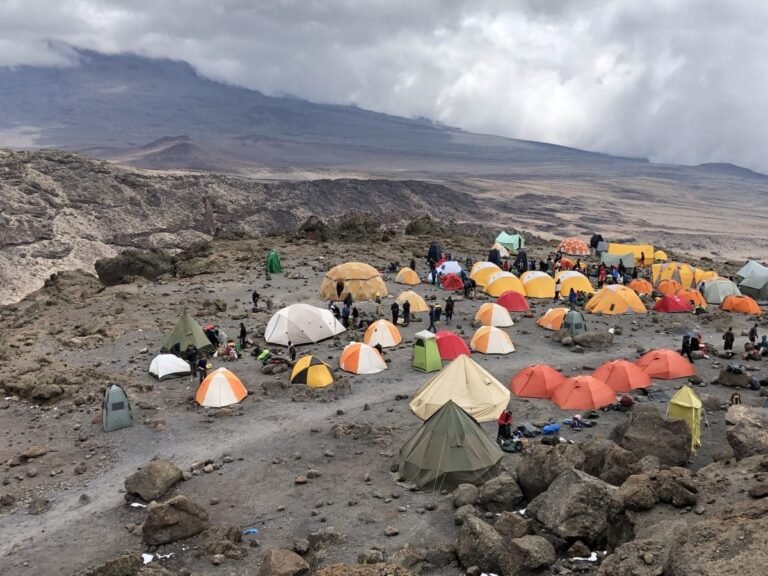
7 Days Umbwe Route Kilimanjaro Challenge: Planning Your December Ascent 2026
A deep-dive guide into the 7-day Umbwe Route, the most challenging and direct path up Kilimanjaro, perfect for those seeking a quiet, steep, and rewarding December 2026 expedition.
View package details7 Days Rongai Route Kilimanjaro Holiday Climb December : Expert Guide 2026
A deep look at the 7-day Rongai Route for December 2026 climbers, focusing on route logic, acclimatization benefits, and practical planning for your holiday expedition.
View package details
Quotation For An 8 Day Lemosho Trek With A New Year Summit: Planning Guide
Planning your Kilimanjaro ascent for the New Year? We break down the 8-day Lemosho route, what influences your quotation, and the logistics of a festive summit.
View package details
Private Kilimanjaro Climbing Tours For Christmas Holidays 2026
A deep-dive guide for planning your private Kilimanjaro expedition for the 2026 holiday season, focusing on route selection, acclimatization, and logistics.
View package detailsPlanning Your Private Kilimanjaro Climb Over Christmas: A Guide For Couples
A detailed guide for couples planning a private Kilimanjaro trek during the Christmas season, covering route selection, logistical planning, and booking considerations.
View package details
9 Days Northern Circuit Kilimanjaro Trek December : The Ultimate
A comprehensive guide to the 9-day Northern Circuit route for December 2026, focusing on acclimatization, route advantages, and logistical planning.
View package details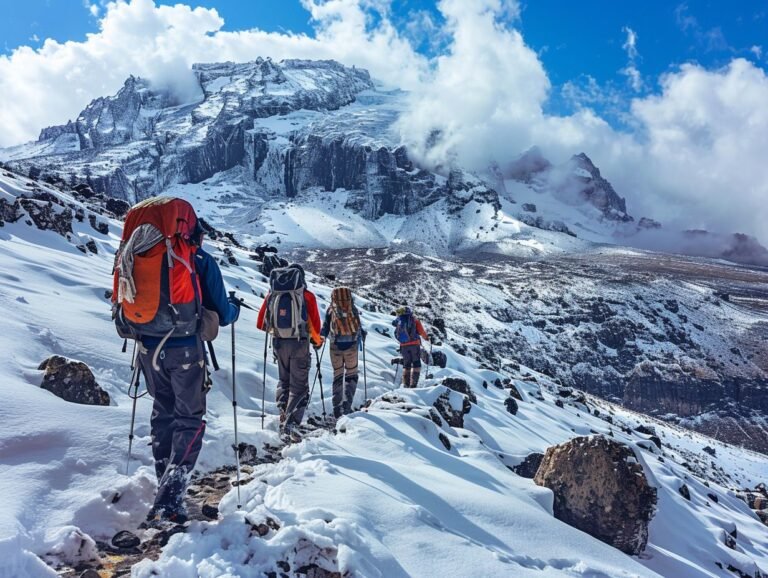
Exclusive Kilimanjaro Christmas Trek With Premium Support Team 2026
An in-depth guide to securing a private, high-support Kilimanjaro expedition for the holiday season. We cover route selection, team ratios, and planning for 2026-2027.
View package details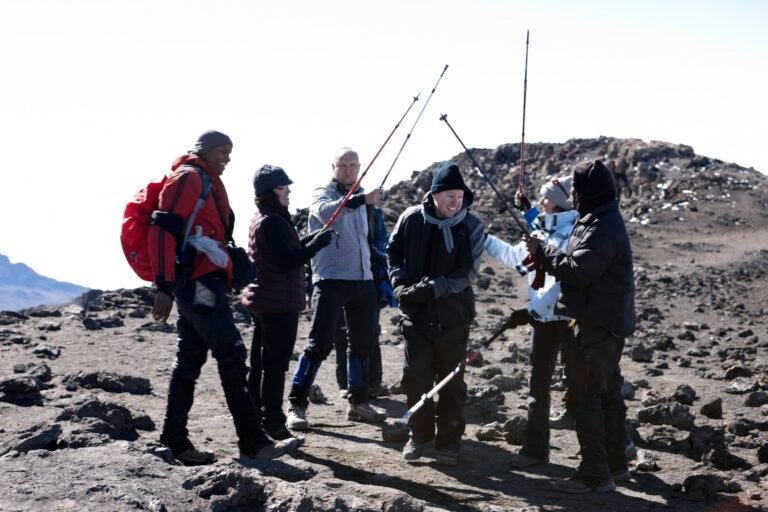
Romantic Kilimanjaro Summit Adventure For Couples December : Planning Your
A detailed guide for couples planning a Kilimanjaro summit in December 2026, focusing on route selection, acclimatization, and the benefits of private trekking arrangements.
View package details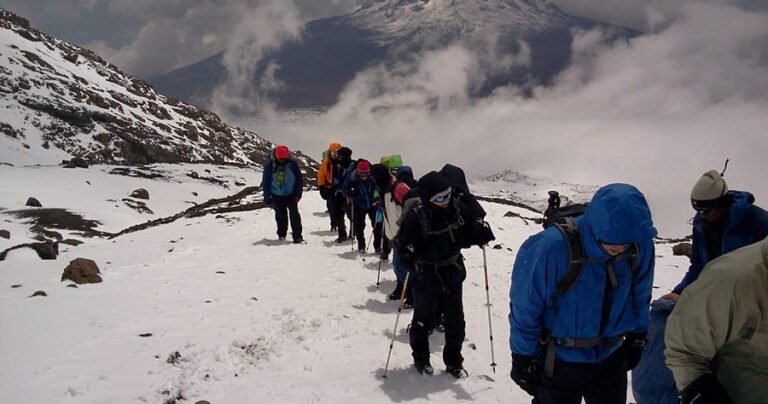
Best Kilimanjaro Routes For A Christmas Summit In 2026
A guide to selecting the optimal Kilimanjaro route for a Christmas 2026 ascent, balancing acclimatization needs, crowd dynamics, and the specific logistics of the holiday season.
View package details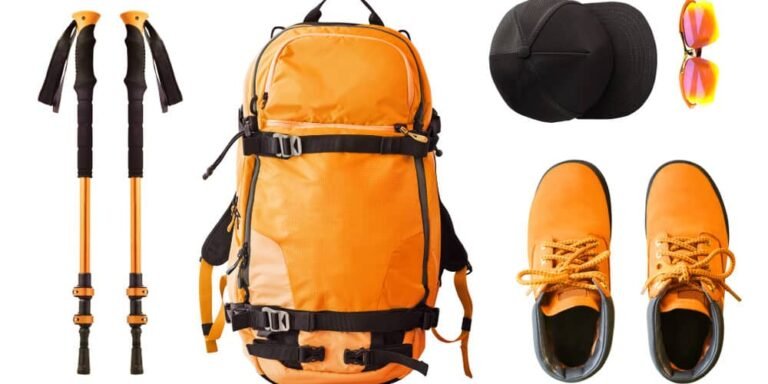
Shira Route Kilimanjaro Climbing Itinerary For December : Expert Guide 2026
A deep look at the Shira Route for December 2026, covering the unique high-start logistics, acclimatization advantages, and step-by-step itinerary planning.
View package detailsNo related package matches those filters. Clear one or more filters to see the other topic-matched options.



