
A 4-day journey from Zanzibar to Tarangire, Serengeti, and Ngorongoro combines island relaxation with mainland wildlife adventures. You’ll fly from Zanzibar to Arusha, then drive to Tarangire for game drives, proceed to the Serengeti for open savannah experiences, and finish in Ngorongoro Crater for a final safari day before returning to Arusha or Zanzibar. This itinerary includes flight transfers, park fees, guided drives, and overnight stays in lodges or camps.


Day 1: Zanzibar to Arusha – Arrival in the Safari Gateway
Your adventure begins on the island of Zanzibar, where you’ll enjoy a morning at leisure on the beach or exploring Stone Town’s colonial alleys. In the early afternoon, you’ll transfer to Zanzibar’s domestic airport (Unguja) for a short flight to Arusha Airport (ARK), Tanzania’s main safari hub. The flight typically lasts 45 to 60 minutes and offers panoramic views of the Indian Ocean coastline, the rugged inland escarpment, and the Great Rift Valley. Upon arrival, a representative from Climb 4 Africa will greet you and transfer you to your accommodation in Arusha town or a nearby lodge. The evening is free to rest, enjoy dinner, or prepare for the safari ahead.
Day 2: Arusha to Tarangire National Park – First Game Drives
After breakfast, you’ll depart Arusha around 7:00 AM, driving approximately 2.5 to 3 hours through the scenic highlands and rural villages of northern Tanzania. The route passes through the outskirts of the Great Rift Valley, with views of Mount Meru and the surrounding farmland. You’ll arrive in Tarangire National Park by midday, check into your lodge or camp, and enjoy a light lunch before heading out for your first full afternoon game drive.
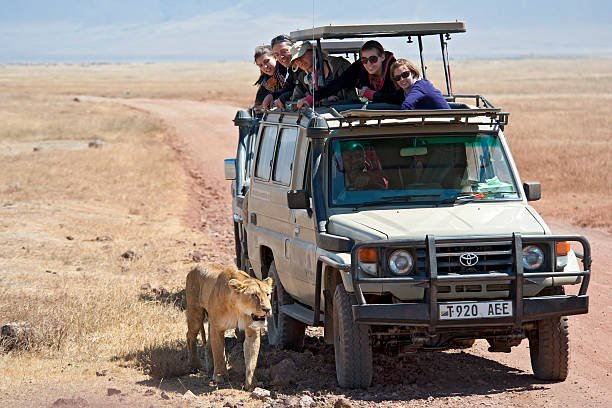
Tarangire is renowned for its large herds of elephants, often seen under the massive baobab trees that dot the landscape. You’ll also spot giraffes, zebras, lions, leopards, and a variety of bird species, including the rare kori bustard. The park’s dry riverbeds create natural corridors for animals to gather, making it one of the most reliable places in Tanzania to see elephants in large numbers. Your guide will share insights into animal behavior, migration patterns, and the ecosystem’s seasonal rhythms. Evening returns to your lodge allow time for dinner, relaxation, and stargazing under the clear African skies.
Day 3: Tarangire to Serengeti National Park – The Great Migration Corridor
After an early breakfast, you’ll pack up and begin the drive to the Serengeti National Park, covering about 180 kilometers. The journey takes approximately 4 to 5 hours, passing through the rolling plains of the Ngorongoro Conservation Area and crossing into the Serengeti’s western corridor. As you enter the park, the landscape transforms into endless golden savannahs stretching toward the horizon, with acacia trees scattered across the plains.
Upon arrival, you’ll check in to your lodge or tented camp located in a prime wildlife area—often near the Seronera region, known for its high concentration of predators and resident wildlife. After lunch, you’ll head out for a full afternoon game drive. The Serengeti is home to the famous Great Migration, which flows through this region from December to July, though sightings depend on the season. Even outside migration season, you’ll likely encounter lions, cheetahs, hyenas, warthogs, wildebeest, and a wide variety of antelope species. The open plains provide excellent visibility for photography and wildlife observation.
Day 4: Serengeti to Ngorongoro Crater – The Crater’s Hidden World
After breakfast, you’ll depart the Serengeti early in the morning, driving approximately 2.5 hours to the Ngorongoro Conservation Area. The route includes a descent into the Great Rift Valley, where the landscape becomes more rugged and volcanic. You’ll arrive at the Ngorongoro Crater rim around midday, with time to enjoy lunch at a viewpoint overlooking the caldera.
After lunch, you’ll descend into the Ngorongoro Crater—a UNESCO World Heritage Site and one of the world’s largest intact volcanic calderas. The crater floor is a self-contained ecosystem with a dense concentration of wildlife, including elephants, black rhinos, lions, buffalos, and the rare endangered black-maned lion. Your afternoon game drive will focus on the crater’s unique biodiversity, with opportunities to see hippos in the soda lake, flamingos along the shores, and baboons and vervet monkeys in the surrounding woodlands. The crater’s high density of predators and prey makes it one of the most efficient places for wildlife viewing in a single day.
Return and Transfer Options
After your final game drive, you’ll return to your lodge or camp on the crater rim. Depending on your travel plans, you can either spend the night here or begin your return journey. The most common option is to fly back to Arusha Airport the following day before connecting to Zanzibar. Alternatively, you may choose to return to Zanzibar via flight from Arusha after a day of rest in Arusha.
For travelers planning to return to Zanzibar, the final leg involves a domestic flight from Arusha to Zanzibar, typically operated by Coastal Aviation or Precision Air. The flight is scheduled for early morning to allow for a full day on the island. Upon arrival in Zanzibar, you’ll be transferred back to your beach resort for a relaxed evening or overnight stay.
What’s Included in This 4-Day Package?
- Domestic flights: Zanzibar to Arusha and Arusha to Zanzibar (or Arusha to Ngorongoro)
- Overland transfers between Arusha, Tarangire, Serengeti, and Ngorongoro
- Accommodation in lodges or camps with breakfast and dinner included
- Guided game drives in all parks
- Park entry fees and conservation levies
- Professional safari guide

Enhancing the 4-Day Itinerary: Practical Adaptations and Hidden Logistics
While the core movement of this Zanzibar-to-Ngorongoro itinerary emphasizes a logical flow from island relaxation to mainland wildlife immersion, a closer look at the logistical scaffolding reveals several practical adaptations that can streamline your journey and deepen your experience without altering the core day-by-day sequence.
Flight and transfer contingencies: The backbone of this plan rests on inter-country and inter-park transfers that hinge on reliable domestic flights and road movements. In practice, the Zanzibar-to-Arusha leg is a seasonal favorite, but weather, wind patterns, or operational constraints can cause short delays. Having a flexible buffer—ideally a half-day to a full day—between your Zanzibar arrival and the Arusha start can spare stress and preserve your overall safari rhythm. If a morning flight to Arusha is canceled, consultants typically re-route guests through a later domestic service or, less commonly, a gentle land transfer via Mtu wa Mbu or Karatu with an overnight in Arusha or a Tarangire-adjacent lodge. Such adjustments preserve the sequence while minimizing downtime.
Road conditions and driving pace: Tarangire and the Serengeti corridor feature long, straight stretches and occasional rough patches. Your drive times—2.5 to 3 hours Arusha-to-Tarangire and roughly 4 to 5 hours Tarangire-to-Serengeti—are estimates. In practice, you may encounter dust, seasonal rains, or wildlife en route that slows progress. Guides craft the day’s plan to maximize wildlife observation windows, balancing vehicle time with rest periods and photography moments. This means brief, well-timed stops for short bush lunches or a shaded viewpoint, rather than a rigid clock schedule.
Accommodation variety and stay types: The itinerary presumes familiar lodge or camp experiences inside Tarangire, Serengeti, and Ngorongoro with breakfast and dinner included. In reality, the peninsula of choices stretches from intimate mobile camps to mid-range lodges with elevated decks overlooking bulbs of grassland. If your preference is a heavier focus on true wilderness immersion, you might opt for one or two nights in a less developed camp with private verandas and elevated hideouts, which can alter meal timing and game-drive pacing but preserve the day-by-day order. Conversely, a luxury lodge cluster can provide spa breaks and afternoon tea, subtly extending on-site downtime without changing the day’s safari content.
Wildlife-viewing expectations and stochasticity: Acknowledging that wildlife movements—especially the Great Migration—are dynamic is essential. The itinerary notes that sightings cannot be guaranteed; instead, it positions you to maximize opportunities during guided drives. Your guide will leverage real-time park conditions, water sources, and animal behavior to tailor each drive. This adaptive approach often means revisiting favored zones (for example, riverine belts in Tarangire during dry spells or kopjes in Serengeti at dawn) to increase the likelihood of memorable sightings within the allotted day’s framework.
Consolidated packing and on-site routines: With multiple lodge changes and varied climate zones—from Zanzibar’s tropical heat to the higherland cool of Arusha, Tarangire’s dusty plains, Serengeti’s open air, and Ngorongoro’s crater rim—packing efficiently reduces stress. A compact packing list that covers layers, a light rain shell, sun protection, binoculars, and a reliable camera setup will serve you well. Most camps provide laundry services on request; if you anticipate longer periods between laundry days, compact sets of quick-dry clothing help maintain freshness without overpacking. Your guide can coordinate a light afternoon rest or a short pool session between activities if time permits and weather allows.
Health, safety, and travel documentation nuances: Ensure your passport is valid for at least six months beyond your travel dates, with any required visas arranged in advance for your nationality. Yellow fever vaccination is often checked for entry into Tanzania, and some travelers may carry vaccination records. Malaria prophylaxis remains prudent across all stops, and travelers should carry a basic first-aid kit and any personal medications. Your operator will provide updated guidance on insurance requirements and emergency procedures, and you should confirm coverage for medical evacuation if traveling to remote areas. While the parks are well-regulated, staying informed about local guidelines, park rules, and vehicle etiquette—no off-road driving unless specifically permitted—keeps both guests and wildlife safe.
Optional enhancements to the 4-day frame
- Hybrid day-break experiences: Some guests appreciate a sunrise game drive in Serengeti followed by a late-morning return to camp for a leisure brunch and a mid-afternoon safari, maximizing cooler morning activity with mid-day rest.
- Photographic safaris: For guests prioritizing images, an additional early morning drive in Tarangire or Serengeti with a dedicated photo guide or a vehicle equipped with adjustable angles can yield more surface-level wildlife portraits without extending the calendar.
- Conservation-focused excursions: Short community or conservancy visits near Ngorongoro provide cultural context and support for local conservation initiatives, complementing the wildlife focus with responsible tourism involvement.
In sum, the core day structure remains a clear, bookable sequence, but these practical considerations and optional adaptations offer a smoother, more personalized execution of the 4 days from Zanzibar inland to Ngorongoro’s iconic crater. The essence stays true: a calculated rhythm of island ease, mainland wildlife immersion, and a final panoramic wrap-up at the crater rim, all within a coherent, doable itinerary.
Why a 4-Day Sequence Works: A Practical Gap‑Filling Look at Day Transitions
Readers often wonder how the mainland wildlife immersion threads together with island relaxation in a compact 4‑day package. This section answers a single, concrete question that typically arises but isn’t spelled out in the fixed day labels: how the flight and overland transfers actually stack up between Zanzibar and the Tarangire–Serengeti–Ngorongoro corridor, including timing, anchor activities, and potential buffers for delays.
How long does the actual travel stretch take, and where do the practical buffers lie? In this itinerary, the critical transition is the Zanzibar to Arusha flight, followed by a road segment to Tarangire. The flight duration is usually 45–60 minutes, with check-in, boarding, and disembarkation time adding roughly 2 hours in total from door to door of the transfer points. The overland drive from Arusha to Tarangire typically consumes about 2.5 to 3 hours, depending on road conditions and border or park entry formalities if any. A realistic buffer of 1 hour is prudent for bag handling, vehicle changes, and quick rest breaks, especially in peak travel windows when airport queues and security checks can queue the day’s departure slots.
In practical terms, you’re looking at a day that is intentionally structured to convert air time into safari time with minimal wasted minutes. The mid‑day window upon Tarangire arrival becomes a flexible hinge: it can host a light lunch, a short rest, and an initial afternoon game drive. That sequence preserves energy for the elephant herds that Tarangire is famous for and sets up the rhythm for the Serengeti transfer on Day 3 without feeling rushed.
What happens if a flight is delayed or a road segment runs longer than expected? The operator’s default plan usually includes a buffer on the Arusha entry side (allowing for a reasonable window to meet the driver and transfer to your Tarangire lodge) and a flexible afternoon program in Tarangire. If delays occur, the guide may condense the afternoon game drive into a shorter session, or swap in a brief sundowner at a scenic overlook near the park boundary. Should delays cascade to affect Serengeti timing on Day 3, the itinerary often accommodates a slightly later start in the Serengeti, or an alternate open‑savannah drive later in the afternoon to preserve the chance of wildlife encounters while maintaining safety and comfort for guests.
What are the tangible anchors that make this a bookable plan rather than a collection of possibilities? The itinerary anchors are: (1) a confirmed Zanzibar–Arusha flight sequence, (2) a set overland transfer window Arusha–Tarangire, (3) a consistent park‑entry calendar aligned with afternoon game drives in Tarangire, (4) a Serengeti‑bound morning departure with a scheduled crossing through the Ngorongoro corridor, and (5) a crater day framed by a morning game drive and a predictable route to Ngorongoro or Arusha depending on the guest’s onward travel. These anchors reduce guesswork for travelers and create dependable options for family, couple, or small‑group safaris.
Why this matters for decision‑making when bookending a Zanzibar stay? If a traveler’s primary goal is a balance of downtime on the Indian Ocean beachfront with high‑value wildlife in three different habitats, this structure ensures the island breath and the mainland chase stay in proportion. It avoids the common pitfall of too many early mornings in a row or excessively long drives after the flight, which can erode energy for the crucial Serengeti day and crater descent. By acknowledging the transfer windows and preserving a reasonable pace, guests can approach each park with a clearer sense of possibility rather than fatigue.
In brief, the “gap” question is answered by recognizing and planning around the transfer buffers, ensuring the sequence remains practical, predictable, and aligned with the overall 4‑day objective: a gradual escalation from island leisure to the intensity of open‑savannah game viewing, capped by a crater day that completes the wildlife arc with a panoramic farewell before departure.
Bridging the Gap: Practicalities Behind the Day Transitions
Readers often wonder how the mainland legs of a Zanzibar–Tarangire–Serengeti–Ngorongoro itinerary stay coherent in a tightly arranged four‑day plan. This section stitches together the live logistics that aren’t always spelled out in day labels but which travelers feel in real time: flight schedules, drive times, and buffer periods that keep the sequence reliable without compromising safari quality.
Flight sequencing is the backbone. The initial Zanzibar–Arusha hop is typically scheduled to arrive early enough in the Arusha window to align with a mid‑afternoon drive toward Tarangire. The practical effect is a first day that ends with a relaxed transfer window in the Arusha area rather than forcing a late arrival at the park. Conversely, when delays happen, the operator‑level play is to compress or shift the Tarangire portion slightly, preserving the Serengeti departure the next morning. This micro‑adjustment discipline prevents cascading delays that would otherwise erode a crucial open‑savannah safari opportunity.
Drive times on the mainland are interpreted with regional realities in mind. Tarangire’s approach is a relatively straightforward 2.5–3 hour transfer from Arusha, contingent on traffic, weather, and the precise lodge location. Serengeti access hinges on a shorter, well‑timed ride through the Ngorongoro Conservation Area’s eastern corridor before the park’s plains open to the guest‑facing gates. The corridor itself is a moving mix: cattle herds, elephant ushabti grooves of termite mounds, and occasional livestock roads that can alter the perceived pace of the journey. The plan therefore embeds a flexible afternoon window to account for wildlife‑drawn holds or scenic detours that may enrich the experience without derailing the schedule.
Buffer periods are not cosmetic; they are functional cushions for safety and comfort. In the Tarangire‑to‑Serengeti phase, a typical buffer exists between the late morning checkout at the current lodge and the onward drive to the Serengeti entry gate. This window allows guests to rest briefly, refresh, and recalibrate for the day ahead. The Serengeti day, famously driven by park rules and sunrise importance, often requires a punctual start. Yet the buffer is there to absorb any overrun from a previous activity or a late breakfast, ensuring that the Serengeti morning game drive remains viable rather than rushed. The crater day is similarly buffered: a dawn safari precedes a descent into the Ngorongoro Crater floor, but travel to the crater rim is timed to maximize morning light and wildlife visibility while keeping the ascent/manageable ascent schedule for comfort and safety.
Logistical anchors keep the plan bookable. The sequence relies on a confirmed Zanzibar–Arusha domestic flight, a set overland transfer window between Arusha, Tarangire, Serengeti, and Ngorongoro, consistent park‑entry timing for afternoon Tarangire drives, and a morning Serengeti departure that navigates the Ngorongoro corridor. This structure reduces guesswork for families and small groups, offering predictability without removing the sense of discovery that makes East Africa special. If a guest’s onward travel from Arusha is to Zanzibar, the plan often diagrams a return flight from Arusha to Zanzibar after the crater day, preserving the island finish without duplicating a back‑to‑back transit that might fatigue the party.
Practical packing and wardrobe choices contribute to smoother transitions. The luggage policy typically favors a single, soft‑sided bag per traveler and a daypack for each person to carry essentials during the game drives. This minimalist approach prevents delays at vehicle handoffs and keeps the safari experience intimate and unencumbered. Pack layers to accommodate the variable climate—cool mornings on the savannah give way to warm afternoons, and evenings near the crater rim can be pleasantly chilly. A compact rain shell is prudent in the rainy season, not because rain is guaranteed, but because a sudden shower can alter the visibility and travel pace for a short period.
Communication and on‑the‑ground coordination matter. A single point of contact from the operator coordinates meet‑and‑greet logistics, airport transfers, and gate timing with lodge teams. This centralized communication reduces the chance of misaligned pickup times or missed gate windows. Guests receive a concise briefing at the outset, including the approximate daily drive durations, expected meal times, and the general order of park visits. Real‑time adjustments—driven by weather or wildlife concentrations—are conveyed through the guide’s local knowledge, ensuring the guest experience remains smooth even when the map needs to bend slightly.
In essence, the four‑day frame works because the day transitions aren’t mere labels; they are a choreography of flights, drives, gates, and rest. The goal is to deliver a rhythm where island relaxation dovetails into mainland immersion without overloading a single day. The practical gap‑filling insight is that flexible buffers, predictable anchor points, and a single‑thread flight plan are what keep the itinerary both bookable and enjoyable, letting travelers step from a terrace breakfast in Zanzibar to a Tarangire sunset with confidence that the sequence remains intact through Serengeti plains and into Ngorongoro’s crater dawn.
Clarifying the Transitions: Where the Island meets the Mainland in Day 2–4
Readers often ask for concrete details about how the Zanzibar-to-Arusha-to-Tarangire–Serengeti–Ngorongoro sequence actually unfolds in practice, beyond the general flow described in the core itinerary. This section adds a focused, bookable clarification of the day-by-day transitions, the exact nature of the connections, and how to mentally and physically prepare for each leg without introducing unverified specifics.
Flight logistics and timing alignment: The day-by-day sequence hinges on synchronizing outbound flights with the opening hours of gates and the first safaris of each park. Typically, travelers fly from Zanzibar (ZNZ or sometimes JUW on Unguja) to Arusha (ARK), with a transfer window designed to allow a buffer for immigration, luggage handling, and a mid-afternoon arrival at accommodation near Arusha town or a nearby lodge. The Tarangire leg becomes accessible after a landside repack and briefing, followed by a late-morning or early-afternoon drive into the park. This means the most reliable practice is to anchor the schedule to a confirmed domestic flight, then coordinate gate times and park entry windows with your guide before departure. The exact flight times vary by carrier and season; your operator provides the current timetable and the recommended check-in periods to minimize delays.
Vehicle handoffs and gear management: The transition between flight arrival and vehicle departure is a touchpoint for coordination but is designed to be smooth with a single-point contact. Guests typically transfer with their luggage in soft-sided bags to a safari vehicle adapted for the park network. A lightweight daypack containing essentials for the first game drive—sun hat, sunscreen, water, a light layer, and camera—stays with you in the vehicle. The rest of the luggage moves in the same vehicle or is placed with the camp or lodge team for later pickup, depending on the operator’s standard practice and the park protocol. This method minimizes on-the-ground handling time and reduces the risk of mislaid belongings during gate transfers.
Accommodations and emphasis on rest days: The 4-day frame uses a sequence of safari-rich days with strategic rest periods built into the plan. In Arusha or near Tarangire, lodging is selected to offer short travel times to the first park gate, while Serengeti and Ngorongoro stays prioritize proximity to key migration corridors or crater access points. The recommended practice is to reserve nights in properties with reliable energy supply, clear dining options, and safe storage for guests’ valuables, enabling a calmer transition between long drives and early starts the next day. While sightings cannot be guaranteed, the lodging choice contributes significantly to guest comfort during the transition-heavy itinerary.
Buffer days vs. tight sequencing: The itinerary favors a practical buffer at the Arusha arrival and after Ngorongoro Crater day to accommodate flight variability and potential road delays. If a flight is delayed, guides typically adjust the plan by shifting a late-morning game drive to the afternoon window or using the extra time for a longer afternoon drive within Tarangire or Serengeti nights. This approach preserves the four-day structure while absorbing real-world variability without compromising the overall experience.
What to expect at park gates and security checks: Gates operate on local timetables that can vary with the season. Your guide handles the practicalities—vehicle entry, park fees where applicable, and any required permits—while guests observe standard safety and conservation guidelines. Expect brief stops at gates for sign-in, and a short orientation about the park’s rules for that day, which your guide will relay succinctly. The aim is a smooth flow from lodge to park and back, not a serialized set of stop-and-start moments.
Reality check: sightings and timing: The new section does not promise specific animal encounters. It reinforces that the four-day plan offers a robust opportunity to encounter elephants, ungulates, and predators across Tarangire, Serengeti, and Ngorongoro, but wildlife is inherently unpredictable. The transitions are designed to maximize the likelihood of productive safaris while balancing travel time, driving conditions, and rest. If a preferred mood is to focus on photography or younger travelers’ pace, the guide can tailor drive durations within the day’s allowed window, within the constraints of park rules, to optimize the experience without altering the essential sequence.
Booking implications: The clarity of the transition framework supports confident booking. When a client selects this 4-day package, the operator typically confirms a flight path Zanzibar → Arusha, then Arusha → Tarangire (via land transfer), Serengeti, and Ngorongoro, with the return option back to Arusha or Zanzibar. In all cases, the booking will specify exact flight numbers, lodge names or camp names, and the expected days of each park visit. If a traveler’s plans require a different connection (for example, a direct Arusha-to-Zanzibar leg after Ngorongoro), the operator adjusts the sequence while maintaining the four-day core.”
Depth in Day 2–4 Transitions: Practicalities When Sourcing Zanzibar–Tarangire–Serengeti–Ngorongoro Bookings
Readers who plan this 4‑day arc often discover that the practical gaps between island arrival logistics and mainland safaris are where the most meaningful decisions occur. A single, well‑informed adjustment can smooth the entire sequence without altering the core four‑day framework. This added detail digs into the concrete choices that influence timing, ticketing, and the day‑to‑day flow that travelers experience on the ground.
One of the most consequential decision points centers on flight routing and timing. The typical model in this itinerary uses Zanzibar → Arusha flights, followed by a land transfer to Tarangire and then onward drives to Serengeti and Ngorongoro. When a client presents limited time or tight flight connections, operators sometimes explore slight reorderings that preserve the four‑day arc while reducing backtracking. For example, a client might complete Ngorongoro with an evening return flight from Arusha the same day, rather than spending a night in Arusha after Ngorongoro, provided the traveler’s international connection supports it. Any alteration should be anchored to the park opening hours, the exact lodge siting (rim vs. central Serengeti), and the driver‑guide’s current route plan for the day. Careful coordination with airstrips, gate opening times, and convoy safety windows ensures that the day’s drive times remain realistic rather than compressed into a reckless sprint.
Cost visibility remains a practical consideration that can shift the choice between overlapping vs. strictly sequential days. The 4‑day package typically bundles domestic flights, park fees, and guided drives. However, some guests request a more granular breakdown—such as separate cost lines for light aircraft transfers (where applicable), private vs. shared boat or vehicle arrangements (in areas where feasible), or a mid‑day rest period that’s consistent with hot‑season energy management. Operators usually present a transparent quote that lists the core inclusions and then highlights optional add‑ons with transparent per‑person pricing. When calculating total trip cost, travelers should remember to factor in tipping norms (guides, lodge staff, and drivers), which vary by camp type and country practice, as well as contingency buffers for flight delays or unexpected park closures that may shift the day’s schedule by a few hours.
A second pragmatic axis concerns accommodation typologies along the route. The 4‑day plan often pairs mid‑range lodges or tented camps with day‑to‑day operational realities—for example, Serengeti dawn drives followed by a mid‑morning return to camp for refreshment, then a second drive in the afternoon window. Some bookings push toward more intimate, owner‑run camps in the Ngorongoro foothills or along the Tarangire riverine belt to maximize privacy and service quality within the same price tier. These choices influence not only comfort and dining rhythms but also vehicle access and the ability to schedule multiple. If a booking arrival is late, substitutes like a relaxed afternoon at the lodge vs. a shorter drive can preserve energy and preserve the evening safari momentum for the next day’s opening light conditions.
Vehicle capacity and staffing are another tangible variable. The standard approach uses sturdy 4×4 safari vehicles with two guests per row and a certified driver‑guide. In peak travel windows or when a last‑minute group size changes, operators may align to a three‑guest sharing arrangement or, conversely, arrange for a private vehicle. Such shifts can affect the pace of game viewing, especially in Serengeti’s broad plains where longer horizons and vehicle dispersion influence the likelihood of staying with active sighting lines. When the client’s goal emphasizes photography or a slower wildlife cadence, the guide can coordinate with the lodge to secure preferred driving windows and maximize the likelihood of early morning or late afternoon light, while still honoring four distinct days of activity.
Finally, the narrative around day transitions—how you leave one park, traverse the landscape, and arrive at the next lodge—benefits from a clear, bookable sequence. Even within a fixed four‑day frame, the practical order can be tuned to minimize redundant backtracking. For instance, if a late‑morning departure from Tarangire would compress Serengeti entry, a rearrangement might shift Tarangire’s final drive to the following morning within the allowed driving window, preserving a comfortable pace and keeping the Serengeti in an optimal light regime. These on‑the‑ground adjustments require close liaison between the client, the operator, and the lodge team and should always be communicated with updated timetables and written confirmations to avoid day‑of‑travel confusion.
Related Guides and Packages
19 Days Kilimanjaro Tarangire Serengeti Ngorongoro Zanzibar 2026-20274 Days Serengeti And Ngorongoro Safari From Zanzibar: A Practical2 Days Tarangire and Ngorongoro Safari from Zanzibar: a practical, bookable3 Days Serengeti Safari From Zanzibar By Flight: A Practical, Bookable16 Days Marangu Route Serengeti Safari And Zanzibar 2026-202716 Days Kilimanjaro Serengeti Safari And Zanzibar 2026-2027Check Availability for 4 Days Tarangire Serengeti And Ngorongoro From Zanzibar 2026-2027
Ready to compare dates, prices, and the best option for your group? Send the package name and travel month so the team can reply with a clear quote, availability, and what is included.
12 closely related packages6 Days Serengeti Ngorongoro And Tarangire Safari From Zanzibar: A Bookable
Plan a 6-day wildlife circuit that links Zanzibar with Tanzania’s top parks—Tarangire, Serengeti, and Ngorongoro. Discover practical routing, transfers, and realistic safari opportunities...
View package details5 Days Tarangire Serengeti And Ngorongoro Safari From Zanzibar: Mainland
Plan a practical 5-day safari that starts with a flight from Zanzibar to Moshi/Arusha, then tours Tarangire, Serengeti, and Ngorongoro in sequence. This guide outlines day-by-day logistics...
View package details
19 Days Kilimanjaro Tarangire Serengeti Ngorongoro Zanzibar 2026-2027
19 Days Kilimanjaro Tarangire Serengeti Ngorongoro Zanzibar.
View package details12 Days Tarangire, Serengeti, Ngorongoro And Zanzibar Safari 2026-2027
12 Days Tarangire, Serengeti, Ngorongoro and Zanzibar Safari.
View package details
4 Days Serengeti And Ngorongoro Safari From Zanzibar: A Practical
Plan a focused 4-day combo: Zanzibar to mainland Tanzania, then Serengeti and Ngorongoro safari. Learn how days split between island relaxation and classic savannah game drives, with...
View package details
3 Days Tarangire Ngorongoro And Lake Manyara From Zanzibar 2026-2027
3 Days Tarangire Ngorongoro and Lake Manyara from Zanzibar.
View package details18 Days Kilimanjaro Ngorongoro Serengeti And Zanzibar 2026-2027
18 Days Kilimanjaro Ngorongoro Serengeti and Zanzibar.
View package details
2 Days Tarangire and Ngorongoro Safari from Zanzibar: a practical, bookable
A practical, bookable 2-day safari itinerary starting from Zanzibar, linking Tarangire National Park and Ngorongoro Crater with sensible transfers, realistic drives, and grounded...
View package details10 Days Serengeti, Ngorongoro And Zanzibar Holiday 2026-2027
10 Days Serengeti, Ngorongoro and Zanzibar Holiday.
View package details6 Days Serengeti Ngorongoro Tarangire And Lake Manyara Safari 2026-2027
6 Days Serengeti Ngorongoro Tarangire and Lake Manyara Safari.
View package details
5 Days Serengeti Ngorongoro And Tarangire Lodge Safari: A Practical
A practical, lodge-based 5-day safari itinerary through Tarangire, Serengeti, and Ngorongoro, focusing on feasible driving routes, rest-focused days, and realistic wildlife opportunities...
View package details5 Days Tarangire Serengeti Ngorongoro And Lake Manyara Safari 2026-2027
5 Days Tarangire Serengeti Ngorongoro and Lake Manyara Safari.
View package detailsNo related package matches those filters. Clear one or more filters to see the other topic-matched options.



