
Travelers planning to combine a Serengeti safari with gorilla trekking in Rwanda often face a logistical reality: there are no direct Serengeti to Kigali flights. The Serengeti is served by remote bush airstrips, while Kigali International Airport (KGL) is a major regional hub requiring international-grade jet operations. Consequently, your journey from the Tanzanian bush to Rwanda is a two-stage process that requires careful synchronization of schedules and baggage allowances.
The core reality of this route: You must first fly from a Serengeti airstrip (such as Seronera, Kogatende, or Grumeti) to a major hub like Arusha (ARK), Kilimanjaro (JRO), or Nairobi (NBO) using a light aircraft. From that hub, you connect to a regional airline operating a commercial jet service into Kigali. Because these are two separate ticket types—a bush flight and a regional commercial flight—booking them requires coordination to ensure your connection times are realistic, especially given the strict luggage limits on bush planes.
Understanding the Two-Stage Flight Logistics
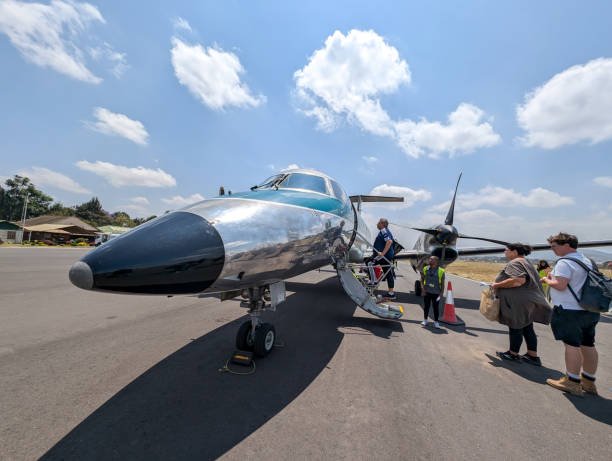
The most common error travelers make when researching Serengeti to Kigali flights is assuming they can book a single ticket from the bush to Rwanda. Bush flights operate on a “circuit” basis, meaning the aircraft may stop at multiple airstrips within the Serengeti before heading to the hub. These flights are highly weather-dependent and subject to strict weight limits.
To reach Kigali from the Serengeti, your itinerary will almost always follow this sequence:
- Leg 1: The Bush Flight. You depart from your chosen Serengeti airstrip (e.g., Kogatende for the Mara River crossing or Seronera for central Serengeti). This flight lands at either Arusha Airport (ARK) or Kilimanjaro International (JRO). Arusha is typically the preferred hub for connecting to regional airlines, though JRO is also viable.
- Leg 2: The Regional Connection. Once at the hub, you transfer to a commercial airline for the flight to Kigali. Airlines such as RwandAir or Kenya Airways are the primary carriers for this segment.
Because these two legs are operated by different companies, your baggage allowance for the first leg (the bush flight) is usually limited to 15kg in soft-sided bags. The second leg (the commercial jet) may allow for more weight, but you are effectively restricted by the lowest common denominator—the bush plane limit—unless you arrange for separate luggage storage or shipping.
Flight Connection Comparison
| Route Segment | Aircraft Type | Typical Baggage Limit | Logistical Consideration |
|---|---|---|---|
| Serengeti to Arusha/JRO | Cessna Caravan / Light Aircraft | 15kg (Soft-sided bags mandatory) | Weather-dependent; subject to multiple stops |
| Arusha/JRO to Kigali | Commercial Regional Jet | 20kg – 23kg | Requires international check-in and security |
For more detailed information on managing these differences, see our guide on Tanzania Flight Ticket Prices: Economy vs Safari Bush Flights.
The Importance of Timing Your Departure
When you are planning your Serengeti to Kigali flights, the timing of your bush flight is critical. Most bush flights depart the Serengeti in the morning or early afternoon to avoid the afternoon thermals and weather patterns that can make the flight uncomfortable or force cancellations. If your regional flight from Arusha or Kilimanjaro to Kigali departs in the evening, you may have a long wait at the hub. Conversely, if your connection is tight, a delay in the bush flight can cause you to miss your international connection.
We generally advise clients to plan a “buffer” day or at least a generous 6-hour window if you are self-booking these segments. However, booking these as part of a tailor-made package allows us to manage the schedule to ensure you aren’t stranded in Arusha or JRO. For those who want to see how this connects to other regions, our Kigali to Serengeti Flights: Prices & Safari Connections guide provides the inverse perspective on this travel route.
Baggage Rules: The Hidden Constraint
The most common point of friction for travelers moving between the Serengeti and Kigali is luggage. You cannot bring hard-shell suitcases on the small aircraft that serve Serengeti airstrips. The holds are shaped to fit soft-sided duffel bags.
If you are traveling for a long trip—perhaps combining a Kilimanjaro climb with a safari and then gorilla trekking—you will likely have more gear than a bush plane allows. We strongly recommend using storage services at our Arusha office or at your first hotel in Arusha. You can leave your large hard-shell bags there and travel into the Serengeti with only what you need for the safari, then pick up your main luggage when you return to the hub before your flight to Kigali.
If you are struggling with the logistics of which airline to choose for the commercial leg, our breakdown of Best Airlines for Tanzania Safari Flights: Prices & Comparison offers insights into service reliability and frequency.
Visa and Entry Considerations
Traveling from the Serengeti (Tanzania) to Kigali (Rwanda) is an international journey, even though it is within East Africa. You will need to clear customs in Tanzania before your bush flight if you are departing the country, or at your hub if you are taking an international flight.
Since 2026, entry requirements have become more streamlined, but you must ensure your passport has at least six months of validity and sufficient blank pages. Many travelers now opt for an East Africa Tourist Visa if they are visiting both countries, which covers multiple entries between Kenya, Rwanda, and Uganda, though Tanzania has its own specific entry protocols. Always check the current visa requirements for your nationality before finalizing your Serengeti to Kigali flights.
Why Plan This Route With Climb 4 Africa?
Attempting to piece together a safari in the Serengeti and a trek in Rwanda requires managing disparate ground transfers, flight schedules, and park entry permits. A small error in flight timing can result in missing a morning game drive or, worse, a pre-booked gorilla trekking permit in Volcanoes National Park.
We provide comprehensive support for these multi-country itineraries. We don’t just book the flights; we coordinate the ground transfers from the airstrip to your lodge, ensure your baggage logistics are handled, and sync your safari end-date with your Kigali departure.
If you are ready to start planning your 2026 or 2027 adventure, reach out to us for a tailor-made quote. We can help you navigate the complexity of bush aviation and regional connections so you can focus on the wildlife.
Contact us to discuss your itinerary:
WhatsApp: +255 747 477 898
Email: climb4africa@gmail.com
Backup Email: info@climb-4-africa.com
Frequently Asked Questions
Is there a direct flight from Serengeti to Kigali?
No. There are no direct commercial flights between Serengeti airstrips and Kigali. You must fly from the Serengeti to a major hub like Arusha or Kilimanjaro, then catch a regional commercial flight to Kigali.
How much luggage can I take on the flight to Kigali?
Your baggage limit is dictated by the bush flight segment, which usually restricts passengers to 15kg in soft-sided bags. If you have more luggage for your Kigali leg, you will need to arrange for storage or forward shipping.
What is the best way to book these flights?
It is best to book these as part of a complete safari package. This ensures your ground transfers, bush flights, and regional connections are synchronized, preventing missed connections and logistical stress.
Do I need a visa for both Tanzania and Rwanda?
Yes. You are entering two different countries. Ensure you have the correct visas for both Tanzania (for your safari) and Rwanda (for your gorilla trekking or city stay).
Understanding the Cost Factors of Multi-Leg Transit
The financial structure of traveling from the Serengeti to Kigali is rarely a straightforward transaction. Because there is no single airline that operates both the bush-plane segment and the regional commercial jet segment, travelers are essentially purchasing two distinct products that operate under entirely different economic models. The cost of your bush flight is primarily driven by the high overhead of maintaining aviation assets in remote bush locations, where fuel must be trucked in, pilots must be stationed, and aircraft maintenance must be performed in austere conditions. Unlike commercial airlines, where economy of scale lowers the per-seat cost, bush aviation relies on limited capacity—typically 12 to 14 passengers per Cessna Caravan—which keeps the per-seat price high.
Furthermore, seasonal demand significantly influences pricing. During the peak Great Migration season, demand for airstrips like Kogatende or Seronera skyrockets, and limited aircraft availability can drive up prices for last-minute bookings. Conversely, in the low season, flight schedules may be consolidated, meaning you might face fewer flight frequency options, forcing you to choose between a very early morning departure or a late afternoon arrival that may not align with your onward regional connection. When budgeting, it is essential to account for the fact that these are not just point-to-point tickets; they are operational logistical services that include landing fees at remote airstrips, which are often passed on to the passenger.
Arusha (ARK) vs. Kilimanjaro (JRO): Evaluating Your Hub
Choosing your connection hub is a pivotal decision that impacts both your budget and your peace of mind. Arusha Airport (ARK) and Kilimanjaro International Airport (JRO) serve different purposes in the regional aviation ecosystem. Arusha Airport is located much closer to the town center and is almost exclusively used for domestic and regional bush flights. If your itinerary involves a morning arrival from the Serengeti, ARK is often the more convenient choice because the transit time from the airstrip to the terminal is minimal, and the airport itself is smaller and easier to navigate. It is the preferred hub for those prioritizing speed and local connectivity.
Kilimanjaro International Airport (JRO), on the other hand, is the primary gateway for international carriers. If you are flying from the Serengeti to JRO, you are essentially positioning yourself for a smooth transition onto a larger commercial jet. While JRO is located further from the Serengeti (requiring a longer flight time from the bush) and further from Arusha town, it offers a more robust infrastructure for international travelers. If your regional flight to Kigali is operated by a major international carrier, JRO is often the more reliable choice for checking in, as it is accustomed to handling international passport control and customs procedures. However, always verify that your regional carrier operates out of JRO, as some smaller regional airlines exclusively use Arusha Airport.
Strategies for Minimizing Connection Risk
The greatest risk in the Serengeti-to-Kigali route is the ‘tight connection.’ Because bush flights are subject to weather delays—such as morning mist in the Serengeti or afternoon thermals that can force a flight to be re-routed—you should never plan a connection that relies on a tight window. A standard rule of thumb is to allow for a minimum of four to five hours between your scheduled bush flight arrival and your international flight departure. This buffer accounts for the potential of the bush flight making multiple stops at other airstrips to pick up or drop off other passengers, a common practice in the Serengeti circuit.
If you find that your flight schedule forces a long layover, do not view this as wasted time. Instead, utilize the hub city. If you are connecting through Arusha, many travelers book a day room at a lodge on the outskirts of the city. This provides a secure, comfortable environment to store your luggage, shower, and enjoy a meal before heading to the airport for your onward flight to Kigali. Planning for this ‘dead time’ is not just a safety measure; it is a way to transition from the rugged pace of a safari to the urban environment of Kigali without the stress of rushing through customs and check-in procedures.
Navigating the Operational Shift: From Bush Airstrip to International Terminal
The transition from a Serengeti bush airstrip to the international terminal at Kigali (KGL) is more than just a change in altitude; it is a fundamental shift in travel infrastructure. Understanding this operational difference is critical to avoiding stress on the day of your departure. You are moving from a highly informal, localized flight environment to a regulated, international aviation ecosystem.
The Security Protocol Contrast
When you depart the Serengeti, your security experience is minimal. Most bush airstrips are unfenced, and the check-in process is informal. You generally walk from your safari vehicle directly to the aircraft, with a quick weight check for your soft-sided bag. There are no X-ray machines, liquid restrictions, or long security queues. However, when you arrive at your transit hub—whether Arusha (ARK) or Kilimanjaro (JRO)—you are re-entering the world of international aviation security. This means that if you purchased items in the park (like wood carvings or souvenirs), you must ensure they are packed in checked luggage before you leave the bush, as they may not be permitted in carry-on bags once you enter the commercial airport environment. Treat the hub arrival as if you are starting your journey over from scratch.
Managing the Luggage Handover
A frequent point of confusion for travelers is the “transfer” of baggage. Unlike a flight with a single airline carrier where bags are automatically checked through to your final destination, the Serengeti-to-Kigali route almost always involves a “self-transfer.” When you land at your hub, you are responsible for retrieving your luggage from the bush plane, walking it into the main terminal, and re-checking it with the regional carrier operating the Kigali leg. This process requires you to factor in enough time to exit the arrival area, navigate to the departures hall, and complete the check-in process, which often closes 60 to 90 minutes before international flight departure. Do not assume your bags are “interlined” between a small bush operator and a regional commercial airline; always confirm if your booking agent has arranged a meet-and-greet service to assist with this, or be prepared to handle the transfer yourself.
Arrival Realities at Kigali International Airport (KGL)
Upon landing in Kigali, the operational pace shifts again. Kigali International Airport is efficient and modern, but it is still an international point of entry. You will need to clear immigration, which often involves presenting your visa or e-visa confirmation. Travelers often underestimate the time required for this. Even with a pre-approved visa, the queue for processing can vary significantly depending on the time of day and the arrival of other international flights. Once you clear immigration and collect your bags, you will pass through customs. Kigali is known for its strict environmental policies, including a ban on single-use plastic bags. Ensure that you have not inadvertently packed plastic bags in your luggage, as these are often confiscated at the airport upon arrival.
The Psychological Transition
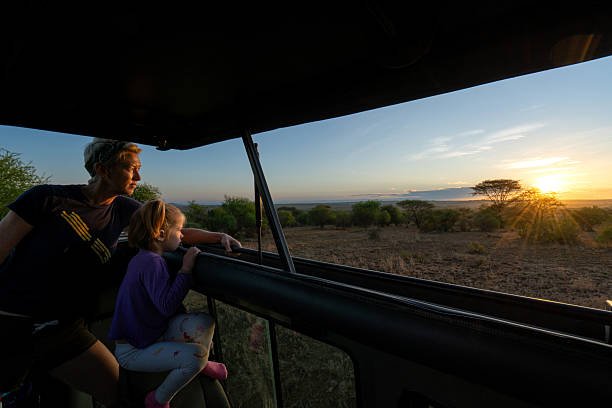
The “Serengeti to Kigali” route is effectively a transition from the wild to the urban. The Serengeti is about isolation, silence, and the raw rhythm of nature. Kigali is a bustling, orderly, and rapidly developing city. Preparing for this mental shift is part of the travel experience. Many travelers find that the “gap time” spent at the transit hub (Arusha or Kilimanjaro) serves as a necessary decompression period. Use this time to organize your digital photos, charge your devices—which may have been limited in the bush—and prepare your documents for the Rwandan entry process. By treating the connection not as a chore, but as a deliberate bridge between two distinct East African experiences, you can maintain a sense of calm regardless of the logistical hurdles.
Bridging the Kigali Gap: Ground Transfers to Volcanoes National Park
Your arrival at Kigali International Airport (KGL) marks the end of the aerial phase of your journey, but it is rarely the final destination. For the vast majority of travelers, the flight to Kigali is merely the precursor to gorilla trekking in Volcanoes National Park. It is vital to recognize that the flight arrival time dictates your entire afternoon. The drive from Kigali to the Musanze district—the gateway to Volcanoes National Park—typically takes between 2.5 to 3.5 hours, depending on traffic and road conditions. Because gorilla trekking permits are strictly timed and require you to be at the park headquarters by 7:00 AM, arriving in Kigali late in the afternoon is a high-risk strategy.
When coordinating your ground transfer, ensure your safari operator or hotel has arranged a private 4×4 vehicle. While the roads in Rwanda are remarkably well-maintained compared to the bush tracks of the Serengeti, the final stretch into the mountains can be steep and winding. Unlike the open-sided safari vehicles used in Tanzania, your transfer vehicle in Rwanda will be an enclosed, air-conditioned SUV or minivan. Do not expect the same “game viewing” experience on this transit; this is a functional transfer designed to get you to your lodge before dark. If your flight lands after 3:00 PM, consider an overnight stay in Kigali rather than attempting the mountain drive at night, as visibility can be poor and fatigue from your previous safari days can impact your ability to enjoy the early start the next morning.
The Reverse Itinerary: Navigating Kigali to the Serengeti
While most planning focuses on the trek from the Serengeti to Kigali, the reverse route—moving from Rwanda back to the Tanzanian bush—presents a distinct set of logistical challenges. If you are flying from Kigali to the Serengeti to conclude your trip, you are essentially reversing the flow of immigration and customs. You will depart Rwanda, which involves standard international exit procedures at KGL, and arrive in Tanzania, where you will need to re-enter the country. If you previously held a single-entry visa for Tanzania, you must ensure you have arranged for a new visa or a multiple-entry visa before your return flight.
Furthermore, the “bush flight” connection in the reverse direction is often more time-sensitive. Because you are heading into the Serengeti, your bush flight will likely depart from Arusha or Kilimanjaro in the mid-morning to ensure you arrive at your airstrip in time for an afternoon game drive. This leaves very little margin for error if your regional flight from Kigali is delayed. Unlike the outbound journey where you might be heading to a city hotel, here you are heading into a remote wilderness where late arrivals can disrupt camp operations. Always prioritize a longer layover at your transit hub in Tanzania when flying in the reverse direction, as this provides a buffer against regional flight delays and ensures you do not miss your scheduled bush plane departure, which is often the final leg of the day’s transport.
Related Guides and Packages
Check Availability for Serengeti To Kigali Flights: Ticket Prices & Travel Guide
Ready to compare dates, prices, and the best option for your group? Send the package name and travel month so the team can reply with a clear quote, availability, and what is included.

Kigali To Serengeti Flights: Prices & Safari Connections
A practical guide to connecting your Rwanda gorilla trekking with a Serengeti safari, focusing on flight routes, transit logistics, and expert booking advice.
View package detailsSerengeti To Entebbe Flights: Prices & Travel Options
Serengeti to Entebbe Flights: Prices & Travel Options.
View package details
Nairobi To Serengeti Safari By Flight: Prices & Travel Options
A practical guide to navigating the logistics of flying from Nairobi to the Serengeti, including transit requirements, airport choices, and cost considerations for your 2027 safari.
View package details
Masai Mara To Serengeti Flights: Cross-Border Safari Costs And Logistics
Discover the logistics of flying from Masai Mara to Serengeti, including bush flight options, cross-border visa requirements, and typical safari cost considerations.
View package details
Serengeti Flight Prices During The Great Migration Season: A Practical Guide
Planning a safari during the Great Migration? Here is how to navigate Serengeti flight prices, seasonal demand, and the logistical realities of bush travel.
View package detailsTanzania Flight Prices September : Serengeti And Zanzibar Planning
Expert advice on navigating domestic flight logistics, seasonal pricing, and the crucial 'bush-to-beach' connection for your September 2027 Tanzania itinerary.
View package details
Serengeti Great Migration Fly-In Safari: Flight And Lodge Prices ()
A deep look at the logistical and financial considerations of planning a Serengeti Great Migration fly-in safari, focusing on how flight routes and seasonal lodge locations dictate your...
View package detailsLuxury Serengeti Fly-In Safari: Private Packages & Prices ( Guide)
A detailed guide to luxury fly-in safaris in the Serengeti, focusing on private logistics, pricing structures for 2026-2027, and maximizing your time in the bush.
View package details2-Day Serengeti Fly-In Safari From Arusha: Understanding Package Prices
A practical guide to the costs, logistics, and planning realities of a 2-day fly-in safari to the Serengeti from Arusha.
View package detailsHow Much Luggage Is Allowed On Serengeti Safari Flights? A Planning Guide
Learn the precise luggage requirements for Serengeti bush flights, including weight limits, the mandatory soft-bag policy, and how to safely store your extra gear.
View package detailsEntebbe To Serengeti Safari: Flight Connections & Cost Planning
A practical guide to connecting your Entebbe-based travel with a Serengeti safari, covering flight routes, airport choices, baggage constraints, and cost factors for 2026-2027.
View package details
Kilimanjaro Climb And Serengeti Safari: Flight & Transfer Planning
Kilimanjaro Climb and Serengeti Safari: Flight & Transfer Planning.
View package detailsNo related package matches those filters. Clear one or more filters to see the other topic-matched options.



