
For travelers planning a trip to Tanzania in May 2027, flight prices for international arrivals typically benefit from the ‘shoulder season’ status, as May marks the tail end of the long rainy season. While international airfare is dictated by global demand and airline yield management, domestic flight prices—the connections between safari hubs like Arusha and coastal destinations like Zanzibar—remain relatively stable because they are driven by fixed operational costs rather than high-season demand surges. If you are looking to secure the best rates, we recommend booking your international flights at least 6 to 8 months in advance, while domestic “bush flights” can be coordinated seamlessly through your local operator as part of your overall tour package.
When you start researching Tanzania flight prices for May 2027, it is essential to distinguish between the two types of air travel involved in an African itinerary: the long-haul international flight into Kilimanjaro (JRO) or Dar es Salaam (DAR), and the domestic “hop” flights that bridge the gap between your safari locations and the beach. These two categories operate under entirely different pricing structures.
Understanding the May Seasonal Influence
May in Tanzania is a transitional month. The “long rains” are usually tapering off, which means park access is generally good, but the volume of tourists is lower compared to the peak months of July, August, or December. This lower tourist volume is your biggest ally for pricing.
International carriers often offer competitive fares for May departures because they are trying to fill seats during a period that is not traditionally “peak.” However, you should not expect massive “fire sale” prices. Instead, look for more flexible booking classes and better availability in premium economy or business cabins. For a 2027 trip, if you are flexible with your departure dates, shifting your travel by just two or three days can sometimes result in significant differences in base fare.
Domestic Flight Routes and Pricing Dynamics
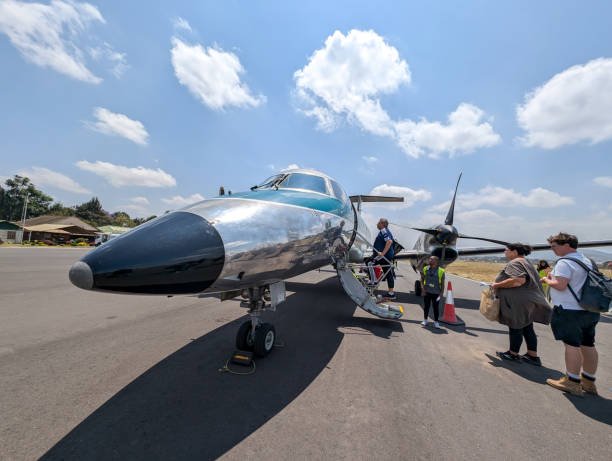
Once you are on the ground in Tanzania, the flight landscape changes. You are no longer dealing with global airline algorithms but with regional bush operators like Coastal Aviation, Auric Air, and Precision Air. These airlines service routes like Arusha (ARK) or Kilimanjaro (JRO) to Zanzibar (ZNZ), or direct flights from safari airstrips (like Seronera in the Serengeti) to the coast.
Domestic flight prices are generally predictable. They are less sensitive to “last-minute booking penalties” than international flights, but they are highly sensitive to seat availability. Because these light aircraft carry only 12 to 20 passengers, a flight can sell out months in advance, even in the off-season. If you are planning a private Tanzania safari with internal flights, it is critical to secure these seats as soon as your safari dates are confirmed.
Domestic Flight Pricing Factors
- Fuel Surcharges: Unlike international tickets where fuel is often baked into the fare, regional operators may adjust surcharges based on current fuel costs.
- Baggage Limits: Domestic bush flights have strict weight limits (usually 15kg in soft bags). Excess baggage fees are not just a cost; they are a logistical constraint that can prevent you from boarding if not planned for.
- Route Connectivity: Flights that connect directly from a bush airstrip to Zanzibar are often more expensive than flying from a main airport like JRO, but they save you an entire day of travel.
Comparing Your Route Options for May 2027
When planning your itinerary, the route you choose dictates your flight costs. Many travelers assume flying into Dar es Salaam is cheaper, but when you factor in the cost of a domestic connection to the northern safari circuit, the total price often balances out with flying directly into Kilimanjaro International (JRO).
| Route Type | Common Hubs | Pricing Predictability | Best For |
|---|---|---|---|
| International Long-Haul | JRO / DAR / ZNZ | High (Dynamic/Yield-based) | Overall Budget Control |
| Regional Trunk Routes | JRO to ZNZ / DAR to ZNZ | Medium (Fixed Tiered) | Connecting Safari to Beach |
| Bush/Airstrip Transfers | Serengeti to Zanzibar | Low (Premium/Direct) | Time-Saving Efficiency |
If you are trying to decide whether to fly or drive between locations, our detailed guide on Tanzania Safari Flight-Inclusive Packages vs Road Safari provides a breakdown of how the total trip cost—not just the flight ticket—is impacted by your choice of transport.
Booking Strategies for May 2027 Travel
Because you are looking ahead to 2027, you have the advantage of time. Here is the recommended approach for managing your flight and tour logistics:
- Secure the Safari First: Domestic flight availability in Tanzania is limited. We always recommend confirming your safari dates with Climb 4 Africa before purchasing your international flights. We can hold a soft space on internal flights while you finalize your international ticket.
- Monitor “Open-Jaw” Tickets: For the most efficient route, look for an “open-jaw” international ticket: fly into Kilimanjaro (JRO) and out of Zanzibar (ZNZ). This avoids the need for a backtracking flight at the end of your trip, which saves both money and time.
- Consider the “Fly-In” Advantage: If you are looking at Tanzania fly-in safari packages for 2027, these packages often bundle the internal flights. This is usually the most cost-effective method because tour operators negotiate bulk rates with regional airlines.
What Happens if Your Flight Plans Change?
One of the most common questions we receive is, “What happens if my Tanzania safari flight is delayed?” In the context of bush flights, a delay can ripple through your entire itinerary, potentially causing you to miss a game drive or a boat transfer in Zanzibar. Understanding the logistics of handling flight delays in Tanzania is a crucial part of your planning process. When you book through a local operator, we have the on-the-ground capability to re-route or adjust your ground transfers in real-time, which is a layer of protection you simply do not get when booking flights independently.
Frequently Asked Questions About May 2027 Travel
Is May a good time to fly to Tanzania?
Yes, May is an excellent time for travelers who prefer fewer crowds and are comfortable with the tail end of the rainy season. The landscape is lush and green, and flight availability is generally better than in the peak summer months.
Should I book my domestic flights separately?
While you can, we generally advise against it. Booking domestic bush flights as part of your Tanzania safari tour package ensures that the flight times align perfectly with your ground transfers, and it simplifies luggage management and re-booking if schedules change.
Are 2027 flight prices available yet?
International flight schedules are typically released 11 months in advance. For a May 2027 trip, you can expect full visibility by mid-2026. However, you can start planning your route and estimated budget now by reviewing our safari tour itineraries.
Planning Your Next Steps
Whether you are finalizing your 2027 itinerary or just starting to explore options, having a local partner to coordinate the logistics of your internal travel is the best way to keep your trip stress-free. At Climb 4 Africa, we specialize in building tailor-made itineraries that balance your desire for adventure with the reality of Tanzanian travel logistics.
To discuss your specific travel dates, potential flight routes, or to get a quote for a package that includes all your internal transfers, please feel free to reach out to us. You can contact our team directly via WhatsApp at +255 747 477 898 or email us at climb4africa@gmail.com. For detailed inquiries, you can also reach us at info@climb-4-africa.com. We are here to help you navigate the planning phase so you can focus on the experience ahead.
Navigating Airport Taxes and Regional Surcharges
When you view flight prices for May 2027 on major booking aggregators, the displayed fare is rarely the final cost. Tanzania, like many East African nations, incorporates various government-mandated taxes and airport development fees that can add a significant percentage to the base fare. For international arrivals into Kilimanjaro (JRO) or Dar es Salaam (DAR), these taxes are typically bundled into your ticket at the point of purchase. However, travelers planning to include a coastal segment often overlook the Zanzibar Infrastructure Development Tax, which is a mandatory fee for all visitors entering the island. While this is a modest amount, failing to account for these localized surcharges—along with potential visa fees—can lead to an inaccurate budget projection for your May trip.
Furthermore, when comparing flight prices, look closely at the “carrier-imposed surcharges.” During the May shoulder season, some airlines may lower their base fare to attract volume, but keep fuel surcharges artificially high to protect margins. Always look at the “Total Price” breakdown before finalizing your selection. If you are booking a multi-leg journey, ensure that your baggage allowance is consistent across all segments; a common trap is booking a low-cost international leg that allows two checked bags, followed by a regional bush flight that only permits 15kg in soft-sided luggage. The excess baggage fees on the latter can easily negate the savings found on the former.

The Economic Advantage of Multi-City “Open-Jaw” Routing
A frequent error in planning Tanzanian travel is the assumption that a round-trip ticket to Kilimanjaro (JRO) is the most cost-effective option. While this may hold true for a pure safari-focused trip, it often proves expensive for travelers who intend to finish their journey on the coast. If you plan to end your May 2027 trip in Zanzibar, booking a “multi-city” or “open-jaw” ticket—flying into JRO and out of ZNZ (Zanzibar International)—is frequently more economical than booking a round-trip to JRO and adding a separate domestic return flight to Arusha or Dar es Salaam.
By utilizing an open-jaw ticket, you eliminate the need for a “backtrack” domestic flight, which saves you both the cost of the ticket and the logistical overhead of returning to your entry point. In May, international carriers are eager to fill seats on flights departing from Zanzibar, which often connects through hubs like Doha, Dubai, or Addis Ababa. By strategically planning your itinerary to move from the northern safari circuit toward the coast, you can optimize your flight path to minimize transit time and consolidate your total airfare costs into a single booking.
Maximizing Shoulder Season Value for Premium Cabins
Because May is a transitional period between the high-demand months, airlines often have lower load factors in premium cabins. If you have been debating whether to upgrade to Premium Economy or Business Class, May 2027 presents a strategic window. Unlike the peak travel months of July and August, where premium seats are often sold out months in advance or priced at a premium, the May shoulder season often sees airlines offering more competitive upgrade pricing or lower base fares for higher cabins.
We recommend setting “price alerts” for your specific route beginning in mid-2026. If you notice the price for a premium cabin is within 20-30% of the economy fare, it may be worth the investment. Given that the long-haul flight to Tanzania is often the most physically taxing part of the journey, securing a seat with extra legroom or lie-flat capabilities can significantly improve your arrival experience, allowing you to hit the ground running for your safari without the fatigue typically associated with long-haul travel.
Factoring in Hidden Transit Costs
Beyond the ticket price, your May 2027 budget must account for the “hidden” costs of transit. If your international flight arrives late in the evening at Kilimanjaro, you may be forced to book an overnight stay in Arusha before your bush flight departs the next morning. These incidental costs—airport transfers, hotel accommodation, and meals—are part of the true cost of your flight itinerary. When comparing a flight that arrives at 9:00 PM versus one that arrives at 11:00 AM, the earlier arrival is almost always cheaper in the long run because it eliminates the need for an extra night of accommodation and the associated transfer fees.
Always verify the connection windows between your international arrival and your domestic bush flight. Bush operators have strict departure times, and they generally do not hold planes for delayed international arrivals. If your international flight is delayed, you may be liable for the cost of a “private charter” or a rebooking fee to get you to your safari camp. When building your budget, set aside a contingency fund of approximately 10-15% of your total flight costs to cover these unpredictable logistical shifts. This approach ensures that your May 2027 travel plans remain stress-free, regardless of the minor disruptions that can occur in international travel.
Decoding the “Bush Flight” Operational Model
A frequent point of confusion for travelers planning a 2027 Tanzanian itinerary is the disparity between international airfare transparency and the opaque nature of domestic bush flights. When you search for flights on major global aggregators, you are accessing the Global Distribution System (GDS), a network that connects international airlines to travel agents and public booking engines. However, Tanzania’s regional operators—the bush pilots who fly light aircraft into remote airstrips—do not operate on this system. Understanding this distinction is the single most effective way to manage your 2027 travel budget and expectations.
Most domestic flights in Tanzania are sold on a “Seat-in-Plane” (SIP) basis. This means you are purchasing a single seat on a scheduled flight that may stop at multiple airstrips before reaching your final destination. Because these schedules are demand-dependent and optimized for efficiency, the “flight time” you see when booking is often an estimate. The aircraft might land at three different camps to drop off or pick up passengers before heading to your lodge. While this is a standard and safe practice, it effectively turns your transfer into a “milk run.” If you require a direct, private transfer to ensure you reach your destination by a specific hour, you must book a “Private Charter,” which is priced by the hour or by the flight leg, rather than by the seat. A private charter can cost several times more than a standard SIP ticket, so clearly distinguishing your needs during the booking phase is critical to avoiding budget overruns.
Furthermore, because these operators do not publish their inventory on public sites like Expedia or Skyscanner, you cannot effectively “price match” these flights online. Many travelers waste hours attempting to find lower fares on third-party sites that are not authorized to sell these specific regional tickets. Instead, the pricing is determined by fixed operational costs—fuel, pilot hours, and landing fees—which remain relatively stable regardless of the season. For May 2027, the price you receive from a reputable local operator is likely the market rate; there is rarely a “last-minute deal” or a “flash sale” for bush flights because the inventory is limited by the number of seats on small Cessna or Caravan aircraft.
To secure the best value for your 2027 trip, shift your focus from “finding the cheapest price” to “optimizing the route.” Ask your operator if your chosen sequence of parks allows for a “circuit” flight. For instance, connecting your safari directly to your coastal destination often involves a hub-and-spoke model through Arusha or Zanzibar. By grouping your domestic flights with a single operator, you can often negotiate a consolidated rate for the entire multi-leg journey, which is significantly more cost-effective than booking individual “point-to-point” flights through different providers. Always ensure that your domestic flight booking includes the “Airstrip Tax” and “Airport Passenger Service Charge,” as these are sometimes billed separately and can add an unexpected 10-15% to your total if not accounted for in your initial quote.
Navigating Terminal Transfers and Connection Buffer Times
A critical, yet frequently overlooked, component of your May 2027 flight budget involves the logistical “gap” between international arrival and domestic bush flight departure. Travelers often assume that landing at Kilimanjaro International Airport (JRO) places them in immediate proximity to their bush flight. In reality, while JRO serves international carriers, many regional bush flights depart from Arusha Airport (ARK), which is a separate facility located approximately 50 to 60 kilometers away. This transit requires a road transfer that can take 60 to 90 minutes depending on traffic conditions in Arusha. When calculating your total flight costs, you must account for the price of this ground transfer, which is rarely included in the ticket price of either flight segment.
Furthermore, setting a realistic “Minimum Connection Time” (MCT) is your primary defense against unexpected costs. International arrivals can be subject to immigration delays, baggage claim bottlenecks, and occasional weather-related diversions. If you book a domestic connection that departs less than four hours after your scheduled international arrival, you run a high risk of missing your bush flight. Because bush flight operators function on strict, demand-based schedules, they do not hold planes for delayed international passengers. Missing a scheduled flight usually results in the total forfeiture of that ticket, forcing you to purchase a new seat on the next available flight or, in extreme cases, commission a private charter at a significantly higher premium. For May 2027, we strongly advise scheduling your international arrival for the morning and booking your domestic bush flight for the following day, or ensuring a minimum of five hours of “buffer time” if you must connect on the same day.
The True Cost of Luggage Restrictions
The operational reality of bush aviation in Tanzania dictates that luggage limitations are not merely suggestions; they are safety requirements. Aircraft used for these transfers, such as the Cessna Caravan or similar light aircraft, have limited cargo hold volume and specific weight distribution requirements. The “soft bag” mandate—requiring luggage to be collapsible and devoid of hard-frame wheels or rigid shells—is essential because these bags must be molded into the irregularly shaped cargo compartments of the small aircraft. If you arrive with hard-shell suitcases, you may be denied boarding, or your bags may be left behind to be transported on a later flight at your own expense.
This restriction introduces a hidden financial variable: the cost of acquiring specialized travel gear. If you do not already own soft-sided, compliant luggage, you must factor in the purchase or rental price of such bags into your 2027 travel budget. Additionally, while the standard weight allowance is often cited as 15kg, this is a total limit that includes your camera equipment and carry-on items. Exceeding this limit often incurs a per-kilogram surcharge, which, while seemingly nominal, can escalate quickly if you are traveling with professional photography gear or bulky technical apparel. Before finalizing your flight bookings, verify the exact weight policy of your specific operator, as these can vary slightly between carriers, and ensure your luggage strategy is finalized months before your departure to avoid last-minute airport surcharges.
Check Availability for Tanzania Flight Prices May : Ticket & Travel Routes
Ready to compare dates, prices, and the best option for your group? Send the package name and travel month so the team can reply with a clear quote, availability, and what is included.

Tanzania To Uganda Flights: Best Routes And Ticket Prices
A detailed guide to navigating air travel between Tanzania and Uganda, including route comparisons, carrier options, and expert advice for planning your multi-country safari.
View package details
Child Flight Ticket Prices In Tanzania: Airline Fare Rules & Planning Guide
Planning a family trip to Tanzania? Don't assume child discounts apply everywhere. Learn the specific rules for domestic carriers versus bush flights and how to manage your booking.
View package details
Tanzania Flight Ticket Prices: Economy Vs Safari Bush Flights Explained
A practical guide to understanding the cost and logistical differences between commercial economy flights and private-style bush flights in Tanzania.
View package details
Coastal Aviation Vs Auric Air: Comparing Tanzania Safari Flight Routes &
Deciding between Coastal Aviation and Auric Air for your Tanzania safari? We break down the differences in routes, reliability, and how to manage your bush flight logistics effectively.
View package detailsTanzania Flight Prices December : Christmas & New Year Travel Planning
A deep look at managing flight costs for Tanzania travel during the peak December 2027 holiday season, including booking strategies and logistics.
View package detailsTanzania Flight Prices November : Seasonal Airfares And Booking Guide
A practical guide to understanding Tanzania flight pricing for November 2027, covering seasonal weather impacts, airport selection strategies, and booking timelines.
View package details
Tanzania Flight Prices April : Low-Season Travel Costs
A deep look at the realities of flying to Tanzania in April 2027, focusing on the seasonal price advantages, logistics of the 'Green Season,' and how to manage your travel budget...
View package detailsTanzania Flight Prices March : Airfare & Seasonal Guide
A practical guide to understanding flight pricing for Tanzania in March 2027, covering seasonal trends, booking windows, and logistics for safari and Kilimanjaro itineraries.
View package detailsTanzania Flight Prices February : Safari & Zanzibar Routes
A detailed guide to navigating flight logistics and budget factors for Tanzania travel in February 2027, focusing on safari circuits and Zanzibar connections.
View package details
Entebbe To Tanzania Flights: Ticket Prices And Route Guide
A comprehensive guide for travelers planning flights from Entebbe to Tanzania, covering ticket price factors, route options for Kilimanjaro and safari tours, and essential booking logistics...
View package detailsSerengeti To Kigali Flights: Ticket Prices & Travel Guide
Connecting the Serengeti to Kigali requires a strategic two-stage flight plan. Understand the logistics, baggage limits, and booking considerations for your 2026-2027 itinerary.
View package detailsNairobi To Zanzibar Flights: Ticket Prices & Booking Guide
A comprehensive guide to understanding flight costs, airline choices, and logistics for the popular Nairobi to Zanzibar route.
View package detailsNo related package matches those filters. Clear one or more filters to see the other topic-matched options.



