
When planning a trip to Tanzania for the Christmas and New Year period in 2027, the most significant factor influencing your total travel cost will be the timing of your international flight bookings. December is the height of the peak tourist season in East Africa. The combination of ideal weather for Kilimanjaro climbs and the short rains ending, which brings lush landscapes for safari, creates a massive surge in demand. Understanding how Tanzania flight prices for December 2027 behave is not about finding a “cheap” fare—which rarely exists for these dates—but rather about securing the most efficient route and avoiding the extreme price spikes that occur as holiday availability dwindles.
The Holiday Reality: December 2027 is a high-demand period. Unlike off-peak travel, where you might see price fluctuations based on minor carrier adjustments, December flights are governed by supply and demand. Airlines know that travelers are committed to specific dates for Christmas and New Year. By the time you reach the three-month mark before departure, the lowest fare classes are almost universally sold out.
The Mechanics of Peak Season Pricing
International airlines serving Tanzania—such as KLM, Qatar Airways, Ethiopian Airlines, and Turkish Airlines—operate on dynamic pricing models. For travel in late December, the pricing algorithm is aggressive. It assumes that travelers are less price-sensitive because their dates are fixed by holiday leave or school calendars.
When researching Tanzania flight prices for December 2027, you will notice that even mid-tier airlines often match the pricing of premium carriers during this window. This is not collusion; it is simple economics. The seat inventory is finite, and the number of people wanting to be in Arusha for a Kilimanjaro climb or in Zanzibar for a beach holiday is at its annual maximum. If you wait for a “last-minute deal” for the period between December 20th and January 5th, you are likely to be disappointed. These flights rarely drop in price; they only increase as the departure date approaches.
Comparison: Booking Strategy for Holiday Travel
To help you decide when and how to book, consider the following comparison of booking approaches. This table outlines the practical differences in cost and risk for your December 2027 trip.
| Strategy | Booking Window | Cost Expectation | Risk Level |
|---|---|---|---|
| Early Bird | 10-12 months prior | Baseline (Best Available) | Low |
| Standard | 6 months prior | Moderate Increase | Moderate |
| Last Minute | 1-3 months prior | High Premium | High |
As you can see, the “Early Bird” window is the only period where you have access to the full inventory of seat classes. By the time you hit the six-month mark, you are essentially paying for the convenience of securing your dates. If you are planning a Kilimanjaro climb, your flights must align perfectly with your group departure dates, which makes flexibility difficult.
Strategic Routing: JRO vs. ZNZ vs. NBO
One of the most effective ways to manage your travel budget is to look beyond Kilimanjaro International Airport (JRO). While JRO is the most convenient entry point for climbs and northern circuit safaris, it is not always the most cost-effective. During the holiday season, international flights into JRO can become exorbitantly expensive.
Many travelers find that flying into Nairobi (NBO) and taking a connecting shuttle or a regional flight to Arusha is a viable alternative. However, you must weigh the savings against the logistical hassle. A shuttle bus from Nairobi to Arusha takes about 6 to 8 hours, depending on the border crossing at Namanga. If your flight arrives in Nairobi late in the day, you will likely need an overnight stay in Kenya before continuing your journey. When you calculate the cost of that extra hotel night, the shuttle, and the visa fees, the savings on the flight might be negated. For a deeper look at these tradeoffs, our guide on safari flight-inclusive packages can help you decide if the added complexity is worth it.
The Zanzibar Connection
If your itinerary involves both a safari and a beach holiday, consider flying “open-jaw.” This means flying into JRO for your mountain or safari portion and flying out of Zanzibar (ZNZ) at the end of your trip. While this can sometimes be slightly more expensive than a round-trip ticket, it saves you the cost and time of a domestic flight back to the mainland from the island. During the Christmas rush, domestic flights within Tanzania are also subject to price surges and availability constraints, so minimizing these internal connections is a smart tactical move.
Domestic Flight Logistics During the Holidays
It is not just international flights that spike in December. Domestic carriers like Coastal Aviation, Precision Air, and Auric Air see demand skyrocket for routes like Arusha to Zanzibar or Seronera (Serengeti) to Zanzibar. These small planes have limited seating capacity. If you have booked a private safari with internal flights, it is imperative that these are booked alongside your international travel.
Do not assume that you can simply book your domestic connection a few weeks before your trip. During the last two weeks of December, these flights often sell out entirely. If you are stuck, the only alternative is a long road transfer, which can turn a two-hour flight into a ten-hour drive. Always confirm your domestic flight status with your tour operator early in the planning phase. If you have questions about whether your domestic flight prices include airport taxes, check with us before finalising your budget.
Managing Your Total Travel Budget
When you are looking at Tanzania flight prices for December 2027, it is helpful to view the flight as part of a larger, bundled experience. At Climb 4 Africa, we often work with travelers who are trying to balance the cost of a high-season climb or safari with the reality of peak-season airfare. The best way to manage this is to be transparent about your total budget from the start.
If your flight budget is fixed, let us know. We can sometimes adjust your safari itinerary or suggest alternative routes that minimize the need for expensive internal bush flights, allowing you to allocate more of your budget toward the actual experience of the safari or climb. For those looking for more cost-effective options, our budget fly-in safari options might provide a better balance of cost and convenience.
Planning for 2027: Why Now?
While December 2027 may feel distant, the planning cycle for African travel—especially for the holiday season—is long. The most experienced travelers are often booking their logistics 12 to 18 months in advance. This is particularly true for group departures on Kilimanjaro. If you are aiming for a specific summit date, such as reaching the top on Christmas Day or New Year’s Eve, your flight schedule must be locked in to match the group departure dates. We maintain a calendar of all Tanzania safaris and group departures that can help you align your flights with confirmed, bookable trips.
Key Considerations Before You Book
- Baggage Allowances: International carriers have different rules for checked baggage. If you are bringing climbing gear, ensure your airline’s allowance covers it, or factor in the cost of excess baggage fees.
- Travel Insurance: Given the higher cost of travel during the holidays, ensure your insurance covers trip cancellation for unforeseen circumstances.
- Airport Transfers: Don’t forget to factor in the cost of airport transfers. During the peak holiday season, transport services in Arusha and Moshi are in high demand. We recommend arranging these well in advance to avoid delays upon arrival.
- Visa Requirements: Ensure your passport has at least six months of validity and that you have planned for the Tanzanian visa process, which is now primarily handled online.


Getting Expert Assistance
Navigating flight logistics for a complex trip like a Kilimanjaro climb or a Serengeti safari is rarely a simple task. It involves coordinating international arrivals, domestic connections, and local transport to the trailhead or lodge. We assist our clients in ensuring that their flight schedules are realistic and that they have enough buffer time for potential delays.
If you are ready to start planning your December 2027 adventure, reach out to us. We can provide guidance on the best flight arrival times for our scheduled tours and help you avoid common pitfalls. You can contact us via WhatsApp at +255 747 477 898 or email us at climb4africa@gmail.com. For urgent inquiries or detailed itineraries, you can also reach our team at info@climb-4-africa.com.
Frequently Asked Questions
Are flights to Tanzania cheaper if I book on a specific day of the week?
Generally, mid-week flights (Tuesday or Wednesday) can be slightly cheaper than weekend flights, but during the December holiday peak, this difference is often negligible. The date of your travel relative to the holiday (e.g., flying on December 24th vs. December 26th) has a much larger impact on the price.
Should I book my international flight before booking my safari?
Yes. We strongly recommend having your international flights confirmed before finalizing your safari or climb dates. This ensures that your local ground arrangements are perfectly synced with your arrival and departure times, preventing unnecessary hotel stays or missed connections.
Do flight prices include the cost of the Kilimanjaro park fees?
No. International flight prices are strictly for your air travel. Park fees, climbing permits, and safari costs are separate. Always ensure you have a clear breakdown of what is included in your tour quote versus what you need to pay for your air travel.
Is it worth paying more for a direct flight to Kilimanjaro (JRO)?
For many travelers, yes. Avoiding a connection in Nairobi or Dar es Salaam reduces the risk of lost luggage and flight delays. Given the tight schedule of a Kilimanjaro climb, the extra cost for a direct flight can be viewed as an investment in the reliability of your trip.
Navigating the “Cascading Failure” Risk of Peak Season Travel
While the financial cost of booking flights for December 2027 is the primary concern for most travelers, the operational risk of travel during this peak window is often overlooked. In the travel industry, December in East Africa is defined by “cascading failure” potential. Because flight loads are consistently at or near 100% capacity, a single disruption—a missed connection in Addis Ababa, a technical delay in Nairobi, or a diverted flight due to weather—does not simply result in a four-hour wait for the next departure. It can result in a 48-hour delay because there are simply no open seats on subsequent flights to rebook you onto.
Understanding this reality is crucial for protecting your investment in your Kilimanjaro climb or safari. When flights are full, the airline’s ability to recover your itinerary is severely hampered. This is why the technical method of how you book your ticket is just as important as the price you pay.
The Critical Distinction: Single PNR vs. Self-Transfer
The most dangerous booking mistake travelers make during the holiday season is attempting to “self-transfer” to save money. A self-transfer occurs when you book two separate tickets—for example, one international flight to a major hub like Nairobi (NBO) and a separate regional flight to Kilimanjaro (JRO) on a different airline or booking reference.
When you book on a single Passenger Name Record (PNR)—meaning one ticket issued by one airline or a single alliance—you are protected by the airline’s interline agreements. If your first flight is delayed and you miss your connection, the airline is contractually obligated to rebook you on the next available flight at no extra cost. They are also responsible for your luggage transfers. In contrast, if you book separate tickets (self-transfer), you are responsible for your own connection. If the first flight is late, you lose the second ticket entirely, and because it is December, buying a new ticket at the last minute may be impossible or prohibitively expensive.
For December 2027 travel, we strongly advise against self-transferring. Even if a single-ticket itinerary looks more expensive on paper, it provides an insurance policy that is invaluable during the peak holiday rush.
The “Buffer Day” Philosophy for Kilimanjaro Climbers
For those arriving in Tanzania specifically for a Kilimanjaro climb, the concept of a “buffer day” is not a luxury; it is a necessity. Many travelers attempt to land at Kilimanjaro International Airport (JRO) on the morning of their scheduled climb start date. This is an incredibly high-risk strategy.
If you land on your climb day, you have zero margin for error. A lost bag, a flight delay, or a custom clearance issue will cause you to miss your group’s departure. Once the group has left for the mountain, joining them late is often logistically impossible due to park permit regulations and the need for acclimatization schedules. We recommend planning your arrival at least 24 to 48 hours before your scheduled trek. This buffer allows you to recover from international travel fatigue, finalize your gear check, and—most importantly—provides a safety net for any flight disruptions. If your luggage is delayed, a 24-hour buffer gives the airline the necessary time to locate and deliver your bags before you head to the trailhead.
Communication Protocols During Disruption
When a flight delay or cancellation occurs, the immediate reaction of most travelers is to wait in line at the airline service desk. While this is necessary for rebooking, it is often insufficient for protecting your ground arrangements in Tanzania. Airlines do not coordinate with your safari operator or climbing guide; they only care about getting you to your destination eventually.
If you experience a significant delay, you must notify your local ground operator immediately. Do not wait until you have a new arrival time. By communicating early, your operator can hold your airport transfer, adjust your hotel reservation, and potentially alert the park authorities if your climb start is impacted. We maintain 24-hour communication channels specifically for this purpose. When you are stuck in transit, knowing that your ground team is already aware and adjusting your itinerary reduces the stress of the situation significantly. Always keep the emergency contact number for your tour operator saved in your phone and written on a physical piece of paper in your carry-on luggage, as digital access can be unreliable during travel disruptions.
The Hidden Costs of “Last-Mile” Logistics
While international flight prices dominate the discussion, the “last-mile” logistics between the airport and your final destination are often the most overlooked expense during the December peak season. Travelers frequently focus their entire budget on securing a seat into JRO or ZNZ, only to realize too late that the ground transportation infrastructure in Tanzania operates under its own seasonal scarcity. When demand for travel spikes in late December, the availability of reliable, private airport transfers and vehicle hire services shrinks rapidly, leading to significant price surges that can catch unprepared travelers off guard.
During the Christmas and New Year period, the surge in volume is not limited to airlines. Regional transport providers, lodges, and tour operators face a massive increase in requests for private vehicle transfers. If you have not pre-arranged your airport pickup, you may find yourself relying on ad-hoc taxi services at the terminal. During peak season, these services are not only more expensive due to demand but also carry higher risks regarding reliability and vehicle condition. It is not uncommon for travelers to arrive at JRO after a long international flight only to find that all reputable, pre-booked transport services are fully committed, leaving them with limited, high-cost options that may not meet safety or comfort standards.
Securing Reliable Ground Transport
To mitigate these last-mile risks, treat your ground transport as a non-negotiable extension of your flight booking. Do not wait until you arrive in Tanzania to arrange your transfer to Arusha, Moshi, or your safari lodge. The most effective strategy is to bundle your airport transfers directly with your tour operator or hotel booking as soon as your flights are confirmed. By doing this, you lock in a rate that is protected from the volatile, day-of-arrival pricing fluctuations common in late December.
Furthermore, consider the logistical reality of late-night arrivals. Many international flights into Tanzania land in the late evening or early morning hours. During the holiday peak, if your flight is delayed, a generic taxi service may not wait for you, or they may charge significant “waiting fees” that were not disclosed upfront. A pre-arranged service provided by a reputable operator will have flight-tracking protocols in place. They monitor your flight status in real-time, ensuring that a driver is there to meet you regardless of whether your flight arrives on time or three hours late. This reliability is a form of insurance, ensuring you are not stranded at the airport in the middle of the night during the busiest week of the year.
The Impact of Holiday Surcharges on Local Services
Be aware that many service providers in Tanzania apply a “holiday surcharge” for bookings falling between December 24th and January 2nd. This is standard industry practice to cover the increased costs of staffing, overtime pay for drivers and support teams, and the premium on fuel or vehicle maintenance during high-traffic periods. When you receive a quote for ground transfers or local excursions during this window, ensure the breakdown explicitly states whether these holiday surcharges are included. If a quote seems suspiciously low compared to others, it may be because it excludes these mandatory seasonal costs, which will then be added to your final bill upon arrival. Always ask for an “all-inclusive” price for your ground transfers to avoid unpleasant surprises at the airport exit.
Finally, if you are planning to rent a vehicle for independent travel—a practice we generally discourage for first-time visitors during the peak holiday period due to road conditions and navigation challenges—be prepared for rental inventory to be completely depleted. If you absolutely must have a vehicle, you should be finalizing these arrangements alongside your international flights, often 10 to 12 months in advance. For the vast majority of travelers, however, the most cost-effective and stress-free approach remains relying on professional, pre-booked ground handlers who understand the specific flow of holiday traffic in Tanzania.
Check Availability for Tanzania Flight Prices December : Christmas & New Year Travel Planning
Ready to compare dates, prices, and the best option for your group? Send the package name and travel month so the team can reply with a clear quote, availability, and what is included.
Tanzania Flight Prices November : Seasonal Airfares And Booking Guide
A practical guide to understanding Tanzania flight pricing for November 2027, covering seasonal weather impacts, airport selection strategies, and booking timelines.
View package detailsTanzania Flight Prices May : Ticket & Travel Routes
Planning your Tanzania trip for May 2027? Understand the seasonal flight dynamics, the difference between domestic and international routes, and how to optimize your travel budget during...
View package detailsTanzania Flight Prices April : Low-Season Travel Costs
A deep look at the realities of flying to Tanzania in April 2027, focusing on the seasonal price advantages, logistics of the 'Green Season,' and how to manage your travel budget...
View package detailsTanzania Flight Prices March : Airfare & Seasonal Guide
A practical guide to understanding flight pricing for Tanzania in March 2027, covering seasonal trends, booking windows, and logistics for safari and Kilimanjaro itineraries.
View package details
Zanzibar Flights During Christmas And New Year: Expert Booking & Pricing Guide
Essential guide for booking Zanzibar flights during the high-demand Christmas and New Year season, covering pricing realities, route strategy, and logistics.
View package detailsChild Flight Ticket Prices In Tanzania: Airline Fare Rules & Planning Guide
Planning a family trip to Tanzania? Don't assume child discounts apply everywhere. Learn the specific rules for domestic carriers versus bush flights and how to manage your booking.
View package details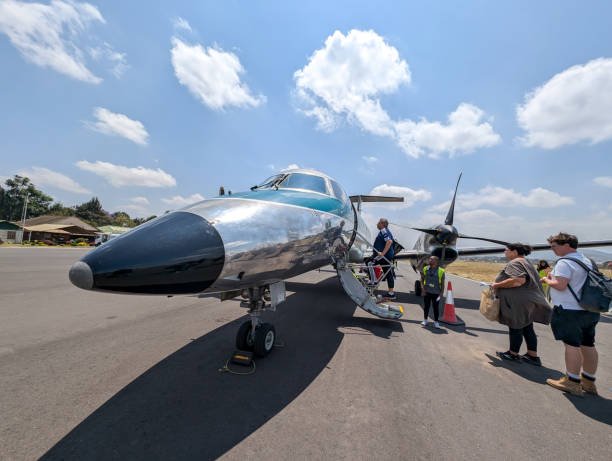
Private Charter Flight Prices In Tanzania: Cost Per Aircraft & Planning Guide
A practical guide to understanding how private charter flight prices in Tanzania are calculated, including aircraft types, route logic, and booking advice for 2027.
View package details
Last-Minute Flights In Tanzania: Prices & Expert Booking Tips
Understand why last-minute flight bookings in Tanzania often lead to higher costs and logistical challenges, and learn the best strategies to secure your travel.
View package detailsTanzania Flight Ticket Prices: Economy Vs Safari Bush Flights Explained
A practical guide to understanding the cost and logistical differences between commercial economy flights and private-style bush flights in Tanzania.
View package detailsPrecision Air Vs Tanzania: Domestic Flight Prices & Comparison
When planning domestic travel in Tanzania, choosing between Precision Air and Air Tanzania often comes down to route networks and baggage policies rather than just the base fare. Learn how...
View package details
Flightlink Vs Coastal Aviation: Tanzania Safari Flight Prices Guide
A practical comparison of Tanzania's two leading bush airline operators, focusing on what drives prices, operational differences, and how to plan your inter-camp travel.
View package detailsCoastal Aviation Vs Auric Air: Comparing Tanzania Safari Flight Routes &
Deciding between Coastal Aviation and Auric Air for your Tanzania safari? We break down the differences in routes, reliability, and how to manage your bush flight logistics effectively.
View package detailsNo related package matches those filters. Clear one or more filters to see the other topic-matched options.



