
When you start booking your travel within Tanzania—whether you are connecting from Kilimanjaro to Zanzibar or taking a bush flight into the Serengeti—the question of whether airport taxes are included in your ticket price is a common point of confusion. The short answer is yes, in nearly all cases, the price you see quoted by a reputable airline or tour operator includes the mandatory government airport taxes. However, the reality of airline pricing in Tanzania is slightly more nuanced than a simple ‘yes’ or ‘no.’
Because Tanzania operates a mix of large, scheduled carriers and smaller, bush-strip operators, the way these costs are presented can vary. When you are budgeting for your 2026 or 2027 trip, it is vital to distinguish between mandatory taxes and the variable service fees that can inflate the final cost of your flight.
Why “All-In” Pricing is the Standard
In the Tanzanian aviation sector, the Civil Aviation Authority mandates certain fees that must be collected from passengers. Most airlines and travel partners simplify this by using “all-in” pricing. This means that when you see a price on a booking engine or in a quote from a tour operator like Climb 4 Africa, the mandatory government levies, including the Airport Service Charge and other regulatory fees, are already baked into the final figure.
You should rarely, if ever, be asked to pay an additional cash fee at the airport gate for a standard domestic flight ticket. If you are being asked for extra money at the airport, it is almost certainly for something outside of the ticket price, such as excess baggage fees, which are calculated based on weight, or in rare cases, a specific national park landing fee if you are flying into a remote airstrip that charges a conservation levy directly to visitors.
What Actually Makes Up Your Flight Price?
It helps to understand what you are paying for when you book. A domestic flight ticket in Tanzania is typically composed of three distinct segments. Understanding these can help you identify if a quote you have received is competitive or if it is missing components.
- The Base Fare: This is the airline’s revenue. It covers the operation of the aircraft, crew, and overhead.
- Fuel Surcharges: These are variable. In 2026 and 2027, aviation fuel prices can fluctuate, and airlines often pass these costs on. Sometimes these are listed separately, but reputable operators will include them in your final quote.
- Taxes and Regulatory Fees: These are the mandatory government charges we are discussing. They cover the maintenance and operation of airport infrastructure, security screening, and air traffic control services.
When you request a quote from us, we provide an all-inclusive price that covers these three segments. This prevents the ‘sticker shock’ that can happen if you book through third-party aggregators that might display a low base fare only to add taxes and service fees at the very last step of the checkout process.
Pro Tip: Watch Out for “Service Fees”
While airport taxes are usually included, booking service fees are not. If you book your flights through an international aggregator website, they often tack on a “convenience fee” or “service charge” at the end of the transaction. These are not taxes; they are profit margins for the booking platform. Booking directly with an airline or through a local operator like Climb 4 Africa often helps you avoid these unnecessary third-party markups.
Booking Direct vs. Through a Tour Operator
Many travelers wonder whether it is cheaper to book their own domestic flights or to have their tour operator handle them. While booking direct seems straightforward, it often lacks the flexibility you need for a complex African itinerary. The following table illustrates the trade-offs.
| Feature | Booking Direct (Online) | Booking via Tour Operator (e.g., Climb 4 Africa) |
|---|---|---|
| Airport Taxes | Included in final price | Included in final price |
| Service/Agency Fees | Often added at checkout | Usually waived or bundled |
| Itinerary Coordination | Manual (you manage connections) | Automated (we align with your safari) |
| Flight Changes | Difficult (you handle the airline) | Managed (we handle rebooking) |
| Luggage Limits | Strictly enforced | Advised/Managed in advance |
As you can see, the price of the airport tax remains a constant regardless of how you book, but the process of booking changes significantly. For more on the realities of flight costs, you may want to review our guide on how much a domestic flight costs in Tanzania.
The Unique Case of Safari Bush Flights
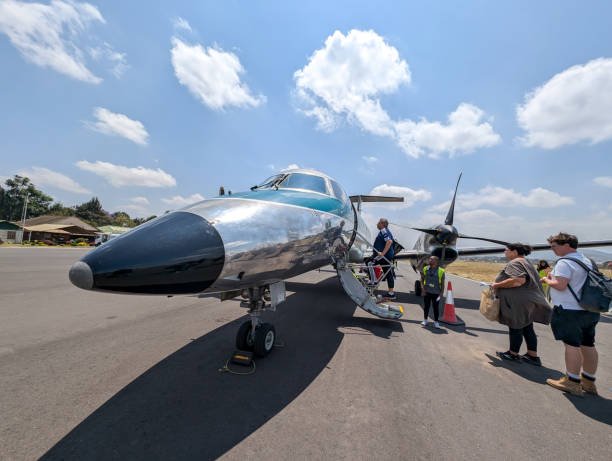
The rules change slightly when you move from scheduled flights between major hubs (like Arusha to Zanzibar) to bush flights that land in remote airstrips in the Serengeti or Ruaha. These bush flights are often operated by different companies, such as Coastal Aviation or Auric Air.
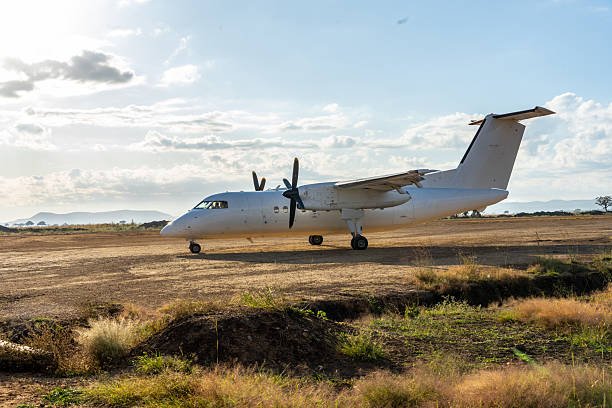
While the ticket price for these flights also includes the necessary airport and airstrip taxes, you must be aware of the luggage allowance. Most bush planes have very strict weight limits (usually 15kg in soft-sided bags). If you exceed this, you may be charged an ‘excess baggage fee’ at the airstrip. This is not a tax, but it is a fee that travelers often mistake for an unexpected cost. Always check your luggage allowance before you pack to avoid this surprise.
Planning for 2026-2027
As you look toward your 2026 or 2027 safari or Kilimanjaro climb, it is important to remember that aviation regulations and airport fees in Tanzania can be adjusted by the government. When we provide a quote for your trip, we lock in the prices based on the current regulatory environment. If you are planning far in advance, it is always a good idea to confirm that your quote includes all current taxes and surcharges.
We strongly recommend that you do not leave your domestic flight booking to the last minute. While it might seem like you are saving money by waiting, you risk being hit by price increases or, more commonly, finding that the specific flights that align with your safari schedule are sold out. For those planning a multi-stop itinerary, such as a flight from the Serengeti to Zanzibar, having an operator manage the connections ensures that if one flight is delayed, your entire travel plan doesn’t collapse.
Why We Handle Flights for Our Guests
At Climb 4 Africa, we include domestic flight arrangements as part of our tailor-made travel packages for a reason. It is not just about the convenience of having everything in one place; it is about risk management. When you book your own flights, you are responsible for monitoring the airline’s schedule changes, gate updates, and potential cancellations. If a flight is cancelled, you are the one on the phone with the airline’s customer service.
When we manage your logistics, we monitor your flight status. If an issue arises, we are already working on the solution before you even reach the airport. We ensure that the taxes and fees are transparent, the booking is confirmed, and the transfer from the airport to your hotel or park gate is smooth. You can learn more about the reliability of these connections in our article on whether Tanzania safari flights are safe and reliable.

Need Assistance with Your Itinerary?
If you are in the middle of planning your 2026-2027 adventure and want to ensure you have a clear, all-inclusive price that covers all taxes, airport fees, and logistics, we are here to help. Whether you are looking for a Kilimanjaro climb or a comprehensive safari package, we can simplify the process.
For a transparent quote, please reach out to us directly. You can send us a message on WhatsApp at +255 747 477 898 or email us at climb4africa@gmail.com (or our backup email info@climb-4-africa.com). Let us know your travel dates and the regions you wish to visit, and we will handle the rest, ensuring there are no hidden surprises in your flight pricing.
Navigating Payment Realities: Currency, Surcharges, and Baggage
Beyond the question of whether airport taxes are included, travelers often encounter confusion regarding the mechanics of payment and the distinction between mandatory government levies and airline-imposed costs. When reviewing your quote, it is essential to recognize that while your ticket covers the regulatory “tax” component, there are other financial variables that can make a flight appear more expensive than the base fare suggests. Understanding these differences prevents the common “sticker shock” that occurs when passengers arrive at an airport or checkout page.
Distinguishing Baggage Costs from Airport Levies
The most frequent point of contention for travelers on domestic Tanzanian flights is not the airport tax, but the baggage allowance. Many international travelers are accustomed to large jet allowances (often 23kg or more). However, domestic bush flights, particularly those operated by companies like Coastal Aviation, Auric Air, or Regional Air, utilize smaller aircraft where weight distribution is critical. These airlines frequently enforce strict baggage limits, often capped at 15kg per person in soft-sided bags.
If you arrive at the airstrip with luggage exceeding this limit, you will be charged an “excess baggage fee.” It is vital to understand that this is not an airport tax. It is a commercial surcharge based on the physical capacity of the aircraft. Because these fees are calculated at the point of departure based on the actual weight of your luggage, they cannot be pre-calculated into your “all-in” ticket price. When you book through a professional operator, we often advise you on these limits in advance, but it remains a variable cost that is entirely separate from the mandatory government airport fees discussed elsewhere in this article.
The Role of Currency and Payment Gateway Fees
Another area where travelers misidentify costs is in the currency and payment processing layer. Most Tanzanian domestic airlines operate in USD for international tourists, while some local ticketing systems may default to Tanzanian Shillings (TZS). If you book independently via an airline website, you may notice a final price that is higher than the displayed fare. This is often due to dynamic currency conversion or credit card merchant fees. These are transaction costs levied by your bank or the payment gateway provider, not the Tanzanian government.
When you book through a specialized tour operator, we mitigate this by handling the payment in the currency that avoids these “surprise” processing fees. By centralizing the payment, we ensure that the price quoted is the price you pay, effectively insulating you from the variable merchant fees that individual travelers often encounter when booking domestic flights on their own. We also ensure that the volatility of the TZS/USD exchange rate does not result in a “hidden” increase in your flight cost between the time of your quote and your date of travel.
Is There Ever a Need for Proof of Tax Payment?
A common anxiety for first-time visitors is whether they need to carry physical receipts or proof that they have paid their airport taxes. In the Tanzanian domestic aviation system, this is unnecessary. Because the “all-in” pricing model is standardized across the industry, the airline’s manifest and your electronic ticket serve as the only documentation required. You will never be stopped at a security checkpoint or boarding gate and asked to produce a receipt for your airport tax. If you have a valid ticket, the tax portion of your fare has already been remitted to the Tanzania Civil Aviation Authority by the airline. If you are ever asked for money at a counter, it is almost exclusively for one of three things: excess baggage, a change of flight date, or a specific, non-tax service fee—none of which are government-mandated airport taxes.
When “Airport Tax” Isn’t the Only Fee: The Reality of Conservation Levies
One of the most frequent sources of confusion for travelers booking bush flights into protected areas like the Serengeti, Ruaha, or the Ngorongoro Conservation Area is the distinction between an airport tax and a park entrance fee. Because many of these remote bush strips are located directly within, or adjacent to, National Parks and protected zones, landing at these locations often triggers a mandatory conservation levy. It is critical to understand that this is not an airport tax.
While your airline ticket will always include the mandatory government airport taxes—which cover air traffic control, runway maintenance, and terminal operations—it rarely includes the park entrance fees mandated by the Tanzania National Parks Authority (TANAPA) or the Ngorongoro Conservation Area Authority (NCAA). These fees are legally distinct. They are essentially a “gate fee” for accessing the protected ecosystem, regardless of whether you arrive by road or by air. If you arrive at a bush strip and are asked to pay an additional amount at the gate, it is almost certainly a conservation fee, not a tax on your flight itself.
For independent travelers, this can be a jarring experience. You may have paid your airfare in full, believing everything was covered, only to be presented with a bill upon landing. To avoid this, always verify whether your tour operator has included “park landing fees” or “conservation levies” in your itinerary quote. Professional operators typically bundle these costs into your overall package to ensure you are not scrambling for cash or credit card terminals in the middle of the bush. If you are booking flights independently, check the airline’s fine print specifically for “Airstrip/Park Entrance Fees,” as these are frequently listed as an exclusion that must be settled separately.
Tax Refundability and Cancellation Policies
A frequent, yet rarely discussed, aspect of Tanzanian domestic aviation is what happens to your prepaid airport taxes in the event of a flight cancellation. Travelers often assume that if a flight is canceled, the entire ticket price—including the taxes—is automatically refunded. However, the reality is more complex and depends entirely on the airline’s specific terms of carriage and the nature of the cancellation.
Government-mandated airport taxes are, in principle, refundable because they are collected by the airline on behalf of the Tanzania Civil Aviation Authority (TCAA). If you do not fly, the airline does not actually owe that tax to the government. However, airlines often impose an “administrative fee” for processing refunds. In many cases, the cost of this administrative fee can equal or exceed the value of the tax portion of your ticket, effectively rendering the refund moot. Furthermore, if you hold a non-refundable ticket, the airline may classify the entire transaction, including the tax component, as forfeited upon cancellation.
When reviewing your booking, pay close attention to the “fare rules” rather than just the price. If you are booking a flexible ticket, the taxes are generally recoverable. If you are booking a promotional or “saver” fare, the airline may have a policy that explicitly states that no portion of the ticket—including taxes—is refundable. If your trip is organized through a tour operator, they often act as a buffer. In the event of a cancellation, a good operator will advocate for the recovery of these costs on your behalf, or utilize their leverage with the airline to credit those funds toward a rebooked flight, rather than leaving you to navigate the bureaucratic process of reclaiming small tax amounts from a regional carrier.
The “Split-Ticket” Risk: Why Your Taxes Might Not Cover Your Transfer
While the Tanzanian aviation industry has largely standardized the “all-in” pricing model for domestic flights, a significant source of confusion remains for travelers who book their international arrival and domestic connection on separate, non-linked tickets. It is critical to understand that while your domestic flight ticket will indeed include the mandatory Tanzania Civil Aviation Authority (TCAA) Airport Service Charge, this fee is strictly for the aviation component of your journey. It does not cover the logistical requirements of transferring between an international arrival terminal and a domestic departure terminal.
When you book an international flight to Kilimanjaro (JRO) or Dar es Salaam (JNIA) on one ticket, and a separate domestic flight to a bush strip or island destination on another, you are essentially managing your own transfer. In this scenario, you are responsible for clearing immigration, collecting your luggage, and re-checking it with the domestic carrier. Travelers often mistake the costs associated with this process—such as porter services, terminal shuttle transfers, or potentially even visa-related re-entry fees if you exit the transit zone—as “airport taxes” or hidden flight fees. They are not. These are service-related costs incurred by the traveler because the two flight segments are not linked under a single Passenger Name Record (PNR).
If your itinerary involves a “self-transfer,” you must factor in the time and potential incidental costs of moving your baggage between terminals. In some cases, if you have not booked a through-fare, you may be required to exit the secure area and re-enter, which can occasionally involve security screening fees or terminal usage fees that are distinct from the TCAA flight tax. By booking your domestic flights through a reputable tour operator, you are not just paying for a seat; you are often paying for the management of these logistical transitions. A professional operator will ensure that your domestic flight is timed appropriately to account for the realities of clearing customs, and they can often coordinate with local ground handling services to ensure your baggage is managed, preventing the need for you to navigate these complex terminal transitions alone.
The Distinction Between Aviation Levies and Airport Facility Fees
Another nuance often overlooked by travelers is the difference between the standardized “Airport Service Charge” (which is almost always included in your ticket) and specific “Airport Facility Fees” or “Passenger Facility Charges” that are occasionally implemented at private or newly renovated airstrips. While the TCAA regulates the major hubs, some remote safari airstrips operate under private concessions. In very rare instances, these private airstrips may impose a modest “landing fee” or “facility maintenance fee” that is not part of the standard airline ticket price. This is particularly common in highly protected conservation areas where the airstrip is maintained by the park authority rather than the government aviation department.
If you are flying into a remote location, check your booking confirmation carefully. If you see a line item labeled “Airstrip Development Fee” or “Park Landing Fee,” do not assume this is an error or an attempt to overcharge you. Unlike the standard airport tax, which is uniform, these facility fees are location-specific and are often mandated by the park authorities to fund the maintenance of the landing strip and the surrounding conservation area. By understanding that your ticket price covers the aviation tax but not necessarily the facility maintenance fee of remote locations, you can avoid the frustration of encountering unexpected charges upon arrival.
Related Guides and Packages
Check Availability for Do Tanzania Domestic Flight Prices Include Airport Taxes? A Guide
Ready to compare dates, prices, and the best option for your group? Send the package name and travel month so the team can reply with a clear quote, availability, and what is included.
Hidden Costs Of Tanzania Domestic Flights: Taxes, Luggage & Transfers ( Guide)
A practical guide to understanding the real price of flying within Tanzania, covering baggage constraints, mandatory airstrip taxes, and the often-overlooked cost of ground transfers.
View package details
Precision Air Vs Tanzania: Domestic Flight Prices & Comparison
When planning domestic travel in Tanzania, choosing between Precision Air and Air Tanzania often comes down to route networks and baggage policies rather than just the base fare. Learn how...
View package details
Best Time To Book Tanzania Domestic Flights For Lower Prices: Planning Guide
A strategic guide to finding the best value on Tanzania internal flights, balancing early booking windows with seasonal demand.
View package detailsKilimanjaro International Airport Flight Prices & Airlines: A Planning Guide
A deep look at planning your travel to JRO, understanding airline options, price variables, and how to coordinate your arrival for a successful Kilimanjaro climb.
View package detailsFlights To Mount Kilimanjaro: Ticket Prices & Airport Guide
A comprehensive guide to flying into Kilimanjaro International Airport (JRO) in 2027. Learn how to secure the best flights, what to expect at the airport, and how to align your arrival with...
View package detailsChild Flight Ticket Prices In Tanzania: Airline Fare Rules & Planning Guide
Planning a family trip to Tanzania? Don't assume child discounts apply everywhere. Learn the specific rules for domestic carriers versus bush flights and how to manage your booking.
View package detailsPrivate Charter Flight Prices In Tanzania: Cost Per Aircraft & Planning Guide
A practical guide to understanding how private charter flight prices in Tanzania are calculated, including aircraft types, route logic, and booking advice for 2027.
View package details
Last-Minute Flights In Tanzania: Prices & Expert Booking Tips
Understand why last-minute flight bookings in Tanzania often lead to higher costs and logistical challenges, and learn the best strategies to secure your travel.
View package details
Tanzania Flight Ticket Prices: Economy Vs Safari Bush Flights Explained
A practical guide to understanding the cost and logistical differences between commercial economy flights and private-style bush flights in Tanzania.
View package details
Flightlink Vs Coastal Aviation: Tanzania Safari Flight Prices Guide
A practical comparison of Tanzania's two leading bush airline operators, focusing on what drives prices, operational differences, and how to plan your inter-camp travel.
View package detailsCoastal Aviation Vs Auric Air: Comparing Tanzania Safari Flight Routes &
Deciding between Coastal Aviation and Auric Air for your Tanzania safari? We break down the differences in routes, reliability, and how to manage your bush flight logistics effectively.
View package detailsTanzania Flight Prices December : Christmas & New Year Travel Planning
A deep look at managing flight costs for Tanzania travel during the peak December 2027 holiday season, including booking strategies and logistics.
View package detailsNo related package matches those filters. Clear one or more filters to see the other topic-matched options.



