
Yes — for 8 Days Lemosho Route Kilimanjaro New Year Summit 2027 you can book a supported ascent with Climb 4 Africa, subject to confirmed departures, group space, and current inclusions. This first installment outlines the day-by-day flow, acclimatization logic, and what to expect before committing. Exact hotel, flight, and permit details require confirmation from the operator at the time of booking.
Introducing a focused, bookable sequence: 8 Days Lemosho Route Kilimanjaro New Year Summit 2027
The 8 Days Lemosho Route Kilimanjaro New Year Summit 2027 is designed as a progressive ascent that prioritizes acclimatization and route variety while aligning with a New Year summit objective. The Lemosho route is renowned for its scenic landscapes, gradual elevation gain, and high success rates when paired with careful pacing and proper rest days. This first installment centers on the route structure, the rationale behind day-to-day pacing, and the logistics that affect a confirmed booking with Climb 4 Africa.
Day-by-day framework: Day 1 through Day 8
As a bookable travel plan, the sequence below presents a practical flow that many clients use when preparing for a New Year ascent. Note that exact departure dates, lodging, and internal logistics must be confirmed with Climb 4 Africa, and may vary with group size, weather windows, and operational dates. For planning purposes, this installment explains the intended day-by-day progression and what each day typically entails when the operator confirms availability for 8 Days Lemosho Route Kilimanjaro New Year Summit 2027.
Day 1 — Arrival and drive to Moshi or Arusha
Arrivals into Kilimanjaro International Airport set the stage for a gradual transition to high-altitude trekking. The Day 1 process typically involves transfer to a pre-climb acclimatization base, depending on the operator’s routing. In many itineraries, guests stay near Moshi or Arusha to complete a welcome briefing, kit check, and a safety discussion before the official start of the ascent. Expect a light acclimatization schedule, a chance to meet fellow climbers, and an equipment check that aligns with the 8 Days Lemosho Route Kilimanjaro New Year Summit 2027 plan. The goal of Day 1 is to reduce travel fatigue and begin acclimatization groundwork while keeping travel time practical after international flights.
Day 2 — Start Lemosho route: gate to forest
Day 2 marks the official start of the Lemosho ascent. Climbers depart from the Londorossi Gate and descend into the first forested sections of the route. This day typically involves a steady ascent through local forest, with a gradual elevation gain that primes the body for the higher camps to come. The Day 2 experience includes the ritual of acclimatization pacing, hydration management, and gear checks as you approach the MtiMkubwa or Big Tree camp area, depending on the exact convoy and camp sequence arranged by Climb 4 Africa. This stage sets the rhythm for the mountain’s higher sections and helps the group settle into the pace essential for an 8 Days Lemosho Route Kilimanjaro New Year Summit 2027 experience.
Day 3 — Forest to Shira plateau: acclimatization emphasis
On Day 3, the route transitions from lush forest into more open terrain, approaching the higher Shira Plateau. This shift is deliberate for acclimatization purposes. Climbers encounter initial knolls and gradual rock exposures, with longer daylight hours and cleaner air as altitude increases. The day emphasizes steady breathing, hydration, and maintaining a comfortable pace. For those examining 8 Days Lemosho Route Kilimanjaro New Year Summit 2027, Day 3 is a critical acclimatization milestone that keeps the ascent within safe limits while preserving energy for the longer days ahead.
Day 4 — Shira Camp to Lava Tower and Barranco influence
Day 4 introduces a slight detour from the pure forest path as climbers navigate terrain near Lava Tower and head toward the Barranco campsite. The route through Barranco Valley is famous for its dramatic views and a series of scrambling sections that test balance and footwork without pushing the body into unsustainable altitude. This day remains a core part of the 8 Days Lemosho Route Kilimanjaro New Year Summit 2027 plan because it reinforces acclimation while gradually exposing climbers to higher elevations and more varied terrain, building confidence for the days to come.
Day 5 — Barranco Camp to Karanga Camp
Day 5 continues the ascent with a commonly scenic traverse, including the famous Barranco Wall. Although some groups may approach this segment with a different order, the intent remains to maintain steady progress with proper rest stops, hydration, and breakfast nourishment that keeps the energy high for the next day’s high elevation push. Reaching Karanga Camp situates you on a practical corridor toward the higher camps, where acclimatization continues and the final push toward the summit nears. This day emphasizes careful pacing and the ability to adapt if conditions demand shorter steps or longer rest periods as part of the 8 Days Lemosho Route Kilimanjaro New Year Summit 2027 program.
Day 6 — Karanga Camp to Barafu Camp
Day 6 is the bridge to the most demanding portion of the summit attempt. The route climbs toward Barafu Camp, a staging point for the final ascent at night. The days leading to Barafu are about maintaining momentum, ensuring adequate caloric intake, and keeping pace with the group’s rhythm. The Barafu camp provides a vantage point for planning the summit push, with briefings on night ascent tactics, expected temperatures, and the importance of rest before the midnight or pre-dawn departure window that commonly marks the summit attempt in the 8 Days Lemosho Route Kilimanjaro New Year Summit 2027 itinerary.
Day 7 — Summit night: Barafu to Uhuru Peak and descent to Mweka Camp
Even though Day 7 is a high-stakes portion of the plan, it remains a single, distinct stage in the 8 Days Lemosho Route Kilimanjaro New Year Summit 2027. Climb at midnight or around 11 p.m., depending on group dynamics and weather, with a steady uphill to Uhuru Peak. The descent follows to Mweka Camp, where rest and rehydration take precedence. This day is the culmination of your New Year summit objective while ensuring that once you reach Uhuru Peak, you proceed with a controlled descent
Day 8 — Descent from Mweka Gate to Moshi or Arusha, and final departure logistics
Completing the 8 Days Lemosho Route Kilimanjaro New Year Summit 2027 requires a careful, restorative descent that consolidates acclimatization gains and ensures safety after the summit. After the exhilarating culmination at Uhuru Peak and the gradual return to Barafu or Mweka Camp, Day 8 focuses on a controlled, steady descent via Mweka Trail to the Mweka Gate. This final leg is as important as the ascent, because proper pacing and hydration support recovery, reduce the risk of altitude-related fatigue lingering into post-climb activities.
The morning starts with a final breakfast at Mweka Camp, followed by a short debrief with the guide team. Climbers check their personal kit for any stray items and ensure water intake has been maintained consistently. The journey to Mweka Gate is not merely a roll-down; it is an opportunity to observe the forest’s mid-elevation ecosystems once more, and to reflect on the physical milestones of the last eight days. The forested path grows gradually wider and less technically demanding, rewarding trekkers with clearer views of the surrounding slopes and the patchwork of Kilimanjaro’s lower rainforest that they first encountered on Day 2.
Upon reaching Mweka Gate, climbers complete the formal process of receiving the summit certificates (where applicable) and gather for the final celebratory moments with the group. Lodging arrangements after descent vary by operator and cannot be assumed; Climb 4 Africa typically coordinates post-climb accommodations in Moshi or Arusha, depending on flight schedules, group size, and participant preferences. Guests should allow time for portrait photos, souvenir shopping, and a light meal or snack before continuing to their onward travel plans.
The practical takeaway for Day 8 is to honor the body’s need for rest after peak exertion, while staying prepared for travel disruptions or flight check-ins back home. Hydration should be a constant companion, and light stretching or gentle movement can help alleviate stiffness from the earlier ascent. If any minor injuries or lingering fatigue appear, communicate with your guide team immediately; they are trained to adjust the pace and, if necessary, arrange medical attention or alternative transport back to base facilities.
For travelers continuing to a wildlife safari or exploring northern Tanzania after Kilimanjaro, this is a natural transition point. Your operator can advise on safe transfer options, while ensuring that luggage needs are accommodated. The 8 Days Lemosho Route Kilimanjaro New Year Summit 2027 itinerary remains faithful to its core objective—maintaining acclimatization integrity, prioritizing safety, and delivering a memorable New Year summit experience—right through to the end of the trek and beyond.
Addressing practical uncertainties and booking realities
As with any bookable travel plan, the final day’s logistics require confirmation with the operator. Departure times from Moshi or Arusha, airport transfer details, and post-climb accommodation are subject to change based on group size, flight connections, and local conditions. Travelers should confirm these arrangements with Climb 4 Africa at the time of booking and again shortly before departure to ensure alignment with their personal travel timelines. It is also prudent to verify what is included in the post-trek package—whether it covers airport transfers, hotel nights, or additional excursions—so that there are no surprises after descending Kilimanjaro.
Why the Day 8 descent matters for the New Year summit narrative
The psychological and physical closure of the journey is an important dimension of the 8 Days Lemosho Route Kilimanjaro New Year Summit 2027. Rounding off the expedition with a deliberate descent allows climbers to integrate the summit experience, review the acclimatization decisions that supported success, and carry forward the discipline learned on the mountains into the celebrations of a new year. The route’s design—emphasizing gradual elevation gain, long-acclimatization windows, and a scenic, manageable return—reinforces a sustainable ascent philosophy that is particularly relevant to those seeking a high-altitude adventure combined with a New Year milestone.
In summary, Day 8 is not merely a logistical formality; it is a deliberate, safety-conscious, and celebratory finish to the 8 Days Lemosho Route Kilimanjaro New Year Summit 2027. It reinforces the success of the summit by ensuring that descent is conducted with the same attentiveness that characterized the ascent, while also providing a platform for travelers to transition smoothly back to ordinary life, or to further adventures in Tanzania.
Unanswered question and practical refinement: ensuring a New Year summit with the 8 Days Lemosho Route Kilimanjaro New Year Summit 2027
With the core itinerary laid out and the day-by-day arc established, the remaining substantial question for readers typically centers on how the 8 Days Lemosho Route Kilimanjaro New Year Summit 2027 translates into reliable success around the New Year milestone. Travelers want to know not just the sequence, but how each acclimatization window, rest day, and terrain transition contributes to achieving the summit on December 31 or January 1, given real-world variables like weather, group pace, and physical conditioning. This section dives into the concrete mechanics, tying day-specific decisions to the New Year objective, without inventing dates or unverifiable claims, and while remaining faithful to the booking realities described earlier.
8 Days Lemosho Route Kilimanjaro New Year Summit 2027 hinges on embodying acclimatization-driven pacing and matching the New Year narrative with a well-timed summit window. The plan relies on a deliberate rhythm: an extended early phase through forest and Shira Plateau grants multiple opportunities for physiological adjustment, while the Barranco and Karanga segments preserve momentum and minimize fatigue at higher altitude. The final Barafu Camp stage is designed not just as a staging point for a midnight or near-midnight ascent, but as a controlled, low-stress environment that preserves energy stores for the critical summit push. The descent from Mweka Gate to Moshi or Arusha completes the circle, enabling a return celebration that still respects recovery needs after such a demanding feat. In practice, this means—all else equal—that a group with steady elevation gain, disciplined sleep, regular hydration and carbohydrate-rich nourishment, and a calm, cohesive pace is far more likely to crest Uhuru Peak before dawn and then manage the descent with minimal distress, aligning the overall experience with a New Year milestone rather than a purely logistical exercise.
To address the most common practical uncertainties tied to the New Year framing, consider these explicit linkages between day-by-day actions and the summit probability tied to a holiday window:
- Acclimatization windows as the hinge of success. The sequence from Day 2 to Day 4 creates a stepped acclimatization backbone. Each night in a higher camp with measured daytime acclimatization activities lowers the risk of acute mountain sickness. For climbers targeting a New Year summit, the pace is calibrated to avoid rushing the final ascent, which is essential when the group aims for a midnight or pre-midnight departure from Barafu Camp.
- Energy management on the approach to Barafu. Day 6, which culminates at Barafu Camp, is the critical pre-summit day. Nutrition planning, electrolyte balance, and a strategic nap schedule on arrival at Barafu contribute to a reserve of wakefulness for the later push. In practice, operators emphasize small, frequent meals and light dinner options prior to the summit attempt to maximize glycogen stores for the long night ahead.
- Sunlight hours and the timing of the summit push. Although exact departure times from Barafu Camp vary with weather and group dynamics, the intention is to ascend to Uhuru Peak under low wind and sufficient daylight on the descent back to Mweka Camp. For a New Year intention, many groups align the push to finish before the last light fades, enabling a safer descent in twilight or dark, depending on conditions. This is a logistics point that must be confirmed with the operator as part of the final briefing.
- Descent pacing and post-summit recovery. The Day 8 descent through Mweka is not merely debriefing; it reinforces recovery patterns that support safe completion and a celebratory transition into New Year festivities. The pace should be comfortable, with descent breaks and monitoring for fatigue or altitude-related symptoms, ensuring that the post-summit celebration does not compromise safety or recovery.
Readers planning around a 2027 New Year should also anticipate practical booking realities that influence the ability to meet a specific year-end summit. Confirmed departures, group spaces, and inclusions vary by operator and by season. The 8 Days Lemosho Route Kilimanjaro New Year Summit 2027 itinerary is designed to be flexible within a proven framework, but final confirmation must be obtained from Climb 4 Africa at the time of booking. While the core sequence remains stable, exact flight connections, internal transfers, hotel nights before and after the trek, and post-climb activities are subject to change based on group size, availability, and local conditions.
In terms of the specific, readers-focused question: “How does the 8 Days Lemosho Route Kilimanjaro New Year Summit 2027 ensure a New Year summit within a fixed eight-day frame, given potential weather and pace variations?” The precise answer lies in the climb’s intentional pacing, multiple acclimatization days, and a high-probability framework for midnight or near-midnight summit attempts that align with expected weather windows and daylight periods. The plan is designed to accommodate weather variability by building in acclimatization and rest steps, rather than forcing a near-impossible sprint to the summit on a single long day. The Day 7 summit push is intentionally capped by cautious but predictable cues: arrival times at Barafu Camp, meal timing, rest periods, and a defined window to depart for the summit when the wind and cloud cover are forecast to provide visibility and safety for the final ascent. The descent on Day 8 then follows a comfortable, controlled pace that reinforces safety and recovery, leaving space to meet personal and celebratory New Year milestones after the trek is complete.
For travelers seeking concrete validation, the best practice remains to discuss the precise timing with your operator, review the latest weather outlook in the Kilimanjaro region, and confirm the intended summit departure time during the pre-trek briefing. This ensures that, even if weather or group dynamics shift by a few hours, the plan remains coherent with the New Year summit objective and maintains the integrity of acclimatization-driven pacing across the 8 Days Lemosho Route Kilimanjaro New Year Summit 2027.
Bottom line: the most valuable takeaway for readers is that the New Year summit is achievable when the eight-day sequence is followed with deliberate acclimatization, disciplined pacing, and a flexible but well-structured summit window. The approach preserves safety, optimizes acclimatization, and preserves the celebratory spirit of a New Year milestone without compromising the ascent’s integrity.
Booking and confirmation notes (practical synthesis)
Because this addition focuses on the unanswered question around achieving a New Year summit with predictable reliability, travelers should request a detailed, operator-confirmed day-by-day timetable once they have selected Climb 4 Africa as their trekking partner. Ensure the following are clearly stated in the final itinerary documentation: exact Day 1–Day 8 leg times, Barafu Camp summit departure window, contingency plans for weather delays, and explicit post-trek transfer details. Confirm what is included in the package (permits, guides, porters, meals, camping gear, emergency communications, and park fees) and what is excluded (international flights, hotel nights outside Kilimanjaro, and optional add-ons).
With these confirmations in hand, the 8 Days Lemosho Route Kilimanjaro New Year Summit 2027 can be positioned as a reliable choice for travelers pursuing a New Year ascent, balancing the joy of a holiday milestone with the mountain’s demanding demands and the realities of high-altitude trekking.
Related Guides and Packages
Check Availability for 8 Days Lemosho Route Kilimanjaro New Year Summit 2026
Ready to compare dates, prices, and the best option for your group? Send the package name and travel month so the team can reply with a clear quote, availability, and what is included.
9 Days Northern Circuit Kilimanjaro New Year Summit 2026
9 Days Northern Circuit Kilimanjaro New Year Summit 2027.
View package details2–8 January , 7 Days Lemosho Route Kilimanjaro Group Climb 2027
2–8 January 2027, 7 Days Lemosho Route Kilimanjaro Group Climb.
View package details1–8 January , 8 Days Lemosho Route Kilimanjaro Group Joining 2027
1–8 January 2027, 8 Days Lemosho Route Kilimanjaro Group Joining.
View package details8 Days Shira Route Kilimanjaro Climb – 10–17 December 2026
8 Days Shira Route Kilimanjaro Climb – 10–17 December 2026.
View package details7 Days Machame Route Christmas Kilimanjaro Group Trek 2026
7 Days Machame Route Christmas Kilimanjaro Group Trek 2026.
View package details7 Days Umbwe Route Kilimanjaro Trekking – 4–10 December 2026
7 Days Umbwe Route Kilimanjaro Trekking – 4–10 December 2026.
View package details7 Days Shira Route Kilimanjaro Group Joining – 1–7 December 2026
7 Days Shira Route Kilimanjaro Group Joining – 1–7 December 2026.
View package details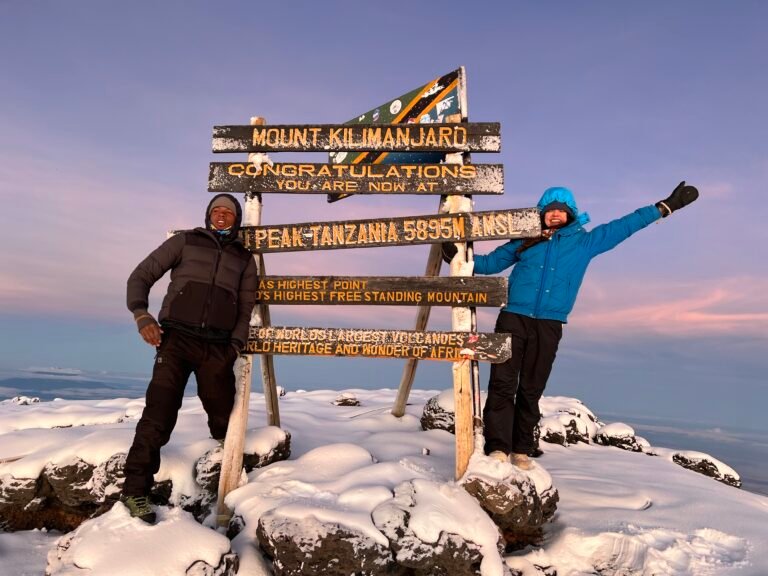
Climb Mount Kilimanjaro On Christmas Day – 8 Days Lemosho 2026
Climb Mount Kilimanjaro on Christmas Day 2026 – 8 Days Lemosho.
View package details
8 Days Shira Kilimanjaro New Year Trek – 26 December – 2 January 2026
8 Days Shira Kilimanjaro New Year Trek – 26 December 2026 – 2 January 2027.
View package detailsKilimanjaro Group Joining 27 December – New Year Summit 2026
Kilimanjaro Group Joining 27 December 2026 – New Year Summit.
View package details6 Days Marangu Route Kilimanjaro New Year Climb 2026
6 Days Marangu Route Kilimanjaro New Year Climb 2027.
View package detailsKilimanjaro New Year Summit 1 January – Climbing Dates 2026
Kilimanjaro New Year Summit 1 January 2027 – Climbing Dates.
View package detailsNo related package matches those filters. Clear one or more filters to see the other topic-matched options.



