
Securing Zanzibar flights during Christmas and New Year is widely considered the most challenging logistics puzzle in East African travel. Unlike the shoulder seasons where flexibility can lead to lower fares, the period between December 20th and January 5th operates on a different set of rules. Demand for air travel to the Zanzibar Archipelago (ZNZ) outstrips supply, meaning the ‘best’ flight is often simply the one that still has an available seat.
As a local operator, we see the same pattern every year: travelers who wait for last-minute deals during this window find themselves either paying premiums for indirect, multi-stop routes or facing sold-out flights on their preferred travel days. For the 2026-2027 season, the strategy is not about finding a bargain; it is about securing reliable connectivity to ensure your island holiday begins on schedule.
The Reality of Peak Season Pricing
In the travel industry, December is the undisputed peak. Airline pricing for Zanzibar during this time is driven by two main factors: limited seat capacity on regional carriers and the massive influx of international travelers connecting through major hubs like Dar es Salaam, Nairobi, and Addis Ababa.
You will not find ‘off-peak’ pricing during the last two weeks of December. Instead, you should focus on inventory availability. When booking, consider the following cost drivers:
- Regional Connectivity: Flights from Arusha (ARK) or Kilimanjaro (JRO) to Zanzibar are operated by smaller aircraft. These have lower passenger caps, meaning they sell out weeks or months before larger international jets.
- Hub Bottlenecks: If you are flying internationally into Dar es Salaam (DAR) and then connecting to Zanzibar, the ‘price’ is actually two separate tickets. If the international leg is delayed, your domestic connection is at risk.
- Baggage Allowances: During peak season, some budget carriers tighten enforcement on weight limits. Booking through a local operator can help clarify these requirements before you arrive at the airport.
For those planning a broader trip, you can compare these logistics with our Tanzania Flight Prices December 2027 guide to see how regional demand impacts overall travel costs.
Strategic Routing for Zanzibar Holidays
When booking your Zanzibar flights during Christmas and New Year, your routing choice is often as important as the price. There are three primary ways to reach the island, each with distinct pros and cons during the holidays.
Comparing Flight Routes to Zanzibar
| Route Type | Best For | Holiday Risk |
|---|---|---|
| Direct International | Avoiding connections; minimizing luggage loss risk. | High cost; limited availability. |
| Via Dar es Salaam (DAR) | Budget travelers; wide range of airline options. | High risk of missed connections if delays occur. |
| Via Arusha/Kilimanjaro | Safari-to-beach combinations. | Small aircraft capacity; early sell-outs. |
If you are combining a Kilimanjaro climb or a safari with a Zanzibar beach stay, your domestic flight logistics become the most critical part of your itinerary. For example, if you finish a safari on December 23rd, you need to ensure your flight from Arusha to Zanzibar is confirmed well in advance. We often advise clients to build a ‘buffer day’ in Dar es Salaam or Arusha if they are flying on peak dates, just in case of minor flight schedule adjustments common in the high season.
Booking Windows: When to Commit
The golden rule for Zanzibar travel during the holidays is to finalize your domestic and regional flights at least 4 to 6 months in advance. While international flights might have more inventory, the small regional planes that shuttle passengers from the mainland to the island are the first to fill up.
If you are organizing a group or family travel, booking separately often leads to split itineraries. We recommend booking all domestic segments together to ensure everyone is on the same flight, as airlines are often unable to shift passengers to later flights once a specific class of tickets is sold out.
If you are still in the planning phase, you may find our Best Time to Book Flights to Zanzibar in 2027 guide helpful for understanding the booking cycles beyond just the holiday rush.
Handling Logistics and Transfers
Once you land at Abeid Amani Karume International Airport (ZNZ), the holiday surge continues. Taxis and private transfers are in high demand. It is common for travelers to spend an hour or more just securing transport to their hotel if they haven’t pre-booked.
When you book your holiday with a local specialist, we ensure that your arrival logistics are synchronized with your flight. This means if your flight is delayed—a common occurrence during the busy holiday airspace—your driver is updated in real-time. This level of support is vital when traveling during peak times, as you avoid the stress of negotiating fares with airport taxi drivers who are often overwhelmed by the holiday crowds.
For those interested in how this integrates with broader travel plans, our Tanzania Safari and Zanzibar Holiday With Domestic Flights: Costs overview provides a clearer picture of how to package these logistics effectively.
Why Expert Support Matters
At Climb 4 Africa, we handle these logistical hurdles daily. We don’t just book flights; we manage the sequence of your trip to minimize the impact of the holiday rush. If you are flying into Tanzania for a safari or a climb, we ensure your transition to Zanzibar is smooth.
Whether you are planning a trip for 2026 or looking ahead to 2027, the best approach is to start a conversation early. We can look at your preferred dates, advise on the most reliable carriers for that specific week, and help you understand the trade-offs between cost and convenience. You can reach us on WhatsApp at +255 747 477 898 or email us at climb4africa@gmail.com or our backup address info@climb-4-africa.com to discuss your travel requirements.
Frequently Asked Questions
Is it cheaper to fly to Zanzibar via Dar es Salaam or Arusha during Christmas?
Generally, flying via Dar es Salaam is more cost-effective because of the higher volume of carriers, but it requires a domestic connection. Flying from Arusha or Kilimanjaro is often more convenient if you are doing a safari first, but tickets are more expensive due to the smaller aircraft capacity.
What should I do if my flight is delayed during the holiday season?
If you booked through a tour operator, contact them immediately so they can adjust your ground transfers. If you booked independently, you will need to contact the airline directly to rebook and then inform your hotel of your new estimated arrival time.
Are there any ‘hidden’ costs for Zanzibar flights in December?
Beyond the ticket price, be aware of potential extra baggage fees if you are traveling with significant gear (like safari bags). Always confirm the baggage allowance on your specific ticket, as budget regional airlines have strict policies.
Can I find last-minute deals for Zanzibar in late December?
It is highly unlikely. The holiday period is a seller’s market. If you see a seat available on a reputable airline, it is almost always better to book it immediately rather than waiting for a price drop that rarely happens.
Final Planning Advice
The Christmas and New Year period is a wonderful time to be in Zanzibar, provided the logistics are handled before you leave home. Don’t let flight stress overshadow your island holiday. By prioritizing your bookings and understanding the regional flight dynamics, you can ensure that your only concern upon arrival is which beach to visit first.
If you are ready to start planning your 2026 or 2027 holiday, contact us at climb4africa@gmail.com. We can help you navigate the flight schedules and ensure your Zanzibar holiday is as relaxing as it should be.


Navigating the ZNZ Arrival and Departure Experience
The experience at Abeid Amani Karume International Airport (ZNZ) during the Christmas and New Year period is fundamentally different from the rest of the year. When you land during this window, you are not just arriving at an airport; you are entering a high-volume bottleneck. The surge in international arrivals often creates significant queues at the visa-on-arrival desks. For travelers arriving on long-haul flights that land simultaneously, the wait time for immigration can exceed ninety minutes. Preparing your documentation—including your visa fee in exact US dollars and your proof of accommodation—is critical to clearing this stage quickly.
Once you exit the terminal, the environment is chaotic. The parking area and the pickup zones are highly congested, and the ‘taxi scrum’ is at its peak. If you have not pre-arranged a transfer with your hotel or a reputable local operator, you may find yourself negotiating with drivers who are aware of the limited availability. During the holidays, the price of these last-minute airport transfers can fluctuate wildly, often costing double or triple the standard rate. The most effective way to preserve the ‘holiday spirit’ upon arrival is to ensure your driver is waiting with a name sign the moment you clear customs, bypassing the negotiation process entirely.
The Reality of Self-Transferring Between Carriers
One of the most common pitfalls for holiday travelers is the ‘self-transfer’—a scenario where you book an international long-haul ticket on one carrier (e.g., Qatar Airways or Ethiopian Airlines) and a separate ticket for a regional bush flight (e.g., Coastal Aviation or Auric Air) on another. During the peak season, this is a high-risk strategy. If your international flight arrives in Dar es Salaam or Nairobi with even a two-hour delay, you risk missing your regional connection. Because these are separate tickets, the regional airline is under no obligation to rebook you on the next flight, and the international carrier is not responsible for your missed connection to the island.
To mitigate this, always build a ‘buffer’ into your itinerary. If you are flying into Dar es Salaam, aim for a minimum of four hours between your international arrival and your domestic departure. If the timing is too tight, the most stress-free approach is to book an overnight stay on the mainland. While this adds a night to your trip, it provides a safety net that protects you from the ripple effects of holiday travel delays, ensuring you arrive in Zanzibar refreshed rather than rushing.
Luggage Constraints: The Soft-Bag Requirement
A frequently overlooked detail that causes significant stress at the boarding gate is the luggage policy for regional flights. Many of the aircraft connecting the mainland to Zanzibar are smaller, Cessna-style planes. These aircraft have strict weight limits (usually 15kg to 20kg per person) and, more importantly, a requirement for soft-sided luggage. Hard-shell suitcases, which are standard for international travel, are often difficult or impossible to stow in the cargo pods of these smaller planes.
If you arrive at the regional terminal with a hard-shell suitcase, you may be forced to pay for an extra seat to transport your bag, or worse, leave it behind until it can be shipped on a later flight. Always check the specific ‘baggage allowance’ section of your regional ticket. If you are traveling with a mix of safari gear and beachwear, consider using a high-quality duffel bag that can be compressed. This simple adjustment prevents the embarrassment and expense of being turned away at the gate during the busiest travel week of the year.
Travel Insurance and Holiday Flight Disruptions
In the context of Zanzibar holiday travel, insurance is not just a safety net for medical emergencies; it is a financial tool for managing flight volatility. Because the Christmas season is a period of high demand, flight cancellations or major delays can be catastrophic to a pre-planned holiday. Standard travel insurance often covers ‘trip interruption’ or ‘travel delay,’ but the definitions vary wildly. Before you finalize your flight bookings, verify that your policy covers ‘missed connections’ caused by airline delays, especially if you have booked separate tickets for your international and regional legs.
If you are booking independently, read the fine print regarding ‘common carrier’ delays. In the event of a significant delay, having a policy that reimburses the cost of rebooking or the additional night of accommodation required to catch the next available flight can save you hundreds of dollars. Furthermore, ensure your coverage is active from the moment you leave your home, not just when you touch down in Tanzania. During the peak season, the ‘first leg’ of your journey is just as vulnerable to disruption as the final connection to the island.
Interline Agreements: The Difference Between Protection and Exposure
One of the most critical decisions you will make when booking your holiday trip to Zanzibar is whether to purchase a single, through-ticket (interline) or separate tickets for your international and regional legs. During the Christmas and New Year period, this distinction is not merely about convenience; it is your primary financial and logistical safeguard. An interline agreement exists when two airlines—for example, a major international carrier and a regional Tanzanian operator—have a partnership that allows baggage to be checked through to your final destination and, crucially, mandates that the airlines assist you if a connection is missed due to a delay.
When you book a single PNR (Passenger Name Record) through a major airline’s website, the carrier is legally responsible for getting you to Zanzibar. If your international flight arrives late in Dar es Salaam or Nairobi, the airline is obligated to rebook you on the next available flight at no cost. Conversely, if you book separate tickets—such as a long-haul flight on one site and a separate domestic flight on another—you are essentially acting as your own travel agent. In this scenario, if your international flight is delayed by three hours, the domestic airline has no obligation to wait for you, nor are they required to rebook you for free. During the high-traffic holiday weeks, when planes are fully booked, a missed connection on a separate ticket can result in being stranded for 24 to 48 hours.
Managing ‘Fluid’ Flight Schedules in the Archipelago
Travelers accustomed to the rigid punctuality of major international hubs often find the operational reality of regional aviation in East Africa surprising. During the peak December and January season, regional carriers such as Coastal Aviation, Auric Air, and Precision Air frequently engage in what is known as ‘schedule optimization.’ Because these airlines operate smaller, high-frequency aircraft, they may adjust departure times by one or two hours to consolidate passenger loads or maximize aircraft utilization during the busiest days of the year.
This is rarely a ‘delay’ in the traditional sense, but rather a dynamic shift in the flight manifest. To navigate this, you must treat your regional flight booking as a living document. Do not assume that the time printed on your ticket four months ago is the time you will depart. Ensure that the email address and phone number provided at the time of booking are ones you check daily in the 72 hours leading up to your travel. If you are staying at a hotel in Zanzibar, provide them with your flight details well in advance; many reputable lodges have local contacts with the airlines and can alert you if a schedule shift has been pushed through the system, often before you receive the automated airline notification.
The Complexity of the Return Leg: Departing ZNZ During Peak Season
While most travelers focus their logistical anxiety on the arrival into Zanzibar, the return leg during the Christmas and New Year window is arguably more critical. Departing the island during the peak season involves a unique set of challenges that can derail your international connection if not anticipated. The holiday surge does not simply dissipate; it clusters heavily around the airport during the first week of January, creating a bottleneck that can surprise even experienced travelers.
When planning your departure, you must account for the fact that the Zanzibar airport (ZNZ) experiences its highest volume of traffic in the early morning and late afternoon. These windows often align with the departure times of major international carriers connecting to Europe, the Middle East, and beyond. If you are flying out on a regional flight to connect to an international long-haul, your departure from the island is the single point of failure for your entire journey home. If you miss this first leg due to traffic or check-in delays, the domino effect on your subsequent flights—especially if you are on separate tickets—is nearly impossible to rectify in real-time.
The ‘Buffer Zone’ Strategy for Holiday Departures
The standard airline advice to arrive two hours before a flight is insufficient for Zanzibar during the December holidays. Because the island’s road infrastructure is limited, traffic congestion between popular beach destinations like Nungwi or Kendwa and the airport can be unpredictable. During the festive season, local traffic increases significantly, and road incidents or holiday-related road closures can turn a standard 90-minute transfer into a three-hour ordeal.
We strongly recommend implementing a ‘Buffer Zone’ for your departure day. Aim to be at the airport at least three hours before a domestic departure and four hours before an international one. This buffer is not just about standing in a queue; it is about providing a safety margin for the unexpected. If you are traveling with a family or a large group, this extra time also accounts for the slower processing of luggage and the potential for secondary screening, which becomes more frequent during high-security holiday periods.
Managing Check-in Congestion and Security
The operational reality of ZNZ during the holiday peak is that check-in counters for regional carriers often become overwhelmed. Because these carriers operate smaller aircraft with high turnover, they do not have the luxury of vast, dedicated check-in halls. You will frequently find that multiple flight check-ins are occurring simultaneously in a shared space. During the last week of December and the first week of January, these lines can snake through the terminal, creating confusion and slowing down the process.
Furthermore, once you have checked your bags, you must navigate the security and immigration checkpoints. During peak season, the number of departing passengers can temporarily exceed the throughput capacity of the security screening machines. Being at the front of this process is vital. Travelers who arrive at the ‘recommended’ time often find themselves stuck in the middle of a surge, risking a missed flight simply because they were caught in the security queue while their plane was boarding. By arriving early, you secure your position, allow for any administrative hiccups with your luggage, and gain the peace of mind that your holiday will not end with a frantic, last-minute dash to the gate.
Related Guides and Packages
Check Availability for Zanzibar Flights During Christmas And New Year: Expert Booking & Pricing…
Ready to compare dates, prices, and the best option for your group? Send the package name and travel month so the team can reply with a clear quote, availability, and what is included.

Nairobi To Zanzibar Flights: Ticket Prices & Booking Guide
A comprehensive guide to understanding flight costs, airline choices, and logistics for the popular Nairobi to Zanzibar route.
View package detailsTanzania Honeymoon Safari And Zanzibar With Flights: Package Prices
Tanzania Honeymoon Safari and Zanzibar With Flights: Package Prices.
View package details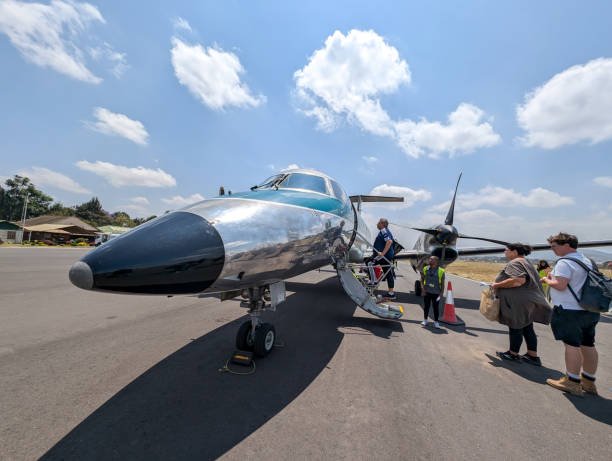
Kilimanjaro Climbing And Zanzibar Package With Flights: Pricing Guide
A detailed guide on how to structure a Kilimanjaro climb and Zanzibar beach holiday, covering cost drivers, flight logistics, and route selection for 2026-2027.
View package detailsBest Flights For Kilimanjaro Climbing And Zanzibar Holidays: A Planning Guide
A professional guide to optimizing your international and domestic flight strategy for a combined Kilimanjaro trek and Zanzibar beach holiday in 2026-2027.
View package details
Best Time To Book Flights To Zanzibar In : Planning Your Island Getaway
Expert advice on securing the best flight arrangements for your 2027 Zanzibar holiday, including seasonal booking windows and coordination with Tanzania safari itineraries.
View package detailsTanzania Flight Prices September : Serengeti And Zanzibar Planning
Expert advice on navigating domestic flight logistics, seasonal pricing, and the crucial 'bush-to-beach' connection for your September 2027 Tanzania itinerary.
View package detailsTanzania Flight Prices February : Safari & Zanzibar Routes
A detailed guide to navigating flight logistics and budget factors for Tanzania travel in February 2027, focusing on safari circuits and Zanzibar connections.
View package detailsTanzania Safari And Zanzibar Holiday With Domestic Flights: Costs Guide
A guide to understanding the costs, logistics, and planning strategies for combining a Tanzanian wildlife safari with a Zanzibar beach getaway using domestic flights.
View package detailsZanzibar To Nairobi Flight Price & Schedule: Planning Your Connection
A practical guide to navigating flights from Zanzibar to Nairobi, covering airport logistics, price factors, and how to coordinate your beach-to-safari transition.
View package detailsWhich Tanzanian Airport Is Best For A Safari And Zanzibar Holiday?
Which Tanzanian Airport Is Best for a Safari and Zanzibar Holiday?
View package detailsCan I Fly From Zanzibar To Serengeti And Return The Same Day? Guide
A professional assessment of the feasibility of same-day air travel between Zanzibar and the Serengeti, including logistical realities and better alternatives for your Tanzanian itinerary.
View package detailsHow Long Is The Flight From Serengeti To Zanzibar? ( Planning Guide)
Planning your bush-to-beach connection? Discover the actual flight durations, stopover logistics, and booking realities for traveling from the Serengeti to Zanzibar.
View package detailsNo related package matches those filters. Clear one or more filters to see the other topic-matched options.



