
When planning a trip that combines the raw wilderness of a safari with the relaxing coastline of Zanzibar, your choice of entry point dictates the entire flow of your itinerary. For most travelers, the question of which Tanzanian airport is best for a safari and Zanzibar holiday comes down to one fundamental decision: are you visiting the Northern Circuit or the Southern Circuit?
There is no single “correct” airport for the entire country. Instead, the choice is driven by your wildlife goals. If your itinerary focuses on the Serengeti, Ngorongoro Crater, and Tarangire, Kilimanjaro International Airport (JRO) is your essential entry point. If you are exploring the quieter, more rugged parks of the south like Nyerere (formerly Selous) or Ruaha, Julius Nyerere International Airport (DAR) in Dar es Salaam is the correct choice.
Choosing the wrong airport can result in unnecessary domestic flights, long road transfers, and wasted time. As you prepare for your 2027 travel dates, we have outlined the strategic differences between these two hubs to help you minimize transit fatigue and maximize your time in the bush and on the beach.
The Northern Circuit: Why Kilimanjaro (JRO) is the Standard
The vast majority of first-time visitors to Tanzania follow the Northern Circuit. This route offers the most iconic wildlife viewing in East Africa. If this is your plan, you should aim to fly directly into Kilimanjaro International Airport (JRO).
JRO is strategically located between the towns of Arusha and Moshi. It acts as the primary hub for the entire northern safari ecosystem. When you land at JRO, you are often within a two-hour drive of your first safari destination, such as Arusha National Park or the gateway to Tarangire. This proximity is vital because it allows you to hit the ground running without an additional domestic flight immediately upon arrival.
Why JRO works for the Safari-to-Zanzibar flow:
- Direct Connections: Many international carriers fly directly into JRO, allowing you to bypass the congestion of Dar es Salaam.
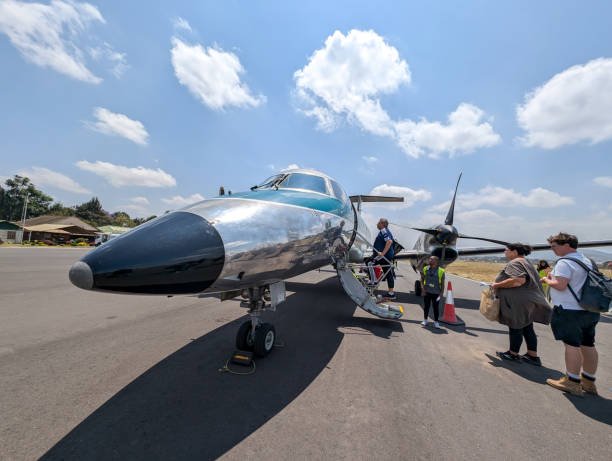
- Bush Plane Accessibility: Regional carriers like Coastal Aviation and Auric Air operate frequent flights from small airstrips inside the Serengeti directly to Zanzibar. By starting in the north, you can finish your safari deep in the bush and fly out to the island without ever needing to return to a major city airport.
- Combined Logistics: If you are planning a Kilimanjaro climb as part of your trip, JRO is the only logical choice, as it is the closest airport to the mountain trailheads.
For those looking to understand how this fits into a broader trip, you can review our 14 days Tanzania safari and Zanzibar family holiday model, which illustrates how the Northern Circuit flow typically integrates with the island transit.
The Southern Circuit Alternative: When to Use Dar es Salaam (DAR)
While the Northern Circuit is famous, the Southern Circuit offers a different, more secluded experience. If you are choosing parks like Nyerere National Park or Ruaha National Park, flying into Julius Nyerere International Airport (DAR) is the most practical strategy.
DAR is the bustling capital’s main airport. It serves as the hub for the southern bush plane network. If you arrive in Dar es Salaam, you can catch a connecting light aircraft directly to the remote airstrips of the south. This saves you from the grueling, multi-day drives that would otherwise be required if you tried to access these parks from the north.
Strategic Advantages of the Southern Flow:
- Proximity to the Coast: If you are prioritizing a shorter, more relaxed beach holiday after a safari, the southern parks are geographically closer to the coast than the northern ones.
- Reduced Internal Flight Time: Flying from the southern parks to Zanzibar is often faster and less complex than navigating the flight networks from the Serengeti.
- Avoiding the Northern Crowd: If your priority is solitude, the Southern Circuit is your best option, and DAR is the gateway that makes it feasible.
However, be aware that DAR is a busier, more complex airport than JRO. Transfers between the international terminal and the domestic terminal (Terminal 1) require planning. If you are booking your own flights, always leave at least four hours between your international arrival and your domestic departure to account for potential delays and customs processing.
The “Open-Jaw” Strategy: Why Round-Trip Flights Often Fail
One of the most common mistakes travelers make when planning a safari and beach holiday is booking a round-trip ticket to a single airport. For example, flying into JRO and back out of JRO, even if you are ending your trip in Zanzibar. This forces you to “backtrack”—taking a flight from Zanzibar back to JRO, potentially spending a night in transit, before your international flight home.
Instead, we strongly recommend an open-jaw ticket. This means you book your international flight to arrive in one city (e.g., Kilimanjaro/JRO) and depart from another (e.g., Zanzibar/ZNZ). This allows you to travel in a straight line: International Arrival -> Safari -> Beach -> International Departure from Zanzibar.
This strategy is not only more efficient but often cheaper when you factor in the cost of the extra domestic flights and hotel nights you would otherwise need to return to your original entry point. If you need help coordinating these logistics, our team at Climb 4 Africa can assist in mapping out the most efficient flight path based on your specific dates. You can reach us via WhatsApp at +255 747 477 898 or email info@climb-4-africa.com to discuss your route.
Practical Logistics: The Reality of Bush Plane Travel
Regardless of whether you fly into JRO or DAR, you will likely be using bush planes (small Cessna Caravans or similar aircraft) to connect your safari to your beach holiday. This is an essential part of the “Which Tanzanian Airport Is Best” question because the airport you choose dictates the frequency and availability of these flights.
Key Considerations for Bush Plane Transit:
- Luggage Restrictions: Unlike international flights, bush planes have strict weight limits, typically 15kg (33 lbs) per person, including carry-on. Furthermore, you are almost always required to use soft-sided bags. Hard-shell suitcases simply do not fit in the cargo pods of these aircraft.
- The “No-Schedule” Nature: Bush planes often fly on a “circuit” basis. This means the plane may stop at multiple airstrips before reaching your final destination. When planning your airport arrival, understand that your flight to the beach might be a scenic tour with multiple stops, rather than a direct flight.
- Weather Dependency: In the rainy seasons, flights can be delayed or rerouted. This is why we advise against scheduling your international flight home on the exact same day you are leaving the bush. Always build in a buffer day or at least a significant time gap to account for these realities.
If you are concerned about how to pack or manage these transitions, our team provides specific briefing notes for all our travelers. For more on the logistics of connecting your flights, see our article on Can I Book International Flights and Safari Packages Together?, which covers the pros and cons of bundling your arrangements.
Summary Comparison for Decision Making
To help you decide, consider the following trade-offs based on the primary focus of your trip:
| Trip Focus | Recommended Entry Airport | Why? |
|---|---|---|
| Northern Circuit Safari (Serengeti, Ngorongoro) | Kilimanjaro (JRO) | Direct access to Arusha; efficient bush plane networks to Serengeti/Zanzibar. |
| Southern Circuit Safari (Selous/Nyerere, Ruaha) | Dar es Salaam (DAR) | Central hub for southern bush planes; avoids long overland drives. |
| Kilimanjaro Climb + Safari | Kilimanjaro (JRO) | Closest proximity to the mountain and northern safari parks. |
| Relaxed / Off-the-beaten-path | Dar es Salaam (DAR) | Gateway to quieter southern parks; easier transit to coastal beach areas. |
Ultimately, the “best” airport is the one that minimizes the time you spend in transit and maximizes the time you spend in the field. If you are unsure which circuit suits your interests or travel style, we can help you compare the two. You can find more inspiration on our Tanzania safari tours blog, where we detail the distinct experiences of the north versus the south.
Booking Guidance and Expert Support
The logistics of Tanzania travel can be complex, especially when you are coordinating international flights, domestic bush planes, and local safari transfers. We do not just book the tour; we assist with the entire flow of your journey. When you reach out to us, please provide your preferred travel dates, the number of travelers, and whether you have a preference for luxury lodges or more adventurous tented camps.
We can help you navigate the specific flight connections required to make your chosen airport strategy work. Whether you are flying from the USA, Europe, or Australia, there are specific hubs that offer the best connections to both JRO and DAR. For travelers coming from afar, we often suggest looking into our guide on planning a safari from the USA, which offers advice on managing long-haul fatigue and arrival logistics.
To start your planning for 2027, send us an email at climb4africa@gmail.com or contact us through our backup email at info@climb-4-africa.com. We are here to ensure that your arrival in Tanzania is the start of a smooth holiday, not the beginning of a logistical headache.
“,
“faq_schema”: [
{
“question”: “Can I fly directly from the Serengeti to Zanzibar?”,
“answer”: “Yes, there are frequent bush plane flights operated by regional carriers that connect major airstrips in the Serengeti directly to Zanzibar. This is a very popular way to end a safari without needing

The ‘Direct to Zanzibar’ Factor: Weighing International Arrivals at ZNZ
In recent years, an increasing number of international airlines have begun operating direct flights into Abeid Amani Karume International Airport (ZNZ) on Zanzibar. For many travelers, this appears to be the ultimate convenience: landing directly in a beach destination without the need to navigate the mainland hubs of Dar es Salaam (DAR) or Kilimanjaro (JRO). However, from a professional safari-planning perspective, choosing ZNZ as your primary international entry point requires a nuanced understanding of the domestic connections that must follow if you intend to visit the mainland.
The primary appeal of flying directly into Zanzibar is the reduction of total travel time. If your itinerary is heavily weighted toward the beach—perhaps spending ten days on the coast and only a short three-day excursion to the mainland—arriving in ZNZ can save you the hassle of a domestic transfer immediately upon landing. You can clear customs, transfer to your resort, and begin your relaxation phase instantly. However, this strategy essentially flips the standard safari-first itinerary on its head. When you start with the beach, you must eventually transition to a domestic flight to reach your safari bush airstrip. This creates a logistical dependency on domestic carriers that can be more complex than flying into the mainland first.
One critical factor to consider is the immigration and visa process. While Tanzania maintains a unified visa policy, clearing immigration at ZNZ can occasionally be a distinct experience compared to the major mainland airports. During peak tourist seasons, the volume of international arrivals at ZNZ can lead to longer wait times at the visa-on-arrival desks. If your onward domestic flight to the mainland is booked on a tight schedule, this can create unnecessary stress. Furthermore, if you are planning to visit the Northern Circuit (Serengeti/Ngorongoro), you will still need to connect to a flight that lands at either Arusha Airport (ARK) or Kilimanjaro (JRO) to reach your safari guides. This adds an extra domestic leg to your journey that could have been avoided by flying directly into JRO at the start of your trip.
Baggage logistics also play a significant role in this decision. International flights have generous luggage allowances, but the bush planes required to transport you from Zanzibar to the safari airstrips (such as Seronera or Manyara) enforce strict weight limits—typically 15 kilograms (33 pounds) in soft-sided bags. If you arrive in Zanzibar with full-sized checked luggage meant for a multi-week international trip, you will face significant challenges. You will either need to pay for extra weight, which is often limited by aircraft capacity, or leave your main luggage in storage at a Zanzibar hotel and pack a smaller safari bag. By flying into the mainland first (JRO or DAR), you can often arrange for your larger luggage to be stored with your safari operator in Arusha or Dar es Salaam, allowing you to travel to the beach with only what you need for the final leg of your journey.
Finally, consider the psychological flow of your trip. Most travelers find that the “safari-to-beach” sequence is more rewarding. The safari experience is physically demanding—early morning game drives, dusty roads, and long hours in the field. Ending this intensity with a period of relaxation on the beaches of Zanzibar provides a natural, satisfying conclusion to the holiday. Reversing this by starting with the beach often leaves travelers feeling slightly restless, as the anticipation of the safari builds while they are trying to relax by the ocean. Unless you have a specific, beach-heavy itinerary or are utilizing a flight connection that is significantly cheaper or faster, the “safari-first” approach via the mainland remains the industry standard for a reason.
Navigating the Domestic Transit Gap: Arusha (ARK) vs. Kilimanjaro (JRO)
One of the most persistent sources of confusion for travelers planning a Northern Circuit safari is the distinction between Kilimanjaro International Airport (JRO) and Arusha Airport (ARK). While they are often grouped together as the “Northern Hub,” they serve fundamentally different functions in your logistics chain. Misunderstanding this difference can lead to expensive, last-minute road transfers or missed flight connections.
Kilimanjaro International Airport (JRO) is the primary gateway for international carriers. It is situated roughly 50 kilometers (31 miles) from the city of Arusha. For travelers arriving on long-haul flights from Europe, the Middle East, or the Americas, JRO is your entry point. However, it is not the only airport in the region. Arusha Airport (ARK) is a much smaller, regional facility located in the heart of the city itself. ARK serves almost exclusively as a hub for bush planes flying directly to the Serengeti, Manyara, and other remote airstrips.
The logistical friction occurs when travelers assume they can simply “connect” from JRO to ARK. If your international flight lands at JRO in the afternoon, you will likely not make a connection to a domestic bush plane at ARK, which usually ceases operations before dusk. This necessitates an overnight stay in the Arusha area. If your safari itinerary begins with a flight from ARK the next morning, you must factor in the one-hour drive from JRO to your hotel, and then a 30-to-45-minute drive from your hotel to ARK the following day. Conversely, many modern bush plane operators now offer direct flights from JRO, bypassing ARK entirely. When booking your safari, explicitly ask your operator if your bush flight departs from JRO or ARK. If you are starting your safari immediately upon arrival, choosing a flight that departs from JRO saves you the time and cost of navigating across Arusha city traffic.
The Dar es Salaam “Terminal Transfer” Reality
For those venturing into the Southern Circuit, the logistical reality at Julius Nyerere International Airport (DAR) is significantly more complex than at JRO. DAR is a split-terminal airport, and the geography of these terminals is a critical detail that is often overlooked in online booking engines. International flights almost exclusively arrive at Terminal 3, a modern, efficient facility. However, the vast majority of domestic bush planes—the “safari taxis” that will take you to Nyerere or Ruaha—depart from Terminal 1, which is located on the opposite side of the airfield.
This is not a simple walk across the tarmac. The transit between Terminal 3 and Terminal 1 requires a taxi transfer that can take anywhere from 15 to 30 minutes, depending on the erratic traffic conditions near the airport perimeter. If you are booking your own international arrival and a separate domestic bush flight, you must build in a minimum “buffer” of four to five hours. A “tight” connection of two hours, which might be perfectly acceptable at a major European hub, is a recipe for disaster at DAR. If your international flight arrives late, you will miss your bush plane, and because these smaller operators often fly only once or twice daily, a missed connection can set your entire safari schedule back by 24 hours.
Furthermore, the immigration process at DAR can be unpredictable. While the introduction of electronic visa systems has improved throughput, the physical processing of passengers at Terminal 3 can occasionally create bottlenecks. We strongly recommend that travelers flying into DAR for a Southern Circuit safari either book their international and domestic legs on a single ticket (if available via a partner airline) or engage a meet-and-greet service to navigate the transfer between terminals. This service, often provided by local safari operators, ensures that you are met at the arrivals gate and driven directly to the domestic terminal, bypassing the stress of negotiating local transport.
Optimizing Your Departure: The Zanzibar-to-Mainland Link
The final logistical hurdle is the return journey. If your trip concludes in Zanzibar, you are faced with a choice: fly directly home from Zanzibar (ZNZ) or connect back to the mainland (DAR or JRO) for your international departure. While flying out of ZNZ is tempting, it often involves a layover in a regional hub like Nairobi, Addis Ababa, or Doha. This can be efficient, but it also increases the risk of baggage mishandling or flight delays that are outside your control.
If you choose to return via the mainland, your connection strategy is paramount. If you are flying out of JRO, ensure your bush flight from Zanzibar arrives at JRO at least three hours before your international flight is scheduled to depart. While the bush plane arrival and international departure terminals at JRO are adjacent, the process of clearing domestic baggage and re-checking for an international flight is mandatory. If you are flying out of DAR, the same “terminal transfer” rule applies in reverse. Always prioritize a “through-ticket” if your airline offers it; this ensures that your baggage is checked through to your final destination, and the airline assumes responsibility for the connection. If you are forced to book separate tickets, treat the Zanzibar-to-Mainland leg as a completely independent journey, allowing for a significant overnight buffer in the mainland city. This not only protects you from flight delays but also provides a final, stress-free evening to enjoy the vibrant culture of Dar es Salaam or the coffee-growing highlands near Arusha before your long-haul flight home.
Related Guides and Packages
Check Availability for Which Tanzanian Airport Is Best For A Safari And Zanzibar Holiday?
Ready to compare dates, prices, and the best option for your group? Send the package name and travel month so the team can reply with a clear quote, availability, and what is included.

Tanzania Safari And Zanzibar Holiday With Domestic Flights: Costs Guide
A guide to understanding the costs, logistics, and planning strategies for combining a Tanzanian wildlife safari with a Zanzibar beach getaway using domestic flights.
View package detailsAfcon Football Safari And Zanzibar Holiday: Expert Planning Guide
A guide to combining the AFCON 2027 football tournament with a Tanzanian safari and Zanzibar beach holiday, focusing on logistics, timing, and travel planning.
View package detailsTanzania Flight Prices February : Safari & Zanzibar Routes
A detailed guide to navigating flight logistics and budget factors for Tanzania travel in February 2027, focusing on safari circuits and Zanzibar connections.
View package details
Tanzania Honeymoon Safari And Zanzibar With Flights: Package Prices
Tanzania Honeymoon Safari and Zanzibar With Flights: Package Prices.
View package details
Zanzibar To Nairobi Flight Price & Schedule: Planning Your Connection
A practical guide to navigating flights from Zanzibar to Nairobi, covering airport logistics, price factors, and how to coordinate your beach-to-safari transition.
View package detailsBest Time To Book Flights To Zanzibar In : Planning Your Island Getaway
Expert advice on securing the best flight arrangements for your 2027 Zanzibar holiday, including seasonal booking windows and coordination with Tanzania safari itineraries.
View package detailsTanzania Flight Prices September : Serengeti And Zanzibar Planning
Expert advice on navigating domestic flight logistics, seasonal pricing, and the crucial 'bush-to-beach' connection for your September 2027 Tanzania itinerary.
View package detailsCan I Fly From Zanzibar To Serengeti And Return The Same Day? Guide
A professional assessment of the feasibility of same-day air travel between Zanzibar and the Serengeti, including logistical realities and better alternatives for your Tanzanian itinerary.
View package detailsHow Long Is The Flight From Serengeti To Zanzibar? ( Planning Guide)
Planning your bush-to-beach connection? Discover the actual flight durations, stopover logistics, and booking realities for traveling from the Serengeti to Zanzibar.
View package details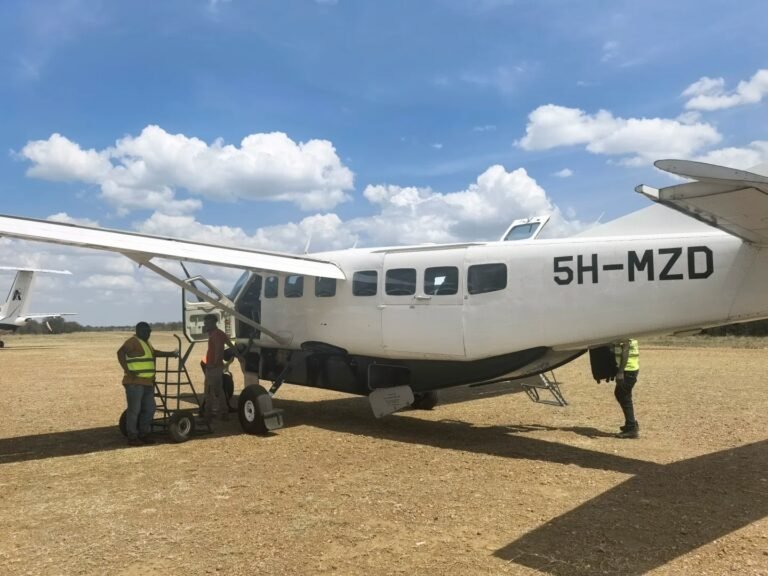
Can You Fly Directly From Zanzibar To Serengeti? A Planning Guide
A practical guide to flying from the beaches of Zanzibar to the Serengeti plains, covering bush plane logistics, baggage restrictions, and planning advice.
View package detailsHow Much Is A Flight From Zanzibar To Serengeti?
How Much Is a Flight From Zanzibar to Serengeti?
View package detailsBest Flights For Kilimanjaro Climbing And Zanzibar Holidays: A Planning Guide
A professional guide to optimizing your international and domestic flight strategy for a combined Kilimanjaro trek and Zanzibar beach holiday in 2026-2027.
View package detailsNo related package matches those filters. Clear one or more filters to see the other topic-matched options.



