
French speakers planning a Kilimanjaro climb can expect a rewarding expedition, with popular routes like Machame and Lemosho offering the best acclimatization and scenery. Planning for 2026-2027 involves selecting a suitable route based on duration and difficulty, understanding costs that typically range from $2,000 to $4,000 USD per person for standard packages, and preparing physically and mentally. Local Tanzanian operators like Climb 4 Africa provide essential support, ensuring a safe and successful ascent. Communication might involve English primarily, but guides are often multilingual, and having French-speaking support can be arranged. Booking well in advance for 2026-2027 is advisable, especially for peak seasons.
Your Kilimanjaro Adventure from France: What to Expect
Embarking on a journey to climb Kilimanjaro from France is a significant undertaking, blending ambitious trekking with a deep look at Tanzanian culture. As a specialist tour operator based in Tanzania, we at Climb 4 Africa understand the unique considerations for international travelers, particularly those who may prefer to communicate in French or have specific expectations shaped by their European travel experiences. This guide is crafted to address those nuances, ensuring your Kilimanjaro climb is not just a physical achievement but a smooth and enriching cultural experience. We’ll cover everything from choosing the right route and understanding the costs for 2026-2027 to essential packing lists and what to anticipate on the mountain itself.
The dream of summiting Kilimanjaro is shared by adventurers worldwide, and for our friends in France, the allure of this majestic dormant volcano is strong. We aim to provide a clear, practical overview, cutting through the noise to offer insights that only a local operator can provide. Think of this as your pre-expedition briefing, designed to equip you with the knowledge needed to make informed decisions about your Kilimanjaro climb.
Choosing Your Kilimanjaro Route: A French Traveler’s Perspective
Selecting the right route is arguably the most critical decision when planning your Kilimanjaro climb. For French climbers, balancing scenic beauty, acclimatization profile, and difficulty is key. Each route offers a distinct experience, and understanding these differences will help you choose the one that best suits your fitness level, time constraints, and desire for adventure. We often explain that the ‘best’ route is subjective, depending entirely on the individual climber’s priorities.
The primary factor influencing success on Kilimanjaro is acclimatization – how well your body adapts to the increasing altitude. Longer routes generally offer better acclimatization, significantly increasing your chances of reaching the summit. We strongly recommend routes of 7 days or more for this reason.
The Most Recommended Routes for French Climbers
Based on success rates, scenery, and acclimatization, certain routes stand out:
- Machame Route: Often called the ‘Whiskey Route’, Machame is one of the most popular choices. It’s known for its stunning scenery, varied terrain, and excellent acclimatization profile due to its ‘climb high, sleep low’ strategy. It’s typically a 6 or 7-day trek. The 7-day option is highly recommended for better acclimatization and summit success.
- Lemosho Route: This route is considered one of the most beautiful, starting in the lush western rainforest and offering excellent wildlife viewing opportunities in its early stages. It merges with the Machame route later on. Lemosho is longer, usually 7 or 8 days, providing superior acclimatization and a higher success rate. Its remote starting point adds to its appeal for those seeking a less crowded experience initially.
- Marangu Route: Known as the ‘Coca-Cola Route’, Marangu is the oldest and perhaps the most straightforward in terms of accommodation, using dorm-style huts instead of tents. It’s also the shortest (5 days) and therefore has the lowest success rate due to poor acclimatization. We generally advise against the 5-day Marangu for most climbers, suggesting the 6-day option if this route is preferred, but even then, Machame or Lemosho are superior for acclimatization.
Routes to Consider with Caution
While these routes can be done, they require careful consideration:
- Rongai Route: This route approaches Kilimanjaro from the north, making it a drier option, which can be beneficial during the rainy season. It’s generally less scenic than Machame or Lemosho but offers a good acclimatization profile, typically over 6 or 7 days. It’s a good alternative if you’re concerned about rain.
- Northern Circuit: The longest route (9 days) and arguably the best for acclimatization, offering a 360-degree view of Kilimanjaro as it circles the mountain. It has the highest success rate but is also the most expensive due to its duration.
- Umbwe Route: The shortest and steepest route, known for its aggressive ascent and poor acclimatization. It is only recommended for experienced, very fit mountaineers who are already well-acclimatized.
For French climbers who may not have extensive high-altitude trekking experience, we strongly recommend the Lemosho or Machame routes, opting for the 7-day or 8-day itineraries. These offer the best balance of scenery, challenge, and, crucially, a higher probability of reaching the summit safely. When considering your Kilimanjaro climb in 2026 or 2027, prioritize duration for acclimatization.
Understanding Kilimanjaro Climb Costs for 2026-2027
The cost of a Kilimanjaro climb can vary significantly depending on the route, duration, operator, and the inclusions offered. For travelers from France planning a trip in 2026 or 2027, understanding these cost factors is essential for budgeting. As a local operator, Climb 4 Africa strives to offer competitive pricing without compromising on safety, quality, or the climber’s experience. Generally, expect costs to range from $2,000 to $4,000 USD per person for reputable operators offering standard packages.
It’s important to distinguish between budget operators and those offering a mid-range to premium service. While lower prices might seem attractive, they often come with compromises on equipment quality, guide experience, food, and safety standards. We believe investing in a reputable operator is investing in your safety and success.
Key Cost Components
The price you pay typically covers:
- Park Fees: These are fixed by the Tanzanian government and are a significant portion of the total cost. They include entry fees, camping/hut fees, and conservation fees.
- Crew Salaries: Wages for your guides, assistant guides, cook, and porters. Fair wages are crucial for motivating a dedicated and experienced team.
- Food: Nutritious meals prepared by your cook throughout the trek.
- Equipment: Tents, sleeping mats, cooking equipment, and safety gear (like oxygen cylinders and a medical kit).
- Transportation: Transfers from Moshi or Arusha to the mountain gate and back.
- Accommodation: Pre- and post-climb accommodation in Moshi or Arusha is often included, as is accommodation at designated campsites or huts on the mountain.
What’s Typically NOT Included
Be aware of potential additional costs:
- Flights: International flights from France to Kilimanjaro International Airport (JRO).
- Visas: Required for most nationalities entering Tanzania.
- Travel Insurance: Essential, covering high-altitude trekking and medical evacuation.
- Personal Gear: Sleeping bag, trekking poles, waterproof clothing, boots, etc.
- Tips: Gratuities for guides, porters, and the cook are customary and expected.
- Lunches/Dinners in Town: Meals before and after the climb are sometimes not included.
- Personal Expenses: Souvenirs, drinks, and laundry.
Budgeting for 2026-2027
When budgeting for your Kilimanjaro climb in 2026 or 2027, consider the following:
- Operator Tier: Budget operators might start around $1,500-$1,800 USD, mid-range operators (like Climb 4 Africa) typically fall between $2,000-$3,000 USD for 7-day treks, and premium or luxury operators can exceed $4,000 USD.
- Route Length: Longer routes (8-9 days) will naturally cost more due to additional park fees and crew costs.
- Group Size: Private climbs are more expensive per person than joining a group.
- Season: Peak seasons (June-October and December-March) may see slightly higher prices, though park fees are generally static.
It’s always advisable to get detailed quotes from reputable operators. A transparent quote will break down the costs, including park fees, so you can see exactly what you are paying for. For the most accurate pricing for your Kilimanjaro climb in 2026-2027, contacting operators directly is the best approach.
Physical and Mental Preparation for French Climbers
Climbing Kilimanjaro is a serious physical challenge, and adequate preparation is non-negotiable for success and safety. For travelers from France, where hiking culture might differ, understanding the specific demands of high-altitude trekking is crucial. This isn’t just about strength; it’s about endurance, cardiovascular fitness, and mental resilience.
Cardiovascular Fitness
The most important aspect of your fitness preparation is building a strong cardiovascular base. This involves activities that elevate your heart rate for sustained periods.
- Aerobic Exercise: Aim for at least 3-4 sessions per week, 45-60 minutes each. Activities like running, cycling, swimming, or brisk walking are excellent.
- Hiking: If possible, incorporate regular hikes, especially those with significant elevation gain. This will simulate the conditions on Kilimanjaro better than any other activity. Try to carry a moderately heavy backpack (5-10 kg) during these hikes.
- Stair Climbing: A fantastic way to build leg strength and endurance for ascents. Use stair machines at the gym or find local stairs.
Strength Training
While cardio is king, strength training, particularly for your legs and core, will help you manage the sustained effort and carry your daypack.
- Legs: Squats, lunges, step-ups, and calf raises are beneficial.
- Core: Planks, crunches, and back extensions will help with stability and carrying your pack.
Acclimatization is Key
No amount of training can fully substitute for proper acclimatization on the mountain. However, being fit will help your body cope better with the altitude stress. Remember our advice: choose a longer route (7+ days) for Kilimanjaro.
Mental Preparation
The mental aspect of climbing Kilimanjaro is often underestimated. The summit night, in particular, is a test of willpower.
- Positive Mindset: Focus on the journey and the achievement, not just the summit. Break down the climb into daily goals.
- Resilience: Understand that you will face discomfort – cold, fatigue, and altitude symptoms. Learning to manage these feelings is part of the challenge.
- Patience: The pace on Kilimanjaro is slow and steady (‘pole pole’ in Swahili). Embrace it.
- Visualization: Imagine yourself successfully completing each stage of the climb.
Specific Considerations for French Climbers
If you are accustomed to European alpine environments, remember Kilimanjaro is a trek, not a technical climb. The altitude is the primary challenge. If your experience is more with coastal or flat regions, focus heavily on building cardiovascular endurance and incorporating hill training. We recommend starting your preparation at least 3-6 months before your planned 2026 or 2027 climb.
Consulting with a doctor before beginning your training program is always a wise step, especially if you have any pre-existing health conditions.
Logistics: Flights, Visas, and Tanzania Travel Essentials
Organizing the logistics for your Kilimanjaro climb from France involves several key steps. Understanding these requirements well in advance will ensure a smooth and stress-free journey to Tanzania. As locals, we’ve guided countless international trekkers and can offer practical advice.
Flights to Tanzania
The primary international airport serving Kilimanjaro is Kilimanjaro International Airport (JRO), also known as Kilimanjaro Airport. Most international flights will arrive here, often with a stopover in a major European hub (like Amsterdam, Paris, or Istanbul) or the Middle East (like Doha or Dubai).
- Booking: Book your flights to JRO as early as possible, especially if you plan to climb during the peak seasons of 2026 or 2027. Early booking often secures better prices.
- Arrival: Aim to arrive at least 1-2 days before your trek begins. This allows time for rest, acclimatization to the local climate, any last-minute gear checks, and to meet your climbing team and receive a briefing. Moshi or Arusha are the typical base towns.
- Internal Travel: If you plan to visit Zanzibar or other parts of Tanzania before or after your climb, you might consider domestic flights from JRO or Arusha Airport (ARK) to Zanzibar (ZNZ).
Visa Requirements for Tanzania
Most nationalities, including French citizens, require a visa to enter Tanzania. You have a few options:
- Online E-Visa: This is often the most convenient method. You can apply for your visa online before you travel. The process usually takes a few business days. Ensure you use the official Tanzanian immigration website to avoid third-party scams.
- Visa on Arrival: You can also obtain a visa upon arrival at Kilimanjaro International Airport. However, applying online in advance can save time and potential queues at the airport.
- Visa Requirements: Check the latest requirements from the Tanzanian embassy or consulate in France, as regulations can change. Ensure your passport is valid for at least six months beyond your intended stay and has sufficient blank pages.
Travel Insurance
Comprehensive travel insurance is mandatory for all our Kilimanjaro climbers. It is not optional. Your policy must cover:
- High-Altitude Trekking: Ensure your policy specifically covers trekking up to altitudes of 6,000 meters (19,341 feet).
- Medical Evacuation: This is critical. If you experience severe altitude sickness or another medical emergency, you will need to be evacuated from the mountain, which can be very expensive.
- Trip Cancellation/Interruption: Covers unforeseen events that might force you to cancel or cut short your trip.
We can often recommend insurance providers that are familiar with Kilimanjaro expeditions.
Health and Vaccinations
Consult your doctor or a travel clinic well in advance of your trip (ideally 4-6 weeks before) regarding recommended vaccinations and malaria precautions. Common recommendations for Tanzania include:
- Hepatitis A and B
- Typhoid
- Yellow Fever (may be required if arriving from a country with risk of Yellow Fever transmission, check current regulations)
- Tetanus, Diphystheria, Polio
- Consider prophylaxis for Malaria, especially if spending time in lower-lying areas like Zanzibar. Moshi and Arusha are considered low-risk but precautions are still advised.
Diamox (Acetazolamide) is often prescribed to help with altitude sickness. Discuss this with your doctor; it’s not a cure but can alleviate symptoms for some.
Currency and Payments
The local currency is the Tanzanian Shilling (TZS). However, for tourist services, especially climbing packages, US Dollars (USD) are widely accepted and often preferred. Ensure you have:
- USD for Park Fees & Operator Payments: Most reputable operators will require payment for the climb package in USD, often paid in installments, with the balance due before the trek starts.
- USD for Tips: Tips for your crew are usually given in USD. Bring a range of small denominations.
- Local Currency: For personal expenses in towns, souvenirs, and smaller purchases. ATMs are available in major towns like Moshi and Arusha. Credit cards are accepted in larger hotels and shops but often incur a surcharge.
Planning these logistical details for your Kilimanjaro climb in 2026-2027 is as important as your physical training. Getting these elements right ensures you can focus on the adventure ahead.
Life on the Mountain: What to Expect During Your Climb
The experience of climbing Kilimanjaro is as much about the journey as the destination. Understanding daily life on the mountain will help you prepare mentally and physically for your Kilimanjaro climb. As Climb 4 Africa, we pride ourselves on providing an exceptional experience, ensuring our climbers are well-supported and comfortable throughout their expedition.
Daily Schedule
A typical day on Kilimanjaro follows a predictable and comforting rhythm:
- Wake Up: You’ll be woken up by your guide, usually around 7:00 AM, with a cup of hot tea or coffee brought to your tent.
- Breakfast: A hearty breakfast follows, usually consisting of porridge, eggs, toast, and fruit.
- Start Trekking: The day’s trek begins shortly after breakfast, typically around 8:00 AM. The pace is slow and steady (‘pole pole’).
- Lunch: A packed lunch is usually enjoyed en route, often at a scenic spot.
- Afternoon Trekking: The final hours of the day’s trek towards the next campsite.
- Arrival at Camp: You’ll arrive at the campsite by mid-afternoon.
- Rest and Hydration: Your tent will be set up. You’ll have time to rest, rehydrate, and possibly use the portable toilet facilities.
- Dinner: A substantial dinner is served in the mess tent or around a communal area.
- Briefing: Your guide will brief you on the next day’s itinerary, weather conditions, and any specific instructions.
- Sleep: Lights out typically around 9:00 PM, preparing for another day.
Food and Drink
Our cooks prepare nutritious and delicious meals using fresh ingredients. Expect a variety of:
- Breakfasts: Porridge, oatmeal, eggs, pancakes, toast, fruit.
- Lunches: Sandwiches, wraps, hard-boiled eggs, fruit, snacks.
- Dinners: Soups, stews, pasta, rice dishes, chicken, beef, vegetables, and always a carbohydrate base.
- Snacks: Biscuits, chocolate, nuts, and fruit are provided.
Hydration is paramount. You should aim to drink 3-4 liters of fluid per day. This includes water, herbal teas, and soup. We provide boiled and purified water. You are expected to carry your own water bottles or hydration reservoir.
Accommodation
On most routes (except Marangu), you will sleep in high-quality 4-season tents. We provide individual tents for sleeping and a separate mess tent for dining. The Marangu route offers basic hut accommodation with shared dormitories.
Guides and Crew
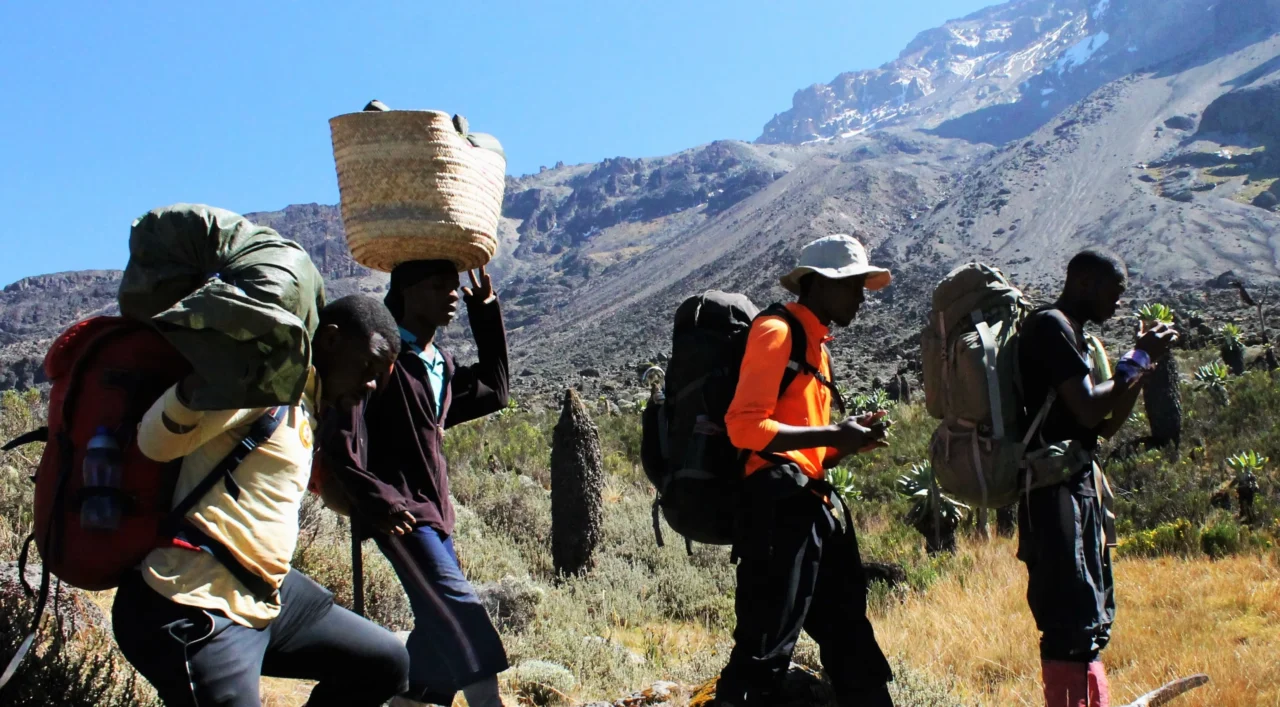
Your climbing crew is your lifeline on the mountain. Our guides are highly trained in first aid, high-altitude medicine, and mountain rescue. They are experienced, knowledgeable, and dedicated to your safety and success. The porters are responsible for carrying the bulk of the equipment, food, and your main luggage, while you carry a daypack with essentials.
Summit Night
Summit night is the most challenging part of the Kilimanjaro climb. It typically begins around midnight from the last camp (Kibo Hut on most routes). You’ll trek in the dark, often in single file, using headlamps. The ascent is steep and slow. You will ascend for 5-7 hours, reaching Stella Point on the crater rim, and then continuing for another 45-60 minutes to Uhuru Peak (the true summit).
- Pace: Extremely slow and steady.
- Conditions: Very cold, windy, and potentially icy.
- Symptoms: Altitude sickness is common; listen to your body and your guide.
- Descent: The descent is long and tiring, often covering the same distance as the ascent. It’s crucial to maintain focus.
The feeling of accomplishment upon reaching the summit is immense, and the sunrise views are spectacular. However, remember that the descent is equally important for safety.
Communication
There is no mobile phone signal or internet access on the mountain. Guides carry satellite phones for emergencies only. This is a chance to disconnect and focus on the experience.
Understanding these aspects of mountain life will help you prepare for an incredible Kilimanjaro climb, whether you’re planning for 2026 or 2027.
Booking Your Kilimanjaro Climb with Local Expertise
Choosing the right operator is paramount for a successful and safe Kilimanjaro climb. For French travelers, partnering with a local Tanzanian company like Climb 4 Africa offers distinct advantages. We provide not just a service, but a deep understanding of the mountain, the local culture, and the logistical intricacies of operating in Tanzania. Our goal is to make your Kilimanjaro climb in 2026-2027 as smooth and memorable as possible.
Why Choose a Local Operator?
While international companies can offer Kilimanjaro treks, local operators like Climb 4 Africa provide:
- Local Knowledge: We have firsthand experience with the mountain, weather patterns, and crew management. Our guides and staff are Tanzanian, intimately familiar with the environment.
- Cost-Effectiveness: By cutting out intermediaries, we can offer competitive pricing without compromising on quality or safety. You pay directly for the services you receive.
- Direct Support: You have direct access to our operations team in Moshi, ensuring quick responses to any queries or issues.
- Community Impact: Booking with us supports the local economy, providing fair wages and employment for Tanzanian guides, porters, and cooks.
- Flexibility: We can often tailor itineraries and arrangements to better suit individual needs.
The Climb 4 Africa Difference
When you book your Kilimanjaro climb with Climb 4 Africa, you benefit from:
- Experienced Guides: Our guides are certified, highly experienced, and trained in wilderness first aid and altitude management.
- Quality Equipment: We use reliable, well-maintained camping and climbing gear.
- Nutritious Food: Our cooks prepare varied and wholesome meals designed to fuel your trek.
- Safety First: We carry comprehensive medical kits, oxygen cylinders, and have emergency evacuation procedures in place.
- Fair Treatment of Crew: We are committed to ethical treatment and fair wages for all our staff, ensuring a motivated and professional team.
Your Next Steps for 2026-2027
Planning your Kilimanjaro climb for 2026 or 2027 starts with a conversation. We recommend the following:
Ready to plan? Reach out to us with your desired dates, preferred route (if you have one), group size, and any specific questions you may have. We are here to guide you through every step of the process, from initial inquiry to summit success.
Contact Climb 4 Africa:
- WhatsApp: +255 747 477 898
- Email: climb4africa@gmail.com
We will provide you with a detailed itinerary, a transparent quote, and answer all your questions to ensure you are fully prepared for your adventure. Booking your Kilimanjaro climb well in advance for 2026-2027 is highly recommended, especially for peak seasons, to secure your preferred dates and ensure the best possible experience.
Check Availability for 🇫🇷 French Speakers Climbing Kilimanjaro: Routes, Costs & Planning 2026-2027
Ready to compare dates, prices, and the best option for your group? Send the package name and travel month so the team can reply with a clear quote, availability, and what is included.
What To Expect On Your First Kilimanjaro Trek: A Comprehensive Guide 2026-2027
Planning your first climb up Kilimanjaro? This comprehensive guide covers everything you need to know, from choosing a route and preparing your body to what daily life on the mountain is...
View package detailsWhy Is Climbing Kilimanjaro So Expensive? 2026-2027
Why Is Climbing Kilimanjaro So Expensive? is explained with current 2026-2027 planning, price, itinerary and booking information.
View package detailsKilimanjaro Climb Machame Route : Expert Guide For Your Trek 2026-2027
Discover the ultimate guide to climbing Mount Kilimanjaro via the Machame Route for your 2026 or 2027 adventure. This comprehensive resource covers everything from choosing an itinerary and...
View package detailsWhy Do People Travel From Around The World To Climb Kilimanjaro? 2026-2027
Why Do People Travel From Around the World to Climb Kilimanjaro? is explained with current 2026-2027 planning, price, itinerary and booking information.
View package detailsWhy Is Kilimanjaro One Of The World’s Most Famous Mountains? Your Planning
Kilimanjaro's fame stems from its status as the highest free-standing mountain, its accessibility to non-technical climbers, its iconic snow-capped summit, and its location in a biodiverse...
View package detailsWhy Do Thousands Of Travelers Visit Kilimanjaro Every Year? Your Expert Guide
Thousands of adventurers flock to Kilimanjaro each year, drawn by its status as Africa's highest peak and a bucket-list trekking challenge. This guide explores the compelling reasons behind...
View package detailsKilimanjaro Routes: Which Is Best For Your Climb? 2026-2027
Choosing the right Kilimanjaro route is crucial for a successful and enjoyable climb. This comprehensive guide compares the main routes, helping you select the best option for your...
View package details10 Mistakes To Avoid Before Climbing Kilimanjaro In 2026-2027
Planning a Kilimanjaro climb is exciting, but avoiding common mistakes is key to a successful and enjoyable experience. This guide details ten critical errors to sidestep, from choosing the...
View package details10 Things To Know Before Climbing Kilimanjaro 2026-2027
10 Things to Know Before Climbing Kilimanjaro is explained with current 2026-2027 planning, price, itinerary and booking information.
View package detailsWhat Nobody Tells You Before Climbing Kilimanjaro 2026-2027
What Nobody Tells You Before Climbing Kilimanjaro is explained with current 2026-2027 planning, price, itinerary and booking information.
View package details
Monte Meru Y Kilimanjaro: Trekking En Tanzania 2026-2027
Discover the ultimate trekking experience in Tanzania by combining Mount Meru and Mount Kilimanjaro. This comprehensive guide covers everything from route selection and preparation to...
View package details20 Natural Wonders In Africa You Need To See 2026-2027
Explore Africa's most spectacular natural wonders, from the majestic peaks of Kilimanjaro and the vast plains of the Serengeti to the unique landscapes of Namibia and the vibrant coral...
View package detailsNo related package matches those filters. Clear one or more filters to see the other topic-matched options.



