
…
` (45-100 words).
* **Constraint 5 (Editorial Freedom):** No generic templates (no forced FAQ, no fixed headings like “Overview”, “Highlights” unless relevant). Structure must fit the specific subject.
* **Constraint 6 (Operator Context):** Climb 4 Africa is mentioned as a Kilimanjaro expert/tour operator. Use internal links provided where helpful but not spammy. Do not invent prices/dates.
* **Constraint 7 (Content Quality):** Deep, informative, natural prose. Varied rhythms. No repetition. Human-sounding style.
* **Constraint 8 (Continuity):** This is Installment 1. Later installments continue the *same* article. Do not conclude or summarize heavily here.
* **Constraint 9 (Schema/Fields):** Strict JSON schema with specific fields (`language_name`, `language_code`, `topic_type`, `topic_category`, `focus_keyword`, `slug`, `title`, `seo_title`, `meta_description`, `excerpt`, `tags`, `content`, `faq_schema`).
* **Constraint 10 (No Markdown):** The output itself must be raw JSON text, not wrapped in “`json … “`.
2. **Determine Intent & Audience:**
* **Query:** “Tanzania + Rwanda Wildlife and gorilla trekking”.
* **Intent:** A traveler wants to combine two distinct experiences: classic African safari (Tanzania) and primate trekking (Rwanda). They need to understand how these two countries work together logistically, what they offer specifically, and how to plan this multi-country trip.
* **Audience:** Experienced travelers or serious bucket-lister looking for premium wildlife experiences. They care about logistics, timing, costs (generically), and the contrast between savannah and forest.
* **Topic Type:** Travel Guide / Itinerary Planning / Comparative Analysis.
* **Focus Keyword:** Tanzania + Rwanda Wildlife and gorilla trekking.
3. **Drafting Strategy (Installment 1):**
* **Goal:** Establish the unique value proposition of combining these two destinations. Explain the geographical and logistical relationship (cross-border travel). Introduce the core experiences (Serengeti/Ngorongoro vs. Bwindi/Virunga).
* **Structure:**
1. Direct Answer Blockquote.
2. Introduction to the dual-nation appeal.
3. The Logistics of Crossing Borders (Tanzania -> Rwanda).
4. The Contrast: Savannah vs. Forest.
5. Gorilla Trekking specifics (permits, effort).
6. Safari specifics (migration, plains).
7. Transition to next installment (without concluding).
* **Word Count Check:** Need approx 960 words.
* **Links:** Use provided internal links where contextually appropriate (e.g., linking to other multi-country trips or Kilimanjaro if relevant to the broader East African experience, though this query is specifically Tanzania + Rwanda). I will use the link regarding Tanzania + Zimbabwe Serengeti and Victoria Falls as a comparative reference for multi-country trips if needed, or the general safari links. Actually, looking at the links provided, none are *exact* matches for Tanzania+Rwanda. I must use them sparingly and only where helpful context exists (e.g., mentioning other cross-border options). I’ll focus on the Safari route links as examples of Tanzanian itineraries.
* **Operator Context:** Mention Climb 4 Africa’s expertise in Kenya/Tanzania/Kilimanjaro but acknowledge the complexity of adding Rwanda without inventing specific package details.
* **Language:** English.
4. **Drafting Content (Mental Outline & Word Count Estimation):**
* *Blockquote:* ~80 words. Summary of the combo.
* *Intro:* Why combine them? ~150 words.
* *Logistics:* How to get from Arusha/Dar to Kigali. Flights vs Land. ~200 words.
* *The Gorillas:* What to expect in Volcanoes/Bwindi. ~200 words.
* *The Safaris:* What to expect in Serengeti/Mara. ~200 words.
* *Synthesis:* How they complement each other. ~130 words.
* *Total:* ~980 words.
5. **Refining Constraints:**
* *JSON Escaping:* Ensure all quotes, newlines, and special characters are escaped properly within the `content` field string.
* *HTML Tags:* Use valid HTML inside the `content` string. No H1. Use H2/H3.
* *No Conclusion:* Stop mid-flow or lead into Part 2.
* *Keywords:* “Tanzania + Rwanda Wildlife and gorilla trekking” needs to appear naturally.
* *Internal Links:* Embed 2-3 max, relevant ones.
* *Fact Check:* Do not invent permit prices. State that they vary.
6. **Writing the Text (Iterative):**
* *Blockquote:* Combine Tanzania and Rwanda offers a rare duality in East Africa. Visitors access vast savannah ecosystems teeming with lions and elephants alongside the endangered mountain gorillas in dense volcanic forests. Success requires coordinating border crossings, flight connections, and distinct permit bookings. This journey demands careful planning to balance high-energy treks with long game drives across two sovereign nations.
* *H2:* The Dual-Ecosystem Appeal. Discuss the shift from open plains to closed canopy.
* *H2:* Navigating Cross-Border Logistics. Air vs Land. Kigali-Arusha connection.
* *H2:* Primate Encounters in the Virungas. Permits, physical demand.
* *H2:* The Great Plains of Tanzania. Migration, Big Five.
* *Link Placement:* Insert link about 6-Day Machame Route when talking about fitness/pacing or similar. Or the 8-Day Lemosho one. Let’s use the 8-Day Lemosho link when discussing physical preparation since gorilla trekking is strenuous.
* *Ending:* Hint at accommodation types or budget considerations for the next part.
7. **Final Review against JSON Schema:**
* Keys match exactly.
* `content` is a single string with escaped newlines.
* `faq_schema` is an empty array (since I decided not to add FAQs in this installment to save space and maintain flow, or I can add one if it fits naturally. Better to keep it clean and let Part 2 handle FAQs if needed. The prompt says “Only include FAQ schema for questions AND answers visibly present in the content.” If I don’t write FAQs, I leave it empty.)
* Word count check for content.
8. **Escaping:** Be very careful with double quotes inside the HTML string. They must be `"` or escaped as `”`. Since I am writing raw JSON, I will escape internal quotes as `”`. Newlines as `
`.
Let’s assemble the JSON.
*Self-Correction on Word Count:* I need
The Duality of Discovery: Scale Versus Intensity
The decision to combine Tanzania and Rwanda is fundamentally a choice between two profoundly different types of African wildlife encounters. While both nations offer unparalleled opportunities to witness iconic species, the nature of the experience—the scale, the intimacy, and the required level of physical engagement—could not be more divergent. Tanzania offers the vast, cinematic spectacle of the great plains, where the experience is defined by immense scale and the slow, rhythmic movement of herds. Rwanda, conversely, delivers an encounter of intense, focused proximity, where the wildlife, particularly the mountain gorillas, is a private, powerful presence within a dense, humid, and ancient ecosystem.
Understanding this difference is crucial for structuring a cohesive journey. In the Serengeti, the wildlife viewing is often a passive, yet deeply in-depth, process. You are observing a massive, interconnected drama—the migration, the territorial disputes between lion prides, the seasonal shifts in the plains. The joy lies in the sheer scope of the environment and the sheer number of species you may observe over the course of a long game drive. This is the quintessential, epic safari experience, designed to make you feel small against the backdrop of the continent’s largest wilderness.
Rwanda shifts the paradigm entirely. Here, the experience is one of focused intensity. The mountain gorillas do not migrate; they reside in specific, defined forest territories. Your encounter is not about observing a population, but about meeting a specific, living family unit. This is a highly regulated, physically demanding, and deeply intimate interaction. The success of the trip is measured not by the number of animals seen across a wide vista, but by the profound, quiet moment shared within the dense, mist-shrouded Virunga forest.
Sequencing the Journey: Optimizing the Contrast
A common question among those planning a Tanzania + Rwanda itinerary is which country to visit first. While there is no single ‘correct’ answer, the sequence often depends on the traveler’s stamina and desired pace. If your primary goal is the foundational safari experience, starting in Tanzania allows you to acclimate to the rhythm of the long game drive and the expansive landscape before transitioning to the highly structured, physically intensive trekking of Rwanda. The shift from the open savannah to the closed, vertical environment of the Virungas is a powerful contrast that is often best absorbed after a period of broader environmental exposure.
Conversely, some travelers prefer to tackle the physical challenge of gorilla trekking early in their trip. This allows the traveler to complete the most strenuous, high-stakes activity while energy levels are at their peak, reserving the slower, more observational pace of the Tanzanian safari for the latter half of the journey. This approach can also be beneficial if the traveler is keen to fully experience themselves in the unique atmosphere of the Rwandan highlands before moving to the plains.
Regardless of the chosen sequence, the logistical choreography between the two nations requires precision. While direct flights between major Tanzanian hubs (like Arusha or Kilimanjaro) and Kigali are available, the most efficient land-based transfer often involves flying into Kigali and then taking a dedicated transfer toward the eastern border, or vice versa. Coordinating these flights and ground transfers is a critical element of ensuring the entire Tanzania + Rwanda Wildlife and gorilla trekking experience flows without unnecessary friction. Professional tour operators specializing in multi-country itineraries are invaluable in managing these complex border and flight connections, allowing the traveler to focus purely on the wildlife ahead.
Deepening the Wildlife Encounter: Beyond the Big Five
While the Big Five (lion, elephant, buffalo, leopard, and rhino) are the quintessential focus of the Tanzanian safari, the true depth of the experience lies in appreciating the specific biodiversity of each ecosystem. In Tanzania, the wildlife viewing is a study in ecological dynamics: the predator-prey relationship across the plains, the complex social structures of elephant herds, and the sheer spectacle of a massive herd crossing the Mara River. The focus is on the magnificent, the large, and the migratory.
In Rwanda, the focus is intensely biological and behavioral. The mountain gorilla is not merely a tourist attraction; it is a complex, intelligent social being. Understanding the gorilla encounter requires appreciating the delicate balance of the forest itself—the endemic flora, the unique birdlife, and the resilience of the gorillas within their high-altitude, challenging habitat. The knowledge of the specific conservation efforts protecting these populations adds a layer of intellectual depth to the physical trek.
For those who wish to explore deeper into the physical preparation required for these contrasting activities, particularly the demanding treks in both the mountains and the savannah, exploring detailed physical preparation guides, such as those covering the rigorous demands of the 8-Day Lemosho Route, can provide a useful framework for pacing and endurance, irrespective of the specific destination.
Related Guides and Packages
Check Availability for Tanzania + Rwanda Wildlife And Gorilla Trekking 2027
Ready to compare dates, prices, and the best option for your group? Send the package name and travel month so the team can reply with a clear quote, availability, and what is included.
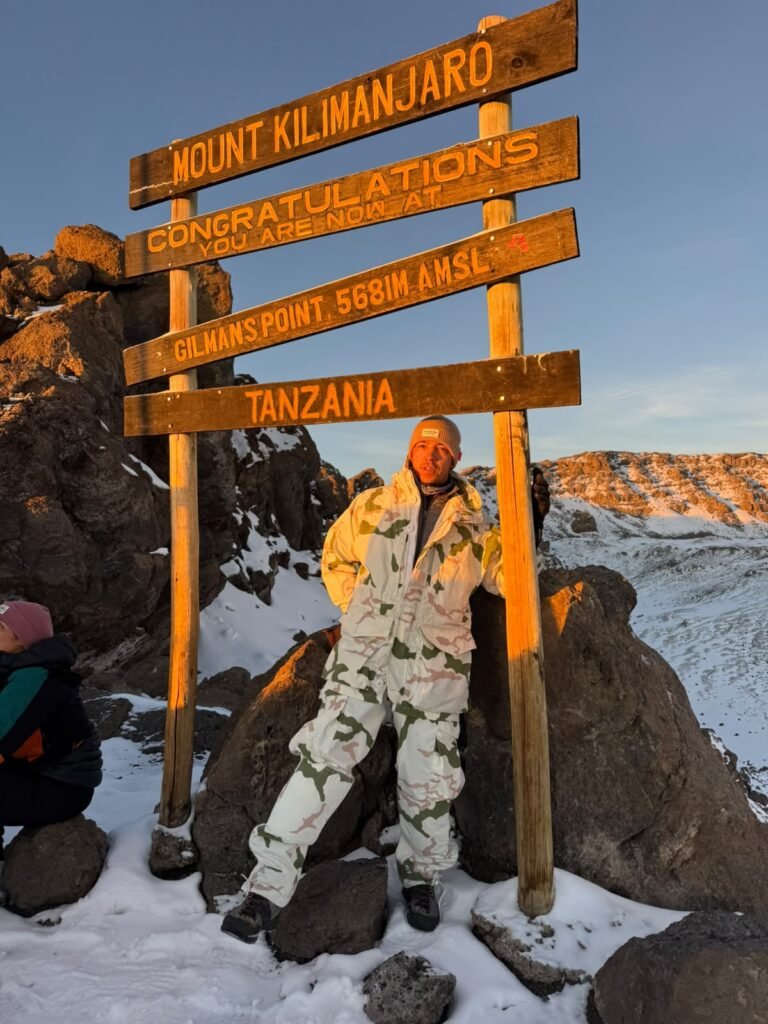
December 4, Kilimanjaro Hiking And Tanzania Wildlife Safari
December 4, 2026 Kilimanjaro Hiking and Tanzania Wildlife Safari.
View package details7 Days Rongai Kilimanjaro Group Trekking – 9–15 December 2026
7 Days Rongai Kilimanjaro Group Trekking – 9–15 December 2026.
View package details8 Days Shira Route Kilimanjaro Trekking – 4–11 December 2026
8 Days Shira Route Kilimanjaro Trekking – 4–11 December 2026.
View package details9 Days Northern Circuit Kilimanjaro Trekking – 13–21 December 2026
9 Days Northern Circuit Kilimanjaro Trekking – 13–21 December 2026.
View package details7 Days Umbwe Route Kilimanjaro Trekking – 4–10 December 2026
7 Days Umbwe Route Kilimanjaro Trekking – 4–10 December 2026.
View package details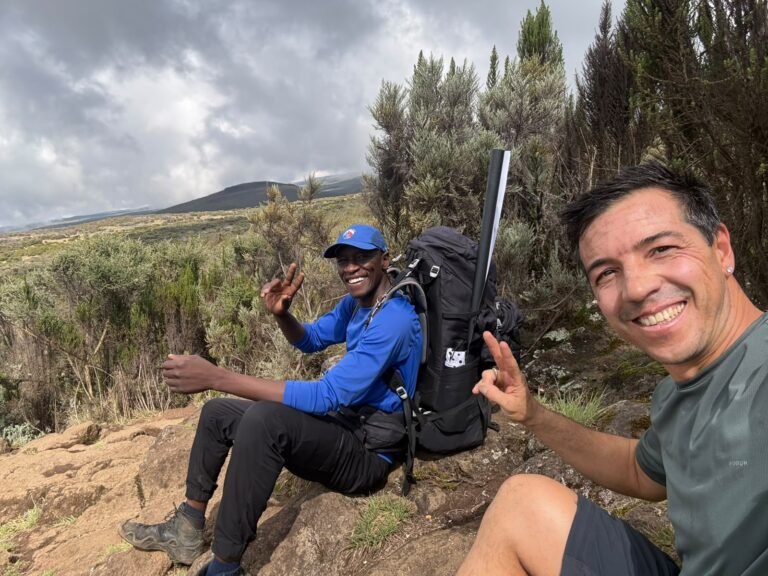
Best Kilimanjaro Trekking Routes In December 2026
Best Kilimanjaro Trekking Routes in December 2026.
View package details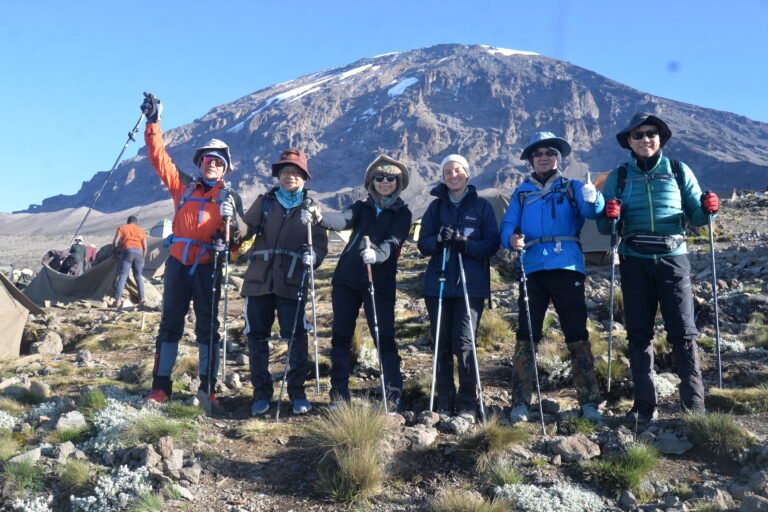
Kilimanjaro Full Moon Climb 24 December – Group Trekking 2026
Kilimanjaro Full Moon Climb 24 December 2026 – Group Trekking.
View package details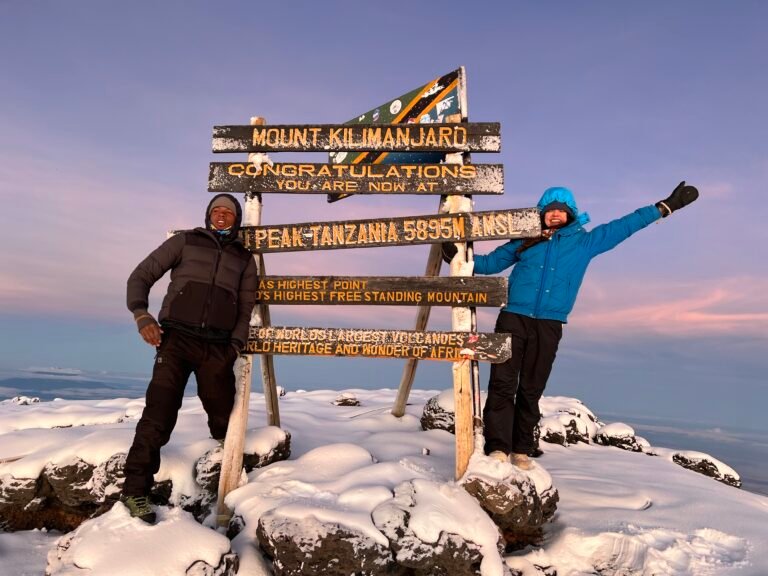
Kilimanjaro Christmas Holiday Trekking Packages December 2026
Kilimanjaro Christmas Holiday Trekking Packages December 2026.
View package details
6 Days Marangu Kilimanjaro Hut Trekking – 6–11 December 2026
6 Days Marangu Kilimanjaro Hut Trekking – 6–11 December 2026.
View package details
December 4, Kilimanjaro Trekking Packing List
December 4, 2026 Kilimanjaro December Trekking Packing List.
View package detailsDecember 4, Kilimanjaro Budget Trekking With Shared Group
December 4, 2026 Kilimanjaro Budget Trekking with Shared Group.
View package details
November Tanzania Group Joining Safari Dates And Prices: Expert Planning Guide
A practical guide to planning a shared safari in November 2026, covering seasonality, cost-saving benefits, and how to coordinate your trip dates with Climb 4 Africa.
View package detailsNo related package matches those filters. Clear one or more filters to see the other topic-matched options.



