
Understanding the Real Cost of Travel from Nairobi to Kilimanjaro
When searching for the Nairobi to Kilimanjaro Airport flight cost, travelers often find that the ticket price is only part of the equation. As a local operator, we see many climbers and safari-goers attempt to optimize their travel budget by choosing between flying directly from Jomo Kenyatta International Airport (NBO) to Kilimanjaro International Airport (JRO) or opting for a cross-border land transfer. The ‘cost’ of this journey is not just the price of the ticket, but also the time investment, the logistical stress of border crossings, and the potential impact on your acclimatization or safari start time.
There is no fixed price for this route. Costs fluctuate significantly based on the airline, your booking lead time, and the specific season of your travel. In 2026 and 2027, airlines such as Kenya Airways and Precision Air dominate this short-haul route. While a flight might appear expensive compared to a shuttle bus, the hidden costs of land travel—such as extra hotel nights, potential border delays, and physical exhaustion—often make the flight the more logical choice for time-constrained travelers.
Comparison: Flight vs. Land Transfer
Before you commit to a flight, it is essential to weigh the trade-offs. The following table provides a clear comparison to help you decide which mode of transport fits your 2026-2027 travel plans.
| Feature | Flight (NBO to JRO) | Land Transfer (Shuttle/Private) |
|---|---|---|
| Travel Time | Approx. 1 hour (plus airport procedures) | 5–7 hours (highly variable) |
| Border Crossing | Handled at the airport (JRO) | Namanga Border (can be busy) |
| Physical Effort | Low; comfortable seating | Moderate; requires sitting for long hours |
| Reliability | High; scheduled departures | Variable; road conditions and traffic |
| Total Cost | Moderate to High (Ticket + Transfer) | Low to Moderate |
For those looking for more detail on why airport choice matters, our guide on Kilimanjaro vs Arusha Airport explains the nuances of landing closer to the mountain versus the city hub. If you decide to take the land route, be aware that you will need to manage your own visa logistics at the Namanga border, which can be a significant hurdle for first-time visitors.
Factors That Drive Your Flight Cost
When you are looking at quotes for your Nairobi to Kilimanjaro Airport flight, understand that pricing is rarely static. Airlines use dynamic pricing models, and the following factors are the most common reasons your quote might spike:
- Booking Lead Time: Tickets booked less than 30 days in advance are almost always significantly higher. For peak climbing seasons (typically January-February and June-October), demand for seats on the Nairobi-Kilimanjaro route increases, pushing prices upward.
- Baggage Allowances: Kilimanjaro climbers often travel with heavy gear. Check if your ticket includes checked luggage. Many budget fares on this route allow only carry-on items; adding a 20kg or 23kg bag later can cost as much as the ticket itself. Read our guide on Tanzania safari flight baggage limits to ensure you aren’t surprised at the check-in counter.
- Connection Times: If you are flying into Nairobi from an international destination (e.g., Europe or the US) and connecting to JRO, your total itinerary cost will be lower than if you buy a separate, standalone ticket for the Nairobi-Kilimanjaro leg. Always check if you can bundle this flight with your long-haul booking.
- Seasonal Demand: High-season travel (when the weather is best for climbing) correlates with higher flight costs. If you are budget-conscious, traveling during the shoulder seasons (November or May) might yield lower flight prices, though you must be prepared for the likelihood of rain on the mountain.
The Hidden Costs of Land Travel
Many travelers choose the shuttle bus from Nairobi to Arusha to save money. However, when calculating the cost of this decision, you must include factors beyond just the bus fare. A land transfer requires a visa for Kenya (if you are exiting) and a visa for Tanzania (if you are entering), or a multi-entry visa. Furthermore, the physical toll of a 6-hour drive on roads that can be unpredictable can affect your performance on the first day of your climb. We often advise clients that the Nairobi to Kilimanjaro Airport flight cost is essentially an investment in energy conservation for your summit attempt.
If you do opt for the land route, be aware that the shuttle typically drops you in Arusha, not at the airport or your hotel near the mountain. You will then need a separate transfer from Arusha to your accommodation. You can find more information on the costs involved in our post about Kilimanjaro Airport to Moshi transfer price.
Planning Your Arrival Logistics
At Climb 4 Africa, we emphasize that your flight is just the first step. Once you land at Kilimanjaro International Airport (JRO), you still need to navigate immigration, collect your baggage, and find your transfer. Because we operate locally, we can coordinate your airport pickup to align with your flight arrival, ensuring you aren’t waiting around after a long travel day.
When you contact us to finalize your itinerary, please provide your flight details as early as possible. If you are flying into Nairobi and connecting, let us know your full itinerary. This allows us to advise you on whether a private transfer is necessary or if a standard group transfer will suffice, which can save you money on your overall trip cost. You can learn more about how we handle these logistics in our Kilimanjaro climbing package with airport transfers guide.
Frequently Asked Questions About Nairobi-Kilimanjaro Flights
- Is it cheaper to fly or take the bus? The bus is almost always cheaper in raw currency, but the flight is often ‘cheaper’ when you factor in time, stress, and physical fatigue before a mountain climb.
- Can I book this flight through you? We specialize in the ground logistics of your trip—climbing, safaris, and transfers. While we cannot issue your international flight tickets, we are experts at timing your airport transfers to match your flight arrival.
- What if my flight is delayed? This is exactly why we monitor your flight details. If your flight is delayed, our team adjusts the transfer schedule so that your driver is still waiting for you when you land.
Whether you choose to fly or take the scenic (and longer) route by road, the most important decision is ensuring your arrival logistics are handled by a team that understands the mountain. If you are ready to plan your trip, we are here to help you navigate the logistics from the moment you land. For assistance with your 2026-2027 trip, please contact us via WhatsApp at +255 747 477 898 or email us at climb4africa@gmail.com for a personalized consultation on how to best align your arrival with your climbing or safari itinerary.
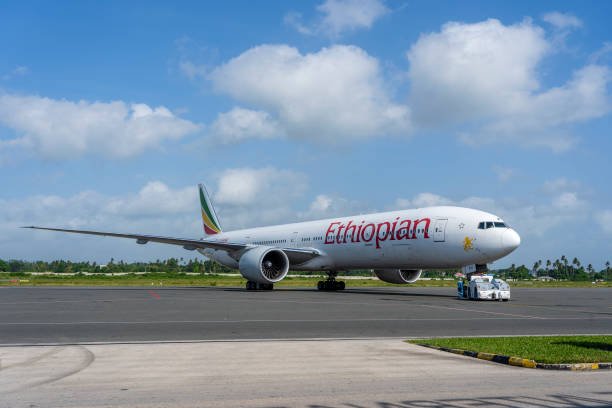

Navigating the “Self-Transfer” vs. “Through-Ticket” Distinction
One of the most significant factors influencing your total travel cost—and one that is often overlooked until it is too late—is how you choose to connect your international flight to your regional flight. Travelers frequently attempt to minimize expenses by booking a major international flight to Nairobi (NBO) and a separate, lower-cost ticket on a regional carrier for the final leg to Kilimanjaro (JRO). While this “self-transfer” strategy can lower the initial ticket price, it introduces substantial financial and logistical risks that can quickly negate any perceived savings.
When you book separate tickets, you are essentially managing two independent travel contracts. If your international arrival into Nairobi is delayed—a common occurrence due to weather, air traffic control, or mechanical issues—your regional airline has no obligation to rebook you on a later flight. You become a “no-show” for the second leg, often resulting in the total loss of that ticket’s value. You would then be forced to purchase a last-minute, full-fare ticket, which can easily cost double or triple the price of your original booking.
Furthermore, self-transferring requires you to navigate the Nairobi airport as if you were ending your journey there. This means you must clear Kenyan immigration, collect your checked luggage, exit the terminal, and then re-check in for your onward flight to Tanzania. This process adds significant time and stress to your travel day. It also creates a “hidden cost” in the form of a Kenyan transit or entry visa, which is required to exit the international transit area and reclaim your bags. By contrast, a “through-ticket” (where your international airline partners with the regional carrier) allows your bags to be checked all the way to Kilimanjaro, and the airline assumes responsibility for your connection. While these tickets are often priced higher, they provide an essential safety net for your travel budget and peace of mind.
Before finalizing your purchase, we recommend checking if your international carrier has a codeshare or interline agreement with regional airlines operating the NBO-JRO route. Booking your entire journey on a single itinerary is generally the most cost-effective decision when factoring in the potential costs of missed connections, baggage handling, and the physical toll of navigating airport transfers on a tight schedule.
Navigating Baggage Allowances and Excess Weight Fees
One of the most frequently underestimated costs when flying from Nairobi (NBO) to Kilimanjaro (JRO) is the discrepancy in baggage allowances between your long-haul international flight and your regional connection. While travelers often assume that their baggage allowance is “through-checked” and therefore consistent across the entire journey, this is rarely the case when separate tickets are involved, or when regional airlines apply their own stricter weight limits.
International airlines arriving into Nairobi often provide a generous allowance—frequently two checked bags of 23 kilograms each. However, regional carriers operating the NBO-JRO route, such as Precision Air or Kenya Airways (on certain regional segments), often adhere to much tighter restrictions. It is common for these regional flights to limit checked baggage to a single piece of 15 or 20 kilograms. If you arrive from your international flight with your full climbing kit—often weighing 25 kilograms or more—you will be hit with excess baggage fees at the check-in counter in Nairobi. These fees are rarely inexpensive; they are often calculated per kilogram and can significantly inflate the total cost of your travel.
To avoid these surprise charges, it is vital to check the specific baggage policy for the regional segment of your journey well in advance. If you realize your gear exceeds the regional limit, do not wait until you are at the airport to address it. Most regional airlines offer the option to pre-purchase additional weight online, which is substantially cheaper than paying the “walk-up” rate at the airport. Alternatively, consider if you truly need to bring all your specialized gear. Many reputable Kilimanjaro operators offer high-quality gear rental in Moshi or Arusha. Renting items like sleeping bags, trekking poles, or heavy-duty jackets locally can often be cheaper than paying airline excess baggage fees for both legs of your international journey.
Furthermore, be mindful of the difference between “checked” and “carry-on” allowances. Regional aircraft, which are often smaller turboprops or regional jets, have limited overhead bin space. Even if your carry-on meets international standards, you may be required to gate-check your bag if the flight is full, which can be a logistical headache if you have fragile equipment like cameras or sensitive electronics. Packing a smaller, soft-sided daypack that can easily fit under the seat in front of you is a strategic way to keep your essential items with you, ensuring that even if your main duffel is delayed or requires checking, you have your critical personal items on hand for the start of your trek.
Navigating Visa Requirements and Entry Costs
Beyond the price of your flight ticket and the potential for excess baggage fees, there is a significant, often overlooked financial component to the Nairobi-Kilimanjaro route: the cost of entry requirements. When you are calculating your total travel budget, you must account for the reality that the “cost” of a border crossing is not merely the time spent in a queue, but the actual monetary expense of visas and electronic authorizations required to move between Kenya and Tanzania.
The Kenya eTA and Transit Distinction
A critical point of confusion for many travelers is the status of their “transit” through Nairobi. Kenya has transitioned to an Electronic Travel Authorization (eTA) system, which replaced the traditional visa for many nationalities. If you are flying into Nairobi (NBO) and connecting to a flight to Kilimanjaro (JRO) on a single, through-booked ticket, you are generally considered an “airside” passenger. In this scenario, you remain within the international transit zone and do not need to clear Kenyan immigration, meaning you do not need to pay for a Kenyan eTA.
However, the cost dynamic changes entirely if you are on separate tickets or if you are opting for a land transfer. If you have to collect your bags, exit the airport to change terminals, or leave the airport grounds to board a shuttle bus to Arusha or Moshi, you are officially entering Kenya. This requires you to apply for and pay the non-refundable eTA fee. For a solo traveler, this might seem like a minor expense, but for a group or a family, these fees can add up to several hundred dollars, effectively eroding any savings you might have gained by choosing a cheaper, non-connected flight or a land transfer.
Tanzania Entry: Visa on Arrival vs. E-Visa
Once you arrive at Kilimanjaro International Airport (JRO), you face the second half of the entry cost equation. Tanzania offers both an e-Visa and a Visa on Arrival. While the cost is generally consistent, the “hidden” cost lies in the payment method and the potential for delays. Immigration officials at JRO often prefer exact change or specific payment methods, and technical issues with credit card terminals can occasionally occur.
To avoid the stress of potential payment failures or long queues, it is highly recommended to apply for your Tanzania e-Visa well in advance of your departure. By handling this cost before you leave home, you remove the uncertainty of currency exchange rates at the airport or the risk of being denied entry due to a card processing error. When budgeting, treat these visa costs as fixed expenses that must be added to your flight ticket price to get a true picture of your transit costs.
How Entry Fees Influence Your Total Budget
When comparing a flight to a land transfer, the visa cost is often the “tie-breaker” that makes the flight more economical. If you choose the bus, you are essentially forced to pay for a Kenya eTA (to enter the country) and a Tanzania visa (to cross the border). If you fly directly from NBO to JRO on a through-ticket, you may be able to bypass the Kenya eTA entirely. In this specific context, the flight is not just faster and more comfortable; it is, in some instances, cheaper because it removes an entire layer of bureaucratic fees.
Always verify the current entry requirements for your specific nationality. Regulations regarding eTAs and visas are subject to change, and what was true for a traveler in 2025 may have evolved by 2027. Check the official government portals for both Kenya and Tanzania at least 60 days before your departure. Do not rely on third-party “visa agency” sites, which often add significant service fees on top of the government-mandated costs, further inflating your travel expenses unnecessarily.
The Financial Risk of Short-Haul Flight Disruptions
When calculating the Nairobi to Kilimanjaro flight cost, most travelers focus exclusively on the face value of the ticket. However, a significant, often ignored financial factor is the operational fragility of regional short-haul routes. Unlike major international hubs where multiple airlines offer hourly alternatives, the NBO-JRO route is serviced by a smaller fleet with limited daily frequencies. If a flight is canceled due to technical issues or weather, there is rarely another flight departing within the next few hours. This reality introduces a “disruption cost” that must be factored into your risk assessment.
If you are booked on a non-connected, self-transfer itinerary, a flight cancellation can trigger a cascade of expenses. You may need to pay for an emergency night in a Nairobi hotel, cover unexpected meals, and potentially forfeit a pre-paid, non-refundable hotel night in Moshi or Arusha. To mitigate this, savvy travelers should treat the cost of comprehensive travel insurance—specifically policies that offer “trip delay” and “missed connection” coverage—as a mandatory surcharge on their ticket price. Without this, a budget-friendly regional flight can quickly become the most expensive part of your trip if plans go awry.
Budgeting for the “JRO Arrival Premium”
Another common oversight in budget planning is the “last mile” cost from Kilimanjaro International Airport (JRO) to your final destination. Because JRO is located roughly 40 to 50 kilometers from both Moshi and Arusha, the airport is geographically isolated. Unlike major city airports that are often connected by trains or cheap, frequent public shuttle buses, JRO relies heavily on private taxis and pre-arranged transfers to move passengers into the town centers.
Travelers who focus solely on the flight ticket often experience “sticker shock” when they attempt to secure ground transport upon arrival. Airport taxis waiting at the arrivals gate are often significantly more expensive than pre-booked transfers arranged through your hotel or trekking operator. To keep your total travel budget accurate, you must add the cost of a private transfer to your flight ticket price. Treating this as a fixed, unavoidable cost rather than an optional expense will prevent you from underestimating the true financial commitment of your arrival day. Always confirm whether your tour operator includes this airport transfer in your package; if they do not, factor it in immediately to avoid overspending at the airport exit.
Check Availability for Nairobi To Kilimanjaro Airport Flight Cost Guide
Ready to compare dates, prices, and the best option for your group? Send the package name and travel month so the team can reply with a clear quote, availability, and what is included.
Kilimanjaro International Airport Flight Prices & Airlines: A Planning Guide
A deep look at planning your travel to JRO, understanding airline options, price variables, and how to coordinate your arrival for a successful Kilimanjaro climb.
View package details
Flights To Mount Kilimanjaro: Ticket Prices & Airport Guide
A comprehensive guide to flying into Kilimanjaro International Airport (JRO) in 2027. Learn how to secure the best flights, what to expect at the airport, and how to align your arrival with...
View package detailsKilimanjaro Airport To Arusha Transfer Cost & Booking Guide
A practical guide to navigating the transfer from Kilimanjaro International Airport (JRO) to Arusha, including cost factors, booking advice, and logistics for your 2027 trip.
View package detailsNairobi To Arusha Flight Price : A Practical Guide For Travelers
Planning your travel from Nairobi to Arusha or Kilimanjaro for 2027? Get expert advice on flight prices, route logistics, and how to book the right connection.
View package details
Cheapest Airport To Fly Into For Climbing Kilimanjaro: A Guide
Is flying into Nairobi cheaper than Kilimanjaro for your trek? We break down the hidden costs of transfers, visas, and transit time to help you plan your 2027 trip.
View package detailsKilimanjaro Vs Arusha Airport: Which Should You Use For Your Trip?
A practical guide to choosing between Kilimanjaro International Airport (JRO) and Arusha Airport (ARK) for your Tanzania safari or Kilimanjaro climb.
View package details
Kilimanjaro Airport To Moshi Transfer Price : A Practical Guide
A practical guide to arranging your transfer from Kilimanjaro International Airport (JRO) to Moshi, covering price factors, vehicle options, and arrival logistics for 2027.
View package details
Flights To Moshi Tanzania: Nearest Airports & Travel Costs Guide
A professional guide to navigating air travel for your Kilimanjaro climb or safari, comparing airport options, transfer logistics, and cost factors for 2026-2027.
View package details
Kilimanjaro Climb And Serengeti Safari: Flight & Transfer Planning
Kilimanjaro Climb and Serengeti Safari: Flight & Transfer Planning.
View package detailsBest Flights For Kilimanjaro Climbing And Zanzibar Holidays: A Planning Guide
A professional guide to optimizing your international and domestic flight strategy for a combined Kilimanjaro trek and Zanzibar beach holiday in 2026-2027.
View package details
Tanzania Flight Prices August : Kilimanjaro & Safari Travel Guide
A deep-dive guide into managing airfare costs and travel logistics for your August 2027 Kilimanjaro climb and Tanzania safari, including expert tips on timing, booking windows, and regional...
View package detailsKilimanjaro Climbing And Zanzibar Package With Flights: Pricing Guide
A detailed guide on how to structure a Kilimanjaro climb and Zanzibar beach holiday, covering cost drivers, flight logistics, and route selection for 2026-2027.
View package detailsNo related package matches those filters. Clear one or more filters to see the other topic-matched options.



