
The most reliable and efficient way to fly to Kilimanjaro from Europe is to book a flight directly into Kilimanjaro International Airport (JRO). While some travelers consider landing in Nairobi (NBO) to save on initial ticket costs, the added complexity of a 6-8 hour cross-border shuttle often negates the financial savings and increases travel fatigue. For a smooth, stress-free start to your expedition, prioritize airlines with single-stop connections via major hubs like Amsterdam, Doha, Addis Ababa, or Istanbul, as these offer the most consistent schedules and baggage handling for climbing gear.
Planning your flight logistics is often the first significant hurdle in organizing a successful Kilimanjaro expedition. As an expert operator, we see many travelers inadvertently add stress to their trip by choosing complex flight paths that look cheaper on paper but create logistical bottlenecks on the ground. When flying from Europe, your goal should be to arrive at the base of the mountain with as much energy as possible, not exhausted from a long-haul journey followed by an arduous road transfer.
Choosing Your Arrival Airport: JRO vs. NBO
The debate between flying into Kilimanjaro International Airport (JRO) and Nairobi (NBO) in Kenya is a classic dilemma for European climbers. Understanding the trade-offs is essential for your flight planning.
The Case for Kilimanjaro International (JRO)
JRO is the designated gateway for the mountain. It is located roughly 45 minutes from the towns of Moshi and Arusha, which serve as the primary hubs for almost all Kilimanjaro climbing operators. When you fly into JRO, you are essentially at the doorstep of your climb. You avoid the complexities of crossing an international border, the risk of shuttle delays, and the physical toll of a long road journey immediately after a long-haul flight. If your budget allows, this is always the recommended path.
The Case for Nairobi (NBO)
Travelers often search for flights to Nairobi because the airport is a massive international hub, frequently resulting in lower ticket prices compared to JRO. However, you must factor in the cost and time of the shuttle bus (typically a 6-8 hour drive) across the Namanga border. This involves immigration processing at the border, potential traffic congestion, and the physical reality of sitting in a vehicle for hours after a 9-12 hour flight. Only choose this route if you have a significant budget constraint or if you are combining your climb with a specific safari itinerary that starts in Kenya.
Major Flight Routes from Europe
Connectivity to Tanzania has improved significantly, with several major carriers operating reliable routes that cater to the adventure travel market.
- KLM Royal Dutch Airlines: Historically the gold standard for European climbers. KLM operates daily flights from Amsterdam (AMS) directly to JRO. This is the most convenient option for many, as it minimizes the number of connections and offers a schedule that typically lands in the afternoon, allowing for a relaxed evening in Moshi or Arusha before your pre-climb briefing.
- Ethiopian Airlines: A highly popular choice due to their extensive network via Addis Ababa (ADD). They offer excellent connectivity from almost every major European capital. While it involves a connection, their frequency of flights to JRO makes them a resilient option if you encounter delays elsewhere.
- Qatar Airways: Flying via Doha (DOH) offers a premium travel experience. For climbers coming from the UK or Scandinavia, this is often the most comfortable route. Qatar provides excellent baggage allowances, which is a major factor when you are hauling specialized mountain gear.
- Turkish Airlines: Connecting through Istanbul (IST), this airline has rapidly expanded its African footprint. They are often competitive on price and offer a good balance between service quality and cost.
Pro Tip: When booking, always check the baggage policy specifically for the final leg into JRO. Some international carriers have generous weight limits, but regional feeder flights or partner airlines may have stricter rules. Ensure your gear fits within these parameters to avoid surprise fees at the check-in desk.
Flight Pricing Logic & Seasonal Trends
Pricing for flights to Tanzania is highly sensitive to seasonality. As a general rule, avoid booking in the peak safari and climbing months (July, August, and the end of December) without securing your seat at least 4-6 months in advance. You can read more about Tanzania flight prices for August to see how demand impacts availability.
Conversely, the "low season" months—typically April and November—often see lower flight prices. These months align with the long and short rains in Tanzania. While you may save on airfare, you should balance this against the trade-off of climbing during wetter, potentially more challenging mountain conditions. If you are budget-conscious, research low-season travel costs to see if the savings justify the weather risks.
Comparison: Flying to JRO vs. Flying to Nairobi
| Factor | Flying to JRO | Flying to NBO + Shuttle |
|---|---|---|
| Convenience | High – 45 min drive to base | Low – 6-8 hour drive + border crossing |
| Cost | Higher base fare | Lower base fare, but add shuttle cost |
| Stress Level | Minimal | Higher (border bureaucracy, traffic) |
| Best For | Time-sensitive travelers | Budget-sensitive travelers |
Essential Logistics: Visas, Transit, and Gear
Your flight is just one part of the journey. Once you land, the transition to your mountain team needs to be smooth. If you are flying into JRO, your visa process is usually straightforward (e-visas are recommended for most nationalities). If you fly into Nairobi, you must ensure you have the correct transit visa for Kenya and the appropriate entry visa for Tanzania, which adds an extra layer of administrative work.
Furthermore, consider the "last-mile" logistics. If you are traveling with significant amounts of trekking gear, we recommend keeping your most critical items (boots, essential layers, medication) in your carry-on luggage. While lost luggage is rare, it can happen, and having your essential gear with you can save your climb if your checked bag is delayed by 24 hours.
Planning Your 2026-2027 Travel
For those planning a trip in 2026 or 2027, the booking window remains consistent. The best prices for major international carriers are typically found 3 to 6 months before departure. We strongly advise against last-minute bookings for Kilimanjaro climbs, as this limits your ability to secure the best flight connections and can often lead to inflated ticket prices.
If you are coordinating a group trip, aim to book flights that arrive within a similar time window. This allows us to organize efficient group transfers from JRO to your hotel in Moshi. When you contact us to finalize your itinerary, let us know your flight arrival times so we can ensure our local team is waiting for you with the correct transfer arrangements. You can find more insights on timing in our guide to booking Tanzania domestic flights.
Ready to Book Your Kilimanjaro Adventure?
Navigating flight schedules and connections can be overwhelming, but you don’t have to do it alone. At Climb 4 Africa, we specialize in helping our climbers coordinate their arrival logistics to ensure a stress-free start to their expedition. Whether you are choosing between airlines or trying to figure out if your flight arrival time works with our group departure dates, we are here to provide the local insight you need.
For personalized advice on your flight itinerary, or to discuss your climb dates for 2027, reach out to our team directly. You can contact us via WhatsApp at +255 747 477 898, or send your flight queries to climb4africa@gmail.com or our backup address at info@climb-4-africa.com. We are here to help you get from Europe to the summit of Kilimanjaro as smoothly as possible.
As you narrow down your travel dates, remember to review our group departure dates. Often, aligning your flight arrival with an existing group departure can simplify your logistics and enhance your experience on the mountain. We look forward to helping you plan your journey.

Managing Flight Disruptions and Gear Logistics
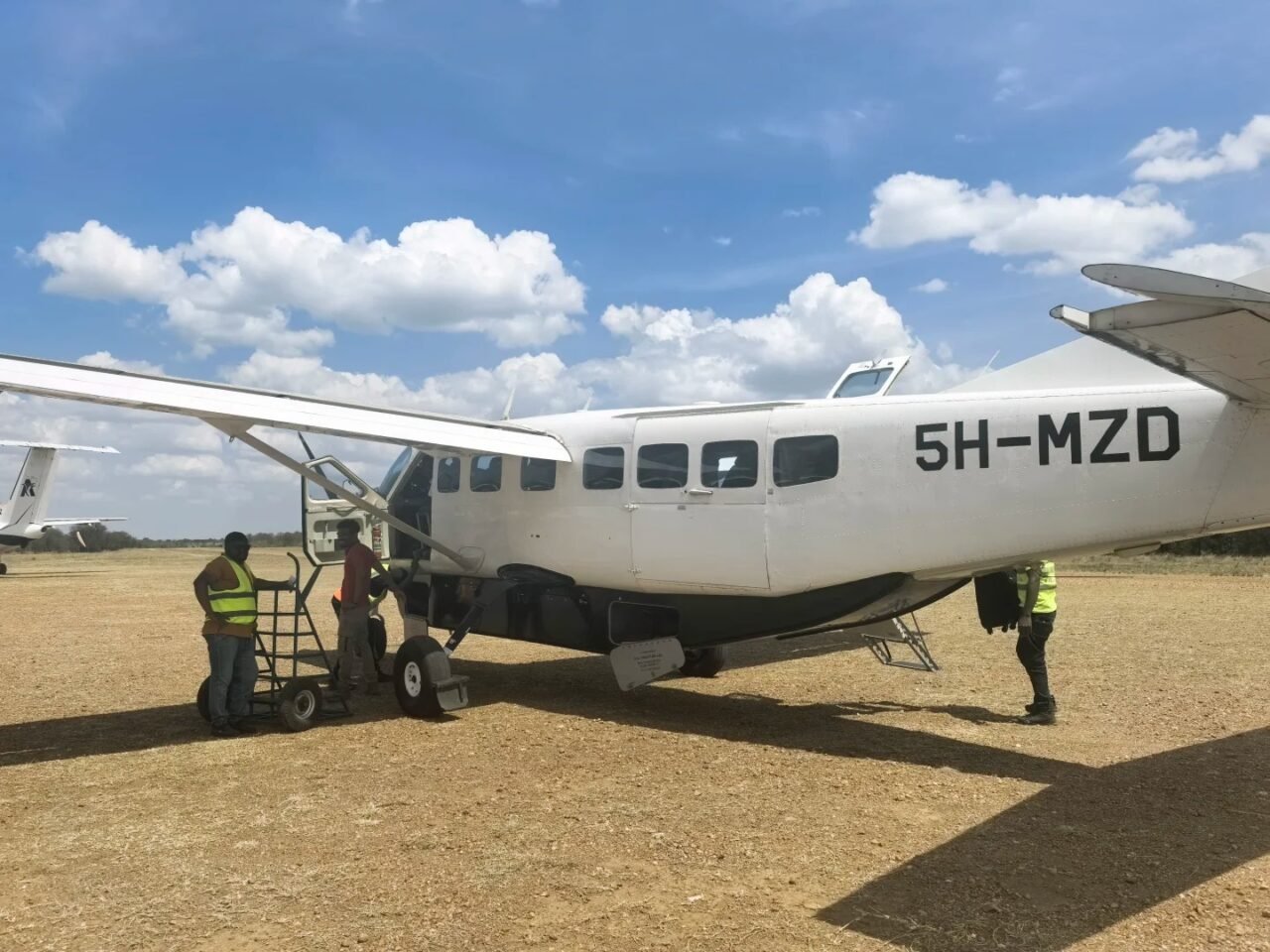
Even with the most meticulously planned itinerary, long-haul travel from Europe to Tanzania carries inherent risks that can jeopardize your expedition before it begins. The primary vulnerability for any Kilimanjaro climber is the ‘tight turnaround’—the practice of scheduling your flight to arrive on the same day as your pre-climb briefing or the start of your trek. As an expert operator, we consistently observe that the most common cause of expedition disruption is not mountain-related, but rather flight-related: a missed connection in a major hub like Addis Ababa or Istanbul, or a delayed arrival that forces you to miss your mandatory gear check.
The Criticality of the Buffer Day
We strongly advocate for a minimum 24-hour buffer between your scheduled arrival at JRO and the start of your climb. This window is your insurance policy against the unpredictable nature of international aviation. If your flight is canceled, rebooked, or if your checked luggage is delayed by a day, a buffer ensures that you are not forced to make the impossible choice between starting your climb without essential gear or delaying the entire group’s departure. When you book your flights, treat this buffer day not as ‘extra’ time, but as an integral part of your expedition schedule. It allows you to acclimate to the altitude of Moshi or Arusha, conduct your final gear inspection with your lead guide, and rest properly before the physical exertion begins.
Airline Policies on Mountaineering Gear
Transporting technical trekking gear requires more foresight than standard holiday luggage. Most European airlines have specific, yet often confusing, policies regarding ‘sporting equipment.’ Trekking poles, for instance, are almost universally prohibited in carry-on luggage due to security regulations regarding pointed objects. You must check these in. If you are traveling with high-end, custom-fitted boots, never pack them in your checked luggage. If your checked bag is delayed or lost, renting boots in Tanzania is a risky gamble; they may not be broken in, leading to debilitating blisters on day two or three of your climb. Keep your boots, your primary base layers, and your essential prescription medications in your carry-on. This ‘survival kit’ approach ensures that even if the airline loses your duffel bag for 48 hours, you can still start the climb with your local team while they track down your main luggage.
Handling Luggage Delays and Local Rentals
Despite best efforts, baggage delays occur. If you land at JRO and your gear does not appear on the carousel, do not panic. The local ground handling teams at JRO are accustomed to this. Immediately file a Property Irregularity Report (PIR) with your airline at the airport before leaving the terminal. Provide them with the address of your hotel in Moshi or Arusha. While it is possible to rent basic items like sleeping bags, down jackets, and rain gear from local outfitters in Moshi, these items are used frequently and may not match the quality of your own gear. Relying on local rentals should be a last resort, not a planned strategy. By keeping your critical, ‘cannot-replace’ items on your person during the flight, you mitigate the impact of any airline logistical failure.
Maximizing Transit Comfort
For European travelers, the transit experience—often involving a 4-6 hour layover—can be exhausting. When selecting your flight, prioritize connections that offer lounge access or, in hubs like Doha or Addis Ababa, transit hotels. Arriving at JRO in a state of extreme sleep deprivation significantly lowers your body’s ability to handle the initial onset of altitude during the first days of the climb. If you have a choice between a ‘budget’ fare with a brutal, middle-of-the-night 9-hour layover and a slightly more expensive ticket with a comfortable 3-hour daytime connection, choose the latter. The cost difference is often negligible when measured against the value of arriving in Tanzania refreshed and ready to begin your acclimatization process.
The Hidden Risks of ‘Self-Transfer’ Flight Bookings
A common mistake budget-conscious travelers make is booking ‘self-transfer’ itineraries through third-party aggregators. These are flight combinations where you arrive in a hub (like Nairobi or Addis Ababa) on one airline and depart on a completely different carrier for the final leg to Kilimanjaro. While these options often appear significantly cheaper, they are fraught with risk for a Kilimanjaro expedition.
In a self-transfer scenario, you are not protected by a single booking reference. If your first flight from Europe is delayed—a frequent occurrence in international aviation—the airline operating your second flight has no obligation to rebook you, as they consider your second ticket a ‘no-show.’ Furthermore, your checked baggage will not be tagged through to JRO. You will be required to clear immigration, collect your bags, exit the terminal, and re-check in for your onward flight. This creates an enormous logistical bottleneck, especially if you are carrying heavy trekking duffels and technical gear.
For climbers, the stakes are higher than a typical vacation. If you miss your connection, you risk arriving in Moshi or Arusha a day late, potentially missing your pre-climb briefing or, in the worst-case scenario, missing the start of the climb entirely. Always prioritize ‘interline’ tickets—flights booked under a single reference number (PNR) where the airline takes responsibility for baggage transfer and rebooking in the event of a delay.
Navigating Arrival Logistics at JRO
The moment you step off the plane at Kilimanjaro International Airport (JRO), your transition from ‘traveler’ to ‘climber’ begins. The airport itself is relatively small, but the arrival process can be busy. For most European travelers, the visa process is the first priority. While e-visas are available and recommended to save time, the visa-on-arrival system remains operational. If you choose the latter, ensure you have the exact amount in clean, newer-series US Dollars (typically $50 or $100 depending on nationality). Airport officials are strict about the condition of banknotes; ripped, marked, or dated bills (pre-2009) are frequently rejected.
Once you clear immigration and collect your luggage, you will enter the arrivals hall. It is common to be approached by independent taxi drivers offering rides to Moshi or Arusha. Unless you have a pre-arranged transfer with your climbing operator, this can be overwhelming. We strongly recommend coordinating your airport pickup with your hotel or expedition company well in advance. Having a driver waiting with a sign bearing your name provides a secure, reliable transition to your hotel, bypassing the need to negotiate rates or verify the safety of local taxis after a long-haul flight.
Essential Digital and Financial Setup
Before leaving the airport terminal, consider your immediate connectivity and financial needs. While most hotels in Moshi and Arusha provide Wi-Fi, having a local SIM card is invaluable for coordinating with your mountain guide or family back home. There are mobile operator kiosks located just outside the arrivals exit. Vodacom and Airtel are the primary providers with the best coverage in the Kilimanjaro region. Purchasing a local SIM and a modest data package takes less than ten minutes and is far more cost-effective than international roaming charges.
Regarding finances, while credit cards are increasingly accepted at hotels and larger establishments, Tanzania remains a cash-heavy economy. Do not rely solely on plastic. Use the airport ATMs to withdraw a small amount of Tanzanian Shillings (TZS) for incidentals like tips, small snacks, or local market purchases. However, keep your main budget in USD, as most climbing operators and hotels quote and accept payment in US Dollars. Having a mix of both currencies ensures you are prepared for any scenario, from tipping your porters at the end of the climb to buying last-minute supplies in town.
Navigating Health Regulations and Transit Requirements
While flight prices and connection times are the primary metrics for most travelers, your choice of transit hub also dictates your health documentation requirements upon arrival in Tanzania. A frequently overlooked logistical hurdle involves the intersection of international aviation routes and Tanzania’s strict public health entry protocols.
The Yellow Fever Transit Trap
Many European climbers favor airlines like Ethiopian Airlines or Kenya Airways due to their competitive pricing and extensive networks. However, transiting through hubs like Addis Ababa or Nairobi can trigger specific health requirements. Under Tanzanian law, travelers arriving from or transiting through countries classified as having a risk of yellow fever transmission—which includes both Ethiopia and Kenya—may be required to present a valid International Certificate of Vaccination or Prophylaxis (the “Yellow Card”).
The ambiguity often arises regarding what constitutes “transiting.” While a short, airside layover (staying within the terminal) is often exempt, immigration officers at JRO retain the discretion to request proof of vaccination if they determine your transit period was significant or if your itinerary involved leaving the airport transit zone. Failing to produce this document when asked can result in delays, secondary screening, or, in rare instances, being required to receive a vaccination on-site at the airport clinic, which is a stressful and inefficient start to your expedition.
Managing Health Documentation for International Travel
To mitigate these risks, treat your health documentation with the same level of priority as your passport and visa. Never pack your vaccination records in checked luggage. If you have received a yellow fever vaccination, keep your original, stamped, and signed Yellow Card in your carry-on bag, ideally in the same document organizer as your flight itinerary and visa confirmation.
If you have not been vaccinated against yellow fever, or if you have medical contraindications, you should prioritize flight routes that avoid endemic hubs entirely. Airlines such as KLM (via Amsterdam) or Qatar Airways (via Doha) utilize hubs that are not classified as yellow fever endemic, effectively bypassing this requirement. Always check the latest entry requirements on the official website of the Tanzanian Ministry of Health or consult your home country’s travel advisory board at least eight weeks before departure. Flight routes are static, but health regulations are dynamic; verifying your specific transit path against current entry mandates is a fundamental step in ensuring your arrival at JRO is defined by excitement for the climb rather than administrative friction.
Related Guides and Packages
Check Availability for Flying To Kilimanjaro From Europe: Expert Guide To Routes, Prices &
Ready to compare dates, prices, and the best option for your group? Send the package name and travel month so the team can reply with a clear quote, availability, and what is included.
Flying To Kilimanjaro From Usa: Airfare & Travel Guide
A deep-dive guide for US travelers planning their 2027 Kilimanjaro climb, covering airport selection, airline connections, and the logistical realities of reaching Moshi.
View package details
Kilimanjaro International Airport Flight Prices & Airlines: A Planning Guide
A deep look at planning your travel to JRO, understanding airline options, price variables, and how to coordinate your arrival for a successful Kilimanjaro climb.
View package detailsFlights To Mount Kilimanjaro: Ticket Prices & Airport Guide
A comprehensive guide to flying into Kilimanjaro International Airport (JRO) in 2027. Learn how to secure the best flights, what to expect at the airport, and how to align your arrival with...
View package details
Tanzania Flight Prices August : Kilimanjaro & Safari Travel Guide
A deep-dive guide into managing airfare costs and travel logistics for your August 2027 Kilimanjaro climb and Tanzania safari, including expert tips on timing, booking windows, and regional...
View package detailsKilimanjaro Climbing And Zanzibar Package With Flights: Pricing Guide
A detailed guide on how to structure a Kilimanjaro climb and Zanzibar beach holiday, covering cost drivers, flight logistics, and route selection for 2026-2027.
View package detailsKilimanjaro Climbing Package With Airport Transfers: Prices & Logistics
A detailed look at the logistics and pricing components of a full-service Kilimanjaro climbing package, focusing on the critical role of airport transfers and professional coordination.
View package details
Kilimanjaro Group Joining Tours December : Planning, Routes, And Availability
A detailed guide on planning your Kilimanjaro group joining climb for December 2026, including route comparisons, logistics, and how to secure your spot with Climb 4 Africa.
View package detailsNairobi To Kilimanjaro Airport Flight Cost Guide
A detailed look at the factors influencing the cost of flights from Nairobi to Kilimanjaro Airport, including comparisons with land transfers and essential planning advice.
View package details
Kilimanjaro Climb And Serengeti Safari: Flight & Transfer Planning
Kilimanjaro Climb and Serengeti Safari: Flight & Transfer Planning.
View package detailsBest Flights For Kilimanjaro Climbing And Zanzibar Holidays: A Planning Guide
A professional guide to optimizing your international and domestic flight strategy for a combined Kilimanjaro trek and Zanzibar beach holiday in 2026-2027.
View package details
Cheapest Airport To Fly Into For Climbing Kilimanjaro: A Guide
Is flying into Nairobi cheaper than Kilimanjaro for your trek? We break down the hidden costs of transfers, visas, and transit time to help you plan your 2027 trip.
View package details
Tanzania Flight Prices March : Airfare & Seasonal Guide
A practical guide to understanding flight pricing for Tanzania in March 2027, covering seasonal trends, booking windows, and logistics for safari and Kilimanjaro itineraries.
View package detailsNo related package matches those filters. Clear one or more filters to see the other topic-matched options.



