
When researching Kilimanjaro International Airport (JRO) flight prices and airlines, it is critical to understand that there is no fixed “standard” ticket price. Unlike domestic train travel, international airfares to JRO fluctuate significantly based on your departure city, the season of travel, the lead time of your booking, and the airline’s hub strategy. For climbers, the priority is rarely finding the absolute cheapest flight, but rather securing a reliable, direct, or single-connection route that minimizes travel fatigue before your trek. As a specialized operator, we advise viewing your flight as an essential piece of your physical preparation: arriving rested is the first step in successful acclimatization.
Kilimanjaro International Airport (JRO) serves as the primary gateway for almost all serious Kilimanjaro expeditions and northern circuit safaris. Located strategically between the towns of Arusha and Moshi, it is the most efficient arrival point for anyone planning to climb the mountain. While some travelers consider flying into Dar es Salaam (DAR) or Nairobi (NBO) to save costs, the added logistics of domestic connecting flights or long-haul bus transfers often negate the initial savings and increase the risk of luggage delays or missed connections. Understanding the airline landscape and price dynamics is essential for a smooth start to your 2027 adventure.
Major International Airlines Serving JRO
The international flight market to Kilimanjaro is dominated by a few key carriers that prioritize connectivity to Tanzania’s tourism hubs. When you look at Kilimanjaro International Airport flight prices, you are essentially looking at the pricing strategy of these major players:
- KLM Royal Dutch Airlines: Historically, KLM has been the preferred choice for many climbers due to their daily direct flights from Amsterdam (AMS) to JRO. This route is favored because it allows for a smooth connection from most North American and European cities. While they often sit at a premium price point, the reliability and the schedule—typically arriving in the evening—allow for a full night’s rest in a hotel before meeting your guide.
- Qatar Airways: Operating via their hub in Doha (DOH), Qatar Airways offers high-frequency service to JRO. Their extensive global network makes them a strong contender for travelers from the Middle East, Asia, and Australia. They are known for competitive pricing during off-peak seasons and a high standard of service, which can be a comfort after a long journey.
- Ethiopian Airlines: With their hub in Addis Ababa (ADD), Ethiopian Airlines provides one of the most comprehensive networks into Africa. They are often the most cost-effective option for travelers from the U.S. and Europe, offering multiple daily connections. For budget-conscious climbers, this airline often presents the best balance between price and reliability.
- Turkish Airlines: Connecting through Istanbul (IST), Turkish Airlines has expanded its footprint in East Africa significantly. They offer a strong alternative for travelers originating in Europe and parts of Asia, frequently providing competitive rates and a modern fleet.
Each of these airlines manages their own pricing algorithms. It is a common misconception that booking through a third-party aggregator is always cheaper; however, booking directly with the airline can provide more flexibility if flight changes are required—a crucial consideration for international trekking expeditions.
Understanding Price Factors for 2026-2027
When you begin monitoring Kilimanjaro International Airport flight prices, you will notice that costs are heavily influenced by several non-negotiable factors. Understanding these helps you time your booking effectively:
Another major factor is the booking window. International airlines generally release seats 11 months in advance. The “sweet spot” for booking is typically 6 to 9 months before your planned departure. Waiting until the last minute usually results in higher prices, as airlines increase costs for remaining seats. If you are planning for 2027, begin your flight research alongside your trek inquiry.
It is also worth noting that “flight prices” often do not include the full cost of your journey. Many travelers forget to factor in the cost of the Tanzania entry visa, which is separate from your airfare. Furthermore, if you are planning to combine your climb with a safari or a trip to Zanzibar, your domestic flight costs will need to be factored in separately. For more details on this, you can review our guide on Tanzania Flight Ticket Prices: Economy vs Safari Bush Flights.
Regional and Domestic Connectivity
Once you arrive at JRO, your journey might continue via regional flights if you have opted for a multi-destination itinerary, such as a climb followed by a beach holiday in Zanzibar. Domestic carriers like Precision Air and Air Tanzania operate the primary routes between JRO, Dar es Salaam, and Zanzibar.
For those interested in how these local flights compare, particularly when moving from the mountain to the coast, we have prepared a comparison of domestic options. Understanding the reliability of these regional carriers is just as important as your international flight choice. You can read more about the specific differences in our analysis of Precision Air vs Air Tanzania: Domestic Flight Prices.
Comparison of International vs. Regional Carrier Logic
| Airline Category | Primary Advantage | Pricing Strategy | Best For |
|---|---|---|---|
| International Full-Service | Reliability, Baggage Through-Checking, Global Hubs | Higher base, but includes more services | Climbers who want to minimize transit stress |
| Regional/Domestic Feeders | Fastest way to Zanzibar or Safari hubs | Variable, often booked separately | Travelers with multi-stop itineraries |
| Budget/Low-Cost International | Lowest initial ticket price | Extra fees for baggage, seat selection, meals | Budget-conscious travelers with light gear |
Logistical Coordination and Booking Strategy
As an expert tour operator, we frequently see travelers arrive at JRO exhausted because they chose a flight route with three connections to save a small amount of money. For a Kilimanjaro climb, where your physical state on Day 1 is vital, we strongly recommend prioritizing flight duration and connection ease over the lowest possible ticket price. A 20-hour travel day with three layovers is significantly harder on the body than a 12-hour flight with one efficient connection.
When coordinating with us at Climb 4 Africa, we advise you to share your tentative flight itinerary as soon as you have it. This allows us to align your airport transfers perfectly. If you are looking for the absolute cheapest airport to fly into for climbing Kilimanjaro, it is almost always JRO, even if the ticket price seems higher than a flight to Nairobi; the cost of the shuttle bus from Nairobi to Moshi and the potential for border delays often outweigh the airfare savings. Detailed information on this can be found in our article on the cheapest airport to fly into for climbing Kilimanjaro.
The Role of Your Tour Operator
At Climb 4 Africa, we do not issue flight tickets, but we provide essential support once you land. Our logistics team monitors your flight status, ensuring our drivers are waiting for you at JRO, regardless of minor delays. This “meet and greet” service is part of the peace of mind we offer. Whether you are arriving on a late-night KLM flight or an early-morning Ethiopian Airlines connection, we ensure your transition from the airport to your hotel is smooth.
If you have questions about which airlines are currently offering the best connectivity for your home region in 2026 or 2027, feel free to reach out to us. We can advise on which routes our recent guests have found most reliable. You can contact us via WhatsApp at +255 747 477 898 or email us at climb4africa@gmail.com or our backup address info@climb-4-africa.com.
Preparing for Your Arrival at JRO
Landing at Kilimanjaro International Airport is a straightforward experience, but being prepared makes it even smoother. Most international travelers will need a visa, which is available on arrival, though applying for an e-visa in advance is increasingly recommended to speed up the process. Ensure your passport has at least six months of validity remaining.
Upon exiting the terminal, you will find a dedicated area for airport transfers. Because we coordinate your pickup in advance, you won’t need to negotiate with taxi drivers or navigate public transport. We suggest keeping your trekking gear—especially your essential items like boots, rain gear, and medication—in your carry-on luggage. While lost luggage is rare, it can happen, and having your core kit with you ensures you are ready to start your climb regardless of baggage delays.
For those planning their full itinerary, it is worth exploring our Machame route group departures or viewing our full list of Tanzania safari group departures to see how your flights might align with these existing schedules. Aligning your arrival with a group departure can sometimes offer logistical advantages.
Planning your flight is the first tangible step toward your Kilimanjaro goal. By choosing the right airline and booking at the right time, you set the stage for a successful, well-rested, and well-prepared expedition. We are here to help you navigate these decisions, ensuring that from the moment you land at JRO to the moment you reach the summit, your experience is supported by local expertise.


The Risks of Self-Transfer Itineraries for Kilimanjaro Expeditions
When searching for the best Kilimanjaro International Airport flight prices, it is tempting to use flight aggregation tools that suggest “hacker fares” or self-transfer itineraries. These often involve booking a long-haul flight to a major hub like Nairobi (NBO) or Addis Ababa (ADD) on one ticket, and then booking a separate, lower-cost regional flight to JRO on a different ticket. While this can theoretically save a few hundred dollars, it introduces a significant risk factor that can jeopardize your entire expedition.
The primary issue is the lack of a single Passenger Name Record (PNR). If your first flight is delayed—a common occurrence in international aviation—the airline operating your second flight is under no obligation to rebook you or assist with your missed connection. Because Kilimanjaro climbs operate on strict, pre-booked schedules with national park permits and ground logistics, missing your arrival window by even 24 hours can result in you having to skip your first day on the mountain or, in worst-case scenarios, missing the group departure entirely. We strongly recommend that climbers book their entire journey on a single ticket (e.g., booking from your home city directly to JRO via a partner alliance). This ensures that the airline is contractually responsible for getting you to your final destination, even if a delay occurs mid-route.
Managing Specialized Mountaineering Gear and Baggage Allowances
For most travelers, standard baggage allowances are sufficient, but Kilimanjaro climbers face a unique challenge: the need to transport heavy, bulky technical gear alongside personal clothing. When evaluating flight prices, you must look beyond the base fare and factor in the cost of potential excess baggage fees. Regional carriers operating into JRO, such as Precision Air or Air Tanzania, often have stricter weight limits for checked bags than the major international carriers that bring you into the country. If you are flying on a “Light” or “Economy Saver” ticket, you may find that your standard allowance is only 15kg or 20kg, which is rarely enough for a full trekking kit.
We advise checking your specific airline’s policy on “sporting equipment” before finalizing your booking. Some airlines allow a complimentary or reduced-fee allowance for trekking gear, provided it is packed in a specific type of bag (usually a soft-sided duffel). Furthermore, always distribute your essential items—such as your hiking boots, prescription medication, and critical thermal layers—between your carry-on and checked luggage. In the event that your checked bags are delayed by the airline, having your core kit with you in the cabin ensures that you can still begin your climb on schedule while the airline tracks your missing items. Do not assume that your international baggage allowance will automatically transfer to a separate regional flight; always verify the “interline baggage” agreement between your carriers.
Strategic Considerations for Last-Minute vs. Advance Booking
While the broader travel industry often promotes last-minute deals, the flight landscape for Kilimanjaro International Airport (JRO) operates under a different set of economic realities. Because JRO is a niche destination served by a limited number of wide-body international carriers, capacity is finite. When you are planning a high-stakes expedition, the “wait and see” approach often backfires. For travel in 2026 and 2027, the pricing curve for JRO flights typically follows a U-shaped trajectory: high prices when schedules are first released (usually 11 months in advance), a period of relative stability, and a sharp, often prohibitive spike in the final 60 to 90 days before departure.
The primary driver of this price volatility is the limited seat inventory on the few major airlines that operate direct or single-connection routes into JRO. Unlike major hubs such as London or New York, where dozens of airlines compete for the same passenger base, JRO relies on a handful of key carriers. Once the “Saver” or “Discount Economy” fare buckets are sold out on these specific routes, you are left with flexible or premium economy tickets that can cost double or triple the initial price. For climbers, this makes early booking—ideally 6 to 9 months in advance—a financial imperative rather than just a logistical convenience. Waiting for a “deal” often results in being forced to choose between paying a premium or accepting a sub-optimal itinerary with multiple layovers, which increases the physical toll on your body before the climb even begins.
Navigating Airline Alliances and Codeshare Complexity
When searching for flights, you will frequently encounter “codeshare” agreements, where one airline markets and sells a ticket for a flight operated by another. For example, you might book a ticket through a major US or European carrier that includes a segment operated by a regional partner or a different alliance member. Understanding these relationships is vital for both pricing and baggage handling. When your itinerary involves multiple carriers, ensure they are part of the same alliance (such as Star Alliance, SkyTeam, or oneworld). This is not merely about accumulating frequent flyer miles; it is about the operational “interline” agreement between the carriers.
If you book a single ticket that includes a codeshare segment, your luggage is almost always checked through to JRO, and the operating airlines have a contractual duty to rebook you if the first leg is delayed. However, if you piece together a journey using separate tickets from different alliances, you effectively lose this protection. This is particularly dangerous when connecting through major African hubs like Addis Ababa, Nairobi, or Dar es Salaam. If your first flight arrives late and you miss the connection on a separate ticket, you are considered a “no-show” for the second flight. You will then have to purchase a new ticket at last-minute prices, which can be significantly more expensive than the original fare, and potentially miss your scheduled climb start date.
The Hidden Costs of “Open-Jaw” Itineraries
Many climbers choose to combine their trek with a safari or a beach holiday in Zanzibar. This often leads to searching for “open-jaw” tickets—flying into JRO and out of a different airport like Zanzibar (ZNZ) or Dar es Salaam (DAR). While these itineraries are efficient for travel time, they can be more complex to price. Some airlines charge a premium for open-jaw tickets compared to a standard round-trip to JRO. However, you must weigh this premium against the cost of a domestic “backtrack” flight. If you fly into JRO and return to JRO from Zanzibar just to catch your international flight home, you are adding the cost of an extra regional flight and, more importantly, adding a day of travel logistics that could be spent resting or recovering.
When evaluating these costs, always factor in the “total cost of transit.” A slightly more expensive open-jaw ticket that allows you to fly out of Zanzibar directly to an international hub is often cheaper and less stressful than a cheaper round-trip ticket to JRO that requires you to pay for an additional regional flight, airport transfers, and potential hotel stays to bridge the gap. Use multi-city search tools rather than round-trip filters to accurately compare these options. By treating your flight as a logistical component of your expedition rather than a commodity to be bought at the lowest possible price, you protect the integrity of your entire trip.
Navigating the JRO Departure Experience: Terminal Logistics and Timing
While much of the planning phase focuses on the inbound journey, the return leg from Kilimanjaro International Airport (JRO) presents its own logistical set of realities that can influence your flight choice. The vast majority of international long-haul departures from JRO—including those operated by major carriers like KLM, Qatar Airways, and Ethiopian Airlines—are scheduled for late evening or early morning slots. This is not merely a scheduling quirk; it is a functional result of the airport’s capacity and the rhythm of connecting traffic at major global hubs, which necessitates departures that align with overnight transit windows.
When selecting your return flight, you must factor in the “departure window” reality. JRO is a compact facility, and check-in counters for international flights typically do not open until three hours prior to departure. Unlike massive international hubs where you might arrive six hours early to enjoy sprawling lounges or extensive retail, arriving excessively early at JRO often results in waiting in the public-side terminal area, which has limited seating and dining options. Coordinate closely with your ground operator regarding your departure time; they are experts at timing your transfer from Arusha or Moshi to coincide with these three-hour windows, preventing you from spending unnecessary hours in the airport lobby while ensuring you aren’t rushing through security.
Inside the terminal, post-security amenities remain modest. Travelers expecting high-end duty-free shopping or a wide variety of dining choices may be disappointed. It is advisable to handle your souvenir shopping in Arusha or Moshi before heading to the airport, as the selection at JRO is limited. Furthermore, security protocols can be thorough, involving multiple checks. By understanding that JRO is a regional airport handling high-volume international traffic in short, intense bursts, you can manage your expectations and plan your final day in Tanzania more effectively, prioritizing rest or a final city tour over an early arrival at the airport.
Related Guides and Packages
Check Availability for Kilimanjaro International Airport Flight Prices & Airlines: A Planning Guide
Ready to compare dates, prices, and the best option for your group? Send the package name and travel month so the team can reply with a clear quote, availability, and what is included.
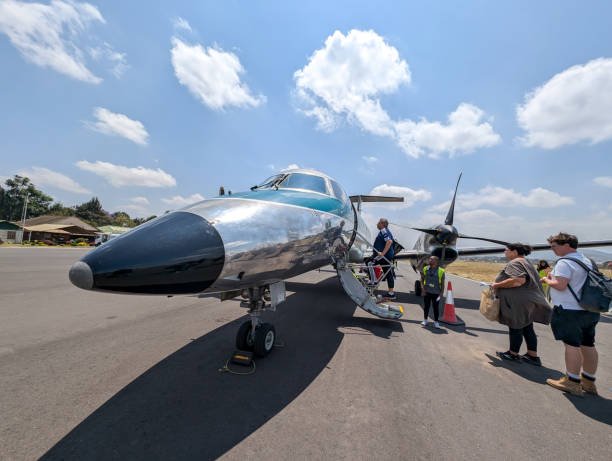
Flights To Mount Kilimanjaro: Ticket Prices & Airport Guide
A comprehensive guide to flying into Kilimanjaro International Airport (JRO) in 2027. Learn how to secure the best flights, what to expect at the airport, and how to align your arrival with...
View package detailsNairobi To Kilimanjaro Airport Flight Cost Guide
A detailed look at the factors influencing the cost of flights from Nairobi to Kilimanjaro Airport, including comparisons with land transfers and essential planning advice.
View package detailsTanzania Flight Prices August : Kilimanjaro & Safari Travel Guide
A deep-dive guide into managing airfare costs and travel logistics for your August 2027 Kilimanjaro climb and Tanzania safari, including expert tips on timing, booking windows, and regional...
View package detailsKilimanjaro Climbing And Zanzibar Package With Flights: Pricing Guide
A detailed guide on how to structure a Kilimanjaro climb and Zanzibar beach holiday, covering cost drivers, flight logistics, and route selection for 2026-2027.
View package detailsKilimanjaro Climbing Package With Airport Transfers: Prices & Logistics
A detailed look at the logistics and pricing components of a full-service Kilimanjaro climbing package, focusing on the critical role of airport transfers and professional coordination.
View package details
Kilimanjaro Climb And Serengeti Safari: Flight & Transfer Planning
Kilimanjaro Climb and Serengeti Safari: Flight & Transfer Planning.
View package detailsBest Flights For Kilimanjaro Climbing And Zanzibar Holidays: A Planning Guide
A professional guide to optimizing your international and domestic flight strategy for a combined Kilimanjaro trek and Zanzibar beach holiday in 2026-2027.
View package detailsFlying To Kilimanjaro From Europe: Expert Guide To Routes, Prices &
A comprehensive guide to flying to Kilimanjaro from Europe, covering the best airport choices, airline connections, and practical booking strategies for your 2027 climb.
View package details
Cheapest Airport To Fly Into For Climbing Kilimanjaro: A Guide
Is flying into Nairobi cheaper than Kilimanjaro for your trek? We break down the hidden costs of transfers, visas, and transit time to help you plan your 2027 trip.
View package details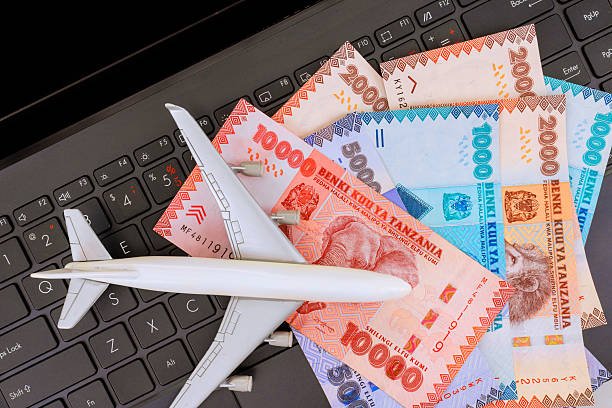
Tanzania Flight Prices March : Airfare & Seasonal Guide
A practical guide to understanding flight pricing for Tanzania in March 2027, covering seasonal trends, booking windows, and logistics for safari and Kilimanjaro itineraries.
View package details
Entebbe To Tanzania Flights: Ticket Prices And Route Guide
A comprehensive guide for travelers planning flights from Entebbe to Tanzania, covering ticket price factors, route options for Kilimanjaro and safari tours, and essential booking logistics...
View package detailsKilimanjaro Vs Arusha Airport: Which Should You Use For Your Trip?
A practical guide to choosing between Kilimanjaro International Airport (JRO) and Arusha Airport (ARK) for your Tanzania safari or Kilimanjaro climb.
View package detailsNo related package matches those filters. Clear one or more filters to see the other topic-matched options.



