
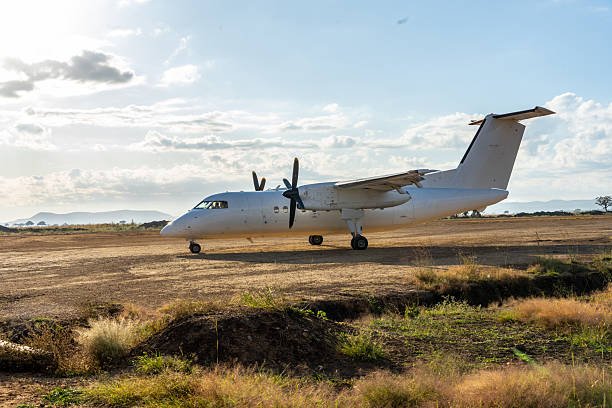
When evaluating Tanzania flight ticket prices, the core distinction lies in the utility of the flight. Commercial Economy flights (operated by airlines like Air Tanzania or Precision Air) function like standard regional transport, connecting major hubs such as Dar es Salaam, Kilimanjaro (JRO), and Zanzibar at a lower, predictable price point. In contrast, Safari bush flights (operated by carriers like Coastal Aviation or Auric Air) are specialized logistical tools. They utilize smaller aircraft to land on remote dirt airstrips directly inside parks like the Serengeti or Ruaha. You aren’t just paying for a seat; you are paying for the time saved by eliminating six-to-eight-hour road transfers. For most travelers, the price difference isn’t just about the ticket—it’s about how much of your limited safari time you are willing to spend on the road versus in the game-viewing area.
The Structural Difference in Flight Pricing
Understanding the pricing of domestic aviation in Tanzania requires looking at the two distinct aviation ecosystems operating in the country. If you attempt to compare them side-by-side without context, you will find the “Economy” ticket looks significantly cheaper, which can lead to planning errors.
Commercial economy airlines operate on a hub-and-spoke model. They fly between paved, international-standard airports. Their pricing is driven by volume, competition, and the economies of scale that come with 50-to-70-seat aircraft. When you book a seat on a flight from Kilimanjaro to Zanzibar, you are a passenger in a mass-transit model. The overhead per passenger is relatively low because the plane is full, the infrastructure (runways, ground staff) is shared, and the flight paths are standardized.
Bush flights operate on a completely different financial model. These are typically Cessna Grand Caravans—small, rugged, 12-to-14-seat aircraft designed to land on bush airstrips. The price of a seat here is not just the cost of fuel and pilot time; it includes a premium for the landing fees at private park airstrips, the specialized insurance for remote operations, and the logistical complexity of coordinating “hop-on, hop-off” schedules that service multiple lodges in a single circuit. When comparing these, remember that the “expensive” bush flight is often the only way to reach your destination without a full-day, bone-jarring drive.
When to Choose Economy Commercial Flights
Commercial flights are your best friend when you are moving between major urban centers or tourism hubs. If your itinerary involves a flight from Dar es Salaam to Kilimanjaro, or from Zanzibar to Arusha, commercial carriers are efficient, reliable, and cost-effective.
We generally recommend choosing commercial economy when:
- Your route is between paved hubs: If both your origin and destination have paved runways, commercial flights are almost always the better value.
- You have standard luggage: Commercial airlines have standard weight allowances (usually 20-23kg checked). You do not need to worry about the strict 15kg limit imposed by bush carriers.
- Your budget is a primary constraint: If you are planning a longer, multi-stop trip, utilizing commercial flights for the “long legs” of your journey can free up budget to allocate toward higher-quality lodges or longer safari durations.
For more details on comparing specific carriers, you can review our Precision Air vs Air Tanzania: Domestic Flight Prices guide.
The Reality of Safari Bush Flights
Safari bush flights are the backbone of a high-end, time-efficient safari. They are not designed for budget travel; they are designed for time-optimization. If you only have five days in the Serengeti, spending two of those days driving from Arusha to the park and back is a poor use of your resources. A bush flight turns that 10-hour round-trip drive into a 50-minute scenic flight.
However, bush flights come with specific “hidden” constraints that you must plan for:
- The 15kg Rule: This is non-negotiable. Bush planes are weight-sensitive. You must use soft-sided luggage. Hard-shell suitcases are often rejected at the airstrip because they don’t fit into the cargo pods of a Cessna Caravan.
- The “Circuit” Schedule: Bush flights often don’t fly point-to-point in a straight line. They may stop at three or four different airstrips in the Serengeti before reaching yours. Your flight time is an estimate, not a guarantee.
- Weather Dependency: Unlike large commercial jets, bush planes fly at lower altitudes. If there is significant cloud cover or poor visibility, flights may be delayed or rerouted. This is a standard part of the bush flying experience.
When planning your logistics, it is vital to understand the difference between the primary carriers. We have compiled a detailed comparison in our Coastal Aviation vs Auric Air: Flight Prices & Safari Routes article.
Comparison Table: Choosing Your Flight Type
| Feature | Commercial Economy | Safari Bush Flight |
|---|---|---|
| Primary Aircraft | ATR 42/72 or Bombardier | Cessna Grand Caravan |
| Luggage Limit | Standard (20-23kg) | Strict (15kg, soft bags only) |
| Airport Type | Paved, major hubs | Dirt/Gravel airstrips |
| Best For | Budget, hub-to-hub, flexibility | Time-saving, remote access |
| Schedule | Fixed, airline-dependent | Circuit-based, flexible |
Logistical Planning: Why Booking Through an Operator Matters
One of the most common mistakes travelers make is booking flights independently and assuming they will seamlessly connect to their safari vehicle. In Tanzania, the coordination between a bush flight and a safari driver is a precise logistical dance. If your flight is delayed by weather, who notifies your driver waiting at the airstrip? If your international flight arrives late, how do you rebook your bush connection without losing the entire fare?
When you book your safari through Climb 4 Africa, we manage these connections. We know which airstrips are closest to your specific lodge and which airlines have the most reliable service for your chosen dates. We don’t just book a ticket; we ensure the vehicle is there when you land. This is particularly critical in the peak season, as discussed in our Tanzania Flight Prices July 2027: Peak Safari Season overview.
The Cost of Convenience
When looking at the price tag of a bush flight, it is helpful to reframe the cost as a “time-purchase.” If you are flying from Arusha to the Northern Serengeti, you are looking at a flight that might cost significantly more than a commercial flight between major cities. However, consider the cost of the extra night’s accommodation you would need if you drove, the cost of the driver’s time, the fuel, and the fatigue of the long drive. For many travelers, the bush flight is actually the more economical choice when you factor in the value of a full day of game viewing.
We always advise clients to consider their total trip duration. If you have a two-week itinerary, you have the luxury of time, and road travel can be a rewarding way to see the Tanzanian countryside. If you have one week, the bush flight is not a luxury—it is a necessity to see the parks you came to visit.
Practical Tips for 2026-2027 Travel
As we look toward 2026 and 2027, the demand for bush flights remains high, particularly during the Great Migration months. Booking your internal flights early is essential, not just for price, but for seat availability. The Cessna Caravans used for these flights have a limited number of seats, and they fill up months in advance.
Furthermore, be aware of how airport taxes and fees are handled. Many travelers are surprised to find that these are not always bundled into the ticket price in the same way they are for international carriers. For clarity on what you are paying for, refer to our guide: Do Tanzania Domestic Flight Prices Include Airport Taxes?
If you are in the initial stages of planning your itinerary, feel free to reach out to us. We can help you determine the most efficient route and whether your specific lodges require a bush flight or are accessible by road. You can contact us via WhatsApp at +255 747 477 898 or email us at climb4africa@gmail.com or our backup address info@climb-4-africa.com. We are here to help you navigate the complexities of Tanzania’s flight network so you can focus on the wildlife.
Frequently Asked Questions About Tanzania Flights
Can I carry a hard-shell suitcase on a bush flight?
Generally, no. Due to the limited space in the cargo pods of small aircraft, hard-shell suitcases are typically prohibited. You must use soft-sided duffel bags that can be compressed to fit into the aircraft’s storage compartments.
What happens if my bush flight is cancelled due to weather?
Weather is a common factor in bush flying. If a flight is cancelled, the airline will typically rebook you on the next available flight. Having an experienced operator like Climb 4 Africa manage your booking is crucial here, as we handle the communication with the airline and your ground team to adjust your safari schedule accordingly.
Are flights cheaper if I book them myself?
Not necessarily. While you might see a “base fare” online, safari flight pricing is dynamic and often involves complex routing. Operators often have access to negotiated rates or, more importantly, the ability to bundle flights into a larger itinerary that saves you money on the total cost of the safari, including transfers and park fees.
Do I need to pay for extra luggage?
If you exceed the 15kg limit, you may be able to purchase an extra seat for your luggage, subject to availability. However, it is always better to pack light. We provide packing lists for all our clients to ensure you have exactly what you need without exceeding weight limits.

The Mechanics of Bush Flight Routing and Pricing Variables
To truly grasp why safari bush flight pricing varies so significantly from commercial aviation, one must understand the operational reality of bush routing. Unlike commercial airlines that operate on a point-to-point basis—flying from Point A to Point B with a single takeoff and landing—bush flights often function as multi-leg circuits. A single Cessna Caravan might depart from Arusha and stop at three or four different airstrips (such as Seronera, Kogatende, and Grumeti) before reaching its final destination. This multi-leg operation is inherently more complex to execute.
Every time the aircraft descends to a remote airstrip, the pilot incurs additional costs: landing fees, which are often charged per landing by the Tanzania National Parks Authority (TANAPA) or the specific conservancy, and increased fuel consumption due to the additional takeoff and climb-out phases. While a commercial flight burns the majority of its fuel during the cruise phase, a bush flight involves multiple high-burn cycles. When you pay for a ticket, you are often subsidizing the operational costs of a route that may only have one or two passengers for specific legs of the journey.
Furthermore, travelers often encounter the minimum passenger variable. Bush flight operators typically require a minimum number of passengers to confirm a scheduled flight. If you are traveling during the shoulder or low season, or if your chosen destination is particularly remote, you may find that the airline requires a minimum of two or four seats to be booked to operate the flight. If you are a solo traveler or a couple, you might be asked to pay for the empty seats to meet this threshold. This is not a price hike; it is a fundamental requirement of operating a small aircraft into a low-volume region. In these instances, the ticket price is effectively a partial charter rate. Understanding this distinction is vital for budget planning; if you see a price that seems significantly higher than the standard rate, it is frequently because the flight is being confirmed specifically for your party rather than being part of a full, regularly scheduled service.
Operational Reliability and the VFR Reality
When you weigh the cost of a bush flight against a commercial alternative, you are essentially evaluating two different standards of air traffic control. Commercial airlines operate under Instrument Flight Rules (IFR), meaning they utilize complex navigational systems that allow them to fly in low-visibility conditions, such as heavy rain, thick cloud cover, or haze. In contrast, almost all bush flight operations in Tanzania are conducted under Visual Flight Rules (VFR). This is not a choice of the operator; it is a necessity dictated by the infrastructure of remote bush airstrips, which lack the sophisticated instrument landing systems found at major hubs like Dar es Salaam or Kilimanjaro.
This reliance on VFR creates a unique “hidden cost” in terms of your time. If the weather in the Serengeti or the Selous (Nyerere National Park) closes in—common during the transition months between wet and dry seasons—bush flights may be grounded for several hours or, in rare cases, until the following day. When you pay for a bush flight, you are paying for a premium service, but you are also accepting a higher degree of schedule variability. A commercial flight might divert or delay by an hour, but a bush flight might be canceled entirely for the day if the pilot cannot visually identify the airstrip or clear the terrain. Savvy travelers account for this by building a “buffer” into their itinerary, particularly when connecting to an international flight home. If your bush flight is the only link between a remote camp and your international departure, you are assuming a risk that commercial passengers do not face.
The “Last Mile” Logistics: Airstrip Transfers vs. Game Packages
A frequent point of confusion that impacts the perceived value of your flight is the distinction between a “fly-in” rate and a “game package” rate at your lodge. When you book a bush flight, you are paying to reach the airstrip, but the airstrip is rarely located at the lodge door. The final segment—the transfer from the airstrip to your accommodation—is where many travelers experience unexpected logistical friction.
Many high-end lodges operate on a “Game Package” basis. This means your stay includes not just the room and meals, but also the lodge’s own 4×4 vehicles and drivers. In this model, the lodge assumes responsibility for meeting you at the airstrip. They track your flight’s progress and ensure a guide is waiting to whisk you away. This is smooth, but it is factored into the higher nightly rate of the lodge. Conversely, if you book a lodge on a “bed and breakfast” or “full board” basis without the game package, you are often responsible for your own “last mile” transfer. If you arrive at an airstrip like Kogatende or Seronera without a pre-arranged transfer, you may find yourself stranded. Understanding whether your flight connects to a lodge-provided transfer is as important as the flight price itself. Never assume the flight operator or the airport staff will provide ground transportation; in the bush, the airstrip is simply a strip of dirt, not a terminal with taxis.
The Geometry of Baggage: Why Soft Bags Matter
The requirement for soft-sided luggage on bush flights is often misconstrued as a mere suggestion or a bureaucratic preference. In reality, it is a strict physical constraint imposed by the design of the Cessna Grand Caravan and similar bush aircraft. These planes do not have conventional cargo holds. Instead, luggage is often stored in an under-belly “pod” or in the rear cabin area, both of which have curved, non-rectangular dimensions.
A hard-shell suitcase, regardless of its weight, has fixed dimensions that cannot be compressed. If the baggage pod is shaped to accommodate narrow, flexible objects, a rigid suitcase may physically fail to fit through the cargo door, even if it weighs under the 15kg limit. When you pay for your flight, you are purchasing a specific volume of space, not just a weight allowance. If you arrive with a hard-shell bag, the pilot may have to refuse the item due to space constraints, leaving you in a difficult position at the airstrip. Investing in a high-quality, collapsible duffel bag is not just about adhering to policy; it is a critical step in ensuring your gear actually reaches the lodge with you. Travelers who ignore this often find themselves paying for an extra seat just to carry their luggage, effectively doubling the cost of their flight.
Navigating Pricing Models: Seat-in-Plane vs. Private Charter
When you begin the booking process, you will often encounter two distinct pricing structures: the “Seat-in-Plane” (SIP) model and the “Private Charter” model. Understanding the difference is vital for budget management. Most bush flight pricing you see online is based on the SIP model. This is the most cost-effective method for solo travelers, couples, or small groups. In this arrangement, you are purchasing a single seat on a scheduled flight that may stop at multiple airstrips before reaching your destination. The operator aggregates demand across various lodges to keep the aircraft as full as possible. Because the fixed costs—fuel, pilot salary, and landing fees—are divided among 12 to 14 passengers, the price-per-head remains predictable.
A private charter, by contrast, is a different financial product. You are not buying a seat; you are leasing the entire aircraft. This is often the preferred choice for larger families, groups of six or more, or travelers with extremely rigid time constraints who cannot afford the variability of a multi-stop schedule. While the total cost is significantly higher, it provides the freedom to select your departure time and potentially bypass intermediate stops that a scheduled SIP flight would require. If you are traveling as a group of six, the price-per-person for a private charter can sometimes rival the cost of individual SIP tickets, making it a viable alternative that offers superior convenience.
The most frequently misunderstood aspect of private charter pricing is the “dead leg.” When you book a charter, you are often paying for the aircraft to be at your disposal for the entire duration of its duty cycle. If you fly from Arusha to a remote airstrip in a park like Ruaha, the aircraft must eventually return to its base. If there is no paying passenger flying the reverse route, you are effectively paying for the aircraft to return empty. Operators must factor this “dead leg” into your quote. When you receive a charter quote that seems disproportionately high, it is usually because you are paying for the plane’s round-trip positioning, not just your one-way journey. Always clarify if your quote includes these “positioning fees,” as they are a standard, unavoidable operational cost in the bush aviation industry.
Check Availability for Tanzania Flight Ticket Prices: Economy Vs Safari Bush Flights Explained
Ready to compare dates, prices, and the best option for your group? Send the package name and travel month so the team can reply with a clear quote, availability, and what is included.

4-Day Tanzania Fly-In Safari With Return Flights: Prices & Planning
A deep look at the logistics and price factors for a 4-day Tanzania fly-in safari, helping you plan your 2027 wildlife adventure.
View package detailsKenya To Tanzania Safari Flights: Prices & Booking Guide
A practical guide to connecting Kenya and Tanzania by air for your safari. Learn about border logistics, booking realities, and why most travelers choose specific routes over others.
View package details
Tanzania To Uganda Flights: Best Routes And Ticket Prices
A detailed guide to navigating air travel between Tanzania and Uganda, including route comparisons, carrier options, and expert advice for planning your multi-country safari.
View package details
Entebbe To Tanzania Flights: Ticket Prices And Route Guide
A comprehensive guide for travelers planning flights from Entebbe to Tanzania, covering ticket price factors, route options for Kilimanjaro and safari tours, and essential booking logistics...
View package details
Best Airlines For Tanzania Safari Flights: Prices & Comparison ()
A guide to navigating Tanzania's domestic airline market for safari travel, covering reliability, baggage constraints, and booking strategies for 2027.
View package details
Tanzania Honeymoon Safari And Zanzibar With Flights: Package Prices
Tanzania Honeymoon Safari and Zanzibar With Flights: Package Prices.
View package details
Kigali To Serengeti Flights: Prices & Safari Connections
A practical guide to connecting your Rwanda gorilla trekking with a Serengeti safari, focusing on flight routes, transit logistics, and expert booking advice.
View package detailsFlightlink Vs Coastal Aviation: Tanzania Safari Flight Prices Guide
A practical comparison of Tanzania's two leading bush airline operators, focusing on what drives prices, operational differences, and how to plan your inter-camp travel.
View package detailsCoastal Aviation Vs Auric Air: Comparing Tanzania Safari Flight Routes &
Deciding between Coastal Aviation and Auric Air for your Tanzania safari? We break down the differences in routes, reliability, and how to manage your bush flight logistics effectively.
View package detailsTanzania Flight Prices August : Kilimanjaro & Safari Travel Guide
A deep-dive guide into managing airfare costs and travel logistics for your August 2027 Kilimanjaro climb and Tanzania safari, including expert tips on timing, booking windows, and regional...
View package detailsTanzania Flight Prices July : Peak Safari Season Planning Guide
July is the absolute peak of the safari season in Tanzania. Here is how to navigate flight pricing, airline choices, and booking strategies for your July 2027 trip.
View package detailsTanzania Flight Prices June : Safari Season Airfares
A practical guide to navigating flight costs and logistics for Tanzania in June 2027, focusing on the seasonal shift from shoulder to peak.
View package detailsNo related package matches those filters. Clear one or more filters to see the other topic-matched options.



