
Planning a trip to Tanzania for February 2027 requires a nuanced understanding of how flight logistics intersect with the country’s peak wildlife seasons. February is a distinctive month in the Tanzanian travel calendar; it marks the height of the calving season in the southern Serengeti, a phenomenon that draws significant interest and, consequently, impacts demand for both international arrivals and domestic bush flights.
When researching Tanzania flight prices for February 2027, it is essential to distinguish between your international long-haul journey and the domestic flights that connect your safari circuit to the beaches of Zanzibar. While international fares fluctuate based on global market demand and airline capacity, domestic flight prices within Tanzania—often operated by smaller regional carriers—are driven by fuel costs, pilot availability, and the specific logistics of landing on remote bush airstrips.
Understanding the February 2027 Travel Landscape
February is widely considered one of the best times to visit Tanzania. The “short rains” have typically subsided, and the landscape is lush and green. More importantly, the wildebeest calving season in the Ndutu and southern Serengeti areas is in full swing. This attracts a specific type of traveler: those focused on predator-prey action and wildlife photography. Because this is a high-demand period for the Northern Circuit, internal flights to airstrips like Seronera or Ndutu often reach capacity months in advance.
If you are planning to combine a safari with a Zanzibar beach holiday, your flight path likely looks like this: arrive at Kilimanjaro International Airport (JRO), transit to your safari start point, fly from a bush airstrip to Zanzibar (ZNZ), and finally depart from Zanzibar or return to Dar es Salaam. The complexity of these connections is where travelers often find the most variance in their total trip budget.
Factors Influencing Domestic Flight Costs
Unlike major commercial airlines where algorithms adjust prices by the hour, domestic flight operators in Tanzania often work with tiered pricing based on the season and route volume. When you look at Tanzania flight prices for February 2027, consider these specific variables:
- Route Connectivity: Flights connecting a bush airstrip directly to Zanzibar are often more expensive than flights returning to Arusha or Dar es Salaam, simply because of the operational logistics involved in cross-country bush aviation.
- Baggage Constraints: Small aircraft have strict weight limits (usually 15kg in soft-sided bags). Exceeding these limits often requires booking an extra seat, which effectively doubles the cost of that leg of your journey.
- Airport Taxes and Fees: These are often bundled into your flight ticket, but it is important to confirm whether your quote includes all local authority fees, particularly when flying between different national parks or onto the island.
- Booking Lead Time: While international flights can sometimes be found at last-minute prices, domestic bush flights are limited by seat inventory. Once a 12-seater aircraft is full, it is full. There is no “overbooking” equivalent in the same way there is for large jets.
Comparing Travel Modes: The Fly-In Advantage
For many, the question isn’t just about the flight price, but whether the cost is justified by the time saved. Comparing Tanzania safari flight-inclusive packages vs road safari reveals a clear trade-off between budget and comfort.
| Feature | Fly-In Safari | Road-Based Safari |
|---|---|---|
| Travel Time | Fast; minimal transit time | Longer; part of the experience |
| Cost | Higher initial ticket cost | Lower transport cost |
| Comfort | High; avoids bumpy roads | Variable; depends on vehicle quality |
| Flexibility | Limited to scheduled departures | Greater control over stops |
For travelers heading to Zanzibar, the fly-in option is almost always the preferred choice. The drive from the Serengeti to the coast is not feasible in a single day, and even breaking it up involves significant travel time. Flying directly from a Serengeti airstrip to Zanzibar saves nearly two full days of transit, allowing you to maximize your time on the beach.
Logistics: Connecting Safari to Zanzibar
The most common logistical challenge for February 2027 itineraries is the connection between the safari end-point and the coastal start-point. You have two main strategies:
1. The Direct Bush-to-Island Route
This involves a flight directly from a regional airstrip (like Seronera or Manyara) to Zanzibar. This is the most efficient method. However, it requires careful coordination. If your safari ends late in the day, you may not make the last scheduled bush flight, necessitating an overnight stay in Arusha before flying to the island the following morning. Our team at Climb 4 Africa often assists in timing these connections to ensure you don’t lose precious holiday hours.
2. The Transit via Arusha/Dar es Salaam
Some travelers prefer to fly back to Arusha (ARK) or Dar es Salaam (DAR) first. This can sometimes be cheaper, but it adds complexity. You must account for the transfer time between airports (especially in Dar es Salaam, where domestic and international terminals are separate) and the potential for delays. When planning your Tanzania flight prices for February 2027, ensure you have a buffer of at least 4-5 hours if you are self-connecting between domestic and international flights.
Booking Strategy for 2027
Because we operate as a local expert, we see the impact of supply and demand firsthand. For a February 2027 trip, we recommend finalizing your domestic flight arrangements by mid-2026. This is particularly important for the high-demand routes from the Serengeti to Zanzibar.
When you contact us for a quote, we don’t just provide a generic price. We look at your entire itinerary. Are you doing a private Tanzania safari with internal flights? If so, the flight costs are bundled into your package, providing a layer of protection against last-minute price hikes. We handle the coordination, the luggage logistics, and the backup planning if a flight schedule changes.
To start your planning, send us the following details:
- Your preferred safari duration and parks (e.g., Serengeti, Ngorongoro).
- The number of travelers in your group (this significantly impacts flight logistics).
- Your target dates for February 2027.
- Any specific preferences for your Zanzibar accommodation (e.g., North coast vs. East coast).
By providing these details, we can build a cohesive route that minimizes transit time and maximizes your wildlife and beach experience. You can reach us via WhatsApp at +255 747 477 898 or email us at climb4africa@gmail.com or our backup address info@climb-4-africa.com.
Common Questions About Tanzania Flight Logistics
Are flight prices fixed?
No. Prices fluctuate based on fuel surcharges, seasonal demand, and booking class. We provide current estimates based on the best available data for your specific dates.
What happens if my safari flight is delayed?
Domestic bush airlines in Tanzania are accustomed to safari schedules. If a delay occurs, they work to rebook you on the next available flight. When booking with a tour operator, we act as your advocate to manage these changes, which is why understanding what happens if my Tanzania safari flight is delayed is a critical part of your pre-trip research.
Should I book my own domestic flights?
While you can, it is rarely advisable for a complex itinerary. If your international flight is delayed, a self-booked domestic ticket may be forfeited as a “no-show.” When we book your flights as part of a package, we coordinate the entire sequence, ensuring that the ground and air components communicate effectively.
Is there a cheaper way to fly to Zanzibar from the safari?
Generally, flying via Dar es Salaam can be cheaper than a direct flight, but you sacrifice significant time. We always suggest weighing the cost savings against the loss of a full day of vacation.
For those interested in combining their safari with an active challenge, we also offer Kilimanjaro climbs in February 2027. If you are planning a multi-stage trip that includes climbing and safari, the flight logic changes entirely, as you will likely be arriving at JRO and departing from ZNZ. We specialize in these complex, multi-leg itineraries and can advise on the most cost-effective and time-efficient flight paths to ensure your February 2027 adventure is smooth.
Navigating Baggage Constraints on Bush Aircraft
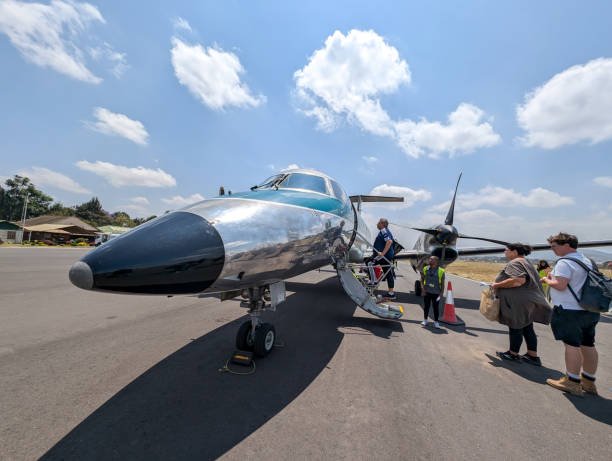
One of the most frequent oversights when booking Tanzania flight packages for February 2027 is the strict baggage policy enforced by domestic bush airlines. Unlike international carriers, which often allow significant weight allowances, regional bush operators utilize smaller aircraft—typically Cessna Grand Caravans—where weight and balance are critical safety factors. Understanding these constraints is not merely about adhering to rules; it is a financial consideration, as failing to comply can lead to unexpected charges or, in rare cases, being bumped from a flight if the aircraft reaches its maximum payload capacity.
The “Soft-Sided” Requirement and Safety
It is standard practice across the Tanzanian safari industry to require soft-sided luggage for all bush flights. This is not a preference but a logistical necessity. The cargo holds on these smaller aircraft are uniquely shaped and lack the rigid, rectangular compartments found in commercial jets. Hard-shell suitcases, regardless of their weight, often cannot be manipulated to fit into the hold. If you arrive at an airstrip with a hard-shell bag, the pilot may refuse to load it, or you may be forced to leave it behind at a secure location, which creates significant logistical stress at the start of your safari.
Managing Excess Luggage Costs
The standard baggage allowance for domestic bush flights is typically 15 kilograms (33 pounds) per person, inclusive of hand luggage. For travelers visiting in February, where you might be packing for a mix of warm coastal weather and cooler mornings in the Serengeti, this limit can feel restrictive. If you exceed this weight, airlines generally do not simply charge a flat fee per kilogram. Instead, they often require the purchase of an ‘extra seat’ to accommodate the weight, which can double the cost of your flight leg. When budgeting for your February 2027 trip, it is far more cost-effective to pack light or arrange for secure storage of excess luggage at your initial hotel in Arusha or Dar es Salaam, rather than attempting to fly with heavy, oversized gear.

The Critical Buffer: International Arrival to Domestic Departure
The transition from your international long-haul flight to your domestic bush connection is the single most vulnerable point in your itinerary. In February 2027, as demand for the Northern Circuit peaks, flight schedules for bush operators are tight. A delay in your international arrival, even by just an hour, can cause a domino effect that results in missing your bush flight. It is essential to understand the difference in airport flow between the two main entry points for safari travelers.
JRO vs. DAR: Understanding Airport Flow
Kilimanjaro International Airport (JRO) is generally the preferred entry point for Northern Circuit safaris. It is a smaller, more manageable facility. However, even here, you must account for the time required to clear immigration, collect checked baggage, and re-check in for your domestic flight. A minimum of three hours between your scheduled international arrival and your domestic departure is the industry-recommended buffer. If you are arriving at Dar es Salaam (DAR), the complexity increases. You must often transfer between the international terminal and the domestic terminal. This transit can involve a shuttle or a short drive, and during peak hours, traffic in Dar es Salaam can be unpredictable. For a connection via DAR, we strongly advise a minimum of four to five hours, or an overnight stay if the connection is too tight.
The Reality of Inter-Airline Baggage Transfer
A common misconception is that your baggage will be ‘interlined’ or transferred automatically from your international carrier (e.g., KLM, Qatar Airways, or Ethiopian Airlines) to your domestic bush airline. In almost all cases, this is not possible. Bush airlines operate on different reservation systems and do not have baggage agreements with major international carriers. You must collect your bags at the international arrival hall, clear customs, and physically present your luggage to the check-in desk of your bush airline. Because this process requires you to be present with your luggage, ‘tight’ connections are not just risky—they are often impossible to execute. When planning your 2027 travel, ensure that your international arrival time aligns with the operating windows of the bush airlines, which typically cease operations shortly before sunset for safety reasons.
Scheduled vs. Charter: The Cost and Flexibility Trade-off
When analyzing Tanzania flight prices for February 2027, it is critical to distinguish between the two primary aviation models: scheduled services and private charters. Most travelers booking online encounter “scheduled” bush flights. These operate like a bus route in the sky, with set departure times and multiple stops to pick up and drop off passengers across the Northern Circuit. Because you are purchasing a single seat on a shared aircraft, these are the most cost-effective options for solo travelers, couples, and small groups. Pricing for these flights is fixed per seat, though it fluctuates based on the booking class and how far in advance you secure your spot.
Conversely, private charters involve renting the entire aircraft. While the initial quote for a charter will appear significantly higher than a per-seat ticket, the cost dynamics shift for groups of four or more. A private charter offers two distinct advantages: schedule flexibility and direct routing. You are not bound by the “milk run” stops that scheduled flights often make to maximize capacity, meaning your transit time between a remote Serengeti airstrip and Zanzibar can be cut by hours. For families or groups traveling with children or elderly members, the ability to dictate departure times often outweighs the premium cost, as it minimizes the fatigue associated with waiting at remote airstrips.
Navigating Weather-Related Operational Changes in February
While February is statistically one of the drier months in Tanzania—marking the tail end of the short dry season—it is not immune to meteorological unpredictability. Unlike major international airports with concrete runways and advanced instrument landing systems, bush airstrips are typically compacted earth or gravel. This operational reality means that your flight is always subject to “weather permitting” status, a clause that becomes more relevant during the transition periods between seasons.
In February, localized thunderstorms can occasionally develop in the late afternoon. If a pilot determines that an airstrip is too soft due to a sudden downpour, or if visibility drops below safety thresholds, the flight will be delayed, rerouted to a nearby all-weather strip, or cancelled for the day. This is a safety protocol, not a service failure. When planning your itinerary, this is why we strongly advise against scheduling your international flight home on the same day you are flying out of the bush. If a morning flight is pushed to the afternoon due to cloud cover, you need that buffer time to ensure you do not miss your long-haul connection from JRO or DAR. Always maintain direct communication with your ground handler or safari operator, as they receive real-time updates from aviation dispatchers and can coordinate alternative ground transfers if an aircraft is grounded.
The Airstrip Departure Experience: What to Expect in the Bush
Transitioning from the Serengeti or the Southern Circuit to the coast involves a shift from wilderness isolation to the infrastructure of a commercial hub. It is vital to understand that bush airstrips bear no resemblance to international airports. There are no check-in counters, no security scanners, and no departure lounges. In many cases, you are waiting near an open-sided shelter or under the shade of a nearby acacia tree. Your pilot—or occasionally a ground handler—serves as your primary point of contact. This lack of formality is part of the safari experience, but it demands a higher level of passenger awareness. You must be ready to board the moment the aircraft touches down, as bush flights often utilize “flexible” scheduling; if all passengers are present and the weather is optimal, flights may depart earlier than the slated time to avoid late-afternoon cloud cover or potential weather delays.
Safety protocols at these strips are visual rather than technical. Pilots perform a fly-by to ensure the runway is clear of wildlife—a common occurrence in February when animals are drawn to fresh grass—before landing. Once the aircraft is on the ground, the loading process is swift. Because there is no formal security checkpoint, the pilot is personally responsible for verifying passenger manifests and ensuring baggage weight limits are strictly adhered to. This is why having your “soft-sided” luggage packed and ready for inspection at the airstrip is critical; there is no secondary “re-packing” area if your bag is found to be oversized or over-limit.
Zanzibar Arrival Logistics: Beyond the Runway
Landing at Zanzibar International Airport (ZNZ) presents a stark, sensory contrast to the quiet of the bush. Upon arrival, you transition from a remote, private aviation environment to a bustling, high-traffic commercial hub. If you are arriving from a domestic bush flight, you will typically deplane at the domestic terminal. While you do not need to clear immigration again, navigating the exit process requires planning. Zanzibar is significantly larger than many travelers anticipate, and the geography of the island dictates your onward travel costs and time.
A transfer from ZNZ to Stone Town is a short 15-minute drive, whereas a transfer to the northern beaches like Nungwi or Kendwa can take upwards of 90 minutes. Many visitors make the mistake of assuming they can easily hail a taxi at the terminal. While taxis are available, the “arrival experience” at ZNZ can be overwhelming, with high demand and variable pricing. Furthermore, the road infrastructure in the interior of the island can be congested. To ensure a smooth end to your transit day, it is highly recommended to pre-book your ground transfer. Whether you are staying at a luxury boutique hotel or a larger resort, these establishments almost always have established transfer partners. Booking this transport in advance not only locks in a fair price but also ensures that a driver is waiting specifically for you, bypassing the negotiation process in the arrivals hall. If your itinerary includes a stay in the Michamvi or Pongwe areas, be aware that the final leg of the journey may involve unpaved roads, which can add time to your transit—a factor to communicate to your driver in advance to avoid late arrivals at your hotel.
Related Guides and Packages
Check Availability for Tanzania Flight Prices February : Safari & Zanzibar Routes
Ready to compare dates, prices, and the best option for your group? Send the package name and travel month so the team can reply with a clear quote, availability, and what is included.

Tanzania Honeymoon Safari And Zanzibar With Flights: Package Prices
Tanzania Honeymoon Safari and Zanzibar With Flights: Package Prices.
View package details
Tanzania Safari And Zanzibar Holiday With Domestic Flights: Costs Guide
A guide to understanding the costs, logistics, and planning strategies for combining a Tanzanian wildlife safari with a Zanzibar beach getaway using domestic flights.
View package detailsWhich Tanzanian Airport Is Best For A Safari And Zanzibar Holiday?
Which Tanzanian Airport Is Best for a Safari and Zanzibar Holiday?
View package details
Zanzibar To Nairobi Flight Price & Schedule: Planning Your Connection
A practical guide to navigating flights from Zanzibar to Nairobi, covering airport logistics, price factors, and how to coordinate your beach-to-safari transition.
View package detailsBest Time To Book Flights To Zanzibar In : Planning Your Island Getaway
Expert advice on securing the best flight arrangements for your 2027 Zanzibar holiday, including seasonal booking windows and coordination with Tanzania safari itineraries.
View package detailsTanzania Flight Prices September : Serengeti And Zanzibar Planning
Expert advice on navigating domestic flight logistics, seasonal pricing, and the crucial 'bush-to-beach' connection for your September 2027 Tanzania itinerary.
View package detailsAfcon Football Safari And Zanzibar Holiday: Expert Planning Guide
A guide to combining the AFCON 2027 football tournament with a Tanzanian safari and Zanzibar beach holiday, focusing on logistics, timing, and travel planning.
View package detailsHow Long Is The Flight From Serengeti To Zanzibar? ( Planning Guide)
Planning your bush-to-beach connection? Discover the actual flight durations, stopover logistics, and booking realities for traveling from the Serengeti to Zanzibar.
View package detailsHow Much Is A Flight From Zanzibar To Serengeti?
How Much Is a Flight From Zanzibar to Serengeti?
View package details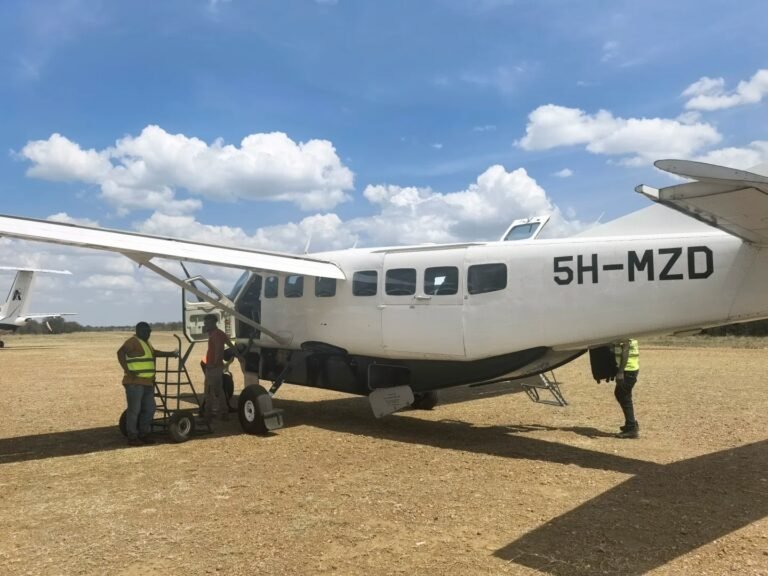
Can You Fly Directly From Zanzibar To Serengeti? A Planning Guide
A practical guide to flying from the beaches of Zanzibar to the Serengeti plains, covering bush plane logistics, baggage restrictions, and planning advice.
View package detailsCan I Fly From Zanzibar To Serengeti And Return The Same Day? Guide
A professional assessment of the feasibility of same-day air travel between Zanzibar and the Serengeti, including logistical realities and better alternatives for your Tanzanian itinerary.
View package detailsNairobi To Zanzibar Flights: Ticket Prices & Booking Guide
A comprehensive guide to understanding flight costs, airline choices, and logistics for the popular Nairobi to Zanzibar route.
View package detailsNo related package matches those filters. Clear one or more filters to see the other topic-matched options.



