
Choosing between Lake Manyara Airstrip and Arusha Airport for your Ngorongoro safari depends entirely on your budget, schedule, and preferred travel style. Arusha Airport (ARK) is the standard, cost-effective gateway for 90% of travelers, serving as the base for road transfers that take approximately 3 to 4 hours to reach the Ngorongoro Conservation Area. Lake Manyara Airstrip (LKY) is the premium alternative, best suited for travelers who have limited time or a higher budget; it bypasses the long drive, landing you just 1 to 1.5 hours from the Crater rim, though it requires specific light-aircraft flight bookings and carries stricter luggage weight limits.
When you start mapping out your Tanzania safari, the logistics often feel like a puzzle. You have the international flight to Kilimanjaro (JRO) or Dar es Salaam, followed by the domestic connections. If your primary focus is the Ngorongoro Crater, the decision between flying into Lake Manyara or driving from Arusha is one of the most critical choices you will make. It dictates your first day, your budget, and the pace at which you experience the Tanzanian bush.
Understanding the Role of Arusha Airport (ARK)
Arusha Airport is not just an airport; it is the heartbeat of the northern safari circuit. Unlike Kilimanjaro International Airport (JRO), which handles large commercial jets, Arusha Airport is a smaller, regional hub. It is the natural starting point for the vast majority of private and group safari packages.
When you choose to start your trip here, you are opting for the classic overland experience. This is the route that allows you to see the changing landscape as you exit the city and climb toward the highlands. The drive from Arusha to the Ngorongoro Conservation Area entrance (Loduare Gate) typically takes between 3 and 4 hours, depending on traffic in the city and road conditions. While that may sound like a long time, this transit is often part of the safari itself, passing through the bustling town of Mto wa Mbu and climbing the dramatic escarpment of the Great Rift Valley. For those looking to save on costs, this road transfer is significantly more economical than chartering or booking individual seats on a bush flight.
The Convenience of Lake Manyara Airstrip (LKY)
Lake Manyara Airstrip serves a completely different purpose. It is essentially a “bush strip” located inside or very near the Lake Manyara National Park ecosystem. When you fly into this airstrip, you are cutting out the entire transit from Arusha. Instead of spending half a day on the road, you are in the air for about 30 to 45 minutes, landing in the heart of the safari region.
This option is the gold standard for high-end itineraries or for travelers who simply hate long car journeys. If you are flying in from Zanzibar or connecting from a Serengeti camp, Lake Manyara Airstrip allows you to start your safari experience almost the moment you step off the plane. The transfer from the airstrip to the Ngorongoro Crater rim is much shorter, usually taking about 60 to 90 minutes. This creates a “cushion” of time, allowing you to potentially visit Lake Manyara National Park for a quick game drive before heading up to the Crater for your overnight stay.
Comparison: Arusha vs. Lake Manyara for Ngorongoro Access
To help you weigh these options for your 2026 or 2027 travel plans, we have broken down the core differences in the table below. Note that these are operational averages and can vary based on weather, vehicle type, and specific lodge locations.
| Feature | Arusha Airport (ARK) | Lake Manyara Airstrip (LKY) |
|---|---|---|
| Primary Travel Mode | Road Transfer (4×4 Land Cruiser) | Light Aircraft (Bush Plane) |
| Transit Time to Ngorongoro | 3–4 Hours | 1–1.5 Hours |
| Cost Factor | Included in standard safari packages | Additional flight cost + transfer fee |
| Luggage Limits | Flexible (Standard safari vehicle) | Strict (15kg soft-sided bags) |
| Best For | Budget-conscious, group travelers | Time-sensitive, luxury travelers |
| Safari Experience | Scenic, gradual immersion | Rapid, exclusive arrival |
The Hidden Costs and Trade-offs
It is easy to look at the map and assume that flying is always better. However, in the context of a Tanzanian safari, the “best” choice is often nuanced. When you fly into Lake Manyara, you are not just paying for the flight; you are often paying for a private transfer from the airstrip to your lodge. Many lodges are located a significant distance from the strip, and these transfers are rarely included in standard flight tickets.
Furthermore, luggage is a major pain point. If you are coming from an international flight, you likely have standard suitcases. Bush planes are notorious for strict weight limits (usually 15kg per person) and, more importantly, the requirement for soft-sided bags. If you arrive at the airport with a hard-shell suitcase, you may be forced to leave items behind or pay for an extra seat, which can negate the convenience of flying. If you are planning your trip for 2026 or 2027, ensure you check your luggage requirements well in advance—contact us at climb4africa@gmail.com if you need clarification on baggage rules for specific light aircraft operators.
The Road Experience: Why Arusha is Often Preferred
Do not underestimate the value of the road trip from Arusha. For many first-time visitors, the drive to Ngorongoro is their introduction to Tanzania. You will drive past coffee plantations, through Maasai villages, and watch the landscape transition from the dry plains to the lush, misty forests of the Crater Highlands. It is a slow, steady acclimatization to the environment. If you suffer from motion sickness, however, the road can be winding. In that case, the flight is definitely the superior option.
We often advise travelers who are on a tight schedule—perhaps a 3-day or 4-day express safari—to choose the flight into Lake Manyara. Every hour counts when you are on a short trip. If you have a week or more, the road journey is a wonderful, budget-friendly way to see the country.
Integration with Your Wider Tanzania Itinerary
Your choice of airport should also be dictated by where you are coming from. If you are flying directly from Zanzibar, you have limited flight options. Many flights from Zanzibar land at Arusha Airport, while others may connect through to regional strips like Lake Manyara. If your itinerary includes a 3-day Serengeti & Ngorongoro safari from Zanzibar, the flight path is often predetermined by the operator’s flight schedule.
For those arriving from international flights into Kilimanjaro (JRO), you have a choice. You can land at JRO, drive to Arusha for an overnight stay, and then head to Ngorongoro the next morning, or you can take a connecting flight to Lake Manyara. We generally recommend the overnight in Arusha to allow for any international flight delays. It provides a buffer that flying directly into the bush does not offer.
Planning Your 2026-2027 Safari
As we look toward the 2026 and 2027 seasons, demand for both private road transfers and bush flights is expected to remain high. If you are leaning toward the flight option, booking your seat early is crucial. The small planes used for these routes often have limited capacity, and they fill up months in advance, especially during the peak migration seasons.
If you are still undecided, we are here to help you weigh the logistics against your specific itinerary goals. A quick conversation can save you hours of transit time or hundreds of dollars in unnecessary flight costs. You can reach our local team via WhatsApp at +255 747 477 898 or send us an email at info@climb-4-africa.com. Let us know your arrival time, your group size, and whether you prefer the scenic drive or the quick flight, and we will help you map out the most efficient route to the Crater rim.
Final Decision Factors
Before you make your final booking, run through this quick checklist:
- Budget: Are you trying to maximize your budget? Choose Arusha. The road transfer is significantly cheaper.
- Time: Is this a short, multi-stop trip? Choose Lake Manyara. The time saved is worth the extra flight cost.
- Luggage: Do you have heavy gear, camera equipment, or multiple suitcases? Stick to the road transfer.
- Comfort: Do you prefer a private 4×4 vehicle with a dedicated guide from the start? Arusha is the better choice for a consistent, personalized experience.
Ultimately, there is no “wrong” answer, only the answer that fits your travel style. Whether you prefer the adventure of the road or the efficiency of the air, the Ngorongoro Crater remains one of the most spectacular destinations in Africa, and the journey there is simply the first part of the experience.
The Sensory Experience: Transit as Part of the Safari
Choosing between Arusha Airport and Lake Manyara Airstrip is not merely a logistical calculation; it is a decision about how you wish to introduce yourself to the Tanzanian landscape. The road transit from Arusha is, for many, the true beginning of the safari. As you depart the urban center of Arusha, the environment shifts perceptibly. You pass through the bustling agricultural town of Mto wa Mbu, where the roadside markets are a vivid kaleidoscope of red bananas, local crafts, and the frenetic energy of northern Tanzanian life. This drive provides a crucial psychological transition from the modern world into the wild; it allows you to observe the changing vegetation, the Maasai herdsmen navigating the plains, and the gradual encroachment of the Great Rift Valley escarpment.
Conversely, the flight into Lake Manyara Airstrip offers a starkly different sensory experience. The flight itself is often short—frequently less than 30 minutes—but it provides an aerial perspective of the Rift Valley that is impossible to replicate from the ground. You are not witnessing the slow transition of landscapes; you are effectively teleporting from a paved runway to a remote, dirt-packed strip surrounded by acacia scrub. The immediate silence upon exiting the aircraft, broken only by the distant calls of birdlife or the hum of a waiting safari vehicle, creates an immediate sense of isolation and exclusivity that defines the high-end safari experience.
The Great Rift Valley Escarpment Ascent
A critical, often overlooked factor in the road-versus-air debate is the geographical ascent. The drive from Arusha to the Ngorongoro Conservation Area involves traversing the floor of the Great Rift Valley before beginning the steep, winding climb up the escarpment toward the Karatu highlands. This route is physically dramatic. The road snakes upward, offering panoramic vistas of Lake Manyara below. For travelers prone to motion sickness, this winding ascent can be challenging, but it is also the most rewarding route for photography and sightseeing. By driving, you are actively engaging with the topography of the region.
If you choose to fly into Lake Manyara, you bypass the initial stretch of the Rift Valley floor, but you still must contend with the final ascent from the airstrip to the Crater rim. While this reduces the total time spent on winding roads, the altitude change remains significant. Travelers should be aware that the Ngorongoro Conservation Area sits at a high altitude—the Crater rim averages over 2,300 meters (7,500 feet)—and the sudden shift in elevation, whether by road or a quick flight, can occasionally cause mild altitude-related discomfort for sensitive individuals. The road trip from Arusha allows for a more gradual, albeit longer, acclimatization process as you traverse the lower elevations first.
Navigating the Micro-Climates
The micro-climates encountered between Arusha and the Ngorongoro Crater are distinct. Arusha sits at a moderate elevation, generally temperate and pleasant. As you move toward the Lake Manyara region, the temperature often rises, and the air becomes drier and dustier. Upon ascending to the Ngorongoro highlands, the temperature drops sharply, often requiring layers, and the air becomes misty and cool. The road transit forces you to physically experience these climate shifts, which helps you prepare your clothing and gear accordingly. When you fly, the transition is abrupt; you may leave the heat of the Manyara plains and arrive at the chilly, high-altitude rim within minutes, which can be disorienting if you are not prepared with a jacket easily accessible in your hand luggage.
Operational Realities of the Bush Strip
It is important to understand the operational nature of the Lake Manyara Airstrip. Unlike the controlled environment of Arusha Airport, Manyara is a bush strip. It is frequently unfenced, and it is not uncommon for wildlife to be present near the runway during takeoff or landing—a thrilling, if sometimes unnerving, reality of flying in Tanzania. Operations here are highly dependent on weather conditions. During the heavy rainy seasons (typically April and May), the airstrip can become waterlogged, leading to flight delays or diversions. When choosing this route, you are trading the reliability of a major regional hub like Arusha for the raw, unpredictable beauty of a bush landing. This trade-off is essential for those seeking the shortest path to the wildlife, but it requires a level of flexibility that the Arusha road route does not demand.
Logistical Nuances: The Impact of Luggage and Vehicle Transfers
Beyond the flight time and the scenic differences, the choice between Arusha Airport and Lake Manyara Airstrip creates a distinct ripple effect on your logistical arrangements, specifically regarding luggage and the transition to your safari vehicle. Understanding these operational realities is crucial, as they often dictate the type of gear you can bring and the flow of your first day in the bush.
The Soft-Sided Luggage Mandate
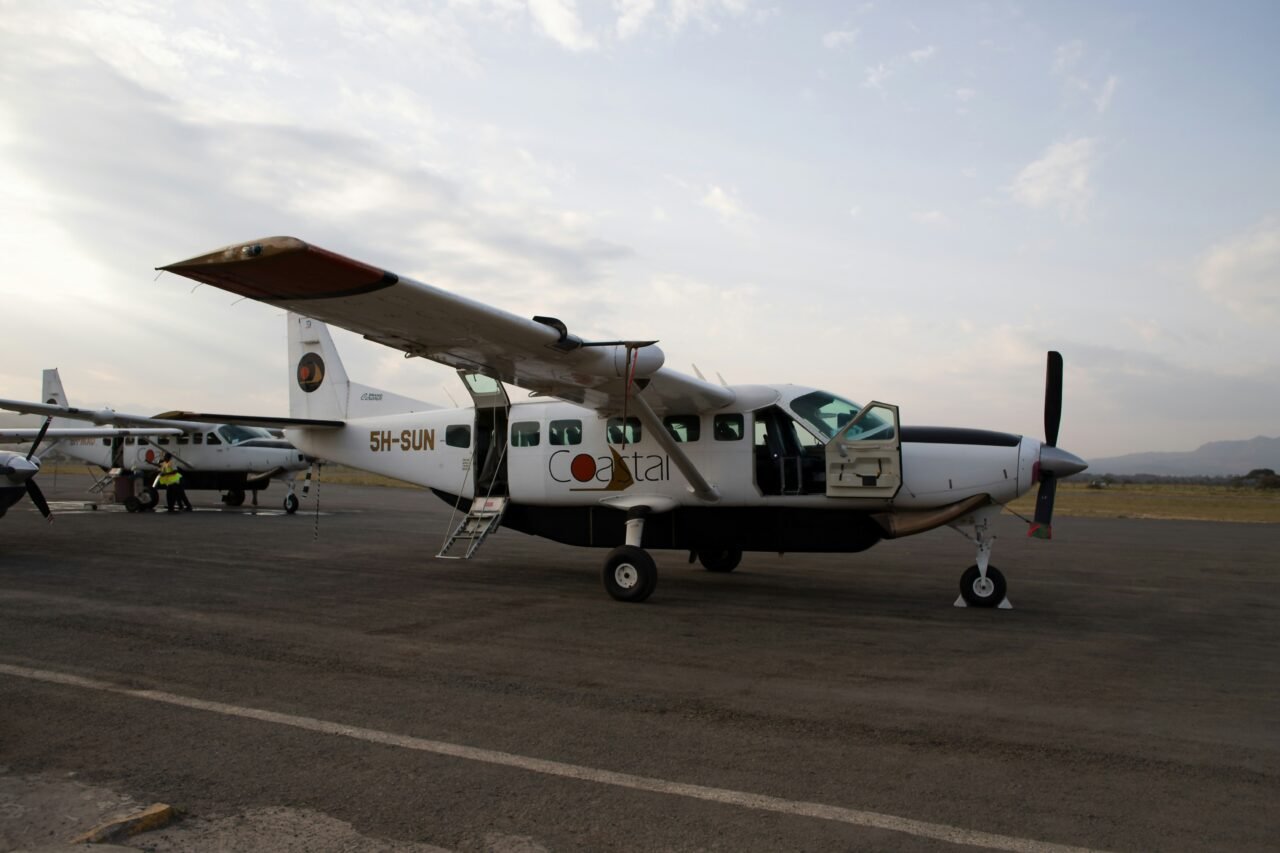
One of the most overlooked distinctions between these two entry points is the baggage restriction policy. If you choose to fly into Lake Manyara Airstrip, you are subject to the strict regulations of light aircraft operators. These bush flights almost universally require soft-sided luggage. Hard-shell suitcases are generally prohibited because they cannot be easily squeezed into the irregularly shaped cargo pods of Cessna Caravans or similar bush planes. Even if a hard-shell bag is within the weight limit, it may be rejected at the hangar simply because it cannot fit the aircraft’s physical dimensions. This mandate forces you to curate your packing list more carefully before you leave home.
Conversely, if you opt for the road transfer from Arusha Airport, you have significantly more flexibility. Your safari vehicle—usually a customized Toyota Land Cruiser—is designed to handle bulkier luggage. Hard-shell suitcases, larger camera equipment cases, and even extra supplies are rarely an issue when traveling by road. If your safari involves specialized photography gear, extensive camping equipment, or a longer multi-week itinerary that requires a variety of clothing for different climates, the Arusha road route offers a logistical buffer that the light aircraft route does not.
Vehicle Rendezvous: The Airport vs. The Bush Strip
The experience of meeting your guide differs dramatically depending on your arrival point. At Arusha Airport, you are typically met by your guide at the arrivals terminal. Your vehicle is usually staged in a parking area, and the transition from the airport building to the safari vehicle is smooth and urban. You have access to facilities, including bathrooms, small shops, and cafes, while you organize your belongings and meet your driver. It is a controlled environment that allows for a relaxed start to the journey.
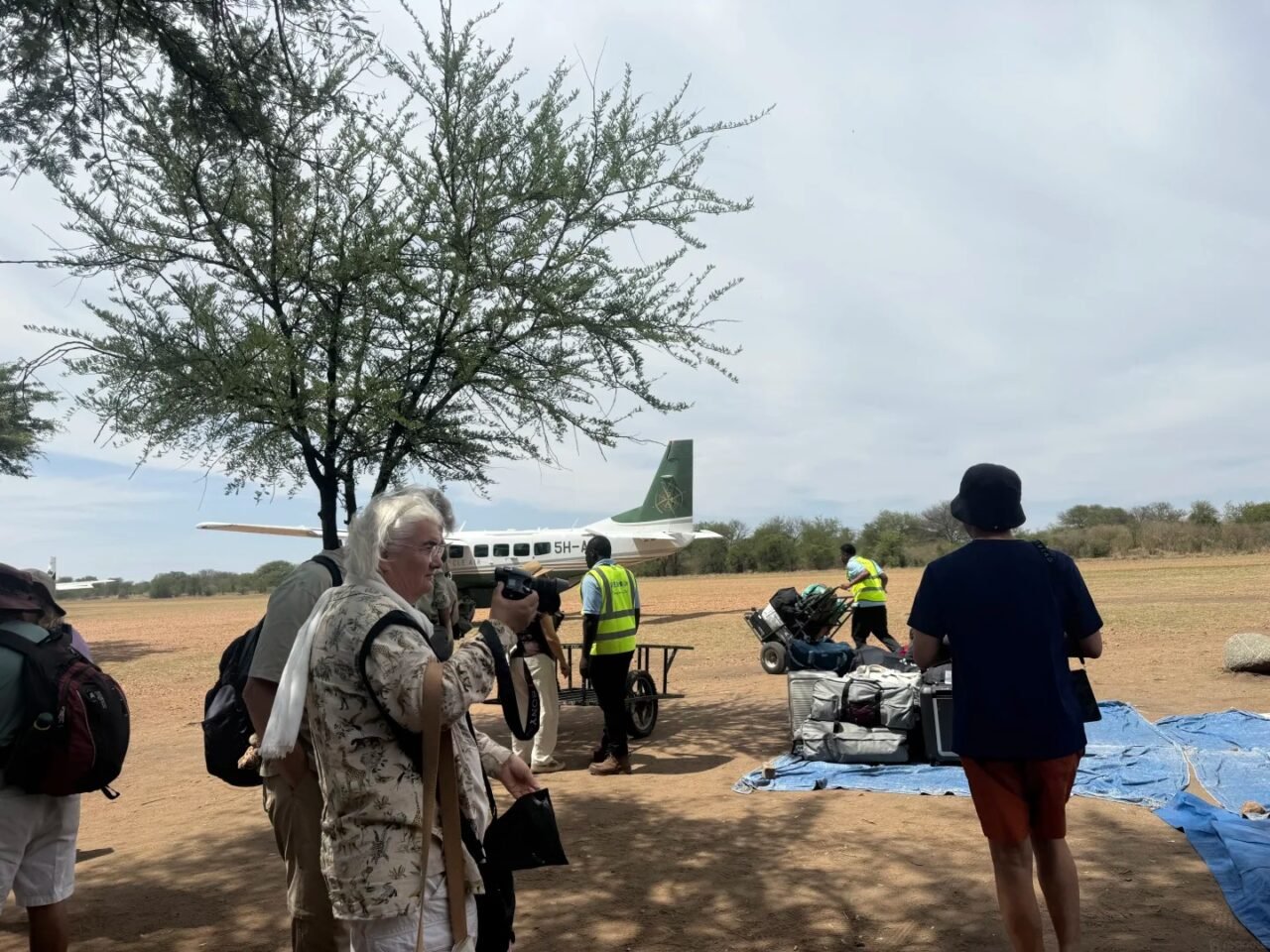
At Lake Manyara Airstrip, the rendezvous is far more intimate and exposed. The airstrip is essentially a patch of gravel or grass in the middle of the wilderness. Your guide will meet you right at the edge of the runway. There is no terminal building, no waiting lounge, and no amenities. Once the plane taxis away and the noise of the engine fades, you are immediately in the bush. This is a powerful, in-depth introduction to the safari, but it requires that you are entirely self-sufficient. You must have your camera, hat, sunscreen, and water bottle accessible in your daypack, as you will be stepping directly from the plane into your safari vehicle and potentially driving straight into a game drive. The “transition time” to decompress after a flight is non-existent here; the safari begins the moment your boots hit the ground.
The Hidden Variable: Timing and Driver Fatigue
When considering the road route from Arusha, it is important to account for the driver’s schedule. A professional safari guide who picks you up at Arusha Airport has often spent the early morning preparing the vehicle, stocking the cooler, and navigating city traffic to meet your flight. If your flight is delayed, this can impact the guide’s ability to reach the Ngorongoro Conservation Area before the gate closes or before dusk, which is when wildlife activity increases and visibility decreases. By contrast, if you fly into Lake Manyara, your guide is usually stationed at a lodge or camp in the Manyara or Karatu area, waiting specifically for your arrival. This localized meet-up minimizes the risk of “transit fatigue” for both you and your driver, as they are not spending three hours driving from Arusha just to pick you up. This can result in a fresher, more attentive guide who is ready to focus entirely on your game viewing from the very first hour.
The Wildlife Expectation Gap: Managing Reality in the Ngorongoro Ecosystem
One of the most pervasive myths in safari planning is the belief that the arrival method—flying versus driving—correlates directly with the quality or quantity of wildlife sightings. Travelers often assume that because the Lake Manyara Airstrip places them closer to the Ngorongoro Conservation Area (NCA), they are effectively ‘buying’ more game viewing time. While proximity is a logistical advantage, it is critical to distinguish between access and certainty. The Ngorongoro ecosystem, like all wild habitats, operates on its own schedule, entirely indifferent to your flight itinerary or your transfer method.
The Manyara ‘Bonus’ Game Drive
Choosing to land at the Lake Manyara Airstrip does provide an undeniable, albeit subtle, advantage: the ‘bonus’ game drive. Because the airstrip is situated in the immediate vicinity of the Lake Manyara National Park and the base of the Great Rift Valley escarpment, your transfer to the Ngorongoro Crater is rarely just a transit. Even before you reach the Loduare Gate, you are traversing a corridor that is frequently frequented by wildlife. In the Manyara basin, sightings of baboons, giraffes, and various antelope species are common along the access roads. For the traveler who has just spent hours on international and domestic flights, this immediate proximity to nature provides a psychological ‘win.’ It validates the decision to fly, offering an immediate sensory payoff that can mitigate the fatigue of travel.
However, it is vital to manage expectations regarding what this ‘bonus’ time actually entails. This is not the Ngorongoro Crater floor; it is the transit zone. While you may see iconic wildlife, the density and variety are distinct from the Crater itself. Viewing this as a mandatory ‘warm-up’ rather than a guarantee of a specific ‘Big Five’ encounter ensures that you remain present in the experience, rather than rushing through the transit in search of a trophy photograph.
The Arusha Drive as a Cultural and Geological Prelude
Conversely, the drive from Arusha is often unfairly maligned as ‘lost time’ in the safari community. While it lacks the immediate proximity to the wildlife of the Manyara basin, it offers a different, equally valuable type of immersion. The 3-to-4-hour journey is a transition from the urban bustle of Arusha into the rural highlands. This route passes through local villages, coffee plantations, and the changing topography of the Rift Valley. For the observant traveler, this is an essential part of the safari experience—it provides context for the environment you are about to enter.
The wildlife expectation gap is often widest for those who view the Arusha-to-Ngorongoro drive solely as an obstacle. When you view the transit as a chore, every minute spent on the road feels like a missed opportunity to be in the bush. When you view it as a cultural and geological prologue, the lack of immediate wildlife sightings becomes less frustrating. The drive allows for a gradual acclimatization to the altitude and the pace of life in the highlands. By the time you reach the Crater rim, you have physically and mentally transitioned from the world of international travel to the isolated, high-altitude ecosystem of the Ngorongoro caldera.
The Danger of ‘Check-Box’ Safari Mentalities
Regardless of your arrival point, the most significant factor in your wildlife experience is the ‘check-box’ mentality. Many travelers arrive at the Crater with a pre-determined list of animals they must see in the first two hours. This pressure can be counterproductive, particularly when you are relying on a driver who is trying to accommodate your needs while navigating the complex, unpredictable nature of animal movements. Whether you arrive via a one-hour flight to Manyara or a three-hour drive from Arusha, the wildlife does not care about your schedule. A pride of lions may be sleeping in deep grass, or a rhinoceros may be miles away from the main track. The best safari experiences are defined by the ability to appreciate the ecosystem as it is, rather than as you hoped it would be. Your arrival method dictates your comfort and your time-efficiency, but it is your mindset that dictates the quality of your engagement with the Tanzanian wilderness.
Navigating the Variable Physics of Transit: Altitude and Road Conditions
While transit times are frequently cited in travel brochures as fixed constants, the reality of moving between Arusha or Lake Manyara and the Ngorongoro Conservation Area is dictated by a complex interplay of physics, infrastructure, and seasonal volatility. When weighing the choice between the Lake Manyara Airstrip and the Arusha road transfer, it is essential to look beyond the clock and understand the specific environmental stressors that define these two routes. The road from Arusha is not merely a distance of kilometers; it is a vertical ascent. You are moving from the relatively low-altitude plains surrounding Arusha into the high-altitude volcanic highlands. This ascent, while visually spectacular, has physical implications for travelers who are sensitive to altitude sickness or rapid changes in atmospheric pressure. By choosing to drive, you are allowing your body a gradual, multi-hour acclimatization period, which can be beneficial if your itinerary immediately precedes a descent into the Crater floor the following morning.
Conversely, the Lake Manyara Airstrip sits at the base of the Great Rift Valley escarpment. Flying into this location creates a distinct logistical pivot point. You are effectively dropped into the lowlands, and the subsequent journey to the Ngorongoro rim—while significantly shorter in duration—is almost entirely a steep, winding climb. For those prone to motion sickness, the rapid elevation gain over a shorter distance on the winding roads up the escarpment can be more taxing than the longer, more gradual road transit from Arusha. Understanding your own physiological reaction to altitude and winding mountain roads is often a more critical factor in your travel comfort than the raw number of hours spent in a vehicle.
Infrastructure Vulnerability: The Reality of Rain and Road Maintenance
A frequently overlooked variable in the Arusha versus Lake Manyara decision is the impact of weather on infrastructure. The road network connecting the northern circuit is subject to seasonal degradation. During the heavy rains, the secondary roads leading to the Lake Manyara Airstrip and the routes connecting to the Ngorongoro Conservation Area can experience localized flooding or washouts. While the main arterial road from Arusha is generally well-maintained and prioritized by local authorities, the bush tracks near smaller airstrips are more susceptible to becoming impassable or severely rutted.
This creates a trade-off in reliability. Arusha Airport acts as a reliable, all-weather hub. It is equipped with better logistical support systems, meaning that if a vehicle breaks down or a transfer is delayed, there are more resources available to resolve the issue. Lake Manyara Airstrip, while offering the allure of proximity, operates with a thinner margin for error. If the airstrip becomes waterlogged or if the connecting road to your lodge is impacted by a sudden downpour, your flexibility is significantly reduced. Experienced travelers often prioritize the robustness of the Arusha connection during the shoulder seasons, accepting the longer drive time as a form of insurance against the unpredictability of remote highland infrastructure.
The Psychological Impact of the ‘Transition’
Beyond the physical and logistical, there is a psychological component to the transit. The Arusha drive acts as a decompression chamber. International flights are notoriously stressful, characterized by sterile terminals, security checks, and the anxiety of arrival. Transitioning directly from an international flight to a small, light aircraft, and then immediately into a game drive, can result in a state of ‘sensory overload’ where the traveler is physically present in the Ngorongoro ecosystem but mentally still processing the logistics of travel. The Arusha road transfer, by contrast, forces a slower pace. It provides a buffer zone—a period of quiet observation where the landscape changes, the air temperature shifts, and the reality of being in Tanzania slowly sets in. For many, this psychological transition is necessary to truly appreciate the scale of the Ngorongoro Conservation Area upon arrival. Choosing the airstrip is an act of efficiency, but choosing the road is often an act of mindfulness.
Accommodation Logistics: How Your Lodge Choice Dictates Your Transit
While the choice between Arusha Airport (ARK) and Lake Manyara Airstrip (LKY) is often framed as a debate about speed versus scenery, the most practical filter is often the location of your specific lodge. The Ngorongoro Conservation Area is expansive, and the “best” airport is frequently determined by the “last mile” of your journey. Many travelers assume that because they are visiting the Crater, all lodges are clustered at the rim. This is a common misconception that leads to significant logistical friction.
For those staying in lodges located on the Crater Rim itself—such as the iconic properties perched directly on the edge—the transit time from Lake Manyara Airstrip is roughly 90 minutes to two hours, depending on the specific gate used and current road conditions. If you are flying into LKY, you are essentially paying a premium to shave off the three-hour drive from Arusha. However, if your accommodation is located in the Karatu area, which sits just outside the Ngorongoro Conservation Area boundaries, the math changes significantly. Karatu is geographically closer to the Lake Manyara Airstrip than it is to Arusha. In this scenario, flying into LKY is objectively more efficient, as it positions you almost at the doorstep of your hotel. Conversely, if you are staying in a lodge further north, towards the Serengeti border or deep within the conservation area, the “proximity advantage” of the Lake Manyara airstrip diminishes, as you still face a substantial drive through the park to reach your destination.
The Hidden Impact of Private Transfers vs. Scheduled Shuttles
The vehicle logistics associated with these two hubs differ substantially. When you land at Arusha Airport, you are almost always met by a private driver or a guide who will be with you for the duration of your safari. This vehicle is typically a customized 4×4 Land Cruiser, built for the rigors of the bush. Because Arusha is the central hub, your guide starts their day from the city, meaning the “transfer” is actually the beginning of your safari. The vehicle is already loaded with your gear, your water, and your supplies.
At Lake Manyara Airstrip, the dynamic is different. Because it is a remote bush strip, your lodge or tour operator must send a vehicle specifically to meet your flight. This is often a separate transfer service. If you are on a scheduled group safari, the logistics become more complex. You are reliant on the synchronization of your flight landing time with the arrival of the vehicle. If your flight is delayed—a common occurrence due to the unpredictable winds and weather patterns of the Rift Valley—you may find yourself waiting on a remote strip with limited facilities. Arusha Airport, by contrast, has a terminal building with waiting areas, cafes, and staff, offering a buffer against the frustrations of travel delays. When evaluating your lodge choice, ask specifically about the “meet and greet” logistics. A lodge that provides a dedicated vehicle transfer from the airstrip is a vastly different experience than one that relies on third-party shuttle services, which are prone to delays and lack the personalized service of a dedicated safari guide.
The Weight of Expectations: Luggage and Vehicle Capacity
A critical, often overlooked factor in the airport decision is the luggage constraint of the light aircraft required to reach Lake Manyara. International flights into Kilimanjaro (JRO) often allow for generous baggage allowances, but the domestic bush flights into LKY are strictly enforced. Passengers are typically limited to 15 kilograms (33 lbs) in soft-sided bags. This is not merely a suggestion; it is a safety mandate dictated by the physics of small aircraft. If you arrive at the Arusha domestic terminal with a large, hard-shell suitcase, you may be forced to leave it behind or pay for an extra seat to accommodate it, which is rarely an option on fully booked flights.
If your itinerary involves a complex mix of bush flights and road transfers, the luggage restriction becomes a logistical headache. You must pack for the most restrictive leg of your journey. If you choose the Arusha-to-Ngorongoro road transfer, you retain the ability to travel with standard-sized luggage, as your private 4×4 vehicle can easily accommodate larger suitcases. This is a significant advantage for families or travelers who are combining a safari with other, less gear-intensive travel. The “soft-sided bag” requirement is a barrier to entry that often forces travelers to reconsider their packing strategy entirely. Before committing to the Lake Manyara Airstrip, assess whether your current travel gear aligns with the realities of light-aircraft aviation. If you are unwilling to pare down your luggage, the road transfer from Arusha is not just the cheaper option—it is the only viable one.
The Micro-Climate Factor: How Atmospheric Conditions Dictate Transit Viability
While logistical planning often focuses on schedules and luggage, the most unpredictable variable in the Lake Manyara Airstrip versus Arusha Airport debate is the atmospheric volatility of the Great Rift Valley. Lake Manyara Airstrip (LKY) sits at the base of the escarpment, a geographical position that makes it highly susceptible to localized weather patterns that do not affect the higher-altitude Arusha Airport. Understanding this nuance is essential for travelers who prioritize reliability over speed. When the Rift Valley experiences heavy cloud cover, morning mist, or localized thunderstorms, the LKY strip can become inaccessible to small bush aircraft, regardless of how clear the sky is just fifty miles away in Arusha.
This is where the “resilience” of the Arusha-to-Ngorongoro road route becomes apparent. A road transfer is rarely canceled due to weather. While mud or washed-out sections can slow a 4×4, the vehicle will almost always reach its destination eventually. Conversely, if your flight to Lake Manyara is grounded, you are not simply delayed; you are often stranded at the domestic terminal in Arusha, waiting for a weather window that may not open for hours. This creates a cascading effect on your itinerary. If you have a scheduled game drive or a specific check-in time at your Ngorongoro lodge, a flight cancellation forces you to abandon the air transit strategy entirely and scramble for a last-minute road transfer, which is rarely smooth or cost-effective when booked on the spot.
The Altitude Transition: Physiological Impacts of Transit Choices
Travelers often overlook the physiological reality of moving between the Tanzanian lowlands and the Ngorongoro highlands. Arusha sits at approximately 1,400 meters (4,600 feet), while the Ngorongoro Crater rim climbs to over 2,300 meters (7,500 feet). The transit time is not just about distance; it is about acclimatization. When you drive from Arusha, the ascent is gradual. The road winds through the coffee plantations and the bustling town of Karatu, allowing your body several hours to adjust to the rising elevation before you reach the high-altitude rim of the Crater.
Flying into Lake Manyara Airstrip offers a starkly different experience. The airstrip is located at a much lower elevation, near the lake’s shore (roughly 960 meters / 3,150 feet). Upon landing, you are met with the heat and humidity of the valley floor. Your vehicle transfer then involves a rapid ascent up the escarpment to reach the Ngorongoro Conservation Area. This can be a jarring transition for some travelers, particularly those sensitive to altitude changes or prone to motion sickness. The winding, steep climb from the valley floor to the highlands is beautiful, but it is physically demanding. If you are prone to altitude headaches or respiratory discomfort, the slower, more controlled ascent provided by the standard Arusha-to-Ngorongoro drive is medically preferable. It allows for a steadier physiological adaptation, ensuring you arrive at your lodge feeling refreshed rather than fatigued by a rapid change in pressure and temperature.
The Hidden Cost of ‘Transit Dead-Time’
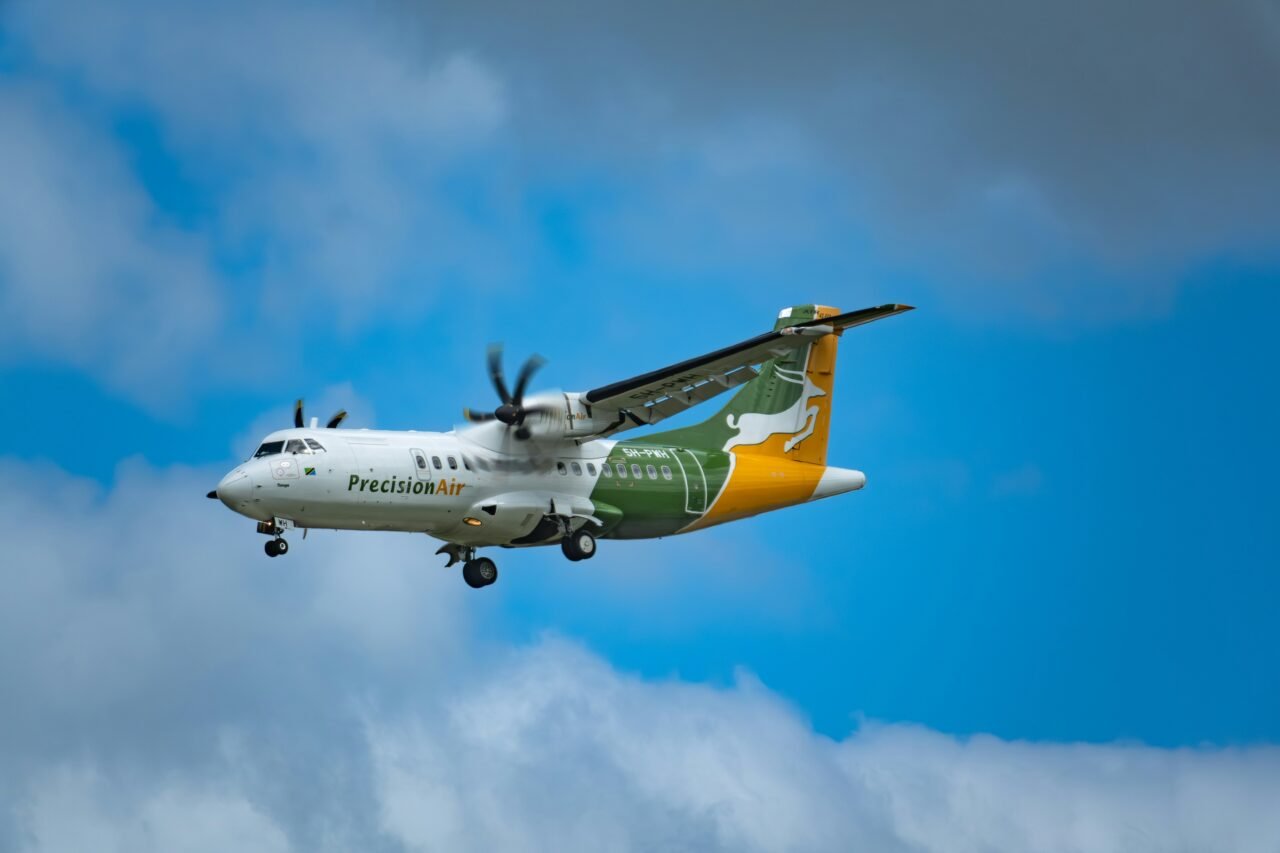
When analyzing the value of your time, it is easy to fall into the trap of comparing “flight time” versus “drive time” as if they are the only metrics. However, you must account for “transit dead-time”—the hours spent navigating airport security, waiting for luggage offloading, and coordinating vehicle rendezvous. At Arusha Airport, the infrastructure is designed to handle this flow. There are established procedures for private drivers to meet guests, and the process is predictable. At a remote bush strip like Lake Manyara, the infrastructure is minimal. If your flight lands early or late, your driver may not be there, or they may be stuck in the same traffic you were trying to avoid.
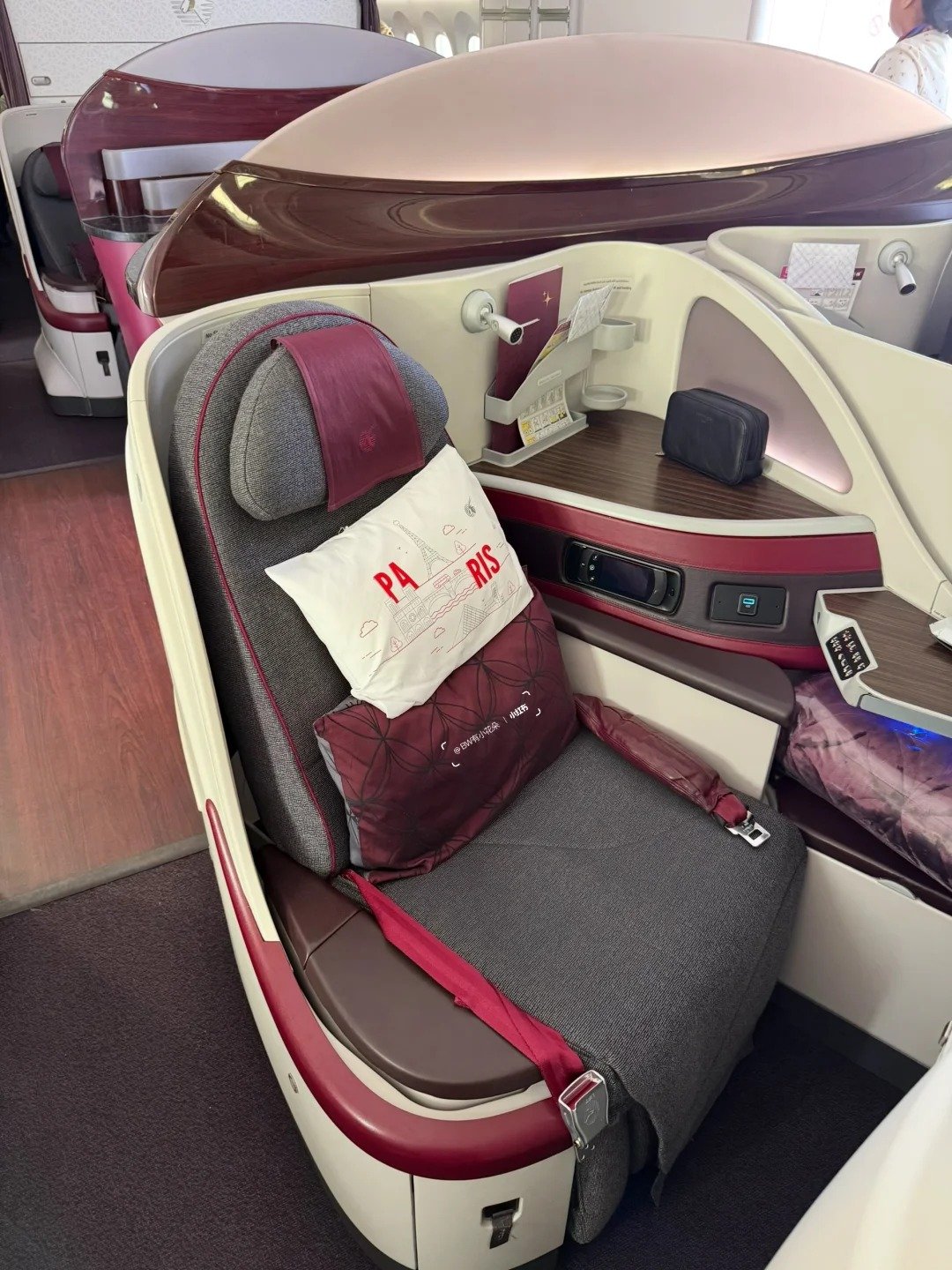
Furthermore, the “premium” nature of the Lake Manyara flight often comes with the expectation of a luxury experience, but the reality can be utilitarian. You are often sharing a small, cramped cabin with other travelers, and the boarding process is rarely the streamlined VIP experience one might anticipate. When you factor in the time spent getting to the airport in Arusha, clearing security, waiting for the flight, the actual flight time, and then the transfer from the LKY strip to your lodge, the total “door-to-door” time savings compared to a private, direct road transfer can be surprisingly marginal. For many travelers, the supposed efficiency of flying is an illusion, especially when accounting for the potential for delays and the rigidity of flight schedules.
Frequently Asked Questions
Seasonal Dynamics: The Weather-Driven Reliability Gap
While the choice between Arusha Airport and Lake Manyara Airstrip is often framed as a debate between budget and speed, there is a third, often overlooked variable: the seasonal resilience of your chosen transit route. The East African climate is notoriously fickle, and the operational viability of a bush strip like Lake Manyara fluctuates significantly with the rainfall patterns. Travelers visiting during the “Green Season”—typically characterized by the long rains from late March to May and the shorter, intermittent rains of November and December—must weigh the risks of flight disruptions against the relative stability of the overland route.
The Vulnerability of the Bush Strip
Lake Manyara Airstrip is, by design, an integrated part of the bush environment. Its surface, while maintained, is not a hardened, all-weather runway like those found at major international hubs. During periods of heavy or sustained rainfall, the ground saturation can reach a critical tipping point. In these conditions, bush pilots often exercise extreme caution, and if the strip becomes too soft or visibility drops below safety thresholds due to low-hanging cloud cover on the Rift Valley escarpment, flights are frequently diverted or canceled entirely. This is not a failure of the airline, but a necessary safety protocol. If your itinerary hinges on a precise flight connection to reach a lodge before dark, this weather-induced uncertainty can cascade into a significant logistical headache, forcing last-minute, expensive, and stressful overland transfers from Arusha anyway.
Road Resilience in the Green Season
Conversely, the transit route from Arusha to the Ngorongoro Conservation Area serves as a primary artery for local commerce and supply chains. Because it is a vital economic link, road maintenance is prioritized, and the route is engineered to handle significant moisture. While the roads can certainly become muddy, they rarely become impassable in the way a bush strip can become unusable. Choosing to drive from Arusha during the wetter months provides a layer of logistical insurance. You are far less likely to face a complete cessation of movement. For the cautious planner, accepting the three-to-four-hour drive is not just a cost-saving measure; it is a tactical decision to prioritize reliability over the potential, yet risky, convenience of a flight.
Wildlife Expectations and the Transit Route
A common misconception among first-time safari-goers is that the drive from Arusha is a “dead zone”—a tedious necessity to be endured before the real wildlife viewing begins at the Crater. This perspective misses the ecological nuance of the region. The drive from Arusha toward the Ngorongoro highlands effectively acts as an extended game drive through the changing biomes of the northern circuit. As you ascend from the city, you traverse agricultural plains that often host herds of Maasai cattle and goats, which share grazing space with wild gazelles and zebra. The approach to the Manyara region itself, even if you are driving past rather than landing there, offers glimpses of the Great Rift Valley’s diverse birdlife and, occasionally, primates in the forested sections of the escarpment.
By flying into Lake Manyara, you essentially “fast-forward” through this transitional ecosystem. While this is efficient for those on a tight schedule, it denies you the gradual immersion into the landscape. The wildlife in the Ngorongoro Crater is resident and largely sedentary, meaning you are not “missing” the main event by driving, but you are potentially missing the context of the environment that surrounds it. When you drive, the transition from the bustling, semi-urban landscape of Arusha to the wild, rugged terrain of the highlands is a sensory progression that helps acclimate you to the pace of the safari. This psychological shift is often as important as the physical one, allowing you to mentally leave behind the constraints of modern travel before you reach the rim of the caldera.
The Risk of the “Check-Box” Safari
Ultimately, the decision should be guided by your risk tolerance regarding weather. If you are traveling during the peak dry months (June through October), the reliability of the Lake Manyara Airstrip is high, and the flight is a smooth, scenic experience. However, if your trip falls within the shoulder or wet seasons, the allure of the flight must be balanced against the reality of potential disruptions. A “check-box” mentality—where the goal is simply to tick off the fastest route to the Crater—can leave you vulnerable to the realities of the Tanzanian climate. A more robust planning approach involves viewing the overland drive not as a fallback option, but as a reliable, scenic, and culturally rich component of your safari that ensures you arrive at your destination regardless of what the clouds are doing.
Navigating the Entry Logistics: Vehicle Coordination and Guide Synergy
The choice between landing at Lake Manyara Airstrip versus driving from Arusha fundamentally alters the choreography of your arrival. This is not merely a question of distance; it is a question of how your professional guide and vehicle are integrated into your transit. When you fly into a remote bush strip like Lake Manyara, you are effectively shifting the burden of logistics onto the airstrip management and the lodge’s transfer team. Conversely, when you start in Arusha, the vehicle and your guide are typically with you from the moment you leave your hotel, creating a continuous, uninterrupted professional relationship from the start of the trip.
At the Lake Manyara Airstrip, the arrival process is intimate and stripped-back. You land on a compacted gravel or dirt runway, often with nothing more than a small, open-air wooden shelter acting as the ‘terminal.’ Your guide, who has likely been waiting for your flight arrival, will meet you right at the aircraft steps or the edge of the tarmac. This is the moment where the ‘safari hand-off’ occurs. Because the airstrip is located within or adjacent to the National Park ecosystem, the transfer from the plane to the lodge is often an immediate game drive. You are not just getting a ride; you are being ushered into the habitat. However, this relies heavily on your lodge or tour operator having a vehicle stationed specifically for your arrival. If there is a delay in your flight—common due to weather or air traffic control at other strips—your guide may be left waiting in a remote location with limited facilities, potentially impacting their overall schedule for the day.
In contrast, Arusha Airport acts as a centralized node. Because it is an active, paved airport, it offers a more predictable environment for your guide to manage their vehicle. If you are starting your safari here, your vehicle is usually pre-loaded with your luggage and supplies before you even land or arrive at the terminal. The transition is smooth: you walk out of the terminal, locate your vehicle in the designated parking area, and depart. This eliminates the ‘shuttle-to-safari-vehicle’ gap that can sometimes occur at bush strips where lodge vehicles must travel from their respective properties to collect guests. The Arusha departure allows for a more controlled environment where you can conduct a final check of your gear, grab any last-minute supplies, or clarify itinerary details with your guide before embarking on the three-to-four-hour journey toward the Ngorongoro Conservation Area.
The Dynamics of the ‘Guide-on-Board’ Advantage
One of the most significant, yet frequently overlooked, benefits of the Arusha departure is the opportunity to establish rapport with your guide during the drive. When you land at Lake Manyara, the transfer to your lodge is often short, and the guide’s primary focus is getting you checked in. The drive from Arusha, however, provides a ‘slow-burn’ introduction to the safari. This is when your guide can provide context on the Tanzanian landscape, explain the cultural nuances of the villages you pass through, and answer questions about the upcoming days in the Ngorongoro Crater. This dialogue helps calibrate expectations and builds a professional bond that is harder to forge during a quick, 60-minute transfer from an airstrip.
Furthermore, the Arusha-based vehicle is your primary tool for the duration of your safari. Starting in Arusha means you are using the vehicle that will likely be with you for the next several days. This allows you to become familiar with the vehicle’s specific layout, storage, and charging capabilities. In some cases, flying into Lake Manyara means you are met by a ‘transfer vehicle’—a vehicle specifically used for airport runs—which may be different from the ‘safari vehicle’ you will use for your actual game drives. While this is not always the case, it is a logistical reality for some lodges that segregate their transport fleets. Clarifying whether your transfer vehicle is the same one you will use for your game drives is a critical piece of pre-trip communication, regardless of your entry point.
Managing Luggage and Vehicle Capacity
The logistical friction between the two options often boils down to vehicle capacity. Bush aircraft, such as the Cessna Grand Caravans frequently used for the Lake Manyara route, have strict weight and volume limits. If your luggage is soft-sided and compact, you may not notice a difference. However, if your group is large or your gear is extensive (such as photography equipment or specialized camping gear), the ‘bush strip’ route necessitates a split-load strategy. Your guide may need to drive your primary luggage to the lodge separately while you fly, or you may be required to pay for an additional seat on the aircraft to accommodate your gear. This adds a layer of complexity to your arrival that simply does not exist when driving from Arusha. When you drive from Arusha, your luggage is loaded into the back of your safari Land Cruiser or Land Rover at the start of the trip and stays there. There is no need for weight distribution calculations or the anxiety of whether your bags will make it on the same flight as you.
Ultimately, the Arusha entry point offers a higher degree of logistical stability. It places you in the driver’s seat—literally and figuratively—of your safari planning. You control the pace, you control the luggage, and you control the timing. The Lake Manyara Airstrip, while undeniably efficient and romantic, requires you to cede control to the complexities of bush aviation and the specific operational schedules of your lodge. For the traveler who values predictability and the cultivation of a relationship with their guide from the first hour, the drive from Arusha remains the superior, albeit longer, logistical choice.
The Dynamics of Group vs. Private Transit Logistics
The choice between Arusha Airport and Lake Manyara Airstrip is rarely made in a vacuum; it is almost always filtered through the lens of whether you are traveling as a private party or part of a larger, pre-arranged group. This distinction is the silent architect of your transit experience. When booking a private safari, you possess the luxury of custom-tailored logistics. Your operator can pivot based on your preference for comfort versus speed. If you are a couple or a solo traveler, a private vehicle transfer from Arusha is a bespoke experience where the driver serves as your personal concierge from the moment you exit the terminal. You dictate the stops, the pace, and the level of engagement. In this scenario, the Arusha drive becomes an extension of the safari itself, offering a controlled, intimate environment where you can begin to build rapport with your guide without the pressure of a flight schedule.
Conversely, group safaris operate on a rigid logistical grid. If you are joining a scheduled group tour, the decision of entry point is usually pre-determined by the operator to maximize efficiency for the collective. In these instances, you are often a passenger in a machine that has been optimized for cost-effectiveness. Group transfers from Arusha often involve larger, higher-capacity vehicles—sometimes even shuttle buses or mid-sized vans—designed to move multiple parties simultaneously. This is a significant departure from the private 4×4 experience. If your group tour utilizes the Lake Manyara Airstrip, it often requires synchronized flight arrivals. If one member of the group experiences a delayed international connection, the entire group’s transit to the Ngorongoro Conservation Area is compromised. This introduces a ‘weakest link’ dynamic that does not exist when driving from Arusha, where the vehicle can simply wait in the parking lot.
The Hidden Operational Costs of Private vs. Group Transfers
There is a nuanced financial and operational trade-off that travelers often overlook when comparing these transit modes. For private travelers, the cost of a dedicated vehicle transfer from Arusha is a fixed line item. It is predictable and scalable. Whether you are two people or four, the vehicle is yours. When you opt for the Lake Manyara flight, you are adding the cost of individual or group air tickets, which can fluctuate based on seasonal demand, plus the separate cost of the ground transfer from the airstrip to your lodge. This ‘double-layer’ of logistics—flight plus ground transfer—is inherently more expensive and requires more coordination. For a group, this multiplication of costs can be substantial, often leading operators to prioritize the Arusha road transfer simply because it simplifies the accounting and ensures that all group members arrive at the lodge at roughly the same time, regardless of minor flight hiccups.
Furthermore, the ‘meet and greet’ experience differs vastly between these two modes. At Arusha Airport, the arrival process is centralized. Your guide is waiting in the arrivals area, your vehicle is parked in a designated zone, and the transition from tarmac to tarmac is smooth. At Lake Manyara, the airstrip is often remote. If you are part of a private group, your guide may be waiting at the airstrip, but if you are part of a larger group safari, you may be met by a lodge-employed transfer driver who is not your primary safari guide. This creates a ‘hand-off’ moment that can feel impersonal. You arrive, you are whisked into a vehicle, and you are driven to the lodge, only to meet your actual safari guide later that evening or the next morning. For travelers who value the continuity of the guide-client relationship, this disconnect can be jarring.
Managing Expectations: The ‘Lost Time’ Fallacy
A common misconception in safari planning is that flying to Lake Manyara ‘saves’ you time. Mathematically, this is true—a 30-minute flight is faster than a 4-hour drive. However, in practice, the time saved is often eroded by the ‘transit overhead.’ You must arrive at Arusha Airport for your domestic flight at least an hour before departure. You must account for the flight time, the deplaning process, the wait for luggage in a bush environment, and the final transfer from the airstrip to the lodge. When you aggregate these segments, the ‘time savings’ of the flight are often reduced to a net gain of perhaps 90 minutes. For the traveler who is not on an extremely tight schedule, this marginal gain is rarely worth the added complexity of managing separate air and ground logistics. The Arusha drive, while longer, is linear and uninterrupted. Once you are in the vehicle, you are moving toward your destination, and your safari has effectively begun.
Ultimately, the choice between Arusha and Lake Manyara for Ngorongoro access should be guided by your tolerance for logistical fragmentation. If you view the transit as a necessary evil to be minimized at any cost, the flight is your best option. If you view the transit as an integral part of the safari experience—a time to decompress, acclimatize, and establish a rhythm with your guide—the Arusha drive is the superior choice. The group versus private decision only amplifies these factors; private travelers should prioritize the intimacy and continuity of the road, while group travelers should prioritize the stability and predictability of a single, unified transit plan, which, more often than not, leads back to the Arusha road route.
Decoding the Financial Architecture of Your Safari Quote
When you receive a quote for a Tanzanian safari, the price tag is rarely a simple reflection of the days spent in the bush. It is an aggregate of complex logistical variables, and the decision to fly into Lake Manyara versus driving from Arusha is often the single most significant driver of price variance. Many travelers compare quotes from two different operators—one proposing a fly-in itinerary and one proposing an overland route—and are confused by the discrepancy. To make an informed decision, you must strip away the marketing language and look at the financial architecture of the proposal.
The fundamental issue is that operators quote these two modes of transit differently. A road-based itinerary is often bundled into a ‘per-day’ vehicle rate, which includes the guide, the fuel, and the vehicle maintenance. A fly-in itinerary, however, introduces a ‘third-party variable’—the airline. Because safari operators are rarely the owners of the light aircraft, they act as brokers. This creates a markup chain that is frequently opaque. When you see a high cost for the ‘Lake Manyara Flight’ segment, you are often paying for the convenience of the operator managing the booking, the liability coverage for that transfer, and the administrative buffer required to handle flight schedule changes, which are common in the bush.
The Hidden Surcharges of Aerial Logistics
The most dangerous trap in evaluating fly-in costs is the assumption that the ticket price is the total cost. If you are a photographer, a serious birder, or a traveler who simply prefers to pack for a two-week trip, the 15-kilogram (33-pound) soft-sided luggage limit imposed by bush airlines becomes a major financial hurdle. When you exceed this limit, you are often forced to purchase an ‘extra seat’ on the light aircraft. This is not a nominal baggage fee; it is the cost of an entire passenger ticket. If your group includes three people with heavy camera gear, the cost of flying suddenly spikes by hundreds of dollars to account for the necessary ‘cargo seat.’ This is an expense rarely highlighted in initial brochures but is a standard reality of operating out of Lake Manyara Airstrip.
Furthermore, consider the ‘meet and greet’ cost. At Arusha Airport, your guide is likely already based in the city, so the pickup cost is baked into the daily rate. At Lake Manyara, if your primary safari guide is based in Arusha, they must drive the vehicle to the airstrip to meet you. This creates ‘dead mileage’—the time and fuel spent moving the vehicle without guests. Most professional operators will bill this cost to you, either as a line item or by inflating the transfer fee. If you are comparing a fly-in quote to a drive-in quote, ask specifically: ‘Is the vehicle repositioning fee included in the flight transfer cost?’ If the answer is no, you may be facing a surprise invoice upon arrival.
Analyzing Road-Based Quotes: Where Costs Accumulate
While the road transfer from Arusha to Ngorongoro appears cheaper on paper, it carries its own set of hidden financial variables. The most significant is the ‘vehicle return’ cost. If your safari ends at a different location than where it began, or if you are dropped at a lodge that requires the driver to return to the city immediately, you are paying for the vehicle’s return journey. In the context of the Ngorongoro Conservation Area, this is particularly relevant because of the high cost of fuel and the wear-and-tear associated with the steep, winding, and often potholed roads leading up the Rift Valley escarpment.
Another subtle cost is the ‘driver-guide overnight’ fee. If your arrival into Arusha is late in the day, or if you choose a road transfer that requires a stopover, your guide will incur additional accommodation and meal expenses. While these are often included in a high-end, all-inclusive quote, they are frequently listed as ‘extras’ in budget-conscious packages. When comparing, ensure you are looking at an ‘all-in’ price that explicitly covers all guide accommodation, park entry fees for the vehicle, and fuel surcharges. A quote that lists these as ‘payable locally’ is a red flag, as it prevents you from accurately budgeting for the trip.
The Transparency Checklist: Vetting Your Proposal
To ensure you are comparing apples to apples, demand that your safari operator breaks down the quote into specific, transparent line items. Do not accept a proposal that simply lists ‘Airport Transfer: $X.’ Instead, ask for the following breakdown to identify where your money is actually going:
- Vehicle Repositioning Fee: Specifically, ask if the guide and vehicle are based in Arusha or if they are traveling to meet you at the Manyara airstrip. If they are traveling, ensure the cost is fixed.
- Baggage Liability: Ask the operator to explicitly state the weight limit for the flight and the exact cost per kilogram for overage, or the cost of an extra seat.
- The ‘Lost Day’ Compensation: If a flight is delayed or cancelled due to weather—a frequent occurrence in the Rift Valley—what is the operator’s policy? Do they cover the cost of the ground transfer as a backup, or are you expected to pay for that on the spot?
- Vehicle Exclusivity: Confirm whether the transfer vehicle is dedicated to your group or if it is a ‘shuttle’ style transfer where you might be waiting for other flights to land. A private transfer is always more expensive but offers vastly higher reliability.
- All-Inclusive vs. Excluded Costs: Ensure that the quote includes the ‘Ngorongoro Crater Service Fee’ and any ‘Concession Fees’ associated with the lodge, as these are often separate from the ‘transfer’ costs but are frequently bundled into the total price by some operators and left out by others.
By forcing this level of granularity, you move from being a passive consumer to an active architect of your safari budget. You will quickly find that the ‘cheaper’ option often carries the highest risk of hidden fees, while the more expensive, transparent quote provides the peace of mind that comes with knowing exactly what you are paying for, and why.
Mastering the Transit Environment: Vehicle Realities and Etiquette
Once you have navigated the financial and logistical architecture of your safari, the final variable to consider is the human element: how you interact with the vehicle and the environment during your transit. Whether you have opted for the long-haul drive from Arusha or the shorter transfer from the Lake Manyara airstrip, the vehicle is not merely a transport pod; it is a specialized tool that requires a specific set of behaviors to ensure comfort, safety, and photographic success.
The Physical Reality of the Safari Vehicle
The standard safari vehicle—typically a modified Toyota Land Cruiser or Land Rover—is built for rugged terrain, not highway comfort. Regardless of your route, you must prepare for the reality of the suspension. These vehicles are designed with heavy-duty shock absorbers and leaf springs to handle the corrugated dirt roads of the Rift Valley. Consequently, the ride can be jarring. If you have chosen the Arusha-to-Ngorongoro transit, you are committing to three to four hours of this vibration. It is essential to manage your physical endurance by utilizing the stops your guide will suggest. Do not view these stops as delays; they are necessary breaks to recalibrate your equilibrium and prevent the fatigue that can ruin your first day of game viewing.
Furthermore, understand the ‘pop-top’ roof mechanism. While it is the highlight of your game drives, it is rarely deployed during high-speed transit on paved roads due to wind resistance and safety regulations. You will likely be seated inside the cabin for the majority of the transfer. If you are prone to motion sickness, communicate this to your operator during the booking phase. They can often ensure the driver takes a smoother, albeit potentially longer, route or provides a vehicle with better interior climate control, which is a significant factor in mitigating nausea on winding highland roads.
Viewing Etiquette: Beyond the Airport Transfer
A common mistake travelers make is treating the airport transfer as a ‘dead’ period where they can disengage. In Tanzania, the transit route is often a game drive in itself. Whether you are driving through the outskirts of Arusha or the scrublands surrounding Lake Manyara, wildlife sightings are possible at any moment. Your behavior inside the vehicle dictates the quality of your experience.
First, respect the ‘guide-in-charge’ protocol. Even if you spot a giraffe or a zebra near the road, avoid shouting or lunging toward the windows. This sudden movement can startle the animal and cause it to retreat, and it can also distract your driver, who is navigating traffic or uneven terrain. Instead, use a pre-agreed signal—a light tap on the shoulder or a quiet verbal cue—to alert your guide. Second, manage your gear. The transit is often the dustiest part of the journey. Keep your camera lenses capped and your electronics in sealed, dust-proof bags until you reach the park gates. The fine, volcanic dust of the Rift Valley is notorious for infiltrating camera sensors; a transfer is not the time to be changing lenses or leaving equipment exposed on the seats.
Environmental Sensitivity and Dust Management
The micro-climates you traverse will change rapidly, particularly as you ascend toward the Ngorongoro Crater rim. You may start in the hot, humid lowlands and end in the cool, misty highlands. Dressing in layers is standard advice, but it is specifically critical for transit. If you are in a vehicle with open windows—which is common for ventilation—you will be exposed to significant airflow and dust. If you are sensitive to air quality or allergies, request that the driver keep the windows closed and rely on the vehicle’s internal ventilation system during the transit portions of the trip. This is a simple, often overlooked request that can prevent you from arriving at your lodge exhausted and congested, ensuring you are fresh for the actual game-viewing hours that follow.
The Arrival Delta: Airstrip vs. Roadside Check-in
The moment you arrive at your lodge, the psychological and physical transition from your transit mode plays a significant role in how you perceive the start of your safari. Arriving via Lake Manyara Airstrip offers a jarring, high-contrast shift. One moment you are in a pressurized cabin looking down at the Rift Valley escarpment, and twenty minutes later, you are standing on a dusty airstrip, often greeted by the immediate sound of the bush. This ‘abrupt arrival’ requires a different mental reset. You have moved from a state of travel-mode vigilance—managing luggage weight, checking flight times, and monitoring the light aircraft’s movement—to an immediate immersion in the wilderness. There is very little ‘buffer’ time to decompress.
Conversely, the road transfer from Arusha acts as a gradual psychological warm-up. By the time you reach the gates of the Ngorongoro Conservation Area or your lodge in the Karatu highlands, your brain has had hours to process the changing topography, the shift in vegetation, and the increasing proximity to the crater. This slow-burn approach often results in a smoother integration into the safari mindset. You arrive at the lodge feeling as though you have already ‘earned’ your place in the ecosystem, rather than having simply been dropped into it. Travelers who struggle with sudden environmental shifts may find the Arusha drive, despite its length, more conducive to a relaxed start.
Managing the Arrival Lag
Regardless of whether you fly or drive, the ‘arrival lag’ is a physiological reality. If you fly into Manyara, you are dealing with the cumulative effect of international flight fatigue combined with the specific, often turbulent nature of light-aircraft transit. The adrenaline of the landing can mask physical exhaustion, leading travelers to over-schedule their first afternoon. If you arrive by air, prioritize a ‘slow start’—a quiet lunch, a brief walk around the lodge grounds, or a rest period—rather than immediately rushing into a late-afternoon game drive. Your body needs time to adjust to the altitude changes, particularly as you move from the relatively low-lying Manyara airstrip up to the cooler, higher-altitude lodges near the Ngorongoro rim.
For those arriving by road from Arusha, the challenge is different. You are likely dealing with ‘static fatigue’—the stiffness and physical lethargy that comes from sitting in a safari vehicle for several hours. Upon arrival, your first priority should be mobility. Do not immediately sit down for a heavy meal. Instead, take the time to stretch, walk the property, and acclimate to the local air quality. Many lodges in the Ngorongoro region offer stunning viewpoints; utilizing these for a half-hour of quiet observation is a far better way to transition than diving straight into the check-in paperwork or the lodge’s common areas.
Luggage Custody and Security at Check-in
The logistics of your luggage change significantly based on your entry point. When arriving by air, your luggage is typically offloaded directly onto the airstrip, where it is transferred from the aircraft hold to the lodge vehicle. This process is hands-on and requires you to be present and vigilant. Ensure that your soft-sided bags are clearly labeled and that you have personally verified their transfer to the vehicle. It is common for multiple lodges to be picking up guests from the same flight; ensure your bags are loaded into the correct transport.
In contrast, when arriving by road from Arusha, your luggage has likely been secured in the vehicle for the duration of the 3-4 hour drive. The transfer from the vehicle to your room is usually handled entirely by the lodge staff. This provides a sense of continuity and security. However, this also means your bags have been exposed to the road environment—dust, heat, and vibration—for a longer period. Upon arrival, it is prudent to perform a quick ‘security check’ of your luggage before it is taken to your room. Check that zippers are fully closed and that no external gear, such as water bottles or jackets, has shifted or fallen into the footwell during the drive. This small act of due diligence ensures that your equipment remains in good order for the game drives ahead.
Related Guides and Packages
Check Availability for Lake Manyara Airstrip Vs Arusha Airport: Which Is Best For Ngorongoro In ?
Ready to compare dates, prices, and the best option for your group? Send the package name and travel month so the team can reply with a clear quote, availability, and what is included.
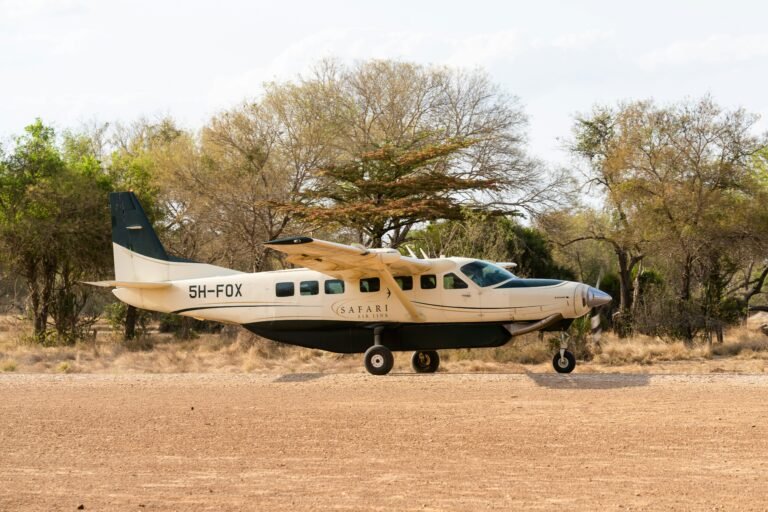
Arusha To Lake Manyara Airstrip Flight Price 2026-2027
Arusha to Lake Manyara Airstrip Flight Price is explained with current 2026-2027 planning, price, itinerary and booking information.
View package details
Nearest Airport To Ngorongoro Crater: Logistics & Planning For 2026-2027
A practical guide to reaching the Ngorongoro Conservation Area, covering the vital difference between international gateways and local airstrips for your 2026-2027 safari itinerary.
View package details
Lake Manyara To Serengeti Flight Price & Safari Connections 2026-2027
A practical guide to connecting Lake Manyara and the Serengeti by air, covering flight pricing factors, logistical trade-offs, and how to optimize your safari schedule.
View package detailsZanzibar To Lake Manyara Flights: Prices & Safari Transfers 2026-2027
Zanzibar to Lake Manyara Flights: Prices & Safari Transfers is explained with current 2026-2027 planning, price, itinerary and booking information.
View package detailsHow To Fly To Ngorongoro Crater: Nearest Airports & Transfer Prices 2026-2027
Planning a trip to the Ngorongoro Crater? Discover the reality of air access, why there is no airstrip inside the crater, and how to coordinate your ground transfers.
View package detailsShould I Visit Tarangire Or Lake Manyara On A Short Safari? 2027
Choosing between Tarangire and Lake Manyara for a short safari in Tanzania involves weighing their unique strengths in wildlife viewing, landscapes, and accessibility. This guide helps you...
View package detailsFly-In Safari To Ngorongoro And Serengeti: Flights & Transfer Costs 2026-2027
Discover the logistics and cost breakdown for a fly-in safari to Ngorongoro and the Serengeti, including airstrip transfers, baggage limits, and vehicle positioning.
View package details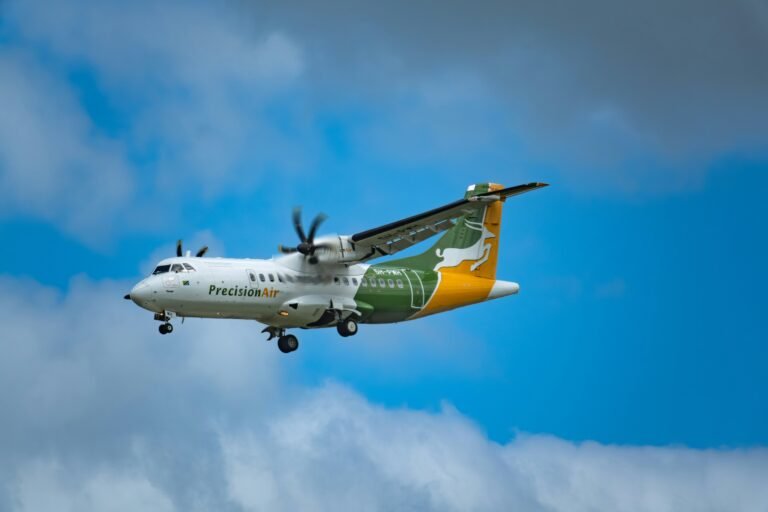
Zanzibar To Ngorongoro Crater: Flight And Road Transfer Costs ( Guide)
A detailed guide on navigating the logistical chain between Zanzibar and the Ngorongoro Crater, covering flight options, airport choices, and the cost variables involved.
View package details
3-Day Serengeti & Ngorongoro Safari From Zanzibar By Flight 2027
3-Day Serengeti & Ngorongoro Safari From Zanzibar by Flight is explained with current 2027 planning, price, itinerary and booking information.
View package detailsZanzibar To Ngorongoro Crater Safari By Flight: Price & Travel Options 2027
A deep look at the logistics, costs, and planning decisions required for flying from Zanzibar to start your Ngorongoro Crater Safari, designed for the experienced traveler.
View package detailsIs Serengeti Or Ngorongoro Better For A First Tanzania Safari? 2027
Is Serengeti or Ngorongoro Better for a First Tanzania Safari? is explained with current 2027 planning, price, itinerary and booking information.
View package details
Serengeti To Zanzibar Vs Arusha To Which Is Better After Safari? 2027
Choosing the right transfer to Zanzibar after a safari—Serengeti to Zanzibar or Arusha to Zanzibar—depends entirely on your safari route, time constraints, and budget. This guide breaks...
View package detailsNo related package matches those filters. Clear one or more filters to see the other topic-matched options.



