
The connection from Lake Manyara to the Serengeti via light aircraft is a specialized bush-flight route designed to maximize time in the national parks by bypassing the 6-to-8-hour overland drive. While exact flight prices fluctuate based on season, demand, and airline availability for 2026 and 2027, you should generally budget for a premium fare that reflects the cost of small-aircraft charters or seat-in-plane services. Flying is best suited for travelers on condensed itineraries who want to avoid long transit days, while road transfers remain the standard for those seeking to reduce costs or include additional stops like the Ngorongoro Crater floor on the way.
Understanding the Lake Manyara to Serengeti Air Link
For most travelers, the journey from the Rift Valley floor at Lake Manyara to the vast plains of the Serengeti is the middle act of a northern Tanzania safari. Many visitors arrive in Manyara to see the tree-climbing lions and the alkaline lake, but the Serengeti is where the true scale of the ecosystem unfolds. The choice between a flight and a drive is one of the most significant logistical decisions you will make when planning your trip.
When you look at a map, the distance might not seem insurmountable, but Tanzanian road conditions and park regulations make it a full-day commitment. A bush flight, however, transforms that day of travel into a 45-to-60-minute hop. This isn’t just about speed; it is about the perspective. Flying low over the Ngorongoro Conservation Area and the endless plains of the Serengeti provides an aerial view of the migration routes and caldera walls that you simply cannot replicate from a 4×4 window.
Factors Influencing Flight Costs
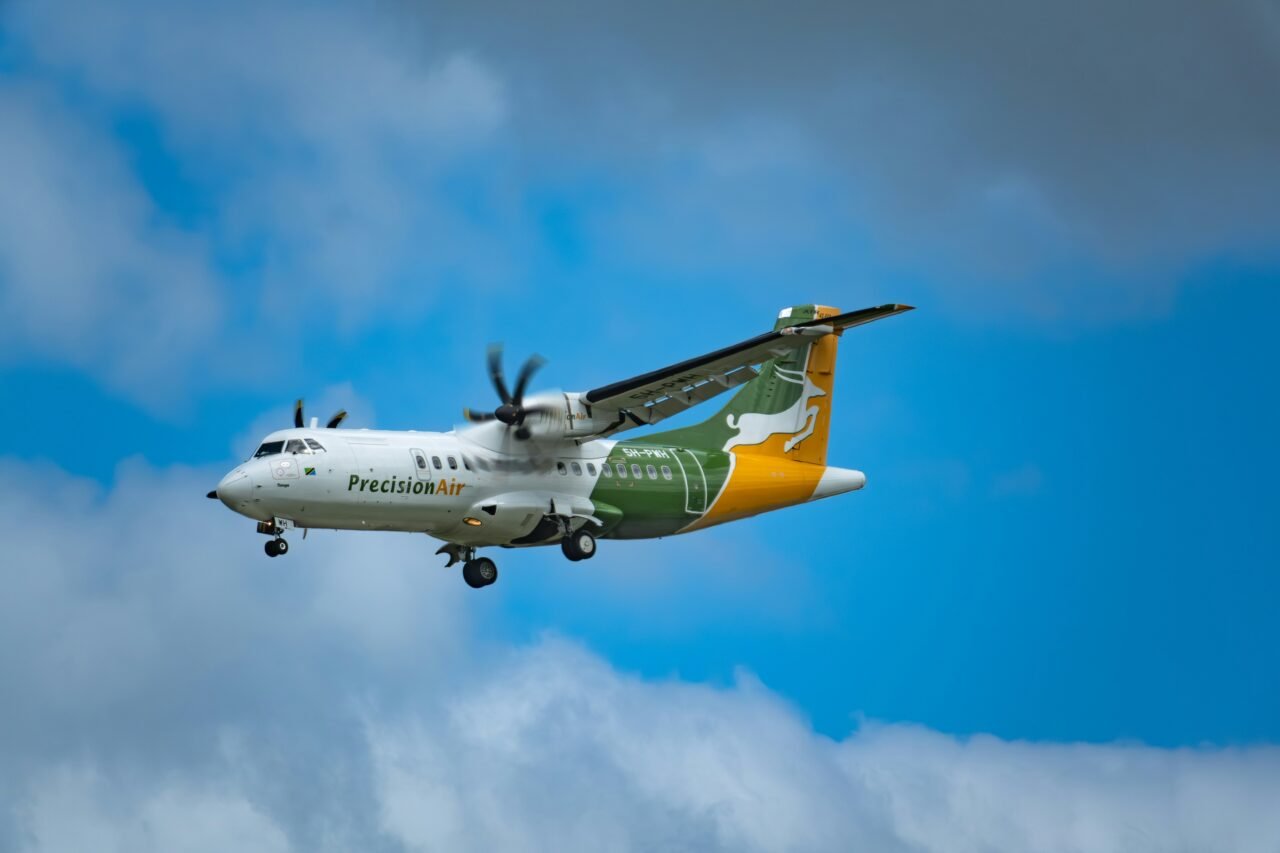
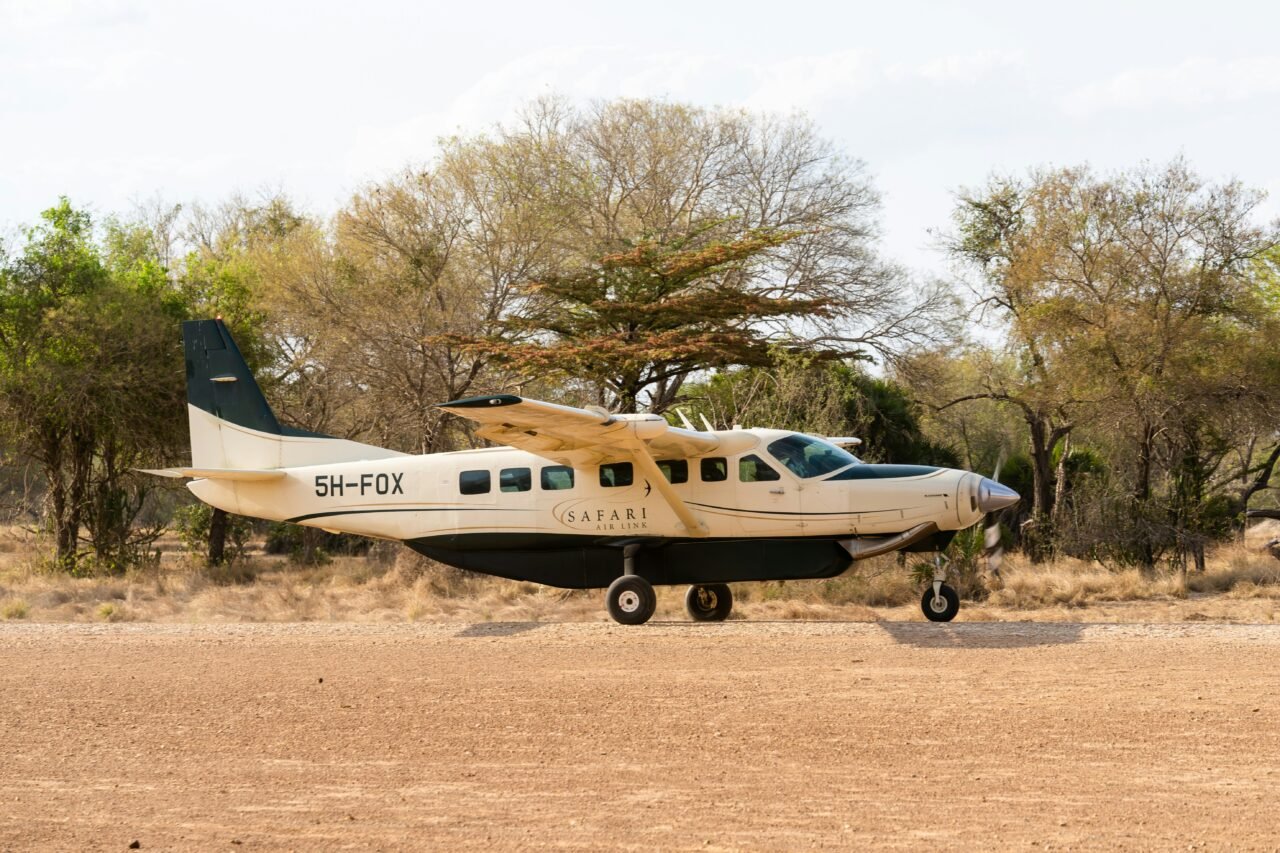
It is important to understand that flight pricing for bush circuits is not static. Unlike commercial international flights, these routes are operated by small carriers (such as Coastal Aviation, Auric Air, or Regional Air) using Cessna Caravans or similar bush planes. Because these are not mass-market flights, prices are sensitive to several variables:
- Seasonality: High season (June through October) and the short peak during the calving season (late January to February) see higher demand, which drives up the price of seat-in-plane tickets.
- Booking Lead Time: Last-minute bookings are notoriously expensive and often unavailable. Securing your seats 6 to 9 months in advance for 2026 and 2027 travel dates is highly recommended.
- Airstrip Selection: The Serengeti has multiple airstrips (Seronera, Kogatende, Lobo, Ndutu). Flying to a remote strip in the far north or south often incurs a higher cost than flying to the central Seronera hub.
- Weight Restrictions: While the ticket price covers your seat, excessive luggage can lead to extra charges or the need to purchase an additional seat for your bags. Always adhere to the strict 15kg soft-bag limit standard in bush aviation.
Comparison: Flight vs. Driving
To decide whether the flight cost is justified for your specific trip, it helps to compare the two methods directly. Most of our clients at Climb 4 Africa weigh these options based on their total safari duration and budget allocation.
| Feature | Flying | Driving (4×4) |
|---|---|---|
| Transit Time | ~45–60 minutes | 6–8 hours |
| Experience | Aerial views; rapid transition | Game viewing en route; cultural stops |
| Cost | Higher (Premium) | Lower (Included in daily rate) |
| Flexibility | Fixed schedules | Stop when you see wildlife |
| Best For | Short trips, luxury focus | Budget-conscious, photography |
Logistical Realities of the Connection
When you book a flight from Lake Manyara to the Serengeti, you are not just buying a ticket; you are coordinating a multi-step transfer. The process typically involves a transfer from your lodge to the Lake Manyara Airstrip, the flight itself, and a subsequent transfer from the Serengeti airstrip to your camp or lodge.
At Climb 4 Africa, we emphasize that the “connection” is where most travelers encounter friction. Flight schedules in the bush are often synchronized with other arrivals and departures, meaning your plane might make a stop at another airstrip (like Ngorongoro or Grumeti) before reaching your final destination. This is standard operating procedure. If your schedule is tight, ensure you have a clear plan for your ground transfers on both ends. If you are arriving at Seronera, for example, your driver-guide will typically meet you there with your vehicle, which would have been driven up from Manyara separately.
This is a crucial point: your 4×4 vehicle and your guide often drive to the Serengeti while you fly. This ensures you have your dedicated vehicle and guide for game drives once you land. It is a smooth way to travel, but it requires precise coordination of vehicle logistics.
When to Choose the Drive
Do not feel pressured to fly just because it is an option. There are instances where the road is the better choice. If your itinerary includes a stop at the Ngorongoro Crater, driving is almost always the preferred method. The road passes through the Conservation Area, offering opportunities for Maasai cultural encounters or impromptu stops at scenic viewpoints that you would miss from the air.
If you are traveling in a group of four or more, the cost of the flight per person can become significant. In these cases, the cost-effectiveness of a private 4×4 vehicle, which is already part of your safari package, makes the long drive more attractive. The road journey, while long, is also part of the safari experience—you pass through local villages, see the changing landscape from the Rift Valley wall to the open plains, and have the flexibility to stop for photos whenever you spot wildlife or interesting scenery.
Planning for 2026 and 2027
If you are in the early stages of planning your 2026 or 2027 safari, start by looking at your total available days. If you have less than 7 days, we strongly advise flying. Every hour spent on the road is an hour not spent game viewing in the Serengeti. If you have 10 days or more, you have the luxury of time, and the road transfer becomes a manageable and even enjoyable part of the journey.
Regardless of your choice, ensure your operator has experience with these specific logistics. For those looking to optimize their time, we often suggest a hybrid approach: fly into the Serengeti to start your game viewing immediately, and drive out through the Ngorongoro Crater on your return to Arusha. This maximizes your time in the wilderness while still allowing you to see the highlands.
Pro-Tips for Bush Flight Success
- Luggage: Use soft-sided duffel bags. Hard-shell suitcases are often prohibited or impossible to fit into the cargo hold of a Cessna Caravan.
- Communication: Always keep your safari operator updated on your flight details. If there is a delay or a change in your flight routing, we need to adjust the driver’s meeting time at the airstrip.
- The Airstrip Wait: Airstrips in the bush are not like international airports. They are often dirt or gravel strips with minimal facilities. Arrive early for your flight as requested, but expect a relaxed, informal atmosphere.
- Weather: During the rainy season, flight schedules can be disrupted by low visibility. Always have a flexible mindset; your safety is the pilot’s primary concern.
Getting Expert Support for Your Safari
Navigating the logistics of Tanzanian bush flights, airstrip transfers, and park entrance requirements can be complex. You don’t have to manage these moving parts alone. At Climb 4 Africa, we specialize in building itineraries that balance the convenience of flying with the necessity of having your own dedicated vehicle on the ground.
Whether you need advice on which Serengeti airstrip is closest to your chosen lodge, or you want a detailed breakdown of how to integrate a flight into your existing safari plan, we are here to help. Reach out to us to discuss your 2026 or 2027 travel dates. You can contact us via WhatsApp at +255 747 477 898 or send your inquiries to climb4africa@gmail.com. For backup support, you can also reach our team at info@climb-4-africa.com.
When you contact us, let us know your preferred travel dates, your group size, and whether you have a specific lodge in mind. We can then provide a tailored plan that accounts for your flight logistics and ensures your safari runs as smoothly as possible.
For more information on other connections, check our guides on Serengeti airstrip transfer prices or learn more about the Ndutu airstrip flights if your travel coincides with the calving season.
Strategic Airstrip Selection: Navigating the Serengeti’s Network
While the flight from Lake Manyara is often booked as a generic ‘Manyara to Serengeti’ ticket, the operational reality is far more nuanced. The Serengeti is not a single destination but a massive ecosystem served by a complex network of airstrips, each strategically located to serve specific regions. Choosing the wrong airstrip can inadvertently add hours of game driving time—or substantial transfer costs—to your journey. Understanding how these airstrips relate to your lodge location is the single most effective way to maximize the value of your flight.
The Regional Divide: Seronera vs. The Peripheral Strips
The central hub for most bush flights is the Seronera Airstrip. Because it sits in the heart of the park, it serves as the primary gateway for the central Serengeti, the Moru Kopjes, and the western corridor. If your accommodation is in the central region, flying into Seronera is efficient. However, if your lodge is located in the remote north (near the Mara River) or the far south (near the Ndutu area), landing at Seronera requires a secondary ground transfer that can take three to four hours. These ground transfers are often not included in the base price of your bush flight ticket and require a separate arrangement with your lodge or safari operator.
For travelers heading to the northern Serengeti, flight operators often utilize the Kogatende Airstrip. This is a seasonal favorite, particularly during the Great Migration river crossings. Conversely, flights heading to the southern plains during the calving season (typically January to March) are directed toward the Ndutu or Kusini airstrips. Always cross-reference your lodge’s exact location with the nearest landing strip rather than assuming a generic ‘Serengeti’ flight will drop you at your doorstep. A flight that appears cheaper on a booking engine might end up costing more once you factor in the private transfer fee from a distant airstrip to your camp.
The Mechanics of ‘Seat-in-Plane’ vs. Private Charter
When reviewing quotes for your Manyara to Serengeti connection, you will encounter two primary service models: ‘seat-in-plane’ (scheduled) and private charter. Understanding the difference is vital for your budget and schedule.
- Seat-in-Plane Services: These function like a bus route in the sky. The airline sells individual seats on a scheduled flight that may stop at multiple airstrips before reaching your destination. This is the most cost-effective option for solo travelers or couples. However, the schedule is fixed, and you are subject to the airline’s routing, which might involve a 30-minute detour to drop off other passengers at a different camp.
- Private Charters: A private charter offers exclusivity and flexibility. You book the entire aircraft, allowing you to dictate the departure time (within daylight hours, as most bush airstrips are not equipped for night landings) and fly directly from Lake Manyara to the airstrip nearest your lodge without intermediate stops. While significantly more expensive, this option is often the only way to avoid the ‘hub-and-spoke’ delays inherent in scheduled bush flights.
For families or groups of four or more, the price difference between booking four individual seats on a scheduled flight and chartering a small aircraft often narrows significantly. It is worth requesting a comparison quote for both options, especially if your itinerary is tight and every hour of game viewing counts.
Daylight Restrictions and Operational Windows
A critical, often overlooked factor in bush aviation is the strict adherence to daylight operation. Unlike major international airports, bush airstrips lack the runway lighting and instrument landing systems required for night operations. This means that all flights must land before sunset, which in Tanzania typically occurs between 6:00 PM and 6:45 PM depending on the time of year.
This operational window creates a ‘hard stop’ for your travel plans. If your flight from Lake Manyara is delayed due to weather or technical issues, and you cannot land at your destination before sunset, the flight may be diverted to the nearest airport with night-landing capabilities (often Arusha or Kilimanjaro), leaving you stranded far from your lodge. To mitigate this risk, always schedule your bush flights for the morning hours. Morning flights are statistically less prone to the afternoon convective cloud build-up and localized thunderstorms that frequently cause delays or cancellations in the Serengeti during the shoulder seasons.
Navigating Baggage Constraints and Weight Limitations in Bush Aviation
One of the most frequent points of friction for travelers transitioning from international flights to the bush-flight circuit is the stark difference in baggage allowances. While your international carrier might allow two checked bags of 23kg each, light aircraft operating between Lake Manyara and the Serengeti operate under strict weight and balance regulations. These regulations are not merely suggestions; they are critical safety protocols dictated by the physics of small aircraft, such as the Cessna Caravan or the smaller Pilatus PC-12, which are the workhorses of the Tanzanian safari circuit.
Most bush operators enforce a maximum baggage allowance of 15kg (33 lbs) per passenger. Crucially, this limit almost universally includes your carry-on luggage and camera equipment. If you are a photography enthusiast carrying long lenses, heavy camera bodies, and a tripod, you will likely exceed this limit before even packing a single change of clothes. The aircraft’s payload capacity is calculated based on the combined weight of passengers, fuel, and cargo; exceeding these limits compromises the pilot’s ability to take off safely from short, often unpaved bush runways.
Strategies for Managing Luggage on Safari
To navigate these restrictions, start by abandoning the concept of the hard-shell suitcase. Hard-sided luggage is notoriously difficult to stow in the narrow, irregularly shaped cargo pods or rear compartments of bush planes. Soft-sided duffel bags are the industry standard. They are malleable, allowing them to be squeezed into tight spaces, and they are generally lighter than their wheeled, rigid counterparts. Many safari lodges and operators provide branded, soft-sided bags specifically for this purpose, or you can purchase high-quality expedition-style duffels that are durable enough to withstand the dust and handling of a safari.
If you anticipate exceeding the 15kg limit, you have two primary options: purchasing an ‘extra seat’ or arranging for luggage storage. Purchasing an extra seat allows you to increase your baggage allowance significantly, effectively buying the weight capacity that would have been occupied by another passenger. This is often the most reliable way to transport specialized gear. Alternatively, many travelers choose to leave their heavy international luggage at their arrival hotel in Arusha or at the safari operator’s base in Lake Manyara. You then travel to the Serengeti with a smaller, curated bag containing only what you need for the bush segment of your trip. Upon returning to the Manyara or Arusha region, you reunite with your main luggage. This requires advance coordination with your ground operator, but it is a standard service that eliminates the stress of weight compliance.
The Anatomy of an Airstrip Arrival: What to Expect
The experience of landing in the Serengeti is fundamentally different from arriving at a commercial airport. There is no tarmac, no jet bridge, and certainly no baggage carousel. Understanding the process of the ‘bush landing’ helps demystify the transition and ensures you are prepared for the immediate start of your safari.
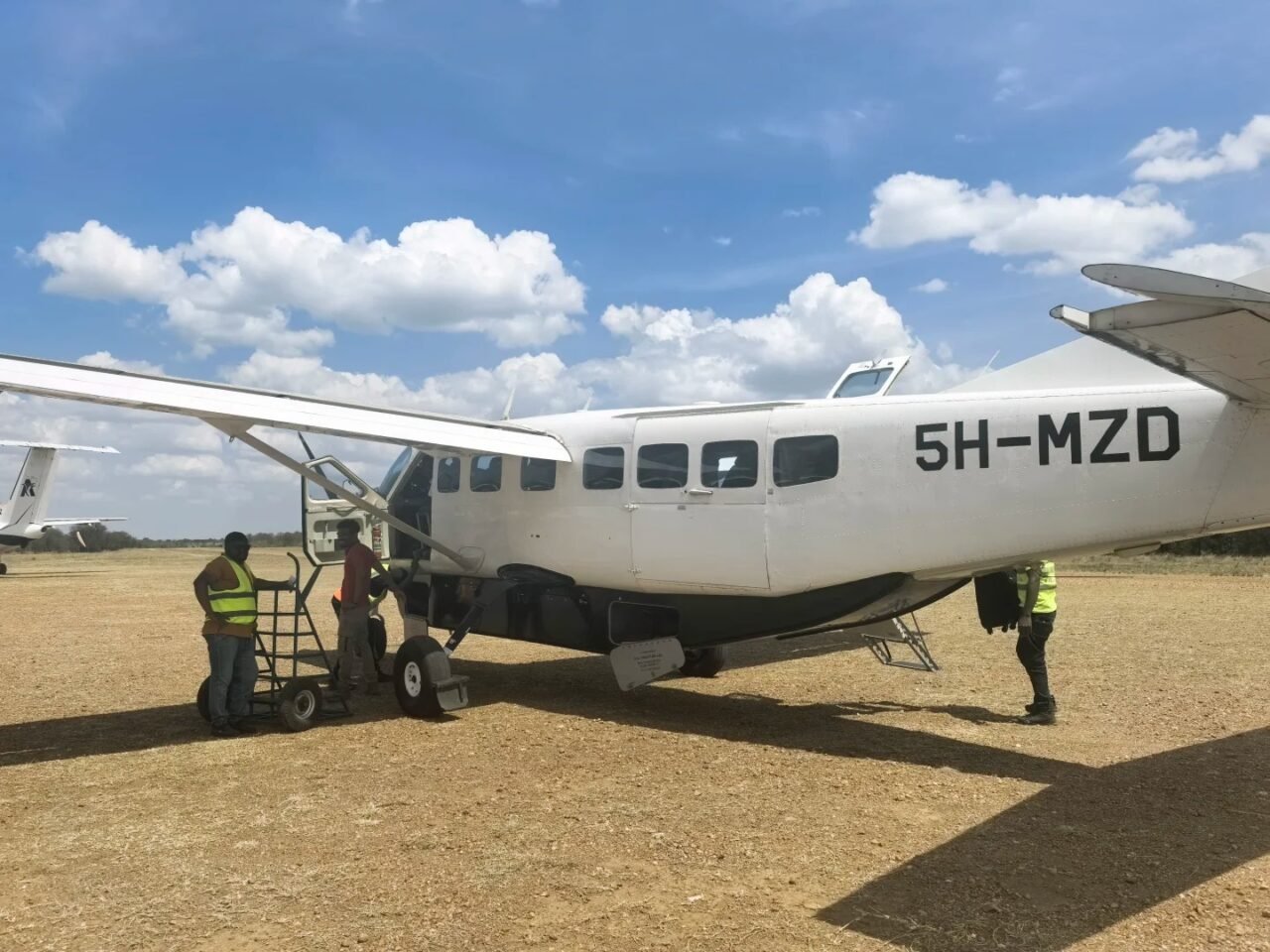
When your aircraft begins its descent, you will often notice the airstrip is little more than a flattened, compacted dirt or gravel track carved into the savannah. As the plane touches down, expect a bumpy ride; the pilots are highly skilled at navigating these surfaces, but the experience is raw and immediate. Once the plane comes to a halt, the engine will likely be cut, and the silence of the bush will rush in, punctuated only by the sounds of the African plains.
You will disembark directly onto the ground. Your pilot will typically assist with unloading your bags from the external pod or rear hold. At this point, you are often met by your lodge’s guide, who will be waiting at the strip with a 4×4 vehicle. This is the moment your bush flight ends and your game drive begins. It is common for the transfer from the airstrip to your lodge to serve as your first unofficial game drive. Do not be surprised if your guide stops the vehicle within minutes of leaving the airstrip to point out a pride of lions or a herd of elephants near the road. Because these airstrips are located within the park boundaries, the safari experience is continuous from the moment you step off the plane.
Managing Expectations During Weather Delays
While bush pilots are remarkably skilled at navigating the Tanzanian skies, they are also the most cautious operators in the industry. Because they fly under Visual Flight Rules (VFR), they must be able to see the ground and the horizon at all times. If visibility drops due to heavy rain, thick dust, or low cloud cover, the flight will be delayed or grounded. This is a safety feature, not a service failure.
If a flight delay occurs, maintain contact with your ground operator or lodge manager. They are accustomed to these scenarios and have contingency plans. If you are stuck at the Lake Manyara airstrip, there are often nearby facilities or shaded waiting areas. If the delay is significant, your operator may arrange a road transfer to get you to your destination, though this is subject to the availability of a vehicle and the remaining daylight hours. The most successful travelers are those who view these potential interruptions as part of the safari adventure rather than a disruption to a rigid itinerary. Flexibility is the ultimate asset when operating in the remote, wild environments of the Serengeti.
The Psychology of the Game Drive: Managing Wildlife Expectations
Stepping off a Cessna Caravan onto a dusty Serengeti airstrip is a memorable experience, but it often brings with it a surge of pressure to immediately spot the ‘Big Five.’ It is critical for travelers to understand the nature of these game drives—the primary activity connecting your flight arrival to your lodge experience. Unlike a zoo or a highly curated wildlife park, the Serengeti is a vast, unmanaged ecosystem. The wildlife here is entirely free-roaming, and their movements are dictated by water sources, seasonal migration patterns, and predator-prey dynamics, not by the schedule of your incoming flight.
When you depart the airstrip, your guide is essentially reading the landscape. A common misconception is that a ‘good’ game drive is measured solely by the number of apex predators seen within the first hour. In reality, the best guides focus on the ‘slow safari’ approach. They look for alarm calls from birds, the posture of impala herds, and the subtle tracks in the dust. You may spend your first hour watching a secretary bird hunt in the grass or observing the complex social hierarchy of a baboon troop rather than encountering a leopard. Viewing these ‘supporting cast’ animals is what builds a genuine understanding of the Serengeti ecosystem. If you approach your first drive with a checklist mentality, you risk missing the nuance of the bush.
The Reality of ‘Guaranteed’ Sightings
You will often encounter marketing materials or anecdotal advice suggesting that certain areas of the Serengeti, particularly those near specific airstrips like Seronera, ‘guarantee’ sightings of lions or cheetahs. It is important to treat these claims with skepticism. While the central Serengeti—where Seronera is located—has a high density of resident big cats due to the permanent water sources in the Seronera River, ‘guarantee’ is a word that does not exist in professional wildlife biology. Animals are mobile. A pride of lions that was seen near the airstrip yesterday may have moved five kilometers away to stalk a herd of zebra overnight. Your guide’s primary responsibility is not to drive to a ‘guaranteed’ spot, but to interpret the signs of the day, which requires patience and sometimes a lack of immediate gratification.
The Role of the Guide in Wildlife Interpretation
The transition from a bush flight to a game drive is arguably the most pivotal interaction of your safari. Your guide is your translator. The difference between a mediocre game drive and an exceptional one rarely comes down to the vehicle or the road conditions; it comes down to the guide’s ability to interpret the environment. When you arrive at the airstrip, take a moment to engage with your guide before the vehicle starts moving. Ask them what they have seen in the last 24 hours, but also ask what they are *looking for* today. This shifts the dynamic from a passive tourist experience to an active, collaborative exploration.
If you find yourself in a vehicle with other guests, remember that wildlife viewing is a collective negotiation. If you are on a private transfer, you have total autonomy. If you are in a shared vehicle, the group must agree on how long to stay at a sighting. A common point of friction is the ‘drive-by’ vs. the ‘observation.’ Some travelers want to see as much as possible, moving quickly from one animal to the next. Others prefer to sit with a single pride of lions for two hours, watching their behavior. Communicating your preference early—perhaps during that first drive from the airstrip—is essential to ensuring your safari style aligns with your companions.
Understanding the ‘Off-Road’ Limitations
One of the most frequent questions regarding Serengeti game drives involves off-roading. Many visitors assume that because they are in a 4×4, they can drive anywhere to get closer to an animal. This is a significant misunderstanding of park regulations. The Serengeti National Park has strict rules regarding off-road driving to protect the fragile soil and root systems of the grasslands. In most areas, vehicles must stay on designated tracks. There are exceptions, usually involving specific predator sightings or during the migration, but these are managed strictly by park rangers and guide ethics.
If you see a cheetah in the distance, your guide will not—and should not—drive directly toward it across the open plain if it violates park rules. Instead, they will use their knowledge of the terrain to position the vehicle on a nearby track where the animal is likely to walk or hunt. This requires a level of patience that can be difficult for travelers fresh off a long journey. Trusting the guide to position the vehicle effectively is part of the art of the safari. Pushing for off-road access not only risks fines for the operator but also disturbs the natural behavior of the wildlife you traveled so far to see.
The Temporal Mathematics of the Transfer: Why ‘Distance’ is a Misleading Metric
When planning the transition from Lake Manyara to the Serengeti, travelers often fixate on raw mileage, assuming that a shorter distance equates to a swifter arrival. In the context of Tanzanian safari logistics, this is a fundamental misconception. The ‘distance’ between a lodge near Lake Manyara and a camp in the central Serengeti is not merely a measurement of kilometers; it is a measurement of terrain, regulatory checkpoints, and the variable nature of infrastructure. Relying on digital mapping software to calculate your travel time is a recipe for frustration, as these algorithms rarely account for the reality of park gate queues, restricted speed limits within the Ngorongoro Conservation Area (NCA), and the physical toll of traversing corrugated dirt roads.
The overland route typically requires passing through the NCA, which functions as both a transit corridor and a protected wildlife area. This means your travel time is subject to the density of the migration, the presence of elephants on the road, and the administrative pace of gate check-ins. A journey that takes six hours on a clear, dry day can easily stretch into nine hours during the rainy season or periods of heavy traffic. When you choose the drive, you are not just choosing a mode of transport; you are committing to a full day of transit where the safari experience is punctuated by the logistics of movement rather than the immersion of wildlife observation.
The Hidden Costs of the ‘Free’ Safari Day
There is a prevailing narrative that driving is the ‘budget-friendly’ option compared to the premium cost of a bush flight. While the ticket price for a light aircraft is undeniably higher, the true cost of the overland transfer is often obscured. When you opt for a full-day drive, you are effectively sacrificing a day of prime safari time. Consider the opportunity cost: if your itinerary allows for only four nights in the Serengeti, spending one entire day in transit means you have essentially lost 25% of your time in the park. For travelers on shorter schedules, the ‘savings’ of a road transfer are quickly eroded by the loss of game-viewing hours.
Furthermore, the physical fatigue associated with long-distance driving in a 4×4 cannot be overstated. The vibration of the road, the constant dust, and the limited mobility within the vehicle often leave passengers exhausted upon arrival at their destination. A bush flight, by contrast, acts as a ‘reset’ button. You depart the Manyara airstrip and arrive at a Serengeti airstrip fresh, energized, and ready for an afternoon game drive. When calculating the value of your safari, factor in the cost of your accommodation per night. If you are paying a high premium for a luxury camp in the Serengeti, every hour spent stuck in a transit vehicle on a dusty road is an hour of that luxury experience you are paying for but not utilizing.
Strategic Breaks: Integrating the Ngorongoro Crater
The only scenario where the overland drive holds a distinct logistical advantage is when it is used as a strategic bridge rather than a transit necessity. If your itinerary includes a descent into the Ngorongoro Crater, the drive from Manyara to the Serengeti becomes a logical, integrated part of your journey rather than a tedious commute. By timing your transit to coincide with a night or two at the crater rim, you break the journey into manageable segments.
This approach transforms the transit day into a destination day. Instead of viewing the road as an obstacle, you view it as a scenic route that allows for a gradual transition from the lush, groundwater forests of Manyara to the high-altitude volcanic landscape of the crater, and finally to the expansive savannah of the Serengeti. If you attempt to do this drive in one go, you miss the nuances of these shifting ecosystems. However, if your goal is to maximize time in the Serengeti specifically, the flight remains the superior tool, allowing you to bypass the crater transit entirely if your schedule does not permit a stop there.
The ‘Bush Pilot’ Variable: Understanding Flight Reliability
While flights are the pinnacle of efficiency, they operate under a different set of rules than commercial aviation. In the bush, the pilot is the final authority, and weather is the final arbiter. Unlike a large jet that can fly above most weather systems, bush planes are often restricted by visibility and cloud cover. During the wet seasons, you may encounter ‘groundings’ where flights are delayed or canceled due to low ceilings or waterlogged airstrips. This is not a failure of the airline, but a necessary safety protocol. When choosing to fly, you must adopt a flexible mindset. If a flight is delayed, the airline will typically rebook you on the next available slot, but you must be prepared for the possibility that your precise arrival time might shift by a few hours. This is the trade-off for the speed and spectacular aerial views that bush aviation provides.
The Impact of Accommodation Logistics on Flight Connectivity
While the choice between flying and driving is often framed as a simple trade-off between time and cost, the specific nature of your accommodation can fundamentally alter the logistical equation. In the Serengeti, where lodges and camps are often located deep within the park, the ‘last mile’ of your journey—the transfer from the airstrip to your accommodation—is a critical component of the flight experience that is frequently overlooked during the initial booking phase.
When you book a flight from Lake Manyara to the Serengeti, you are not simply flying to a single destination; you are flying to a specific airstrip. The Serengeti ecosystem spans thousands of square kilometers, and the airstrip network is decentralized. If your chosen lodge is located in the Northern Serengeti near the Mara River, but your bush flight lands at Seronera in the Central Serengeti, you are still facing a potential three-to-four-hour game drive to reach your destination. This effectively negates the time-saving benefits of the flight. Consequently, your choice of accommodation dictates your flight path. Before confirming your bush flight, it is essential to cross-reference the specific airstrip serviced by your lodge or tented camp. Some remote luxury camps operate their own private airstrips, which can reduce transfer times to mere minutes, while others rely on the busier, public airstrips that serve multiple properties.
The ‘Camp-to-Camp’ Transfer Complexity
Travelers often assume that a “Serengeti flight” is a point-to-point service. However, bush aviation in Tanzania operates on a “hub-and-spoke” or “circuit” model. A single aircraft may stop at three or four different airstrips before reaching your destination. This means that while your flight time in the air might only be 45 minutes, your total time in the aircraft could extend to two or three hours if you are the last passenger to be dropped off. This is a standard practice designed to maximize fuel efficiency and seating capacity for the operator, but it can be frustrating if you are expecting a direct flight.
If you are prioritizing comfort and efficiency, inquire about the routing of your specific flight. Some operators offer ‘private charter’ options, which allow you to fly directly from the Manyara airstrip to the strip closest to your accommodation without intermediate stops. While this is significantly more expensive than a seat-in-plane fare, it eliminates the unpredictability of the circuit flight and ensures that you arrive at your lodge in time for an afternoon game drive, rather than arriving at sunset after a lengthy series of taxiing and unloading procedures.
Seasonality and Accommodation Access
The relationship between your accommodation and your flight is further complicated by the migration patterns of the herds and the seasonal mobility of the camps. Many high-end safari operators utilize “seasonal” or “mobile” tented camps that relocate throughout the year to follow the Great Migration. If you are staying in a seasonal camp, the airstrip you utilize in January may be completely different from the one you use in August. This requires a higher level of coordination. When booking, ensure that your flight itinerary is updated to reflect the current location of the camp, not just the brand or the company name. A flight booked to a static, permanent airstrip serving a camp that has moved 100 kilometers away can result in a logistical crisis upon arrival, necessitating a costly and lengthy emergency ground transfer.
The Hidden Burden of Luggage Logistics
Accommodation choice also influences your luggage strategy. Permanent lodges often have laundry services that can handle significant volumes, allowing you to travel with a lighter soft-sided bag, which is mandatory for bush flights. However, if you are staying in remote, off-grid mobile camps, amenities may be more restricted. The weight limit on bush flights—typically 15 kilograms (33 pounds) per person—is enforced strictly for safety and performance reasons, particularly when taking off from shorter or high-altitude airstrips. If your accommodation requires specific gear (such as specialized photographic equipment or heavy cold-weather clothing for high-altitude nights), you must balance these needs against the baggage constraints of the flight. It is often wise to coordinate with your lodge beforehand; some high-end properties can arrange for the secure storage of excess luggage if you are returning to the same area or transiting through a major hub like Arusha, allowing you to fly into the bush with only the essentials.
Operational Realities of Airstrip Infrastructure
Not all airstrips in the Serengeti and Lake Manyara region are created equal. Understanding the infrastructure of these landing zones is vital for managing your expectations regarding the ‘comfort’ of your transfer. Most airstrips in the northern circuit are unpaved gravel or dirt strips. During the dry season, this means substantial dust, which can affect sensitive camera equipment and respiratory health. During the wet season, these strips can become muddy or slick, leading to temporary closures that are entirely out of the airline’s control.
Furthermore, these airstrips are not “airports” in the traditional sense. They lack terminal buildings, lounges, or reliable food services. They are functional clearings in the bush. When you land, you are essentially stepping directly into the wilderness. Your guide will typically meet you at the airstrip in a 4×4 vehicle. This meeting point is often the first moment of your safari, and it is crucial to have clear communication with your lodge or tour operator regarding your arrival time. If your flight is delayed, the lodge needs to know, as they often time their game drives around the arrival of guests. Arriving unannounced or significantly off-schedule can disrupt the lodge’s operational flow and potentially cause you to miss the afternoon activity.
Finally, consider the environmental impact of your transfer. Light aircraft are carbon-intensive per passenger, but they are often the only way to avoid the massive carbon footprint of a heavy 4×4 vehicle driving hundreds of kilometers across rough terrain. If sustainability is a core value of your travel, some operators are beginning to offer carbon-offset programs linked to their flight operations, or you may choose to prioritize lodges that utilize renewable energy, thereby balancing the environmental cost of your aerial transit with a low-impact stay.
The Dynamics of ‘Fly-In’ Safari Scheduling: Mitigating the Inter-Lodge Gap
A critical, often overlooked aspect of the Lake Manyara to Serengeti connection is the gap between landing at an airstrip and arriving at your specific lodge. In the context of bush aviation, the flight is merely the transit phase; the ‘transfer’ is a separate logistical entity that requires careful synchronization. When you book a flight from the Lake Manyara airstrip to a Serengeti strip (such as Seronera, Kogatende, or Lobo), you are not flying into your hotel lobby. You are flying into a designated landing zone that may be anywhere from 20 minutes to two hours away from your accommodation. This transit, often conducted in an open-sided safari vehicle, is effectively your first game drive, but it must be accounted for in your daily schedule.
Many travelers mistakenly assume that a 10:00 AM flight arrival means they will be checked into their lodge by 10:30 AM. In reality, the airstrip transfer process involves coordinating with the lodge’s driver, clearing the vehicle of any previous guests, and navigating the park’s internal roads, which are rarely paved and often subject to heavy traffic or wildlife blockages. If you are flying into a remote airstrip like Kogatende in the north, the drive to a lodge near the Mara River can be substantial. This transfer time is a variable that is frequently omitted from online booking portals but is essential for managing your safari pace.
Optimizing the ‘Transit Game Drive’
The transfer from the airstrip to your lodge should be viewed as a strategic opportunity rather than a logistical inconvenience. Because you are already in a 4×4 vehicle with a professional guide, the drive from the runway is rarely just a shuttle service; it is an introduction to the landscape. To maximize this, ensure that your luggage is packed in soft-sided bags, which are not only required for the flight but are also significantly easier to stow in the game viewer vehicles. Hard-shell suitcases often require roof-rack mounting, which can delay departure from the airstrip while the driver secures the load, potentially costing you precious time during the golden hour of wildlife activity.
Furthermore, communicate with your lodge regarding the timing of your arrival. If your flight lands mid-day, you may find that the lodge is between guest changeovers, meaning your room might not be ready. By coordinating this arrival, you can often arrange for a picnic lunch to be waiting at the airstrip, allowing you to transition directly from the plane into a game drive without the need to return to the lodge first. This ‘strip-to-safari’ approach is a hallmark of experienced travelers who understand that the Serengeti is too expansive to waste time sitting in a reception area.
The Complexity of Multi-Stop Bush Flights
It is vital to understand that bush flights rarely operate as point-to-point direct services. The aircraft you board at Lake Manyara may stop at multiple airstrips before reaching your destination in the Serengeti. These are effectively ‘bus routes in the sky.’ A flight that is scheduled for 45 minutes of airtime can easily stretch into a three-hour journey if the pilot is scheduled to drop off passengers at Ngorongoro, Manyara, and two different Serengeti strips along the way.
This multi-stop reality impacts your ability to predict arrival times. When reviewing your flight manifest, look closely at the routing. If your ticket lists multiple stops, assume that each landing and takeoff adds approximately 20 to 30 minutes to the total journey, accounting for taxiing, passenger disembarkation, and mandatory safety checks. This is not a flaw in the service, but a necessity of bush aviation efficiency; by grouping passengers, operators keep the cost of seats lower than a private charter. For travelers on a tight schedule, this ‘hop-on, hop-off’ reality is why we often suggest booking the earliest possible flight of the morning. Early morning flights are statistically less prone to the cascading delays that accumulate throughout the day as weather patterns shift or previous legs run behind schedule.
Managing the ‘Split-Stay’ Logistics
For those splitting their time between two different areas of the Serengeti—for example, spending three nights in the Central Serengeti (Seronera) and three nights in the Northern Serengeti (Kogatende)—the connection becomes even more complex. You are essentially managing two separate flight legs. The logistics of this split-stay require you to be completely self-sufficient with your gear, as you will be moving from one remote camp to another without returning to a central hub like Arusha.
In these scenarios, the airstrip connection is the pivot point. If you are flying between Serengeti airstrips, you may be using a smaller shuttle plane that services only the park interior. These flights are highly dependent on the pilot’s discretion regarding weather and visibility. If a storm cell develops over the Serengeti plains, flights between internal airstrips can be grounded even if the main regional flights from Arusha are still operating. Always maintain a flexible mindset; the bush pilot’s decision to ground a flight is a safety-first mandate that cannot be negotiated. In the event of such a delay, your lodge will be the primary point of communication. They are equipped to handle these interruptions and will often reorganize your afternoon game drive to compensate for the lost time, ensuring that your safari experience remains smooth despite the unpredictable nature of the regional weather.
Aligning Flight Paths with Migratory Pulse: The Seasonal Reality
While the logistics of bush aviation are governed by mechanical and meteorological constraints, the strategic value of your flight from Lake Manyara to the Serengeti is fundamentally dictated by the movement of the Great Migration. It is a common misconception that the Serengeti is a static destination; it is a fluid, ever-changing landscape where the “best” airstrip changes month by month. When booking your transfer, you are not merely purchasing a seat on a plane; you are positioning yourself within a dynamic ecosystem. The price of your flight remains relatively stable regardless of where in the park you land, but the utility of that flight fluctuates wildly depending on whether you are positioning yourself for the calving season in the South or the dramatic river crossings in the North.
To optimize your connection, one must understand the ‘migration gap.’ Many travelers book a flight to Seronera (Central Serengeti) by default because it is the primary hub. However, if your travel window falls in August or September, landing in Seronera requires a long, dusty, and often redundant game drive to reach the Mara River in the North. Conversely, flying directly to Kogatende or Lamai airstrips during the dry season places you in the heart of the action, but these northern strips are subject to different operational constraints than the central hub. The decision to fly is often a decision to ‘chase’ the migration, and your flight booking should be synchronized with the most recent wildlife reports rather than a fixed itinerary created six months prior.
The Risk of Static Itinerary Planning
A critical error in safari planning is the ‘fixed-point’ bias. Travelers often pre-book flights to specific airstrips based on a lodge’s location before confirming where the herds are likely to be. While you cannot always change your accommodation, you can often adjust your flight routing up to a few weeks before departure. If the rains arrive early or the herds move faster than anticipated, a flight booked to a southern strip in April might leave you hours away from the primary wildlife concentrations. When coordinating with your safari operator, ask specifically about the ‘migration proximity’ for your chosen airstrip. If the herds are located in a sector of the park that is not serviced by your booked airstrip, discuss the feasibility of an ‘airstrip-to-airstrip’ transfer or a longer, game-drive-inclusive transfer, which, while slower, may provide better wildlife viewing opportunities than a direct flight to a quiet area.
Navigating the ‘Shoulder Season’ Uncertainty
The shoulder seasons—typically May/June and November/December—present unique challenges for flight connectivity and wildlife strategy. During these periods, the migration is in transition. The herds are moving between the southern plains and the northern woodlands, often creating a ‘no-man’s-land’ where wildlife is dispersed rather than concentrated. In these months, the value proposition of a bush flight shifts. When the wildlife is spread out, the ‘transit game drive’—the drive you take from the airstrip to your lodge—becomes just as important as the destination itself. If you are flying into a remote strip, ensure your lodge has confirmed that a vehicle will meet you there, as some smaller strips do not have permanent ground crews. A flight that lands in the middle of nowhere without a pre-arranged vehicle is not a luxury; it is a logistical liability.
The Feedback Loop: How Wildlife Patterns Influence Flight Schedules
Airlines serving the Serengeti are highly responsive to demand, which is driven entirely by wildlife patterns. During peak migration months, you will notice an increase in the frequency of flights to northern strips like Kogatende and Lobo, while flights to the southern Ndutu region may decrease as the herds move north. This creates a feedback loop: flight availability often acts as a proxy for wildlife density. If you see a sudden influx of flight options to a specific airstrip that wasn’t previously on your radar, it is a strong indicator that the migration has arrived in that sector. Savvy travelers use this ‘flight density’ as an informal barometer for where the action is, allowing for last-minute adjustments to their safari routing to ensure they are spending their time in the most active regions of the park.
The ‘Last Mile’ Logistics: Coordinating Airstrip Pickups and Guide Transfers
The efficiency of a bush flight is often undermined by the complexity of the ‘last mile’—the critical handover between the pilot and your safari guide. Unlike commercial airports where you exit a terminal and find a taxi stand, Serengeti airstrips are essentially remote clearings in the bush. There is no central dispatch, no public transport, and certainly no signage. When you disembark from a Cessna Caravan or a smaller bush plane, you are entering a managed wilderness zone where your arrival must be synchronized with a pre-arranged vehicle. This logistical handover is the single most common point of failure for travelers who have not fully vetted their transfer arrangements.
When booking your bush flight, the ticket price covers the air transit, but it almost never includes the ground transfer from the airstrip to your camp. This is a separate service usually managed by the lodge or your safari operator. The operational reality is that your guide must know your flight number, the specific airline, and the exact estimated time of arrival (ETA). Because bush flights often adjust their schedules based on weather or passenger loads from previous stops, your guide cannot simply wait at the airstrip all day. They must track your flight in real-time, which necessitates a reliable line of communication between the airline’s operations center and the lodge’s ground team. If you are booking flights independently of your ground safari operator, you create a dangerous communication gap. Always ensure that your ground operator is the one managing the flight booking, or at the very least, that they have direct, confirmed access to your flight manifest.
The Role of the ‘Airstrip Meet’ in Safari Continuity
The meeting at the airstrip is more than just a taxi service; it is the official commencement of your Serengeti experience. A high-quality guide will use the drive from the airstrip to the lodge as an orientation session. They will check your equipment, discuss your wildlife priorities, and gauge your energy levels after the flight. If you have booked a ‘fly-in’ safari, this initial drive is effectively your first game drive. However, this only happens if you have communicated your arrival details accurately. In remote areas of the Serengeti, such as the far north near the Mara River or the deep southern plains, there may be only one or two vehicles at the airstrip. If your transfer is not there, you are essentially stranded until the next scheduled flight or until the airline can radio for assistance, which can take hours.
Furthermore, consider the vehicle logistics involved in these transfers. Many lodges operate specialized game-viewing vehicles that are built for off-road durability rather than highway comfort. These vehicles often have pop-up roofs and open sides. If you are arriving with significant luggage, the space in these vehicles is at a premium. You must confirm that your lodge is aware of your luggage volume. If you arrive with a large hard-shell suitcase, it may physically not fit in a vehicle that is already configured for a game drive, potentially forcing the lodge to send a separate, non-safari vehicle to retrieve your bags. This creates a disjointed arrival experience where you are separated from your gear, sometimes for hours, while the camp manages the logistical scramble.
Navigating Airstrip Entry and Exit Protocols
Entry and exit at Serengeti airstrips are governed by park regulations that are distinct from those at major international airports. You are required to possess a valid park entry permit before you can even step onto the ground, or you must be prepared to pay the entry fee at the airstrip, if such facilities exist. Many smaller, remote airstrips do not have payment kiosks. If your operator has not pre-arranged your park entry, you may find yourself in a bureaucratic standoff with park rangers who are simply enforcing the law. The most smooth approach is for your safari guide to hold your permit or to be fully integrated into the park’s digital ticketing system before you land.
Additionally, be aware of the ‘transit’ rules. If your flight lands at an airstrip inside the Serengeti, you are technically entering the park. If your lodge is outside the park boundaries, you must ensure your transfer logistics account for the exit permit requirements. Conversely, if you are flying from Lake Manyara—which is a separate park—into the Serengeti, you are dealing with two distinct sets of park authorities. This is why using a single, cohesive operator to manage both your flights and your ground transfers is not merely a convenience; it is a regulatory safeguard. They understand how to bridge these administrative gaps so that you are not delayed by permit checks or documentation disputes while the sun is setting and your window for wildlife viewing is closing.
Managing the ‘Split-Transfer’ Reality
Occasionally, flight paths and accommodation locations do not align perfectly, requiring a ‘split-transfer.’ This occurs when you fly into a central hub airstrip (like Seronera) but are staying at a lodge in a remote sector. In these instances, you may be met by a driver who is not your primary guide, or you may be required to take a ‘transfer drive’ that is essentially a transit route rather than a game drive. It is vital to manage your expectations here. A transfer drive is about efficiency; the goal is to get you to your accommodation. If you treat this transit as a game drive, you will likely be frustrated by the driver’s focus on speed and destination rather than wildlife tracking. Clarify with your operator beforehand: is this a transfer, or is this a game drive? If it is a transfer, do not expect the vehicle to stop for every zebra or gazelle. If you want a game drive, you must negotiate that as a specific service, which often involves a higher cost for the extra time and fuel required.
The Economic Calculus: Private Charter vs. Seat-in-Plane
When finalizing your budget for the Lake Manyara to Serengeti connection, the choice between ‘seat-in-plane’ services and private aircraft charters is the single largest variable. It is a common misconception that a private charter is simply a multiple of the seat-in-plane cost based on the number of passengers. In reality, these two booking models operate on fundamentally different economic principles, and understanding them is essential for avoiding financial surprises.
A seat-in-plane service functions like a scheduled bus route. The airline aggregates passengers from various lodges and airstrips, optimizing the route to ensure the aircraft remains as full as possible. Because the operational costs—fuel, pilot wages, maintenance, and landing fees—are distributed across multiple bookings, the per-passenger price is significantly lower. However, this efficiency comes at the cost of flexibility. You are bound to the airline’s schedule, which may require you to depart earlier or later than your ideal safari timeline, and you are subject to the airline’s routing, which might involve multiple stopovers at other airstrips to drop off or pick up other passengers before arriving at your destination.
Private chartering, conversely, is an asset-rental model. When you charter a plane, you are not paying for seats; you are paying for the utilization of the aircraft and its crew for a specific window of time. You are effectively purchasing the plane’s availability, which allows you to dictate the departure time and, in some cases, the routing. However, this autonomy carries a premium. You are responsible for the total cost of the aircraft’s operation, regardless of whether you fill every seat or travel alone. For a small group, this can be an expensive luxury, but for larger families or groups of four to six, the cost-per-head gap between a private charter and individual seat-in-plane tickets often narrows, making the privacy and efficiency of a charter a more viable consideration.
Decoding the ‘Dead-Leg’ and Positioning Fees
One of the most misunderstood aspects of private charter pricing is the ‘dead-leg’ or ‘positioning’ fee. Aircraft do not magically appear at the Lake Manyara airstrip. They are based at hubs, typically Arusha or Wilson Airport in Nairobi. If you book a charter to pick you up at Manyara and drop you in the Serengeti, the operator must account for the ‘ferry’ flight—the flight required to get the plane from its home base to your starting point, and often the flight required to return the plane to a hub after your drop-off.
If you are quoted a price that seems suspiciously low, it may be because the operator has ‘tucked’ your flight into a pre-existing schedule where the aircraft was already repositioning. However, if you require a specific, off-schedule departure time, you will almost certainly be charged for these positioning flights. Always ask your operator for a breakdown of the ‘total flying hours’ versus ‘total aircraft utilization hours.’ You are paying for the time the engine is running, and that includes the time spent flying to meet you. In remote bush aviation, transparency regarding these ferry legs is the hallmark of a reputable operator.
The Hidden Infrastructure Surcharges of Remote Airstrips
Beyond the flight time, the operational budget must account for the ‘hidden’ costs of bush aviation infrastructure. Every time an aircraft touches down at a bush airstrip, the operator incurs landing fees. These fees are not universal; they vary significantly depending on whether the strip is managed by the Tanzania National Parks Authority (TANAPA), a private lodge consortium, or a regional municipal authority. Some airstrips charge a flat fee per landing, while others charge based on the maximum take-off weight (MTOW) of the aircraft.
Furthermore, if your itinerary requires a pilot to overnight in the bush—often necessary if you are flying into a remote area late in the day and departing early the next morning—you are responsible for the pilot’s accommodation and meals, often referred to as ‘night-stop’ costs. These are rarely included in the initial flight quote. When reviewing your safari proposal, ensure that ‘handling charges,’ ‘landing fees,’ and ‘pilot accommodation’ are explicitly listed as either included or excluded. Failing to clarify these can lead to unexpected invoices at the end of your trip, particularly when operating in the more remote sectors of the Serengeti where infrastructure costs are higher due to the logistical difficulty of maintaining these strips.
The Anatomy of a Transparent Safari Flight Quote
When reviewing a proposal for a bush flight connecting Lake Manyara to the Serengeti, the complexity often lies in the breakdown of the invoice. A quote is rarely a simple A-to-B fare; it is a composite financial instrument that reflects the volatile realities of remote aviation. To avoid mid-safari financial surprises, travelers must learn to dissect the difference between the ‘base fare’ and the ‘operational surcharge’ layer. A transparent quote should clearly delineate between the aircraft time, passenger taxes, and the logistical overheads that bush carriers incur to maintain safety and compliance in the Tanzanian interior.
The first item to scrutinize is the ‘per-seat’ versus ‘charter’ designation. If you are booking a ‘seat-in-plane’ service, the pricing is fixed, and the operator is responsible for filling the remaining seats. This is the most cost-effective method for solo travelers or couples. However, if your itinerary requires a private charter—perhaps due to a specific timing need or a group size that fills the aircraft—you are entering the realm of ‘wet leasing.’ In this model, you are paying for the aircraft’s entire utilization. Transparency here means the operator must show you the ‘block hour’ rate. This rate covers fuel, pilot salary, insurance, and the aircraft’s hourly maintenance accrual. If a quote lacks a breakdown of how many block hours are being billed, you are essentially flying blind, unable to verify if you are being charged for the efficient route or a circuitous flight path necessitated by the pilot’s positioning requirements.
Decoding Ancillary Aviation Taxes
Beyond the flight time, the Tanzanian aviation landscape is layered with specific taxes that are often misunderstood. The most common of these is the ‘Passenger Service Charge’ (PSC) and the ‘Aviation Security Fee.’ These are mandatory levies imposed by the Tanzania Civil Aviation Authority (TCAA). Crucially, these fees are per-passenger, not per-flight. If your itinerary involves a multi-leg journey—for instance, flying from Lake Manyara to Seronera, and then connecting to a remote northern strip—you may be liable for these fees at every touchpoint. A professional operator will include these in the ‘taxes and fees’ line item. If they are absent, assume they will be added at the time of ticketing, which can inflate the final price by 10% to 15%.
Furthermore, consider the ‘Fuel Surcharge’ clause. In the context of bush aviation, fuel is transported to remote airstrips via tanker trucks, which is an expensive and logistically fraught process. Consequently, carriers often reserve the right to adjust fuel surcharges up to 48 hours before departure based on current market rates. A transparent contract will specify a ‘trigger point’ for this surcharge—a defined price per barrel of aviation fuel beyond which the operator can pass the cost to the consumer. If your quote does not mention a fuel surcharge policy, ask specifically if the price is ‘guaranteed’ or ‘subject to adjustment.’ Locking in a price early can be a gamble, but it provides the budget certainty that many travelers prefer.
The Hidden Cost of ‘Dead-Leg’ Positioning
One of the most significant, yet often opaque, drivers of flight costs is the ‘dead-leg’ or positioning fee. Because light aircraft are not based at every airstrip, the operator must fly the plane from a hub (like Arusha or Wilson) to pick you up at Lake Manyara. If that aircraft is not already scheduled for a commercial run in that direction, you are essentially paying for the pilot to fly an empty plane to your location. This is the ‘dead-leg.’
Sophisticated operators mitigate this by ‘interlining’—trying to find other passengers or cargo to fill that empty space on the way to you. If your quote seems unusually competitive, it is likely because the operator has successfully ‘married’ your request with another flight. Conversely, if your quote is high, it may be because you are paying for the full positioning cost. Transparency here means the operator should be willing to explain if the flight is a ‘scheduled service’ (shared cost) or a ‘private repositioning’ (your cost). Never hesitate to ask: ‘Is this aircraft already in the Manyara region, or is it being dispatched from Arusha specifically for my party?’ The answer dictates whether you are paying for a shared service or the full operational cost of the aircraft’s movement.
Operational Contingencies and ‘Force Majeure’ Clauses
Finally, examine the fine print regarding cancellation and delay. In bush aviation, weather is the ultimate arbiter. A sudden storm over the Ngorongoro highlands can ground flights for hours, or even a full day. A standard airline ticket might offer a rebooking or a refund, but bush flight operators often have rigid ‘no-refund’ policies for weather-related cancellations. You must clarify the ‘re-routing’ capability of the operator. If your flight is canceled, does the operator have a fleet large enough to swap aircraft? Do they have agreements with other carriers to put you on their planes? A premium price should buy you ‘network resilience.’ If you are paying a high premium for a private charter, ensure the contract specifies the operator’s obligation to provide an alternative in the event of mechanical failure or weather grounding. Without this, you are paying for a flight that may never happen, with no recourse for the lost time or the need to hire a last-minute road transfer to salvage your safari.
The Dynamics of ‘Bush-to-Vehicle’ Transitioning: Managing the Safari Pace
The transition from a high-altitude bush flight to the low-altitude reality of a 4×4 safari vehicle is often underestimated by travelers who view these legs as mere logistical hurdles. When you touch down on a dirt airstrip in the Serengeti, you are not simply arriving at a destination; you are immediately entering a sensory environment that demands a shift in pace. The ‘bush-to-vehicle’ transition requires an adjustment in both physical stamina and observational discipline. Unlike the structured, linear nature of a flight, the game drive is non-linear and unpredictable. Travelers often arrive expecting an immediate ‘Big Five’ checklist, but the reality involves long stretches of scanning the horizon, punctuated by intense, fleeting moments of wildlife activity. Understanding that a game drive is a test of patience—not a guaranteed wildlife parade—is essential for mental preparation.
Furthermore, managing the vehicle environment is a critical component of safari success. Dust, heat, and the vibration of the vehicle on corrugated roads are constant factors. Seasoned travelers know that the ‘safari look’ often promoted in media—pristine clothing and open-window ease—frequently conflicts with the reality of the dust clouds kicked up by other vehicles or the harsh, dry winds of the dry season. Your guide acts as the interface between you and this environment. Respecting their expertise regarding wildlife positioning, engine noise, and vehicle placement is paramount. A guide will often position the vehicle to maximize light for photography or to ensure the animal remains comfortable and undisturbed; following their cues on when to remain silent or when to move positions is not just polite, but vital for ensuring the animal remains in view for longer than a few seconds.
Finally, consider the ‘sensory fatigue’ that sets in after several days of constant motion. Moving from a flight directly into a 4-hour game drive can lead to burnout. If your itinerary allows, aim for a ‘buffer period’—even if just an hour—upon landing. This time allows you to hydrate, adjust to the climate, and brief your guide on your specific interests (e.g., birding, predator behavior, or landscape photography) before the engine starts. This brief pause transforms the drive from a rushed transit into a deliberate, tailored safari experience, ensuring that the energy you expend is focused on the sightings that matter most to you, rather than simply covering ground.
Related Guides and Packages
Check Availability for Lake Manyara To Serengeti Flight Price & Safari Connections 2026-2027
Ready to compare dates, prices, and the best option for your group? Send the package name and travel month so the team can reply with a clear quote, availability, and what is included.
Zanzibar To Lake Manyara Flights: Prices & Safari Transfers 2026-2027
Zanzibar to Lake Manyara Flights: Prices & Safari Transfers is explained with current 2026-2027 planning, price, itinerary and booking information.
View package details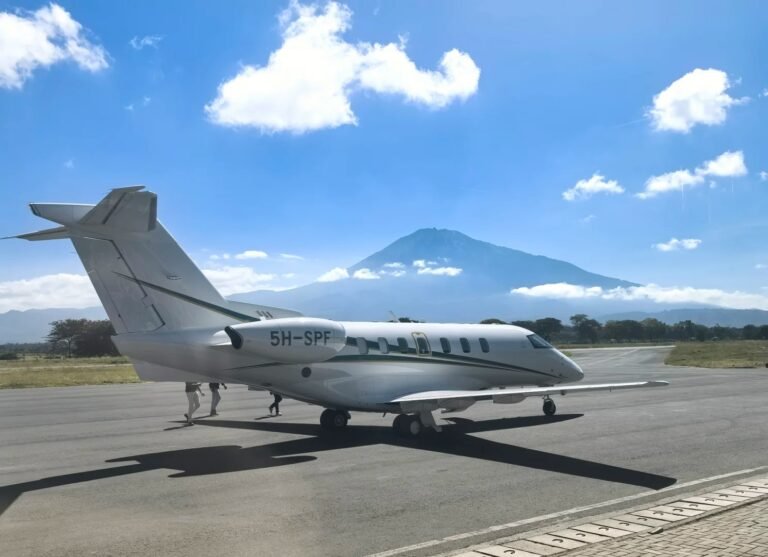
Zanzibar To Serengeti Flight Price –: Planning Your Safari Transfer 2027
Navigate the complex flight and transfer options between Zanzibar and the Serengeti. This deep guide breaks down expected costs, seasonal variables, and optimal routing for 2026 and 2027...
View package details
Fly From Arusha To Serengeti For A 3-Day Safari: Flights & Package Prices 2027
Discover the most efficient ways to fly from Arusha to the Serengeti for a concentrated 3-day safari. This guide breaks down airstrip choices, flight costs, and package structures for 2027.
View package details
Arusha To Serengeti Flight Price : Tickets & Safari Airstrips 2027
Arusha to Serengeti Flight Price 2027: Tickets & Safari Airstrips is explained with current 2027 planning, price, itinerary and booking information.
View package detailsLamai Airstrip Flights: Prices & Northern Serengeti Safari 2027
Lamai Airstrip Flights: Prices & Northern Serengeti Safari is explained with current 2027 planning, price, itinerary and booking information.
View package detailsKogatende Airstrip Flights: Ticket Prices & Northern Serengeti Safari 2027
Kogatende Airstrip Flights: Ticket Prices & Northern Serengeti Safari is explained with current 2027 planning, price, itinerary and booking information.
View package detailsFly-In Safari To Ngorongoro And Serengeti: Flights & Transfer Costs 2026-2027
Discover the logistics and cost breakdown for a fly-in safari to Ngorongoro and the Serengeti, including airstrip transfers, baggage limits, and vehicle positioning.
View package details3-Day Serengeti & Ngorongoro Safari From Zanzibar By Flight 2027
3-Day Serengeti & Ngorongoro Safari From Zanzibar by Flight is explained with current 2027 planning, price, itinerary and booking information.
View package details3-Day Serengeti Fly-In Safari From Zanzibar: All-Inclusive Package Prices 2027
Plan your ultimate Tanzanian adventure, combining Zanzibar's beaches with the Serengeti's wildlife. This guide details all-inclusive package pricing and logistics for a 3-day fly-in safari...
View package details
Singita Serengeti Airstrip Flights: Charter Prices And Expert Booking Guide
Planning your journey to Singita Serengeti requires careful flight planning. This guide details charter options, cost considerations, and the booking process for a smooth 2027 luxury safari.
View package detailsArusha To Northern Serengeti Flight Prices & Booking Guide () 2027
A comprehensive guide detailing the logistics, costs, and best practices for flying from Arusha to the Northern Serengeti for your 2027 safari.
View package detailsSerengeti Airstrip Transfer Prices: From Plane To Safari Lodge 2027
Serengeti Airstrip Transfer Prices: From Plane to Safari Lodge is explained with current 2027 planning, price, itinerary and booking information.
View package detailsNo related package matches those filters. Clear one or more filters to see the other topic-matched options.



