
There are no direct commercial flights between the Serengeti and Entebbe International Airport (EBB). If you are looking to combine a safari in northern Tanzania with a gorilla trekking expedition in Uganda, you are planning a multi-leg journey that requires careful coordination. Because the Serengeti is a remote wilderness area served only by bush strips, your travel plans will inevitably involve a transition from a light aircraft to a regional commercial flight hub.
For travelers planning their 2027 itinerary, the goal is to minimize transit time while managing the strict luggage restrictions inherent in bush aviation. Below is the practical breakdown of how to navigate this connection effectively.
The Logistics of the Serengeti-to-Entebbe Connection
The Serengeti is not a single airport; it is a collection of bush airstrips (such as Seronera, Kogatende, Seronera, and Grumeti) that connect to larger Tanzanian hubs. To get to Entebbe, you are effectively performing a two-stage journey: a bush flight to a gateway city, and a regional commercial flight to Uganda.
The Primary Routing Strategy:
- Stage 1 (The Bush Flight): You fly from your specific Serengeti airstrip to Arusha (ARK) or Kilimanjaro International (JRO). Arusha is generally the most convenient for quick connections, while JRO is the primary international gateway.
- Stage 2 (The Hub Connection): From either Arusha or JRO, you typically connect through Nairobi (NBO). Nairobi’s Jomo Kenyatta International Airport is the central clearinghouse for flights heading to Entebbe.
While it is occasionally possible to find routes that bypass Nairobi, they are infrequent and often subject to schedule changes. Relying on the Nairobi hub provides the highest frequency of flights, ensuring that if one leg of your journey is delayed, there is a higher probability of rebooking without losing days of your trip.
Important Planning Note: When booking, do not assume that a flight from “Tanzania” to “Entebbe” is a simple hop. These are two separate flight tickets booked on different carriers (e.g., a bush operator like Coastal or Air Excel for the first leg, and a regional carrier like Kenya Airways or Uganda Airlines for the second). Always build in a buffer of at least 4-6 hours between your bush flight arrival and your international departure to account for potential weather delays in the Serengeti.
The Luggage Trap: A Critical Decision Point
One of the most common mistakes travelers make when planning a combined Tanzania-Uganda trip is failing to account for the 15kg (33lb) luggage limit on bush flights. This limit is strict and non-negotiable for safety reasons on small aircraft.
If you are traveling with large suitcases or heavy camera gear, you cannot simply fly from the Serengeti to your next destination with your full luggage. You must plan for logistics:
- Storage: Most travelers working with Climb 4 Africa arrange to store their heavy luggage at their base hotel in Arusha or at the Kilimanjaro airport area.
- The “Safari Bag” Strategy: You should travel to the Serengeti with a soft-sided duffel bag containing only what you need for the safari. Your larger suitcase stays in secure storage.
- The Return Loop: If your flight to Entebbe departs from JRO or Arusha, you pick up your stored bags there before checking in for your flight to Uganda.
Ignoring this reality often leads to expensive last-minute overweight fees or, in some cases, being denied boarding on the bush flight entirely. Plan your packing with the 15kg limit in mind from the start.
Route Comparison: Understanding Your Choices
The following table illustrates the trade-offs between the common routing methods. This is not a list of prices, but a comparison of travel logic to help you decide how to structure your 2027 trip.
| Routing Option | Pros | Cons |
|---|---|---|
| Via Arusha (ARK) | Closest to many lodges; frequent daily bush flights. | Requires transfer from ARK to JRO (if your next flight departs from JRO) or a separate connection in Nairobi. |
| Via Kilimanjaro (JRO) | Direct international departures available to Nairobi; better facilities for international transit. | Longer bush flight time; fewer daily bush flight options compared to Arusha. |
| Private Charter | Maximum flexibility; avoids commercial hub schedules; direct to regional hubs. | Significant cost increase; requires full group booking; still subject to border/customs regulations. |
If you are currently evaluating these options, contact Climb 4 Africa with your specific lodge locations. We can advise on which airstrip is closest to your accommodation and which hub provides the most efficient connection for your travel dates.
Visa and Border Logistics
Crossing from Tanzania to Uganda involves more than just a flight. You are entering a different sovereign nation. Ensure your passport has at least six months of validity and sufficient blank pages.
The East Africa Tourist Visa is a popular option for travelers visiting both Kenya and Uganda, but it is important to remember that it does not include Tanzania. You will still need a separate Tanzanian visa (or your existing one) for your safari. Plan your visa applications at least 4-6 weeks before your 2027 departure. Do not rely on “visa on arrival” if you can avoid it, as policies can change, and having your documentation pre-approved significantly speeds up your transit through Entebbe airport.
Planning for 2027: Seasonality and Availability
Flight availability in the Serengeti is highly seasonal. During the Great Migration (typically June-October and January-February), the bush flights are frequently sold out months in advance. Because your flight to Entebbe is a separate ticket, a delay in the bush flight arrival—caused by weather or a missed connection—can have a domino effect on your Uganda itinerary.
When booking, consider the following:
- Book the bush flight first: These are the most capacity-constrained legs of the journey. Once your safari flight is locked in, book your regional connection to Entebbe.
- Avoid same-day tight connections: If you are flying from the Serengeti to Arusha and then to Entebbe on the same day, ensure you have a minimum of 5 hours of “buffer” time. Weather in the Serengeti can ground flights, and small aircraft often operate on “African time,” which is flexible but unpredictable.
- Consider an overnight in Nairobi: If the connection timing looks risky, an overnight in Nairobi is often safer and more relaxing than gambling on a 90-minute layover.
For more detailed information on airline choices and how they compare, you may want to review our guide on the best airlines for Tanzania safari flights, which helps clarify which carriers provide the most reliable regional service.
Getting Expert Help with Your Multi-Country Itinerary
Coordinating a safari in Tanzania with a trek in Uganda is complex. It involves synchronizing bush flight schedules, managing luggage storage, and ensuring your visa documentation is correct for two separate border crossings. Trying to piece this together using online flight aggregators often leads to itineraries with impossible connection times or baggage disasters.
At Climb 4 Africa, we specialize in these multi-country African itineraries. We understand the nuances of the Serengeti airstrips and how they connect to the wider regional network. We don’t just book flights; we help you build a logical, stress-free flow for your trip.
If you are planning your 2027 adventure, reach out to us for a consultation:
- WhatsApp: +255 747 477 898
- Email: climb4africa@gmail.com
- Backup Email: info@climb-4-africa.com
When you reach out, please provide your preferred travel dates, the number of travelers in your group, and whether you have already booked your gorilla trekking permits in Uganda. Having this information upfront allows us to provide a more accurate assessment of the flight connections that will work best for your specific schedule.
Remember, the goal is to spend your time experiencing the migration in the Serengeti and the primates in Bwindi, not sitting in airport terminals. Let us handle the logistical heavy lifting of your flight connections so you can focus on the experience.

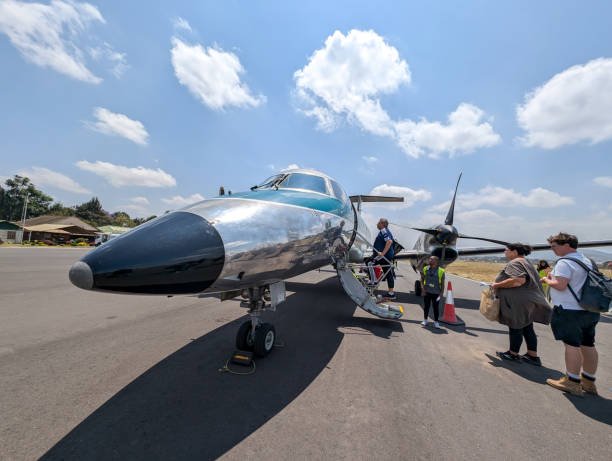
Beyond Entebbe: The Final Leg to the Gorilla Forests
Landing at Entebbe International Airport (EBB) marks the successful conclusion of your international transit from the Serengeti, but it is rarely the end of your travel day. For the vast majority of travelers, the ultimate objective is the dense, mountainous terrain of Bwindi Impenetrable National Park or Mgahinga Gorilla National Park. Understanding the geography of Uganda is essential at this stage, as these parks are located in the remote southwestern corner of the country, roughly 450 to 500 kilometers from Entebbe. Unlike the Serengeti, where you are often landing on a flat, savannah-based strip, the approach to Uganda’s gorilla country involves navigating complex, high-altitude terrain that demands specific logistical planning.
The Kajjansi Factor and Domestic Transfers
A frequent point of confusion for travelers is the location of domestic departures. While some regional flights may depart directly from EBB, a significant volume of bush flights to the gorilla parks operates out of Kajjansi Airfield. Kajjansi is a smaller, domestic hub situated between Entebbe and Kampala. If your itinerary requires a transfer from EBB to Kajjansi, you must factor in the reality of Ugandan road traffic. Depending on the time of day, this transfer can take anywhere from 45 minutes to two hours. It is rarely a smooth “gate-to-gate” experience; it involves exiting the international terminal, clearing customs, and coordinating a private transfer to the domestic strip. Always verify whether your onward connection departs from the main international airport or the Kajjansi domestic airfield before booking your initial flight from Tanzania.
Choosing Your Airstrip: Kihihi vs. Kisoro
You cannot simply book a flight to “Bwindi.” The park is vast, and the road infrastructure between different sectors can be poor, meaning your choice of airstrip dictates your final destination. Kihihi Airstrip is the primary gateway for the northern sectors of Bwindi (Buhoma and Ruhija). It is generally more accessible and experiences fewer weather-related flight cancellations. Conversely, Kisoro Airstrip serves the southern sectors (Rushaga and Nkuringo) as well as Mgahinga Gorilla National Park. The flight into Kisoro is often described as one of the most spectacular in East Africa, as the aircraft navigates between volcanic peaks to land in a high-altitude bowl. However, this geography makes Kisoro significantly more susceptible to low-lying fog and cloud cover, which can lead to last-minute flight diversions or cancellations. If your gorilla permit is for a southern sector, you must accept the higher risk of flight disruption compared to the northern route.
The Strategic Importance of the Entebbe Buffer Night
Because gorilla trekking permits are strictly date-specific and non-refundable, missing your morning departure to the forest can effectively invalidate your entire trip. If you are flying from the Serengeti to Entebbe, you are at the mercy of two separate, non-aligned aviation networks. A delay on the Serengeti-to-Nairobi leg, or a missed connection in Nairobi, creates a cascading effect. For this reason, spending a night in Entebbe is not merely a comfort preference—it is a critical risk-mitigation strategy. Arriving in Entebbe the day before your onward connection to the forest allows you to absorb any delays from the Tanzania leg, retrieve your luggage without the pressure of a ticking clock, and ensures you are rested for the physically demanding trek ahead. Attempting to connect from a Serengeti bush flight directly to an Entebbe-to-Bwindi flight on the same day is a high-risk gamble that seasoned operators strongly advise against.
The Hidden Complexity of the “Self-Transfer”
For many travelers, the term “connecting flight” implies a smooth hand-off of luggage and a simple walk between gates. However, when combining a Serengeti bush flight with a regional commercial flight to Entebbe, this assumption is often the primary cause of travel anxiety and missed connections. You are almost certainly engaging in a “self-transfer” journey, even if your itinerary was booked through a single agency. Understanding the mechanics of this process is essential for maintaining your schedule.
Why Your Luggage Rarely “Checks Through”
The fundamental issue is the lack of interline agreements between the small bush-aviation companies (such as Coastal Aviation, Auric Air, or Regional Air) and the larger regional carriers (such as Kenya Airways or Uganda Airlines). Because these bush airlines operate on different ticketing systems and lack the automated baggage-transfer protocols of international carriers, they cannot “through-check” your luggage to your final destination in Entebbe.
This means that upon landing at your Tanzanian hub—typically Arusha (ARK) or Kilimanjaro (JRO)—you must physically collect your bags from the bush-flight operator. You then have to exit the arrivals area, navigate to the check-in counters of your onward regional airline, and re-check your bags as if you were starting your journey from scratch. If your Serengeti bush flight arrives at 10:00 AM and your flight to Entebbe departs at 12:00 PM, you do not have two hours of “transit time”; you have two hours to clear arrivals, retrieve luggage, navigate the terminal, check in, clear security, and reach your new gate. This is a significantly tighter window than most travelers anticipate.
Navigating the Nairobi (NBO) Transit Hub
If your routing takes you through Jomo Kenyatta International Airport (NBO) in Nairobi, the complexity increases. Nairobi is a major hub with multiple terminals. If your flight arrives at Terminal 2 (often used for regional or domestic flights) and your onward flight to Entebbe departs from Terminal 1 (the main international terminal), you will need to transit between buildings. While there are shuttle buses, they are not always frequent, and the walk can be substantial.
The critical danger at NBO is the “International Transit” vs. “Landside” confusion. If you have not through-booked your ticket—which is rare for these combinations—you cannot use the “Transit” security desk. You must proceed through immigration, enter Kenya, collect your bags, and go to the departures level to re-check in. If you attempt to follow “Transit” signs while holding a separate ticket, you may find yourself stuck in a sterile area without access to your bags or the ability to obtain your boarding pass for the next leg. Always confirm with your airline staff upon arrival in Nairobi: “Do I need to clear immigration to collect my bags for a separate onward ticket?”
Entebbe Arrivals: Navigating the Domestic Transition
Once you land at Entebbe International Airport (EBB), your transit reality shifts again. If you are heading straight to a gorilla trekking lodge, you will likely need to connect to a domestic flight from the Kajjansi airfield or a different part of the EBB complex. The arrivals hall at Entebbe is efficient, but it can become congested during peak afternoon hours when multiple international flights land simultaneously.
If you have an onward flight, do not linger in the duty-free shops or the arrivals hall. Once you have cleared immigration and collected your bags, your immediate priority is to locate your ground transfer or domestic check-in desk. If your onward flight is from the main EBB terminal, the transition is straightforward. If it is from Kajjansi, you must account for the transfer time, which can range from 45 minutes to 90 minutes depending on Entebbe’s infamous road traffic. This is why the “buffer night” mentioned previously is not just for rest—it is a critical hedge against the unpredictability of these ground transfers.
The Value of Professional Meet-and-Greet Services
Given the complexity of self-transferring in busy hubs like Nairobi or navigating the transition at Entebbe, many seasoned travelers opt for “Meet-and-Greet” services. These are not merely luxury add-ons; they are tactical logistical assets. A professional ground handler will meet you at the aircraft door or the arrivals hall, assist with the physical movement of your luggage, guide you through the correct immigration queues, and expedite your check-in at the next terminal. In a self-transfer scenario where you have limited time and two separate PNRs (Passenger Name Records), having a fixer who knows the airport layout can be the difference between making your flight and being stranded in a transit hub for 24 hours.
Decoding the Cost Structure of Multi-Country Transfers
One of the most persistent misconceptions regarding the Serengeti-to-Entebbe route is that travelers can purchase a single, consolidated ticket. Because the bush aviation sector (the small Cessna and Caravan aircraft) operates on proprietary, independent reservation systems rather than the Global Distribution Systems (GDS) used by international commercial carriers, your trip is fundamentally composed of separate, unlinked financial transactions. This “unbundling” is the primary driver of price volatility. When you look at the total cost of your transfer, you are essentially managing two different economies: the fixed-seat pricing of bush operators and the dynamic, demand-based pricing of commercial airlines.
The financial risk in this arrangement lies in the “rebooking gap.” If a commercial flight from Arusha to Entebbe is delayed or cancelled, the airline is often obligated to rebook you. However, if your bush flight from the Serengeti is delayed due to weather or mechanical issues, causing you to miss that commercial connection, the commercial airline is under no obligation to assist you. This is why the “cheapest” ticket is rarely the most economical choice. Experienced travelers prioritize booking the commercial leg of the journey on a “flexible” or “fully refundable” fare class. While the upfront cost is higher, it functions as a form of insurance, allowing for rapid rebooking without the need to purchase an entirely new ticket at last-minute prices.
Managing Flight Cancellations in Remote Bush Strips
Bush aviation is subject to operational constraints that do not affect major airports, primarily weather-related visibility and airstrip conditions. During the rainy seasons in Tanzania, it is not uncommon for bush flights to be delayed by several hours or even grounded for the day. Because these flights are often the first link in your chain to Entebbe, a cancellation here creates a cascade effect.
When selecting your bush operator, do not evaluate them solely on price. Investigate their “operational redundancy”—the size of their fleet and their ability to dispatch a backup aircraft if one goes technical. Furthermore, ensure your travel insurance policy specifically covers “missed connections” and “trip interruption” caused by bush flight delays. Many standard policies require a common carrier (like a major airline) to be the cause of the delay; you must verify that your policy recognizes bush-aviation providers as valid transit carriers for claims. If you are forced to spend an unexpected night in Arusha or Nairobi due to a bush-flight cancellation, having a policy that covers the additional accommodation and rebooking fees is essential for protecting your overall trip investment.
Related Guides and Packages
Check Availability for Serengeti To Entebbe Flights: Prices & Travel Options
Ready to compare dates, prices, and the best option for your group? Send the package name and travel month so the team can reply with a clear quote, availability, and what is included.

Kigali To Serengeti Flights: Prices & Safari Connections
A practical guide to connecting your Rwanda gorilla trekking with a Serengeti safari, focusing on flight routes, transit logistics, and expert booking advice.
View package details
Entebbe To Serengeti Safari: Flight Connections & Cost Planning
A practical guide to connecting your Entebbe-based travel with a Serengeti safari, covering flight routes, airport choices, baggage constraints, and cost factors for 2026-2027.
View package details
Serengeti Flight Prices During The Great Migration Season: A Practical Guide
Planning a safari during the Great Migration? Here is how to navigate Serengeti flight prices, seasonal demand, and the logistical realities of bush travel.
View package detailsTanzania Flight Prices September : Serengeti And Zanzibar Planning
Expert advice on navigating domestic flight logistics, seasonal pricing, and the crucial 'bush-to-beach' connection for your September 2027 Tanzania itinerary.
View package detailsSerengeti Great Migration Fly-In Safari: Flight And Lodge Prices ()
A deep look at the logistical and financial considerations of planning a Serengeti Great Migration fly-in safari, focusing on how flight routes and seasonal lodge locations dictate your...
View package details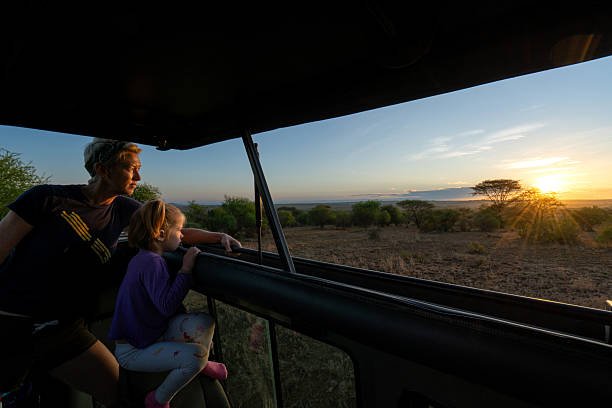
Luxury Serengeti Fly-In Safari: Private Packages & Prices ( Guide)
A detailed guide to luxury fly-in safaris in the Serengeti, focusing on private logistics, pricing structures for 2026-2027, and maximizing your time in the bush.
View package details2-Day Serengeti Fly-In Safari From Arusha: Understanding Package Prices
A practical guide to the costs, logistics, and planning realities of a 2-day fly-in safari to the Serengeti from Arusha.
View package details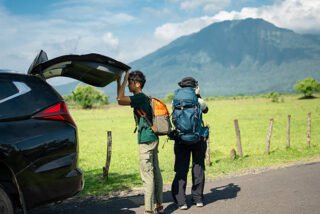
How Much Luggage Is Allowed On Serengeti Safari Flights? A Planning Guide
Learn the precise luggage requirements for Serengeti bush flights, including weight limits, the mandatory soft-bag policy, and how to safely store your extra gear.
View package details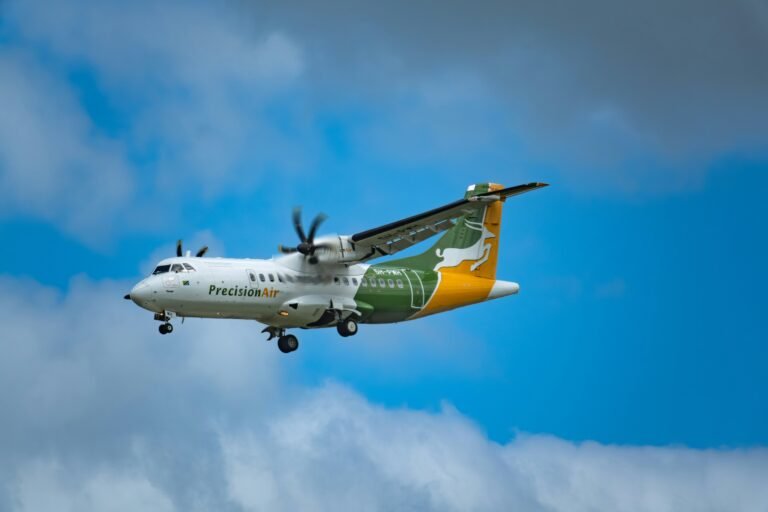
Kilimanjaro Climb And Serengeti Safari: Flight & Transfer Planning
Kilimanjaro Climb and Serengeti Safari: Flight & Transfer Planning.
View package detailsFly-In Safari From Dar Es Salaam: Serengeti, Ruaha & Nyerere Packages
A professional guide to organizing fly-in safaris from Dar es Salaam, covering the logistical advantages of accessing Nyerere, Ruaha, and the Serengeti by air.
View package details5-Day Serengeti & Ngorongoro Fly-In Safari: Complete Package Costs
5-Day Serengeti & Ngorongoro Fly-In Safari: Complete Package Costs.
View package details
How Early Should I Arrive For A Serengeti Bush Flight? ( Planning Guide)
A practical guide on timing your arrival for Serengeti bush flights, covering airstrip logistics, transfer planning, and why bush flight operations differ from standard commercial travel.
View package detailsNo related package matches those filters. Clear one or more filters to see the other topic-matched options.



