
For travelers planning a trip in December 2026, affordable Kilimanjaro group joining safari and trekking packages offer the most practical way to reduce costs by sharing fixed expenses like park fees, transport, and guide services. By joining a pre-scheduled group, you benefit from lower per-person rates compared to private expeditions while maintaining the same high standard of safety and logistical support. December is a peak planning period; we recommend securing your spot at least 6–9 months in advance to ensure availability on your preferred route, such as the popular Machame or Lemosho trails, and to lock in safari dates that align with your climb.
Planning a trip to Tanzania in December requires balancing two very different environments: the high-altitude, physically demanding slopes of Mount Kilimanjaro and the vast, wildlife-rich plains of the northern circuit. Because these two experiences have distinct logistical requirements, opting for a group joining package is often the smartest financial decision for solo travelers or small groups of two or three.
When you book a shared package with Climb 4 Africa, you are essentially splitting the overhead costs—such as the vehicle hire for the safari, the crew for your climb, and the transfer logistics—among several participants. This does not mean you compromise on the quality of your experience; rather, it means you benefit from the efficiency of shared resources.
Understanding the Group Joining Model for Kilimanjaro
Many travelers assume that group joining means being stuck in a massive, impersonal crowd. In reality, on Kilimanjaro, group sizes are strictly regulated by park authorities and operator safety standards. A well-managed group typically ranges from 4 to 10 people. This size is ideal: it is large enough to make the trip affordable but small enough to allow for personalized attention from your lead guide.
The primary advantage of these packages in December 2026 is the cost efficiency. When you book privately, you cover the full cost of the mountain crew (guides, cooks, porters), the park entrance fees (which are significant), and the private transport. In a group, these costs are distributed. Furthermore, December often sees a higher volume of climbers, meaning it is easier to find an existing group that fits your schedule, especially if you are looking at common routes like the Machame Route.
If you are considering your options, look for packages that clearly outline what is included. Does the price cover your hotel stay before and after the climb? What about the airport transfers? At Climb 4 Africa, we emphasize transparency in our itineraries so you know exactly what you are paying for, avoiding the surprise costs that can derail a travel budget.
December Safari Logistics: What to Expect
Combining a Kilimanjaro climb with a safari is the classic Tanzania itinerary. However, in December, the weather and wildlife movements dictate your safari strategy. December marks the beginning of the “short rains” in some parts of Tanzania, but this often means the landscape is lush and green, and birdlife is spectacular. It is also a fantastic time to see the Great Migration in the southern Serengeti.
When searching for an affordable group joining safari, consider these factors:
- Park Variety: Are you focusing on the Northern Circuit (Serengeti, Ngorongoro Crater, Tarangire)? Ensure your package includes enough time to actually enjoy the game drives rather than spending all your time driving between parks.
- Accommodation Standards: Group packages usually utilize mid-range lodges or tented camps. These provide a comfortable bed, private bathrooms, and hearty meals—a welcome luxury after a grueling climb.
- Vehicle Logistics: Most group safaris use 4×4 Land Cruisers with pop-up roofs. Ensure your package guarantees a window seat, which is standard for reputable operators.
For those interested in specific wildlife viewing, you might want to look at our tanzania safari group departures, which are designed to maximize your time in the field while keeping costs manageable.
Comparing Routes: 6-Day vs. 7-Day Kilimanjaro Climbs
One of the most frequent questions we receive involves the duration of the climb. Should you choose a 6-day or 7-day itinerary? For a group joining package, this decision affects both your success rate and your total cost.
| Feature | 6-Day Machame Route | 7-Day Machame Route |
|---|---|---|
| Acclimatization | Faster ascent, higher risk | Gradual, higher success rate |
| Daily Effort | Longer hiking days | More manageable pacing |
| Cost | Lower (fewer days of park fees) | Slightly higher |
While the 6-day itinerary is cheaper, the 7-day itinerary provides a much more comfortable experience. When you join a group, check which duration is being offered. Many of our December 2026 departures are structured as 7-day climbs to balance affordability with safety.
Booking Your December 2026 Adventure
As you plan for December 2026, keep in mind that December is a high-demand month due to the holidays. Flights are more expensive, and accommodation on the mountain fills up quickly. Our advice is to start your conversation with a local operator early.
When you contact us at Climb 4 Africa, you don’t need to have every detail finalized. We can help you navigate the following:
- Choosing the right route: We will assess your fitness and experience level to recommend the best trail.
- Coordinating dates: We can match you with existing groups that have already confirmed their dates, allowing you to join a team with similar goals.
- Logistics: We manage everything from your arrival at Kilimanjaro International Airport (JRO) to your departure, ensuring your transition from mountain to safari is smooth.
If you are ready to explore your options or want to request a quote, please reach out to us directly. You can send a message via WhatsApp at +255 747 477 898 or email us at climb4africa@gmail.com. Alternatively, you can use our backup email at info@climb-4-africa.com. When inquiring, please let us know your approximate travel dates, the number of people in your party, and whether you are interested in a combined climb-and-safari package or just one of the two.
Practical Considerations for Your Trip
Beyond the cost and the itinerary, there are practical aspects of your December trip that you should prepare for. First, consider the weather. December is typically warm at the base of the mountain, but temperatures can drop well below freezing at the summit. Your packing list must account for this range. We provide a comprehensive gear list to all our climbers, but the golden rule is layering.
Second, consider your visa and health requirements. Tanzania has specific entry requirements that can change, so always check the latest official government updates well in advance. We provide guidance on these procedures as part of our booking support.
Finally, remember that the success of your climb and the enjoyment of your safari depend heavily on your guide and crew. Our team at Climb 4 Africa is composed of experienced local professionals who know the mountain and the parks intimately. They are the ones who will ensure your safety, manage your group dynamics, and share the local knowledge that turns a standard tour into an unforgettable adventure.
Whether you are a solo traveler looking to join a group or a small group of friends wanting to share the costs of a private expedition, we are here to help you plan a safe, affordable, and rewarding experience in December 2026. Do not hesitate to get in touch to discuss your vision for this trip.
Navigating the Transition: From Kilimanjaro Summit to Safari Plains
One of the most critical, yet often overlooked, aspects of a combined Kilimanjaro and safari package is the logistical transition between the two environments. After descending from the mountain, your body is in a state of recovery, and your mind is likely still processing the intensity of the summit push. A well-structured group joining package accounts for this physical “reset” period. We typically advise a mandatory buffer day between your descent from the mountain and the start of your safari. This day allows for essential gear cleaning, laundry services, and, most importantly, a full night of restorative sleep in a proper bed before you begin the long, bumpy drives required for game viewing.
When you join a group for this combined itinerary, the safari portion usually follows a set route through the Northern Circuit. In December, wildlife behavior is dictated by the onset of the short rains, which makes the landscape lush and green. Your group will likely visit Tarangire National Park, known for its massive baobab trees and high concentration of elephants, followed by the Ngorongoro Crater. The Crater is a highlight for many because it acts as a self-contained ecosystem, ensuring wildlife viewing regardless of the season. Because you are in a group, you will be sharing a 4×4 Land Cruiser with a pop-up roof. This is a communal experience; you will be rotating seats to ensure everyone gets a fair vantage point for photography and observation. Communication is key here—your guide will manage the “spotting” duties, but the group dynamic relies on everyone respecting the shared space and the silence required to observe animals without disturbing them.
Defining the Safari Experience in a Group Setting
Unlike the trek, where the focus is on personal endurance and collective pacing, the safari is about patience and observation. In a group joining format, you are not setting the schedule. The itinerary is pre-determined to maximize the chances of seeing the “Big Five” while keeping travel times between parks manageable. A typical safari day starts early, often before sunrise, to catch predators while they are still active. You will return to your lodge or tented camp in the late afternoon. The accommodation standard for group joining packages is generally “mid-range,” which typically includes comfortable lodges or permanent tented camps with en-suite bathrooms. These are chosen for their proximity to park gates, which minimizes time spent on transit and maximizes time spent on game drives.
It is important to understand that in December, while the parks are vibrant, the roads can be muddy. Your group’s vehicle will be equipped for these conditions, but flexibility is essential. If a particular track becomes impassable, your guide will adjust the route. This is where the benefit of an experienced, local operator becomes clear; they know the backroads and the current state of the park infrastructure. You are not just paying for a ride; you are paying for the local knowledge that ensures your safari continues smoothly even when the weather creates minor obstacles.
The “Buffer Day” and Recovery Logistics
We often get asked why the transition day is necessary. After 6 or 7 days of sleeping in tents and eating trekking rations, your body needs to acclimatize to lower altitudes and different dietary habits. Attempting to jump into a 6-hour drive to a game park immediately after exiting the Kilimanjaro National Park gate is a recipe for exhaustion. In our group packages, this transition day is usually spent at a partner lodge near Moshi or Arusha. This is the time to finalize your safari packing—moving from heavy trekking boots and thermal layers to light, breathable clothing, hats, and binoculars. It is also the time to settle the final balance of your trip and meet any new participants who might be joining your group specifically for the safari portion of the journey.
Group Compatibility and Expectations
One concern for solo travelers is the personality mix of the group. While we cannot guarantee that every group will be a perfect social match, the shared goal of the adventure creates an immediate bond. You are all there for the same reason: to experience the best of Tanzania. Most groups form a camaraderie quickly, sharing stories from the mountain during the long drives between parks. If you are a photographer who requires long stops, or if you prefer a fast-paced viewing style, we recommend discussing your preferences with your guide on the first day. While the itinerary is fixed, the guide can often balance the group’s requests during the game drives to keep everyone satisfied.
Operational Mechanics: Mapping Your Combined Itinerary
For those booking a combined Kilimanjaro and safari package for December 2026, understanding the sequence of events is crucial for managing expectations. Almost all reputable group-joining itineraries follow a strict “trek-first, safari-second” structure. This is not merely a preference; it is a physiological necessity. The altitude acclimatization required for Kilimanjaro must be completed before you descend to the lower elevations of the safari parks. By the time you finish your descent, your body is physically drained, and your mountain guide team will have completed their responsibilities. The safari portion, therefore, acts as a distinct second chapter of your trip, usually beginning 24 to 48 hours after you leave the mountain.
A standard combined itinerary typically involves a transfer from the Kilimanjaro National Park exit gate to a hotel in the Moshi or Arusha area. The following day is usually designated as a “transition day.” In a group-joining context, this is when your mountain group—which may have had different post-climb plans—dissolves, and your safari group forms. You will meet your safari driver-guide, who is a different professional from your mountain guide. While mountain guides are experts in high-altitude physiology and camp management, safari guides are experts in animal behavior, park geography, and vehicle navigation. Expect this transition day to involve a briefing where your new guide outlines the route, checks the vehicle, and confirms the park itinerary based on the current wildlife migration patterns for December.
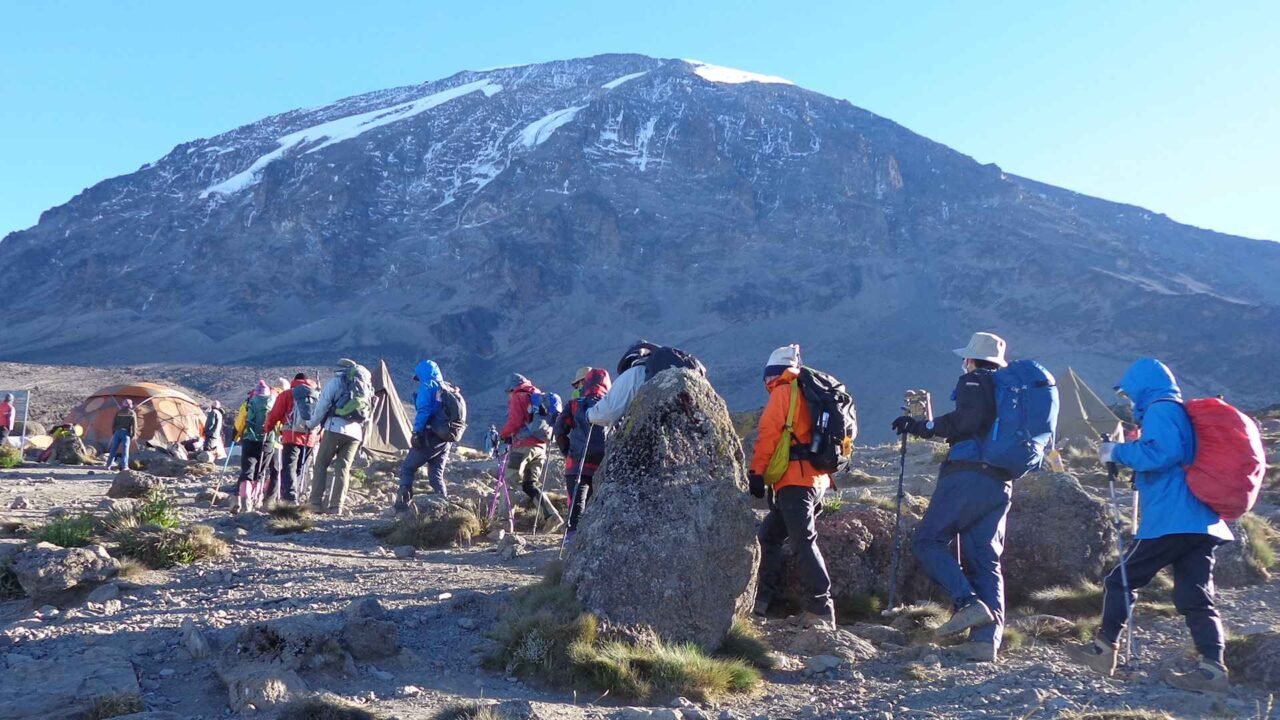
The Logistical Hand-off: Managing Gear and Transfers
One of the most frequently asked questions concerns the management of luggage. You will arrive in Tanzania with two distinct sets of gear: technical mountaineering equipment (heavy boots, sleeping bags, thermal layers) and safari-appropriate clothing (lightweight, neutral-colored, breathable fabrics). Managing this transition is a hallmark of a professional operator. When you depart for the safari, you should not be hauling your full trekking duffel into the safari vehicle. Most operators provide secure luggage storage at the base hotel in Moshi or Arusha.
During your transition day, you will repack. The key is to leave your mountain gear, which will be damp or dusty from the trek, in storage. Repack only what you need for the safari—a smaller daypack for the vehicle and a soft-sided duffel for the lodges. Many hotels used by group-joining operators offer laundry services specifically timed for this window. Utilizing this service is highly recommended; it allows you to start your safari experience with clean, fresh clothing, which is a significant quality-of-life improvement after a week of camping. Ensure you clarify with your booking agent where your gear will be stored and confirm that the storage is included in your package to avoid unexpected fees.
Financial Transparency: Understanding Inclusions and Hidden Costs
When reviewing “affordable” group-joining packages for December 2026, it is vital to distinguish between the base cost and the total cost. A transparent operator will provide a clear line item for what is included. Typically, your package should cover all park entry fees, which are significant in Tanzania and often account for a large portion of the total price. These fees are paid to the Tanzania National Parks Authority (TANAPA) and are non-negotiable. If you see a price that seems exceptionally low, verify whether it includes these mandatory park fees and the Ngorongoro Crater service fee, as omitting these is a common tactic to make an itinerary appear cheaper than it is.
Beyond the advertised price, you must budget for tipping. Tipping culture in Tanzania is standard and expected, but it operates on a specific structure. You will have two separate tipping pools: one for your mountain crew (guides, porters, and cooks) and one for your safari driver-guide. Because your groups are different, the tipping dynamics will also differ. On the mountain, the tip is often pooled and presented at a final ceremony. On the safari, you will likely tip your driver-guide directly at the end of the safari. It is advisable to withdraw sufficient local currency (Tanzanian Shillings) or have clean, crisp US Dollars (printed after 2009) ready for these gratuities. Do not assume tips are included in your “all-inclusive” package unless explicitly stated in your contract; usually, they are considered a separate, personal expense that reflects the quality of service you received.
Navigating Social Dynamics in a Group Joining Environment
When you book an affordable group joining package for December 2026, you are entering a social contract that differs significantly from a private expedition. While the logistical aspects of shared transport and park fees are straightforward, the interpersonal dynamics require a level of awareness that can turn a good trip into an exceptional one. Understanding how to manage your role within a group of strangers—who will become your closest companions for 7 to 10 days—is essential for a smooth experience.
The “Pole Pole” Pace as a Social Equalizer
On the slopes of Kilimanjaro, the group dynamic is dictated by the mountain itself. The requirement to climb pole pole (slowly, slowly) acts as a natural social equalizer. Regardless of your personal fitness level or athletic background, the group is only as fast as its slowest member. This is not a race, and the group joining model is designed specifically to discourage sprinting. Recognizing this early is vital for group harmony. If you are a naturally fast hiker, your contribution to the group’s success is not speed, but patience. By setting a steady, sustainable rhythm, you help ensure that the entire group reaches the summit together. Avoid the temptation to break away or push the pace; doing so creates logistical headaches for the guides and can lead to altitude sickness, which jeopardizes the safety of the entire party.
Safari Vehicle Etiquette: Rotation and Fairness
The transition from the mountain to the safari environment introduces a new set of social rules. While the mountain trek is about endurance and physical exertion, the safari is about observation, patience, and shared space within a confined vehicle. Most safari vehicles used for group joining packages are 4×4 Land Cruisers or similar, typically equipped with a pop-up roof for game viewing. To ensure everyone has an equal opportunity to photograph wildlife and view the landscape, professional operators almost always enforce a seat rotation policy. This means you will rotate your seat position every half-day or every morning, moving from the window seat to the middle or back, ensuring that no single traveler monopolizes the best view. Accepting this rotation gracefully is a hallmark of a seasoned traveler. If you are prone to motion sickness, communicate this to your guide on the first day of the safari portion; they are usually adept at managing seating assignments to accommodate physical needs while maintaining fairness for the rest of the group.
Managing Group Expectations with the Lead Guide
In a group joining package, your lead guide is the mediator, the safety officer, and the facilitator of the group’s mood. They have the ultimate authority on the itinerary, and it is important to understand that their decisions are based on the collective safety and success of the group, not individual preferences. If a conflict arises—whether it concerns the speed of the trek, the length of a break, or the focus of a game drive—address it through the lead guide rather than directly with other group members. This preserves the social fabric of the group. If you find the group pace is too slow or you wish to spend more time at a specific watering hole during a game drive, approach your guide during a private moment. They can often provide context on why the itinerary is structured the way it is, or they may be able to make minor adjustments that accommodate your request without disrupting the experience for others.
The Reality of Shared Accommodations and Privacy
For many travelers, the most significant adjustment in a group joining package is the shift from private space to shared space. On the mountain, unless you have paid a supplement for a private tent, you will likely be paired with a roommate. This is a standard practice in group joining packages to optimize tent space and porter load. When you are paired with a stranger, establish basic “tent etiquette” early on. This includes agreeing on wake-up times, the organization of gear inside the tent, and the use of headlamps at night. Because the mountain environment is inherently stressful and tiring, respecting the need for quiet time is crucial. If you are an early riser and your tent-mate is not, try to organize your gear the night before so you can exit the tent quietly without disturbing them. This small act of consideration goes a long way in preventing friction during the long, demanding days of the trek.
Similarly, on the safari portion of your December 2026 trip, you will likely be staying in lodges or tented camps. While you will have your own room, the communal dining areas are where the group will congregate. After a long day of game drives, these spaces become the center for sharing stories and processing the day’s sightings. While it is tempting to retreat to your room for total solitude, participating in these group meals is a key part of the experience. It allows you to bond with your fellow travelers, share photos, and build the camaraderie that makes the group joining model so rewarding. Remember that everyone in your group is likely in the same boat: they have invested significant time and money into this trip and are looking for a shared sense of adventure. Being open to these social interactions often results in lasting friendships that extend well beyond the borders of Tanzania.
Navigating the Departure Process: Confirming Your Group Joining Seat
Once you have identified a potential December 2026 Kilimanjaro and safari package, the most critical step is moving from an inquiry to a confirmed seat. Because these packages rely on a ‘group joining’ model, availability is not static; it fluctuates based on how many individuals have already committed to specific dates. Unlike a private climb, where the operator simply allocates resources to your specific request, a group joining slot requires synchronization with other travelers. When you reach out to operators, ask specifically for the ‘current occupancy status’ of your preferred departure. A transparent operator will tell you exactly how many spots are filled and how many are pending, rather than offering a generic ‘yes’ or ‘no.’
When verifying your seat, ensure you understand the ‘minimum group size’ threshold. Most operators require a minimum number of participants—typically four—to confirm a departure. If your chosen date has only two people booked, the operator may have a ‘guaranteed departure’ policy or a ‘supplemental fee’ clause. A guaranteed departure means the operator will run the trip regardless of whether more people sign up, though this often comes at a slightly higher cost to cover the fixed expenses. Conversely, a supplemental fee structure allows you to pay a bit more to ensure the trip goes ahead even if the group remains small. Before finalizing your booking, clarify which policy applies to your December 2026 dates. This prevents the disappointment of having a trip cancelled last-minute due to low enrollment, a common pitfall for travelers who book with budget operators that lack the operational volume to absorb the costs of a small group.
Finally, confirm the ‘booking window’ for your specific package. December is a peak season for Tanzanian tourism. While some operators may accept bookings as late as three months out, the most popular routes and the best-maintained safari vehicles are often fully committed by the late summer of the preceding year. By securing your spot early, you not only lock in the current pricing but also gain access to the pre-trip support channels—such as gear checklists and training advice—that are essential for a successful Kilimanjaro summit. Treat your booking confirmation as the start of your training regimen; once you have your slot, you can begin the physical and logistical preparations with the confidence that your Tanzanian adventure is set.
Related Guides and Packages
Check Availability for Affordable Kilimanjaro Group Joining Safari And Trekking Packages December
Ready to compare dates, prices, and the best option for your group? Send the package name and travel month so the team can reply with a clear quote, availability, and what is included.
Can I Join A Safari Group Directly From Kilimanjaro Airport? Logistical Guide
A practical guide to coordinating your arrival at Kilimanjaro International Airport (JRO) with a scheduled group safari, including logistical requirements and booking tips.
View package detailsAfcon Kilimanjaro Safari And Zanzibar Package: Expert Planning Guide
A comprehensive guide to coordinating your AFCON 2027 travel, including Kilimanjaro trekking, Northern Circuit safaris, and Zanzibar relaxation, with expert logistical advice.
View package details
Last Minute Kilimanjaro Group Joining Deals December : Planning Your Climb
Looking for last-minute Kilimanjaro group joining deals in December 2026? Discover how to secure your spot, understand the route trade-offs, and plan your mountain ascent with expert local...
View package detailsKilimanjaro Group Joining Tours December : Planning, Routes, And Availability
A detailed guide on planning your Kilimanjaro group joining climb for December 2026, including route comparisons, logistics, and how to secure your spot with Climb 4 Africa.
View package detailsI Land At Kilimanjaro Airport—Can I Join A Safari The Next Day? ( Planning
A practical guide to the logistics of starting your Tanzania safari immediately after landing at Kilimanjaro International Airport, including arrival times, visa tips, and itinerary...
View package details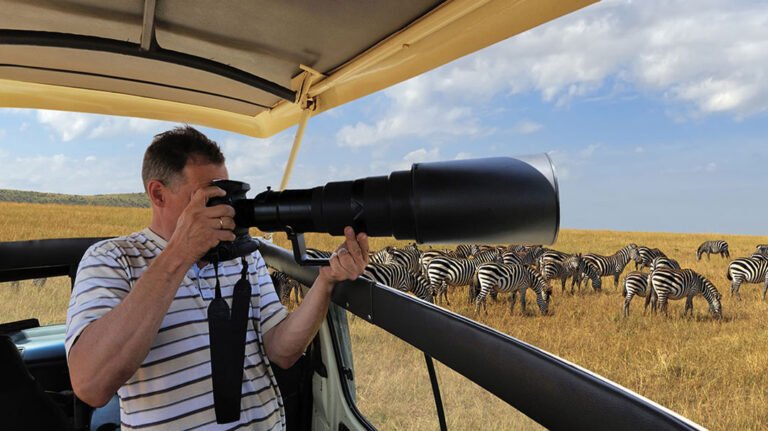
Kilimanjaro Safari And Afcon Final Package
Kilimanjaro Safari and AFCON Final Package.
View package details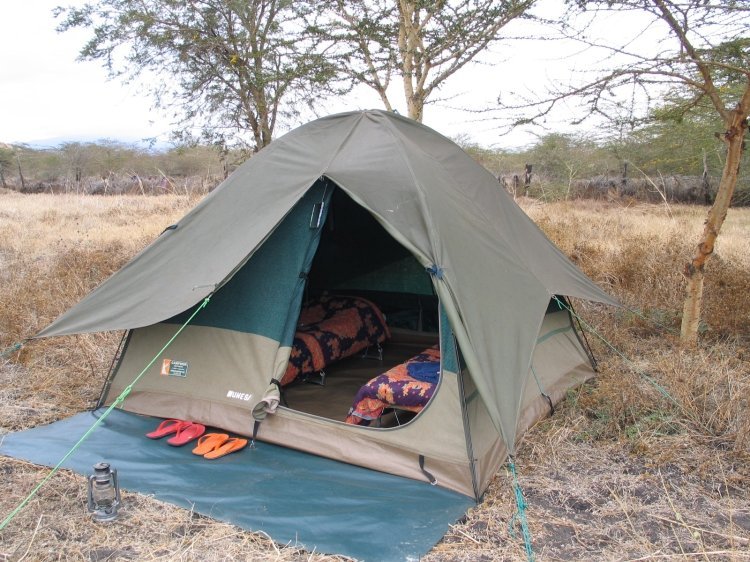
Afcon Tanzania Football Kilimanjaro And Safari Tour
AFCON 2027 Tanzania Football Kilimanjaro and Safari Tour.
View package detailsAFCON 2027 Safari from Kilimanjaro Airport
Mwongozo wa kina wa AFCON 2027 Safari starting from Kilimanjaro Airport, ukiruhusu kupanga ratiba, usafiri, mapumziko ya kambi, na maeneo ya kuzunguka ili kuonyesha wanyama na mandhari ya...
View package details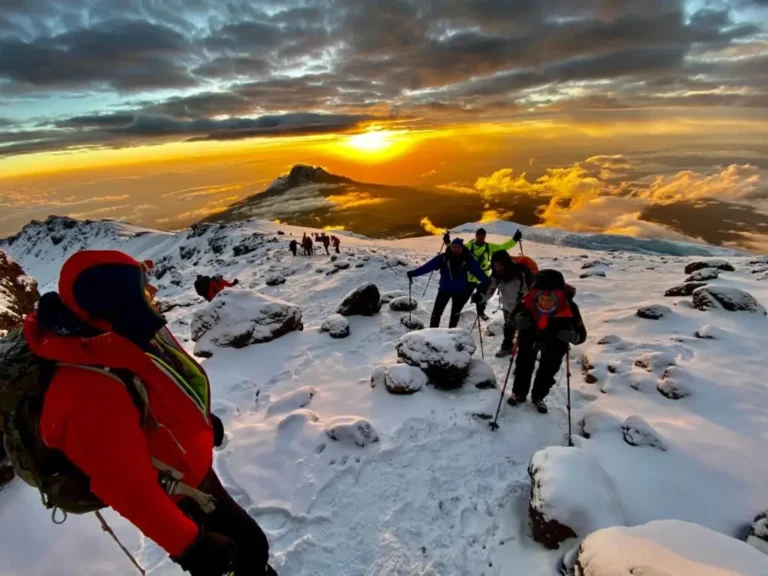
Kilimanjaro New Year Summit Group Departures December : Planning Your Ascent
Planning a New Year summit on Kilimanjaro requires specific logistics. Learn how to join a group departure for December 2026, choose the right route, and prepare for your climb.
View package details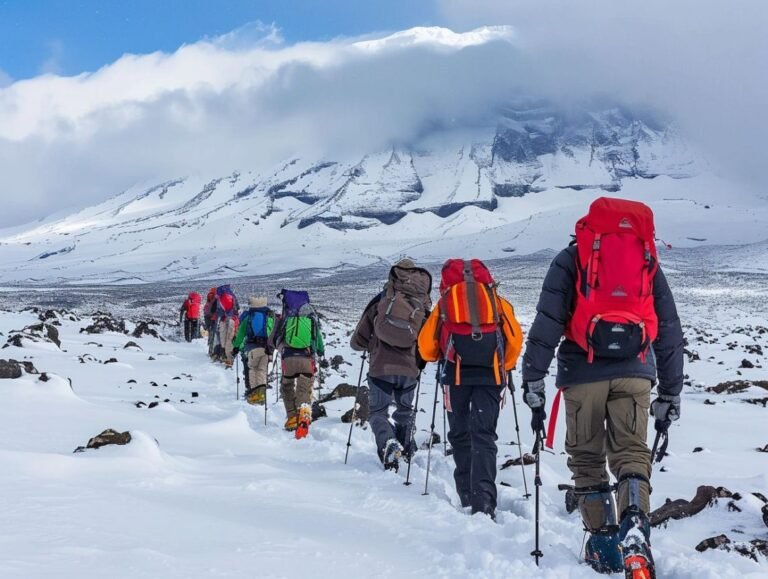
December Kilimanjaro Group Departures For Solo Travelers: Planning Your Climb
A practical guide for solo travelers planning to climb Kilimanjaro in December 2026, covering group joining benefits, route selection, and booking logistics.
View package details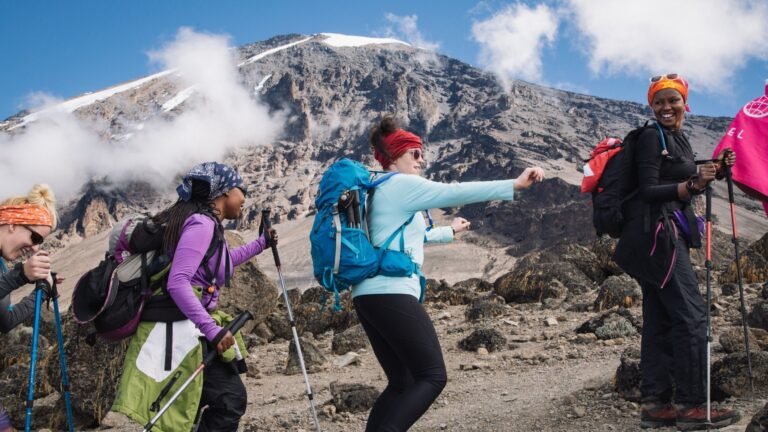
Join A Kilimanjaro Christmas Climbing Group In December 2026
A guide to securing your spot on a Kilimanjaro Christmas group climb for 2026, including route advice, group logistics, and essential planning steps.
View package detailsTraveling Alone To Kilimanjaro In December: Can You Join A Machame Route 2026
A practical guide for solo travelers planning a December Kilimanjaro climb. Discover how group joining works on the Machame Route, the realities of cost-sharing, and how to prepare for your...
View package detailsNo related package matches those filters. Clear one or more filters to see the other topic-matched options.



