
When planning a Kilimanjaro expedition, the search for the cheapest airport to fly into for climbing Kilimanjaro often leads travelers to look at options beyond the most direct route. It is a common misconception that finding the lowest airfare price automatically results in the cheapest total trip cost. As a local operator, we frequently see climbers book flights to Nairobi or Dar es Salaam, only to realize that the logistics of getting to Moshi or Arusha—the gateways to the mountain—effectively erase any savings they made on the initial ticket.
To make the right choice for your 2027 adventure, you must look at the “Total Landed Cost.” This includes your international flight, any necessary domestic connections, shuttle or private transfer fees, visa costs, and the often-overlooked value of your time and rest before you begin a physically demanding trek.
The Standard Choice: Kilimanjaro International Airport (JRO)
For the vast majority of climbers, Kilimanjaro International Airport (JRO) is the only logical choice. It is situated roughly 45 to 60 minutes from Moshi and about an hour from Arusha. When you land here, you are essentially at the doorstep of the mountain.
The primary advantage of JRO is not just convenience; it is energy conservation. A Kilimanjaro climb is a test of endurance. Arriving at JRO allows you to transfer directly to your hotel, settle in, organize your gear, and begin the necessary acclimatization process without the lingering fatigue of a long-haul bus journey or an additional domestic flight. If you are looking at total climbing costs, the ease of arriving at JRO often justifies a slightly higher ticket price compared to regional hubs.
The Nairobi Alternative: Is It Worth the Savings?
Many travelers notice that flights into Jomo Kenyatta International Airport (NBO) in Nairobi, Kenya, are significantly cheaper than those into JRO. This is a major hub, served by more airlines and often featuring competitive pricing. However, choosing NBO requires a clear-eyed assessment of the “transit gap.”
To get from Nairobi to the Kilimanjaro region, you have two primary options:
- The Shuttle Bus: This is the most popular budget option. Several companies operate daily shuttle buses (e.g., Riverside or Impala Shuttles) from Nairobi city center or the airport area to Arusha or Moshi. The journey takes anywhere from 6 to 9 hours, depending on traffic and the border crossing at Namanga.
- The Connection Flight: You can book a separate flight from NBO to JRO or Arusha Airport (ARK). While this is faster, it can be expensive and carries the risk of a missed connection if your international flight is delayed.
If you choose the bus, you must factor in the cost of a Kenyan transit visa (if applicable) or the effort of securing a multi-entry visa if you plan to return through Kenya. Furthermore, consider the physical toll. Spending 8 hours on a bus after an international flight can leave you dehydrated and exhausted—not the ideal state to start your pre-climb preparation.
The Dar es Salaam Option: When It Makes Sense
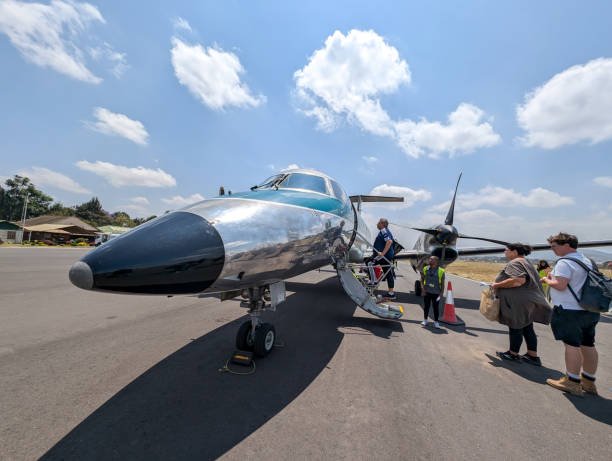
Flying into Dar es Salaam (DAR) is rarely the cheapest option if your sole goal is climbing Kilimanjaro. It is located on the coast, hundreds of kilometers from the mountain. You would still need to take a domestic flight or a very long bus journey to reach the Kilimanjaro region.
However, this route makes perfect sense if you are planning a multi-leg holiday. If your itinerary includes a Kilimanjaro and Serengeti safari holiday or a post-climb beach relaxation in Zanzibar, flying into Dar es Salaam can sometimes be part of a strategic route. We suggest checking our guide on which Tanzanian airport is best for a safari and Zanzibar holiday to see if you can consolidate your travel.
Logistical Comparison of Arrival Points
To help you decide, consider how these variables impact your specific trip. Every traveler has a different tolerance for transit time versus monetary savings.
| Airport | Distance to Moshi/Arusha | Primary Transport | Best For |
|---|---|---|---|
| JRO | 45-60 mins | Private transfer / Taxi | Most climbers, time-sensitive travelers |
| NBO | 350-400 km | Shuttle bus (6-9 hrs) or Flight | Budget-conscious travelers, multi-country tours |
| DAR | 600+ km | Domestic flight (1 hr) | Those combining climb with coastal holidays |
When you contact our team at Climb 4 Africa, we can help you weigh these options based on your specific arrival date and group size. Whether you need a simple airport transfer or help coordinating a complex itinerary, reach out via WhatsApp at +255 747 477 898 or email us at climb4africa@gmail.com. We provide practical local support to ensure your travel logistics are as smooth as your summit attempt.
The Hidden Costs of Choosing the “Cheaper” Airport
The price tag on your flight ticket is only the beginning. When evaluating the cheapest airport to fly into for climbing Kilimanjaro, you must account for these often-hidden expenses:
- Visa Fees: If you fly into Nairobi and then take a bus to Tanzania, you may need a Kenyan transit visa in addition to your Tanzanian visa. These costs can quickly add up and negate the savings on the flight.
- Accommodation during Transit: If you fly into NBO late in the day, you will likely need a hotel in Nairobi before catching the morning shuttle to Tanzania. This adds a night of accommodation and meals to your budget.
- Baggage Fees & Logistics: Regional airlines often have stricter weight limits than international carriers. If you are carrying heavy trekking gear, you might end up paying excess baggage fees on a smaller domestic flight, which can be surprisingly high.
- The “Cost” of Stress: The Namanga border crossing between Kenya and Tanzania can be chaotic. For an inexperienced traveler, navigating immigration and bus transfers in a foreign environment can be stressful. We always recommend that if you choose the NBO route, you allow for a buffer day on either side of your trek to manage these logistics without jeopardizing your climb schedule.
Planning Your Transfer Logistics
Regardless of which airport you choose, you need a plan for your final leg to the hotel. We always advise our climbers to avoid last-minute taxi negotiations at the airport if possible. Having a pre-arranged transfer not only saves you money but also ensures you are greeted by someone who knows exactly where your hotel is located.
For those flying into JRO, we offer smooth transfer services as part of our comprehensive climbing packages. We monitor your flight status, ensuring our driver is waiting for you even if your flight is delayed. This peace of mind is invaluable after a long journey.
If you are planning your trip for 2026 or 2027, remember that peak seasons—such as the December holidays—see a massive influx of climbers. During these times, ground transport can be booked out weeks in advance. If you are curious about group departures or availability, check our Machame route group departures or get in touch with us at info@climb-4-africa.com to secure your spot.


Frequently Asked Questions About Kilimanjaro Flights
- Is it cheaper to fly to Nairobi and bus to Moshi? It can be cheaper on paper, but after factoring in the cost of the shuttle, potential transit visas, and the loss of time, the savings are often minimal.
- Can I fly into Arusha Airport (ARK) instead of JRO? Arusha Airport is a smaller, domestic airport. It is very close to Arusha town, but it does not receive international flights. You would still need to fly into JRO or NBO first and then catch a smaller plane to ARK.
- What is the best way to get from Nairobi to Moshi? The most reliable way is the daily shuttle bus (Riverside or Impala). They are designed for travelers and understand the border crossing procedures.
- Should I book my flight before my climb? Yes, we recommend confirming your flight details before finalizing your trek dates to ensure your airport transfers are synchronized with your arrival and departure times.
Ultimately, the cheapest airport to fly into for climbing Kilimanjaro is the one that minimizes your total expenditure of both time and money. While NBO might show a lower price on a comparison site, JRO provides the most efficient, stress-free start to your expedition. For most climbers, the value of arriving fresh and ready to trek outweighs the modest savings of a long bus ride from Nairobi.
If you are still undecided, let us know your departure city and planned travel dates. We can help you analyze the flight options and determine if a direct flight to JRO or a connection through a major hub is the most cost-effective path for your specific 2027 adventure. Contact us today at climb4africa@gmail.com or WhatsApp +255 747 477 898 to discuss your plans.
The Real-Time Transfer Decision: When to Book Your JRO Pickup vs. Waiting at the Airport
One of the most overlooked yet critical choices for climbers arriving at Kilimanjaro International Airport (JRO) is whether to book a transfer in advance or attempt to arrange one on arrival. While many travelers assume that airport taxis are readily available and affordable, the reality—especially during peak climbing seasons—can be quite different. In the months leading up to the June and December climbs, JRO often sees a surge in international arrivals, with hundreds of climbers landing within a few days of each other. This congestion can quickly overwhelm the small pool of private transfer drivers, leading to long waits, inflated prices, and even unavailability of vehicles.
Booking your transfer ahead of time is not just a convenience—it’s a strategic move to protect your acclimatization window. Arriving at JRO after a long international flight already depletes your energy reserves. Adding a 45-minute wait in a crowded arrivals hall, followed by negotiations with drivers who may not speak English fluently, only compounds fatigue. More importantly, delays in securing transport can push your hotel check-in past the recommended acclimatization window, which begins the moment you land. Climbers who arrive late to their hotel may miss the first full day of rest, hydration, and light activity that are essential for adjusting to the altitude before starting the trek.
Local operators who manage multiple climbing groups consistently recommend pre-booking your JRO transfer through a verified provider. These services typically include real-time flight tracking, a driver with your name on a sign, and a guaranteed pickup within 30 minutes of your landing. The cost difference between a pre-booked private transfer and an on-arrival taxi is usually minimal—often just $10–$15 more—but the value in time, comfort, and peace of mind is substantial. On the other hand, attempting to book a transfer on arrival may result in paying double or even triple the rate, especially if you’re arriving late at night or during a holiday period.
That said, there are rare exceptions. If you’re arriving early in the week during the low season (January–February, May–early June), and you’re traveling solo with minimal luggage, it may be feasible to arrange a transfer at the airport counter. However, even then, we advise against relying on this option unless you’ve confirmed the driver’s credentials and vehicle details in advance. Unregistered or unofficial drivers may not have the proper permits or insurance, and some have been known to overcharge or take longer routes to increase fees.
For climbers using third-party travel agencies or booking flights independently, the transfer booking process can be confusing. Some agencies offer “airport transfer” as an add-on, but these packages may not always include a direct pickup from the arrivals gate. Instead, you could be directed to a central office or waiting area, which adds unnecessary steps. To avoid this, confirm with your operator that the transfer includes a meet-and-greet service at the airport exit, with a clearly marked sign and a driver who knows your name and hotel.
What to Do If Your Flight Is Delayed or Diverted to JRO
Delays are common, especially on long-haul flights from Europe or North America. When your flight is delayed or rerouted to JRO due to weather or air traffic, your pre-booked transfer may still be valid—but only if the provider monitors your flight status. Some operators automatically adjust pickup times based on real-time flight data, while others require you to notify them manually. If you’ve booked through a third party, double-check whether they offer this service. In the absence of flight tracking, your driver may leave after a set time, leaving you stranded.
To mitigate this risk, always provide your full flight details (airline, flight number, departure and arrival airports) when booking your transfer. A reliable provider should offer a 24/7 support line and the ability to reconfirm pickup times via SMS or WhatsApp. If your flight is diverted to JRO from another airport—such as Nairobi or Dar es Salaam—your transfer provider should still be able to accommodate you, provided they are aware of the change in advance.
Navigating the Border Crossing: The Hidden Costs of the Nairobi Route
For travelers fixated on the initial flight cost, the Nairobi-to-Moshi shuttle bus route often appears to be the ultimate budget-saving strategy. However, experienced climbers frequently overlook the administrative and logistical burden of crossing an international land border. Unlike landing at JRO, where you process your visa and entry requirements in a single, controlled environment, the land crossing at Namanga or Taveta introduces a layer of complexity that can turn a cost-saving measure into a logistical nightmare.
When you fly into Jomo Kenyatta International Airport (NBO), you are entering Kenya. This means you must satisfy Kenyan entry requirements, which may involve purchasing a separate Kenyan visa or an Electronic Travel Authorization (eTA), depending on your nationality and current regulations. When you then board a shuttle bus to cross into Tanzania, you are effectively entering a second sovereign nation. You must then process your Tanzanian entry requirements at the land border immigration office. This is not merely a formality; it involves de-boarding the bus, managing your luggage, and standing in queues that can vary significantly in length depending on the season and time of day.
The financial impact of this is twofold. First, you are paying for two separate visa processes, which can quickly negate the savings found on a cheaper flight ticket. Second, the time lost—often several hours—must be factored into your pre-climb recovery. Arriving at your hotel in Moshi at 10:00 PM after a grueling, multi-stage journey across a border is significantly more taxing than a direct arrival at JRO followed by a short, 45-minute drive. Furthermore, if your shuttle bus is delayed due to border processing bottlenecks, you may miss your scheduled check-in window at your hotel, leading to further complications with your climbing operator.
Expedition Gear and Domestic Transit Limitations
The choice of airport also dictates how you manage your specialized climbing gear, a factor often ignored until the moment of transit. If you choose to fly into a secondary airport like Dar es Salaam (DAR) and then connect via a domestic flight to JRO, you are subject to the baggage policies of regional carriers. These airlines often have much stricter weight and size restrictions than major international carriers. A duffel bag that passed through international security without issue might be flagged for excess weight or size fees on a smaller, regional aircraft.
Moreover, the risk of luggage mishandling increases exponentially with every connection. If your international flight arrives in Dar es Salaam, and you have a separate ticket for a domestic connection to JRO, your gear is not automatically transferred. You must collect your bags, clear customs, and re-check them for your domestic flight. This process provides a significant window for delays or lost equipment. In the context of a Kilimanjaro climb, where your gear—specifically your boots, technical layers, and personal medical kit—is non-negotiable for safety, the risk of your equipment failing to arrive on the same flight as you is a critical, often-underestimated cost.
To mitigate these risks, we recommend a “carry-on-first” strategy. Regardless of your chosen airport, always pack your essential climbing boots, a set of base layers, and any specialized medical equipment in your carry-on luggage. If you are forced to use a connection through Dar es Salaam or Nairobi, having these items with you ensures that even if your checked luggage is delayed or rerouted, you can still begin your climb as scheduled, rather than waiting in the hotel for your gear to catch up. For those flying into JRO, the risk is minimized, but the principle of keeping mission-critical gear in your carry-on remains the most effective insurance policy against transit disruptions.
Related Guides and Packages
Check Availability for Cheapest Airport To Fly Into For Climbing Kilimanjaro: A Guide
Ready to compare dates, prices, and the best option for your group? Send the package name and travel month so the team can reply with a clear quote, availability, and what is included.
Kilimanjaro Climbing Package With Airport Transfers: Prices & Logistics
A detailed look at the logistics and pricing components of a full-service Kilimanjaro climbing package, focusing on the critical role of airport transfers and professional coordination.
View package details
Cheapest Kilimanjaro Climbing Options For December 2026 Guide
When searching for the most affordable way to climb Kilimanjaro in December 2026, the key is understanding that 'cheap' should never mean 'unsafe.' We break down how to manage costs through...
View package detailsNairobi To Kilimanjaro Airport Flight Cost Guide
A detailed look at the factors influencing the cost of flights from Nairobi to Kilimanjaro Airport, including comparisons with land transfers and essential planning advice.
View package detailsKilimanjaro Vs Arusha Airport: Which Should You Use For Your Trip?
A practical guide to choosing between Kilimanjaro International Airport (JRO) and Arusha Airport (ARK) for your Tanzania safari or Kilimanjaro climb.
View package detailsBest Flights For Kilimanjaro Climbing And Zanzibar Holidays: A Planning Guide
A professional guide to optimizing your international and domestic flight strategy for a combined Kilimanjaro trek and Zanzibar beach holiday in 2026-2027.
View package detailsKilimanjaro Airport To Arusha Transfer Cost & Booking Guide
A practical guide to navigating the transfer from Kilimanjaro International Airport (JRO) to Arusha, including cost factors, booking advice, and logistics for your 2027 trip.
View package details
Kilimanjaro Airport To Moshi Transfer Price : A Practical Guide
A practical guide to arranging your transfer from Kilimanjaro International Airport (JRO) to Moshi, covering price factors, vehicle options, and arrival logistics for 2027.
View package detailsKilimanjaro International Airport Flight Prices & Airlines: A Planning Guide
A deep look at planning your travel to JRO, understanding airline options, price variables, and how to coordinate your arrival for a successful Kilimanjaro climb.
View package detailsFlights To Mount Kilimanjaro: Ticket Prices & Airport Guide
A comprehensive guide to flying into Kilimanjaro International Airport (JRO) in 2027. Learn how to secure the best flights, what to expect at the airport, and how to align your arrival with...
View package detailsKilimanjaro Climbing And Zanzibar Package With Flights: Pricing Guide
A detailed guide on how to structure a Kilimanjaro climb and Zanzibar beach holiday, covering cost drivers, flight logistics, and route selection for 2026-2027.
View package details
Kilimanjaro December Climbing Cost Including Park Fees: A Transparent
A detailed look at the financial structure of a Kilimanjaro climb in December 2026, focusing on mandatory park fees, ethical operator standards, and route-specific cost variables.
View package detailsKilimanjaro Full Moon Climbing Experience December 24 : Planning Your Summit
A comprehensive guide to planning a Kilimanjaro full moon summit for December 2026, covering route selection, holiday season logistics, and expert preparation strategies.
View package detailsNo related package matches those filters. Clear one or more filters to see the other topic-matched options.



