
The best time to book Tanzania domestic flights for lower prices is generally 3 to 4 months in advance for peak season travel (July through September) and 6 to 8 weeks in advance for the shoulder and low seasons. Unlike international long-haul flights where dynamic pricing fluctuates wildly, Tanzania’s domestic bush airlines often operate on fixed-tier pricing. The key to lower prices is not just booking early, but understanding the difference between commercial carriers like Precision Air and smaller bush operators like Coastal Aviation or Auric Air, which often have fixed luggage and route costs that don’t drop significantly, regardless of how far in advance you book. If you are planning a 2026-2027 safari, bundle your internal flights with your tour operator to avoid the hidden costs of baggage fees and airport transfers.
Many travelers approach domestic flight booking in Tanzania with the same mindset they use for trans-Atlantic or trans-Pacific flights—looking for “last-minute deals” or tracking price drops on comparison sites. In Tanzania, this strategy often backfires. Domestic aviation here is a different beast, influenced by small aircraft capacity, fuel costs, and the logistics of remote airstrips. Understanding these dynamics is the most effective way to protect your budget.
The Two Distinct Categories of Domestic Flights
To find the best prices, you first need to identify which type of flight you are booking. They operate under entirely different pricing logic.
1. Commercial Hub-to-Hub Flights
These are the flights between major airports like Dar es Salaam (DAR), Kilimanjaro (JRO), and Zanzibar (ZNZ), typically operated by airlines like Precision Air or Air Tanzania. These airlines use dynamic pricing. When demand is high—such as during the Great Migration season or holidays—the prices rise sharply as the flight fills up. For these routes, early booking is essential for lower prices. If you wait until a month before your trip, you will almost certainly pay the premium “last-seat” fare.
2. Safari Bush Flights
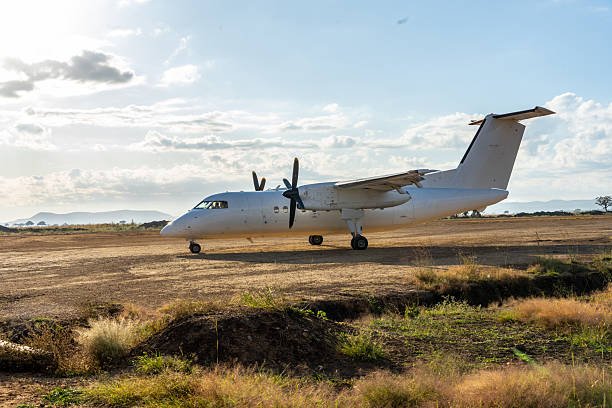
These are the flights that take you from Arusha or Zanzibar directly into the Serengeti, Ruaha, or Selous airstrips, operated by companies like Coastal Aviation, Auric Air, or Regional Air. These bush carriers often have fixed, transparent pricing tiers based on season. A seat on a Cessna Caravan doesn’t get “cheaper” the earlier you book; rather, it becomes unavailable. The goal here isn’t to find a discount, but to secure a seat before the flight is fully booked, which forces you into a more expensive private charter or a less convenient ground transfer.
Strategic Comparison: When to Book
| Flight Category | Best Booking Window | Price Volatility | Primary Cost Driver |
|---|---|---|---|
| Commercial (e.g., DAR to JRO) | 3-5 Months Ahead | High | Dynamic / Demand-based |
| Bush Flights (e.g., Arusha to Serengeti) | 4-6 Months Ahead | Low (Fixed Tiers) | Seasonality & Load |
| Last-Minute (Within 2 weeks) | Avoid if possible | Very High | Scarcity / Full capacity |
Why “Last-Minute” is Usually More Expensive in Tanzania
There is a persistent myth that waiting until the last minute will find cheap unsold seats. In the context of Tanzania’s domestic network, this is rarely true. Because these planes are small—often carrying between 12 and 18 passengers—they hit capacity quickly. Once the scheduled flights are full, you are left with two options: either change your entire itinerary or pay for a private charter, which can cost thousands of dollars. We discuss this in our guide on last-minute flights in Tanzania, where we break down the reality of flight scarcity.
Seasonal Impacts on Flight Pricing
Your travel dates dictate the pricing baseline. Tanzania has distinct tourism seasons that influence airline capacity.
- Peak Season (July, August, September): This is the most expensive time for domestic flights. Demand for Serengeti bush flights is at its absolute maximum. If you are traveling during these months, booking 6 months in advance is not excessive—it is a safety measure to ensure you get the flight at all.
- Shoulder Season (June, October, January, February): These months offer a balance. Prices for commercial flights are more stable, and bush flights are easier to secure. Booking 3 months in advance is usually sufficient to capture the standard rates.
- Low Season (March, April, May, November): This is the “Green Season.” You may find promotional pricing on commercial flights during these months as airlines try to stimulate demand. However, be aware that flight schedules for bush routes may be reduced or consolidated due to lower passenger numbers.
For more specific timing advice, check our analysis on January flight pricing or October travel costs to see how the specific month affects your bottom line.
The Hidden Costs That Make “Cheap” Flights Expensive
When searching for the lowest price, travelers often overlook the secondary costs that turn a “good deal” into a financial headache. As we explore in our article on the hidden costs of Tanzania domestic flights, the ticket price is only part of the equation.
1. Luggage Weight Limits
Bush flights almost universally require soft-sided luggage and have strict weight limits (usually 15kg total, including carry-on). If you exceed this, you will be charged per kilogram at the airport. These fees are often higher than the cost of upgrading your ticket class in advance. Always check your airline’s baggage policy before you book.
2. Airport Transfers
The cost of a flight doesn’t include the taxi to the airport. In Arusha, there are two airports: Arusha Airport (ARK) for bush flights and Kilimanjaro International Airport (JRO) for international/commercial flights. They are about 1.5 hours apart. If you book a flight that lands at one and departs from the other, the cost of the transfer can negate any savings you made on the flight ticket. We often help travelers compare these logistics in our analysis of domestic flights versus private transfers.
How Climb 4 Africa Helps You Manage Flight Logistics
Booking flights independently can be risky because if one connection is delayed, you might miss your safari departure or your international flight home. When you book a Tanzania fly-in safari package through us, we manage the flight selection as part of your overall itinerary.
We don’t just look for the cheapest ticket; we look for the most reliable connection. This means ensuring your arrival at JRO gives you enough buffer time to reach Arusha for your bush flight, or timing your Zanzibar departure so you aren’t spending 8 hours at the airport. Our goal is to provide a smooth travel experience where the flight is a tool to maximize your time on safari, not a source of stress.
Frequently Asked Questions About Tanzania Flight Booking
- Is it cheaper to book a return flight or two one-way tickets? In Tanzania, return tickets are rarely cheaper than two one-ways. In fact, many bush airlines price every leg individually. See our detailed breakdown on one-way versus return flights for more clarity.
- Should I book flights before my safari? Yes. Your safari itinerary should be finalized, and then the flights should be booked to match the start and end points. Booking flights first can lock you into an itinerary that doesn’t make geographical sense.
- Do flight prices change based on the airline? Absolutely. Precision Air, Air Tanzania, and the various bush operators have different cost structures. We compare these in our guide to the cheapest domestic airlines in Tanzania.


Next Steps for Your 2026-2027 Trip
If you are in the early stages of planning your Tanzania adventure, don’t rush to book flights until you have a rough outline of your route. Whether you are planning a Kilimanjaro climb followed by a safari, or a beach holiday in Zanzibar, we can help you align your domestic flights with your ground arrangements to ensure you aren’t paying for unnecessary transfers or lost time.
For personalized advice on the best flight routes for your specific itinerary, or to request a quote that includes your domestic logistics, reach out to our team. You can contact us via WhatsApp at +255 747 477 898 or email us at climb4africa@gmail.com (or our backup address at info@climb-4-africa.com). We are here to help you navigate the logistics so you can focus on the experience itself.
Operational Realities That Influence Your Flight Budget
Beyond the simple calendar-based booking windows, understanding the operational mechanics of Tanzania’s aviation network is essential to accurately assessing the “true” cost of your travel. Many travelers inadvertently overpay or face unexpected logistical hurdles because they treat bush flights as if they were standard point-to-point commercial services. By understanding how these airlines function, you can make more informed decisions about when and how to book.
The “Milk Run” Effect on Flight Durations
When you book a bush flight, you are rarely booking a direct, non-stop flight from point A to point B. Most bush carriers operate what is known in the industry as a “milk run” or a multi-leg route. A single aircraft might depart Arusha, stop at Manyara to drop off passengers, continue to Seronera to pick up others, and finally land at Kogatende.
This operational reality is critical for your budget and planning. If you are searching for the lowest price, you might be tempted by a fare that appears lower than others on the same route. Often, that lower price reflects a flight with more stops. While the ticket price is lower, the “cost” is paid in time. A flight that takes 45 minutes on a direct routing might take 2.5 hours with multiple stops. If you have a tight safari itinerary, those extra hours spent on the tarmac at various airstrips reduce your game-viewing time. When you are evaluating the “best time” to book, consider that the cheapest ticket may require a less efficient route, which can indirectly impact the value of your entire safari day.
Scheduled Seats vs. Private Charters: Knowing What You Are Buying
A frequent point of confusion for travelers is the distinction between a “scheduled seat” and a “private charter.” When booking online, you are almost always purchasing a seat on a scheduled service. These are the most cost-effective options because the airline is aggregating multiple passengers to fill the Cessna Caravan or similar aircraft.
However, if your group size is large—typically 6 to 12 people—you may find that booking a private charter is more economical or, at the very least, provides significantly better value. A private charter allows you to dictate the departure time, which can be the difference between catching a morning game drive and missing it entirely. If you are a larger group, do not simply look at the per-seat price of a scheduled flight. Contact a local operator to compare the cost of a private charter. Sometimes, when you factor in the efficiency of direct routing and the elimination of luggage transfers, the charter price is competitive with the aggregate cost of individual scheduled seats.
The Financial Risk of Non-Refundable Fares in a Dynamic Environment
In the scramble to secure lower prices, travelers often prioritize “non-refundable” or “restricted” fares. In the context of Tanzania’s domestic travel, this is a high-risk strategy. Safari travel involves many moving parts: international flight connections, weather-dependent road conditions, and the inherent unpredictability of wildlife sightings which may cause travelers to extend their stay.
A non-refundable ticket, while cheaper at the point of purchase, can become the most expensive option if your plans change. Unlike major international carriers that have robust rebooking systems, smaller bush airlines have limited capacity. If you miss your flight or need to shift your dates by 24 hours, a non-refundable ticket often results in a total loss of the fare. You are then forced to buy a new ticket at last-minute prices, which, as established, are the highest in the market. When booking, always compare the price of a “flexible” ticket against the “non-refundable” rate. For domestic bush flights, the premium for flexibility is often surprisingly small compared to the total cost of the trip and acts as an essential insurance policy against the volatility of remote travel.
Managing the “Connection Gap”
The most common source of stress and unexpected cost in Tanzania domestic travel is the “connection gap”—the time between your international arrival and your bush flight departure. If you book an international flight that lands at Kilimanjaro International Airport (JRO) at 10:00 AM, and you attempt to book a bush flight departing from Arusha Airport (ARK) at 1:00 PM, you are setting yourself up for failure.
The drive between JRO and ARK is approximately 1.5 hours, but traffic, road conditions, and the requirement to arrive at the bush terminal at least 60 minutes before departure make a 3-hour connection window dangerously tight. If your international flight is delayed—a common occurrence—you will miss your bush flight. Because bush flights operate on strict, low-frequency schedules, missing one often means waiting until the following day. The “cost” of this mistake includes overnight accommodation in Arusha, meals, and the potential loss of a pre-paid night at your safari lodge. Always allow a minimum of 5 to 6 hours between an international landing and a domestic departure, or better yet, plan to overnight in Arusha. The extra night is a small price to pay to ensure your safari begins on schedule.
The Anatomy of “Fare Classes” in Tanzanian Domestic Aviation
While we have established that Tanzanian bush aviation avoids the hyper-dynamic, algorithm-driven pricing models of major international carriers, it is not entirely devoid of pricing structures. Travelers often mistakenly assume that a “seat is a seat,” but understanding the subtle hierarchy of fare classes within the domestic network can lead to significant savings—or at least better value for money. Most regional carriers, such as Coastal Aviation or Auric Air, utilize a tier-based booking system that is rarely transparent on third-party aggregator sites.
These fare tiers are typically categorized by flexibility rather than just price alone. The entry-level tier, often labeled as “Saver” or “Promotional,” usually requires non-refundable, non-changeable terms. While tempting, these are rarely the best choice for travelers connecting from international flights. A mid-tier fare—often marketed as “Flexible” or “Standard”—usually allows for date changes with a nominal administrative fee. In the context of a two-week safari, where a single flat tire or a delayed international arrival can cascade into a missed connection, the price difference between a “Saver” and a “Flexible” fare is often negligible compared to the total cost of the holiday. Savvy travelers prioritize these mid-tier fares, which effectively act as a low-cost insurance policy for their itinerary.
Navigating Third-Party Aggregators vs. Direct Booking
One of the most common pitfalls for travelers seeking lower flight prices is the reliance on major global flight search engines (like Skyscanner, Kayak, or Expedia). These platforms excel at finding flights for major commercial airlines, but they frequently struggle to accurately index the inventory of Tanzania’s smaller bush carriers. When they do display availability, the data can be stale, leading to “phantom availability” where a seat appears bookable but fails at the final payment step.
Furthermore, booking through a third-party aggregator often complicates customer service. If a flight is canceled due to weather or operational issues—a rare but possible occurrence in remote bush aviation—the airline will only communicate with the entity that booked the ticket. If you booked through a global OTA (Online Travel Agency), you are at the mercy of their often-impersonal help desk, which may not have direct access to the bush airline’s dispatch office. Booking directly through the airline’s website or via a specialized local operator ensures that you receive real-time notifications about flight status, weight limit updates, and weather-related diversions. The price you see on the airline’s direct site is almost always the “true” price, and it eliminates the middleman fees that some aggregators quietly bundle into the final checkout.
The “Weight-to-Value” Ratio: Why Packing Light Saves You Money
We have touched on luggage weight limits, but it is worth examining how this operational reality dictates your flight budget. Most bush aircraft (like the Cessna Caravan) have a strictly limited payload. If you arrive at the airstrip with a suitcase that is 5kg over the limit, you may not just be charged an “excess baggage fee”; you might be forced to purchase a “freight seat.” This is an actual seat on the plane reserved solely for your luggage because the aircraft cannot legally take off with the extra weight.
This is a catastrophic budget error that can double the cost of your flight instantly. When evaluating the “best time” to book, factor in the time needed to acquire the right gear. Investing in high-quality, lightweight, soft-sided duffel bags well in advance allows you to optimize your packing to stay under the 15kg limit. By avoiding the need for an extra seat or heavy excess baggage charges, you are effectively reducing the total cost of your domestic travel. This is a “hidden” price reduction that doesn’t show up on a booking engine but is entirely within your control.
Check Availability for Best Time To Book Tanzania Domestic Flights For Lower Prices: Planning Guide
Ready to compare dates, prices, and the best option for your group? Send the package name and travel month so the team can reply with a clear quote, availability, and what is included.
Kenya To Tanzania Safari Flights: Prices & Booking Guide
A practical guide to connecting Kenya and Tanzania by air for your safari. Learn about border logistics, booking realities, and why most travelers choose specific routes over others.
View package details
Last-Minute Flights In Tanzania: Prices & Expert Booking Tips
Understand why last-minute flight bookings in Tanzania often lead to higher costs and logistical challenges, and learn the best strategies to secure your travel.
View package details
Tanzania To Uganda Flights: Best Routes And Ticket Prices
A detailed guide to navigating air travel between Tanzania and Uganda, including route comparisons, carrier options, and expert advice for planning your multi-country safari.
View package details
Entebbe To Tanzania Flights: Ticket Prices And Route Guide
A comprehensive guide for travelers planning flights from Entebbe to Tanzania, covering ticket price factors, route options for Kilimanjaro and safari tours, and essential booking logistics...
View package details
Nairobi To Zanzibar Flights: Ticket Prices & Booking Guide
A comprehensive guide to understanding flight costs, airline choices, and logistics for the popular Nairobi to Zanzibar route.
View package details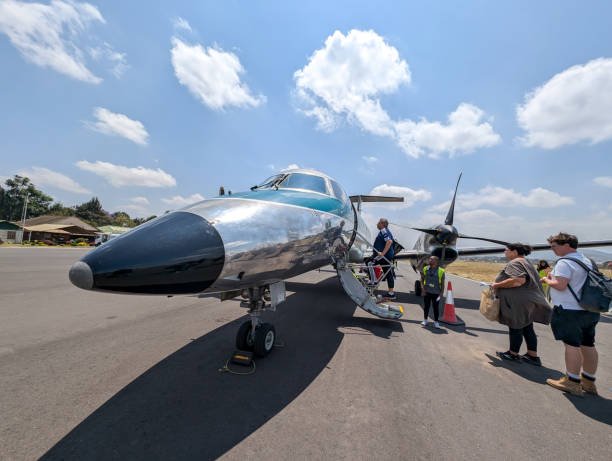
Arusha To Nairobi Flights: Prices & Booking Guide
A practical guide to navigating the air and road connections between Arusha and Nairobi, covering airport differences, booking strategies, and the shuttle bus alternative.
View package detailsHidden Costs Of Tanzania Domestic Flights: Taxes, Luggage & Transfers ( Guide)
A practical guide to understanding the real price of flying within Tanzania, covering baggage constraints, mandatory airstrip taxes, and the often-overlooked cost of ground transfers.
View package details
One-Way Vs Return Flights In Tanzania: Which Costs Less And Saves Time?
A deep look at Tanzanian domestic flight pricing: why return tickets aren't always cheaper, the logic of open-jaw travel, and how to optimize your itinerary for 2027.
View package detailsTanzania Flight Ticket Prices: Economy Vs Safari Bush Flights Explained
A practical guide to understanding the cost and logistical differences between commercial economy flights and private-style bush flights in Tanzania.
View package detailsHow To Find Cheap Domestic Flights In Tanzania: A Planning Guide
Discover practical strategies for securing affordable domestic air travel in Tanzania for your 2026 or 2027 trip, including booking timing, airline selection, and the hidden costs of...
View package detailsPrecision Air Vs Tanzania: Domestic Flight Prices & Comparison
When planning domestic travel in Tanzania, choosing between Precision Air and Air Tanzania often comes down to route networks and baggage policies rather than just the base fare. Learn how...
View package detailsBest Airlines For Tanzania Safari Flights: Prices & Comparison ()
A guide to navigating Tanzania's domestic airline market for safari travel, covering reliability, baggage constraints, and booking strategies for 2027.
View package detailsNo related package matches those filters. Clear one or more filters to see the other topic-matched options.



