
When planning your trip to Tanzania for January 2027, understanding the landscape of air travel is the first step toward a successful itinerary. January is a distinct period in the Tanzanian tourism calendar—often referred to as the “short dry season”—which makes it a highly sought-after time for both Kilimanjaro climbers and safari enthusiasts. Because demand for international flights into Kilimanjaro International Airport (JRO) and Julius Nyerere International Airport (DAR) spikes during this window, travelers should expect different pricing dynamics compared to the low season.
While exact Tanzania flight prices for January 2027 will fluctuate based on global fuel costs, airline competition, and booking lead times, the seasonal trend is consistent: January is considered a peak or shoulder-peak month. This is driven by favorable weather conditions: the skies are generally clear for trekking, and the Serengeti is alive with the calving season, drawing wildlife photographers and nature lovers from around the world.
The Seasonal Impact on 2027 Flight Costs
Seasonality is the primary driver of airfare costs to East Africa. January sits at the tail end of the holiday season and the beginning of the prime safari window. If you are looking at travel dates in the first two weeks of January, you will likely encounter higher prices due to the residual demand from New Year’s travel. By the third week of January, prices often stabilize, though they remain higher than during the “green season” (typically April and May).
When you are budgeting for your 2027 expedition, treat your international flight as a fixed cost that requires early commitment. Waiting for “last-minute deals” to major hubs like Kilimanjaro International Airport is rarely a viable strategy for this specific month, as inventory on the most convenient routes (often via Doha, Amsterdam, or Istanbul) fills up months in advance.
Major International Airlines Serving Tanzania
Your choice of airline does more than just determine the price; it dictates your total travel time and potential for connection fatigue. For a 2027 arrival, the following carriers are the primary lifelines for international visitors:
- KLM Royal Dutch Airlines: Offers one of the most reliable direct connections from Europe into Kilimanjaro (JRO). It is a preferred choice for many because it avoids the need for a domestic transfer after landing.
- Qatar Airways: Known for extensive connectivity via Doha, providing a high frequency of flights into both Kilimanjaro and Dar es Salaam.
- Ethiopian Airlines: Often the most competitive on price, utilizing Addis Ababa as a massive regional hub. This is a common choice for travelers seeking a balance between cost and frequency.
- Turkish Airlines: Provides robust connections from Istanbul to both Kilimanjaro and Zanzibar, making it a strong contender for travelers coming from Europe or North America.
When comparing these options, look beyond the base fare. Consider the arrival time. A flight that lands at JRO in the early morning allows you to begin your safari or pre-climb briefing the same day, whereas an evening arrival necessitates an extra night in a hotel, which should be factored into your overall budget.
Domestic Flights: Connecting to the Wilderness
Once you land in Tanzania, your journey often continues by air to remote airstrips in the Serengeti, Selous, or Zanzibar. For those planning a Tanzania fly-in safari, the domestic flight component is separate from your international ticket. Regional carriers like Coastal Aviation, Auric Air, and Precision Air dominate this sector.
Comparison: Fly-In vs. Road Transfers
A frequent question we receive is whether it is cheaper to fly between parks or drive. While road transfers are typically less expensive, they consume significant time. For a 7-day trip, spending two full days in a vehicle can drastically reduce your time in the bush. We have detailed the trade-offs in our guide on Tanzania safari flight-inclusive packages vs road safari, which can help you decide if the extra cost of flying is worth the time savings for your January 2027 trip.
Booking Strategy for January 2027
To optimize your budget and logistics for January 2027, consider the following timeline:
| Action | Recommended Lead Time | Why? |
|---|---|---|
| International Flights | 6–9 Months | Secures preferred routes and avoids peak-season premium pricing. |
| Domestic Bush Flights | 4–6 Months | Limited seat capacity on small aircraft; essential for tight itineraries. |
| Kilimanjaro/Safari Package | 6–12 Months | Ensures availability of your preferred guide and lodge/camps. |
If you are coordinating a complex trip—such as a Kilimanjaro climbing and Zanzibar package—we recommend booking the entire experience as a single, coordinated package. This ensures that your domestic flight connections are timed perfectly with your arrival and departure, preventing the risk of missing a bush flight due to an international delay.
Common Pitfalls to Avoid
The most common mistake travelers make is booking an international flight that lands in the late afternoon, followed by a domestic flight connection the next morning, without accounting for potential baggage claim delays or visa processing times at the airport. In January, airport terminals can be busy. Always build a buffer into your travel plan.
Additionally, be wary of third-party flight aggregators that show “too good to be true” prices. These sites often sell “self-transfer” tickets, where you are responsible for collecting your bags and re-checking them for a separate flight. If your first flight is delayed, the second ticket is often voided. For a trip to Tanzania, where connections can be complex, booking directly with the airline or through a reputable travel operator is significantly safer.
Next Steps for Your 2027 Journey
If you are in the early stages of planning your January 2027 adventure, start by defining your route. Are you focusing on the Serengeti Great Migration, or is your priority reaching the summit of Kilimanjaro? The answer changes which airport you should target and which domestic connections you need.
At Climb 4 Africa, we specialize in building itineraries that account for these logistical realities. We can help you identify the most efficient flight paths and handle the booking of internal transfers to ensure your transition from the international terminal to the African bush is smooth. We understand the nuances of the Tanzanian flight network and can help you avoid common scheduling traps.
Ready to start planning? You can reach our team for personalized advice on your 2027 itinerary:
- WhatsApp: +255 747 477 898
- Email: climb4africa@gmail.com
- Backup Email: info@climb-4-africa.com
We are here to assist with your safari or Kilimanjaro climb logistics. Whether you are looking for a budget fly-in safari or a bespoke private experience, getting the logistics right is the foundation of a great trip.
Frequently Asked Questions
Should I book my international flight before or after my safari?
It is generally best to have a rough idea of your dates and then consult with us to confirm the itinerary before finalizing non-refundable international tickets. This ensures your flights align with our scheduled group departures or your preferred private start date.
Are flight prices for January 2027 fixed?
No. Airline pricing is dynamic and changes based on demand. As we approach 2027, prices will generally trend upward, especially for popular routes. We recommend monitoring prices and booking once you have settled on your travel dates.
Do I need to book domestic flights separately?
If you book a comprehensive package with Climb 4 Africa, we often manage the domestic flight bookings for you. This is highly recommended to ensure that all ground transfers and flight timings are synchronized, reducing the risk of logistical errors.
What is the best airport to fly into for Kilimanjaro?
For a Kilimanjaro climb or a Northern Circuit safari, fly directly into Kilimanjaro International Airport (JRO). It is significantly closer to Arusha and Moshi than Dar es Salaam, saving you a long, tiring domestic flight or a very long drive.

Navigating Luggage Restrictions on Internal Bush Flights
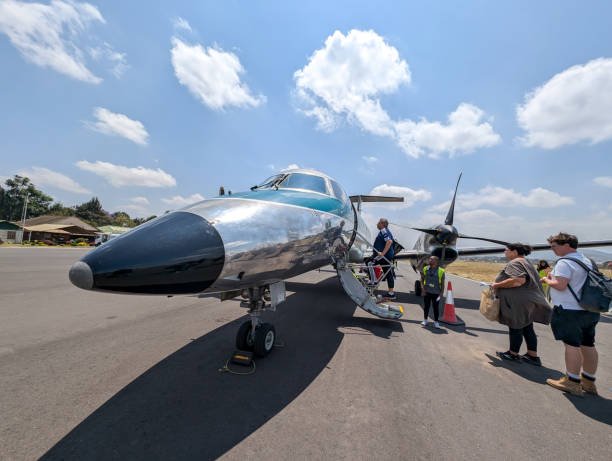
One of the most frequent logistical oversights for travelers booking flights for January 2027 is the stark difference between international carrier allowances and domestic bush flight requirements. When you transition from a wide-body jet arriving at Kilimanjaro International (JRO) to a light aircraft (such as a Cessna Caravan or a Pilatus PC-12) headed for the Serengeti or Selous, the rules of the sky change significantly. These smaller aircraft are not just smaller; they operate under strict physics-based weight and balance regulations that prioritize safety over convenience.
Most domestic bush airlines operating in Tanzania enforce a strict luggage weight limit, typically capped at 15 kilograms (33 pounds) per person. This limit is cumulative, meaning it includes your carry-on items and camera gear. Furthermore, the material of your luggage is non-negotiable. Hard-shell suitcases are almost universally prohibited on these flights because they cannot be squashed or reshaped to fit into the oddly shaped, confined cargo holds of small aircraft. If you arrive with a hard-shell bag, you may be forced to leave it at your hotel in Arusha or Dar es Salaam, or pay a significant fee for an extra seat just to accommodate the bag, provided there is space available—which is rarely guaranteed during the peak January season.
To avoid this, invest in high-quality, soft-sided duffel bags well before your 2027 departure. These bags are flexible, durable, and easily stowed by ground crews. If you are traveling with heavy photography equipment, consider booking an ‘extra seat’ at the time of your domestic flight reservation. This is a common practice for professional wildlife photographers, and it guarantees that your gear remains with you on the aircraft rather than being bumped to a later flight due to weight restrictions.
The Critical Role of Travel Insurance for January 2027
While flight disruptions are an inconvenience anywhere in the world, they carry higher stakes in Tanzania due to the limited frequency of flights to remote bush airstrips. If your international flight arrives late due to a connection delay in Doha or Amsterdam, you risk missing your scheduled bush flight. In January, while the weather is generally favorable, the global aviation network can still experience cascading delays. Relying on the airline to ‘rebook’ you is often insufficient, as bush flights operate on fixed schedules and do not have the flexibility of major hub airlines.
When purchasing travel insurance for your 2027 trip, ensure your policy includes specific ‘Trip Interruption’ and ‘Missed Connection’ coverage that explicitly accounts for bush flight transfers. Standard policies often cover delays of 6–12 hours, but in the bush, a delay of even four hours can mean you miss the only flight of the day to your camp. Your insurance should ideally cover the cost of an emergency private charter or an overnight stay in Arusha if a missed connection forces a schedule change. Always verify that your policy provider recognizes Tanzanian domestic carriers as ‘common carriers’ to ensure your claim is processed without dispute.
Airport Formalities: Estimating Your Buffer Time
The time it takes to clear immigration and customs at JRO or DAR is a variable that travelers often underestimate. In January, the influx of visitors can lead to longer queues at the visa-on-arrival desks. While many travelers now utilize the e-visa system, which can expedite the process, you must still factor in baggage claim and the potential for a secondary security check. If you are booking your own domestic connection, the golden rule is to allow a minimum of four hours between your international arrival and your domestic departure.
This buffer is not just for the immigration line; it accounts for the ‘check-in’ window for domestic bush flights, which usually closes 45–60 minutes before departure. Arriving at the airport with only two hours to spare leaves you virtually no margin for error if your international flight is delayed by even 30 minutes. If you are traveling as part of a group, coordinate your flight timings with your tour operator. We often see travelers trying to save money by booking a ‘tight’ connection, only to find that the cost of a missed flight—including the rebooking fee and a night in a hotel—far exceeds the savings of the cheaper, riskier ticket.
Maximizing Value: The Strategic Benefit of Open-Jaw Routing
When analyzing the cost of your 2027 Tanzanian expedition, the most common financial error is treating your international airfare as a simple round-trip transaction. For many travelers, the itinerary begins at Kilimanjaro International Airport (JRO) for a mountain trek or safari and ends on the beaches of Zanzibar or in the historical streets of Dar es Salaam. If you book a standard round-trip ticket into and out of JRO, you inadvertently create a ‘backtracking’ requirement. You will either need to purchase an expensive, last-minute domestic flight to return to your departure point or endure a grueling, multi-day road journey across the country, which adds hidden costs in vehicle transfers and accommodation.
The solution is the ‘open-jaw’ or ‘multi-city’ booking strategy. By utilizing the multi-city search tool on major airline websites—rather than booking two separate one-way tickets—you can often secure a fare that is comparable to a round-trip ticket while eliminating the need for a return domestic leg. For example, booking a flight that arrives in JRO and departs from Julius Nyerere International Airport (DAR) allows you to travel in a logical flow across the country. Airlines price these multi-city routes competitively because they capture the full transit value of your journey. Conversely, booking two one-way tickets is almost universally more expensive, as airlines treat each leg as a distinct, high-yield transaction, often doubling the base fare and increasing the total taxes and surcharges.
When using this strategy for January 2027, ensure you select the ‘multi-city’ or ‘add a destination’ feature on your booking engine. If the system forces you into two separate one-way tickets, check if the airline offers a ‘partner’ fare or a codeshare option that bundles the segments. This is particularly effective with major carriers like KLM, which often allows a ‘stopover’ or ‘open-jaw’ configuration that includes both JRO and DAR at a significantly lower price point than purchasing individual segments.
Navigating Transit Hubs and Fare Classes
The cost of your flight to Tanzania is heavily influenced by the airline’s hub strategy, and understanding how these hubs operate can save you significant capital. Most international arrivals into Tanzania flow through one of three primary hubs: Doha (DOH), Amsterdam (AMS), or Istanbul (IST). The pricing difference between these routes is rarely about distance; it is about ‘yield management’—how the airline fills its seats based on historical demand for those specific connections.
For January 2027, be aware that the ‘cheapest’ fare displayed on a comparison site often comes with a ‘restrictive’ fare class. These tickets are frequently non-refundable and carry heavy penalties for date changes. Because January is a peak travel month, you should prioritize ‘flexible’ economy or premium economy fare buckets. While these may cost 15% to 25% more at the time of booking, they provide a critical safety net. If a flight schedule changes—which is common in the aviation industry—you will avoid the ‘fare difference’ trap. In the airline industry, if you need to change a flight date, you are not just paying a change fee; you are paying the difference between your original, deeply discounted ticket and the current, high-demand price of a ticket for your new date. By choosing a slightly higher fare class from the outset, you effectively lock in a buffer against these volatile price hikes.
Furthermore, pay attention to the ‘connection duration’ listed in your booking details. A ticket with an 8-hour layover in a hub like Doha may be cheaper than a 3-hour layover, but factor in the cost of lounge access or food. If you are traveling as a family or a group, these ‘hidden’ costs can quickly erase the savings of the cheaper ticket. For January 2027, where reliability is paramount, a shorter, more efficient connection is often the superior value proposition, even if the base fare is slightly higher.
Navigating Booking Channels: Direct vs. OTA vs. Specialized Agents
When finalizing your January 2027 travel, the platform you use to purchase your tickets significantly influences your risk profile. While Online Travel Agencies (OTAs) are excellent for scanning the market for the lowest fare, they often become a liability for complex, multi-segment itineraries involving remote bush airstrips. If your international arrival at Kilimanjaro International Airport (JRO) is delayed, an OTA’s automated customer service will rarely provide the proactive support needed to reschedule your onward domestic connection, often leaving you to manage the rebooking process entirely on your own.
Booking directly with international carriers—such as KLM, Qatar Airways, or Ethiopian Airlines—is the preferred method for your long-haul segments. It ensures that you are the primary customer in the airline’s system, granting you direct access to flight alerts, seat selection, and streamlined rebooking options should a schedule change occur. However, this approach creates a “logistical gap” regarding your domestic bush flights, which are typically operated by smaller regional carriers that do not participate in the same global distribution systems as major airlines.
For travelers planning a January 2027 trip, utilizing a specialized Tanzania-focused travel operator or agent is the most effective way to bridge this gap. These professionals often act as the “glue” between your international arrival and your safari start. They can synchronize your entire journey, ensuring that your domestic flight is booked with an appropriate buffer time that accounts for the specific visa processing and baggage reclaim realities at JRO or DAR. Because January is a peak travel month, flight inventory on bush routes is tight. An agent can secure these seats in advance, often providing a single point of contact who can navigate the local carrier’s rebooking protocols faster than a traveler could via an international call center or an online booking engine. This strategic choice is not merely about convenience; it is about ensuring that your entire flight itinerary functions as a cohesive unit rather than a series of disconnected, high-risk segments.
Check Availability for Tanzania Flight Prices January : Airlines & Booking Tips
Ready to compare dates, prices, and the best option for your group? Send the package name and travel month so the team can reply with a clear quote, availability, and what is included.

Last-Minute Flights In Tanzania: Prices & Expert Booking Tips
Understand why last-minute flight bookings in Tanzania often lead to higher costs and logistical challenges, and learn the best strategies to secure your travel.
View package details
Tanzania Flight Prices October : Airlines & Booking Guide
A detailed guide on navigating flight prices and airline bookings for Tanzania travel in October 2027, covering international routes, domestic connections, and planning strategies.
View package details
Tanzania Flight Prices November : Seasonal Airfares And Booking Guide
A practical guide to understanding Tanzania flight pricing for November 2027, covering seasonal weather impacts, airport selection strategies, and booking timelines.
View package details
Kenya To Tanzania Safari Flights: Prices & Booking Guide
A practical guide to connecting Kenya and Tanzania by air for your safari. Learn about border logistics, booking realities, and why most travelers choose specific routes over others.
View package details
Best Airlines For Tanzania Safari Flights: Prices & Comparison ()
A guide to navigating Tanzania's domestic airline market for safari travel, covering reliability, baggage constraints, and booking strategies for 2027.
View package detailsNairobi To Zanzibar Flights: Ticket Prices & Booking Guide
A comprehensive guide to understanding flight costs, airline choices, and logistics for the popular Nairobi to Zanzibar route.
View package detailsKilimanjaro International Airport Flight Prices & Airlines: A Planning Guide
A deep look at planning your travel to JRO, understanding airline options, price variables, and how to coordinate your arrival for a successful Kilimanjaro climb.
View package detailsChild Flight Ticket Prices In Tanzania: Airline Fare Rules & Planning Guide
Planning a family trip to Tanzania? Don't assume child discounts apply everywhere. Learn the specific rules for domestic carriers versus bush flights and how to manage your booking.
View package detailsGroup Flight Booking In Tanzania: Expert Guide To Pricing & Logistics
Planning a trip for a group? Discover the logistical realities, pricing structures, and coordination strategies for group flight booking in Tanzania.
View package detailsPrivate Charter Flight Prices In Tanzania: Cost Per Aircraft & Planning Guide
A practical guide to understanding how private charter flight prices in Tanzania are calculated, including aircraft types, route logic, and booking advice for 2027.
View package details
Tanzania Flight Ticket Prices: Economy Vs Safari Bush Flights Explained
A practical guide to understanding the cost and logistical differences between commercial economy flights and private-style bush flights in Tanzania.
View package detailsPrecision Air Vs Tanzania: Domestic Flight Prices & Comparison
When planning domestic travel in Tanzania, choosing between Precision Air and Air Tanzania often comes down to route networks and baggage policies rather than just the base fare. Learn how...
View package detailsNo related package matches those filters. Clear one or more filters to see the other topic-matched options.



