
A 2-day Serengeti safari from Zanzibar by flight is an intensive, time-optimized wildlife experience that bypasses the long overland travel, allowing you to maximize your limited time in the bush. By flying directly into the Serengeti, you trade long road transit for immediate game viewing, though it requires a higher budget due to flight costs, park entrance fees, and the premium of condensed logistics.

When you are relaxing on the beaches of Zanzibar, the vast plains of the Serengeti can feel like a world away—and on the ground, they are. Covering that distance by road is physically impossible for a short trip, which is why the fly-in option is the only viable way to experience the park in just 48 hours. At Climb 4 Africa, we frequently help travelers bridge this gap, ensuring that the transition from coastal island life to the rugged savannah is as efficient as possible.
Choosing a 2-day safari is a deliberate trade-off: you are prioritizing time over budget. Because you are essentially “buying back” the hours you would have spent in a car, the per-day cost of a 2-day flight safari is naturally higher than longer, overland-inclusive trips. However, for travelers with a tight schedule who refuse to miss the chance to see the Big Five, this remains the gold standard for short-term Tanzanian wildlife excursions.
The Logistics of Flying to the Serengeti
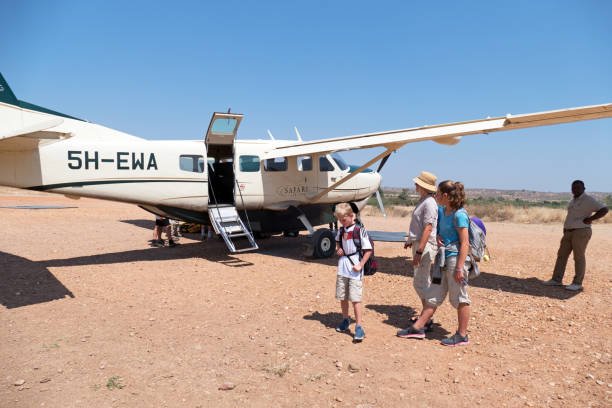
The primary advantage of this itinerary is the avoidance of the long drive from Arusha. Instead of spending 8 to 10 hours on bumpy roads, you board a light aircraft—usually a Cessna Caravan or similar bush plane—at Zanzibar International Airport (ZNZ). These flights typically head directly to the Seronera Airstrip, which is located in the heart of the central Serengeti.
The flight path itself is a highlight. On a clear day, you get a bird’s-eye view of the Tanzanian coastline, the sprawling plains, and the dramatic rift valley escarpment. Upon landing, your guide and vehicle are already waiting. You aren’t just arriving; you are starting your game drive the moment you step off the tarmac.
It is important to manage expectations regarding baggage. Because these are small bush planes, they have strict weight limits—usually 15kg (33 lbs) in soft-sided bags. If you are traveling with large, hard-shell suitcases from your international flight, you will need to leave them at your hotel in Zanzibar or use a luggage storage service. We advise our clients to pack a separate “safari duffel” specifically for this 2-day trip.
Understanding the 2-Day Itinerary Flow
A 2-day trip is high-energy. You don’t have the luxury of slow mornings or extended downtime. To make this work, every hour must be utilized.
Day 1: Arrival and The First Encounter
Most flights from Zanzibar depart early in the morning, arriving at the airstrip by mid-morning. Once you land, you immediately jump into your 4×4 safari vehicle. You spend the remainder of the day tracking wildlife in the Central Serengeti, known for its high density of big cats, especially leopards and lions. You will spend the night at a lodge or tented camp within the park boundaries, allowing you to wake up to the sounds of the African bush.
Day 2: The Morning Drive and Departure
The second day begins before sunrise. This is when predators are most active, and the light is perfect for photography. You will have a few hours of game viewing before heading back to the airstrip for your afternoon flight back to Zanzibar. By the evening, you are back at your beach resort, often in time for dinner.
If you find this pace too demanding, you might want to consider a 3-day Serengeti fly-in safari, which offers a slightly more relaxed rhythm and covers more ground, including potential visits to other areas of the park.
Price Factors: What You Are Paying For
When you request a quote for a 2-day safari, you will notice that the price is not just for the “tour.” It is a package that includes several high-cost components that are unavoidable:
- Internal Flights: Regional flights in Tanzania are priced at a premium. They are essentially air taxis, and the cost covers the aircraft, fuel, and pilot services.
- Park Entrance Fees: These are daily fees charged by TANAPA (Tanzania National Parks Authority) per person, per day. For a 2-day trip, you are paying for two full days of entry, regardless of how many hours you are actually in the park.
- Vehicle & Guide: You are paying for the exclusive use of a 4×4 vehicle and a professional driver-guide who is dedicated to your itinerary.
- Accommodation: Staying inside the Serengeti is more expensive than staying outside the park gates, but it is essential for a 2-day trip to avoid wasting hours driving in and out of the park.
Prices fluctuate based on the season. During the “peak” season (June to October and January to February), availability is lower and costs are higher. During the “green” season, you may find better value. We recommend reviewing our latest package pricing to get a sense of the current market rates for 2026-2027.
Comparison: 2-Day vs. 3-Day Fly-In Safari
| Feature | 2-Day Safari | 3-Day Safari |
|---|---|---|
| Wildlife Exposure | Intense, focused on central Serengeti | More comprehensive, potential for wider range |
| Pace | Fast, high-energy | Moderate, more balanced |
| Value | Higher per-day cost | Better value per day |
| Best For | Short-term travelers | Those wanting a deeper experience |
Planning for 2026-2027
Booking a safari for 2026 or 2027 requires early coordination. Because internal flights have limited seating, they often sell out months in advance, especially during the migration season. We suggest starting your planning at least 4 to 6 months before your intended travel date.
When you contact us, please have the following details ready so we can provide an accurate, no-obligation quote:
- Travel Dates: Even if they are tentative, knowing your window helps us check flight availability.
- Number of Travelers: Safari vehicles and flights are priced per person, and group size can impact the final cost.
- Accommodation Preferences: Do you prefer mid-range lodges or luxury tented camps? Your choice significantly impacts the total price.
- Any Specific Interests: Are you looking for the Great Migration, or are you more interested in general big cat sightings?
If you are still weighing your options, you might also want to look at our 1-day Serengeti safari if your schedule is even tighter, or explore our shared group departures if you are looking to lower costs by joining other travelers.
Practical Tips for Your Safari
Dress for the Transition: Zanzibar is tropical and humid; the Serengeti can be chilly, especially on early morning game drives. Pack layers. A fleece or light jacket is essential for the 6:00 AM game drive, even if it gets hot by noon.
Dust Protection: The Serengeti is dusty. Bring a dedicated bag for your camera equipment and consider a dust cover for your lens. Your guide will have a cleaning kit, but prevention is better.
Tipping Culture: Tipping is a standard part of the safari experience in Tanzania. While not mandatory, it is customary to tip your driver-guide and lodge staff. We can provide guidance on appropriate amounts based on your group size.
Connectivity: Expect spotty mobile service inside the park. This is your chance to disconnect. Most lodges offer Wi-Fi in the main areas, but it is often slow and should not be relied upon for critical business tasks.
Next Steps for Booking
We are here to make your transition from island to savannah smooth. Whether you have firm dates or are just exploring the possibility of a 2-day Serengeti fly-in, the best first step is to get a custom quote that reflects your specific travel preferences. We don’t believe in one-size-fits-all itineraries.
To start your planning, you can reach out to us directly. Send your travel dates and group size to climb4africa@gmail.com or our backup address at info@climb-4-africa.com. If you prefer a faster response, you can also reach us via WhatsApp at +255 747 477 898. Our team is based locally and can provide the most current information on flight schedules, park conditions, and lodge availability for the 2026 and 2027 seasons.
Managing Wildlife Expectations in a 48-Hour Window
When you condense a Serengeti experience into 48 hours, managing your expectations is as important as the booking itself. The Serengeti is an ecosystem spanning nearly 15,000 square kilometers, and a 2-day itinerary primarily focuses on the Seronera area in the Central Serengeti. This is the park’s wildlife hub, known for its high density of big cats—lions, leopards, and cheetahs—which are often easier to spot here than in the vast, open plains of the far north or south. However, understanding the reality of a short-term safari is key to avoiding disappointment.
First, recognize that wildlife is not guaranteed. While the Central Serengeti is a reliable location for sightings, animals move according to their own biological rhythms, not your flight schedule. A 2-day trip minimizes your “search time” by placing you in the most productive habitat immediately upon landing, but you are still subject to the luck of the draw. If you arrive with a rigid checklist of the “Big Five” (lion, leopard, elephant, buffalo, and rhino), you may feel rushed. Instead, shift your mindset to appreciating the entire ecosystem. The beauty of a short fly-in safari is the immersion; you are not just ticking boxes, but observing the behavior of the animals your guide locates.
Second, communicate your priorities to your guide the moment you meet. If you have a specific interest—such as wanting to see a leopard in a tree or witnessing a lion pride—tell your driver-guide during the initial briefing. They cannot control the wildlife, but they can adjust the route of your game drives to focus on habitats where those specific species are more frequently spotted. If you are visiting during the Great Migration season, ask your guide about the current location of the herds. While a 2-day trip usually keeps you in the central region, your guide may know of nearby river crossings or concentrations that are accessible within your limited timeframe.
Crucial Pre-Flight Logistics: Luggage, Health, and Safety
The transition from a coastal environment like Zanzibar to the rugged interior of the Serengeti involves specific logistical hurdles that go beyond simply booking a ticket. Because you are traveling on small, light aircraft (often Cessna Caravans or similar bush planes), the physical constraints of your luggage and your personal health preparations are paramount to a smooth journey.
Luggage restrictions are the most common source of friction for travelers on fly-in safaris. These small aircraft have strict weight limits, typically capped at 15 kilograms (approximately 33 pounds) per person, including your carry-on. More importantly, these bags must be soft-sided. Hard-shell suitcases are generally prohibited because they cannot be squeezed into the narrow, irregular cargo compartments of bush planes. If you arrive at the Zanzibar airstrip with a hard-shell suitcase, you may be denied boarding or forced to leave items behind in secure storage at the airport. Invest in a high-quality, collapsible duffel bag well before your departure. This not only ensures compliance with flight regulations but also makes the loading and unloading process at the airstrip much faster, keeping your schedule on track.
Regarding health, the transition from sea level to the Serengeti plateau—which sits at an elevation of roughly 1,500 meters—is generally manageable, but you should prepare for the change in environment. Tanzania requires proof of Yellow Fever vaccination if you are arriving from a country with a risk of yellow fever transmission, or if you have transited through such a country for more than 12 hours. Even if not strictly required based on your specific flight path, it is a common requirement for entry and should be kept with your passport.
Malaria prophylaxis is strongly recommended for all safari travelers. Zanzibar and the Serengeti are both malaria-endemic zones. Consult with a travel clinic or your primary care physician at least six weeks before your trip to discuss the best medication for your health profile. Additionally, while the lodges you will stay at provide safe, treated water, it is standard practice to drink only bottled or filtered water throughout your safari. Finally, remember that you are flying into a remote environment. While emergency medical evacuation services exist for safari operators, you should ensure that your comprehensive travel insurance covers “bush evacuation” and medical transport. This is a standard inclusion in many reputable policies but is often overlooked by travelers focused solely on the cost of the safari itself.
Navigating Accommodation Choices for a 48-Hour Safari
When you are compressing the Serengeti experience into a 48-hour window, the selection of your accommodation is not merely a matter of comfort or budget; it is a strategic logistical decision that directly impacts your wildlife viewing time. Because your flight schedule is fixed and your time on the ground is limited, where you sleep determines how much of the Serengeti you will actually see. For a 2-day fly-in itinerary, the vast majority of travelers are based in the Seronera area of the Central Serengeti. This region is the hub of the park’s internal flight network and serves as the epicenter for wildlife density, making it the only logical choice for short-stay visitors.
The accommodation landscape in the Central Serengeti is generally divided into two distinct categories: permanent safari lodges and luxury tented camps. Understanding the operational differences between these two is vital for managing your expectations before you land.
The “Location First” Mandate
For a 2-day safari, your primary goal is to minimize “dead time” spent in a vehicle. If you choose accommodation located outside the park boundaries or on the periphery of the Seronera valley, you might spend an hour or more each morning and evening just driving to and from the prime game-viewing zones. In a 48-hour itinerary, that is an unacceptable loss of time. When reviewing your booking options, verify that your base is located within the Seronera area. This proximity allows you to begin your game drives the moment you leave your room, significantly increasing your chances of spotting the Big Five without the fatigue of long-distance transit.
Tented Camps: The in-depth Canvas Experience
Many first-time visitors are surprised by the nature of “tented camps.” These are not the nylon tents of recreational camping; they are sophisticated, semi-permanent structures featuring large, heavy-duty canvas walls stretched over sturdy wooden or concrete platforms. Inside, you will typically find real beds with high-quality linens, en-suite bathrooms with flush toilets, and hot showers. The appeal of a tented camp is the sensory connection to the bush. Because your walls are made of canvas, you will hear the rustle of the wind, the distant call of hyenas, and the early morning chatter of birds. For many, this is the quintessential African safari experience—it feels raw, intimate, and authentic.
However, it is important to understand the limitations. Tented camps are designed to be low-impact, meaning they often operate on solar power or generators that may be switched off during the middle of the day or late at night. Wi-Fi is frequently limited to common areas, if available at all, and cell reception can be sporadic. If you are someone who requires constant connectivity or absolute silence from the outside world, a tented camp might feel more exposed than you prefer.
Safari Lodges: The Structural Alternative
Safari lodges offer a more traditional “bricks and mortar” experience. These are permanent, built structures that often resemble small hotels or villas. They provide thicker walls, which offer superior sound insulation and a sense of physical security that some travelers find more comforting, especially when staying in an environment where wildlife roams freely outside the perimeter. Lodges typically offer more robust amenities, such as larger dining halls, swimming pools, and more consistent power and connectivity. If you are traveling with family or prefer a more structured, hotel-like environment, a lodge is generally the safer choice.
The trade-off, however, is that lodges can sometimes feel slightly detached from the bush. You may have to walk further to reach the safari vehicles, and the communal areas can feel more like a resort than an outpost in the wilderness. When choosing between a lodge and a tented camp, consider your personal tolerance for the “wild” aspect of the trip. If you want to feel the pulse of the Serengeti from your bed, choose a tented camp. If you want the reliability and comfort of a hotel room after a long day of game viewing, choose a lodge.
Nighttime Safety and the “Bush Routine”
Regardless of whether you choose a lodge or a tented camp, you are staying in an unfenced wilderness. This is a critical point that requires a shift in mindset. You cannot wander around the grounds of your accommodation after dark. In both lodges and tented camps, it is standard safety protocol to be escorted by a staff member or an armed guard whenever you move between your room and the main dining area after sunset. This is not because the area is inherently dangerous, but because wild animals—including elephants, buffalo, and occasionally predators—do pass through the camp grounds at night.
This “escort culture” is part of the safari experience. Do not view it as an inconvenience; view it as a reminder of where you are. Your hosts will explain the specific rules upon arrival. You will be expected to remain in your room once you have been escorted back for the night, and you should keep your tent or room zipped or locked at all times. By adhering to these simple, non-negotiable safety rules, you ensure that your 48-hour stay is not only memorable but also perfectly secure.
Navigating the 24-Hour Permit and Park Logistics
One of the most critical, yet frequently misunderstood, aspects of a 2-day Serengeti fly-in safari is the nature of the park entry permit. Unlike many other national parks globally, Serengeti National Park entrance fees are calculated based on a strict 24-hour cycle rather than a calendar day. When you book your flight, you are essentially determining the start and end time of your permit window. If your bush plane touches down at the Seronera airstrip at 11:00 AM, your permit is valid until 11:00 AM the following day. This is not a suggestion; it is a rigid logistical framework that your operator must manage.
Understanding this 24-hour cycle is vital for managing your expectations regarding your departure. Many travelers arrive expecting a full second day of game viewing, but if your return flight is scheduled for 1:00 PM on day two, you are technically entering a period where your permit may expire or require a partial extension fee. Your operator will likely schedule your morning game drive on day two to conclude by 10:00 AM or 11:00 AM, allowing time for the drive to the airstrip and the pre-flight boarding process. By aligning your flight times with this 24-hour window, you ensure that you are not paying for an extra day of fees that you cannot fully utilize, or conversely, being rushed out of the park before your permit expires.
Furthermore, the location of your airstrip in relation to your accommodation plays a role in this timing. While the Seronera airstrip is central, some boutique camps or lodges are located further afield. If your accommodation is an hour’s drive from the airstrip, that hour is subtracted from your “active” game viewing time on both arrival and departure days. When booking, ask your operator specifically where your airstrip is in relation to your camp. A 30-minute transfer is standard, but a 90-minute transfer can significantly eat into your 48-hour window, effectively reducing your “on-safari” time by three hours total.
The Financial Reality of Tipping in the Bush
While the price you pay for your 2-day safari package covers your flights, accommodation, park fees, and vehicle hire, it rarely includes gratuities. In the Tanzanian safari industry, tipping is not just a gesture of appreciation; it is an expected component of the service economy. For a short 2-day trip, it is easy to overlook this, but failing to prepare can create awkward moments at the end of your journey. Because you are in a remote environment where ATMs do not exist, you must carry your tip money in cash, specifically in US Dollars (USD) or Tanzanian Shillings (TZS), before you leave Zanzibar.
The industry standard for a private driver-guide on a 2-day safari typically ranges between $20 to $30 USD per day, depending on the level of service and the size of your group. It is advisable to provide this tip directly to your guide at the end of your trip. Additionally, most tented camps and lodges operate a communal tip box for the support staff—including chefs, housekeepers, and camp attendants. A general guideline for camp staff is approximately $10 to $15 USD per guest, per day. These funds are pooled and distributed among the staff who work behind the scenes to keep your camp running.
When preparing your cash, ensure that your US Dollar bills are printed in the year 2009 or later. Many businesses and banks in Tanzania strictly refuse older “small head” notes due to concerns about counterfeit currency. Bringing crisp, clean bills in smaller denominations ($5, $10, and $20) is essential, as you will likely not be able to get change for a $100 bill in the middle of the savannah. By budgeting for these gratuities in advance, you remove the stress of scrambling for cash at the end of your trip and ensure that your interactions with the staff remain smooth and professional.
Power, Connectivity, and the Reality of Remote Living
A frequent point of friction for travelers on short 2-day itineraries is the adjustment to the power and connectivity infrastructure of the Serengeti. Because you are staying in a protected wilderness area, the infrastructure is intentionally kept to a minimum to reduce the environmental footprint. Most mid-range and luxury tented camps rely on solar power, battery banks, or silent generators. This means that power is often not available 24 hours a day. It is common for camps to switch off main power grids during the day when guests are out on game drives to conserve energy, or to have limited hours of electricity in the evening.
If you have specific equipment—such as camera batteries, CPAP machines, or medical devices—that require consistent power, you must communicate this to your operator at the time of booking. While most camps can accommodate these needs, they may need to run a generator specifically for you, which is a logistical request that should be confirmed in advance. Do not assume that every tent will have a universal power outlet. Carrying a portable power bank is the single most practical “pro-tip” for a 2-day safari; it ensures your phone and camera remain charged regardless of the camp’s power schedule.
Regarding connectivity, the Serengeti is a “digital detox” zone. While some lodges offer Wi-Fi in communal areas, it is rarely high-speed or reliable enough for video calls, large file uploads, or streaming. The signal is often satellite-based and prone to weather interference. If you are a business traveler or someone who needs to be “always on,” you must adjust your expectations. Use your 48 hours to disconnect. The lack of constant digital noise is a significant part of what makes the Serengeti experience so profound, but it requires a mental shift before you board your flight from Zanzibar. Inform your family or colleagues that you will be unreachable for these two days, as finding a signal in the middle of the plains is often impossible and should not be relied upon.
Maximizing Your Game Drive: Vehicle Types and Guide Dynamics
In a 48-hour itinerary, your game drive vehicle is not just a mode of transport; it is your primary base of operations. Because you are flying into the Serengeti, your vehicle will be provided by either your lodge or a specialized ground-handling operator based within the park. Understanding the configuration of these vehicles is essential for managing your expectations regarding photography, comfort, and wildlife viewing.
The Vehicle Configuration: Pop-Up Roofs vs. Open-Sided
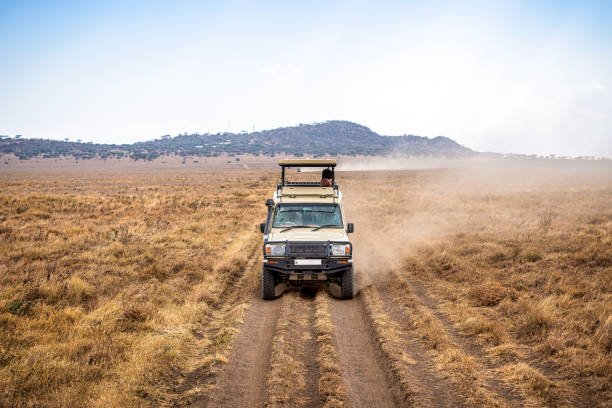
Most standard safari vehicles in the Serengeti are 4×4 Land Cruisers modified with a pop-up roof hatch. This design is the industry standard for a reason: it offers the best balance of safety, weather protection, and visibility. The metal roof provides essential shade from the equatorial sun, while the pop-up mechanism allows you to stand up and view wildlife at eye level. For a 2-day trip, this is the most common vehicle you will encounter. It is enclosed, which protects you and your camera gear from the fine, pervasive dust of the Serengeti plains while moving between sightings.
Some specialized lodges or higher-end private tours may offer open-sided vehicles. These vehicles lack windows and sometimes have a canvas roof instead of a metal one. They provide an unobstructed, 360-degree view that is unparalleled for photography, as there are no roof pillars to frame your shots. However, they offer less protection from the elements and insects. If you are booking a luxury-tier 2-day package, it is worth inquiring about the vehicle type. If you are a serious photographer, this distinction matters significantly. If you are a casual observer, the standard pop-up roof 4×4 is more than adequate and generally more comfortable for longer stretches of driving.
The Role of the Guide in a Short-Term Itinerary
On a 2-day safari, the relationship between you and your guide is accelerated. In a longer 5-day or 7-day trip, you have time to calibrate your preferences with your guide over several days. With only 48 hours, you must establish communication immediately. Your guide is not just a driver; they are a tracker, a naturalist, and a logistical coordinator. When you arrive at the airstrip, take the first five minutes of the drive to articulate your priorities. If you are particularly interested in big cats, birdlife, or photography, tell your guide immediately. They cannot read your mind, and in a short window, they will default to the standard “circuit” unless you provide specific direction.
Furthermore, be aware that your guide is often managing a complex radio network with other drivers. If you hear them speaking Swahili over the radio, they are likely coordinating with other vehicles to locate sightings of elusive animals like leopards or cheetahs. Trust this process. A guide who is well-connected in the Seronera area is far more valuable than one who simply drives around hoping to stumble upon a sighting. If you feel the pace is too fast or too slow, communicate this politely but clearly before the end of the first afternoon game drive.
Communicating Dietary Requirements: The “Remote Kitchen” Constraint
A frequently overlooked aspect of booking a 2-day fly-in safari is the management of dietary requirements. Because you are staying in the middle of a protected wilderness area, logistics for food supply are incredibly complex. Most camps and lodges operate on a “supply chain” basis where goods are trucked in from Arusha or Mwanza, often over long distances. They do not have the luxury of running to a local grocery store if a guest arrives with an unannounced allergy or specific dietary preference.
If you have specific dietary needs—such as severe nut allergies, Celiac disease, veganism, or specific religious dietary requirements—you must communicate these at the time of booking, not upon arrival. When you book your 2-day trip, ensure that your operator explicitly confirms these needs with the lodge. A “request” is often insufficient; you need a confirmation that the kitchen has been notified. If you arrive at a remote tented camp and mention a complex dietary restriction for the first time at dinner, the staff will do their best, but their options will be severely limited by the inventory on hand. Proactive communication regarding your diet is a fundamental part of the booking process that ensures you are not left with limited or unsuitable meal options during your short stay.
Handling Flight Disruptions: The “Plan B” Reality for 48-Hour Trips
When you commit to a 2-day safari, you are operating on a “just-in-time” schedule that leaves almost no margin for error. Unlike a 5-day or 7-day trip where a 6-hour delay might result in missing a single game drive, a 6-hour delay on a 2-day itinerary can effectively wipe out 50% of your total wildlife viewing time. Understanding the operational risks of bush aviation is not about pessimism; it is about proactive management.
The Vulnerability of Bush Airstrips
The airstrips servicing the Serengeti (such as Seronera) are generally unpaved, gravel, or grass surfaces. They lack the sophisticated instrument landing systems found at major international hubs like Zanzibar (ZNZ). Consequently, these flights are highly sensitive to weather conditions. During the rainy seasons—typically November and April/May—afternoon thunderstorms can create visibility issues that force pilots to ground flights for safety. Furthermore, because these are light aircraft (often Cessna Caravans or similar), they are more susceptible to turbulence and wind than commercial jets.
If a flight is cancelled or significantly delayed due to weather or mechanical issues, your operator is often at the mercy of the airline’s schedule. There is no “next flight in an hour” option; flights are often scheduled once or twice daily to maximize occupancy. If you miss your morning connection, you may not reach the park until the following day, which essentially cancels your 2-day itinerary entirely.
When Things Go Wrong: Managing the 48-Hour Buffer
To protect your investment, you must approach your booking with a clear understanding of the risks. First, ensure your travel insurance explicitly covers “bush flights” and “trip interruption.” Many standard policies cover commercial airlines but have specific exclusions for light aircraft or private charters. Verify that your policy includes coverage for the cost of rebooking flights, missed accommodation nights, and ground transfers if you are stranded.
Second, establish a “communication protocol” with your booking agent before you leave Zanzibar. In the event of a delay, you need to know who is responsible for re-routing you. Does your operator have a 24/7 emergency line? Are they authorized to book you on alternative transport if the scheduled flight is grounded? Knowing that your operator has a contingency plan—such as an agreement with a local ground handler who can assist with rebooking or accommodation if you are stuck in transit—provides significant peace of mind. While you cannot prevent a storm or a mechanical fault, you can ensure that you are not left navigating the logistics of a missed flight on your own while in the middle of a remote transit hub.
The Return Journey: Navigating the “Bush-to-Beach” Transition
While the focus of a 2-day safari is almost exclusively on the journey into the wilderness, the return leg to Zanzibar is a critical logistical phase that is frequently underestimated. You are transitioning from the dry, high-altitude environment of the Serengeti back to the humid, sea-level climate of the Zanzibar coast, often within a span of just a few hours. This shift involves more than just a change in temperature; it requires a precise plan for your arrival at Zanzibar International Airport (ZNZ) to ensure your holiday momentum is not lost to airport confusion.
Terminal Awareness and Airport Logistics
A common point of confusion for travelers returning from the bush is the distinction between Zanzibar’s terminal facilities. Domestic flights from the Serengeti (or Arusha) typically arrive at the domestic terminal, whereas your international flight home or your transport to a resort may be located at or near the international terminal (Terminal 3). These terminals are distinct, and while they are geographically close, they are not always seamlessly connected for pedestrian traffic carrying luggage. If you are arranging your own transfers from the airport to your beach hotel, you must specify to your driver exactly which terminal you are arriving at. Relying on an “airport pickup” without confirming the terminal can lead to significant delays, as drivers may be waiting at the wrong gate while you navigate baggage claim.
The Risks of Same-Day International Connections
One of the most dangerous scheduling decisions in a 2-day fly-in itinerary is attempting to connect your bush flight back to Zanzibar with an international flight home on the same day. Because bush flights are subject to the weather and mechanical variables discussed previously, they rarely operate with the strict punctuality of international carriers. If your bush flight is delayed by even two or three hours—a common occurrence due to shifting weather patterns over the Serengeti—you risk missing your international departure. We strongly advise against booking a same-day connection. The most prudent approach is to schedule your return flight from the Serengeti to arrive in Zanzibar at least 24 hours before your international flight home. This provides a necessary buffer to handle potential delays and allows you to enjoy a “decompression” day on the beach, which is essential after the high-energy, sleep-deprived nature of a 48-hour safari.
Managing the “Dust-to-Sea” Transition
The final hour of your return flight is a period of rapid environmental recalibration. You will be traveling from a landscape where the primary concerns are dust, sun, and dehydration, to an island environment defined by humidity and salt air. Upon landing at ZNZ, you will likely notice that your gear—camera equipment, clothing, and luggage—is saturated with the fine red dust of the Serengeti. It is advisable to have a plan for cleaning your equipment immediately upon reaching your hotel. Do not assume that your hotel will have professional cleaning services available for specialized camera gear; travel with a basic cleaning kit to protect your lenses from the residual dust. Furthermore, recognize that the fatigue of a 2-day safari often hits during the transit from the airport to your hotel. This is not the time to schedule a Stone Town walking tour or a spice farm excursion. Prioritize a direct transfer to your accommodation, ensuring that your transport is pre-booked, air-conditioned, and waiting for you upon arrival to minimize exposure to the heat and potential soliciting at the airport exit.
The Photography Constraint: Gear and Mobility in a 48-Hour Window
For many travelers, the 2-day Serengeti safari is a pilgrimage for wildlife photography. However, the constraints of a 48-hour fly-in itinerary necessitate a vastly different approach to camera gear compared to a week-long overland trip. The primary challenge is not just the 15-kilogram baggage limit imposed by bush airlines, but the sheer speed at which you must transition from landing to shooting.
In a 48-hour window, you do not have the luxury of “scouting” a location or waiting for light to change over several days. You are effectively working on a “capture-as-you-go” schedule. This requires a shift in your equipment philosophy: prioritize versatility over specialization. Carrying multiple camera bodies and a heavy array of prime lenses is often counterproductive. You will be moving in and out of a vehicle, navigating pop-up roofs, and dealing with the logistical tightrope of the bush airstrip. A single high-quality camera body paired with a versatile zoom lens (such as a 100-400mm or 100-500mm) is generally the most effective setup for this duration.
The Stability Dilemma: Tripods vs. Beanbags
A common mistake for first-time safari photographers is bringing a heavy tripod. In the context of a 48-hour fly-in safari, a tripod is effectively useless. You will be shooting from inside a vehicle or through the pop-up roof hatch, where floor space is limited and movement is restricted. Tripods are cumbersome to set up in these tight confines and offer little advantage when your subject is moving. Instead, rely on the “beanbag” method. Most reputable safari operators provide beanbags that you can rest on the window frame or the roof hatch edge. If you are a serious photographer, consider bringing an empty beanbag cover that you can fill with beans or rice upon arrival in Arusha or at your lodge, or check with your operator beforehand to ensure they provide them. This provides the stabilization you need for long-lens work without the bulk of a tripod.
Dust Protection as a Survival Skill
While the “dust-to-sea” transition was mentioned previously, the impact of dust on your gear during the 48-hour window is immediate. The Serengeti is an arid environment, and the fine, volcanic dust is invasive. It will find its way into your camera sensor, lens rings, and memory card slots within hours. Because you have no time for professional cleaning or maintenance, your protective measures must be preventative. Keep your camera inside a sealed dry bag or a dedicated, padded camera backpack when you are in transit between the airstrip and the lodge, or during the drive between game viewing spots. Never leave your camera exposed on the seat while the vehicle is in motion, as the vibration shakes dust into every crevice. A simple microfiber cloth and a handheld air blower are essential tools that should be kept in your pocket, not in your checked luggage, so you can clean your lens elements between sightings.
The “Big Five” Pressure: Avoiding the Checklist Trap
The intensity of a 48-hour itinerary often creates a psychological trap: the “Big Five” checklist. Because you have limited time, there is a temptation to pressure your guide to drive faster or cover more distance in search of a specific animal. Resist this urge. The Serengeti is not a zoo; wildlife movements are unpredictable. The most successful 48-hour safaris are those where the traveler embraces the “slow-down” philosophy. If you spot a pride of lions, stay with them. Observe their behavior, the interaction between cubs, or the way they respond to the environment. Often, travelers who spend 30 minutes with a single sighting come away with better photos and a more profound memory than those who spend their entire 48 hours rushing from one location to another in a frantic attempt to tick off a list. Your guide knows the local movements better than you do; trust their judgment on when to move and when to wait.

The “Fixed Cost” Economics of the 2-Day Fly-In
When analyzing the price of a 2-day Serengeti safari from Zanzibar, it is vital to understand that your quote is not a linear division of total costs. In the travel industry, short-duration trips are disproportionately expensive because they are heavily “front-loaded” with fixed costs that do not decrease simply because your stay is brief. Understanding these mechanics is essential for managing your budget expectations.
The most significant component of your price is the flight charter or the individual seat cost on a scheduled bush flight. Aviation fuel, pilot salaries, and landing fees at remote bush airstrips are fixed overheads. Whether you are flying into the Serengeti for two days or seven, the cost of the aircraft positioning remains largely the same. In the context of a 2-day trip, these flight costs are amortized over a very short period, making the “cost per day” appear significantly higher than it would be on a longer safari. Furthermore, many bush airlines operate on a “per-seat” basis, and during peak seasons, the scarcity of these seats drives prices up regardless of the duration of your stay.
Ground handling costs follow a similar logic. When you book a private vehicle and a dedicated guide, you are essentially paying for their availability for the duration of your trip. A guide must be present, fueled, and prepared for your arrival, regardless of whether you choose to spend your afternoon relaxing at the lodge or out on a game drive. Many operators have a “minimum day” policy for vehicle hire, which means you are often paying for a full day’s service even if your arrival time into the Serengeti and your departure time the following day leave you with only 12 hours of active game viewing. When comparing quotes, you will often find that adding a third day to your itinerary increases the total price only marginally—usually just the cost of an extra night’s accommodation and meals—because the “fixed” costs of the flight and vehicle are already covered.
The Physiological “Switch”: Managing the Zanzibar-to-Bush Transition
Travelers often underestimate the physical impact of the “Zanzibar-to-Serengeti” transition. You are moving from a humid, sea-level, and relaxed island environment to a high-altitude (averaging 1,500 meters or 5,000 feet), arid, and high-adrenaline wilderness in a matter of hours. This rapid shift requires a deliberate approach to your physical well-being to ensure you do not spend your precious 48 hours recovering from the travel itself.
The first factor is hydration. The Serengeti is an extremely dry environment, and the combination of high altitude and the wind exposure you experience in an open-sided or pop-up roof vehicle can lead to rapid dehydration. Because you are on a tight 2-day schedule, you may be tempted to skip breaks or minimize water intake to avoid needing to stop the vehicle. This is a mistake. Dehydration in the bush leads to headaches and fatigue, which will dull your senses and make it harder to spot wildlife. Drink significantly more water than you think you need, starting from the moment you board your flight in Zanzibar.
The second factor is the “circadian shock” of the safari routine. Zanzibar is a destination defined by a relaxed, “pole-pole” (slowly-slowly) pace. The Serengeti, conversely, is governed by the sun. To maximize your 2-day window, you will likely be up before dawn—often around 5:30 AM—to catch the prime predator activity. This requires a sharp pivot from a vacation mindset to an early-riser, alert mindset. If you have been enjoying late-night dinners on the beach, try to shift your sleep schedule by an hour or two on your final night in Zanzibar before flying to the bush. Arriving in the Serengeti already sleep-deprived will significantly diminish your ability to enjoy the intensity of the game drives. Finally, be prepared for the “adrenaline crash.” The excitement of your first game drive, where you might see lions, elephants, or leopards within the first few hours, is mentally exhausting. Plan to use your downtime between the morning and afternoon game drives for genuine rest rather than trying to catch up on emails or social media. Your goal is to keep your energy levels steady so that you remain sharp for the final hours of your trip.
The “Hidden” Costs of Last-Minute Booking Adjustments
While the initial quote for your 2-day Serengeti fly-in safari provides a comprehensive baseline, travelers often fail to account for the financial and logistical implications of last-minute changes once they are already in Tanzania. Because the 2-day itinerary is so tightly compressed, any deviation from the original plan—such as a request to extend your stay by a few hours, a late change in flight times, or a sudden shift in accommodation preference—triggers a cascade of fees that are rarely transparent during the initial booking phase.
The primary driver of these “adjustment costs” is the nature of bush aviation. Unlike commercial airlines, where ticket changes are handled through standardized fare classes, bush flight bookings are often tied to specific “seat-in-plane” charters. If you decide on your second day that you want to delay your return flight to Zanzibar by even three or four hours to squeeze in one final game drive, you are not simply changing a ticket; you are potentially disrupting the aircraft’s entire flight rotation for the day. Operators often charge a significant “re-ticketing” fee, which is essentially a service charge for the administrative effort of re-routing the pilot and aircraft schedule across multiple airstrips.
Furthermore, park entry permits are strictly non-refundable and non-transferable. If you book a 2-day trip and then decide to shorten it to a single night or change your park entry date, you cannot simply “roll over” the unused permit value. The Tanzania National Parks Authority (TANAPA) operates on a system where fees are tied to the specific 24-hour entry window. If you miss your window due to a late-arriving flight or a personal change of plans, you are often required to purchase a brand-new permit for the remainder of your time. This “sunk cost” is a frequent point of frustration for travelers who do not realize that their park fee is a fixed, time-bound contract with the park authorities, not a flexible credit.
Finally, consider the “last-minute upgrade” trap. It is common for travelers to arrive at their lodge or tented camp and decide they want to upgrade to a “premium” tent or a room with a better view. While this seems like a simple transaction, in a remote bush environment, the logistical cost of preparing a room is high. Supplies like fresh linens, water, and power are managed on a “just-in-time” basis. Requesting an upgrade upon arrival often incurs a premium surcharge that far exceeds the standard difference in room rates found on online booking platforms. Always finalize your accommodation and itinerary preferences at least 30 days before departure to avoid these “operational premiums” that can easily add hundreds of dollars to your final bill.
The Luggage Paradox: Storing and Managing Gear for a 48-Hour Transit
One of the most frequent points of friction for travelers on a 2-day fly-in safari is the management of luggage. You are effectively living in two different worlds simultaneously: the tropical, beach-focused environment of Zanzibar and the arid, high-altitude bush environment of the Serengeti. Most international travelers arrive in Zanzibar with a standard hard-shell suitcase, which is fundamentally incompatible with the aircraft used for bush transfers. Light aircraft, such as the Cessna Caravan, utilize small, under-wing or nose-cone cargo pods that are rigid in size and shape. Hard-shell cases cannot be compressed to fit into these spaces; consequently, your airline may refuse to load your bag, or you may be forced to pay for an additional seat just to accommodate your luggage.
To solve this, you must plan for a “luggage swap.” Most reputable safari operators require soft-sided duffel bags that weigh no more than 15 kilograms (33 pounds). You should prepare this bag in Zanzibar before your departure. The challenge, however, is what to do with your main luggage. Do not assume that your Zanzibar hotel will automatically store your primary suitcase for free. Many beach resorts are not equipped with secure, long-term luggage storage facilities. Before you confirm your safari booking, explicitly ask your hotel if they provide complimentary, secure storage for the duration of your 48-hour excursion. If they do not, you may need to hire a private locker service or arrange for a transfer service to hold your bags, which adds another logistical layer to your trip.
Furthermore, never place your high-value items—passports, large amounts of cash, camera bodies, or specialized lenses—in the luggage you leave at the hotel. While hotel staff are generally professional, the risk of theft or misplacement in a busy resort environment is non-zero. Your “bush bag” should contain everything you need for the 48 hours, plus your essential valuables. This creates a psychological shift: you are not just going on a trip; you are conducting a tactical deployment of gear. Pack only what is necessary for two days of game drives. If you bring a massive camera backpack, ensure it can fit under your seat or be easily carried, as you will not have time to unpack or organize gear once you land on the airstrip.
Negotiating the “Gap” with Your Zanzibar Hotel
The 48-hour safari window creates a complex “gap” in your Zanzibar hotel reservation. You are effectively paying for a room you will not occupy for two nights, but managing this gap requires careful coordination. There are two primary schools of thought here: checking out completely or maintaining your room reservation. If you choose to check out, you must coordinate a “luggage handover” where your bags are stored, and you must ensure your return transfer from the airport is booked for your arrival back from the Serengeti. This is often the most cost-effective route, but it leaves you vulnerable if your bush flight is delayed or cancelled, as you will have no “home base” to return to on the island.
Maintaining your room reservation is the safer, albeit more expensive, option. It allows you to leave your primary luggage in your room, keeps your base of operations secure, and provides a guaranteed place to shower and sleep the moment you return from the bush. Many travelers find that the “peace of mind” premium of keeping the room is worth the cost. If you opt for this, ensure you inform the front desk of your exact departure and return times. Specifically, request a “breakfast box” for your early morning departure day, as most bush flights leave Zanzibar at dawn, well before the standard hotel breakfast service begins. Similarly, alert the hotel to your late-night return; bush flights returning to Zanzibar often land in the late afternoon or early evening, and you will want to ensure your room is prepped and your key access remains valid despite your absence.
Finally, be aware of the “check-out pressure” on your return day. If you are flying out of Zanzibar on an international flight the morning after your safari, your hotel might be hesitant to extend your check-out time. If you do not have a room for that final night, you will be stranded with your luggage in the hotel lobby. Always align your safari return date with your hotel checkout policy to avoid being caught in the airport terminal with all your gear for 10 or 12 hours before your international flight home.
The Micro-Climate Gear Strategy: Navigating Temperature Extremes
One of the most frequent logistical oversights for travelers transitioning from the Zanzibar coast to the Serengeti is the failure to account for the dramatic micro-climate shift. While you may be fully acclimated to the tropical, sea-level humidity of Zanzibar, the Serengeti sits at an average elevation of 1,500 meters (approximately 5,000 feet). This altitude, combined with the arid, open nature of the savannah, creates a temperature variance that catches many unprepared visitors off guard, particularly during the 48-hour window of a short-stay safari.
In Zanzibar, your wardrobe is defined by high heat, high humidity, and salt air, necessitating light, breathable fabrics. However, the Serengeti operates on a different thermal reality. During the early morning hours—typically when game drives commence, often between 5:30 AM and 6:30 AM—the temperature can drop significantly, sometimes dipping below 15°C (59°F). When you factor in the wind chill created by an open-sided vehicle or a pop-up roof moving at 30-40 kilometers per hour, the effective temperature feels considerably colder. Relying on a light sweater or a thin windbreaker is often insufficient for the first three hours of your morning game drive.
To manage this, you must adopt a “layering system” that can be easily shed as the sun climbs and the temperature rises rapidly toward midday. A high-quality, windproof, but lightweight jacket is the most critical piece of gear you can bring. It serves a dual purpose: providing necessary insulation during the pre-dawn hours and acting as a barrier against the fine, pervasive dust that characterizes the dry season. Avoid heavy, bulky winter coats, which are difficult to manage in the cramped quarters of a safari vehicle; instead, prioritize technical, compressible layers that can be packed into a small daypack once the morning chill dissipates.
Tsetse Fly Protection and Color Theory
Beyond temperature regulation, your clothing choices in the Serengeti must also account for specific biological factors, most notably the Tsetse fly. These insects are prevalent in parts of the Serengeti, particularly in the central regions often visited on 2-day itineraries. Unlike mosquitoes, Tsetse flies are attracted to movement and, critically, to specific colors. They are highly drawn to deep blue and black, which they perceive as large animals, and are also attracted to very bright, neon colors.
For your 48-hour window, the most effective strategy is to avoid these colors entirely. Stick to a palette of neutral tones—khaki, tan, olive, and light brown. These colors are not just for the “safari aesthetic”; they are functional tools that help you blend into the environment, making you less visible to the wildlife and less attractive to biting insects. Furthermore, ensure your clothing provides full coverage. Even if the day warms up, keep your arms and legs covered in long sleeves and long trousers made of lightweight, tightly woven fabric. This is your primary defense against bites, which can be irritating and, in rare instances, carry a risk of African Trypanosomiasis (sleeping sickness). By planning your wardrobe with this “functional-first” mindset, you protect your health and comfort, ensuring that you remain focused on the wildlife rather than dealing with physical discomfort during your limited time in the bush.
The Migration Paradox: Managing Geographical Expectations
A frequent source of disappointment for 48-hour safari travelers is the discrepancy between the marketing images of the Great Migration and the reality of their specific itinerary. Because 2-day fly-in safaris rely on the Seronera Airstrip—the most reliable, all-weather, and centrally located hub in the Serengeti—your game viewing will be almost exclusively confined to the Central Serengeti region. While this area is spectacular and rich in resident wildlife, it is not always the location of the migratory herds.
The Great Migration is a dynamic, year-round movement of wildebeest and zebra. If your 48-hour window falls during a month when the herds are in the far North (crossing the Mara River) or the far South (in the Ndutu plains for calving season), you will not see the massive, horizon-stretching columns of animals often depicted in brochures. Understanding this geographical constraint is vital. When you book a 2-day trip, you are essentially opting for a high-intensity, resident-wildlife experience rather than a migration-chasing expedition. The Central Serengeti is home to a high concentration of big cats—lions, leopards, and cheetahs—which remain in the region year-round. By shifting your focus from the “Great Migration” checklist to the “Big Cat” reality of the central plains, you align your expectations with the logistical reality of the flight-based itinerary.
The Strategic Necessity of a Private Vehicle
On a standard 5-day or 7-day safari, joining a “shared” vehicle—where you pay for a seat rather than the whole car—is a common way to reduce costs. However, for a 48-hour fly-in safari, opting for a shared vehicle is a tactical error that can undermine the entire value of your investment. In a shared vehicle, the itinerary is dictated by the lowest common denominator of the group. If your fellow passengers want to spend three hours watching a single elephant, or if they prefer to return to the lodge for a midday nap while you are eager to keep driving, you lose your agency.
In a 48-hour window, every hour is a high-value asset. A private vehicle grants you the autonomy to dictate the pace of your game drives. You can decide when to leave for the morning drive, how long to stay at a specific sighting, and when to return to camp. This is critical because the “prime” viewing times (dawn and dusk) are fleeting. If you are in a shared vehicle, you are bound by the group’s collective decision-making, which often leads to compromise and lost time. When requesting your quote, explicitly insist on a private game drive vehicle. While this carries a higher price tag, it is the only way to ensure that your brief 48-hour immersion is fully optimized for your personal interests and wildlife priorities.
The “Transparency Gap”: Navigating Quote Inclusions and Exclusions
One of the most frequent sources of post-booking friction for travelers on a 2-day Serengeti fly-in safari is the discrepancy between the quoted price and the final invoice. Because the Tanzanian safari market is highly fragmented, operators utilize different pricing models that can significantly alter your out-of-pocket costs. When comparing quotes, you are often not comparing like-for-like, and understanding the “hidden” variables of these contracts is essential to managing your budget.
The primary point of confusion lies in the treatment of VAT and government-mandated fees. In Tanzania, there is an 18% Value Added Tax (VAT) applied to tourism services. Some operators include this in their “all-inclusive” quote, while others—particularly those targeting the budget-conscious segment—list it as an additional “+18%” surcharge at the bottom of the quote. Furthermore, Serengeti National Park fees are subject to periodic regulatory changes. A quote generated six months prior to your travel may not reflect a mid-season tariff adjustment. Always ask for a written confirmation that the quote is “inclusive of all current VAT, park fees, and concession fees,” and check if the operator guarantees the price against future regulatory increases.
Another layer of complexity is the distinction between TANAPA (Tanzania National Parks Authority) fees and WMA (Wildlife Management Area) fees. Many lodges are located inside the park boundaries, but some are situated in concession areas bordering the park. These concession areas often levy their own “conservation fees” or “community development fees” that are separate from the standard park entry fees. If your quote simply states “includes park fees,” it may not cover these specific concession levies, leading to an unexpected payment request upon check-in at your lodge. When reviewing your booking contract, look specifically for a line item that confirms all concession and conservation fees are settled in advance. If an operator is hesitant to provide this, it is a red flag that you may be facing an unbudgeted expense upon arrival.
The “Arrival Compression”: Deciding Your First Afternoon
The most critical decision you will make regarding your 2-day itinerary occurs the moment your wheels touch the gravel of the Seronera Airstrip. Because flight schedules into the Serengeti are dictated by commercial carriers and bush-plane availability, you will typically land between 10:00 AM and 1:00 PM. This timing leaves you with a binary choice that will define the quality of your first day: the “Lodge-First” approach or the “Immediate-Drive” approach.
The “Lodge-First” approach involves checking into your accommodation immediately upon landing, having lunch, and then heading out for an afternoon game drive. This is the path of least resistance. It allows you to freshen up, store your luggage securely, and re-orient yourself after the flight. The benefit here is physical recovery; the flight from Zanzibar, while short, involves a transition from sea level to altitude, and the dust and heat can be fatiguing. However, the downside is significant: by the time you check in, eat lunch, and settle, you may lose two hours of prime daylight. In a 48-hour window, two hours is a massive loss of potential wildlife viewing time.
The “Immediate-Drive” approach is the tactical choice for the wildlife-focused traveler. You arrange for your guide to meet you at the airstrip with a “lunch box” prepared by the lodge. You drop your heavy luggage at the vehicle, and you proceed directly into the bush. This maximizes your exposure to the Serengeti environment during the crucial midday-to-late-afternoon period. While this requires a bit more stamina, it effectively turns your arrival day into a full-day game drive. If you choose this route, ensure your booking agent explicitly communicates this to the lodge so your lunch is ready to be picked up, rather than waiting for a sit-down meal that won’t be served until you arrive at the camp. This simple logistical adjustment—eating your lunch under a tree in the savannah rather than in a dining hall—can be the difference between seeing a leopard in the brush or missing it entirely.
The “Lunch-on-the-Go” Trade-off
If you opt for the “Immediate-Drive” approach, you must manage your expectations regarding the meal. A “packed lunch” in the Serengeti is rarely a gourmet experience; it is functional fuel. It typically consists of sandwiches, fruit, a boiled egg, and juice. This is not a failure of the lodge’s service, but a necessity of the environment. The primary constraint is hygiene and the logistical difficulty of keeping food hot and fresh in a vehicle while navigating bumpy, dusty roads. By embracing the “lunch-on-the-go” as part of the adventure rather than a culinary disappointment, you free yourself to focus on the landscape. If you are a traveler who requires a hot, plated meal to function, the “Lodge-First” approach is the only viable option, but be aware that you are effectively trading wildlife viewing time for comfort. In the 48-hour window, every choice is a trade-off; choose the one that aligns with your priority—rest or discovery.
Related Guides and Packages
Check Availability for 2-Day Serengeti Safari From Zanzibar By Flight: Price & Booking Guide
Ready to compare dates, prices, and the best option for your group? Send the package name and travel month so the team can reply with a clear quote, availability, and what is included.

3-Day Serengeti & Ngorongoro Safari From Zanzibar By Flight 2027
3-Day Serengeti & Ngorongoro Safari From Zanzibar by Flight is explained with current 2027 planning, price, itinerary and booking information.
View package details
3-Day Serengeti Fly-In Safari From Zanzibar: All-Inclusive Package Prices 2027
Plan your ultimate Tanzanian adventure, combining Zanzibar's beaches with the Serengeti's wildlife. This guide details all-inclusive package pricing and logistics for a 3-day fly-in safari...
View package detailsZanzibar To Serengeti Safari By Flight: Prices & Packages 2026-2027
A practical guide to booking a Zanzibar to Serengeti safari by flight in 2027, covering route options, baggage logistics, and how to choose the right itinerary length.
View package details
Zanzibar To Serengeti Flight Price –: Planning Your Safari Transfer 2027
Navigate the complex flight and transfer options between Zanzibar and the Serengeti. This deep guide breaks down expected costs, seasonal variables, and optimal routing for 2026 and 2027...
View package details4-Day Serengeti Safari From Zanzibar With Return Flights: A Planning Guide
A deep look at planning a 4-day fly-in safari from Zanzibar to the Serengeti, covering flight logistics, itinerary structures, and the critical decisions needed for a successful 2026 or...
View package details1-Day Serengeti Safari From Zanzibar By Flight: Cost & Itinerary 2026-2027
Is a 1-day Serengeti safari from Zanzibar feasible? Get the expert breakdown on the flight logistics, cost factors, and how to manage your expectations for this intense, one-day wildlife...
View package detailsSerengeti To Zanzibar Vs Arusha To Which Is Better After Safari? 2027
Choosing the right transfer to Zanzibar after a safari—Serengeti to Zanzibar or Arusha to Zanzibar—depends entirely on your safari route, time constraints, and budget. This guide breaks...
View package details
Serengeti To Zanzibar Flight Price : Tickets & Airline Logistics Guide 2027
A comprehensive guide to managing the complex travel logistics and expected flight costs when transitioning from the Serengeti National Park to Zanzibar Island in 2027.
View package details
Direct Flights From Serengeti To Zanzibar: Prices & Schedule 2027
Direct Flights From Serengeti to Zanzibar: Prices & Schedule is explained with current 2027 planning, price, itinerary and booking information.
View package details
Serengeti To Zanzibar Flight Baggage Limits And Transfer Costs Guide () 2027
This deep-dive guide covers everything you need to know about baggage restrictions and transfer expenses when flying from the Serengeti region to Zanzibar, ensuring smooth travel planning.
View package detailsSerengeti To Zanzibar One-Way Flight Costs: Your Complete Guide 2027
Planning the transition from the Serengeti plains to the beaches of Zanzibar requires careful consideration of flight options and associated costs. This guide provides expert analysis on...
View package detailsHow Much Is A Flight From Serengeti To Zanzibar? 2027
How Much Is a Flight From Serengeti to Zanzibar? is explained with current 2027 planning, price, itinerary and booking information.
View package detailsNo related package matches those filters. Clear one or more filters to see the other topic-matched options.



