
There is no commercial airport located inside the Ngorongoro Crater itself, as it is a protected UNESCO World Heritage Site. To “fly to the crater,” travelers must book a regional flight to Lake Manyara Airstrip (LKY), which acts as the closest aerial gateway, followed by a 60-to-90-minute road transfer to the Ngorongoro Conservation Area entrance. Alternatively, most international visitors fly into Kilimanjaro International Airport (JRO) and combine the transfer with an overland drive, which typically takes 3 to 4 hours depending on traffic and road conditions.


When you start researching how to reach the Ngorongoro Crater, the term “fly-in safari” can be misleading. Because the crater is a caldera with steep walls, light aircraft cannot land on the floor of the crater, nor are there any airstrips on the immediate rim due to conservation restrictions. Understanding this geographical limitation is the first step in planning a realistic itinerary for 2026 or 2027.
As an operator at Climb 4 Africa, we often see travelers arrive with the expectation that a flight will drop them at the edge of the wildlife action. While flying saves significant time compared to driving from Arusha, the “final mile” is always a road transfer. Here is the breakdown of how to manage this, the airports involved, and the logistics of the transfer.
The Three Primary Airport Gateways
You generally have three options when considering air access for a Ngorongoro-focused trip. Your choice depends entirely on where you are coming from—whether you are arriving internationally or connecting from another Tanzanian safari destination like the Serengeti.
1. Lake Manyara Airstrip (LKY)
This is the de facto “Ngorongoro Airport.” It is located at the base of the Great Rift Valley escarpment. It is the most convenient option if you are coming from Zanzibar, Dar es Salaam, or the Northern Serengeti. The flight duration from these hubs is usually between 45 minutes and 1.5 hours. Once you land, you are at the foot of the highlands. The drive up the escarpment and into the Ngorongoro Conservation Area is scenic, taking roughly 1 to 1.5 hours depending on your specific lodge location.
2. Kilimanjaro International Airport (JRO)
Most international flights land here. While you cannot fly directly from JRO to the crater rim, this is your starting point if you are beginning your safari from scratch. Most travelers choose to drive from JRO to the Ngorongoro area (a 3-4 hour drive) rather than chartering a flight to Manyara, as the cost-to-benefit ratio for a short flight is often negligible once you factor in airport security, check-in times, and the need for a vehicle at the destination anyway.
3. Arusha Airport (ARK)
Arusha Airport is a regional hub used primarily for bush flights. If your itinerary involves a mix of locations—perhaps a Zanzibar to Ngorongoro Crater safari—you will likely fly out of ARK. It is much closer to the city center than JRO, making it a smoother transition if you are spending a night in Arusha before heading to the crater.
Important Logistical Note: If you book a flight to Lake Manyara Airstrip, your tour operator must be notified of your flight number and arrival time well in advance. Unlike major international airports, airstrips in Tanzania are remote. Your driver-guide needs to coordinate their arrival to meet you on the tarmac, as there are no taxis waiting for walk-in passengers.
Comparison of Access Methods
Choosing between flying and driving is a trade-off between time, budget, and the desire to see the landscape. The following table illustrates the standard planning logic for reaching the Ngorongoro Crater.
| Arrival Method | Best For | Typical Transfer Time to Crater Rim | Key Consideration |
|---|---|---|---|
| Flight to Manyara (LKY) | Short itineraries; travelers coming from Zanzibar/Serengeti | 60–90 Minutes | Requires pre-arranged private vehicle transfer. |
| Drive from JRO | Most standard safari packages; groups of 3+ | 3–4 Hours | More cost-effective; allows for a scenic route. |
| Drive from Arusha (ARK) | Mid-range budgets; flexible schedules | 2.5–3 Hours | Ideal for starting the safari immediately. |
The Transfer Price Reality
We are often asked about “transfer prices” from the airstrip to the crater. It is important to understand that there is no fixed bus or shuttle service. The transfer is a private safari vehicle service. When you pay for a transfer, you are paying for:
- Vehicle Availability: A 4×4 Land Cruiser must be dedicated to your pickup.
- Driver-Guide Time: Your guide must leave their base, drive to the airstrip, wait for your arrival, and then drive you to your lodge.
- Fuel and Park Entry: Fuel costs in remote areas of Tanzania are significant. If the transfer involves entering the Ngorongoro Conservation Area (NCA), your driver may need to manage park permits or transit fees.
Because these factors vary based on the season, the number of passengers, and the specific lodge location (some are on the crater rim, others are in Karatu), we do not provide flat-rate online pricing. Instead, we customize the transfer quote based on your specific itinerary. To get an accurate estimate, please email our team at info@climb-4-africa.com with your flight details and lodge name.
Why Most Travelers Choose the Drive Over the Flight
While flying sounds like the “luxury” option, driving from Arusha or JRO is often the preferred choice for 2026 and 2027 safari planners for several strategic reasons:
1. The Safari Vehicle is Your Home
When you fly, you arrive at the airstrip, but you still need a vehicle to explore the crater. That vehicle must be driven to the airstrip to pick you up. If you start your safari in Arusha, you have your 4×4 and your dedicated guide with you from the very first moment. You are not reliant on coordinating flight schedules, which are notorious for being delayed due to weather or operational shifts.
2. Luggage Constraints
Bush flights (the planes that land at Lake Manyara) have strict weight limits, usually capped at 15kg (33 lbs) per person in soft-sided bags. If you are on a longer trip, perhaps combining a Kilimanjaro climb with your safari, you will have too much gear for these small aircraft. A private road transfer has no such baggage restrictions.
3. The Scenery
The drive from Arusha to the Ngorongoro Conservation Area passes through the town of Karatu and the coffee plantations of the highlands. It is a genuine look at Tanzanian life that you simply miss when you fly over the top of it.
Planning Your 2026-2027 Itinerary
If you are in the early stages of planning, we recommend deciding on your total duration first. If you have 3 days or less, flying to Lake Manyara is a vital time-saver. If you have 4 days or more, driving is usually the better value and offers a more comprehensive experience.
For those who prefer to fly, we handle the full coordination. This includes:
- Monitoring flight schedules for delays.
- Dispatching a 4×4 safari vehicle to meet your specific flight arrival at the Manyara Airstrip.
- Ensuring your driver is ready to assist with baggage and immediate transfer to your accommodation.
If you are looking for a smooth experience, contact us via WhatsApp at +255 747 477 898 or email climb4africa@gmail.com. Let us know if you have already booked your international flights, as this dictates which airport we will use for your safari start.
Common Questions Regarding Airport Access
Is there a public shuttle from the airport to Ngorongoro?
No. There is no public transport, shuttle bus, or taxi service that operates between airports and safari lodges. You must arrange a private transfer through your tour operator or hotel.
Can I fly from the Serengeti to the Crater?
Yes. You can fly from various Seronera Airstrip or other Serengeti airstrips to Lake Manyara Airstrip. This is a common route for travelers who want to maximize game viewing time in the Serengeti and then fly quickly to the Ngorongoro highlands. However, be prepared for the same 60–90 minute road transfer from the airstrip to your lodge.
Are there baggage fees on the flights to Manyara?
Excess baggage on bush flights is often charged per kilogram. If you are planning to bring heavy camera equipment or gear for a multi-activity trip, please let us know when booking so we can advise on the best way to manage your logistics, whether that involves extra seat bookings or private vehicle transfers.
What happens if my flight is delayed?
Bush flights are flexible but can be impacted by weather. When you book your safari with us, our logistics team tracks your flight status. If your flight is delayed, we adjust the driver’s schedule accordingly. This is the advantage of using a dedicated operator rather than booking separate transfers and flights on your own.
For travelers who want to explore beyond the crater, we often recommend combining these logistics with a group departure tour, where transport logistics are already streamlined and optimized for group sizes. If you are ready to start planning your specific dates for 2026 or 2027, send us your rough itinerary, and we will provide a breakdown of the best airport strategy for your group.
Navigating the Bush Flight Logistics: What to Expect Onboard
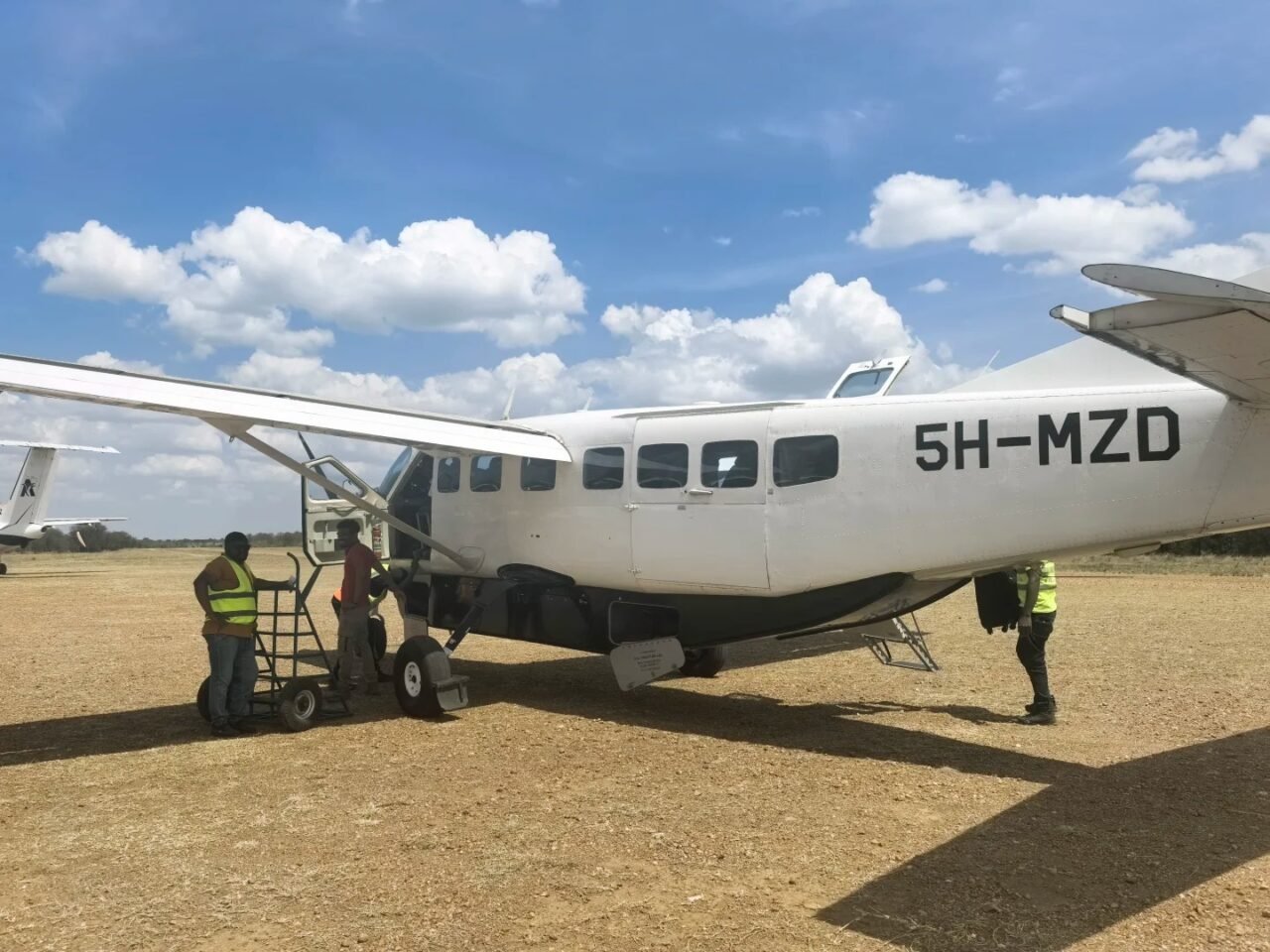
For travelers choosing the fly-in route to Lake Manyara Airstrip (LKY), the experience differs significantly from commercial air travel. Understanding the operational constraints of these bush flights is essential for managing expectations regarding comfort, timing, and cargo. Unlike the jetliners that land at Kilimanjaro International (JRO), the aircraft serving the Ngorongoro region are typically light, twin-engine turboprops or single-engine utility planes, such as the Cessna Grand Caravan. These aircraft are workhorses designed for short, unpaved runways and rapid turnarounds.
When you book a bush flight, you are not just purchasing a seat; you are entering a logistical ecosystem where weather and weight are the primary variables. Pilots on these routes often navigate by visual flight rules (VFR), meaning that heavy cloud cover or low visibility over the Rift Valley escarpment can lead to delays or rerouting. Unlike major airlines, these carriers do not have vast fleets of standby planes. If a mechanical issue occurs, maintenance teams must be flown in, or the aircraft must be repositioned. This is why seasoned safari operators always include a buffer period in itineraries, ensuring that a minor flight delay does not jeopardize your scheduled game drive or crater descent.
The Weight Limit Reality
The most frequent friction point for travelers arriving by air is the baggage policy. Because bush planes have strict maximum takeoff weights, airlines impose rigorous luggage restrictions—usually capped at 15 kilograms (33 pounds) per person, inclusive of carry-on items. Furthermore, your suitcase must be a soft-sided duffel bag. Rigid, hard-shell suitcases are notoriously difficult to stow in the narrow cargo pods or internal luggage holds of light aircraft. If you arrive at the terminal with a hard-shell suitcase that exceeds the dimension limits, the pilot may refuse to load it, or you may be forced to pay for an additional seat to accommodate the bag. Planning your packing strategy around these constraints is a critical part of the pre-trip preparation.
The “Flight-to-Vehicle” Handover
The transition from air to land is a choreographed sequence. When your plane touches down on the dirt strip at Lake Manyara, your safari vehicle is typically waiting within a few meters of the parking bay. This is the moment your “safari home” begins. Your driver-guide, who will likely be with you for the duration of your trip, will meet you on the tarmac. This person is not just a driver; they are your primary source of local knowledge, safety, and navigation. Because the airstrip is located outside the Ngorongoro Conservation Area, the first hour of your journey is a road transit through local Tanzanian villages and agricultural lands. This “buffer zone” drive provides a stark contrast to the protected wildlife areas you are about to enter, offering a glimpse into the daily life of the communities living on the periphery of the crater.
Weather-Dependent Operations and Safety
It is important to acknowledge that bush flights are inherently weather-dependent. During the long rainy season (typically March through May), airstrips can become muddy or waterlogged, occasionally rendering them unusable for heavier aircraft. While airlines prioritize safety above all else, this can lead to last-minute cancellations or diversions to alternative airstrips. If your flight is diverted to a different landing strip, your operator must be agile enough to reroute your pickup vehicle. This is why, when booking these flights independently, you risk being stranded if you do not have a ground operator tracking the movement of your flight in real-time. A professional operator acts as the central nervous system, coordinating between the airline’s dispatch office and the driver on the ground, ensuring that even if the landing location changes, your transport remains waiting for you.
The Visual Experience of the Approach
One of the most compelling reasons to choose the flight over the drive is the aerial perspective. Flying into the Lake Manyara Airstrip allows you to see the Great Rift Valley escarpment from above—a perspective that truly illustrates the geological scale of the region. As you descend toward the airstrip, you will often fly parallel to the massive wall of the escarpment, providing a panoramic view of the lake and the dense forests that cling to the valley sides. For photographers, this approach is a unique opportunity to capture the landscape from an angle that is impossible to replicate from a safari vehicle. If you are seated in a window seat, ensure your camera is accessible (and your memory card cleared) before takeoff, as the descent is often the most visually rewarding portion of the flight.
Navigating the “Milk Run” Bush Flight Network
When booking a flight to the Ngorongoro region, it is essential to understand that regional aviation in Tanzania rarely operates as a direct point-to-point service. Instead, most carriers utilize a “milk run” model, where a single aircraft may service three to five different airstrips in a single loop. If you are flying from the Serengeti to Lake Manyara (LKY), your flight may stop at two or three other airstrips along the way to pick up or drop off passengers. This operational reality is why flight schedules are often published as “approximate” departure times rather than fixed slots.
For the traveler, this means your flight time is fluid. You might be scheduled for a 10:00 AM departure, but the aircraft could arrive at your airstrip at 10:30 AM because it was delayed picking up passengers at a remote bush strip elsewhere. This is not a failure of service but an inherent characteristic of maximizing fuel efficiency and aircraft utilization in a low-density environment. When planning your itinerary, never book a tight connection on the same day as your international flight out of Kilimanjaro (JRO). Always factor in a three-to-four-hour buffer for these multi-leg hops, as the cumulative delays of multiple stops can easily push your arrival back by an hour or more.
The Communication Protocol: Coordinating the Landing
Unlike commercial airports where air traffic control manages runway slots, remote airstrips rely on a sophisticated, low-tech communication loop between the pilot and the ground operator. In the minutes before a bush plane lands, the pilot will typically radio the ground agent or the safari operator’s office to confirm the landing time and passenger manifest. This communication is the “secret sauce” of a smooth safari.
If you are arriving at Lake Manyara, your safari vehicle driver is likely already parked at the edge of the airstrip, scanning the horizon for the specific markings of the aircraft. Because there are no arrival boards or terminal PA systems, the driver relies on the direct radio link from the pilot to know exactly which plane is yours. This is why it is critical that your safari operator has your flight number and airline details at least 48 hours in advance. If the airline changes the aircraft type or the flight sequence, that information must be relayed to the driver immediately. Without this active loop of communication, the driver might be waiting at the wrong end of the runway or, in some cases, at the wrong airstrip entirely if the flight was diverted due to weather or runway conditions.
Luggage Strategy: The Physics of the Cargo Pod
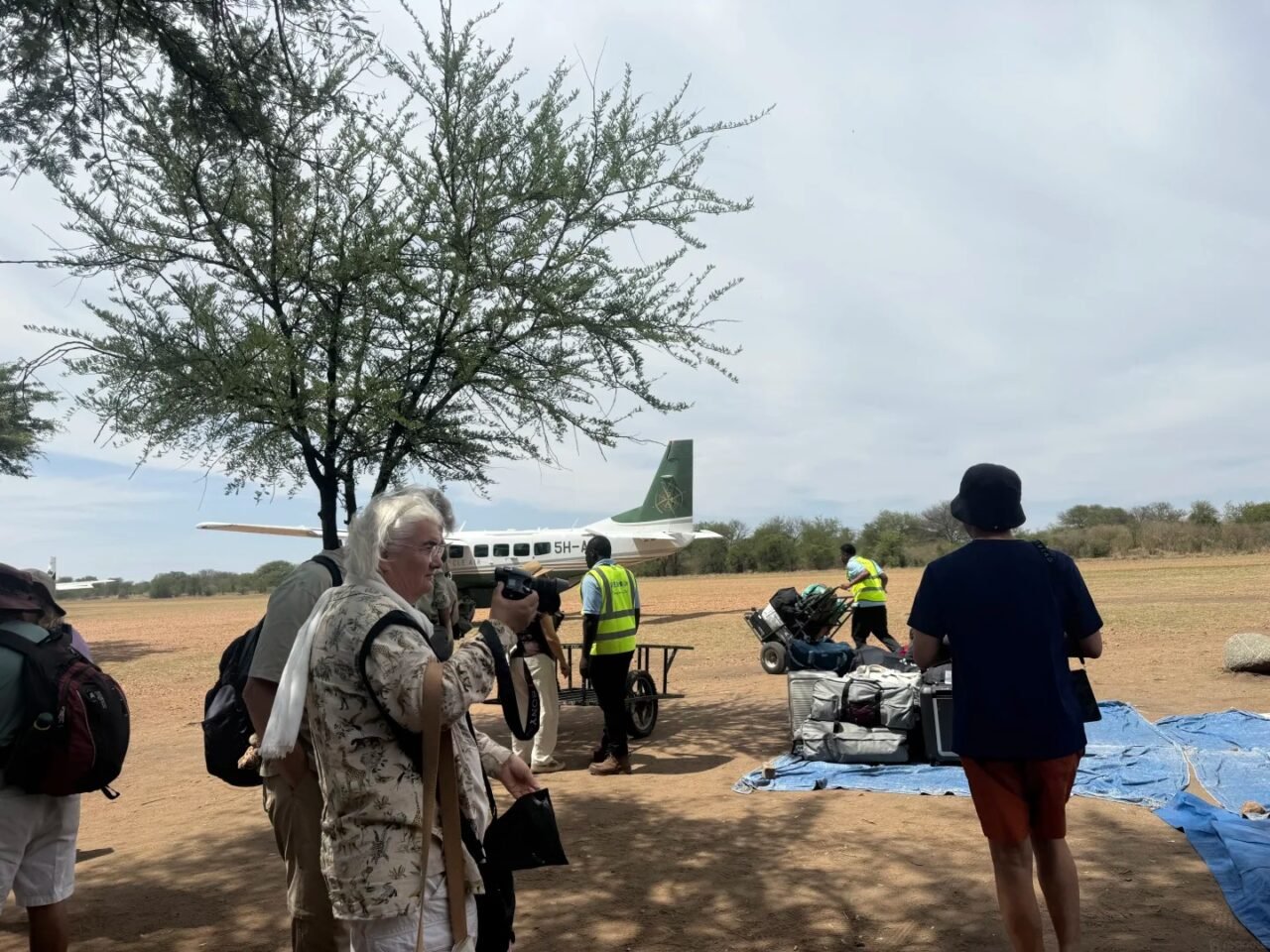
While most travelers are aware of the strict weight limits (typically 15kg or 33lbs per person), the physical dimensions of your luggage are just as important as the weight. Small bush planes, such as the Cessna Caravan, utilize external cargo pods mounted underneath the fuselage. These pods are narrow and have specific curvature constraints. A standard hard-shell suitcase, even if it weighs exactly 15kg, is often rejected by the pilot because its rigid, rectangular shape cannot physically fit through the narrow cargo door or sit flush against the pod’s interior walls.
To avoid a situation where you are forced to leave luggage behind at the airstrip, you must utilize soft-sided duffel bags. These bags are malleable, allowing them to be compressed and squeezed into the odd-shaped nooks of the cargo pod. Furthermore, avoid bags with heavy, rigid frames or wheels that cannot be collapsed. If you are carrying camera equipment, the best practice is to carry your primary camera bodies and lenses in a soft, padded backpack that can fit under your seat in the cabin, rather than checking them in the cargo pod. This ensures your gear remains with you, protected from the vibrations of the flight and the temperature fluctuations in the unpressurized cargo hold.
The Myth of the “Guaranteed” Crater Floor Experience
While the logistics of flying into the region are focused on efficiency and weight management, the primary motivation for arriving via air is to maximize time on the crater floor. However, travelers often arrive with a misconception about what a “Ngorongoro Safari” actually entails. Because the crater is a finite, contained ecosystem—a 260-square-kilometer caldera—it operates under a strict set of regulations that differ significantly from the open plains of the Serengeti. Understanding these constraints is vital for managing your expectations once your bush plane lands and your vehicle transfer is complete.
First and foremost, the Ngorongoro Conservation Area Authority (NCAA) enforces a strict “six-hour rule” for crater floor descents. Unlike other parks in Tanzania where you might spend the entire day from dawn until dusk roaming freely, your time on the crater floor is strictly metered. This is not a limitation of your driver’s ability or your vehicle’s capability, but a deliberate conservation management strategy to prevent overcrowding and reduce stress on the wildlife. When you book your safari, your operator is essentially scheduling a “slot” for your vehicle. If your flight arrives late at Lake Manyara Airstrip due to weather or ATC delays, you risk missing your designated entry window, which can drastically shorten or even cancel your opportunity to descend into the caldera that day.
The Reality of Wildlife Sightings
It is common to see marketing materials featuring high-definition, close-up shots of lions, black rhinos, and leopards in the crater. While the Ngorongoro Crater boasts one of the highest densities of predators in Africa, no operator can guarantee specific wildlife sightings. The crater is a dynamic, wild environment. There are days when the floor is teeming with activity, and days when the animals seek shelter in the dense forests of the crater walls or move to the more remote corners of the caldera, away from the main tourist circuits.
The “crowd factor” is another reality of the crater experience. Because the floor is a relatively small, accessible area, safari vehicles tend to congregate around significant sightings. If a pride of lions is spotted, you will likely see a cluster of vehicles. This is an inherent part of the Ngorongoro experience. If you are seeking a solitary, off-road, or “private” wildlife encounter, the crater floor may not meet that specific expectation. Those seeking solitude are often better served by spending more time in the Serengeti or the quieter, peripheral regions of the Ngorongoro Conservation Area, such as the Empakaai Crater or the Olmoti Crater, which require walking safaris and offer a completely different, more secluded dynamic.
Navigating the “Crater Rim vs. Floor” Distinction
Many travelers conflate the “Crater Rim” with the “Crater Floor.” Your accommodation is almost certainly located on the rim, high above the caldera. The flight to Lake Manyara brings you to the base of the Great Rift Valley, and the drive up to the rim is a significant ascent in elevation. The air is thinner, and the temperature is markedly cooler at the rim than it is on the floor or at the airstrip. This elevation difference is critical for your packing strategy—layers are essential. You may start your day in the humid heat of the base and end it in the chilly, misty conditions of the rim.
Furthermore, the descent into the crater is a steep, winding road that takes roughly 20 to 30 minutes. This is a one-way traffic system for much of the descent. Once you are down, you are committed to the floor until your allotted time expires. There are no “quick exits” if you have forgotten a camera battery or if the weather turns. Your vehicle must be fully equipped for the day before you descend. This includes sufficient water, snacks, and, crucially, a pair of high-quality binoculars for every passenger. Because you must stay on designated tracks, you cannot drive off-road to get closer to a sighting. The animals, however, have no such restrictions; they often cross the roads, and you may find yourself sitting in your vehicle while a herd of elephants or a pride of lions walks right past your window. This is the hallmark of the crater experience: the animals are habituated to the vehicles, allowing for closer observation than in many other parts of Tanzania, provided you respect the distance and the traffic rules.
Managing the “Safari Fatigue” Factor
By the time many visitors reach Ngorongoro, they have already spent several days on safari in other parks. It is easy to fall into the trap of “sighting fatigue,” where you become desensitized to common animals like zebras, wildebeest, or gazelles. However, the Ngorongoro Crater offers a unique context. Because it is a self-contained ecosystem, the animal behavior here is distinct. You are observing a closed population. Watching how the apex predators interact with this specific, contained prey base provides a different educational value than observing the vast, migratory herds of the Serengeti. Use your time here to observe behaviors—the grooming, the social dynamics, and the interaction with the landscape—rather than just checking species off a list. This shift in perspective often transforms a good safari into a truly memorable one, regardless of whether you spot the “Big Five” in a single morning.
The Geometry of the Journey: Understanding Travel-Day Trade-offs
When analyzing the transit logistics between your arrival point and the Ngorongoro Conservation Area, it is a mistake to view travel time simply as a calculation of distance divided by speed. The geography of Northern Tanzania is defined by dramatic elevation changes, unpredictable road conditions, and the reality of the “bush road” network. Travelers often underestimate how the transition from a paved highway to a gravel access road alters the pace of the journey, turning what looks like a short distance on a map into a significant commitment of time.
The trade-off between flying and driving is rarely about the raw speed of movement; it is about the conservation of energy. If you opt for a “fly-in” strategy to Lake Manyara Airstrip, you are effectively trading the fatigue of a long overland transit from Arusha for the logistical complexity of coordinating a bush flight. While the flight itself may only take 30 to 45 minutes, the process involves arrival at the terminal, luggage weighing, security checks, and the inevitable waiting periods inherent to regional aviation. Conversely, the overland drive from Arusha offers a continuous, albeit longer, journey that allows you to acclimatize to the landscape gradually. The key differentiator is the “Safari Transition”—the mental shift from the urban environment to the wilderness. Driving allows for a slow immersion, whereas flying creates a jarring, rapid arrival.
The Hidden Variable: Road Surface Variability
One of the most frequent misconceptions involves the quality of the roads leading to the crater rim. While the main arterial roads connecting Arusha to the conservation area entrance are largely paved, the final stretches—particularly as you ascend toward the crater rim or navigate between lodges—frequently transition to compacted dirt or gravel. These surfaces react violently to weather conditions. During the rainy season, these roads can become slick, muddy, or even temporarily impassable, forcing detours that can add hours to a travel day. A flight into Lake Manyara Airstrip bypasses the long, paved highway stretch but does not eliminate the need for the final, potentially rugged drive up the escarpment. When evaluating your travel day, assume that the final 20% of your journey will always take 50% of the time, regardless of how you arrived in the region.
Analyzing the “Transit Day” Fatigue Factor
Travel days are notoriously draining, and the Ngorongoro region is no exception. If you are arriving from an international flight into Kilimanjaro (JRO) and immediately attempting to transit to the crater, you are essentially stacking a long-haul flight on top of a 3-to-4-hour drive. This cumulative fatigue is often the silent killer of an otherwise perfect safari. Many travelers underestimate the impact of altitude. As you move from the low-lying plains toward the Ngorongoro rim, the elevation climbs significantly—reaching over 2,300 meters (7,500 feet) in some areas. This altitude gain can exacerbate dehydration and travel exhaustion. Choosing to break the journey with an overnight stay in Arusha or at a lodge near the base of the escarpment acts as a buffer. It allows you to enter the conservation area fresh, rather than arriving at your lodge in a state of sensory overload and physical depletion.
The Economics of Convenience vs. Experience
It is tempting to view the flight as the “premium” option and the drive as the “budget” option, but this is a reductionist view. The flight is a utility for those with limited time; the drive is an experience for those with limited flexibility. If you have only four days for your total safari, the flight is mandatory to ensure you have sufficient time on the crater floor. However, if your itinerary spans a week or more, the drive provides a vital opportunity to witness the changing vegetation zones of Tanzania—from the dry, dusty plains of the lowlands to the lush, verdant forests that cling to the crater walls. When deciding, prioritize your “time-on-ground” requirement. If your goal is to maximize wildlife viewing hours, the flight is the only logical choice. If your goal is to understand the geography and scale of the region, the drive is superior.
Logistical Buffer Zones: Why You Should Never Schedule Tight Connections
A critical rule for any Ngorongoro transit is to build in a “buffer zone.” Whether you are flying or driving, regional transport in Tanzania is prone to delays. Bush flights are often subject to “daisy-chaining,” where a single delay at the first stop of the day ripples through the entire schedule. Similarly, road traffic—be it heavy trucks on the main highways or local livestock crossings—can cause unpredictable slowdowns. Never schedule a flight or a transfer that relies on a perfect, minute-by-minute execution. A safe itinerary assumes that your arrival at the lodge will be at least two hours later than the theoretical travel time. This buffer prevents the stress of missed check-in windows, late-afternoon gate closures, or the frustration of arriving at your accommodation after dark, when the scenery of the crater rim is hidden and the temperature has already dropped sharply.
The Accommodation Access Matrix: How Lodging Location Dictates Your Transit Path
While the airport is the starting point, your final destination—the specific lodge or camp where you intend to sleep—is the primary variable that dictates the efficiency of your transit. A common mistake among first-time safari planners is assuming that all “Ngorongoro” accommodations are equidistant from the airstrips or the main entry gates. In reality, the Ngorongoro Conservation Area (NCA) is vast, and the distinction between “Rim Lodges” and “Highlands/Farmhouse Lodges” fundamentally changes your logistical requirements.
The Rim-Dweller Logistics: The Necessity of Precision
If you have booked a lodge directly on the crater rim, you are paying a premium for the view and the proximity to the descent roads. However, this proximity comes with a strict logistical requirement: timing. The descent roads into the crater are heavily regulated, with specific “up” and “down” traffic flows designed to prevent congestion. If you fly into Lake Manyara Airstrip and require a transfer to a rim lodge, your vehicle must navigate the Loduare Gate and then climb the steep, winding roads to the top. This drive can take significantly longer than the distance suggests due to the steep incline, speed restrictions within the conservation area, and the potential for wildlife sightings (such as elephant crossings) that naturally slow traffic.
For those staying on the rim, the “fly-in” experience is often a high-pressure logistical event. If your bush flight arrives at Lake Manyara at 2:00 PM, you must account for the 30-minute drive to the park gate, the administrative paperwork for entry permits, and the 60-to-90-minute drive to the rim. If you arrive late, you risk missing the “golden hour” of the rim, which is arguably the most valuable time to be at your accommodation. Guests staying on the rim should prioritize early-morning flights to ensure they are settled before the late afternoon mist rolls in, which can often reduce visibility to near zero and make the final approach to the lodge feel disorienting.
The Highlands and Farmhouse Alternative: A Buffer for the Transit-Weary
Conversely, if you choose to stay in the Karatu area—the “Highlands” region located just outside the Ngorongoro Conservation Area gates—your transit logistics are markedly different. This area is often favored by travelers who want a more relaxed pace or those who are combining the crater with visits to Lake Manyara or Tarangire. From a logistical standpoint, staying in Karatu acts as a “buffer zone.” You are not bound by the strict gate-closing times of the NCA for your evening arrival, and you are positioned to start your crater ascent early the next morning without the need for a long, pre-dawn transit from the airport.
For travelers flying into Lake Manyara, the transfer to a Karatu lodge is significantly shorter and less demanding than the transfer to the rim. This allows for a more flexible arrival window. If your bush flight is delayed—a common occurrence in the regional network—the impact on a Karatu-based itinerary is minimal. You are not racing against the setting sun to reach a remote lodge on the crater edge. This choice essentially trades the “immediate immersion” of the rim for a more predictable, stress-free arrival day.
Evaluating the “Access Burden” of Remote Camps
There is a third category of accommodation: the remote camps located further afield within the NCA, often near the Olmoti or Empakaai craters. These locations require specialized transit arrangements. If you are staying at one of these remote properties, a standard transfer from the airstrip is rarely sufficient. You will likely require a dedicated 4×4 vehicle capable of handling deeper, less-maintained tracks. When booking, it is imperative to verify whether your lodge provides a “meet and greet” service at the airstrip or if you are expected to coordinate a private transfer. Relying on a generic transfer service to reach a remote camp is a recipe for logistical failure, as these drivers may lack the specific permits or vehicle clearance required to navigate the secondary roads that lead to these secluded areas.
Why Luggage Type Matters More Than Weight
While the “weight limit” of bush flights is a frequently discussed topic, the *type* of luggage is often overlooked until it is too late. Because you are moving from a light aircraft into a safari vehicle, the physical dimensions of your bag are as critical as its weight. Hard-shelled suitcases are notoriously difficult to pack into the cargo pods of Cessna Caravans and the tight storage compartments of safari Land Cruisers. They do not flex, meaning they take up a disproportionate amount of space, often forcing operators to leave behind items or upgrade to a larger, more expensive vehicle just to accommodate your gear. Soft-sided duffel bags are the industry standard for a reason; they can be compressed to fit into the irregular storage spaces of both planes and vehicles. When planning your transit, view your luggage as part of the vehicle’s geometry. If your bags are rigid, you are effectively reducing the capacity of your transfer, which can lead to unexpected surcharges or the need for a private vehicle transfer rather than a shared shuttle.
The Inter-Park Connectivity Trap: Why “Chaining” Flights Increases Risk
For many travelers, the Ngorongoro Crater is the centerpiece of a larger Tanzanian circuit, often following a multi-day stint in the Serengeti. This creates a common logistical desire: to fly directly from the Serengeti (usually Seronera or Kogatende airstrips) to Lake Manyara (LKY). While this flight path exists, it is critical to understand that the Tanzanian bush flight network is not a point-to-point shuttle service. It is a highly dynamic, hub-and-spoke system that relies on “milk runs”—flights that stop at multiple airstrips to pick up and drop off passengers before reaching their final destination.
When you book this connection, your itinerary is susceptible to what operators call a “logistical cascade.” If a flight originating in the Northern Serengeti is delayed by a late passenger, a mechanical check, or weather conditions at an intermediate stop, that delay compounds. By the time the aircraft reaches the Lake Manyara airstrip, you may be several hours behind schedule. This is particularly problematic for travelers who have pre-booked a private transfer vehicle to meet them at a specific time. Unlike a commercial airline, where ground handling teams monitor connections, bush flight operators rarely coordinate with your private safari driver. If you miss your window, your driver may have already left the airstrip to service another client or reach their own accommodation, leaving you stranded at a remote airstrip with limited communication infrastructure.
Scheduled Bush Flights vs. Private Charters: Analyzing the Trade-offs
The decision to utilize a scheduled bush flight versus a private charter is often framed as a luxury choice, but it is more accurately a risk-management decision. Scheduled flights are the standard for 95% of safari travelers. They are cost-effective, reliable within the context of bush operations, and integrated into the established tourism flow. However, they lack flexibility. You are beholden to the airline’s fixed schedule, which often dictates that you must depart early in the morning to avoid the afternoon thermals and turbulence common in the Rift Valley.
Private charters, by contrast, offer a “bespoke” logistical experience. You dictate the departure time, which can allow for a final morning game drive in the Serengeti before flying to Manyara. More importantly, a private charter eliminates the “milk run” risk. The aircraft is yours from takeoff to landing, meaning there are no intermediate stops to pick up other passengers. For families or groups of four or more, the cost difference between four individual seats on a scheduled flight and a private charter can sometimes be bridged, particularly when factoring in the value of the extra half-day of safari time gained. However, private charters are also subject to the same strict safety protocols and weather limitations as scheduled flights; owning the plane does not give you immunity from the decision to ground flights due to visibility or wind.
The “Last-Minute Pivot”: Handling Flight Cancellations in the Bush
The most significant operational risk to your Ngorongoro itinerary is not the flight itself, but the “go/no-go” decision made by the pilot. Lake Manyara Airstrip sits at the base of the Great Rift Valley escarpment. During the rainy season, or even during periods of heavy cloud cover, the airstrip can become inaccessible. If your flight is canceled, you are suddenly faced with the “Plan B” scenario, which is almost always a long-distance road transfer.
When a flight cancellation occurs, the airline will typically offer to fly you to the nearest operational airport—often Arusha (ARK) or Kilimanjaro (JRO)—rather than Manyara. This requires a complete pivot in your logistics. If you were expecting a 60-minute transfer from Manyara to the Ngorongoro Conservation Area, you are now looking at a 3-to-4-hour drive from Arusha. This is why experienced operators always recommend building a “buffer” into your travel day. Do not schedule a crater floor tour for the afternoon of your arrival day if you are flying in. The logistical reality of bush travel requires that you treat your arrival day as a “transit day” first and a “safari day” second. If you arrive early, consider it a bonus; if you arrive late, your itinerary remains intact because you haven’t pre-booked activities that require your physical presence at the crater floor.
The Geometry of Airstrip Access: Why Distance Varies by Lodge
It is a common misconception that all lodges in the Ngorongoro region are accessed via the same route from the Lake Manyara airstrip. In reality, the “access burden” varies significantly based on where your lodge is located relative to the park gates. Lodges located near the Loduare Gate (the main entrance) enjoy a relatively straightforward transit. However, properties located further along the crater rim or deep within the Karatu Highlands require traversing significantly different road conditions.
Before confirming your flights, request a specific “transfer time estimate” from your lodge, not just a distance estimate. In the Ngorongoro region, 30 kilometers can take anywhere from 45 minutes to two hours depending on whether you are navigating the paved roads of Karatu or the heavily rutted, seasonal tracks that lead to more remote rim-side accommodations. If your flight arrives at 2:00 PM, a 90-minute transfer puts you at your lodge just as the sun is beginning to dip, which is ideal for a sundowner. A 3-hour transfer, however, means you are spending your first afternoon in the back of a vehicle, missing the opportunity to settle into the environment. Always align your flight arrival time with the specific transit requirements of your accommodation to ensure you aren’t spending your entire first day in transit.
The Seasonal Wildlife Pulse: Aligning Flight Schedules with Migration Patterns
While the Ngorongoro Crater is often marketed as a year-round destination, the reality of wildlife distribution and accessibility is governed by the seasonal pulse of the Serengeti-Mara ecosystem. When planning your flight logistics, it is a mistake to view your transit as a static event independent of the time of year. The timing of your flight—and the subsequent transfer—can significantly alter the quality of your experience, particularly when considering how wildlife density shifts between the crater floor and the surrounding conservation area.
During the green season, typically spanning from late November through April, the short and long rains transform the landscape. While many travelers assume the crater floor is the only place to see game, the surrounding Ngorongoro Highlands and the Serengeti plains to the west become highly productive. If you are flying into Lake Manyara during these months, you may find that the wildlife is more dispersed. The “flight-to-vehicle” handover during this season requires extra flexibility. Muddy roads can increase transfer times from the airstrip to your lodge by 30 to 50 percent. If you are flying in during a period of heavy rainfall, adjust your expectations: your transfer from the airstrip to the lodge is not just a commute; it is the beginning of the safari. Drivers often need to navigate slower, more cautious routes to avoid getting bogged down in black cotton soil, which is notorious for swallowing vehicle tires.
Conversely, the dry season—from June to October—presents a different logistical challenge. As water sources on the Serengeti plains dry up, wildlife congregates in the crater bowl. This is the peak demand period for both bush flights and road transfers. Because the crater becomes the central hub for wildlife, the road traffic at the entry gates (specifically the Loduare and Seneto gates) can be intense. If your flight lands at Lake Manyara at midday during the peak of the dry season, you may find yourself caught in a bottleneck of safari vehicles entering the conservation area. This is a critical factor for flight planning: choosing a morning flight, which lands before the main wave of arrivals from Arusha or Kilimanjaro, can save you hours of waiting at park entry checkpoints.
The “Shoulder Season” Flight Strategy
The shoulder seasons (May and November) offer a unique logistical advantage for those willing to embrace a degree of unpredictability. During these transition months, wildlife movements are fluid. You might find that the herds have not yet migrated fully into or out of the crater, leading to high concentrations in the transition zones between the Highlands and the crater rim. Flying in during these months often requires a “wait and see” approach to your daily itinerary. Because the weather patterns are less stable, bush flights are more susceptible to morning fog or sudden cloud cover over the Rift Valley escarpment. Travelers who prioritize flexibility—choosing to keep their afternoons open upon arrival—are the ones who best manage the inherent instability of shoulder-season travel.
It is also essential to understand that wildlife activity in the Ngorongoro region is not restricted to the floor. Many lodges located on the rim offer spectacular views of the crater, but the surrounding forests and grasslands are home to significant populations of elephant, buffalo, and leopard. If you fly into the region and find that the crater floor is crowded with vehicles, the surrounding conservation area often provides a quieter, more intimate viewing experience. When coordinating your transfer from the airstrip, discuss with your operator the possibility of a “scenic transfer.” Rather than taking the most direct, paved route to your lodge, ask if the driver can route through areas of the conservation area that are less frequented by day-trippers. This turns your transfer day into a productive game drive, maximizing the value of your travel time.
Managing Wildlife Expectations During Transit
There is a persistent myth that the wildlife experience only begins once you descend into the caldera. This creates a psychological hurdle for travelers during their transit from the airstrip. By viewing the transfer from Lake Manyara Airstrip to the Ngorongoro Conservation Area as a distinct “safari segment” rather than a chore, you mitigate the fatigue of travel. This is particularly relevant when you consider the varied terrain. The ascent from the Rift Valley floor up to the crater rim is one of the most visually dramatic drives in Tanzania. You pass through distinct ecological zones—from the dry, acacia-studded plains of the floor to the lush, high-altitude rainforests of the rim. This transition is, in itself, a wildlife experience. Keep your camera accessible during your transfer; it is not uncommon to spot giraffes, baboons, or even elephants in the forests lining the road long before you reach the crater gates.
Ultimately, the most successful itineraries are those that acknowledge the fluidity of the environment. If you are flying in during a period of high animal concentration, prepare for busier park gates and slightly longer wait times for your transfer. If you are traveling during the green season, prepare for slower road speeds and more cautious driving. By aligning your expectations with the seasonal pulse of the region, you stop fighting the logistics and start integrating them into the fabric of your safari.
The Mechanics of the Handover: Coordinating Guides and Vehicles
The most critical, yet often overlooked, aspect of the “fly-in” transition is the synchronization between your bush flight pilot and your ground safari guide. Unlike arriving at a major international airport where your transfer driver might be waiting at a designated arrivals hall, a bush airstrip like Lake Manyara operates as a fluid, often unstructured environment. There is no central dispatch office for all operators at these remote strips. Instead, the handover relies on a communication chain that begins hours before your wheels touch the tarmac.
When you book a fly-in safari, your operator is essentially managing two distinct logistical streams: the aerial transport (often subcontracted to a bush airline) and the ground transport (managed by your safari operator). A successful handover requires your ground guide to be physically present at the airstrip before your plane lands. This is not a matter of convenience; it is a necessity for security and efficiency. Because these airstrips are unfenced, wildlife—including buffalo, zebra, and occasionally lions—can encroach on the runway. Your guide acts as both a chauffeur and a safety monitor, ensuring that your luggage is secured and you are safely inside the vehicle before the aircraft departs, as the pilot often needs to vacate the strip quickly to accommodate incoming or outgoing traffic.
The “Meet-and-Greet” Protocol at Remote Airstrips
At an airstrip like Manyara, there are no luggage carousels or porters. The process is manual and intimate. As the plane taxis to a stop, the pilot will typically open the cargo pods, and your guide will be there to assist in the physical transfer of your bags. This is the moment to confirm that your specific vehicle is ready. It is highly recommended that you establish a clear communication channel with your safari operator at least 24 hours prior to your flight. Confirm the tail number of your aircraft if possible, or at the very least, ensure your operator has your flight number and expected arrival time. In the event of a flight delay—which is common due to the “milk run” nature of these bush flights—your operator needs to know exactly when to mobilize. If they are waiting for you at the airstrip, they cannot be conducting game drives elsewhere, which highlights why tight communication is the only way to avoid wasted time.
Vehicle Logistics and Permit Handling
Once you are in the vehicle, the transition from “transit mode” to “safari mode” should be smooth. However, this relies on your guide having already processed the necessary paperwork. Entry into the Ngorongoro Conservation Area (NCA) requires specific permits. If your guide has not pre-arranged these, or if there is a discrepancy in your documentation, you may find yourself waiting at the gate while the guide navigates administrative hurdles. Experienced operators prioritize “pre-clearing” these logistics. When you are booking your transfer, ask specifically if the guide will have the permits ready upon arrival at the airstrip or if there will be a stop at the gate office. Reducing the number of stops between the airstrip and your lodge is the single most effective way to maintain the momentum of your trip.
Furthermore, consider the vehicle type used for your transfer. Many travelers assume they will be picked up in a rugged, open-sided Land Cruiser immediately upon landing. However, depending on the distance between the airstrip and your final destination, some operators utilize a more comfortable, closed-body vehicle for the initial transfer to the lodge, switching to the open-sided game-viewing vehicle once you have checked in. Clarify this with your operator. If you prefer to be in your dedicated game-viewing vehicle the moment you leave the airstrip, ensure this is explicitly requested. This allows you to start your game viewing immediately, effectively turning the drive to your lodge into an unofficial safari.
Managing the “Guide-to-Guest” Relationship During Transit
The drive from the airstrip to the crater rim is often the first time you are alone with your guide. Use this time effectively. Rather than treating the transfer as a period of inactivity, view it as an orientation session. Your guide is your primary source of local knowledge. Ask about the specific route you are taking—is it the main road, or a more scenic, off-road track? Are there specific ecological markers you should look for as you ascend the escarpment? This is also the time to discuss your preferences for the coming days: do you prefer early starts to beat the crowds, or are you interested in a more relaxed pace? The transit period is the best time to calibrate your expectations and build rapport, ensuring that by the time you reach the crater, your guide already understands your priorities and interests.
The Dynamics of Private vs. Shared Transfers: Weighing Flexibility and Cost
When finalizing your logistics for the Ngorongoro region, you will inevitably face the choice between a private transfer and a shared transfer. While this may seem like a minor administrative detail, it fundamentally alters the rhythm of your arrival and departure days. The decision is not merely financial; it is a choice between autonomy and integration within the broader safari ecosystem.
The Mechanics of the Shared Transfer
Shared transfers are the industry standard for most mid-range and lodge-based safari packages. In this model, you are part of a larger logistical chain. Your operator bundles your arrival with other guests landing on the same flight or arriving at the same time window. This is highly efficient for the operator, as it allows them to maximize vehicle utilization and keep costs lower for individual travelers. However, the trade-off is a loss of control over your immediate schedule. If you are sharing a vehicle with guests staying at a different lodge, you are beholden to their drop-off sequence. If another party has a delayed flight or requires a stop at the gate office for paperwork, your journey to your own accommodation is delayed accordingly.
Furthermore, shared transfers often utilize larger, multi-passenger vehicles that are less conducive to immediate game viewing. These vehicles are designed for transit—getting guests from Point A (the airstrip) to Point B (the lodge) as quickly and safely as possible. They are not necessarily equipped with the pop-up roofs, charging ports, or photography beanbags found in dedicated safari vehicles. If you are a photography enthusiast, this can be a missed opportunity, as the drive from the airstrip to the Ngorongoro Conservation Area often traverses landscapes where wildlife sightings are entirely possible, even if you are technically “in transit.”
The Strategic Advantage of Private Transfers
Opting for a private transfer offers a starkly different experience. By booking a private vehicle, you are purchasing the flexibility to dictate the pace of your arrival. This is particularly valuable if you are traveling with children, have specific dietary requirements that necessitate a stop at a local town, or simply prefer to avoid the social dynamic of sharing a vehicle with strangers after a long flight. A private transfer means the vehicle and the guide are dedicated solely to you from the moment you step off the tarmac.
The most significant advantage of a private transfer is the ability to convert the transit into a “soft-launch” safari. Because the vehicle is yours, you can instruct your guide to stop whenever you see something interesting—a bird, a herd of zebra, or a unique geological formation. You are not bound by the schedule of other guests. If you arrive at the airstrip feeling refreshed and eager to see the crater, a private guide can adjust the route or the speed of the drive to ensure you arrive at your lodge at the optimal time for a sundowner or an afternoon activity. This eliminates the “hurry-up-and-wait” syndrome common in shared transit logistics.
Decision Matrix: Assessing Your Needs
To decide which transfer mode suits your travel style, evaluate the following factors:
- The “Transit Fatigue” Variable: If you are flying in after a long-haul international flight, a shared transfer might be less stressful. You can simply sit back and let the operator manage the logistics. If you are flying in from a domestic location like Zanzibar or Arusha, you are likely fresher and better positioned to benefit from the flexibility of a private transfer.
- Photography Requirements: If you are carrying significant camera gear, private is almost always superior. It allows you to set up your equipment in the vehicle without disturbing others and ensures the vehicle stops exactly where you need it for the perfect shot.
- Budgetary Constraints: Shared transfers are undeniably more cost-effective. If your budget is tight, the savings from a shared transfer can often be reallocated toward a higher-end lodge or an extra night in the crater, which may provide a better overall return on investment than a private vehicle for a single drive.
- Group Size: If you are traveling as a family of four or more, the cost difference between shared and private often narrows significantly. In these cases, a private transfer is frequently the better logistical choice, as you are essentially filling the vehicle anyway.
Managing Expectations with Your Operator
Regardless of whether you choose private or shared, communication is paramount. If you book a shared transfer, ask your operator for the “estimated transit time” including potential stops. Knowing that you might have a 30-minute delay while dropping off other guests allows you to mentally prepare, rather than becoming frustrated by the stop-and-start nature of the journey. If you choose a private transfer, explicitly state your goals for the drive. Tell your guide: “We are interested in photography, so we would like to take the scenic route,” or “We are tired and would prefer the most direct route to the lodge.” This level of clarity prevents misalignment between your expectations and the service provided.
Deconstructing the Financial Components of Your Transfer
When reviewing a quote for a transfer to the Ngorongoro Crater, it is common to see significant price variances between operators. Understanding the architecture of these costs is essential for distinguishing between a premium, reliable service and one that may be cutting corners. A transparent quote should clearly isolate the vehicle costs, driver labor, fuel consumption, and, most importantly, the statutory park fees. Many travelers mistakenly assume that a transfer is a simple point-to-point service, but in the context of the Ngorongoro Conservation Area, it functions as a logistics operation that requires specific permits and equipment.
The “Repositioning” Variable and Empty Legs
The single largest driver of cost in a remote transfer is the “repositioning” or “empty leg” fee. Because your vehicle must be at the airstrip the moment your flight lands, the operator must account for the time and fuel required to get the vehicle and driver to that location from their base—often Arusha or a nearby lodge. If you are flying into a remote airstrip, the vehicle might spend three or four hours driving empty just to meet you. When you see a high price for a relatively short transfer, it is rarely just for the drive itself; it is for the operational necessity of having a 4×4 vehicle and a professional guide stationed at a remote location, ready to meet your specific flight time.
Distinguishing Between “Transit” and “Game Viewing” Permits
A critical, often overlooked element of your budget is the distinction between a transit permit and a game-viewing permit. Many travelers request a transfer that includes “stops for wildlife viewing” along the way. However, the Ngorongoro Conservation Area Authority (NCAA) regulates vehicle access strictly. If your transfer is booked as a standard point-to-point transit, your driver is legally obligated to take the most direct route to your destination. If you intend to pause for photography, bird watching, or wildlife spotting, the operator must often secure a different type of permit or allocate significantly more time, which increases the cost. A transparent quote will explicitly state whether your transfer includes the ability to stop for wildlife or if it is a “direct-to-lodge” service. Assuming you can turn a transit into a game drive without prior authorization is a common source of friction between guests and drivers.
A Transparency Checklist for Your Safari Quote
To ensure you are comparing “apples to apples” when evaluating quotes from different operators, use the following checklist to interrogate the proposal. If a quote is missing these details, ask for a revision before finalizing your booking:
- Vehicle Entry Fees: Does the quote include the specific vehicle entry fee for the Ngorongoro Conservation Area, or is this a “pay-on-arrival” cost?
- Fuel and Mileage: Is there a cap on the mileage, or is fuel consumption factored into the flat rate?
- Driver-Guide Accommodation: If your transfer involves an overnight stay or a very late arrival, does the quote cover the driver’s lodging and meals, or is this an unexpected expense you will be asked to handle?
- Permit Type: Is the transfer classified as a transit, or does it include game-viewing status? This determines how much freedom you have to stop and explore.
- Buffer Time: Does the price account for waiting time if your bush flight is delayed? Reputable operators will build in a “waiting window” for flight delays without charging an hourly penalty.
Ultimately, the lowest quote is rarely the best deal in the context of remote logistics. A higher price often reflects the operator’s investment in a well-maintained vehicle, a guide with a valid license for the specific transit route, and the logistical flexibility to handle the inherent unpredictability of bush aviation. When you pay for a premium transfer, you are paying for the peace of mind that comes with knowing the vehicle will be there, regardless of whether your flight arrives on time or three hours late due to weather.
The Micro-Climate Factor: Why Your Gear Choice Matters Mid-Transit
While the transfer from Lake Manyara Airstrip or Arusha to the Ngorongoro rim is often viewed as mere logistics, it is actually a transition through three distinct ecological zones. Understanding this is critical for passenger comfort. You begin at the base of the Rift Valley, which is often arid, dusty, and sweltering, especially during the dry season. Within ninety minutes, you are ascending the escarpment toward the Ngorongoro Conservation Area, where the elevation jumps from roughly 900 meters to over 2,300 meters. This rapid altitude gain creates a micro-climate that is significantly cooler—often by 10 to 15 degrees Celsius—and frequently mist-covered.
Many travelers make the mistake of packing their heavy fleece or windbreaker deep within their checked luggage, which is often strapped to the roof or locked in the vehicle’s cargo hold. When the vehicle stops at the Ngorongoro gate for administrative processing, you may be stepping out into a damp, chilly highland wind. Always keep your “layering gear” in your daypack inside the cabin. The transition is not just about temperature; it is about moisture. The crater rim is a cloud forest environment. If your transfer vehicle has been open-sided for game viewing, the driver must be prepared to close the canvas flaps or engage the pop-up roof sealing mechanisms rapidly. Ensure your operator confirms that the vehicle is equipped with high-quality, non-leaking canvas closures, as a standard “open” safari vehicle can become an icebox during a rainstorm on the rim.
Etiquette and Environmental Stewardship During the Transfer
Because the transit route often cuts through buffer zones where wildlife roams freely outside the designated park boundaries, the way you behave inside the vehicle matters. Drivers are often under pressure to reach the lodge before sunset, but this does not excuse poor viewing etiquette. If you spot wildlife during your transit, avoid the urge to stand up or lean out of the windows while the vehicle is moving. The roads can be uneven, and sudden braking or swerving to avoid potholes is common. Furthermore, noise discipline is essential. In the quiet of the bush, sound travels incredibly far; loud conversations or music can alert animals to your presence long before you arrive, causing them to move into the thicket and out of view. Treat the transit as a “soft safari”—keep your camera ready, your voice low, and your movements deliberate. This not only improves your chances of spontaneous wildlife sightings but also respects the driver’s need to maintain focus on the challenging, often unpaved road conditions.
The Regulatory Maze: Why Your Permit Type Dictates Your Route
The Ngorongoro Conservation Area (NCA) operates under a unique administrative framework that differs significantly from Tanzania’s standard National Parks. Unlike the Serengeti, where entry is relatively straightforward, the NCA is a multiple-use area where indigenous Maasai pastoralists coexist with wildlife. This dual-purpose status creates a rigid regulatory environment regarding how you traverse the land. Many travelers assume that once they land at Lake Manyara Airstrip and meet their driver, the route to their lodge is fluid. In reality, your route is strictly governed by the specific entry permit your tour operator has purchased: a “Transit Permit” or a “Game Viewing Permit.”
A Transit Permit is fundamentally designed for logistics. It allows your vehicle to move from a designated entry gate to a designated exit gate (or lodge) via the most direct route possible. These permits are significantly less expensive than Game Viewing Permits because they do not grant you the right to linger. If you are flying into Lake Manyara and taking a transfer to a rim-based lodge, your operator may book a transit permit to save on costs. However, this creates a “no-stop” constraint. If you spot a pride of lions or a rare black rhino near the road, your guide is technically prohibited from pausing to allow for photography. Attempting to game drive on a transit permit is a violation of NCA regulations; if a ranger stops your vehicle and finds you stationary for viewing rather than transit, the vehicle can be fined, and your permit may be invalidated, forcing a costly re-entry.
Conversely, a Game Viewing Permit allows for the flexibility that most safari-goers expect. It authorizes you to move at your own pace, stop for photography, and deviate from the main transit arteries to follow wildlife sightings. When booking your transfer, it is essential to clarify with your operator whether your transfer fee includes a transit permit or a full-day game viewing permit. If you are arriving late in the day, a transit permit is often the only logical choice, as you would not have enough daylight hours to justify the higher cost of a game viewing permit. However, if you are arriving in the morning, upgrading to a game viewing permit essentially turns your “transfer” into your first game drive, allowing you to maximize your time in the caldera ecosystem from the moment you hit the conservation area boundary.
The gate you enter through further complicates this. The Lodoare Gate is the primary entrance for travelers coming from the Lake Manyara/Arusha direction. It is the most efficient point for transit. However, if your lodge is located on the eastern rim near the Lemala entrance, the logistics shift. Using the Lemala gate often requires a different permit strategy, as the road quality and the density of wildlife near the entrance differ from the Lodoare sector. Your operator’s choice of gate is not arbitrary; it is a calculated decision based on your lodge’s specific location, the current status of the road, and the permit type they have secured. Always ask for a copy of your permit documentation if you feel your transfer is being rushed; it serves as the “rulebook” for what your driver is legally permitted to do during your transit.
Related Guides and Packages
Check Availability for How To Fly To Ngorongoro Crater: Nearest Airports & Transfer Prices…
Ready to compare dates, prices, and the best option for your group? Send the package name and travel month so the team can reply with a clear quote, availability, and what is included.

Zanzibar To Ngorongoro Crater: Flight And Road Transfer Costs ( Guide)
A detailed guide on navigating the logistical chain between Zanzibar and the Ngorongoro Crater, covering flight options, airport choices, and the cost variables involved.
View package details
Fly-In Safari To Ngorongoro And Serengeti: Flights & Transfer Costs 2026-2027
Discover the logistics and cost breakdown for a fly-in safari to Ngorongoro and the Serengeti, including airstrip transfers, baggage limits, and vehicle positioning.
View package details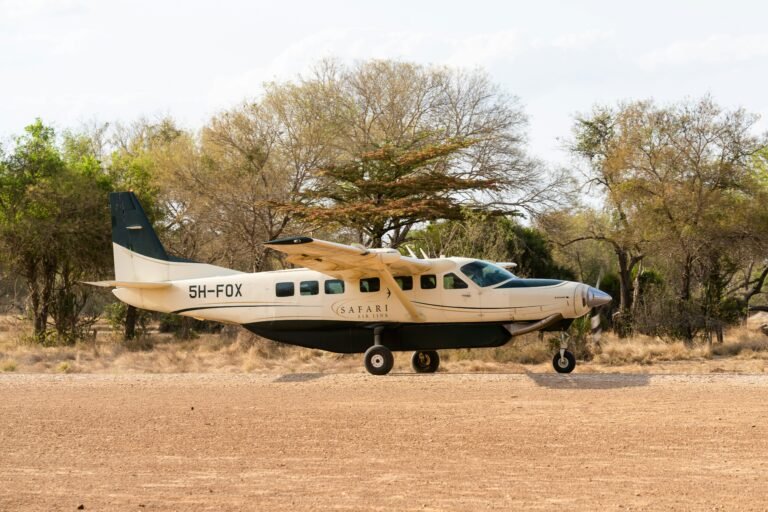
Lake Manyara Airstrip Vs Arusha Airport: Which Is Best For Ngorongoro In ?
Deciding between Lake Manyara Airstrip and Arusha Airport for your Ngorongoro Crater safari? We compare the transfer times, costs, and travel styles to help you choose the right gateway for...
View package details
Nearest Airport To Ngorongoro Crater: Logistics & Planning For 2026-2027
A practical guide to reaching the Ngorongoro Conservation Area, covering the vital difference between international gateways and local airstrips for your 2026-2027 safari itinerary.
View package details
Zanzibar To Ngorongoro Crater Safari By Flight: Price & Travel Options 2027
A deep look at the logistics, costs, and planning decisions required for flying from Zanzibar to start your Ngorongoro Crater Safari, designed for the experienced traveler.
View package details3-Day Serengeti & Ngorongoro Safari From Zanzibar By Flight 2027
3-Day Serengeti & Ngorongoro Safari From Zanzibar by Flight is explained with current 2027 planning, price, itinerary and booking information.
View package detailsIs Serengeti Or Ngorongoro Better For A First Tanzania Safari? 2027
Is Serengeti or Ngorongoro Better for a First Tanzania Safari? is explained with current 2027 planning, price, itinerary and booking information.
View package details
Serengeti Airstrip Transfer Prices: From Plane To Safari Lodge 2027
Serengeti Airstrip Transfer Prices: From Plane to Safari Lodge is explained with current 2027 planning, price, itinerary and booking information.
View package details
Serengeti To Zanzibar Flight Baggage Limits And Transfer Costs Guide () 2027
This deep-dive guide covers everything you need to know about baggage restrictions and transfer expenses when flying from the Serengeti region to Zanzibar, ensuring smooth travel planning.
View package details
Zanzibar To Serengeti Flight Price –: Planning Your Safari Transfer 2027
Navigate the complex flight and transfer options between Zanzibar and the Serengeti. This deep guide breaks down expected costs, seasonal variables, and optimal routing for 2026 and 2027...
View package detailsSerengeti To Zanzibar Vs Arusha To Which Is Better After Safari? 2027
Choosing the right transfer to Zanzibar after a safari—Serengeti to Zanzibar or Arusha to Zanzibar—depends entirely on your safari route, time constraints, and budget. This guide breaks...
View package detailsZanzibar To Lake Manyara Flights: Prices & Safari Transfers 2026-2027
Zanzibar to Lake Manyara Flights: Prices & Safari Transfers is explained with current 2026-2027 planning, price, itinerary and booking information.
View package detailsNo related package matches those filters. Clear one or more filters to see the other topic-matched options.



