
If you are planning to combine a safari in Kenya’s Maasai Mara with a visit to Tanzania’s Serengeti, you are looking at one of the most iconic wildlife routes in Africa. However, the reality of Kenya to Tanzania safari flights is more complex than a simple direct commercial hop. Most travelers do not fly directly from a bush strip in the Mara to a bush strip in the Serengeti because of border regulations and customs requirements. Instead, the standard, most reliable route involves flying from Nairobi (Wilson Airport) to Arusha or Kilimanjaro International, or using a land-based border crossing at Isebania for a shorter, more cost-effective transit. When air travel is your priority, we recommend coordinating these connections through a single operator to ensure your luggage limits, visa timing, and vehicle transfers align perfectly.
The Reality of Cross-Border Safari Flights
When searching for flight options between Kenya and Tanzania, it is easy to assume that small bush planes can hop across the border as freely as they fly between parks within the same country. In practice, international flights require specific customs and immigration clearances. While there are some operators that offer specific routing, most scheduled bush flights operate domestic circuits. Crossing from Kenya to Tanzania by air usually means flying from Wilson Airport (WIL) in Nairobi to Kilimanjaro International (JRO) or Arusha (ARK), then taking a separate domestic flight into the Serengeti.
This is not just about the flight path; it is about the logistics of clearing immigration. If you fly directly into a remote airstrip in the Serengeti from Kenya, you may not have access to the customs officials required to stamp your passport and process your visa. This is why many travelers opt for the Nairobi-to-Arusha connection as their primary air link, followed by a ground transfer or a connecting domestic flight into the park.
Comparison: Flying vs. Driving the Border
Many travelers are surprised to find that for the “Mara-to-Serengeti” leg, driving is often the preferred choice despite the distance. Here is a breakdown of why, so you can decide which suits your itinerary best.
| Feature | Flight Connection (Via Nairobi/Arusha) | Ground Transfer (Isebania Border) |
|---|---|---|
| Time Efficiency | Fastest in the air, but slow with airport transfers and customs. | Longer total transit time (often 6-8 hours). |
| Cost | Higher (multiple ticket segments + taxes). | Lower (usually included in private safari package). |
| Comfort | Less luggage space, stricter weight limits. | More flexibility with luggage and personal space. |
| Scenery | Aerial views of the Rift Valley. | You see the changing landscape and local villages. |
| Logistics | Requires careful synchronization of flight times. | Your guide handles the border crossing. |
As you can see, the choice depends heavily on your budget and how much you value your time versus the cost savings. If you are on a tight schedule, the flight route—while more expensive—keeps you moving. If you prefer a more relaxed pace and want to see the countryside, a private vehicle transfer is the standard for most of our clients at Climb 4 Africa.
Booking Your Safari Flights: The Operator Advantage
Booking these flights independently can lead to significant headaches, primarily due to the strict 15kg luggage limit enforced by bush airlines. When you book through a specialized operator, we manage the entire chain: the Nairobi arrival, the transfer to Wilson Airport, the flight to Tanzania, and the ground pickup at the airstrip. We also ensure your visa requirements are clearly understood before you even step on the plane.
For those looking to understand the different airline options, we have detailed guides on Flightlink vs Coastal Aviation and Coastal Aviation vs Auric Air. These comparisons are essential because the luggage rules and aircraft types can vary significantly, which impacts your packing strategy. You cannot simply show up with a standard hard-shell suitcase; you need soft-sided bags that fit into the small cargo holds of the Cessna Caravans typically used for these routes.
Essential Planning Details for 2026-2027
If you are mapping out your safari for 2026 or 2027, timing is everything. During peak seasons, such as July and August, flights between Nairobi and Tanzania sell out months in advance. We strongly advise finalizing your safari itinerary at least six months ahead of your departure date. This is particularly true if you are planning to visit the Serengeti during the Great Migration season, where demand for both safari vehicles and air seats is at its highest.
Why Luggage Limits Matter
The biggest friction point for travelers on Kenya to Tanzania safari flights is the luggage allowance. Unlike international carriers that allow 23kg or more, bush planes operate on strict weight limits for safety and performance reasons. When you combine this with the fact that you might be carrying gear for both a safari and potentially a Kilimanjaro climb, you need to be strategic. We often assist clients in storing excess luggage at our base in Arusha or Nairobi, allowing them to travel light into the bush and pick up their gear upon their return.
If you are unsure about what to pack, refer to our broader advice on Tanzania flight ticket prices and how they differ from international economy fares. The costs are not just about the seat; they are about the operational overhead of flying into remote locations.
How to Get Started with Your Booking
We do not suggest booking these flights as isolated tickets on third-party travel aggregator sites. These sites often fail to account for the specific terminal changes in Nairobi or the required ground transfers in Tanzania. Instead, reach out to us directly with your preferred travel dates and the parks you intend to visit. We can package your flights with your safari accommodation and guide, ensuring that every leg of your journey is accounted for.
To get an accurate quote for your specific dates, please reach out to us:
- WhatsApp: +255 747 477 898
- Email: climb4africa@gmail.com
- Backup Email: info@climb-4-africa.com
When you contact us, please provide your tentative dates, the number of travelers in your group, and whether you have already booked your international flights into Nairobi or Kilimanjaro. This information allows us to suggest the most efficient route and provide a transparent breakdown of costs, including all necessary park fees and transit logistics.
Common Questions About Safari Connections
Travelers often ask if they can “just hop a flight” on the day of their safari. Because these routes are not like city-to-city commercial lines, they are highly sensitive to weather and pilot availability. If you are flying into a remote airstrip, the flight is often coordinated with other passengers. This is why we emphasize the importance of having a local operator on the ground who can track your flight, manage delays, and ensure your guide is waiting at the correct airstrip when you land. Planning for the “unexpected”—like a delayed flight due to afternoon storms—is part of the service we provide to keep your trip moving forward without stress.
By choosing a professional operator to handle your Kenya to Tanzania safari flights, you move from the role of a logistics coordinator back to that of a traveler. You focus on the wildlife, and we focus on the connections.
Navigating Visa Requirements for Multi-Country Safaris
One of the most frequent oversights for travelers planning a dual-country safari is the assumption that a single visa covers both Kenya and Tanzania. While the East Africa Tourist Visa was designed to facilitate travel between Kenya, Rwanda, and Uganda, it does not include Tanzania. This distinction is critical when booking your Kenya to Tanzania safari flights, as it dictates your entry requirements at each border.
If you are flying from Nairobi into Kilimanjaro or Arusha, you are technically arriving as an international passenger. You must clear immigration at the Tanzanian airport of entry. Even if you hold an e-visa for Tanzania, the physical process of clearing customs is mandatory. Travelers often make the mistake of assuming that because they are coming from a neighboring safari hub, the process will be expedited. In reality, Tanzanian immigration officials process your entry based on your passport and visa status, regardless of whether you arrived via a commercial jet or a private bush plane.
For those holding passports that require a visa on arrival, ensure you have the necessary cash in USD—typically in clean, post-2009 bills—as credit card machines at smaller airstrips or secondary border crossings can be unreliable. If your flight route involves a stopover in Nairobi before heading to a secondary Tanzanian airport, you must ensure your Kenya transit visa or entry visa is valid for the duration of your stay in Kenya, and your Tanzanian visa is ready for your subsequent arrival.

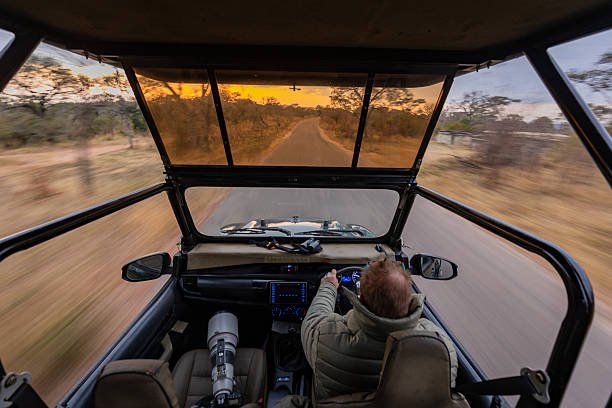
The Role of Bush Plane Safety and Operational Reliability
When you book a seat on a light aircraft for your cross-border transit, you are entering a different operational environment than that of major commercial airlines. Bush planes, such as the Cessna Caravan, are workhorses designed for short, unpaved runways. Their reliability is high, but their operational constraints are rigid. Unlike commercial flights that might circle or divert to a nearby major hub during bad weather, bush planes are highly dependent on visual flight rules (VFR).
If afternoon thunderstorms—common in the Serengeti and Maasai Mara—roll in, pilots may be forced to delay flights or land at alternative, safer airstrips. This is not a failure of service but a standard safety protocol. When booking your transit, remember that your “schedule” is often a suggestion rather than a guarantee. This is why professional operators emphasize a “buffer” in your planning. Never schedule an international flight home on the same day you are flying out of a remote bush airstrip. Always build in a 24-hour cushion, staying overnight in a major hub like Nairobi or Arusha before your final departure.
Cost Drivers: Why Short Flights Often Come with Premium Pricing
Travelers often compare the cost of a 45-minute bush flight to a 2-hour commercial flight and find the price difference jarring. The cost of a safari flight is not calculated by the mile; it is calculated by the “cycle.” Every time a bush plane takes off and lands, it incurs significant operational costs, including landing fees at private airstrips, fuel consumption, pilot positioning, and aircraft maintenance.
Furthermore, many of these flights operate on a “seat-rate” basis. If a flight is scheduled to fly from Arusha to the Serengeti and back, the operator must cover the cost of the entire circuit. If only one or two seats are filled, the price per seat remains high to cover the operational overhead. When booking, keep in mind that you are paying for the convenience of bypassing an 8-to-10-hour drive, the safety of a maintained aircraft, and the logistical coordination that ensures a vehicle is waiting for you the moment your wheels touch the ground. These costs are fixed by the aviation providers, and while they may fluctuate based on fuel surcharges, they are rarely subject to the same competitive discounting seen in commercial aviation.
The Bush Airstrip Experience: What to Expect at Remote Terminals
Transitioning from a major international airport to a remote bush airstrip requires a mental shift in your travel expectations. When you fly between Kenya’s Maasai Mara and Tanzania’s Serengeti, you are not navigating traditional airport terminals with security scanners, boarding gates, or duty-free shops. Instead, you are interacting with bush airstrips—often simple, unpaved runways carved into the savanna landscape. Understanding the flow of these smaller facilities is essential to avoiding stress on your travel day.
Upon arrival at a bush airstrip, the experience is intimate and immediate. There is rarely a formal building; you might find a small, open-sided shelter or simply a waiting area under a tree. Your pilot often doubles as the ground crew, handling the manifest, loading the luggage, and briefing passengers. This is the moment where the 15kg weight limit mentioned earlier is strictly enforced. Because these light aircraft operate with precise weight-and-balance requirements, the pilot will weigh every piece of luggage—including carry-ons—on a portable scale. There is no flexibility here; if your gear exceeds the limit, you may be required to pay for an extra seat to carry the weight or, in extreme cases, leave items behind.
Operational reality at these strips also includes the “wildlife clearance” protocol. It is not uncommon for a pilot to perform a low-altitude flyover of the airstrip before landing to ensure that zebras, wildebeest, or even lions have not wandered onto the runway. Passengers should not be alarmed if the plane circles the area; this is a standard safety measure. Similarly, departures can be delayed by a few minutes if local wildlife decides the runway is the perfect place to graze. Patience is the most important asset you can bring to these connections.
Finally, the handoff upon arrival is where the benefit of a coordinated booking becomes most apparent. At a major airport, you navigate toward baggage claim and ground transport zones. At a bush strip, your driver-guide will be waiting on the edge of the runway, often with the safari vehicle parked just meters from the plane’s door. This is a smooth transfer, but it relies on clear communication. Ensure your operator has confirmed your flight arrival time with the lodge staff in advance, as these airstrips do not have arrival boards or flight information displays. If your flight is delayed due to weather, the pilot will typically radio ahead, but having a professional operator managing the communication chain ensures your vehicle is re-timed to meet you, preventing a long wait in the heat.
Navigating Weather-Related Flight Disruptions and Re-Routing
While the logistics of flying between Kenya and Tanzania are often presented as a straightforward transfer, the reality of operating in the East African bush introduces a layer of variability that every traveler must anticipate: weather. Unlike commercial hubs with sophisticated instrument landing systems and massive infrastructure, bush airstrips are highly sensitive to visibility and surface conditions. Heavy rainfall, particularly during the “long rains” (typically April and May) and the “short rains” (November and December), can turn a dirt runway into a muddy, unusable track within hours. When a flight is canceled due to weather, the ripple effect on your cross-border itinerary is immediate.
If your flight from the Maasai Mara to the Serengeti is grounded, you are rarely just waiting for the next plane. Because these flights are often part of a “circuit”—where a single aircraft might service four or five different camps in a day—a delay at one location cascades through the entire schedule. When you book your connections through a specialized operator, this is where the value of their network becomes critical. An operator has direct contact with the pilots and the camp managers. They are the ones who will proactively coordinate a “Plan B,” which often involves pivoting to a ground transfer if the weather clears in a different sector, or re-booking you on a flight departing from a more stable, all-weather airstrip further away.
Travelers should also be aware of the difference between “scheduled” bush flights and “charter” flights. Scheduled flights operate on fixed routes with multiple stops; if a weather event occurs, they have less flexibility to deviate because they are beholden to the other passengers on the manifest. If you have a tight timeline—for example, if you have an international flight departing from Kilimanjaro or Nairobi that same evening—you are inherently at higher risk. We always advise a “buffer day” between your bush safari and your international departure. If you are flying from the bush directly to an international hub, try to ensure there is at least a six-hour window between your expected landing time and your check-in deadline. This buffer accounts for the standard flight times, but more importantly, it provides a safety margin for the inevitable weather-related delays that are a normal part of the East African bush flying experience.
The Hidden Logistics of Connecting Flights and Terminal Swaps
A common misconception is that when you book a flight from the Mara to the Serengeti, you are stepping onto a single plane that flies you directly across the border. In reality, you are almost always dealing with two separate legs: a domestic flight to a border-adjacent hub and a separate transfer, often including a ground crossing or a change of aircraft. This is not just a bureaucratic hurdle; it is a logistical reality of how bush airlines operate within their respective national jurisdictions.
For instance, if you are flying from Kenya’s Wilson Airport (WIL) to Tanzania’s Arusha Airport (ARK), you are crossing an international border. Even if the flight is short, the aircraft must land at a designated customs point. If your final destination is a remote airstrip deep in the Serengeti, the bush plane that brought you from Kenya cannot simply drop you off there without you having officially cleared customs in Tanzania first. This means your journey often looks like this: you fly from the Mara to Wilson Airport, connect to a flight to Kilimanjaro or Arusha, clear immigration, and then take a final, shorter hop into the Serengeti. Each of these segments is a separate ticket, and each has its own check-in deadline. When you manage these segments yourself, you are responsible for monitoring the turnaround time at each airport. If your first flight is delayed by 45 minutes, you risk missing the “hard” check-in time for your connecting bush flight, which often closes 30 minutes before departure. A coordinated booking ensures that the operator tracks these connections as a single chain, holding the second plane if the first is slightly delayed, or proactively re-routing your ground transport if the connection becomes impossible to make.
Related Guides and Packages
Check Availability for Kenya To Tanzania Safari Flights: Prices & Booking Guide
Ready to compare dates, prices, and the best option for your group? Send the package name and travel month so the team can reply with a clear quote, availability, and what is included.
Tanzania Flight Ticket Prices: Economy Vs Safari Bush Flights Explained
A practical guide to understanding the cost and logistical differences between commercial economy flights and private-style bush flights in Tanzania.
View package details
Best Airlines For Tanzania Safari Flights: Prices & Comparison ()
A guide to navigating Tanzania's domestic airline market for safari travel, covering reliability, baggage constraints, and booking strategies for 2027.
View package details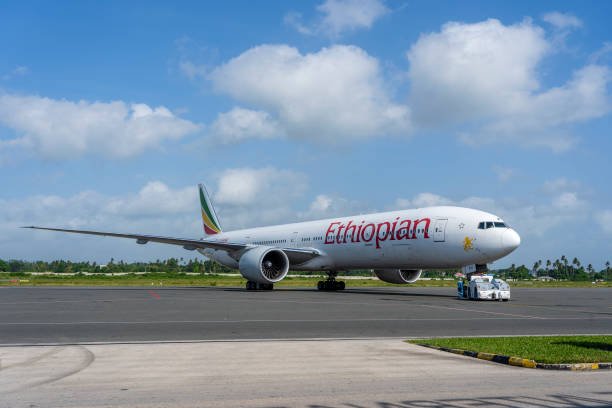
Tanzania Honeymoon Safari And Zanzibar With Flights: Package Prices
Tanzania Honeymoon Safari and Zanzibar With Flights: Package Prices.
View package details4-Day Tanzania Fly-In Safari With Return Flights: Prices & Planning
A deep look at the logistics and price factors for a 4-day Tanzania fly-in safari, helping you plan your 2027 wildlife adventure.
View package details
Tanzania Fly-In Safari Packages : Prices & Booking Guide
A comprehensive guide to planning Tanzania fly-in safaris for 2027, covering the trade-offs between flying and driving, pricing structures, and essential logistical details.
View package detailsTanzania To Uganda Flights: Best Routes And Ticket Prices
A detailed guide to navigating air travel between Tanzania and Uganda, including route comparisons, carrier options, and expert advice for planning your multi-country safari.
View package details
Kigali To Serengeti Flights: Prices & Safari Connections
A practical guide to connecting your Rwanda gorilla trekking with a Serengeti safari, focusing on flight routes, transit logistics, and expert booking advice.
View package details
Entebbe To Tanzania Flights: Ticket Prices And Route Guide
A comprehensive guide for travelers planning flights from Entebbe to Tanzania, covering ticket price factors, route options for Kilimanjaro and safari tours, and essential booking logistics...
View package detailsFlightlink Vs Coastal Aviation: Tanzania Safari Flight Prices Guide
A practical comparison of Tanzania's two leading bush airline operators, focusing on what drives prices, operational differences, and how to plan your inter-camp travel.
View package detailsCoastal Aviation Vs Auric Air: Comparing Tanzania Safari Flight Routes &
Deciding between Coastal Aviation and Auric Air for your Tanzania safari? We break down the differences in routes, reliability, and how to manage your bush flight logistics effectively.
View package details
Tanzania Flight Prices August : Kilimanjaro & Safari Travel Guide
A deep-dive guide into managing airfare costs and travel logistics for your August 2027 Kilimanjaro climb and Tanzania safari, including expert tips on timing, booking windows, and regional...
View package detailsTanzania Flight Prices July : Peak Safari Season Planning Guide
July is the absolute peak of the safari season in Tanzania. Here is how to navigate flight pricing, airline choices, and booking strategies for your July 2027 trip.
View package detailsNo related package matches those filters. Clear one or more filters to see the other topic-matched options.



