
June 2027 marks the transition from the shoulder season to the high season in Tanzania. For travelers, this means flight prices typically follow a rising curve. You will find that flights booked for the first two weeks of June are often more accessible and competitively priced compared to the final week of the month, which aligns with the start of the primary wildlife-viewing season. Because June is the beginning of the dry season, demand for safari logistics—specifically domestic bush flights to the Serengeti—increases significantly by month-end. We recommend securing your international and domestic connections at least six to eight months in advance to avoid the mid-year price spikes that occur as peak-season demand settles in.


When you are planning a trip to Tanzania for June 2027, the flight strategy differs significantly from the quieter shoulder months. June is widely considered the “awakening” of the peak safari season. The rains have subsided, the landscape is turning from lush green to golden, and wildlife is beginning to congregate around predictable water sources. This change in environment is mirrored in the travel industry: airfare pricing begins to firm up, and availability on popular domestic routes becomes a logistical factor rather than just a budget consideration.
As a local operator, we see this transition happen every year. The first two weeks of June often retain some of the residual pricing benefits from the low season, but as the calendar moves toward the July peak, airline revenue management systems adjust accordingly. Understanding these dynamics is the first step in building a realistic budget for your 2027 safari.
The June 2027 Price Curve: Early vs. Late
It is a mistake to view June as a single pricing block. In our experience, there is a distinct difference between the first and second halves of the month. Early June is often characterized by better availability on major international carriers, as the heavy summer holiday surge from Europe and North America has not yet reached its zenith.
By the third and fourth weeks of June, the “safari rush” begins in earnest. International flights into Kilimanjaro International Airport (JRO) and Dar es Salaam (DAR) experience higher load factors. When flight demand increases, the cheapest fare classes vanish first. This creates an artificial impression of higher “base” prices, even if the actual ticket costs are consistent with airline pricing models.
Practical Tip: If your schedule allows, prioritizing a departure in the first 10 days of June 2027 often provides a wider selection of flight options and potentially lower ticket costs. If you must travel in late June, treat your flight booking with the same urgency as your safari lodge reservations.
International Flight Logistics: JRO vs. DAR
Choosing your port of entry is the most significant decision for your flight budget and overall travel time. For most safari-bound travelers, Kilimanjaro International Airport (JRO) is the superior choice. It puts you directly at the doorstep of the northern circuit parks, including the Serengeti, Ngorongoro, and Tarangire.
Flights into JRO are often priced at a premium compared to the larger hub of Dar es Salaam (DAR). However, when you factor in the cost of a domestic connection from Dar to Arusha, the price difference often narrows. For a detailed breakdown of how to choose your route, refer to our guide on Direct Flights to Tanzania. Many travelers assume that flying into the capital is always cheaper, but the added expense of a domestic “hop” and the time lost in transit often negates the savings on the long-haul ticket.
Domestic Flight Strategy for June 2027
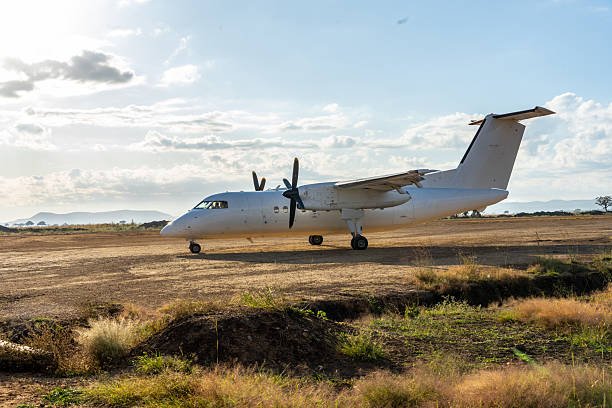
Once you land in Tanzania, your domestic flight itinerary is the next piece of the puzzle. In June, the “bush” airports—such as Seronera in the Serengeti or Kogatende in the north—become extremely busy. The smaller aviation companies like Coastal Aviation, Auric Air, and Precision Air manage these routes.
Unlike international flights, these smaller planes have strict weight limits and limited seating capacity. In June, these flights sell out. If you are planning a Tanzania Fly-In Safari, the domestic flight is not just a transport leg; it is a core component of your trip’s feasibility. We advise our clients to book these internal legs as part of a package whenever possible. This ensures that if your international arrival is delayed, your ground operator has the leverage and the local contact to reschedule your connection without you having to navigate the airline’s help desk alone.
Comparison: Booking Factors for June 2027
| Factor | Early June (1st–15th) | Late June (16th–30th) |
|---|---|---|
| International Demand | Moderate; better availability | High; peak season begins |
| Domestic Flight Seats | Generally available | Limited; early booking essential |
| Safari Lodge Capacity | High availability | Filling up rapidly |
| Pricing Trend | Competitive / Standard | Premium / Rising |
As the table above illustrates, the primary difference is availability rather than just price. In late June, you aren’t just paying more; you are dealing with a market where the best connections are already taken. This is why we often suggest that travelers look at the Tanzania Safari Flight-Inclusive Packages vs Road Safari comparison to see if a fly-in approach is the best fit for their time and budget constraints.
Managing Flight Delays and Connections
One of the most common questions we receive involves what happens if a flight is delayed. In June, the weather is generally favorable, but the sheer volume of air traffic can cause knock-on delays. If you are flying into JRO and have a connecting bush flight, you need a minimum buffer of at least 3–4 hours. If your international flight arrives late, you risk missing the last bush flight of the day, which usually departs before sunset. For more on this, read our advice on What Happens if My Tanzania Safari Flight Is Delayed?
We always recommend that our guests check their baggage allowances, especially for those internal flights. Smaller aircraft have strict limits—often 15kg in soft-sided bags. If you are arriving on an international flight with a full 23kg or 30kg allowance, you will need to store your extra luggage in Arusha. Planning for this logistical step is part of a smooth safari experience.
Expert Guidance for Your 2027 Journey
Navigating the complexities of flight pricing for June 2027 does not have to be a solo effort. At Climb 4 Africa, we specialize in building itineraries that integrate your international arrivals with the necessary domestic logistics. We don’t just book flights; we manage the sequence of your trip to ensure that your transit time is minimized and your time in the bush is maximized.
If you are in the early stages of planning, the best approach is to share your rough travel dates and preferred international departure city with us. We can then provide a realistic look at how those dates will impact your total travel costs, including internal connections. You can reach our team via WhatsApp at +255 747 477 898 or by email at climb4africa@gmail.com. If you prefer, our backup email is info@climb-4-africa.com.
Whether you are looking for a Private Tanzania Safari With Internal Flights or a more cost-conscious group departure, we can help you navigate the 2027 season with confidence. The earlier you initiate the conversation, the more options you will have to balance your budget with your ideal itinerary.

Frequently Asked Questions
- Should I book my international flights to Tanzania before booking my safari?
Yes. While we can assist with the logistics, having your international flights confirmed allows us to synchronize your domestic connections perfectly. It is the foundation of your itinerary. - Are internal flight prices in Tanzania fixed?
No, internal flight prices are subject to seasonal demand and availability. Booking early is the best way to secure the current rate and avoid price increases as peak season approaches. - Do I need to worry about baggage weight on internal flights?
Yes, this is a critical detail. Most safari bush flights use small aircraft with limited space and weight capacity. Always use soft-sided bags and aim for the airline’s stated weight limit (typically 15kg) to avoid extra charges or the need to pay for an extra seat. - Is it cheaper to fly into Dar es Salaam or Kilimanjaro for a safari?
It depends on your destination. While flights to Dar es Salaam are often cheaper, you must factor in the cost and time of the domestic flight to the northern safari parks. For most northern circuit safaris, flying directly into Kilimanjaro (JRO) is the most efficient and often the most cost-effective choice when all transit costs are totaled. - How far in advance should I book for June 2027?
We recommend starting your planning and booking process 6 to 10 months in advance. June is the start of the high season, and the most popular safari lodges and optimal flight timings fill up quickly.
The Hidden ‘Last Mile’ Logistics: Connecting Bush Flights to Safari Lodges
While much of the discussion regarding Tanzania flight prices centers on the long-haul ticket or the domestic bush flight, a significant portion of your travel budget and logistical stress often occurs in the ‘last mile’—the transition between the bush airstrip and your final lodge destination. For travelers visiting in June 2027, understanding this gap is essential for maintaining both your budget and your schedule. The most common pitfall involves the confusion between Kilimanjaro International Airport (JRO) and Arusha Airport (ARK). While JRO serves the bulk of international arrivals, many domestic bush flights operate out of Arusha Airport, which is located approximately 50 kilometers away. Failing to account for this transfer time—which can take over an hour depending on traffic—is a frequent cause of missed connections during the busy June transition.
When you book your bush flight, you are purchasing a seat on a small aircraft that will land on a remote, unpaved airstrip. Unlike commercial airports, these locations do not have centralized transport hubs. Your ‘last mile’ begins the moment the prop-plane engine cuts out. In the vast majority of cases, the transfer from the airstrip to your lodge is arranged by the lodge itself or your safari operator. It is vital to confirm whether this transfer is included in your accommodation package. If it is not, you are essentially looking at a private taxi service in a remote area, which can be surprisingly costly due to the distances involved and the specialized nature of 4×4 vehicles required to navigate park terrain.
Furthermore, the ‘last mile’ logistics in June are heavily influenced by the dry season conditions. As the ground hardens and the bush thins out, wildlife movement becomes more unpredictable. It is not uncommon for a bush flight to be delayed or for a vehicle transfer to take longer than anticipated because a herd of elephants has decided to cross the access road to the airstrip. This is not a delay in the traditional sense, but a ‘safari delay,’ and it is part of the authentic experience. However, for those on a tight schedule or with onward international flights, these moments can create anxiety. We advise all travelers to build a ‘buffer’ into their final day of the safari, ensuring that the transfer from the lodge to the airstrip is scheduled at least two hours before your bush flight’s departure time.
Another logistical factor that impacts your June 2027 budget is the ‘baggage tax’ or the ‘extra seat’ requirement. Because June is the start of the peak season, bush flights are often fully booked. If you arrive at the airstrip with luggage that exceeds the strict 15kg limit—a common issue for travelers coming directly from international long-haul flights—you may not simply be asked to pay an overweight fee. In high-demand periods, the airline may require you to purchase an entire extra seat just to accommodate your bags. This is a non-negotiable safety requirement for small aircraft weight and balance. By packing soft-sided bags and strictly adhering to the weight limits, you avoid this ‘hidden’ cost, which can easily add hundreds of dollars to your total transit budget.
Finally, consider the timing of your arrival at the airstrip. If your flight lands late in the afternoon, you may miss the opportunity for an afternoon game drive, which is often included in your lodge rate. While you cannot control flight schedules, you can control your arrival strategy. Aiming for a morning arrival at your bush airstrip allows you to maximize your first day. If your flight schedule forces a late afternoon arrival, communicate this with your lodge immediately. They may be able to adjust your itinerary or arrange a shorter, twilight drive. Planning these details in advance prevents the disappointment of paying for a full day of lodge services that you are unable to fully utilize due to late-day logistics.
The Multi-Carrier Liability Gap: Interline Agreements vs. Separate Tickets
One of the most significant, yet often overlooked, factors influencing your Tanzania flight budget for June 2027 is the distinction between a ‘single-ticket’ itinerary and a ‘self-transfer’ itinerary. When you book your international long-haul flight (e.g., on Qatar Airways, KLM, or Ethiopian Airlines) and your domestic bush flight (e.g., on Coastal Aviation or Auric Air) separately, you are essentially creating a multi-carrier liability gap. Most major international carriers do not have interline agreements with the smaller, regional bush operators that service the Serengeti or Ruaha airstrips. This means that if your international flight is delayed—even by a few hours—the domestic airline has no contractual obligation to hold your flight or rebook you without penalty.
In the context of June 2027, where demand for safari logistics is at its annual peak, this gap becomes a critical financial and logistical risk. If you miss your connection due to an inbound delay, you are not simply looking at a re-booked flight; you are looking at potential inventory scarcity. If the next available bush flight to your lodge is fully booked, you may be stranded at the international airport (JRO or DAR) overnight, incurring additional hotel costs, ground transfer fees, and the loss of a pre-paid day at your safari lodge. This is a common ‘hidden cost’ that rarely appears in initial budget spreadsheets but frequently manifests as a major expense for travelers who underestimate the complexity of these transfers.
Navigating the Customs and Re-Check Process
Regardless of whether your tickets are linked, every international traveler arriving in Tanzania must clear immigration and customs at their port of entry before proceeding to the domestic terminal. At Kilimanjaro International Airport (JRO), this process involves collecting your checked baggage, passing through customs, and then proceeding to the domestic check-in counters. This ‘re-check’ process is mandatory. You cannot ‘through-check’ your luggage from your home airport to a bush airstrip.
For travelers arriving in June 2027, the volume of traffic at JRO will be significantly higher than in the shoulder season. Queues at immigration can fluctuate based on flight arrivals, and baggage handling times can vary. We strongly advise that you do not book a domestic connection with less than a three-hour buffer between your scheduled international arrival and your domestic departure. While this might seem excessive, it provides the necessary cushion to navigate the customs terminal, handle potential baggage delays, and complete the check-in process for the smaller bush aircraft, which often close their flight manifests 30 to 45 minutes before departure.
Mitigating Risk Through Strategic Booking
To bridge the liability gap, savvy travelers focus on three specific mitigation strategies for their 2027 trip. First, prioritize international flights that arrive in the morning (typically between 7:00 AM and 10:00 AM). This provides the largest possible window for domestic connections and acts as a buffer against minor international delays. Second, if you are booking separate tickets, ensure that your travel insurance policy explicitly includes coverage for ‘missed connections’ on self-transfers. Many standard policies cover missed connections only if the flights are on a single ticket; verify that your policy covers the specific scenario of a self-transfer between an international carrier and a bush airline.
Finally, consider the ‘baggage check’ reality. Because bush planes operate on strict weight and balance calculations, they are often less flexible than international carriers. If you miss your original flight due to a delay and are rebooked on a later flight, ensure your lodge is notified immediately. In June, the flight schedules are tighter, and the lodges often coordinate their own vehicle transfers to the airstrips based on specific flight arrival times. A missed flight does not just disrupt your air travel; it disrupts the entire ground logistics chain for your safari.
The Hidden Cost of Weight: Bush Flight Baggage Policies
One often overlooked factor in your June 2027 flight budget is the strict baggage policy enforced by domestic bush carriers. Unlike international airlines that charge by the kilogram for excess luggage, bush airlines operate under strict weight and balance limitations due to the size of the aircraft—typically Cessna Caravans or similar light utility planes. For most domestic operators, the standard baggage allowance is capped at 15 kilograms (33 lbs) per passenger, and all luggage must be packed in soft-sided bags without wheels or rigid frames.
If your luggage exceeds these limits, you cannot simply pay an ‘excess baggage fee’ at the counter. Because the aircraft’s payload is calculated precisely for every flight, heavy luggage often requires the purchase of an additional ‘freight seat.’ This effectively means you are paying for an entire extra passenger ticket just to transport your gear. In June, when safari lodges are operating at higher occupancy and bush planes are frequently flying at maximum capacity, there is very little room for negotiation. If your bags are over the limit, the pilot may refuse to load them, or you may be forced to pay for that extra seat on the spot, which can significantly inflate your domestic travel costs.
To avoid these unexpected expenses, we recommend a ‘two-bag’ strategy: a primary soft-sided duffel for your safari gear that adheres to the 15kg limit, and a smaller carry-on for your electronics and essentials. If you are traveling with specialized equipment, such as professional camera gear or tripods, notify your booking agent or the bush airline at least four weeks before your June departure. Securing a ‘freight seat’ in advance is almost always more cost-effective and reliable than attempting to resolve weight issues at the airstrip in the heat of the June peak season.
Check Availability for Tanzania Flight Prices June : Safari Season Airfares
Ready to compare dates, prices, and the best option for your group? Send the package name and travel month so the team can reply with a clear quote, availability, and what is included.
Tanzania Flight Prices July : Peak Safari Season Planning Guide
July is the absolute peak of the safari season in Tanzania. Here is how to navigate flight pricing, airline choices, and booking strategies for your July 2027 trip.
View package details
Tanzania Flight Prices August : Kilimanjaro & Safari Travel Guide
A deep-dive guide into managing airfare costs and travel logistics for your August 2027 Kilimanjaro climb and Tanzania safari, including expert tips on timing, booking windows, and regional...
View package details
Tanzania Flight Ticket Prices: Economy Vs Safari Bush Flights Explained
A practical guide to understanding the cost and logistical differences between commercial economy flights and private-style bush flights in Tanzania.
View package detailsFlightlink Vs Coastal Aviation: Tanzania Safari Flight Prices Guide
A practical comparison of Tanzania's two leading bush airline operators, focusing on what drives prices, operational differences, and how to plan your inter-camp travel.
View package detailsCoastal Aviation Vs Auric Air: Comparing Tanzania Safari Flight Routes &
Deciding between Coastal Aviation and Auric Air for your Tanzania safari? We break down the differences in routes, reliability, and how to manage your bush flight logistics effectively.
View package detailsTanzania Flight Prices March : Airfare & Seasonal Guide
A practical guide to understanding flight pricing for Tanzania in March 2027, covering seasonal trends, booking windows, and logistics for safari and Kilimanjaro itineraries.
View package detailsTanzania Flight Prices February : Safari & Zanzibar Routes
A detailed guide to navigating flight logistics and budget factors for Tanzania travel in February 2027, focusing on safari circuits and Zanzibar connections.
View package details4-Day Tanzania Fly-In Safari With Return Flights: Prices & Planning
A deep look at the logistics and price factors for a 4-day Tanzania fly-in safari, helping you plan your 2027 wildlife adventure.
View package detailsKenya To Tanzania Safari Flights: Prices & Booking Guide
A practical guide to connecting Kenya and Tanzania by air for your safari. Learn about border logistics, booking realities, and why most travelers choose specific routes over others.
View package details
Best Airlines For Tanzania Safari Flights: Prices & Comparison ()
A guide to navigating Tanzania's domestic airline market for safari travel, covering reliability, baggage constraints, and booking strategies for 2027.
View package details
Tanzania Honeymoon Safari And Zanzibar With Flights: Package Prices
Tanzania Honeymoon Safari and Zanzibar With Flights: Package Prices.
View package detailsNairobi To Serengeti Safari By Flight: Prices & Travel Options
A practical guide to navigating the logistics of flying from Nairobi to the Serengeti, including transit requirements, airport choices, and cost considerations for your 2027 safari.
View package detailsNo related package matches those filters. Clear one or more filters to see the other topic-matched options.



