
The primary difference between a flight-inclusive safari and a road-based safari is the trade-off between time and cost. A road safari is almost always the more budget-friendly option, offering a ground-level view of the landscape and local culture, but it requires long hours of driving on bumpy roads. A flight-inclusive safari, while significantly higher in price due to domestic airfare and landing fees, is the preferred choice for travelers with limited time who want to maximize their game-viewing hours in the parks. For most itineraries under five days, flying is the most efficient logistical choice; for longer, multi-park journeys, road travel is often the standard.
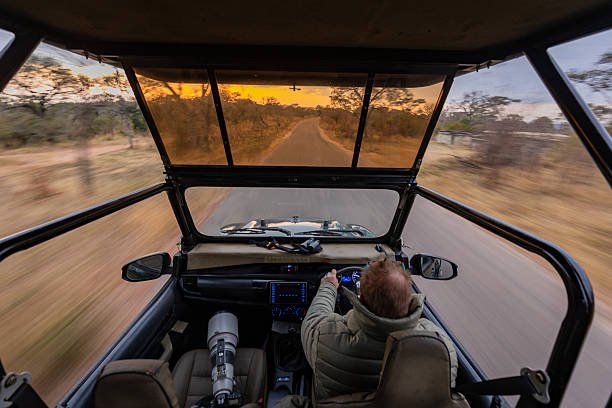
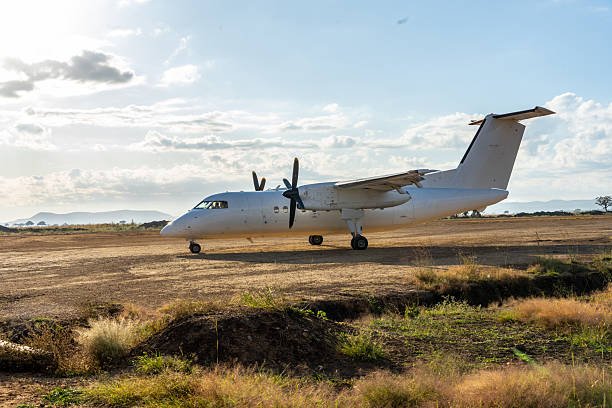
When planning a trip to Tanzania, the choice between driving and flying is rarely just about the bottom line. It is about how you want to spend your days. Are you looking to minimize transit time and maximize wildlife sightings, or do you want the flexibility and lower price point that comes with a road-based adventure? At Climb 4 Africa, we help travelers weigh these factors based on their specific itinerary, group size, and travel style.
The Cost Drivers: Why the Price Gap Exists
Understanding why one option costs more than the other requires looking at the components of each trip. A road safari is a logistical exercise in vehicle management. You are paying for the vehicle, the driver-guide, fuel, and the amortization of vehicle wear and tear over the course of your itinerary. Because the vehicle stays with you, the daily cost per person drops as your group size increases.
A flight-inclusive safari, on the other hand, operates on a per-seat model. When you book a Tanzania fly-in safari package, you are paying for the commercial domestic flight, which includes the pilot, fuel, and significant airport and airstrip landing fees. These costs are fixed per person. If you are a solo traveler or a couple, a flight can feel expensive because you are paying for those seats regardless of how many others are on the plane. If you are a larger family, the cost of multiple flight tickets can quickly surpass the cost of hiring a private 4×4 for a week.
Logistical Comparison: Road vs. Flight
| Feature | Road Safari | Flight-Inclusive Safari |
|---|---|---|
| Travel Time | High (6–9 hours between parks) | Low (45–60 minute flights) |
| Cost | Lower (economical for groups) | Higher (per-seat pricing) |
| Luggage | Flexible (standard suitcases) | Strict (15kg soft-sided bags) |
| Experience | Scenic, in-depth, cultural | Efficient, comfortable, time-saving |
| Best For | 7+ day trips, budget-conscious | Short trips, luxury travelers |
The Reality of Road Travel
A road safari is not just about getting from A to B. It is an integral part of the Tanzanian experience. When you depart from Arusha, you pass through villages, local markets, and changing landscapes that you simply cannot see from 5,000 feet in the air. For many travelers, this provides a necessary context for the country.
However, you must be realistic about the infrastructure. Roads leading into parks like the Serengeti or Tarangire can be dusty, bumpy, and long. A drive from Arusha to the Serengeti can consume an entire day. If you have only four days in Tanzania, spending two of those days driving means you have essentially cut your vacation time in half. We often recommend a private Tanzania safari with internal flights for anyone who is constrained by time but still wants a high-quality experience.
When to Choose a Flight-Inclusive Package
Flight-inclusive packages are not just for luxury travelers; they are for time-poor travelers. If your goal is to see the Great Migration in the Northern Serengeti or to maximize your time in Nyerere (formerly Selous) without the long drive from Dar es Salaam, flying is the only logical choice.
There is also the fatigue factor. A 6-hour game drive is exhilarating. A 6-hour drive on a corrugated dirt road is exhausting. By flying, you arrive at your lodge refreshed, often landing on an airstrip located just minutes from your accommodation. This is particularly relevant for families with young children or seniors who may find long, bumpy car rides uncomfortable. You can explore options like our 2-day Serengeti fly-in safari from Arusha if you want to test the experience before committing to a longer trip.
The Luggage Challenge
One of the most frequently overlooked factors in the price and planning comparison is luggage. If you are planning to combine your safari with a Kilimanjaro climb, you will likely have a large bag of trekking gear. Domestic bush airlines have very strict luggage policies—usually a 15kg limit in soft-sided bags. This is a non-negotiable safety requirement for small aircraft.
If you choose a flight-inclusive safari, you must either pay for extra weight (which is expensive and subject to space availability) or arrange for secure storage of your excess luggage in Arusha or at your hotel. On a road safari, your vehicle stays with you, and your driver can securely store your extra bags in the back of the Land Cruiser, removing the need to pack light or pay for excess weight.
Planning Your Itinerary with Logistics in Mind
When you contact us to request a quote, we start by looking at your total time in Tanzania. A common mistake is trying to cram too many parks into a short time frame using road travel. If you have five days and want to see both the Serengeti and Ngorongoro Crater, a road safari is feasible, but it will be fast-paced. If you want to see the Serengeti, Ngorongoro, and Tarangire in five days, you will spend more time in the vehicle than in the parks. In this scenario, we would strongly suggest a budget Tanzania fly-in safari to make the itinerary actually work.
Conversely, if you have ten days, a road safari becomes much more enjoyable. You can break up the journey, stay in different regions, and experience the transition of the landscape without feeling rushed. It allows for a slower pace, which is often better for wildlife viewing—you aren’t just rushing to the next airstrip; you are taking the time to track animals along the way.
Common Misconceptions About Flight Delays
Travelers often worry about the reliability of internal flights. While it is true that bush flights are subject to weather conditions and can be delayed, they are generally safe and efficient. We always advise clients to have a buffer in their schedule. If you are flying back to Arusha to catch an international flight, we recommend allowing at least four to five hours between your bush flight arrival and your international departure. You can read more about our guidance on what happens if your Tanzania safari flight is delayed to see how we manage these logistics.
Next Steps for Your Booking
Whether you lean toward the efficiency of a flight-inclusive package or the in-depth, cost-effective nature of a road safari, the next step is to define your dates and group size. We do not believe in one-size-fits-all itineraries. When you reach out to us, provide as much detail as possible about your priorities: Is the budget the primary constraint? Is time more important? Are you combining this with a climb or a beach holiday in Zanzibar?
For those interested in a mix, we often design hybrid itineraries: fly into the Serengeti to save time, and drive back through the Ngorongoro Crater to see the changing scenery on your way back to Arusha. This approach balances the comfort of flying with the adventure of driving.
To start planning your 2026 or 2027 safari, reach out to our team. We are here to provide transparent, practical advice that helps you make the right choice for your trip. You can reach us on WhatsApp at +255 747 477 898 or email us at climb4africa@gmail.com or our backup address at info@climb-4-africa.com. Let us know your preferred travel dates, the number of travelers, and which parks are on your bucket list, and we will build a custom itinerary that fits your needs.

The Regional Divide: Northern versus Southern Circuit Logistics
The debate between road and flight-inclusive safaris is fundamentally a Northern Circuit conversation. When you plan a trip to the Northern Circuit—comprising Arusha, Tarangire, Lake Manyara, the Ngorongoro Crater, and the Serengeti—you are operating within a well-connected network of roads. Here, the choice is genuinely yours; the infrastructure supports both long-haul driving and short-hop aviation. However, if your itinerary includes the Southern Circuit, specifically Nyerere National Park (formerly Selous) or Ruaha National Park, the logistical reality shifts dramatically.
In the Southern Circuit, the distances are vast, and the road infrastructure is less developed for tourism transit. While it is technically possible to drive from Dar es Salaam to Nyerere, it is a grueling journey that consumes an entire day, leaving little room for game viewing upon arrival. Consequently, for the Southern Circuit, flight-inclusive packages are not just a luxury; they are the standard. When comparing prices for these regions, the ‘road vs. flight’ comparison effectively disappears because the road option is rarely recommended for short-stay travelers. If you are budget-conscious and looking specifically for a road-based safari, the Northern Circuit is your only viable arena.
The Fixed-Cost Illusion: Understanding the ‘Floor’ of Your Safari Price
One of the most common misunderstandings in price comparisons is the assumption that choosing a road safari will slash your total trip cost by half. It is essential to understand that a significant portion of your safari invoice is comprised of fixed costs that remain identical, regardless of whether you arrive by Cessna or Land Cruiser. These include daily park entry fees, concession fees for staying inside park boundaries, and conservation levies. These are government-mandated costs that do not fluctuate based on your mode of transport.
When you strip away these fixed government fees and the cost of your accommodation (which also remains constant), the remaining variable is the transport and logistics. While a road safari significantly lowers the cost of the transit component compared to commercial airfare, it does not reduce the price of the safari experience as a whole. Travelers often find that even when opting for the ‘cheaper’ road transport, the total package price remains substantial because the wildlife-viewing experience—the park access—is the most expensive part of the trip. Do not expect a road-based itinerary to be a ‘budget’ version of a flight-inclusive one; it is simply a different logistical approach to accessing the same premium wildlife resources.
Seasonal Logistics: How Weather Dictates Your Mode of Transport
The choice between flying and driving is not static; it is heavily influenced by the Tanzanian seasons. During the dry season, the roads are dusty but passable, making road travel a predictable, if bumpy, experience. However, during the ‘Green Season’ (typically November through May), the dynamic changes. In areas like the Central Serengeti or the approaches to Tarangire, heavy rains can turn tracks into mud pits. A road safari during this time requires a vehicle that is not only robust but a driver with the experience to navigate slick, unstable terrain.
In these months, flight-inclusive packages gain a distinct advantage beyond just saving time. Flying over the landscape allows you to bypass the risk of getting stuck, which can occasionally happen even to the most skilled drivers during the peak of the rains. If you are planning a safari during the shoulder or rainy seasons, we often advise prioritizing the reliability of air travel. While the price gap remains, the ‘cost’ of a road safari can suddenly spike if you factor in the potential for delays, vehicle recovery, or the need to alter your route mid-trip due to impassable roads.
The Physical Toll: Assessing the ‘African Massage’
When analyzing the cost-benefit of road travel, travelers often neglect the physical toll of long-distance driving. In Tanzania, main roads are paved, but the final legs into the national parks are often unpaved, corrugated, and rugged. This is colloquially known as the ‘African massage.’ Spending six to eight hours in a vehicle on these surfaces is physically demanding. For travelers with back issues, mobility concerns, or simply those who prefer to arrive at their destination refreshed, the price of a flight is essentially a purchase of comfort and physical well-being.
We advise clients to be honest about their physical tolerance. If you arrive at your lodge after an eight-hour drive feeling exhausted, you are less likely to enjoy the afternoon game drive or the evening sundowners. If the flight-inclusive package allows you to arrive in 45 minutes, fresh and ready to head straight into the bush, you are effectively buying back your energy—a variable that is difficult to price but easy to feel once you are on the ground.
The Hybrid Strategy: Why ‘Fly-In, Drive-Out’ is the Strategic Middle Ground
For many travelers, the choice between a road safari and a flight-inclusive package is treated as a binary decision. In reality, the most effective itineraries often utilize a hybrid approach, combining both modes of transport to optimize both budget and time. This ‘fly-in, drive-out’ or ‘drive-in, fly-out’ strategy addresses the primary pain point of road travel—the long, often monotonous transit legs—while retaining the benefits of a private driver-guide for the core safari experience.
Consider the typical Northern Circuit route. The drive from Arusha to the Central Serengeti can take upwards of seven to nine hours, traversing busy towns, dusty highways, and eventually, the Ngorongoro Conservation Area. By flying into the Seronera airstrip in the Serengeti, you effectively ‘skip’ the transit day, landing directly in the heart of the predator action. You then spend your days exploring the Serengeti with a private guide who meets you at the airstrip. When it is time to depart, you can then drive out slowly, stopping at the Ngorongoro Crater for a game drive, and perhaps staying overnight on the crater rim before completing the final, shorter drive back to Arusha or Kilimanjaro International Airport. This approach significantly reduces the ‘dead time’ spent on long-distance asphalt while keeping the total cost lower than a fully flight-inclusive trip, as you are only paying for one domestic flight rather than multiple hops.
This hybrid model also solves a common logistical hurdle: the return journey. Often, after several days of intense wildlife viewing, the prospect of a full-day drive back to the city feels daunting. A hybrid itinerary allows you to enjoy the in-depth experience of the bush with your own vehicle and guide, and then utilize a short, efficient flight at the very end of your trip to return to your departure point. This strategy is particularly effective for travelers who want to maximize their time in remote areas like the Northern Serengeti or the far reaches of the Selous (Nyerere National Park) without committing to the full financial premium of a multi-leg flight itinerary.
The Guide Continuity Factor: The Hidden Value of Your Safari Experience
When comparing the price of a road safari versus a fly-in safari, the most overlooked variable is the role of the driver-guide. In a road-based safari, your driver-guide is with you from the moment you leave your hotel in Arusha until the moment you return. They become your concierge, your wildlife expert, your cultural interpreter, and your logistical manager. They learn your specific preferences—whether you are a photographer who needs the vehicle positioned at a specific angle for the morning light, or a family that prefers a slower, more relaxed pace with frequent breaks for children.
In contrast, a fly-in safari often relies on ‘lodge-based’ guiding. When you land at an airstrip, you are met by a guide from your specific lodge. While these guides are usually exceptional and possess expert knowledge of their immediate concession or park area, they do not know your history. They do not know what you have already seen in the previous three days, what your preferred photography style is, or how you like your coffee. You are essentially ‘starting fresh’ with a new guide at every new lodge. While this is not inherently a negative experience, it is a different one. The continuity of having a single, private driver-guide for the duration of your trip provides a level of personalization that is difficult to quantify in a price spreadsheet, yet it is a significant contributor to the overall quality of your safari.
This continuity also extends to the vehicle itself. On a road safari, your vehicle becomes your ‘home’ for the duration of the trip. You can leave your binoculars, cameras, spare jackets, and snacks in the vehicle, knowing they are safe and exactly where you left them. On a fly-in safari, you are constantly packing and unpacking as you move between different lodge vehicles. If you value the comfort of a consistent environment and the relationship-building aspect of having one dedicated guide who learns and adapts to your needs, the road-based model—or a hybrid model that retains a private vehicle—often provides superior value, even if the price appears higher due to the vehicle’s daily operational costs.
Check Availability for Tanzania Safari Flight-Inclusive Packages Vs Road Price Comparison
Ready to compare dates, prices, and the best option for your group? Send the package name and travel month so the team can reply with a clear quote, availability, and what is included.
Best Airlines For Tanzania Safari Flights: Prices & Comparison ()
A guide to navigating Tanzania's domestic airline market for safari travel, covering reliability, baggage constraints, and booking strategies for 2027.
View package detailsTanzania Flight Ticket Prices: Economy Vs Safari Bush Flights Explained
A practical guide to understanding the cost and logistical differences between commercial economy flights and private-style bush flights in Tanzania.
View package detailsFlightlink Vs Coastal Aviation: Tanzania Safari Flight Prices Guide
A practical comparison of Tanzania's two leading bush airline operators, focusing on what drives prices, operational differences, and how to plan your inter-camp travel.
View package detailsCoastal Aviation Vs Auric Air: Comparing Tanzania Safari Flight Routes &
Deciding between Coastal Aviation and Auric Air for your Tanzania safari? We break down the differences in routes, reliability, and how to manage your bush flight logistics effectively.
View package details
Tanzania Flight Prices August : Kilimanjaro & Safari Travel Guide
A deep-dive guide into managing airfare costs and travel logistics for your August 2027 Kilimanjaro climb and Tanzania safari, including expert tips on timing, booking windows, and regional...
View package detailsTanzania Flight Prices July : Peak Safari Season Planning Guide
July is the absolute peak of the safari season in Tanzania. Here is how to navigate flight pricing, airline choices, and booking strategies for your July 2027 trip.
View package detailsTanzania Flight Prices June : Safari Season Airfares
A practical guide to navigating flight costs and logistics for Tanzania in June 2027, focusing on the seasonal shift from shoulder to peak.
View package detailsTanzania Flight Prices February : Safari & Zanzibar Routes
A detailed guide to navigating flight logistics and budget factors for Tanzania travel in February 2027, focusing on safari circuits and Zanzibar connections.
View package details4-Day Tanzania Fly-In Safari With Return Flights: Prices & Planning
A deep look at the logistics and price factors for a 4-day Tanzania fly-in safari, helping you plan your 2027 wildlife adventure.
View package detailsKenya To Tanzania Safari Flights: Prices & Booking Guide
A practical guide to connecting Kenya and Tanzania by air for your safari. Learn about border logistics, booking realities, and why most travelers choose specific routes over others.
View package details
Tanzania Honeymoon Safari And Zanzibar With Flights: Package Prices
Tanzania Honeymoon Safari and Zanzibar With Flights: Package Prices.
View package detailsNairobi To Serengeti Safari By Flight: Prices & Travel Options
A practical guide to navigating the logistics of flying from Nairobi to the Serengeti, including transit requirements, airport choices, and cost considerations for your 2027 safari.
View package detailsNo related package matches those filters. Clear one or more filters to see the other topic-matched options.



