
The Dec 29, 2026 – 6 Day Ndutu, Serengeti and Ngorongoro Group Safari is a specialized itinerary designed to position travelers in the Ndutu plains during the early phase of the wildebeest calving season. By starting your journey on December 29, you bypass the peak holiday congestion of Christmas and enter the park as the ecosystem begins to shift toward the southern plains. This 6-day route offers a distinct advantage over shorter 3 or 4-day trips because it provides sufficient time to explore the Ndutu area—where the migration typically gathers in late December—without rushing the transit through the Ngorongoro Conservation Area.
For travelers planning their end-of-year travel in 2026, this departure is structured to balance the excitement of the Great Migration with the practical realities of Tanzanian road travel. Because this is a group departure, you share the logistics and costs of a 4×4 land cruiser, making it a sustainable choice for solo travelers, couples, or small groups of friends who want to experience the Northern Circuit without the premium price tag of a private, tailor-made safari.
If you are considering this specific date, your primary planning goal should be securing your spot early, as group departures for the turn of the year fill up months in advance. To discuss availability or to hold a seat, please contact our team via WhatsApp at +255 747 477 898 or email us at climb4africa@gmail.com.
Why the Ndutu Region in Late December Matters
Many first-time visitors to Tanzania assume that the Serengeti is a singular destination. In reality, it is a massive ecosystem. By late December, the short rains have typically arrived, turning the dry, dusty plains into lush green grazing lands. This is the magnetic force that pulls the wildebeest migration from the northern and central regions down toward the Ndutu area, which straddles the border of the Serengeti and the Ngorongoro Conservation Area.
Choosing a 6-day itinerary that prioritizes Ndutu is a strategic decision. On shorter 3-day or 4-day safaris—such as our 4 Day Tarangire, Serengeti and Ngorongoro Group Safari—you often spend significant time in transit. With six days, you are not just passing through; you have the time to track the herds. In late December, the grass in Ndutu is rich in calcium and phosphorus, critical for the impending calving season. This concentration of wildlife is why we focus our December 29th departure specifically on this region.
Detailed 6-Day Group Itinerary
This itinerary is built on the reality of road conditions and park geography. We avoid over-scheduling to ensure that when you reach a prime wildlife area, you actually have time to stop, observe, and photograph without the pressure of a ticking clock.
Day 1: Arrival and Preparation in Arusha
Your journey begins in Arusha. We suggest arriving at least one day before the start date to recover from international flights. On this day, we hold a mandatory briefing where you meet your guide and fellow group members. We review the packing list, explain the vehicle seating rotation, and finalize any last-minute administrative details. Staying in Arusha allows you to start fresh on the morning of the 29th.
Day 2: Transit to the Ngorongoro Highlands and Ndutu
We depart early to maximize our time. The drive takes us through the Ngorongoro Conservation Area. This is not just a transit day; the drive itself offers views of the highlands and the chance to see Maasai pastoralists with their cattle. By late afternoon, we descend into the Ndutu region. We establish camp or check into our lodge, setting the stage for the next day’s game drives.
Day 3: Full Day in the Ndutu Plains
This is the highlight of your 6-day trip. We spend the entire day in the Ndutu area. Because the wildebeest and zebras are congregating here for the grass, predator activity is at its highest. We look for cheetahs, lions, and hyenas that follow the herds. Your guide will focus on the areas where the grass is greenest, as this is where the action is most predictable.
Day 4: Serengeti Central and Seronera
We move northward into the central Serengeti, specifically the Seronera Valley. This area is famous for its rocky outcrops, known as kopjes, which are favorite vantage points for leopards and lions. Moving from the open plains of Ndutu to the granite formations of the central Serengeti provides a complete view of the ecosystem’s diversity.
Day 5: Ngorongoro Crater Descent
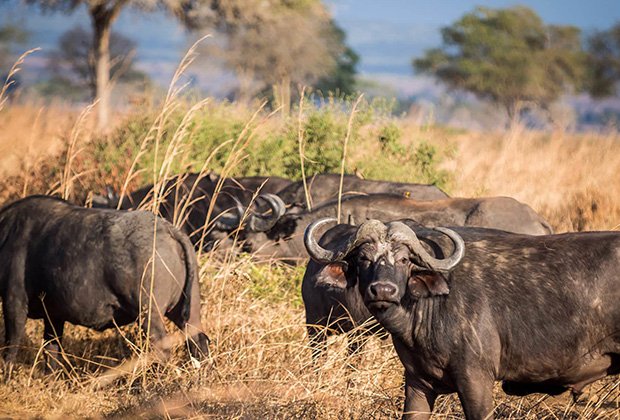
We exit the Serengeti and head toward the Ngorongoro Crater. This is the most iconic wildlife viewing destination in Africa. The crater floor is a self-contained ecosystem, and the density of animals here is unmatched. We spend the morning tracking the Big Five before ascending the crater walls in the afternoon and heading back toward our accommodation near the park exit.
Day 6: Return to Arusha
After a final morning game drive or a relaxed breakfast, we begin the drive back to Arusha. We typically arrive in the late afternoon, leaving you time for a final dinner or an evening flight if you have arranged for late departure.
Understanding Group Safari Logistics
Joining a group safari is fundamentally different from a private trip. It is a social experience that requires flexibility, but it offers significant benefits, most notably the cost-sharing aspect. When you join our Dec 29, 2026 group safari, you are sharing the vehicle, the fuel costs, and the guide’s daily rate with other travelers.
How the group structure works:
- Vehicle Capacity: We typically limit our vehicles to a maximum of 6 or 7 passengers to ensure everyone has a window seat.
- Flexibility: You must be comfortable with the group’s pace. If the group decides to stay longer at a lion sighting, everyone stays. If the group wants to head to the lodge for lunch, the vehicle moves.
- Social aspect: You will be spending long hours in a vehicle with the same people for six days. Most travelers find this to be a highlight, as they get to share the experience with like-minded individuals from around the world.
If you prefer complete control over your schedule—such as deciding exactly when to start your day or how long to stay at each stop—you might consider our private tailor-made options instead. However, for most, the group dynamic is a core part of the safari’s charm. If you have specific dietary requirements, mobility needs, or photographic equipment that takes up significant space, please inform us during the booking process so we can manage expectations or adjust the vehicle load accordingly.
Planning for December 2026
Travel in late December is peak season. Not only is the wildlife viewing excellent, but it is also a popular time for travelers globally. We strongly advise that you do not wait until the last minute to book your flights or your safari.
Key planning steps:
- Book Flights Early: Flights into Kilimanjaro International Airport (JRO) can become expensive and scarce for the end-of-year period. Secure your airfare as soon as your safari dates are confirmed.
- Visas: Ensure your passport is valid for at least six months beyond your departure date. Most nationalities require a visa to enter Tanzania; check the latest regulations for your country well in advance.
- Tipping Culture: Tipping is a standard practice in the Tanzanian tourism industry. While we provide guidance on appropriate amounts for your guide and cook, it is helpful to budget for this in cash (USD) before you arrive.
- Packing: Even though it is the “green season,” you will experience temperature fluctuations. The mornings in the Ngorongoro highlands can be quite cold, while the afternoons in the Serengeti plains can be hot. Pack layers.
Why 6 Days vs. Other Options
Travelers often ask us if a shorter 3-day or 4-day trip is sufficient. While we do offer those, as seen in our 3 Day Serengeti and Ngorongoro Budget Group Safari, there is a distinct trade-off. A 3-day trip is essentially a “highlights” tour. You spend a lot of time driving to reach the park, leaving you with less time for actual game viewing.
A 6-day itinerary allows you to travel at a more natural pace. You spend less time rushing between gates and more time in the wilderness. For the specific date of December 29, the extra days are invaluable because they allow us to explore the Ndutu area thoroughly. If the herds have moved slightly further south or west, we have the time to find them. On a 3-day trip, you are locked into a very rigid schedule that doesn’t allow for such adjustments.
Common Questions About This Departure
Is the wildlife guaranteed?
No ethical tour operator can guarantee wildlife sightings. However, by choosing the Ndutu region in late December, we are positioning ourselves in the area with the highest statistical probability of seeing the migration and associated predators. Nature is unpredictable, and that is part of the experience.
What if the group size is small?
We aim to fill our group departures to capacity to ensure the best experience and cost-efficiency. If a group departure does not meet the minimum number of participants, we will contact you well in advance to discuss options, such as moving to a different date or upgrading to a private safari.
What is the accommodation style?
For our group departures, we typically use a mix of mid-range tented camps and lodges. These provide a comfortable bed, en-suite facilities, and good meals, allowing you to stay close to the wildlife without sacrificing basic comforts. Specific accommodation is confirmed upon booking.
How to Secure Your Spot
If you are ready to move forward with the Dec 29, 2026 – 6 Day Ndutu, Serengeti and Ngorongoro Group Safari, the next step is to initiate a conversation with our team. We do not use automated booking systems because we prefer to ensure that the trip is the right fit for your expectations and travel style.
Please reach out to us with the following details:
- The number of travelers in your party.
- Your preferred arrival date in Tanzania.
- Any specific interests (e.g., photography, bird watching, cultural visits).
- Any dietary or mobility requirements.
You can contact us via WhatsApp at +255 747 477 898 or send an email to climb4africa@gmail.com. Alternatively, you can use our backup address at info@climb-4-africa.com. We look forward to helping you plan a successful end-of-year safari in 2026.
Navigating the Physical Realities of a 6-Day Safari
One aspect of the 6-day itinerary that often surprises first-time visitors is the physical reality of spending consecutive days in a 4×4 safari vehicle. While the scenery in the Ndutu plains and the Serengeti is impressive, the transit times between these locations are significant. Unlike a city tour where you move between points of interest in minutes, the Northern Circuit requires traversing vast distances on roads that transition from tarmac to rough, unpaved terrain. Understanding the rhythm of these days helps you manage your physical comfort and maximize your enjoyment.
For the Dec 29 departure, we utilize custom-modified 4×4 Land Cruisers. These vehicles are designed for the terrain, featuring pop-up roofs for optimal 360-degree viewing and suspension systems built to handle the washboard roads of the Ngorongoro Conservation Area. However, comfort is relative in the bush. We recommend that guests bring a small, comfortable neck pillow and ensure their camera gear is secured in a bag that is easy to access but protected from dust. Dust is a constant companion on the safari circuit, particularly during the drier transitions between the short rains, so protecting your electronics with sealed bags is a standard practice among seasoned photographers.
Hydration and nutrition also play a role in your daily comfort. Because we prioritize game viewing, lunch is often a picnic style taken at designated sites within the parks. This allows us to keep moving and avoid the time-consuming process of driving back to a lodge in the middle of the day. We provide ample bottled water in the vehicle, but we encourage participants to carry a reusable water bottle to reduce plastic waste, which is heavily discouraged within the national park boundaries. If you have specific dietary restrictions—such as being vegetarian, vegan, or gluten-intolerant—please communicate these well in advance of your December 29 start date. Our catering partners in Arusha and the bush camps require this information at least two weeks prior to departure to ensure your meals are prepared correctly.
The Social Dynamics of Group Travel
Choosing a group safari means you are sharing a confined space with fellow travelers for nearly a week. This dynamic is one of the most rewarding aspects of the trip, as you will meet people from all over the world who share your interest in wildlife and conservation. However, it also requires a baseline of social etiquette to ensure everyone has a positive experience. The most successful groups are those that embrace a spirit of cooperation.
For instance, when we are on a game drive, the vehicle’s seating arrangement is often rotated daily. This ensures that everyone gets a turn in the “window seat” and a chance to sit closer to the guide for better communication. Your guide will facilitate this rotation, but we appreciate guests who are proactive about it. Similarly, when it comes to wildlife spotting, we encourage a “quiet observation” rule. Loud conversations can spook animals, especially in the quiet, expansive environment of the Ndutu plains where predators are often stalking prey. If you spot something, a gentle tap on the roof or a quiet word to the guide is preferred over shouting, which can disturb the animal’s behavior and ruin the experience for the rest of the group.
Finally, remember that your guide is the captain of the ship. They are responsible for your safety and the vehicle’s adherence to park regulations. If they ask you to stay inside the vehicle or to keep a certain distance from an animal, please follow these instructions without negotiation. These rules exist not just for your safety, but to protect the animals and ensure the longevity of the safari industry in Tanzania. By respecting these boundaries, you contribute to a responsible and sustainable travel experience that allows the ecosystem to remain wild for future visitors.
Photography Considerations for Group Safaris
Many travelers join this 6-day safari with the intention of capturing high-quality wildlife imagery. While the Ndutu plains offer incredible, unobstructed vistas, shooting from a shared 4×4 vehicle requires a different approach than solo wildlife photography. The primary constraint is the vehicle itself. Because you are sharing the space with others, deploying a full-sized tripod is impossible and, frankly, impractical. Instead, we recommend using a beanbag, which can be rested on the window frame or the roof hatch to stabilize your camera against the inevitable engine vibrations. This allows for quick adjustments as the animal moves, which is critical when tracking active predators like cheetahs.
Regarding lens selection, the rule of thumb in the Serengeti is that you can never have enough reach. While a wide-angle lens is useful for capturing the vast, dramatic skies of the southern plains, a zoom lens—ideally in the 100-400mm or 150-600mm range—is essential for wildlife that remains at a safe distance. In the Ndutu region, where the grass is often shorter during the calving season, animals are sometimes easier to spot, but you still want the ability to compress the background and isolate your subject from the herd.
The group dynamic also plays a role in your photographic success. If you are a dedicated photographer, communicate this to your group members early on. Often, a group will be happy to accommodate a “photo-first” approach, but it is vital to respect that others may be there for casual viewing. When the vehicle stops, be mindful of your shutter noise and your physical footprint. If you are using a DSLR, consider using a “silent shutter” mode if your camera supports it. Above all, prioritize the moment over the shot. If you spend the entire sighting looking through a viewfinder, you risk missing the raw, visceral experience of the migration unfolding right in front of you.
Managing Health, Wellness, and Dietary Needs on a Shared Safari
Embarking on a 6-day group safari through the Serengeti and Ngorongoro requires a level of personal responsibility that goes beyond simply packing the right camera gear. Because you are traveling in a shared vehicle and staying in remote, often tented environments, your health and wellness choices directly impact both your enjoyment of the trip and the comfort of your fellow travelers. The most critical logistical step is the communication of dietary requirements. While lodges and tented camps in the Northern Circuit are accustomed to catering to international guests, they operate in remote locations where supplies are brought in on a strict schedule. If you have specific dietary restrictions—such as severe allergies, gluten intolerance, or a strictly vegan diet—you must disclose this to the operator at the time of booking, not upon arrival. Expecting a specialized menu on the day of your arrival at a remote bush camp is often unrealistic; giving the team a minimum of two weeks’ notice allows the kitchen staff to procure the necessary fresh ingredients from Arusha before the safari begins.
The environment of the Ndutu plains and the Serengeti also presents unique physical challenges, most notably dust and sun exposure. The “short rains” in late December do not eliminate the dust; in fact, the combination of dry, fine soil and passing safari vehicles can create significant airborne particulate matter. This is particularly noticeable when you are standing in the pop-up roof hatch of the Land Cruiser. If you have a history of respiratory sensitivity, asthma, or seasonal allergies, bring a high-quality buff, gaiter, or light mask to wear during transit game drives. Additionally, the dry air, combined with the wind from an open vehicle, can quickly dehydrate you. Maintaining hydration is the single most effective way to prevent the fatigue that often sets in by day four or five. Do not rely solely on the water provided during meal times; carry a reusable water bottle that you can refill at the lodge or from the large jerrycans typically stored in the safari vehicle.
Motion sickness is a frequent, yet often unmentioned, reality of the Northern Circuit. The roads connecting Arusha, the Ngorongoro Conservation Area, and the Serengeti are not all paved; you will encounter corrugated gravel roads, steep inclines, and uneven terrain. If you are prone to motion sickness, do not wait until you are already on the road to address it. Consult your physician before your trip regarding over-the-counter preventative measures. Choosing a seat in the vehicle can also make a difference—if possible, negotiate with your group to rotate seating daily so that everyone has a turn in the front seat or near the windows, as the middle seats in the back row are often the most susceptible to the swaying motion of the vehicle.
Finally, consider the pacing of your wellness. A 6-day safari is an active, early-morning endeavor. You will likely be waking up before dawn to catch the best predator activity, which means early nights are necessary to sustain your energy levels. In a group setting, this requires mutual respect. If you are an early riser and your tent-mate or group member is not, be mindful of noise levels in the early hours. Keeping your personal space organized and your health needs managed proactively ensures that you remain an active, engaged participant in the group rather than a passenger who is simply trying to endure the travel days. Your guide is there to manage the vehicle and the wildlife tracking, but your personal physical maintenance remains your own responsibility.
Essential Gear and Luggage Management for Shared Vehicles
One of the most common logistical hurdles on a 6-day group safari is the management of personal gear within the confined space of a 4×4 Land Cruiser. Unlike a private safari where you might have the luxury of spreading out, a group departure requires a disciplined approach to what you bring and how you store it. Every item you pack must serve a purpose, as the vehicle’s storage space—specifically the rear compartment for luggage and the cabin space for day bags—is shared among all passengers. Understanding these physical limitations before you leave home will prevent the stress of trying to fit oversized suitcases into a vehicle designed for agility rather than cargo capacity.
The Mandatory Soft-Sided Luggage Rule
The first rule of group safari logistics is the absolute necessity of soft-sided luggage. Hard-shell suitcases are notoriously difficult to pack into the rear storage area of a safari vehicle. They do not compress, they slide around on the metal floor, and they often prevent the tailgate from closing properly when combined with the bags of three or four other travelers. Opt for a high-quality, durable duffel bag or a soft-sided adventure pack. Not only does this allow your guide to tetris your luggage efficiently, but it also protects your belongings from the inevitable bumps of the corrugated dirt roads you will traverse between Ngorongoro and Ndutu. If you are traveling with a camera bag or a day pack, ensure it is compact enough to fit at your feet or in the overhead rack without encroaching on the legroom of the person sitting next to you.
Power Management in a Shared Environment
In the age of digital travel, managing the power needs of an entire group is a frequent point of friction. While many modern safari vehicles are equipped with charging ports (typically USB or cigarette lighter sockets), these are finite resources. Do not assume that you will have constant, uninterrupted access to a dedicated port for your phone, camera, and tablet simultaneously. The most experienced group travelers bring a compact, multi-port power bank that can be charged overnight at the lodge and used to top up devices during the long transit days. Furthermore, bring a universal travel adapter. Even if the lodge or camp provides outlets, they may be limited, and having the ability to daisy-chain your charging needs without monopolizing the shared outlet is a courtesy that your fellow travelers will appreciate.
Strategic Layering for Variable Climates
Packing for a 6-day safari in late December requires preparing for two distinct climate zones: the cool, high-altitude air of the Ngorongoro Crater rim and the hot, dusty plains of the Ndutu region. The temperature differential can be significant. On the crater rim, early morning temperatures can hover near freezing, requiring a fleece, a windbreaker, or a light down jacket. However, by midday in the Serengeti, you will likely be in shorts and a t-shirt. The key to managing this in a shared vehicle is to keep your layers accessible in your day bag, not buried in your main luggage in the back of the vehicle. If you have to ask your guide to stop and open the trunk every time you get too hot or too cold, you are disrupting the game drive flow. Wear your layers in a way that you can shed or add them quickly without exiting the vehicle.
Dust Mitigation and Electronic Protection
The “short rains” in December do not necessarily mean mud; they often result in fine, silty dust that acts like a fine powder, infiltrating every zipper and seal. This is the primary enemy of your electronics. Bringing a high-quality dry bag or a dedicated, dust-proof camera case is not optional; it is essential. Even when your camera or tablet is inside your day pack, the fine dust from the Serengeti roads will find a way in. Keep a microfiber cloth readily available to wipe down your lenses and screens after every game drive. Additionally, consider packing a few large, heavy-duty Ziploc bags. These are invaluable for sealing away your electronics during the dustier transit sections of the drive, providing a secondary layer of protection that a standard camera bag may not offer.
Respecting Shared Space Etiquette
Finally, the most overlooked aspect of gear management is the etiquette of your personal footprint. A group safari is a communal experience. Avoid the temptation to bring large pillows, excessive blankets, or bulky extra bags that clutter the vehicle. If you require specific items for comfort—such as a neck pillow or a personal snack stash—keep them contained within your own seat area. The goal is to keep the aisles clear and the vehicle interior clean. By maintaining a compact, organized, and self-sufficient gear setup, you ensure that you remain a low-impact, highly mobile participant in the group, allowing everyone to focus on the wildlife rather than navigating a cluttered vehicle interior.
Navigating the Unspoken Rules of Game Drive Etiquette
While the logistics of gear and space management are critical, the success of a 6-day group safari often hinges on the intangible behaviors of the participants. When you are confined in a 4×4 vehicle for eight to ten hours a day, your behavior directly impacts the experience of your fellow travelers. The most successful group safaris are those where participants adopt a ‘shared pursuit’ mindset rather than a ‘solo explorer’ approach.
The first rule of game drive etiquette is the management of sound. When your guide cuts the engine to observe a leopard in a tree or a lion pride resting in the shade, the vehicle should ideally become a silent observation deck. While it is natural to want to share your excitement, loud conversations, rustling plastic bags, or constant clicking of camera shutters can be disruptive. Practice the ‘whisper rule’ during sightings. If you need to communicate with your guide, do so in a low, controlled voice. If you see something of interest, point it out calmly rather than shouting, which can startle animals and ruin the moment for everyone.
Secondly, establish a ‘Window Seat Rotation’ policy early on. In a group of four to six, not everyone can have the best view at all times. If your vehicle has a pop-up roof, the person with the best angle on a specific sighting should be mindful of how long they occupy that vantage point. A good rule of thumb is to allow five to ten minutes for photography, then gently shift to allow others a turn. If you notice a fellow traveler struggling to get a shot, be the one to offer them your spot. This simple gesture of camaraderie sets a positive tone for the entire week and often leads to a more collaborative group dynamic.
Finally, respect the ‘Stop/Go’ authority of the guide. It is tempting to ask the guide to stop every time you see an impala or a gazelle, but remember that the group has a broader itinerary to cover. Trust your guide’s judgment; they are scanning the horizon for the ‘Big Five’ and other elusive species. If you constantly interrupt their flow to stop for common plains game, you risk missing the rare sighting that the guide is actively tracking. If you have a specific request—such as a desire to spend more time photographing birds—bring it up during a lunch break or at the end of the day, rather than during the heat of the game drive.
The Financial Etiquette of Group Tipping
Tipping is a standard practice in the Tanzanian tourism industry, but it can be a source of confusion for first-time group safari participants. Because you are traveling as a group, the question of whether to tip individually or collectively often arises. As a general rule of thumb, group tipping is far more efficient and avoids the awkwardness of disparate tip amounts.
Before the final day of your safari, it is standard practice for the group to have a brief, private conversation—usually during dinner on the fifth night—to decide on a collective tip for the driver-guide. This removes the pressure from individuals to decide ‘how much is enough’ and ensures that the guide receives a substantial, unified gratuity that reflects the group’s appreciation for their expertise and safety. While the amount is entirely at your discretion, it is helpful to research current industry standards for Tanzania, which generally range between $20 and $30 USD per day, per group, depending on the level of satisfaction and the complexity of the service provided.
When preparing your tipping funds, the condition of the currency is paramount. Tanzania operates on a ‘crisp bill’ policy for USD. Banks and exchange bureaus in Arusha will often reject or heavily discount bills that are torn, marked, taped, or printed before 2009. Ensure that the cash you bring for your tips is clean, uncreased, and relatively new. It is also advisable to keep your tip money in a separate, secure envelope from your daily spending cash. This prevents you from accidentally handing over a large tip bill for a small purchase and keeps your ‘gratitude fund’ organized. If you choose to tip the lodge staff separately—which is also encouraged—most lodges provide a central ‘tipping box’ at the reception. Utilizing this is the most professional and equitable way to ensure that the behind-the-scenes staff, such as the chefs and housekeepers, are also recognized for their contribution to your stay.
The Sensory and Ecological Transitions of the Northern Circuit
The Northern Circuit of Tanzania is not merely a collection of safari destinations; it is a sequence of distinct ecological biomes, each demanding a different mode of observation and mental adjustment. For travelers on a 6-day itinerary, understanding these transitions is key to maximizing the experience. You are moving through a rapid succession of environments: the cool, high-altitude forests of the Ngorongoro rim, the expansive, open short-grass plains of Ndutu, and the rocky, acacia-studded woodlands of the central Serengeti. Recognizing these shifts allows you to adjust your expectations, camera settings, and even your physical pace.
From Volcanic Highlands to Short-Grass Plains
The journey begins with a transit through the Ngorongoro Conservation Area. As you ascend into the highlands, the environment is dominated by montane forests and cool, often misty air. This is a zone of verticality and enclosure. The transition from this lush, high-altitude habitat to the Ndutu region is abrupt. As you descend toward the plains, the horizon opens dramatically. In Ndutu, the landscape is defined by its horizontality. There are fewer trees, and the eye is drawn to the vast, flat stretches of grass that define the calving grounds. This environment requires a shift in your “search” pattern. In the highlands, you are looking for movement against dense foliage; in Ndutu, you are scanning the horizon for silhouettes against the sky. The light here is intense and unfiltered, reflecting off the grass, which can significantly impact your photography. Utilizing a polarizing filter is highly recommended here, as it cuts the glare from the expansive, sun-drenched plains.
The Visual Language of the Serengeti Kopjes
By the time you reach the Seronera Valley in the central Serengeti, the landscape undergoes another transformation. The flat plains give way to granite outcrops known as kopjes. These geological formations are essentially islands of rock in a sea of grass, and they act as the primary structural feature of the ecosystem. Leopards and lions favor these formations for both hunting and resting. For the traveler, this means the game drive rhythm changes again. In Ndutu, your guide is driving across open terrain, following the movement of the herds. In Seronera, the drive becomes more strategic and “micro-focused.” You are no longer scanning the horizon; you are examining the base of rocks, the crooks of acacia branches, and the shadows cast by the kopjes. This requires a more patient, observant approach, as the wildlife here is often camouflaged against the granite and vegetation.
Navigating the ‘Short Rains’ Ecosystem
Traveling in late December places you directly within the influence of the ‘short rains.’ This is a critical factor in the health and vitality of the ecosystem. Unlike the heavy monsoon rains that can render roads impassable, the short rains in December are often sporadic, manifesting as brief afternoon thunderstorms followed by clear, brilliant skies. This weather pattern has a profound impact on the landscape. The dust that characterizes the dry season is suppressed, and the plains are vibrant with new growth. For the traveler, this means the air is clearer, the colors are more saturated, and the animal activity is heightened. The fresh grass attracts the wildebeest herds, which in turn draws the predators. It is important to remember that this is a dynamic, living system. If you notice a sudden shift in animal behavior—birds gathering, gazelles staring in a single direction—your guide is likely picking up on the subtle cues of an impending hunt. The short rains bring the ecosystem to life, and being present during this transition is the primary advantage of a late-December departure.
The Post-Safari Decompression Phase
The final transition is the return to Arusha on day six. After spending five days immersed in a world governed by natural rhythms—where your day is dictated by sunrise, sunset, and the movement of wildlife—returning to the urban environment can be jarring. This is often referred to as ‘safari withdrawal.’ To mitigate this, we recommend building a buffer into your travel plans. Do not schedule a late-night flight immediately after the drive back to Arusha. The transit from the Serengeti back to the city can be long, and traffic near Arusha can be unpredictable. Allowing yourself an evening in a quiet lodge or hotel, perhaps with a final dinner to reflect on the week, provides a necessary period of decompression. It allows you to process the intensity of the experience before re-entering the pace of international travel. Many travelers find that this final, relaxed evening is just as valuable as the game drives themselves, offering a chance to review photos, exchange contact information with fellow group members, and transition slowly back to the demands of the ‘real world.’
The Predator-Prey Dynamics of the Ndutu Plains
While the Serengeti is often viewed as a singular, vast wilderness, the Ndutu region functions as a distinct ecological theater. Understanding the predator-prey dynamics here is essential for appreciating why this specific area is the focal point of your late-December safari. Unlike the central or northern Serengeti, where the landscape is often dominated by tall grasses and dense acacia scrub, the Ndutu region is defined by its unique volcanic soil. This soil supports short, highly nutritious grasses that act as a magnet for the wildebeest migration, particularly as the calving season begins.
For the traveler, this creates a high-density environment that is fundamentally different from other parts of the Northern Circuit. Because the grass is short, visibility is significantly higher, allowing you to observe behaviors that would be obscured in thicker vegetation. This is the primary reason Ndutu is widely regarded as one of the best places in East Africa to witness the mechanics of a hunt. You are not just looking for animals; you are learning to read the tension in the landscape. When the vast herds of wildebeest and zebra are grazing in the open, they are constantly scanning the horizon. When they suddenly move in unison or form a defensive circle, it is a signal that a predator is nearby.
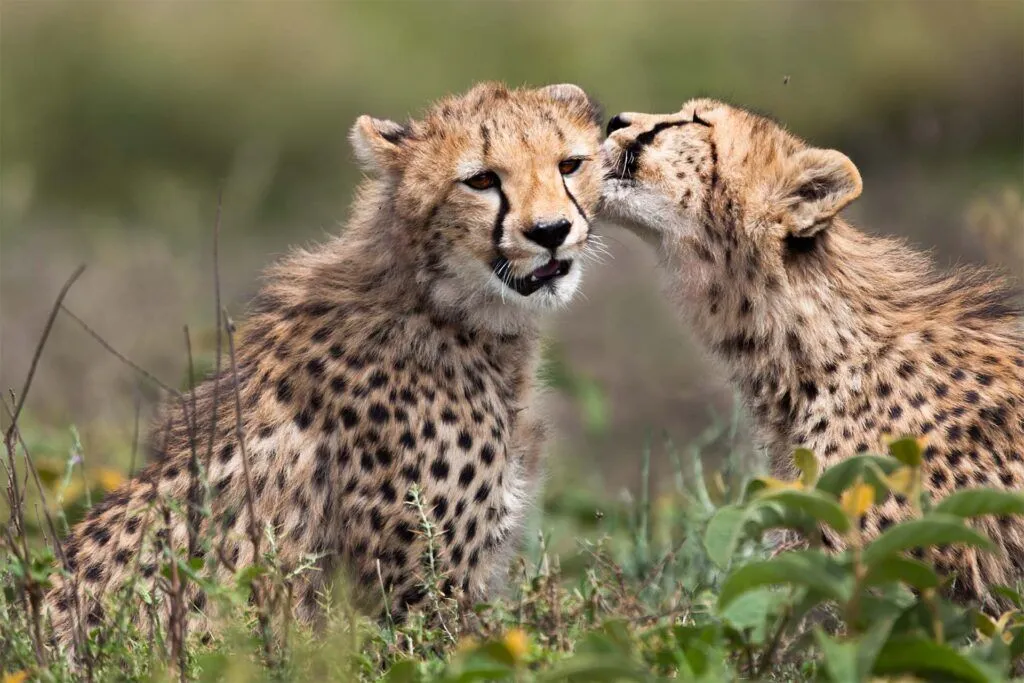
The region is particularly famous for its cheetah population. Cheetahs are daylight hunters that rely on speed and open ground to secure their prey. The Ndutu plains provide the ideal, unobstructed terrain for these cats to execute high-speed pursuits. On a 6-day itinerary, you have the luxury of time to track these animals patiently. Unlike shorter, high-speed ‘highlights’ tours that must move quickly between locations, our group safari allows you to spend extended periods—sometimes several hours—parked near a coalition of cheetahs or a pride of lions. This ‘slow safari’ approach is often rewarded with behaviors that most visitors never get to see: the patient stalking, the strategic positioning of a pride, or the intense, silent interaction between a predator and a herd.
It is important to remember that these interactions are not guaranteed, nor are they always dramatic. A significant portion of predator behavior in Ndutu is characterized by long periods of inactivity. A pride of lions may spend the entire heat of the day sleeping in the shade of a kopje or under a lone acacia tree. Having six days allows you to visit these same sites at different times of the day. You might pass a pride in the morning when they are inactive, and return in the late afternoon when the cooling temperatures prompt them to stir, groom, and begin their evening patrol. This iterative approach to game viewing turns the safari into an in-depth study of animal behavior rather than a simple checklist of sightings.
The Unique Atmosphere of New Year’s Eve in the Serengeti
Because your departure is set for December 29, you will inevitably find yourself in the heart of the Serengeti or the Ndutu plains on December 31. For many, this is a significant draw—the chance to ring in a new year away from the noise and artifice of urban celebrations. However, it is essential to adjust your expectations regarding what ‘New Year’s Eve in the bush’ actually entails. You should not arrive expecting fireworks, loud music, or late-night parties. The wilderness functions on a biological clock, not a calendar one.
In most tented camps and lodges within the conservation area, New Year’s Eve is marked with a sense of understated elegance. While the kitchen staff may prepare a slightly more festive dinner, the atmosphere remains hushed and respectful. The most profound part of the experience is the silence. As midnight approaches, you are far more likely to hear the distant whoop of a hyena or the rustle of dry grass than any human celebration. This contrast—being in a place where the passage of time is measured by the migration and the rains rather than the turning of a calendar page—is the true appeal of a year-end safari.
Crucially, the next morning, January 1st, remains a standard safari day. There is no ‘sleeping in’ on New Year’s Day. The 5:30 AM or 6:00 AM wake-up call will proceed as scheduled, because the predators are most active in the cool dawn hours. Approaching this date requires a shift in mindset: treat the experience as a meditative reset. You are starting your year in one of the most primal environments on earth, and the reward is a sunrise game drive on the first day of the year, witnessing the ecosystem wake up while the rest of the world is still asleep.
Mastering the Transit Days: The Rhythm of the Road
The 6-day itinerary relies on two critical transit days: the journey from Arusha to the Ndutu plains on Day 2, and the return journey on Day 6. These are not merely ‘travel days’ to be endured; they are an integral part of the Northern Circuit experience. The roads in Tanzania, particularly once you exit the paved sections and enter the conservation areas, are unpaved, corrugated, and unpredictable. Viewing these transit days as ‘dead time’ is a common mistake that leads to frustration.
Instead, view these drives as a transition of landscapes. On the transit to Ndutu, you are observing the slow shift from the chaotic, bustling streets of Arusha to the lush, volcanic highlands of Ngorongoro, and finally to the expansive, open savannah. This visual progression is the story of the Northern Circuit. To manage the transit rhythm, utilize the ‘stretch stops’ effectively. When your driver-guide pulls over for a quick break or to show you something interesting—perhaps a Maasai boma or a unique bird species—take the opportunity to physically move. Staying sedentary for eight hours is the fastest way to fatigue.
Furthermore, the transit days are the best time to engage with your driver-guide. Because the game drives are often intense and focused on tracking animals, the driver is usually preoccupied with the road and the wildlife. On the transit days, the pace is more relaxed. This is the ideal time to ask questions about the geography you are crossing, the history of the conservation area, or the cultural nuances of the regions you are passing through. By reframing the transit days as an educational and observational component of the trip rather than a logistical hurdle, you significantly enhance the overall quality of your 6-day adventure.
Navigating the Departure Logistics: Your Arrival and Pre-Safari Briefing
While the itinerary officially begins on December 29, the success of a 6-day group safari often hinges on the 24 hours preceding your departure from Arusha. Because this is a group departure, you are not arriving in a vacuum; you are joining a pre-coordinated team. The logistics of your arrival in Tanzania—specifically regarding airport transfers and the mandatory pre-safari briefing—are critical components that ensure the vehicle departs on time on the morning of the 29th.
Most participants arrive at Kilimanjaro International Airport (JRO). It is highly recommended to schedule your flight to arrive no later than the afternoon of December 28. Attempting to land on the morning of the 29th introduces significant risk; flight delays, lost luggage, or customs bottlenecks can derail the entire group’s schedule. By arriving a day early, you allow yourself a buffer to recover from international travel and, more importantly, to attend the mandatory pre-safari briefing.
The Importance of the Pre-Safari Briefing
The evening before your departure, your safari guide or a representative from the operation will meet with you at your hotel in Arusha. This is not merely a formality; it is an essential operational meeting. During this session, several key items are finalized:
- Final Gear Inspection: The guide will verify that you have adhered to the soft-sided luggage rule. If your bags are unsuitable, this is the last opportunity to make adjustments or leave excess items in secure storage at your hotel.
- Group Introductions: You will meet your fellow travelers. This is the moment to establish group norms, discuss dietary requirements again, and align expectations for the week ahead.
- Itinerary Review: The guide will provide a detailed breakdown of the route, weather expectations for the Ndutu region, and any specific park regulation updates that might have changed since your booking.
- Financial Coordination: You will be briefed on the tipping structure, currency requirements for park entry (if applicable), and how to handle any incidental costs that might arise during the transit days.
Managing Your Arusha Base
Your choice of accommodation in Arusha for the night of the 28th should ideally be centrally located or near the route the vehicle will take to exit the city. Arusha traffic can be notoriously slow, particularly as you leave the urban center toward the Ngorongoro Conservation Area. By staying in a hotel that is accustomed to hosting safari departures, you ensure that your breakfast and check-out process are streamlined, allowing for an early departure—often by 7:30 AM—to beat the worst of the regional traffic.
If you have specific dietary needs, such as severe allergies, use this pre-safari window to confirm that the kitchen at your hotel and the safari catering team have received your details. While most lodges in the Serengeti are well-equipped to handle standard requests, verifying this in person with your guide during the briefing provides peace of mind before you enter the remote bush where communication with the outside world is limited.
Navigating the Specifics of the ‘Group Departure’ Booking Process
Joining a scheduled group departure for the December 29th slot requires a shift in mindset compared to booking a private, tailor-made safari. In a private setup, the operator builds the itinerary around your specific flight times and personal preferences. In this group format, the itinerary is fixed to maximize the efficiency of the vehicle and the logistics of the group, meaning your personal schedule must align with the pre-set departure date. Understanding how to navigate this booking process is crucial to ensuring your spot is secured without operational friction.
The first step in this process is the verification of the ‘minimum participant’ threshold. Unlike private safaris, which can run with just two people, group departures are often cost-optimized based on a specific occupancy level—typically four to six travelers per Land Cruiser. When you inquire about the December 29th departure, you are not simply booking a seat; you are entering a collective agreement. If the minimum number of participants has not been reached, the operator will typically hold your booking as ‘pending’ until the threshold is met. It is vital to clarify the status of this threshold during your initial inquiry. Avoid making non-refundable international flight arrangements until you receive written confirmation that your specific departure date is ‘guaranteed to run.’ Most reputable operators will provide this confirmation 60 to 90 days before the departure date.
Once your spot is confirmed, the payment structure for group departures often differs from custom trips. Because the operator is managing a block of accommodation and vehicle logistics, they may require a larger, non-refundable deposit earlier in the process. This is not an attempt to lock you in, but a necessary measure to secure the limited inventory in the Ndutu region during the high-demand New Year’s period. Be prepared to provide proof of travel insurance that covers the full value of your trip at the time of booking, as the operator will likely require this to finalize your registration.
Communication during the lead-up to December 29th is also distinct. In a private safari, you might communicate directly with your guide or a dedicated travel designer. For a group departure, you will likely be added to a shared communication channel—often a WhatsApp group or an email thread—with the other participants. This is where the operator will share updates on the group composition, final logistics, and any changes in the park entry requirements. Engaging in this group channel is highly recommended; it allows you to coordinate arrival times, share flight details to help the operator optimize airport transfers, and even begin the process of getting to know your fellow travelers, which significantly eases the social transition once you meet in person in Arusha.
Finally, be aware of the ‘change of mind’ policy. Because you are joining a group, you cannot unilaterally request to change the dates or the itinerary once the booking is finalized. If you decide that you want to add an extra day or visit a different park, you would effectively need to leave the group and book a private tour, which would incur significant additional costs. If you have any hesitation about the fixed nature of the 6-day itinerary, it is essential to voice these concerns *before* you pay your deposit. The group departure model is designed for efficiency and shared experience; it thrives when all participants are aligned with the established route and pace.
Mastering the Vehicle Environment: Seating Rotation and Roof Etiquette
In a 6-day group safari, the 4×4 Land Cruiser becomes your primary living space for eight to ten hours each day. While the vehicle is designed for game viewing, the physical configuration requires a clear, pre-agreed system to ensure fairness. The most effective way to manage this is through a structured seating rotation policy, which should be established by the group—or enforced by your guide—on the morning of Day 2.
The Mechanics of Seating Rotation
Standard safari vehicles are configured with three rows of passenger seats behind the driver. The seats closest to the windows are universally considered the most desirable for photography and wildlife observation, while the middle seats are less optimal. To prevent resentment and ensure everyone has equal access to the best vantage points, implement a rotation schedule: move forward one row after every morning or afternoon game drive. This ensures that everyone spends time in the front, middle, and back rows throughout the six-day journey. Do not leave seating to ‘first come, first served’ each morning; this invariably leads to social friction and the formation of cliques within the vehicle.
Pop-Top Roof Management
The pop-top roof is the defining feature of the safari experience, allowing you to stand and scan the horizon. However, it is a limited resource. When the vehicle is stationary for a sighting, the roof space can quickly become crowded. Establish a ‘one-in, one-out’ or ‘turn-taking’ rule for the roof hatch. If you are standing, be acutely aware of your elbows and camera straps; a common complaint in group safaris is the unintentional blocking of another passenger’s shot. Avoid ‘hogging’ the roof for extended periods, especially when the vehicle is moving slowly. If you are not actively photographing, consider yielding your position to someone who is, particularly if the group is tracking a predator or a rare sighting.
Operational Contingencies: Navigating Remote Road Challenges
The Ndutu region and the Serengeti are vast, remote wilderness areas where infrastructure is minimal. While modern safari vehicles are robust and well-maintained, mechanical issues—such as a flat tire, a punctured radiator, or a stuck axle—are a reality of off-road travel. In a group safari, these moments are the ultimate test of the group’s collective temperament.
Handling Mechanical Delays
If the vehicle experiences a breakdown, the standard procedure is for the driver-guide to assess the situation. They will typically attempt a field repair or call for backup support from the local park network or the tour operator’s base. This process can take anywhere from thirty minutes to several hours. During this time, you may be required to remain inside the vehicle for safety reasons, especially if you are in an area with high predator density. View these periods not as ‘lost time,’ but as an unplanned opportunity for a ‘stationary game drive.’ The surrounding environment is rarely empty; often, the best birdwatching or smaller mammal sightings occur when the vehicle is silent and stationary.
The Reality of Road Conditions
The roads in the Serengeti are not paved highways; they are graded tracks that change character with every rain shower. During the late December period, even light rain can turn a dry track into a slick, muddy challenge. Your driver is trained to navigate these conditions, but progress will be slower than on a paved road. Avoid the urge to pressure the driver to ‘speed up’ or take shortcuts. The risk of getting bogged down in mud or damaging the vehicle suspension is high, and a stuck vehicle can result in a significantly longer delay than simply driving cautiously. Trusting the driver’s judgment on which tracks to take—and which to avoid—is essential for keeping the 6-day itinerary on schedule.
Managing Expectations During Wildlife Searches
Because you are in a group, the ‘target’ for the day is a collective decision. If one member of the group is desperate to find a leopard while another prefers to watch a herd of elephants, the guide will attempt to balance these interests. However, the guide’s primary directive is to maximize the group’s collective experience. Be prepared for the reality that you may not be able to spend as much time as you personally desire at a single sighting. Understanding that the group’s needs take precedence over individual preferences is the single most important mindset shift required for a successful 6-day shared departure.
Navigating the Return to International Departure Logistics
The final afternoon of your 6-day safari is rarely just a drive back to a hotel; it is a complex logistical transition that bridges the gap between the raw, untamed environment of the Serengeti and the structured requirements of international air travel. Because your return to Arusha coincides with the end of a group itinerary, the transition is often compressed. Understanding how to manage these final hours is critical to ensuring your departure from Tanzania is as smooth as your safari experience.
The Final Afternoon Transit and Buffer Time
On Day 6, the drive from the Ngorongoro Conservation Area back to Arusha involves a descent from the highlands and a transit through the bustling outskirts of the city. Traffic patterns in Arusha are highly unpredictable, often dictated by local market days, road construction, or weather-related delays. Most reputable operators schedule the return to arrive in Arusha by late afternoon, typically between 4:00 PM and 6:00 PM. However, you should never book an international flight that departs before late evening on the same day. The risk of a minor mechanical delay or a slower-than-expected exit from the park is simply too high. If your flight is scheduled for the early hours of the following morning, utilize the evening in Arusha to organize your gear, ensure your electronics are charged, and settle any outstanding administrative tasks with your operator.
The Final Gear Audit and Repacking
Throughout the six days, your luggage has likely been subjected to dust, humidity, and the rigors of being moved in and out of a 4×4 vehicle. Before you reach your final hotel or the airport, dedicate time to a final gear audit. Remove all dust-sensitive equipment—cameras, lenses, and tablets—from your main luggage and place them in your carry-on bag. If you have been utilizing the ‘soft-sided’ luggage rule, your bags are likely compressed and perhaps a bit grimy. This is the moment to inspect your zippers and seams; the fine, silty dust of the Ndutu plains can be abrasive, and cleaning your gear before repacking for your flight home prevents that dust from migrating into your clean clothing or causing issues with your luggage’s mechanical components.
Administrative Wrap-Up and Feedback
The return journey is the appropriate time to handle the administrative closure of your group safari. If you have any outstanding balances for incidental costs—such as additional drinks at lodges, laundry services, or park fee adjustments—settle these with your guide or the office representative upon arrival. Furthermore, providing constructive, specific feedback is invaluable for group operators. If you encountered a specific logistical friction point or a particular highlight, share this with the operator’s management. Unlike a private safari where the feedback loop is personal, group departures rely on the aggregate experience of the participants to refine the itinerary for future groups. Your input helps the operator calibrate the balance between group needs and individual flexibility for the next season.
The Logistics of the Post-Safari Buffer Period
The conclusion of your 6-day group safari, typically arriving back in Arusha on the evening of January 3rd, marks the beginning of the ‘re-entry’ phase. A common pitfall for travelers is attempting to coordinate an international flight departure on the same evening the safari concludes. While it is technically possible if your flight departs very late at night, it is strongly discouraged. The transit from the Ngorongoro region back to Arusha is subject to the variables of the Northern Circuit: road conditions, potential wildlife-induced traffic, and the unpredictable nature of Arusha’s urban congestion. A dedicated buffer day between your return to Arusha and your international flight is not merely a luxury; it is a critical logistical safeguard. This time allows you to properly decompress, process the intense sensory intake of the Serengeti, and address the practicalities of international travel that are difficult to manage while inside a 4×4 vehicle.
Navigating the JRO Departure Experience
Kilimanjaro International Airport (JRO) serves as the primary gateway for Northern Circuit safaris, yet it operates with a rhythm distinct from major global hubs. Because it is a smaller facility, it can experience significant bottlenecks during the peak evening departure window when multiple international carriers schedule their flights. Upon arriving at the airport, you will first encounter a security screening before entering the check-in hall. This initial check is mandatory for all individuals, including drivers and guides who might be dropping you off. Ensure your passport and flight itinerary are easily accessible, as security personnel will verify these documents before allowing entry into the terminal. Once inside, the check-in process for international flights generally opens three hours prior to departure. Use the time before this window to organize your carry-on luggage. If you have purchased souvenirs or wood carvings, ensure they are securely wrapped and compliant with airline size restrictions, as the hold space on smaller regional aircraft or the overhead bins on long-haul flights can be limited. If you have specific VAT refund documentation for large purchases, have these forms completed and your receipts organized before approaching the customs desk, as the process can be time-consuming.
Managing Post-Safari Hygiene and Health
After six days in the bush, your physical environment has been dominated by fine, silty dust—a hallmark of the Ndutu plains and the Serengeti. This dust is remarkably persistent; it penetrates zippers, settles into the fibers of your clothing, and coats camera gear. Before you repack for your journey home, prioritize a thorough cleaning process. If your hotel offers laundry services, this is the ideal time to utilize them, though be mindful of turnaround times; if you are staying for only one night, express services are essential. For your electronics, use a soft-bristled brush or compressed air to clean lenses and ports. Do not use wet wipes on optical glass, as the abrasive nature of the dust can cause micro-scratches. From a health perspective, the transition from the high-altitude, arid environment of the Ngorongoro Highlands to the humid, lower-altitude conditions of Arusha can lead to mild dehydration or fatigue. Continue your hydration regimen even after the safari has concluded. If you have been taking anti-malarial medication, adhere strictly to the prescribed dosage schedule, which often requires you to continue the medication for a specific period after leaving the malarial zone. By managing these small but vital details, you ensure that the conclusion of your trip is as smooth and restorative as the safari experience itself.
Navigating the Ngorongoro Crater Descent as a Group
The Ngorongoro Crater presents a unique logistical challenge that differs significantly from the expansive Serengeti plains. Because the Crater is a distinct caldera with a strictly enforced permit system, your Day 5 experience is governed by time constraints and high vehicle density. Unlike the Serengeti, where you can move freely across the landscape, the Crater floor operates on a strict entry-and-exit permit window—typically limited to six hours. For a group traveling in a single vehicle, this creates a high-pressure environment where every minute counts. Your driver-guide is tasked with balancing the group’s desire to see the ‘Big Five’—with the Black Rhino being the primary, elusive objective—against the reality of park traffic and the permit clock.
The congestion in the Crater is often the highest of the entire Northern Circuit. During the peak season, you will encounter dozens of vehicles clustered around major sightings, such as a lion pride or a rhino sighting. As a group, it is vital to maintain patience. If your vehicle is in the third or fourth row of a ‘traffic jam’ around a sighting, the collective temptation is to push the driver to maneuver closer. However, the Crater has strict off-road driving bans to protect the fragile ecosystem. Respecting these boundaries is not just a legal requirement; it is essential for maintaining the integrity of the habitat. If the group is unable to get a clear view due to the sheer volume of other tourists, accept that this is part of the Crater experience. The best strategy is to scan the periphery of the crowd, where you might find less-heralded but equally fascinating wildlife, such as servals or golden jackals, which are often ignored by the larger, frantic clusters of vehicles.
Lunch on the Crater floor is another specific logistical event. Most groups are directed to the designated hippo pool picnic site. This area is a high-traffic hub where hundreds of travelers converge simultaneously. Space is limited, and the local wildlife—particularly the black kites—are notorious for swooping down to steal food from unsuspecting visitors. When your group stops here, practice ‘defensive dining.’ Keep your food covered until you are ready to eat, and do not leave bags or loose items unattended. This is also a moment to reset the group dynamic. Use the 30-minute break to discuss what you have seen so far and what, if anything, remains a priority for the final few hours of the drive. By coordinating these expectations during the lunch break, you prevent the ‘FOMO’ (fear of missing out) that can sometimes turn a group safari into a tense experience, ensuring the final ascent out of the caldera is as harmonious as the morning descent.
Related Guides and Packages
Check Availability for Dec 29, – 6 Day Ndutu, Serengeti And Ngorongoro Group Safari 2026
Ready to compare dates, prices, and the best option for your group? Send the package name and travel month so the team can reply with a clear quote, availability, and what is included.
Dec 12, – 6 Day Serengeti, Ngorongoro, Tarangire And Manyara Group Safari 2026
Dec 12, 2026 – 6 Day Serengeti, Ngorongoro, Tarangire and Manyara Group Safari.
View package detailsDec 8, – 4 Day Tarangire, Serengeti And Ngorongoro Group Safari 2026
A detailed guide to our December 8, 2026 group joining safari, covering the itinerary, logistics, and what to expect during this 4-day wildlife adventure in Tanzania.
View package detailsNov 10, – 4 Day Serengeti, Ngorongoro And Tarangire Group Safari 2026
Join our group safari on November 10, 2026, for an intensive 4-day tour of Tanzania's Northern Circuit. Perfect for those with limited time who want to experience the best of the Serengeti...
View package detailsOct 31, – 6 Day Serengeti, Ngorongoro, Tarangire And Manyara Group Safari 2026
A detailed look at the 6-day Northern Circuit group safari departing October 31, 2026, covering Tarangire, Manyara, Serengeti, and Ngorongoro Crater.
View package detailsOct 29, – 4 Day Tarangire, Serengeti And Ngorongoro Group Safari 2026
Plan your October 2026 Tanzania adventure. This 4-day group safari covers Tarangire, Serengeti, and Ngorongoro Crater with reliable local support.
View package details8 Day Serengeti And Ngorongoro Group Safari – December 16, 2026
Planning your December 2026 Tanzanian adventure? Our 8-day group safari offers a deep, unhurried exploration of the Serengeti and Ngorongoro Crater.
View package details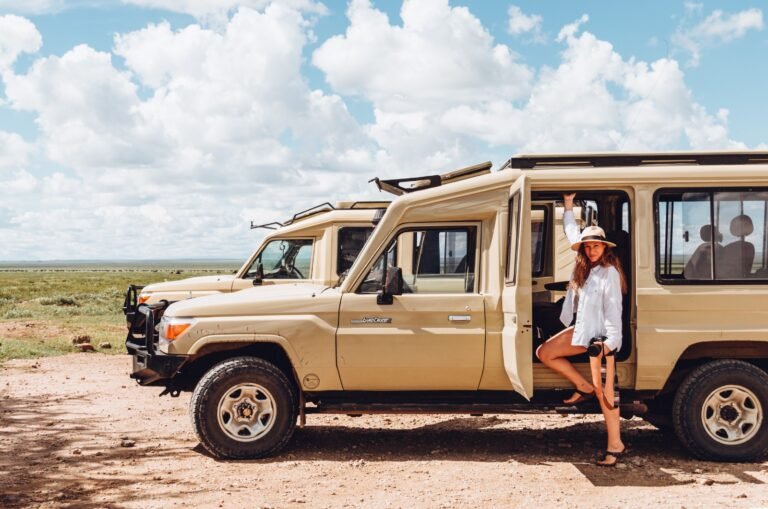
Nov 6, – 3 Day Serengeti And Ngorongoro Budget Group Safari 2026
A detailed look at our November 6, 2026 group departure for a 3-day Serengeti and Ngorongoro safari, including planning tips and route logistics.
View package detailsOct 27, – 3 Day Serengeti And Ngorongoro Group Safari 2026
Planning for a short, high-impact wildlife adventure? Our October 27, 2026, group safari offers a direct route through the Serengeti and Ngorongoro Crater, perfect for travelers with...
View package detailsNov 18, – 7 Day Serengeti And Ngorongoro Group Joining Safari 2026
A detailed guide to the 7-day group joining safari departing November 18, 2026, covering Serengeti, Ngorongoro, and the logistical advantages of shared travel.
View package detailsDec 14, – 7 Day Complete Tanzania Northern Circuit Group Safari 2026
Planning for December 2026? Join our 7-day complete Tanzania Northern Circuit group safari. A deep look at the Serengeti, Ngorongoro, and Tarangire with expert, locally-led logistics.
View package details
Fly-In Safari To Ngorongoro And Serengeti: Flights & Transfer Costs 2026-2027
Discover the logistics and cost breakdown for a fly-in safari to Ngorongoro and the Serengeti, including airstrip transfers, baggage limits, and vehicle positioning.
View package details
3-Day Serengeti & Ngorongoro Safari From Zanzibar By Flight 2027
3-Day Serengeti & Ngorongoro Safari From Zanzibar by Flight is explained with current 2027 planning, price, itinerary and booking information.
View package detailsNo related package matches those filters. Clear one or more filters to see the other topic-matched options.



