
The journey from Zanzibar to the Ngorongoro Crater is a multi-modal trip requiring a flight to the Tanzanian mainland followed by a 4×4 road transfer. There is no direct route; you must first fly into either Arusha (ARK), Kilimanjaro (JRO), or Lake Manyara (LKY) airports. Your total cost is a combination of a regional flight (typically $150–$350 USD per person) and a private or shared 4×4 vehicle transfer ($250–$450 USD per vehicle), which varies significantly based on your chosen airport, the season of travel in 2026 or 2027, and whether your transfer is bundled into a pre-booked safari package.

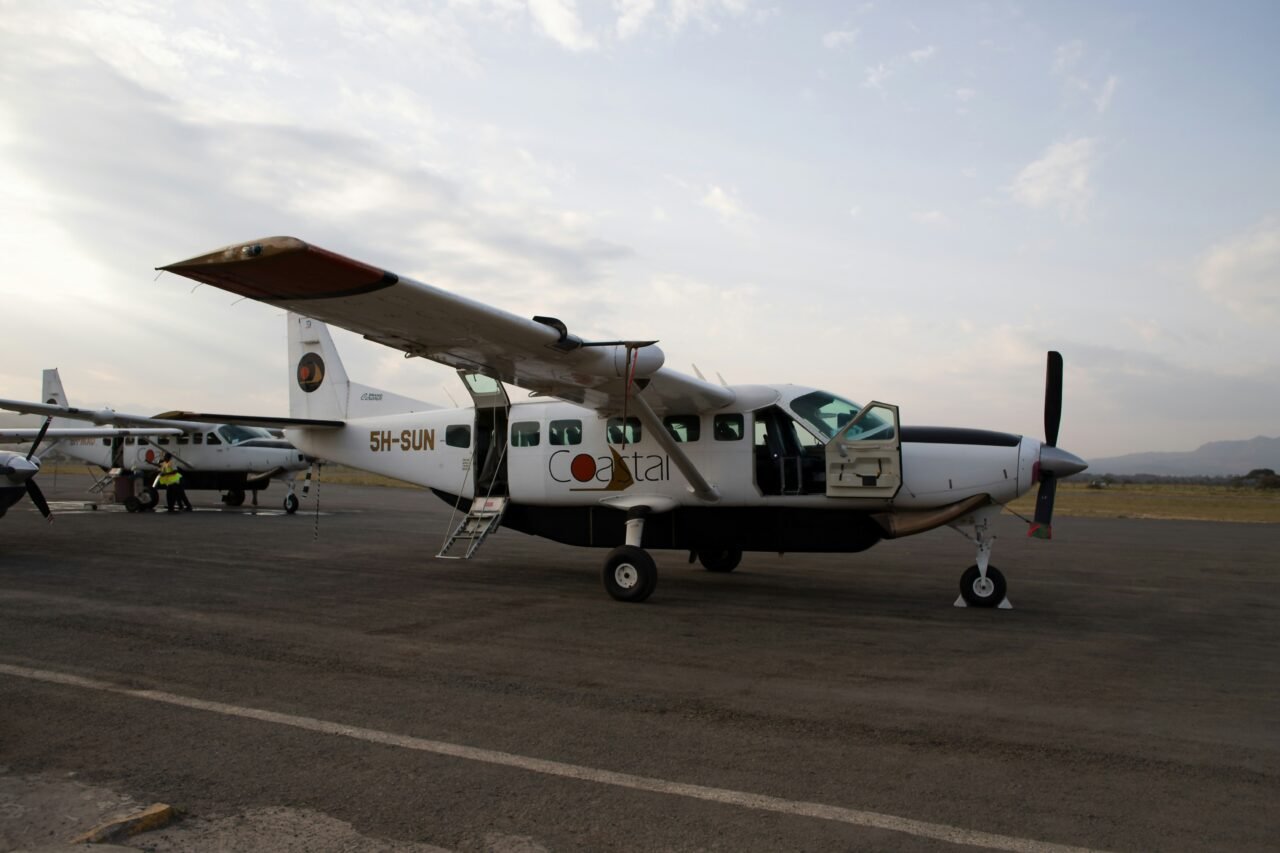
Connecting the white sands of Zanzibar with the wildlife-rich floor of the Ngorongoro Crater is a classic Tanzanian itinerary, yet it remains one of the most misunderstood segments of trip planning. Travelers often search for a single price or a direct connection, but the reality is a logistical puzzle involving aviation schedules and varying road conditions. Because there is no single “Zanzibar to Ngorongoro” ticket, your planning must account for two distinct service providers: the regional airline operating the flight and the safari operator managing your land transfer.
Understanding the Logistical Chain
When you transition from the coast to the interior, you are essentially stitching together two different travel worlds. Zanzibar (ZNZ) is a busy hub, while the airports serving the Ngorongoro Crater are smaller and subject to different operational rules. Your journey will almost always involve a flight to one of three mainland airports, followed by a drive of varying duration.
If you are coordinating this yourself, the primary challenge is alignment. Flights from Zanzibar often arrive in the mid-morning or early afternoon. If your flight is delayed, your road transfer—which must navigate national park entry times and daylight driving restrictions—may need to be re-booked or adjusted on the fly. This is why most travelers prefer to book this as a smooth package through an operator like Climb 4 Africa, who can monitor flight times and adjust the driver’s schedule accordingly. You can reach our team for logistics planning at WhatsApp +255 747 477 898 or email us at climb4africa@gmail.com.
The Three Main Flight-to-Transfer Routes
The cost and efficiency of your trip depend entirely on which airport you choose. Each has distinct trade-offs regarding time, price, and convenience.
Option 1: The Standard Route (Flight to Arusha – ARK)
This is the most common path. You fly from Zanzibar (ZNZ) to Arusha Airport (ARK). From there, it is a drive of approximately 3.5 to 4 hours to reach the Loduare Gate (the main entrance to the Ngorongoro Conservation Area).
- Pros: Most flight options, competitive pricing, and convenient access to town-based supplies or last-minute needs.
- Cons: A longer drive immediately after a flight; you spend more time on tarmac and paved roads before reaching the wilderness.
- Cost Logic: Generally the most cost-effective option for mid-range itineraries.
Option 2: The Fast Track (Flight to Lake Manyara – LKY)
For those prioritizing time over budget, flying directly into the Lake Manyara Airstrip is the gold standard. It is located just about an hour from the Ngorongoro gate.
- Pros: Drastically reduces your time in a vehicle. You land in the bush, effectively starting your safari experience the moment you step off the plane.
- Cons: Flights to LKY are significantly more expensive and less frequent than those to Arusha.
- Cost Logic: Expect a premium on the flight ticket. This is usually reserved for luxury or time-sensitive itineraries.
Option 3: The International Arrival (Flight to Kilimanjaro – JRO)
Sometimes, flight availability forces you to fly into JRO. While it is the main international hub, it is the furthest from the Ngorongoro Crater.
- Pros: High volume of flights and often the cheapest landing option.
- Cons: A 4.5 to 5-hour drive to the crater gate. Traffic in Arusha can also add to this duration significantly.
- Cost Logic: You save on the flight but pay more for the longer private vehicle transfer and the driver’s time.
Breakdown of Transfer Cost Variables
It is tempting to look for a flat fee for this transfer, but that doesn’t exist in the Tanzanian safari market. When we quote a transfer, we look at several non-negotiable variables that affect the final price for 2026 and 2027.
1. Vehicle Type and Fuel
The cost of a 4×4 land cruiser is heavily influenced by fuel prices and maintenance. A private transfer means you are paying for the vehicle to be at your disposal. If you are part of a larger group, this cost is split, but for solo travelers or couples, the per-person cost is naturally higher. We always advise checking if your safari group departure includes these transfers, as that is the most economical way to travel.
2. Seasonality and Demand
Tanzania has distinct high and low seasons. During the peak months (July–September and January–February), flight demand is sky-high, and vehicle availability is tight. Prices for both flights and private drivers tend to rise. In the low season (April–May), you might find better deals, but you must weigh this against the “long rains” which can make road travel slower and more taxing.
3. The “Meet and Greet” Factor
When you arrive at the airstrip, your driver is not just a taxi service; they are your guide. They must wait for your flight, help with luggage, and navigate park entry permits. This service level is built into the cost. Always clarify if your quote includes the driver’s park entry fees for the day of the transfer, as some operators exclude this, leading to surprise charges at the gate.
Practical Planning for 2026-2027
If you are in the early stages of planning for 2026 or 2027, the best advice is to align your flight booking with your safari operator’s schedule. Do not book your Zanzibar-to-Mainland flight until you have confirmed the itinerary with your ground handler. We see too many travelers book a flight that lands at 3:00 PM, only to realize that the drive to the crater takes them into the park after dark, which is prohibited by park regulations.
For those looking to build a specific itinerary, consider these steps:
- Define your budget: Are you looking for the most efficient, high-cost route (LKY) or the standard, budget-conscious route (ARK)?
- Inquire early: Contact us at info@climb-4-africa.com with your preferred dates. We can check current flight availability and suggest the most cost-effective transfer match.
- Bundle the service: Whenever possible, include the transfer in your full safari package. It removes the stress of coordinating between an airline and a driver, and it ensures that if a flight is delayed, your safari team is already aware and managing the backup plan.
Pro Tip: The Hidden Costs of Independent Travel
Travelers often try to save money by booking a flight to Arusha and then attempting to hire a “taxi” at the airport to drive them to Ngorongoro. This is a common pitfall. The vehicles found at airports are rarely equipped for the rough, dusty, and often muddy terrain of the Ngorongoro Conservation Area. Furthermore, they lack the necessary permits to operate as safari vehicles inside the park. Always ensure your transfer is conducted by a registered safari operator who provides a legitimate 4×4 safari vehicle. Using an unauthorized vehicle can lead to being denied entry at the park gate or significant safety risks on the road.
FAQ: Frequently Asked Questions
Is it cheaper to fly to Arusha or Kilimanjaro?
Generally, flights to Kilimanjaro (JRO) are slightly cheaper due to higher volume, but the savings are often negated by the higher cost of the longer road transfer to the Ngorongoro Crater. Arusha Airport (ARK) is usually the smarter choice for a balanced budget.
Can I take a public bus from Arusha to Ngorongoro?
Public buses operate between major towns but do not provide direct access to the Ngorongoro Crater lodges or the park gates. They are not recommended for safari travelers as they do not offer the flexibility, safety, or required permits for safari entry.
How far in advance should I book my transfer?
For the 2026 and 2027 seasons, we recommend booking your internal flights and transfers at least 4 to 6 months in advance. This ensures you get the best flight rates and secures a high-quality safari vehicle for your transfer.
What happens if my flight to the mainland is cancelled?
This is where having a dedicated operator matters. If you book through a local specialist, we monitor your flight status. If a cancellation occurs, we handle the re-scheduling of your driver and accommodation adjustments, saving you from having to navigate airline customer service while on vacation.
For personalized help with your route, please feel free to reach out to our team. Whether you are planning a solo trip or a family safari, we can help clarify the logistics and costs for your specific travel dates. You can find us via WhatsApp at +255 747 477 898 or send your inquiries to info@climb-4-africa.com.
Navigating the Ngorongoro Conservation Area Authority (NCAA) Gate Logistics
One of the most significant and often overlooked cost variables when traveling from the mainland airports to the Ngorongoro Crater is the mandatory entry fee structure imposed by the Ngorongoro Conservation Area Authority (NCAA). Unlike a standard national park where you simply pay a flat entrance fee, the Ngorongoro Conservation Area functions as a complex, multi-use zone. When your driver transports you from Arusha, Kilimanjaro, or Lake Manyara, the logistical cost is not merely fuel and time; it includes a complex interplay of permit regulations that can either inflate or optimize your travel budget depending on your arrival timing.
The NCAA operates on a 24-hour permit system. This is crucial for travelers arriving via road transfer. If your flight lands at Arusha (ARK) at 1:00 PM and you reach the Loduare Gate (the main entry point) by 4:00 PM, your 24-hour clock begins the moment you process your entry. If you intend to descend into the crater floor the following morning, this timing is perfect. However, if your flight is delayed and you arrive at the gate after 6:00 PM, you may find yourself forced to overnight in the Karatu area—outside the conservation zone—before entering the next morning. While this seems like a minor inconvenience, it creates a ‘split’ in your transfer logistics. Your driver must now manage two distinct legs of the journey: the airport-to-Karatu transfer, and the Karatu-to-Crater-rim transfer. This often incurs an additional ‘standby’ fee for the driver or a second day’s vehicle rental cost, which is rarely factored into initial quotes.
The Reality of Road Surface and Transit Times
Travelers often underestimate the sheer physical toll of the transit from the tarmac to the crater rim. While the distance from Arusha to the Ngorongoro entrance gate is approximately 160 kilometers (about 100 miles), this is not a standard highway drive. The route takes you through the bustling town of Arusha, onto the paved but often congested B144 highway toward Karatu, and finally into the winding, steep ascent toward the crater highlands.
During the rainy seasons—typically November to December and March to May—the final stretch of road, particularly the approach to the crater rim lodges, can become treacherous. This is where the cost of the ‘4×4’ vehicle becomes transparent. A standard sedan or a light-duty van, often offered by cheaper transfer services, will struggle significantly with the mud and steep gradients. Professional safari vehicles are equipped with specialized heavy-duty suspension and all-terrain tires designed specifically for these conditions. When you pay a premium for a reputable transfer operator, you are paying for the insurance against vehicle breakdown in remote areas and the assurance that your driver is experienced in ‘high-altitude’ driving, which requires specific techniques to manage engine temperature and braking on the long, winding descents into the crater.
Managing the ‘Transit’ vs. ‘Game Drive’ Vehicle Distinction
A frequent point of confusion for those planning their own logistics is the distinction between a transfer vehicle and a safari vehicle. Many travelers arrive at Kilimanjaro (JRO) or Arusha (ARK) and assume the vehicle taking them to the lodge will be the same one they use for their game drives. This is not always the case. Some operators use comfortable, air-conditioned minivans for the tarmac transfer from the airport to the lodge, and then switch to a ‘pop-top’ open-sided 4×4 for the actual game viewing.
If your itinerary involves switching vehicles, you must factor in the time and logistical effort required for this hand-off. If you are staying at a lodge on the crater rim, the transfer vehicle can often drop you directly at the lodge, and your safari-specific vehicle meets you there. However, if you are staying in Karatu (the town outside the gate), you might be required to transfer into your game-viewing vehicle at the gate itself. This ‘mid-transit’ switch can add 30 to 60 minutes to your travel time and requires precise coordination. Always clarify with your operator whether your transfer vehicle is ‘game-drive ready’ or if it is strictly a transport unit. If it is the latter, ensure there is a clear plan for luggage storage and vehicle swapping to avoid sitting with your suitcases in a vehicle that isn’t designed for the dusty, rugged environment of the crater floor.
The Impact of ‘Transit-Only’ vs. ‘Full-Day’ Safari Transfers
When booking your road transfer from the airport, it is vital to distinguish between a ‘direct transfer’ and a ‘transfer with game viewing.’ A direct transfer is the most cost-effective method; the driver takes the most efficient route to your lodge, bypassing any wildlife viewing opportunities. This is best for travelers arriving on late afternoon flights who simply need to reach their accommodation before dark.
Conversely, some travelers attempt to maximize their time by turning the transfer into a mini-safari. If you fly into Lake Manyara (LKY), your route to the Ngorongoro Crater naturally passes through or near the Manyara National Park gate. While this is an excellent way to see wildlife immediately upon landing, it changes the nature of the cost. Your driver will now require a full day’s salary, and you will likely be responsible for the vehicle’s national park entry fees for that day, even if you are only ‘passing through’ to get to Ngorongoro. This strategy is highly efficient for time but can increase your ‘transfer’ budget by 30% to 50% due to the additional park permits and the driver’s increased daily rate for guiding services rather than simple transport.
Navigating the ‘Transit-Only’ vs. ‘Full-Day’ Safari Transfer Distinction
When booking your road transfer from the airport, it is vital to distinguish between a ‘direct transfer’ and a ‘transfer with game viewing.’ A direct transfer is the most cost-effective method; the driver takes the most efficient route to your lodge, bypassing any wildlife viewing opportunities. This is best for travelers arriving on late afternoon flights who simply need to reach their accommodation before dark. Conversely, some travelers attempt to maximize their time by turning the transfer into a mini-safari. If you fly into Lake Manyara (LKY), your route to the Ngorongoro Crater naturally passes through or near the Manyara National Park gate. While this is an excellent way to see wildlife immediately upon landing, it changes the nature of the cost. Your driver will now require a full day’s salary, and you will likely be responsible for the vehicle’s national park entry fees for that day, even if you are only ‘passing through’ to get to Ngorongoro. This strategy is highly efficient for time but can increase your ‘transfer’ budget by 30% to 50% due to the additional park permits and the driver’s increased daily rate for guiding services rather than simple transport.
The Hidden Operational Costs of ‘Transit’ Permits
A critical, often overlooked detail in Tanzanian logistics is the distinction between a transit permit and a tourist entry fee. When your transfer vehicle drives through a protected area like the Ngorongoro Conservation Area (NCA) to reach a lodge located within the crater rim or on the other side of the reserve, you are technically ‘transiting.’ The Ngorongoro Conservation Area Authority (NCAA) maintains strict rules regarding these transit windows. If your transfer is strictly a transit, you are generally not permitted to stop for photography or game viewing, and you must exit the conservation area within a specific timeframe—usually 6 to 8 hours depending on the gate entry. If your driver stops for a leisurely lunch or allows you to exit the vehicle for a photo opportunity, you may be flagged by rangers as having violated the transit rules. This can result in significant fines that are almost always passed on to the passenger. Always confirm with your operator whether your transfer is booked as a ‘transit’ or a ‘game drive.’ If you are transiting, respect the timeline; it is designed to keep traffic moving and minimize human disturbance in sensitive wildlife zones.
Managing Luggage and Vehicle Compatibility
The transition from a coastal environment in Zanzibar to the high-altitude, dusty environment of the Ngorongoro Highlands presents unique challenges for luggage management. Zanzibar airports (ZNZ) often handle smaller regional aircraft with strict weight and size limits for baggage, favoring soft-sided duffel bags. When you arrive on the mainland and transfer to a 4×4, the vehicle’s storage configuration becomes paramount. A standard safari 4×4, particularly those with pop-top roofs, has a different cargo capacity than a city-based minivan transfer vehicle. If your itinerary involves a vehicle swap at a hub like Arusha, ensure that your luggage is easily transferable. Hard-shell suitcases, while secure, are notoriously difficult to pack into the specific storage compartments of rugged safari vehicles, which are designed for soft gear. Furthermore, the dust in the Ngorongoro region is extremely fine and pervasive; if your luggage is not protected by dust-proof covers or high-quality, water-resistant material, the fine red volcanic soil will penetrate the zippers of standard suitcases. Professional operators will often provide dust covers for luggage during the transfer phase, but checking this in advance can save your gear from significant wear and tear.
The Role of Airport Proximity in Total Transit Time
While flight costs to Arusha (ARK), Kilimanjaro (JRO), and Lake Manyara (LKY) are often the primary focus, the ‘lost time’ associated with airport proximity is a hidden cost that impacts your itinerary. Arriving at Kilimanjaro International (JRO) is the most common route, but it requires a 3.5 to 4.5-hour drive to reach the Ngorongoro gate. If you land after 2:00 PM, you will likely be driving during the late afternoon and potentially into the early evening. This limits your ability to enter the conservation area before the gates close for tourist traffic, often forcing an overnight stay in the town of Karatu. By contrast, flying into Lake Manyara (LKY) puts you significantly closer to the Ngorongoro entry points, potentially saving you three hours of road time. However, flights into LKY are generally more expensive and less frequent, operating on stricter schedules. When calculating the value of your transfer, weigh the cost of an extra night in a hotel against the premium price of a flight to a closer airport. Often, the ‘expensive’ flight to a closer airport is more economical than the ‘cheap’ flight that necessitates an unplanned hotel stay due to arrival times.
Strategic Timing: Coordinating Wildlife Activity with Transit Logistics
While the mechanical costs of flights and fuel are quantifiable, the ‘temporal cost’ of your transit—specifically how it aligns with the Ngorongoro Conservation Area Authority (NCAA) gate regulations and wildlife movement—is often overlooked. The Ngorongoro Crater is a self-contained ecosystem, and the logistics of entering the crater floor are strictly governed by time-based permits. Understanding the distinction between a ‘transit’ permit and a ‘full-day’ crater permit is critical to ensuring your travel budget is not wasted on a day where you cannot actually see the wildlife.
The Ngorongoro Conservation Area (NCA) operates on a 24-hour permit system for entry, but the crater floor itself—the primary attraction—is restricted. You cannot simply drive from Zanzibar, land at an airport, and descend into the crater at any hour. The crater floor gates typically close for entry by 3:30 PM or 4:00 PM, and vehicles must be out of the crater floor by 6:00 PM. If your flight from Zanzibar to Arusha or Manyara lands at 2:00 PM, you will likely spend 3 to 4 hours in transit, arriving at the Loduare or Seneto gate well after the cutoff for crater descent. In this scenario, you have paid for a full day of vehicle transfer and potentially a full-day crater permit, only to find yourself confined to the rim lodges or hotels in Karatu, unable to see the wildlife until the following morning. This ‘lost half-day’ effectively increases your per-day cost of the safari by 50% because you are paying for logistics without the corresponding activity.
The Financial Impact of Permit Overlap
Travelers often make the mistake of booking a transfer that includes a ‘game drive’ on the day of arrival. When flying from Zanzibar, this is a high-risk financial strategy. If your flight is delayed by even 90 minutes—a common occurrence with regional coastal carriers—the entire afternoon schedule collapses. You are then left with two choices: pay for a ‘transfer-only’ service that essentially acts as a taxi, or pay for a ‘full-day safari’ that you cannot legally or physically complete.
Smart planning involves decoupling your transfer from your game drive. It is often more cost-effective to book a dedicated ‘transfer vehicle’ to get you from the airport to your lodge near the Crater rim on Day 1. This vehicle does not need to be a high-spec safari 4×4 with a pop-up roof, which can save on rental costs. On Day 2, you engage a dedicated crater-specialist vehicle. This avoids the ‘permit overlap’ cost, where you are paying for the high daily rate of a specialized safari vehicle to sit in traffic on the main road between Arusha and the Crater, rather than using that vehicle to traverse the crater floor.
Regional Weather Patterns and Transit Disruption
The Zanzibar to Ngorongoro route is susceptible to seasonal weather disruptions that can significantly inflate costs. During the ‘long rains’ (typically April and May) and the ‘short rains’ (November and early December), regional airstrips near the Ngorongoro region, such as Lake Manyara (LKY), are prone to temporary closures due to waterlogged runways or poor visibility. If you have booked a flight to LKY and it is diverted to Arusha (ARK) or Kilimanjaro (JRO) due to weather, your pre-booked road transfer will likely be invalidated.
Operators will charge a ‘re-routing fee’ to send the driver to a different airport, which is often significantly further away. Because the distance between JRO and LKY is substantial, this last-minute change can add hundreds of dollars in fuel and driver overtime costs. When planning for travel during these shoulder seasons, it is financially safer to book a flight to the most reliable, all-weather airport (JRO) and accept a longer road transfer, rather than chasing the convenience of a closer, weather-sensitive airstrip.
Luggage Dynamics and Vehicle Selection
The transition from a coastal environment to the Ngorongoro Highlands presents unique challenges for luggage management. Zanzibar airports (ZNZ) often handle smaller regional aircraft with strict weight and size limits for baggage, favoring soft-sided duffel bags. When you arrive on the mainland and transfer to a 4×4, the vehicle’s storage configuration becomes paramount. A standard safari 4×4, particularly those with pop-top roofs, has a different cargo capacity than a city-based minivan transfer vehicle. If your itinerary involves a vehicle swap at a hub like Arusha, ensure that your luggage is easily transferable. Hard-shell suitcases, while secure, are notoriously difficult to pack into the specific storage compartments of rugged safari vehicles, which are designed for soft gear. Furthermore, the dust in the Ngorongoro region is extremely fine and pervasive; if your luggage is not protected by dust-proof covers or high-quality, water-resistant material, the fine red volcanic soil will penetrate the zippers of standard suitcases. Professional operators will often provide dust covers for luggage during the transfer phase, but checking this in advance can save your gear from significant wear and tear.
The Economics of Vehicle Deadheading and Repositioning
One of the most significant factors influencing the cost of a transfer from Zanzibar’s mainland arrival points to the Ngorongoro Crater is a logistical phenomenon known as ‘deadheading.’ In the transport industry, deadheading refers to the movement of a vehicle without passengers—essentially, the empty miles a driver must cover to reach your pickup point or return to their base after dropping you off. When you book a private transfer, you are rarely paying for the distance between the airport and the crater alone; you are paying for the vehicle’s entire operational loop.
For operators based in Arusha—which is the logistical hub for most safari companies—a transfer to the Ngorongoro Crater involves several hidden, non-revenue-generating legs. If you land at Kilimanjaro International Airport (JRO), your driver must first travel from their depot in Arusha to JRO (often a 45 to 60-minute drive). This is the first ‘deadhead’ leg. After they collect you and transport you to the crater, they must then drive back to their base, which constitutes the second ‘deadhead’ leg. Because the vehicle is unavailable for other bookings during this entire window, the operator must price the transfer to cover the fuel, driver wages, and vehicle wear-and-tear for the *entire* journey, not just the distance you occupy the seat. Understanding this helps clarify why quotes for private transfers can seem disproportionately high compared to standard taxi rates in other parts of the world.
The Distinction Between Transfer Vehicles and Safari 4x4s
A frequent source of budget confusion arises from the difference between a ‘transfer vehicle’ and a ‘safari vehicle.’ Many operators offer two distinct tiers of service. A standard transfer vehicle is often a Toyota HiAce, a minivan, or a saloon car. These vehicles are cheaper to run, more fuel-efficient, and designed specifically for paved road transit. However, they are generally not permitted or mechanically equipped to perform game drives within the Ngorongoro Conservation Area. If you book a cheaper transfer vehicle, you will reach the crater gate, but you will then need to switch vehicles to a dedicated 4×4 safari cruiser to descend into the crater floor.
Conversely, when you book a full-spec safari 4×4—typically a Toyota Land Cruiser with a pop-top roof—you are paying a premium for a specialized piece of equipment. These vehicles are heavy, have high fuel consumption, and require intensive, specialized maintenance due to the constant exposure to the volcanic dust and rough terrain of the Ngorongoro Highlands. When you request a safari 4×4 for your airport transfer, you are essentially paying for the ‘safari-ready’ status of the vehicle from the moment it leaves the depot. While this is more expensive, it eliminates the logistical headache of a vehicle swap at the gate, which can save two to three hours of transit time and significant stress if the transfer coincides with peak entry hours at the Lodoare Gate.
Optimizing Costs Through Shared Logistics
For solo travelers or couples looking to mitigate the high costs of private deadheading, the most effective strategy is to align your arrival with the operator’s existing schedule. Safari operators frequently have vehicles moving between Arusha and the Ngorongoro region to pick up other clients or deliver supplies. If you can be flexible with your arrival time, an operator may be able to ‘piggyback’ your transfer onto an existing route, effectively splitting the deadheading cost across multiple bookings. This is rarely advertised as a standard price, as it requires manual coordination between the operator’s logistics team and your flight schedule. To explore this, you must initiate a dialogue with your operator well in advance, providing your flight details and asking if there are any ‘repositioning’ opportunities that align with your travel window. It is a high-effort planning strategy, but it is the single most effective way to reduce the financial impact of the empty-mile logistics inherent in Tanzanian travel.
Pacing Your Transit: The ‘Direct Transfer’ vs. ‘Stopover’ Philosophy
The decision to treat your journey from Zanzibar to the Ngorongoro Conservation Area as a pure transit exercise versus an experiential itinerary segment is a primary driver of cost and complexity. Travelers often view the road transfer as a necessary evil—a tedious bridge between the luxury of a beach resort and the thrill of the crater. However, viewing this transit through the lens of ‘pacing’ allows for a more nuanced approach to budgeting and logistics. The cost differential between a direct, high-speed transfer and a multi-stop, activity-laden transfer can be significant, but the value proposition varies greatly depending on your travel style.
The Direct Transit: Efficiency at a Premium
A direct transit strategy prioritizes speed and minimizing the time spent on the road. For the traveler who has limited time and wants to maximize hours spent on the crater floor, this is the logical choice. This approach usually involves a private vehicle transfer that moves from the airport (Arusha, Kilimanjaro, or Lake Manyara) straight to your lodge near the Ngorongoro rim. The financial structure here is straightforward: you pay for the vehicle, the fuel, and the driver’s time, plus the inevitable deadheading costs mentioned previously. The ‘cost’ of this efficiency is the lack of engagement with the landscape between the airport and the conservation area.
The beneficiaries of the direct transit model are usually families with young children, travelers on tight schedules (typically 3-4 day itineraries), or those who have already experienced the Northern Circuit and are prioritizing the Ngorongoro experience specifically. Because the vehicle is moving directly from point A to point B, you are not paying for extra guide hours, additional entry fees, or meals at roadside stops. However, you are paying for a high-intensity, potentially exhausting drive. If you land at Kilimanjaro (JRO) and drive to the Ngorongoro rim, you are looking at a four-to-five-hour journey. In a direct transfer, this is purely logistical. You are paying for the service, not the experience.
The Experiential Transit: Integrating the Journey
Conversely, the ‘experiential transit’ approach treats the road transfer as part of the safari itself. This strategy involves incorporating stops along the route, such as the Mto wa Mbu cultural village, coffee plantations near Karatu, or a short game drive in Lake Manyara National Park if your flight lands early enough. While this sounds appealing, it fundamentally alters the cost structure of your transfer. You are no longer paying for a ‘transfer’; you are paying for a ‘day-hire’ of a safari vehicle and guide.
The financial impact of this choice is twofold. First, you incur additional park fees. If you choose to stop in Lake Manyara for a few hours, you must pay the full entry fee for that park, even if you are only there for a fraction of a day. Second, you are paying for the guide’s time. A driver tasked with a direct transfer can often complete the job and return to their base within a single shift. A driver tasked with an experiential transit is effectively ‘on the clock’ for a full day, necessitating extra costs for their meals, potential overnight accommodation if the schedule demands it, and the higher daily rate associated with a safari guide versus a simple transfer driver.
Who Benefits from Each Approach?
The choice between these two styles of travel is rarely about budget alone; it is about the trade-off between fatigue and engagement. The direct transit benefits those who view the Ngorongoro Crater as the singular objective. If your goal is to be on the crater floor by dawn the following morning, the direct transfer minimizes the risk of travel fatigue. It allows you to check into your lodge, rest, and prepare for the early morning descent without the exhaustion of a day spent sightseeing on the road.
The experiential transit benefits the curious traveler who wants to understand the transition from the arid plains of the Rift Valley floor to the lush, volcanic highlands. It is ideal for photographers who want to capture the changing landscapes and for travelers who prefer to break up the journey to avoid the monotony of a long drive. However, this approach requires a realistic budget that accounts for the ‘hidden’ costs of extended guide hours and multiple park entry permits. When planning this, it is crucial to request a ‘full-day safari hire’ rather than a ‘transfer’ from your operator. If you ask for a transfer but then request stops along the way, you may face unexpected surcharges for the driver’s overtime or vehicle usage, as the initial quote was based on the most efficient point-to-point route.
Pre-Payment Due Diligence: Verifying Operator Contracts
Before finalizing any financial commitment for a Zanzibar-to-Ngorongoro transfer, the burden of clarity rests heavily on the traveler. Because this route involves multiple moving parts—regional aviation, private ground transport, and conservation area permits—misunderstandings are common. What an operator classifies as an ‘all-inclusive transfer’ often differs significantly from what a traveler perceives as a smooth door-to-door service. To avoid mid-journey disputes or unexpected surcharges, you must conduct a rigorous vetting process of your operator’s quote before transferring funds.
Defining the ‘Transfer’ vs. ‘Safari’ Scope
The most frequent source of friction arises from ambiguity regarding the driver’s role. Verify explicitly whether your driver is a ‘transfer specialist’ or a ‘safari guide.’ A transfer specialist is hired to move you from point A to point B with maximum efficiency; they are typically not trained as wildlife experts, their vehicle may not be fully equipped for off-road game viewing, and they are often paid a lower daily rate. Conversely, a safari guide is a professional naturalist. If your expectation is that the driver will stop to point out wildlife, explain the Rift Valley geology, or detour for photo opportunities, you must clarify this in writing. If you pay for a transfer but expect a guide, you will likely be disappointed by the service level, or worse, face a demand for additional payment on the spot when you ask for a deviation from the direct route.
The ‘Empty Leg’ and Fuel Surcharge Clauses
Ground transport in Tanzania often involves significant ‘deadheading’—the practice of driving a vehicle empty to a pickup location or returning it empty to a base. For transfers from Kilimanjaro (JRO) or Arusha (ARK) to the Ngorongoro Conservation Area, the vehicle must originate from a base, often in Arusha or Karatu. You should ask your operator if the quote includes the ‘positioning’ of the vehicle. Some low-cost quotes appear attractive because they omit the fuel and driver costs associated with getting the vehicle to the airport to meet your flight. Ask for a breakdown that explicitly states: ‘Does this price include the vehicle positioning from the base to the airport?’ If the answer is vague, you risk being hit with a fuel surcharge upon arrival, especially if your flight is delayed and the driver incurs extra waiting time or needs to fuel up in a remote area where prices are higher.
Clarifying ‘Waiting Time’ and Flight Delay Policies
Regional flights in Tanzania are notoriously susceptible to schedule shifts due to weather, air traffic control, or aircraft maintenance. Your transfer contract must contain a clear clause regarding ‘waiting time.’ A standard transfer quote usually covers a specific window—often 60 to 90 minutes from your scheduled arrival. Beyond that, operators may charge an hourly ‘standby fee.’ Verify the exact cost of this fee before you book. Furthermore, ask what happens if your flight is diverted or cancelled entirely. Does the operator have a policy for last-minute rescheduling, or do they treat it as a ‘no-show’ and forfeit your payment? A reputable operator will have a contingency plan and a transparent policy on how they handle flight disruptions, rather than leaving the liability entirely on the traveler.
The ‘Transit’ Permit vs. ‘Entry’ Permit Distinction
When you enter the Ngorongoro Conservation Area, you are subject to strict permitting. Operators often quote a ‘transfer price’ that assumes the vehicle will simply transit through the area to reach a lodge in Karatu or on the crater rim. However, if you plan to stop at the Ngorongoro viewpoint, visit a Maasai village, or take a detour, you may technically be entering the conservation area for non-transit purposes. This can trigger a requirement for a full entry permit rather than a transit pass. Ensure your operator confirms: ‘Does the quoted price include the specific transit permit required for this route, or will I be required to pay additional gate fees upon arrival?’ Never assume that ‘all-inclusive’ covers government park fees unless it is explicitly itemized in your invoice.
Vehicle Specifications and Luggage Capacity
Finally, verify the vehicle type against your luggage requirements. Travelers coming from Zanzibar often arrive with more luggage than those on a standard safari, as they are transitioning from a beach holiday. Standard 4×4 safari vehicles (such as the Toyota Land Cruiser) are designed for efficiency and durability, not necessarily maximum luggage capacity. If you have large hard-shell suitcases, they may not fit in the rear compartment of a vehicle already carrying camping gear or emergency equipment. Ask for a photo or the model of the vehicle that will be assigned to your transfer. If you are a party of four or more, confirm that the vehicle has adequate seating space for a long drive, as a crowded vehicle significantly increases the fatigue of a four-to-six-hour transit from the airport to the highlands.
Seasonal Road Dynamics and Transit Reliability
The transit from the Tanzanian mainland to the Ngorongoro Conservation Area is not a static calculation; it is highly sensitive to the regional climate. While many travelers view the transfer simply as a connection between points A and B, the ‘Long Rains’ (typically occurring from late March through May) and the ‘Short Rains’ (November and December) fundamentally alter the operational reality of the journey. During these periods, the road network—which consists of a mix of tarmac highways and gravel access roads—can see significant changes in quality. While the main arterial roads from Arusha are generally well-maintained, the final approach into the Ngorongoro highlands often involves steep, unpaved inclines that become slick and prone to erosion during heavy precipitation.
When planning your transfer during these wetter months, you must factor in a ‘buffer’ for transit time. An operator might quote a four-hour drive, but in the height of the rainy season, this can easily extend to six or seven hours due to mud, reduced visibility, or the necessity of navigating around localized flooding or road maintenance crews. If you are flying into Lake Manyara (LKY) or Arusha (ARK) during these months, avoid scheduling your flight for the late afternoon. Arriving at 3:00 PM or 4:00 PM in the rainy season leaves almost no margin for error. If the road conditions deteriorate or if your driver encounters a minor mechanical issue, you risk arriving at the park gate after the official closing time, which can result in denied entry or heavy fines for the operator, potentially leaving you stranded outside the conservation area.
The ‘Game Drive’ vs. ‘Transit’ Activity Trade-off
A frequent point of confusion for travelers is the distinction between a ‘transit’ and a ‘game drive’ during the transfer process. A transit permit is a specific, lower-cost government authorization that allows a vehicle to pass through the Ngorongoro Conservation Area to reach a destination, such as a lodge on the crater rim or a camp in the Serengeti. Critically, these permits are time-bound and strictly regulated. They assume the vehicle is moving from the entry gate to the exit gate (or lodge) with minimal delay. If you stop the vehicle to watch wildlife, take photographs, or observe a lion pride near the road, you are technically conducting a game drive, which is not covered by a transit permit.
This creates an operational tension. If you stop for a significant amount of time to view wildlife, your driver may be flagged by park rangers for exceeding the expected transit time between gates. Conversely, if you are strictly adhering to a transit schedule to minimize costs, you may find yourself driving past significant wildlife sightings without the ability to stop. When negotiating your transfer, be explicit about your expectations. If you want the flexibility to stop for photography, you must inform your operator beforehand. They may need to upgrade your booking to a full ‘entry’ permit, which includes the right to stop and observe wildlife, rather than the standard transit pass. This upgrade will increase the cost of your transfer, but it prevents the friction of being rushed by your driver or, worse, facing penalties from park authorities for unauthorized stopping.
Daylight Constraints and Operational Safety
The geography of the Ngorongoro highlands dictates that much of the driving occurs on winding, steep, and often narrow roads. Consequently, safety protocols for reputable safari operators typically prohibit, or strongly discourage, driving on these roads after dark. Wildlife activity, particularly of large mammals like elephants and buffalo, increases near the roadsides at night, and the lack of artificial lighting makes navigation hazardous. When coordinating your Zanzibar-to-mainland flight, ensure that your arrival time is early enough to allow for a complete transit before sunset.
If your flight from Zanzibar is delayed—a common occurrence due to regional air traffic congestion or weather—you may find that your transfer operator refuses to complete the drive to the Crater rim that evening. In such cases, the operator will likely recommend an overnight stay in Arusha or Karatu. While this may feel like an inconvenience, it is a necessary safety precaution. Always clarify this contingency in your booking: does your transfer contract include a ‘safety clause’ that covers the cost of an emergency overnight stay in Arusha if the flight arrives too late for a safe transit? Understanding this policy beforehand saves you from the stress of last-minute hotel hunting and ensures your operator prioritizes your safety over the convenience of a late-night drive.
The Vehicle Handover Protocol: Why Your Transfer May Change Mid-Route
A common point of friction for travelers moving from the Tanzanian coast to the Ngorongoro highlands is the assumption that the vehicle collecting them at the airport will be the same one they use for their safari. In reality, professional logistics often dictate a ‘vehicle handover’—a process where you are transferred from a standard airport shuttle vehicle into a specialized safari 4×4 at a mid-point, such as Arusha or Karatu. Understanding this operational nuance is essential for managing expectations regarding luggage handling, time efficiency, and the overall flow of your journey.
Distinguishing Between the ‘Airport Shuttle’ and the ‘Safari 4×4’
The vehicle you encounter at the airport is frequently chosen for its efficiency on tarmac roads. A standard SUV, minivan, or sedan is often more fuel-efficient, faster, and more comfortable for the transit from Kilimanjaro International Airport (JRO) to Arusha or the surrounding areas. Conversely, a safari 4×4—typically a Land Cruiser with a pop-up roof and specialized suspension—is an expensive, heavy-duty machine designed specifically for the rugged terrain of the Ngorongoro Conservation Area. Utilizing a safari 4×4 for simple airport-to-hotel transfers on paved roads is an inefficient use of resources; it increases fuel consumption and subjects the vehicle to unnecessary wear and tear, which ultimately drives up the operational costs passed on to the traveler.
The Logistics of the Mid-Journey Vehicle Swap
When an operator schedules a vehicle handover, the transition usually occurs at a pre-arranged hub, often an office in Arusha or a lodge in the Karatu area. This is not merely a change of car; it is a critical logistical node. Your luggage must be transferred from the airport shuttle to the safari vehicle, a process that requires vigilance to ensure that all items, including sensitive camera equipment and carry-on bags, are accounted for. When booking, ask your operator explicitly if your journey involves a vehicle switch. If it does, ensure that the handover location is secure and that there is a buffer time of at least 30 to 45 minutes built into the itinerary to account for the physical transfer of gear. This buffer is vital; rushing this process is where luggage is most likely to be left behind or misplaced.
The Economics of Vehicle Deadheading and Repositioning
The cost of your transfer is heavily influenced by a concept known in logistics as ‘deadheading’—the movement of an empty vehicle to pick up a passenger. If you fly into Lake Manyara (LKY) or a smaller airstrip, your safari vehicle must often travel empty from its base in Arusha to meet you. You are, in effect, paying for the fuel and driver time for the vehicle to reach your landing point. This is why transfers from Arusha are almost always more cost-effective than those originating from more remote airstrips. When comparing quotes, analyze the ‘repositioning fee.’ Some operators bundle this into the total safari package, masking the true cost, while others list it as a separate line item. Understanding this allows you to make informed decisions about whether to pay for a longer, more expensive road transfer from a major hub or to absorb the premium cost of a shorter transfer from a regional airstrip.
Driver Continuity: The ‘Transfer Driver’ vs. ‘Safari Guide’ Distinction
Another layer of the transfer experience is the professional identity of the person behind the wheel. It is not uncommon for a company to employ a ‘transfer driver’ for the airport pickup—someone whose primary role is to navigate airport logistics and traffic—and then switch you to a ‘safari guide’ at the handover point. The safari guide is a specialized professional trained in wildlife behavior, park regulations, and off-road navigation. While the transfer driver may be perfectly competent, they may lack the deep ecological knowledge required for the Ngorongoro Crater floor. If you value continuity and the opportunity to begin learning about the ecosystem from the moment you leave the airport, negotiate for a ‘dedicated safari guide’ who will perform the entire journey. This may come at a higher cost, as the guide is essentially ‘on the clock’ for the duration of the transit, but it provides a smooth transition into your safari experience and allows you to build rapport with your guide before you even reach the crater rim.
Cultural Etiquette and Local Interactions During Transit
While the logistical mechanics of your transit from the coast to the Ngorongoro Conservation Area often dominate planning, the human element of the journey is equally significant. The route from Arusha or Kilimanjaro toward the crater rim traverses diverse communities, from bustling urban centers to rural Maasai grazing lands. Understanding the cultural etiquette of these regions can transform a standard transfer into a respectful and mutually beneficial interaction. When your vehicle stops for fuel, a stretch break, or a quick supply run, you are not merely a tourist in transit; you are a visitor in local spaces where traditional values often dictate social conduct.
Navigating Stops in Rural Communities
Unlike the tourist-centric environment of Zanzibar, the areas surrounding the Ngorongoro Conservation Area—particularly the transit zones through Karatu and the outskirts of Arusha—are functional, working landscapes. If your transfer driver pulls over for fuel or a brief stop, avoid the impulse to photograph locals without explicit permission. In many rural communities, photography is viewed as an intrusion. Always ask your driver to act as an intermediary if you wish to capture an image of a local market or a specific scene. Your driver understands the local social temperature and can advise on whether a request is appropriate, helping you avoid awkward or disrespectful misunderstandings.
Furthermore, when purchasing items such as water, snacks, or local crafts during transit stops, remember that bargaining is common but should be conducted with patience and a smile. Aggressive negotiation, which might be acceptable in some tourist markets, can be perceived as disrespectful in rural shops where fixed pricing or modest margins are the norm. Engaging with a friendly greeting in Swahili—a simple “Habari” (hello) or “Asante” (thank you)—often changes the dynamic of the interaction entirely, signaling respect for the local culture rather than treating the shopkeeper as a mere transaction point.
The Role of Tipping and Gratuity Culture
Tipping is a complex subject in Tanzania, particularly during transit segments where you may interact with various personnel, including luggage handlers at airports, fuel station attendants, and your transfer driver. While service charges are sometimes included in formal safari packages, the ‘ground’ portion of your journey often relies on discretionary tipping. For transfer drivers, a tip is a standard acknowledgment of their service, especially given the long hours spent navigating traffic and road conditions. However, the timing of this tip matters. It is generally considered more polite to provide a gratuity at the end of the journey or at the conclusion of the transfer segment, rather than attempting to tip for individual small tasks along the way.
When it comes to the Maasai communities you may encounter near the Ngorongoro entry gates, be wary of ‘photo-tip’ traps. You may be approached by individuals in traditional attire offering photos for a fee. If you choose to engage, be clear about the terms beforehand. However, it is often more respectful to support these communities through established channels, such as purchasing authentic crafts at reputable community-run cooperatives, rather than engaging in transactional photography which can commodify culture.
Communication Styles and Patience
The pace of life in rural Tanzania is generally slower and more deliberate than what many international travelers are accustomed to. During your transfer, you may encounter road delays, unexpected vehicle checks, or slower service at roadside stops. Adopting a mindset of patience is not just a travel tip; it is a form of cultural respect. Expressing frustration or demanding speed from your driver can cause significant stress, as they are often balancing your expectations against safety requirements and local traffic regulations. If a delay occurs, view it as an opportunity to observe the landscape or engage in conversation with your driver, who is often a wealth of information about the region’s geography and local history. By shifting your focus from ‘efficiency at all costs’ to ‘observing the journey,’ you align yourself with the local rhythm of life, leading to a much more pleasant and harmonious transit experience.
Respecting Environmental Stewardship
The Ngorongoro Conservation Area is a fragile ecosystem, and the transit routes leading to it are critical corridors. A key aspect of local etiquette is strict adherence to environmental stewardship. Never litter, even during short stops along the roadside. The local communities take immense pride in their land, and seeing tourists discard plastic bottles or wrappers is deeply offensive. Furthermore, if you are traveling with children, ensure they understand that the areas outside the vehicle are not playgrounds but working environments and protected wildlife corridors. Maintaining a low profile and minimizing noise pollution when stopping in rural areas is a simple yet profound way to show respect for both the people living in these zones and the wildlife that moves through them.
The Liability Gap: Assessing ‘Unbundled’ Bookings vs. Integrated Safari Packages
One of the most significant, yet frequently overlooked, financial and logistical risks in planning a trip from Zanzibar to the Ngorongoro Crater is the decision to ‘unbundle’ your travel components. Many travelers attempt to book their regional flights independently via online travel agencies (OTAs) to secure a lower fare, while simultaneously contracting a separate safari operator for the ground transfer. This approach creates a ‘liability gap.’ When these services are unbundled, you effectively become the logistics manager for your own journey. If your flight from Zanzibar is delayed, cancelled, or rescheduled—a common occurrence during the rainy season or due to regional aviation congestion—the ground transfer operator is under no contractual obligation to wait for you without additional fees, nor are they responsible for the downstream impacts on your Ngorongoro entry permits.
Conversely, an integrated safari package, where the operator manages both the ground logistics and, in some cases, the regional flight booking, shifts this liability. A reputable operator will track your flight in real-time. If you are delayed, they have the internal flexibility to adjust the driver’s schedule, re-route the vehicle, or communicate directly with the Ngorongoro Conservation Area Authority (NCAA) to manage gate entry timing. While the initial quote for an integrated package may appear higher than the sum of its independent parts, the ‘premium’ is effectively an insurance policy against the operational volatility of Tanzanian transit. When evaluating costs, you must quantify the potential expense of a missed gate entry, a re-booked transfer, or a wasted night of accommodation due to a flight-induced delay. For many, the peace of mind provided by a single-source operator outweighs the marginal savings of an unbundled itinerary.
The ‘Buffer Night’ Strategy: Mitigating Transit Fatigue and Operational Risk
A frequent error in itinerary planning is the ‘arrival-to-transfer’ compression, where travelers attempt to land at Arusha or Kilimanjaro airport and drive directly to the Ngorongoro Crater on the same day. While physically possible, this strategy introduces significant risks. The drive from the airport to the Ngorongoro gate takes between three to five hours, depending on traffic and vehicle type. If your Zanzibar flight arrives after 1:00 PM, you risk reaching the conservation area gates after the designated closing times for check-in, or worse, navigating treacherous rural roads in the dark, which is strongly discouraged for safety reasons.
Strategic planning often dictates the use of a ‘buffer night’ in either Arusha or the town of Karatu. Although this adds the cost of an extra night of lodging, it fundamentally alters the economics of your transit. A buffer night allows for a relaxed, morning departure, ensuring you arrive at the Ngorongoro gates when the light is optimal and your driver is alert. Furthermore, this approach allows you to utilize the transit day for other logistical necessities, such as purchasing supplies, exchanging currency, or conducting a final briefing with your guide without the pressure of a ticking clock. When calculating the total cost of your transit, do not view the buffer night as an ‘extra’ expense, but rather as an investment in the reliability of your safari start date. It protects the integrity of your subsequent game drives by ensuring you are not exhausted or delayed upon entry.
Contractual Safeguards for Multi-Leg Logistics
If you choose to manage your own transit or work with multiple vendors, your due diligence must extend to the fine print of your service contracts. Before finalizing any transfer booking, explicitly ask for the operator’s policy on ‘Flight Delay and No-Show.’ A transparent operator will have a defined protocol for how they handle unexpected changes in your arrival time. Look for clauses that specify the maximum waiting time included in the base fee and the hourly rate for additional waiting time thereafter. Furthermore, clarify whether the transfer fee includes the necessary ‘Transit Permit’ costs, which are distinct from standard entry fees. Some budget-oriented operators may quote a base price for the vehicle and driver but exclude the mandatory transit fees levied by the NCAA, leading to an unpleasant surprise at the gate. Always request an itemized breakdown that separates the ‘driver/vehicle hire’ from ‘park/transit fees.’ This transparency allows you to compare quotes on an apples-to-apples basis and ensures that your budget remains intact from the moment you leave the Zanzibar coast to the moment you reach the Crater rim.
The Physiological and Climatic Transition: Beyond the Budget
While financial spreadsheets and contractual clauses focus on the mechanics of moving from Zanzibar to the Ngorongoro Crater, the human element of this transit—often ignored until the journey is underway—is equally critical to the success of your safari. You are not merely moving between two points; you are navigating a radical topographical and climatic shift. Zanzibar is a humid, sea-level, tropical environment. In contrast, the Ngorongoro Crater rim sits at an altitude of over 2,300 meters (7,500 feet). This rapid ascent, often completed within a single day of travel, can lead to mild altitude fatigue, which is compounded by the physical toll of a long road transfer.
The comfort of your transfer vehicle is a primary variable in how you arrive at the crater. A standard minivan, while cost-effective, may struggle with the suspension requirements of the rural roads leading into the conservation area, resulting in a journey that is physically draining. When selecting your transport, consider the ‘vibration and dust’ factor. The roads leading from the main transit hubs toward the Ngorongoro Conservation Area Authority (NCAA) gates are frequently unpaved, corrugated, and perpetually dusty. A vehicle with heavy-duty suspension and, crucially, a sealed cabin, is not just a luxury—it is an operational necessity. Arriving at the crater rim exhausted, dehydrated, or coated in a fine layer of red dust significantly diminishes the quality of your first game drive. When calculating your total transit costs, view the premium for a higher-grade, well-maintained 4×4 not as an indulgence, but as an investment in your physical readiness for the wildlife experience that follows.
Adaptive Scheduling: Navigating Environmental Variables
The most significant, yet often overlooked, variable in your transit cost is the environment itself. Tanzania’s road network, particularly the segments connecting regional airstrips to the conservation area, is highly susceptible to seasonal degradation. During the ‘long rains’ (typically March to May) and the ‘short rains’ (November to December), the soil composition in the Ngorongoro highlands—often referred to as ‘black cotton soil’—becomes treacherous. This soil type is notorious for its ability to transform from a hard, dusty surface into a thick, impassable slurry within minutes of a heavy downpour.
This environmental reality creates a ‘flexibility tax.’ If your transit is booked with a rigid itinerary that demands a specific arrival time at the crater rim, you are vulnerable to delays caused by road closures or vehicle recovery operations. A five-hour drive can easily stretch into an eight-hour ordeal if the vehicle ahead of you becomes mired in mud or if a road section is washed out. Experienced operators will often build ‘contingency capital’ into their pricing to account for these potential slowdowns, or conversely, they may advise against certain routes during the peak of the rainy season. Ignoring these warnings to save money on a cheaper, less-flexible transfer can result in a ‘lost’ day, where you spend your time waiting for road crews rather than viewing wildlife. Budgeting for the possibility of a detour or a slower transit pace is a hallmark of seasoned safari planning.
The Psychological Dividend of Flexibility
There is a hidden cost to rigidity in your transit planning. When travelers attempt to force a direct, ‘door-to-door’ connection between a Zanzibar flight and a late-afternoon game drive, they are often operating on a razor-thin margin of error. Any deviation—a flight delay of thirty minutes, a slow check-in at the airport, or a minor mechanical issue—cascades through the rest of the day. This creates a high-stress environment that is antithetical to the purpose of a safari.
Instead, consider the ‘experiential transit’ model. By allocating an extra half-day for the transit, you remove the pressure to arrive by a specific deadline. This allows for scheduled stops in local communities or at scenic viewpoints along the Great Rift Valley escarpment, transforming the transit from a logistical hurdle into a meaningful part of the safari experience. When you de-couple the ‘transfer’ from the ‘wildlife viewing’ mandate, you reduce the risk of booking cancellations or last-minute, expensive upgrades to bypass delays. The most successful itineraries are those that treat the transit not as a race to the gate, but as a transitional phase, allowing for the physical and psychological adjustment required to move from the coastal rhythm of Zanzibar to the rugged, high-stakes environment of the Ngorongoro Crater.
The Anatomy of ‘All-Inclusive’ Versus ‘Unbundled’ Pricing
When reviewing quotes for your transit from Zanzibar to the Ngorongoro region, you will inevitably encounter two distinct pricing structures: the ‘all-inclusive’ safari package and the ‘unbundled’ service model. Understanding the difference is crucial for cost control. An all-inclusive quote typically wraps your road transfer, park entry fees, transit permits, and vehicle fuel into a single line item. While this offers peace of mind, it often obscures the individual costs. Conversely, an unbundled quote separates the driver’s daily rate, vehicle rental, fuel surcharges, and the government-mandated transit permits. If you are comparing quotes from different operators, you must request a breakdown that distinguishes between these categories to ensure you are comparing apples to apples.
The most common area of confusion lies in the ‘transit permit’ versus the ‘entry fee.’ A transit permit is a specific government authorization required to drive through the Ngorongoro Conservation Area (NCA) without stopping for game viewing. It is significantly cheaper than a full-day entry permit. However, if your transit vehicle stops for more than a brief bathroom break or if the driver decides to pause for wildlife photography, local authorities may demand an upgrade to a full-day entry fee on the spot. Operators who quote suspiciously low ‘transfer’ prices may be banking on the hope that you will not be stopped, or they may be passing the liability for these upgrades onto you once you are already inside the vehicle. Always verify whether your quote includes the transit permit or if you are expected to pay park fees upon arrival at the Lodoare or Naabi Hill gates.
The Hidden Cost of Driver Welfare and Logistics
A significant, yet often overlooked, component of your transfer cost is the ‘driver welfare’ factor. When you book a private transfer from Arusha or Kilimanjaro to the crater, you are not just paying for fuel and vehicle depreciation; you are paying for the professional driver’s time, meals, and accommodation. If your flight arrives late in the day, necessitating an overnight stay for the driver near the airport or along the route, this cost is factored into your quote. Some budget-conscious travelers attempt to negotiate these costs down by suggesting the driver ‘sleep in the car’ or ‘find their own way,’ but this is a false economy. A well-rested driver is an essential safety requirement for the winding, often treacherous roads leading to the Ngorongoro highlands. Furthermore, professional operators include a ‘per diem’ for their drivers to ensure they have access to decent lodging and meals. Cutting these costs can lead to driver fatigue, which increases the risk of mechanical breakdowns or poor decision-making during the transit. When evaluating the cost of your transfer, consider that a slightly higher price point often reflects the operator’s commitment to fair labor practices and, by extension, your safety.
Vehicle Depreciation and the ‘Rough Road’ Premium
The road conditions between the Tanzanian mainland airports and the Ngorongoro Crater are notoriously hard on vehicles. The combination of corrugated dirt roads, deep potholes, and volcanic dust acts as a constant abrasive on suspension systems, tires, and engine components. Reputable safari companies operate their vehicles on a strict maintenance schedule, pulling them off the road for servicing every few thousand kilometers. This ‘maintenance load’ is a direct driver of the transfer price. A company that charges a premium for your transfer is likely reinvesting that capital into frequent tire replacements, suspension overhauls, and engine tuning. If you encounter a quote that is significantly lower than the market average, ask yourself how the operator is covering these operational costs. Often, the answer is deferred maintenance, which increases the likelihood of a mid-journey breakdown. In the remote stretches between the highway and the crater rim, a vehicle failure is not just an inconvenience; it can result in hours of waiting in isolated areas, potentially forcing you to miss your scheduled activities or even your return flight. Investing in a transfer with a company that prioritizes fleet integrity is, effectively, an insurance policy against logistical failure.
Related Guides and Packages
Check Availability for Zanzibar To Ngorongoro Crater: Flight And Road Transfer Costs ( Guide)
Ready to compare dates, prices, and the best option for your group? Send the package name and travel month so the team can reply with a clear quote, availability, and what is included.
Zanzibar To Ngorongoro Crater Safari By Flight: Price & Travel Options 2027
A deep look at the logistics, costs, and planning decisions required for flying from Zanzibar to start your Ngorongoro Crater Safari, designed for the experienced traveler.
View package details3-Day Serengeti & Ngorongoro Safari From Zanzibar By Flight 2027
3-Day Serengeti & Ngorongoro Safari From Zanzibar by Flight is explained with current 2027 planning, price, itinerary and booking information.
View package details
Serengeti To Zanzibar Flight Baggage Limits And Transfer Costs Guide () 2027
This deep-dive guide covers everything you need to know about baggage restrictions and transfer expenses when flying from the Serengeti region to Zanzibar, ensuring smooth travel planning.
View package details
Zanzibar To Serengeti Flight Price –: Planning Your Safari Transfer 2027
Navigate the complex flight and transfer options between Zanzibar and the Serengeti. This deep guide breaks down expected costs, seasonal variables, and optimal routing for 2026 and 2027...
View package details
Serengeti To Zanzibar Vs Arusha To Which Is Better After Safari? 2027
Choosing the right transfer to Zanzibar after a safari—Serengeti to Zanzibar or Arusha to Zanzibar—depends entirely on your safari route, time constraints, and budget. This guide breaks...
View package detailsSerengeti To Zanzibar One-Way Flight Costs: Your Complete Guide 2027
Planning the transition from the Serengeti plains to the beaches of Zanzibar requires careful consideration of flight options and associated costs. This guide provides expert analysis on...
View package detailsZanzibar To Moshi: Flight Cost And Airport Transfer Guide For 2027
A comprehensive guide detailing the flight options, estimated costs, and necessary ground transfers when traveling from Zanzibar to Moshi, Tanzania.
View package details
Fly-In Safari To Ngorongoro And Serengeti: Flights & Transfer Costs 2026-2027
Discover the logistics and cost breakdown for a fly-in safari to Ngorongoro and the Serengeti, including airstrip transfers, baggage limits, and vehicle positioning.
View package detailsZanzibar To Lake Manyara Flights: Prices & Safari Transfers 2026-2027
Zanzibar to Lake Manyara Flights: Prices & Safari Transfers is explained with current 2026-2027 planning, price, itinerary and booking information.
View package detailsZanzibar To Tarangire Safari By Flight: Prices & Travel Options 2026-2027
A detailed breakdown of the logistics, flight connections, and road transfers required to travel from Zanzibar to Tarangire National Park for a safari.
View package details
How Much Is A Flight From Serengeti To Zanzibar? 2027
How Much Is a Flight From Serengeti to Zanzibar? is explained with current 2027 planning, price, itinerary and booking information.
View package details
Serengeti To Zanzibar Flight Price : Tickets & Airline Logistics Guide 2027
A comprehensive guide to managing the complex travel logistics and expected flight costs when transitioning from the Serengeti National Park to Zanzibar Island in 2027.
View package detailsNo related package matches those filters. Clear one or more filters to see the other topic-matched options.



