The 8-day Kilimanjaro Lemosho group joining departure on December 5, 2026, offers an excellent balance of acclimatization and scenic beauty for reaching Uhuru Peak. This specific departure date allows for planning and preparation throughout 2025 and 2026, with the Lemosho route providing a gradual ascent that significantly increases summit success rates compared to shorter options. Joining a group on this date is ideal for solo travelers or small groups looking to share the experience and costs while benefiting from a well-established itinerary and experienced local support.
Understanding the 8-Day Kilimanjaro Lemosho Route for December 2026
When considering a trek up Kilimanjaro, the choice of route is paramount to your success and overall experience. For the 8 Days Kilimanjaro Lemosho Group Joining Departure 5 December 2026, the Lemosho route stands out. It’s widely regarded as one of the most scenic and logistically sound paths up Africa’s highest peak. The Lemosho route approaches Kilimanjaro from the west, offering a less-trafficked start through the lush rainforest before traversing the Shira Plateau. Its gradual ascent profile is specifically designed to maximize acclimatization, a critical factor for reaching the summit at 5,895 meters (19,341 feet).
The 8-day variation of the Lemosho route is particularly beneficial. While a 7-day version exists, the extra day provides a crucial slower pace, allowing for better adaptation to the thinning air. This extended duration means more time for rest, lower daily altitude gains, and an extra acclimatization day, often built in around the Barranco Wall or Karanga Valley. For a group joining departure on a specific date like December 5, 2026, understanding the route’s characteristics is the first step in confident planning.
Key Features of the Lemosho Route:
- Scenery: Offers diverse landscapes, from dense rainforest and moorland to alpine desert and arctic summit zones. Its western approach provides stunning views of the Shira Plateau and Mount Meru.
- Acclimatization: Generally considered one of the best routes for acclimatization due to its slow, steady ascent and “climb high, sleep low” opportunities. The 8-day itinerary maximizes this advantage.
- Traffic: Less crowded than the Marangu or Machame routes, especially in the initial days, providing a more tranquil trekking experience.
- Success Rate: The 8-day Lemosho route typically boasts higher summit success rates due to its excellent acclimatization profile.
Choosing a group joining departure for December 5, 2026, means you’ll be part of a pre-set itinerary designed by Climb 4 Africa to incorporate these Lemosho route benefits. This date falls within Kilimanjaro’s dry season, typically offering good weather windows, though December can sometimes see early rains or cooler temperatures at altitude. Planning this far in advance for 2026 is prudent for securing your spot on popular group dates and allows ample time for physical and logistical preparation.
Why Choose a Group Joining Departure for December 5, 2026?
Opting for a group joining departure for your 8 Days Kilimanjaro Lemosho Group Joining Departure 5 December 2026 offers distinct advantages, particularly for solo travelers or those with a small group of friends who want to share the adventure without the logistical complexities of organizing a private expedition. Climb 4 Africa facilitates these departures by consolidating individual bookings onto a single, scheduled itinerary.
Cost-Effectiveness: The most significant benefit is cost. By sharing the expenses of guides, porters, cooks, park fees, and camp logistics among a larger group, the per-person cost is considerably lower than a private climb. This makes Kilimanjaro more accessible for a wider range of budgets. For a departure date like December 5, 2026, booking into a group departure is often the most economical way to climb.
Social Experience: Kilimanjaro is a challenging trek, and sharing the journey with like-minded individuals can be incredibly rewarding. A group dynamic can foster camaraderie, mutual support, and shared experiences, turning a personal challenge into a collective achievement. You’ll meet people from different backgrounds, all united by the goal of reaching the summit.
Logistical Simplicity: Climb 4 Africa handles all the intricate planning. This includes obtaining permits, arranging transport, coordinating with the mountain crew, and ensuring all necessary supplies are in place. For the 8 Days Kilimanjaro Lemosho Group Joining Departure 5 December 2026, you can trust that the operational aspects are managed by experts, allowing you to focus solely on your preparation and the trek itself.
Guaranteed Departure: Once a group departure date is set and reaches a minimum number of participants, it’s typically guaranteed. This means you can book with confidence, knowing the trip will run. The December 5, 2026 date provides a clear target, allowing for structured training and planning throughout the preceding year and a half.
Ideal for Solo Travelers: If you’re traveling alone, a group departure eliminates any concerns about forming a private group or incurring single supplement fees, which can be substantial on private treks. You’ll immediately have a ready-made group to share the experience with.
When you book an 8 Days Kilimanjaro Lemosho Group Joining Departure 5 December 2026 with Climb 4 Africa, you’re not just securing a spot on a mountain; you’re joining an organized expedition where the complexities are managed, costs are optimized, and the social aspect is enhanced. This makes it a highly attractive option for many aspiring Kilimanjaro climbers.
The Lemosho Route: A Detailed 8-Day Itinerary Breakdown
The 8-day Lemosho route itinerary is meticulously crafted to provide the best possible acclimatization and enjoyment of Kilimanjaro’s diverse ecosystems. This structure is what Climb 4 Africa uses for its 8 Days Kilimanjaro Lemosho Group Joining Departure 5 December 2026. It involves a slow, progressive ascent, maximizing your body’s ability to adapt to the altitude.
Day 1: Londorossi Gate to Mti Mkubwa Camp
Distance: 6 km (3.7 miles)
Time: 3-4 hours
Altitude Gain: 670m (2,198 ft)
Habitat: Rainforest
The journey begins with a drive from Arusha to the Londorossi Gate (2,360m / 7,742 ft). After park formalities, you’ll start trekking through the dense rainforest. The trail is generally gentle, and the primary goal is to reach Mti Mkubwa Camp (2,895m / 9,500 ft) in good time. The air is thick with moisture, and you might spot monkeys and various bird species. This first day is relatively short, serving as an easy introduction to trekking at altitude and covering ground to get you into the mountain environment.
Day 2: Mti Mkubwa Camp to Shira 1 Camp
Distance: 10 km (6.2 miles)
Time: 5-7 hours
Altitude Gain: 700m (2,297 ft)
Habitat: Moorland
Today, you leave the rainforest behind and enter the moorland zone. The path becomes steeper in places as you ascend towards the Shira Ridge. The views begin to open up, offering glimpses of the Shira Plateau. You’ll reach Shira 1 Camp (3,610m / 11,844 ft), a picturesque site on the western rim of the plateau. The day’s trek is longer than Day 1, and the altitude gain is more significant. This is where the gradual acclimatization really starts to pay off, allowing your body to adjust to higher elevations.
Day 3: Shira 1 Camp to Shira 2 Camp and then to Barranco Camp
Distance: 8 km (5 miles)
Time: 5-7 hours
Altitude Gain: Approx. 400m (1,312 ft) overall, with some descent and ascent
Habitat: Alpine Desert
This day involves traversing the expansive Shira Plateau, offering incredible panoramic views. You’ll pass Shira 2 Camp (3,970m / 13,025 ft) before descending towards the Lava Tower (4,640m / 15,223 ft). After lunch at Lava Tower, you’ll descend to Barranco Camp (3,970m / 13,025 ft). This “climb high, sleep low” strategy is a cornerstone of effective acclimatization. The descent after reaching a high point helps your body adjust more efficiently. Barranco Camp is known for its stunning location beneath the towering Barranco Wall.
Day 4: Barranco Camp to Karanga Camp
Distance: 5 km (3.1 miles)
Time: 4-5 hours
Altitude Gain: 270m (886 ft)
Habitat: Alpine Desert
The highlight of today is conquering the Great Barranco Wall, a challenging but rewarding scramble. It’s not technically difficult, but it requires steady footing and confidence. The views from the top are spectacular. After descending into the Karanga Valley, you’ll make a short but steep climb to Karanga Camp (4,200m / 13,780 ft). This day is shorter in distance but demanding due to the Barranco Wall and the altitude. Karanga Camp offers a resting point before the final push towards the summit.
Day 5: Karanga Camp to Barafu Camp
Distance: 4 km (2.5 miles)
Time: 3-4 hours
Altitude Gain: 300m (984 ft)
Habitat: Alpine Desert
Today’s trek is relatively short, leading you to Barafu Camp (4,680m / 15,354 ft). Barafu Camp is situated on a rocky ridge and serves as the base camp for the summit attempt. The terrain is increasingly barren and rocky. The main goal today is to rest and prepare for the strenuous summit night. You’ll have an early dinner and try to get as much sleep as possible before the midnight start. The altitude at Barafu Camp is significant, and you’ll likely feel its effects.
Day 6: Barafu Camp to Summit and Descend to Millennium Camp
Distance: 7 km (4.3 miles) ascent, 11 km (6.8 miles) descent
Time: 7-8 hours ascent, 3-4 hours descent
Altitude Gain: 1,215m (3,986 ft) to summit, then descent
Habitat: Arctic Summit / Alpine Desert
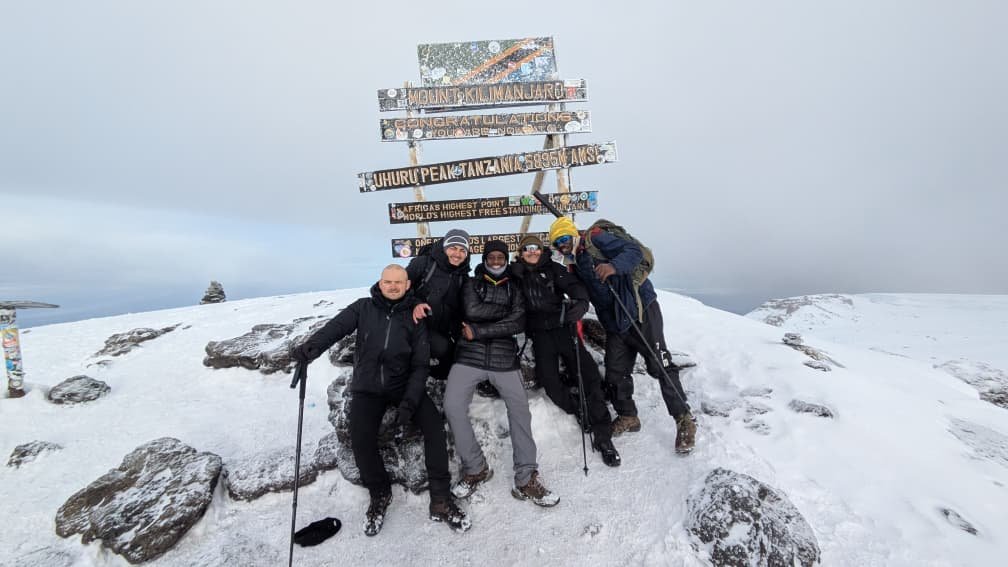
This is summit day, beginning around midnight. You’ll trek steeply upwards through the night, aiming to reach Stella Point (5,756m / 18,885 ft) by sunrise. From Stella Point, a further gentle ascent along the crater rim leads to Uhuru Peak (5,895m / 19,341 ft), the roof of Africa. After celebrating your achievement, you’ll begin the long descent back to Barafu Camp for a short rest before continuing down to Millennium Camp (3,790m / 12,434 ft). This is a physically and mentally demanding day, requiring significant endurance.
Day 7: Millennium Camp to Mweka Gate
Distance: 12 km (7.5 miles)
Time: 5-6 hours
Altitude Gain: Significant descent
Habitat: Forest
After breakfast, you’ll complete the final descent through the forest zone to Mweka Gate (1,640m / 5,380 ft). The trail is often muddy, especially in December. Upon reaching the gate, you’ll be greeted by your driver and crew, and then transferred back to your hotel in Arusha. This is a day of celebration and relief, marking the successful completion of your Kilimanjaro climb. You’ll likely feel tired but exhilarated.
Day 8: Buffer Day / Departure
This day is often included as a buffer in case of unforeseen delays or for those who wish to have a more relaxed departure from Arusha. It allows for souvenir shopping or simply recuperating before your onward journey. For the 8 Days Kilimanjaro Lemosho Group Joining Departure 5 December 2026, this day ensures flexibility.
Preparing for Your Kilimanjaro Climb: Key Considerations for 2026
Embarking on an 8-day Lemosho climb requires diligent preparation, especially for a departure date as specific as December 5, 2026. The window between now and then is ample time to get into optimal physical condition and organize all necessary logistics. Climb 4 Africa emphasizes that preparation is as crucial as the climb itself.
Physical Training: This is non-negotiable. Kilimanjaro is not a technical climb, but it is a strenuous endurance test. Your training should focus on cardiovascular fitness and leg strength.
- Cardiovascular Fitness: Aim for at least 3-4 sessions per week of moderate-to-high intensity cardio. Activities like running, cycling, swimming, or brisk hiking are excellent.
- Strength Training: Focus on leg muscles (squats, lunges, calf raises) and core strength.
- Hiking Practice: The most important training is hiking, ideally with a weighted backpack. Find local trails with significant elevation gain. Aim for longer hikes (4-6 hours) on weekends. Practice on consecutive days if possible to simulate the trekking experience.
- Altitude Simulation: If available, altitude training or using an altitude simulation mask can be beneficial, though not essential.
Mental Preparation: Kilimanjaro is as much a mental challenge as a physical one. The summit night, in particular, requires immense mental fortitude. Visualize success, practice positive self-talk, and be prepared for discomfort. Understanding the risks and challenges beforehand can help manage expectations.
Health and Medical:
- Consult Your Doctor: Discuss your plans with your physician, especially if you have any pre-existing medical conditions. They can advise on fitness, vaccinations, and altitude sickness medication (e.g., Diamox).
- Vaccinations and Medications: Ensure your routine vaccinations are up-to-date. Yellow fever vaccination is often required for entry into Tanzania. Your doctor may recommend malaria prophylaxis.
- Travel Insurance: Comprehensive travel insurance is essential. Ensure it covers high-altitude trekking and emergency medical evacuation.
Logistics and Documentation:
- Passport: Ensure your passport is valid for at least six months beyond your intended stay and has sufficient blank pages.
- Visa: Check visa requirements for Tanzania for your nationality. Many can obtain a visa on arrival or apply online.
- Flights: Book your international flights to Kilimanjaro International Airport (JRO) well in advance, especially for a specific date like December 5, 2026.
- Climb Permits and Fees: Climb 4 Africa handles these for group departures, but confirm what is included.
Financial Planning: Beyond the tour cost, budget for flights, visa fees, travel insurance, personal gear, tips for the crew, and any pre/post-climb accommodation or activities.
Timeline for 2026:
- 12-18 Months Prior: Research routes, tour operators, and book your group departure. Start general fitness training.
- 6-12 Months Prior: Intensify physical training. Begin acquiring essential gear.
- 3-6 Months Prior: Focus on specific hiking training, ideally with elevation. Purchase specialized gear. Consult your doctor.
- 1-3 Months Prior: Finalize training plan. Pack your bags. Confirm all travel documents.
- 1 Week Prior: Light activity, focus on rest and hydration. Final gear check.
The 8 Days Kilimanjaro Lemosho Group Joining Departure 5 December 2026 offers a solid target. Use the time between now and then effectively. Climb 4 Africa is available to answer any specific questions regarding preparation tailored to this expedition.
Essential Gear and Packing List for a December Kilimanjaro Expedition
Packing correctly is fundamental for comfort, safety, and success on your 8 Days Kilimanjaro Lemosho Group Joining Departure 5 December 2026. The weather on Kilimanjaro can change rapidly, and temperatures vary drastically from the humid rainforest to the frigid summit. December is generally considered part of the dry season, but conditions can still be unpredictable, with potential for rain, wind, and snow, especially at higher altitudes.
Clothing Layers (The “Onion System”)
Layering is key to managing temperature fluctuations. Aim for breathable, moisture-wicking materials. Avoid cotton, as it retains moisture and can lead to hypothermia.
- Base Layers: Moisture-wicking tops and bottoms (synthetic or merino wool). 2-3 sets.
- Mid Layers: Insulating layers such as fleece jackets or synthetic puffy jackets. 2-3 layers.
- Outer Shell: Waterproof and windproof jacket (Gore-Tex or similar) and trousers. Essential for protection against rain and wind.
- Insulation Layer: A warm down or synthetic insulated jacket for summit night and cold evenings.
Headwear and Handwear
- Warm Hat: Wool or fleece, covering the ears.
- Sun Hat: Wide-brimmed, for sun protection during the day.
- Balaclava or Buff: For face protection against wind and cold.
- Gloves: Lightweight liner gloves and warm, waterproof/windproof outer gloves or mittens. Consider having spares.
Footwear
- Hiking Boots: Broken-in, waterproof, sturdy hiking boots with good ankle support. Essential for the Lemosho route terrain.
- Camp Shoes: Comfortable shoes or sandals for wearing around camp.
- Socks: Several pairs of warm wool or synthetic hiking socks. Avoid cotton.
- Gaiters: To keep mud, rocks, and snow out of your boots.
Trekking Gear
- Backpack: A comfortable daypack (30-40 liters) for carrying essentials during the trek (water, snacks, rain gear, camera).
- Duffel Bag: A large, waterproof duffel bag (80-100 liters) for porters to carry your main gear. Ensure it’s durable and waterproof.
- Sleeping Bag: A 4-season (-10°C to -20°C comfort rating) sleeping bag is recommended, especially for December.
- Sleeping Bag Liner: Adds warmth and keeps your sleeping bag clean.
- Trekking Poles: Highly recommended for reducing strain on knees, especially on descents.
- Water Bottles/Hydration Reservoir: Capacity for at least 3 liters. Insulated covers for reservoirs are useful in cold weather.
- Headlamp: With extra batteries. Essential for summit night and navigating in the dark.
Personal Items
- Sunscreen: High SPF.
- Lip Balm: With SPF.
- Sunglasses: UV protection.
- Toiletries: Biodegradable soap, toothbrush, toothpaste, wet wipes, hand sanitizer.
- Personal First-Aid Kit: Include blister treatment, pain relievers, any personal medications.
- Camera: With extra batteries and memory cards.
- Power Bank: For charging electronics.
- Book or Journal: For downtime.
- Snacks: High-energy snacks (nuts, energy bars, dried fruit) can supplement meals.
- Passport and Copies: Keep copies separate from the original.
- Cash: For tips and personal expenses.
Important Notes for December 2026 Climbs:
- Waterproofing: Ensure all gear is well-protected from moisture. Use dry bags within your duffel.
- Warmth: Focus on layers that provide significant warmth. Summit night can be well below freezing.
- Comfort: Well-fitting, broken-in boots and comfortable clothing are crucial for preventing blisters and discomfort.
Climb 4 Africa can provide a more detailed packing list upon booking your 8 Days Kilimanjaro Lemosho Group Joining Departure 5 December 2026. Reviewing this list and acquiring items well in advance will ensure you are fully prepared for the varied conditions on Kilimanjaro.
Acclimatization Strategies and Altitude Sickness on the Lemosho Route
Altitude sickness, or Acute Mountain Sickness (AMS), is the most significant risk factor for climbing Kilimanjaro. The Lemosho route, particularly the 8-day itinerary, is designed to mitigate this risk through excellent acclimatization. Understanding the principles of acclimatization and recognizing the symptoms of AMS is vital for anyone booked on the 8 Days Kilimanjaro Lemosho Group Joining Departure 5 December 2026.
How Acclimatization Works:
As you ascend, the atmospheric pressure decreases, meaning there’s less oxygen available to your body. Acclimatization is the process by which your body adapts to this lower oxygen level. This involves physiological changes, such as increased breathing rate, increased heart rate, and the production of more red blood cells to carry oxygen more efficiently. This process takes time.
Key Acclimatization Principles on the Lemosho Route:
- Slow Ascent: The Lemosho route, especially the 8-day version, allows for a gradual increase in altitude. This is the single most important factor. Rushing the ascent significantly increases the risk of AMS.
- “Climb High, Sleep Low”: This strategy involves ascending to a higher altitude during the day for acclimatization, then descending to a lower altitude to sleep. The itinerary for the 8-day Lemosho route incorporates this, notably on Day 3 when trekking to Lava Tower and descending to Barranco Camp.
- Hydration: Drinking plenty of fluids (3-4 liters per day) helps your body function optimally and can aid acclimatization. Water, herbal teas, and electrolyte drinks are good choices. Avoid alcohol and caffeine, which can dehydrate you.
- Pacing: Walk at a slow, steady pace – often referred to as “pole pole” (slowly, slowly in Swahili). Avoid overexertion, especially on ascent days. Listen to your body.
- Rest: Adequate sleep is crucial for recovery and acclimatization.
Symptoms of Altitude Sickness:
AMS symptoms are similar to a hangover and can include:
- Headache (the most common symptom)
- Nausea and vomiting
- Dizziness or lightheadedness
- Fatigue and weakness
- Loss of appetite
- Difficulty sleeping
- Shortness of breath, even at rest
More severe forms include High Altitude Cerebral Edema (HACE) and High Altitude Pulmonary Edema (HAPE). Symptoms of HACE can include confusion, impaired coordination (ataxia), drowsiness, and even coma. Symptoms of HAPE can include severe shortness of breath, coughing up frothy sputum, chest tightness, and blue lips or fingernails.
What to Do if You Experience Symptoms:
Do not ascend further if you have symptoms of AMS. The primary treatment is descent. Your guides are trained to recognize AMS and will make decisions based on your condition and the severity of symptoms.
- Communicate: Be honest with your guide about how you are feeling. Do not try to tough it out.
- Rest: If symptoms are mild, resting at the current altitude may be sufficient.
- Descend: If symptoms worsen or do not improve, descent is mandatory. Even a descent of 300-500 meters can make a significant difference.
- Medication: Your guide may administer oxygen or medication like Diamox (acetazolamide), which can help speed up acclimatization. However, medication is not a substitute for proper acclimatization and descent.
Preventative Measures:
- Pre-Climb Hydration and Health: Be well-hydrated and healthy before you start the climb.
- Diamox: Consult your doctor about taking Diamox. It can be prescribed to help prevent or alleviate AMS symptoms. It works best when started 24-48 hours before ascent and continued during the climb.
- Gradual Ascent: The 8-day Lemosho route is ideal for this.
For the 8 Days Kilimanjaro Lemosho Group Joining Departure 5 December 2026, Climb 4 Africa’s guides are experienced in managing altitude sickness. They will monitor the group closely. Your awareness and open communication are your best tools for a safe and successful climb.
What to Expect on the Mountain: Daily Life and Support Crew
Life on Kilimanjaro is a unique experience, distinct from any other type of travel. For the 8 Days Kilimanjaro Lemosho Group Joining Departure 5 December 2026, understanding the daily rhythm and the vital role of the support crew will enhance your journey. Climb 4 Africa prides itself on its professional and dedicated mountain teams.
The Mountain Crew: A Vital Team
A typical Kilimanjaro climb involves a hierarchy of roles, each critical to the expedition’s success:
- Lead Guide: The most experienced climber, responsible for the overall safety and well-being of the group. They make critical decisions regarding pacing, acclimatization, and potential medical issues.
- Assistant Guides: Support the lead guide, often focusing on smaller groups or individuals within the main group. They are trained in first aid and AMS management.
- Cook: Prepares all meals, from breakfast to dinner, often under challenging conditions. The food is generally nutritious and hearty, designed to provide energy.
- Porters: The backbone of the expedition. They carry all the equipment, including tents, food, cooking gear, and personal duffel bags (up to a specified weight limit, typically 15kg). They set up camp before you arrive each day.
- Camp Hands: Assist the cook and help set up camp.
A Typical Day on the Mountain:
While days vary slightly, a general pattern emerges:
- Morning (Wake-up): You’ll be woken up early, typically around 6:30-7:00 AM, with a cup of hot water for washing and then breakfast is served.
- Trekking: After packing your daypack and ensuring your duffel bag is ready for the porters, you’ll begin trekking. The lead guide will set the pace. Expect breaks for snacks and water.
- Lunch: Usually taken en route at a scenic spot. Your cook may meet you with a hot meal, or you’ll have packed lunches.
- Afternoon (Arrival at Camp): You’ll typically arrive at camp in the early to mid-afternoon. The porters will have already set up your tents.
- Camp Life: Upon arrival, you’ll receive a hot drink and snacks. You can then relax, read, journal, or prepare for the next day. Your duffel bag will be delivered to your tent.
- Evening: Dinner is served around 6:30-7:00 PM. After dinner, your guide will brief you on the next day’s trek. Lights out is usually by 9:00 PM to allow for rest.
Meals on the Mountain:
Climb 4 Africa provides wholesome and varied meals designed to sustain you throughout the climb. Expect:
- Breakfast: Porridge, eggs, toast, pancakes, fruit, tea, coffee.
- Lunch: Soups, sandwiches, pasta, rice dishes, salads.
- Dinner: Stews, chicken, rice, pasta, vegetables, soup, followed by dessert.
- Snacks: Biscuits, fruit, popcorn, nuts.
- Drinks: Purified water is provided. Herbal teas and coffee are available.
Special dietary requirements can usually be accommodated with advance notice.
Communication and Safety:
Guides carry radios and satellite phones for emergencies. They are trained in first aid and recognize symptoms of altitude sickness. The safety of every climber on the 8 Days Kilimanjaro Lemosho Group Joining Departure 5 December 2026 is the top priority.
Tipping:
Tipping the mountain crew is customary and greatly appreciated. A guideline is usually provided by Climb 4 Africa, and tips are typically pooled and distributed among the crew. This is a significant part of their income.
Life on Kilimanjaro is characterized by simplicity, teamwork, and a focus on the climb. Embrace the routine, trust your guides, and enjoy the camaraderie of your fellow trekkers and the support of the dedicated crew.
Post-Climb Options: Safari and Zanzibar in 2026-2027
Completing your 8 Days Kilimanjaro Lemosho Group Joining Departure 5 December 2026 is a monumental achievement, and many travelers choose to extend their African adventure with a safari or a relaxing escape to Zanzibar. Climb 4 Africa specializes in creating smooth transitions from mountain to relaxation or further exploration.
Tanzania Safari Experiences:
Tanzania is world-renowned for its exceptional wildlife viewing. After descending Kilimanjaro, you’ll be ready for a change of pace and scenery. Common safari options include:
- Northern Circuit Safari: This is the most popular circuit, encompassing iconic parks such as:
- Serengeti National Park: Famous for the Great Migration and vast plains teeming with predators and prey.
- Ngorongoro Conservation Area: A UNESCO World Heritage Site featuring the Ngorongoro Crater, a caldera with an incredible density of wildlife, including the Big Five.
- Tarangire National Park: Known for its large elephant herds and baobab trees.
- Lake Manyara National Park: Famous for its tree-climbing lions and diverse birdlife.
- Tailor-Made Safaris: Climb 4 Africa can customize safari itineraries based on your interests, budget, and time. Whether you prefer camping under the stars or luxury lodge stays, they can arrange it.
- Group Safari Departures: Similar to the Kilimanjaro climbs, group safaris offer a cost-effective way to experience Tanzania’s wildlife.
Zanzibar Holidays:
For a complete contrast to the mountain and safari, the Spice Island of Zanzibar offers pristine white-sand beaches, turquoise waters, and a rich cultural heritage. It’s the perfect place to unwind and recover.
- Stone Town: Explore the historic labyrinthine streets, visit spice markets, and learn about the island’s fascinating history.
- Beach Resorts: Relax on the idyllic beaches of Nungwi, Kendwa, Paje, or Matemwe. Enjoy snorkeling, diving, or simply soaking up the sun.
- Spice Tours: Discover the cultivation and uses of Zanzibar’s famous spices.
- Dolphin Tours: Take a boat trip to swim with dolphins off the coast of Kizimkazi.
Combining Kilimanjaro, Safari, and Zanzibar:
A popular combination for travelers in 2026-2027 includes:
- 8 Days Kilimanjaro Lemosho Group Joining Departure 5 December 2026
- 3-5 Day Northern Circuit Safari: Immediately following the climb, or after a day or two of rest in Arusha.
- 3-5 Day Zanzibar Beach Holiday: Flying from Arusha or Kilimanjaro to Zanzibar for relaxation.
Climb 4 Africa excels at coordinating these multi-faceted trips. They can arrange airport transfers, internal flights, and ensure a smooth flow between your Kilimanjaro adventure and subsequent experiences. Planning these additions when you book your Kilimanjaro climb can often secure better availability and pricing for popular dates in 2026 and 2027.
Consider how you’d like to extend your African journey. A safari offers unparalleled wildlife encounters, while Zanzibar provides a tranquil tropical escape. Discussing these options with Climb 4 Africa early can help you craft a comprehensive itinerary that maximizes your time and enjoyment in Tanzania.
Booking Your 8 Days Kilimanjaro Lemosho Group Joining Departure 5 December 2026
Securing your spot on the 8 Days Kilimanjaro Lemosho Group Joining Departure 5 December 2026 is a straightforward process with Climb 4 Africa. As an expert Kilimanjaro operator with deep local roots, they ensure a smooth booking experience and unparalleled support for your expedition.
Why Book with Climb 4 Africa:
- Expertise: Years of experience operating Kilimanjaro climbs, particularly on the Lemosho route, mean they understand the nuances of successful expeditions.
- Local Support: Being a Tanzania-based company, they have direct relationships with guides, porters, and park authorities, ensuring high operational standards and ethical treatment of staff.
- Comprehensive Inclusions: Their package typically covers park fees, rescue fees, all meals on the mountain, experienced guides and crew, camping equipment, and transfers. It’s essential to review the detailed inclusions list for the 8 Days Kilimanjaro Lemosho Group Joining Departure 5 December 2026.
- Customer Service: They are committed to providing responsive and personalized service, assisting you with every step of your planning.
The Booking Process:
- Inquiry: Reach out to Climb 4 Africa to confirm availability for the December 5, 2026 departure. Even if you’re planning further ahead for 2027, they can advise on future group dates.
- Consultation: Discuss your requirements, ask any questions about the route, gear, training, or inclusions.
- Confirmation and Deposit: Once you decide to book, a deposit will be required to secure your place on the group departure. The remaining balance will be due closer to the departure date.
- Pre-Departure Information: After booking, you’ll receive comprehensive pre-departure information, including a detailed packing list, training advice, and tips for preparing for your climb.
- Final Preparations: Follow the recommended training schedule and gather your gear.
What to Consider When Booking:
- Inclusions: Clearly understand what is and isn’t included in the tour price. This often includes park fees, rescue fees, meals, crew wages, and transfers. Exclusions typically involve international flights, visa fees, travel insurance, personal gear, tips, and meals/drinks in Arusha.
- Crew Welfare: Ensure the operator adheres to fair wages and ethical treatment for guides and porters. Climb 4 Africa is committed to this.
- Safety Standards: Verify their safety protocols, including the provision of oxygen, satellite phones, and the training of their guides.
To book your 8 Days Kilimanjaro Lemosho Group Joining Departure 5 December 2026 or to inquire about other dates in 2026 or 2027, please contact Climb 4 Africa directly. They are ready to assist you in planning an unforgettable Kilimanjaro adventure.
Contact Climb 4 Africa:
- WhatsApp: +255 747 477 898
- Email: climb4africa@gmail.com
- Website: Climb 4 Africa
Check Availability for 8 Days Kilimanjaro Lemosho Group Joining Departure 5 December 2026-2027
Ready to compare dates, prices, and the best option for your group? Send the package name and travel month so the team can reply with a clear quote, availability, and what is included.
Can I Join A Safari Group Directly From Kilimanjaro Airport? Logistical Guide
A practical guide to coordinating your arrival at Kilimanjaro International Airport (JRO) with a scheduled group safari, including logistical requirements and booking tips.
View package detailsAfcon Kilimanjaro Safari And Zanzibar Package: Expert Planning Guide
A comprehensive guide to coordinating your AFCON 2027 travel, including Kilimanjaro trekking, Northern Circuit safaris, and Zanzibar relaxation, with expert logistical advice.
View package detailsI Land At Kilimanjaro Airport—Can I Join A Safari The Next Day? ( Planning
A practical guide to the logistics of starting your Tanzania safari immediately after landing at Kilimanjaro International Airport, including arrival times, visa tips, and itinerary...
View package details
Afcon Kilimanjaro Ngorongoro And Zanzibar Holiday
AFCON 2027 Kilimanjaro Ngorongoro and Zanzibar Holiday.
View package details
Afcon Mount Kilimanjaro And Serengeti Package
AFCON 2027 Mount Kilimanjaro and Serengeti Package.
View package details
Kilimanjaro Safari And Afcon Final Package
Kilimanjaro Safari and AFCON Final Package.
View package details
Kilimanjaro To Kampala Afcon Travel Package
Kilimanjaro to Kampala AFCON Travel Package.
View package detailsKilimanjaro to Nairobi AFCON Travel Package
Mpango wa safari wa Kilimanjaro hadi Nairobi kwa AFCON unaowezesha kushuhudia milima na miji miwili mikubwa ya Afrika pamoja na mechi za AFCON kwa njia salama na ya kipekee.
View package detailsKilimanjaro to Dar es Salaam AFCON Travel Package
Mpango wa kipekee wa Kilimanjaro hadi Dar es Salaam kwa AFCON 2027 unachanganya milima, bahari na mandhari za Tanzania, huku ukitoa ufafanuzi wa njia, upangaji na chaguo za utekelezaji.
View package details
Kilimanjaroo Airport to AFCON Host City Transfer
Katika ukurasa huu wa kina, tunakuletea mwongozo wa kina juu ya jinsi ya kuhamisha kutoka Uwanja wa Kilimanjaro kwenda mjini litakalohudhuria AFCON 2027, pamoja na mapendekezo ya usafiri...
View package details
Kilimanjaroo Climb After AFCON 2027
Mwongozo wa kina wa kupanda Kilimanjaro baada ya AFCON 2027: njia zinazofaa, ratiba inayoakisi acclimatization, na vidokezo vya kupanga pamoja na namna ya kuwasiliana na Climb 4 Africa kwa...
View package detailsNo related package matches those filters. Clear one or more filters to see the other topic-matched options.